Category Archives: Topics

Should the Old Testament Be Unhitched from Christian Faith? … (Acts 15 and Andy Stanley)

Megachurch pastor Andy Stanley. He is stirring controversy again, but he is also getting Christians (like me) to think about stuff that we are not always prepared to deal with.

A lot of skeptics find the Old Testament to be a problem. A lot of Christians, if they are honest, do too.

But at the first great church council, in Jerusalem, in Acts 15, you get the impression that the earliest Christians were willing to get rid of the legal requirements of the Old Testament, in order to reach more people, with the Gospel. Staunch Jewish members of the early church resisted this, wanting Gentile converts to become circumcised, as a condition for salvation. But those like the Apostle Paul convinced the church leadership to conclude otherwise:

For it has seemed good to the Holy Spirit and to us to lay on you no greater burden than these requirements: that you abstain from what has been sacrificed to idols, and from blood, and from what has been strangled, and from sexual immorality. If you keep yourselves from these, you will do well (Acts 15:28-29 ESV)

In other words, if the Gentiles Christians were willing to adhere to these four basic requirements, they could remain in the church, without (at least the men) falling under the knife. At first, this sounds straight forward, until you read elsewhere later in the New Testament, where the exact requirement for abstaining from food sacrificed to idols, appears to be set aside as a “disputable matter,” as explained by Paul in Romans 14 and 15, where Christians can follow their consciences, as long as they do not cause other believers to stumble.

The main point seems to be that Christians should put an emphasis on unity, and that the requirements laid down in Jerusalem were more about keeping peace, than they were about adhering to moral principle.

One of America’s most influential pastors, Andy Stanley, of one of the largest churches in Atlanta, Georgia, North Point Community Church, has gone a step further, in a 2018 sermon that has caused a firestorm of controversy. Stanley lands his message by saying, “Peter, James, Paul elected to unhitch the Christian faith from their Jewish scriptures, and my friends, we must as well.

Andy Stanley has received quite a bit of pushback (Dr. Michael Brown at Charisma magazine, Wesley Hill at First Things). In understanding the Old Testament to be a problem, for many people today, is pastor Stanley throwing out the baby with the bathwater?

If you look at Acts 15, I find that many modern Christians have a problem with even the basic requirements adopted at the Jerusalem council. With respect to the requirement to abstain from “sexual immorality,” a lot of evangelicals are quick to lament how same-sex marriage, and other traditional, sexual immorality issues are being compromised, in certain quarters of the church.

But with equal force, we see the early church condemning, at least here in Acts 15, the eating of food sacrificed to idols, consuming blood, and eating the meat of animals that still have blood in them (what has [not] been strangled). And yet, how many Christians do you see today worrying about eating any food, in connection with idolatry?

Even more unsettling, and more relevant to modern Christians, what about eating red meat? Do you like your steak rare or medium rare? Are you violating the requirement laid down by the first great council of the church?

What are we to make of the binding force of the Acts 15 decree, for today’s Christians? How are we to relate to the Old Testament, rejecting what is an obstacle to faith in Jesus, without throwing the baby out with the bathwater?
Continue reading


James Comey, William and Mary, … and Truth

It is not all that common when your place of employment, and hometown, take center stage in the national spotlight. But that is exactly what happened last night when former FBI director, James Comey, was interviewed by CNN’s Anderson Cooper, at a “Town Hall” meeting, at the College of William and Mary.

Phi Beta Kappa Hall was packed with college students, and several of my Information Technology colleagues were given the opportunity to ask questions on live camera. I opted not to attend in-person, as part of my job was to provide background assistance to the CNN tech crew, to make sure that they had the technology support to pull off this televised event. Instead, I was keeping an eye on my geeky graphs and computer logs.

A lot of people have strong opinions about Mr. Comey. The current United States President has expressed dismay over certain statements Mr. Comey has made. Likewise, a former presidential candidate believes that Mr. Comey’s actions helped her lose the recent presidential election. William and Mary has invited Mr. Comey to teach a class on “ethical leadership” this fall, something that has stirred up endless controversy, including Christians that I know on all sides. Mr. Comey had attended the College as an undergraduate, co-majoring in chemistry and religion, where he wrote a thesis comparing the theologian Reinhold Niebuhr to the televangelist Jerry Falwell. Questions about “truth,” and who is telling it, seems to be the center of discussion.

If I had been permitted to ask my question, this is what I would have asked: “Mr. Comey, much of the controversy you are embroiled in is not just about public policy. It is about moral standards, personal integrity, and truth telling. You co-majored in religion when you were an undergraduate here. Do you have a particular faith commitment, that informs your moral perspective? For example, would you consider yourself a Christian? Why, or why not?

If given a further chance, I would probably also like to ask Anderson Cooper a very similar question.

When it comes to questions about “truth,” it really puzzles me as to why no one bothered to ask a question like this at the “Town Meeting.” Moral foundations are important, are they not?


The Easter Effect

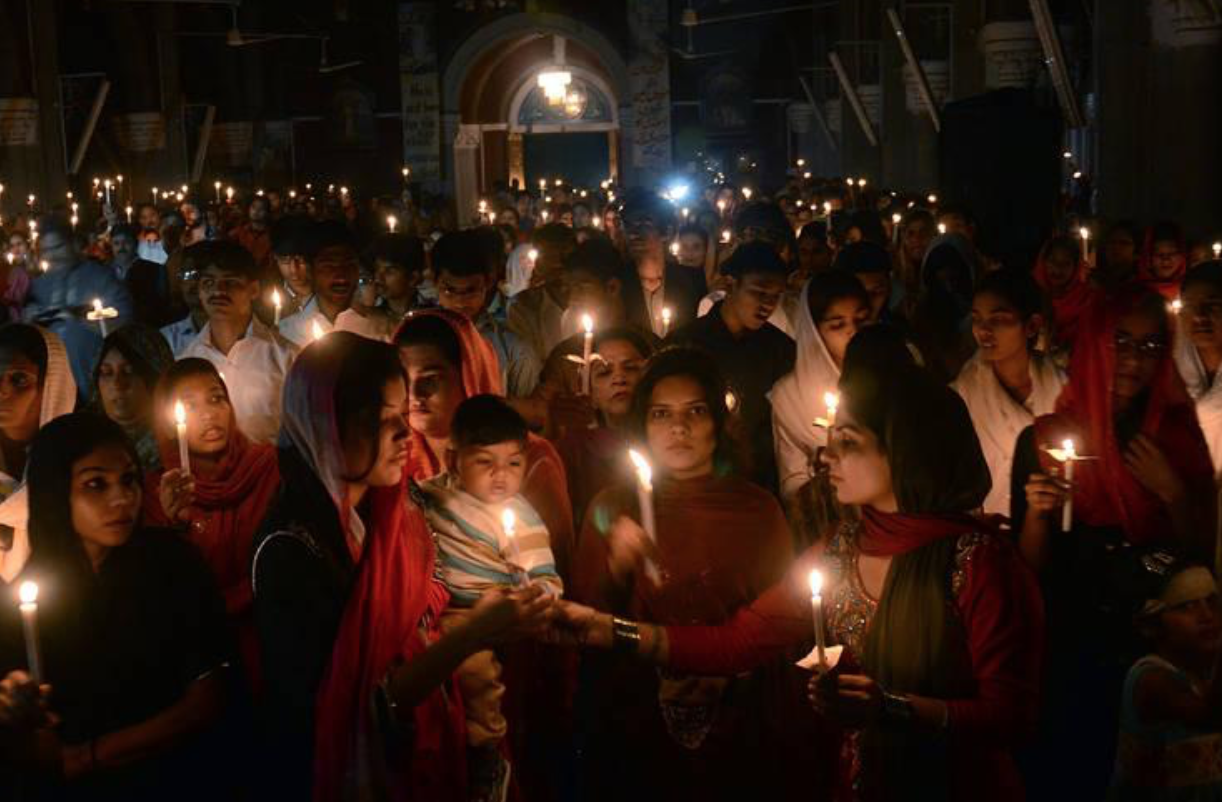
Pakistani Christian worshipers during an Easter Mass in Lahore, 2015. PHOTO: LIGHTROCKET/GETTY IMAGES (as in the Wall Street Journal article)

Several Veracity readers came to me on Easter Sunday and asked me about a recent Wall Street Journal article, “The Easter Effect and How it Changed the World” (behind a paywall), by a Catholic intellectual, George Weigel. Weigel’s argument is that the event of Christ’s resurrection, so inspired, so disturbed, and so invigorated the world of the Roman empire, that it eventually led to Christianity’s effectively taking over the Mediterranean basin within just a few centuries. Weigel published a briefer essay along the same lines in the journal First Things in 2016  (no paywall).

In the First Things essay, I disagree with Weigel’s judgment that the popularity of the New Atheism of the likes of Richard Dawkins has “just about expired.” I only see the trend continuing to erode the cultural landscape, though in a more subdued manner, until the church recaptures the imagination of the “Easter effect.” This caveat aside, I recommend Weigel’s thoughts to you.

If you are interested in this theme, of how the “Easter Effect” radically changed the world, even to the present day, you can explore this idea in a couple of books that treat this topic in-depth. Weigel was partly inspired by the work of Baylor University sociologist, Rodney Stark, in his 2012 The Triumph of Christianity: How the Jesus Movement Became the World’s Largest Religion. You can read a review of the book by Scott Wenig, of Denver Seminary.

In a similar vein, the infamously skeptical, UNC Chapel Hill scholar Bart Ehrman recently released The Triumph of Christianity: How a Forbidden Religion Swept the World. What is remarkable about Ehrman’s book is that even though he is decidedly an agnostic, he nevertheless finds the impact of the claims to Christ’s Resurrection to be of tremendous historical significance. So, even though Ehrman does not believe the Resurrection to be true, he admits that something indeed happened, following Jesus’ death, that led to the radical transformation of the Roman empire. Charlotte’s Reformed Theological Seminary president, Michael Kruger, reviews Ehrman’s book.

HT: Paulette Parker


Resurrection Day!!

St. John’s Church in King William County, Virginia, one of the many historic, colonial era churches, where the altar always faces East.

If you drive around parts of rural Virginia, the state where I live, you will find a number of churches built in the pre-Revolutionary War era. Nearly all of these old churches have one thing in common: the church altar faces east. The great, historic cathedrals of western Europe do the same.

Why? In Mark 16:1-2, we read that Jesus’ women disciples went out to the tomb to anoint the dead body of Jesus with spices, at sunrise, only to find out that Christ had already risen. As a result, Christians have historically associated the Resurrection with the sun rising out of the east, in hopes that believers will one day share in that very same Resurrection that Jesus experienced, some 2,000 years ago. Many churches even today continue this tradition by having sunrise services on Easter morning. In fact, the word for Easter has the same root from which we get the English word for east.

Now some try to overly complicate this by associating Easter with having pagan origins, a tale which can be easily debunked (see here, here, and here). But, if it makes people feel better, just substitute the Scriptural Greek word pascha, transliterated from the Hebrew word for passover, as used by the Eastern Orthodox, or call it “Resurrection Day.” Whatever.

The point is: Do not get hung up on a word like Easter. Instead, please focus on what the concept behind the word means. Christians celebrate Jesus’ Resurrection from the dead, because it gives us the great hope, that one day, we too will inherit Resurrected bodies. For a quick five-minute summary on the meaning of Resurrection Day, Easter, or Pascha, here is Bible scholar Ben Witherington.

In the meantime, let us celebrate remember the meaning of Resurrection Day: HE IS RISEN!


Did Jesus “Descend into Hell?” (Explained in 3 Minutes)

So, what did Jesus do between his death on Good Friday and his Resurrection on Sunday morning? The early church had a line in the earliest known creed, the Apostles Creed, which reads “He descended into hell,” according to the 1662 version of the Book of Common Prayer, the version familiar to most English readers.

Most Christians who affirm this creed, and believe it, recite this line without thinking much about what it means. Other Christians refuse to recite this part of the creed, believing that this line is not in alignment with the Bible. So, what’s story with the whole “descended into hell” stuff? Is it in the Bible or is it not?

The CredoHouse, out of Oklahoma, develops fantastic educational resources geared to help average Christians gain a handle on advanced theological concepts. I highly recommend them for use in adult Sunday School classes. In this 3-minute video snippet, Michael Patton, the lead instructor at the Credo House, does a great job succinctly tackling the subject that would probably take hours to sufficiently unpack.

The key controversial verses behind the “He descended into hell” clause are mainly Acts 2:31, 1 Peter 4:6, and 1 Peter 3:18-20, leading many Christians to traditionally believe in the so-called “Harrowing of Hell,” when Jesus preached to the souls that died previously to the appearance of Christ upon the stage of world history. Listen to how Michael Patton summarizes other various viewpoints.
