Category Archives: Topics

Happy Ascension Day!!

Today is Ascension Day in the Western church calendar (it will be a week from now in the Eastern calendar). But is it not interesting, that while a number of essentially secular European countries mark today as a bank holiday, most evangelical Protestants in the United States would never have given it a thought?

I would have forgotten it myself, if London Bible teacher, Andrew Wilson, had not reminded me. Get his book Spirit and Sacrament: An Invitation of Eucharismatic Worship, on why recovering the great liturgy of the church, such as remembering Ascension Day, might be important.

In the meantime, I stumbled on this video by Bishop Robert Barron, that succinctly explains, in 8-minutes, why the Ascension should be important, to all Christians, corresponding to what is taught in the Bible. Bishop Barron makes me think of the teachings of Joshua Ryan Butler. Though I am an evangelical Protestant, this Roman Catholic theologian has a lot to teach any Christian.


Why Do Some Evangelical Protestants Convert to Roman Catholicism OR Eastern Orthodoxy?

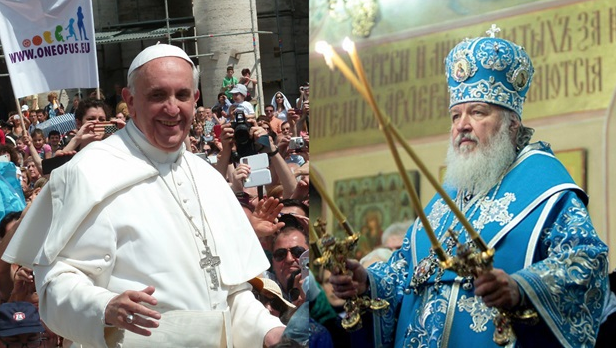
Roman Catholic Pope Francis and Russian Orthodox Patriarch Kirill made history in February, 2016, by meeting together, in an effort towards Christian reconciliation. (Photo credit: Edgar Jimenez / Flickr | Larry Koester / Flickr)

The vast majority of evangelical Protestants remain in such churches, once they become Christians. Also, quite a number of Roman Catholics and Eastern Orthodox convert and join evangelical Protestant churches, particularly if their faith was rather nominal to begin with.

But interestingly, some evangelical Protestants move in the opposite direction, and either join the Roman Catholic Church, or they join an Eastern Orthodox church.  So, why do some evangelicals bail out on Protestantism, to become members of these other churches?  When it comes to Roman Catholicism, is it not true that Protestants fought long and hard to try to reform Catholicism, only to find themselves outside of the church of Rome? When it comes to Eastern Orthodoxy…. well,… what is Eastern Orthodoxy, anyway?

Well, there are multiple reasons why some evangelical Protestants either “cross the Tiber” (a metaphorical way of saying that they become Roman Catholic…. the Tiber River cuts through the heart of the city of Rome), or “cross the Bosphorus” (a metaphorical way of saying that they become Eastern Orthodox…. the Bosphorus is a body of water that goes through Istanbul, Turkey, the traditional heart of the Eastern Orthodox world). One reason is that in both Roman Catholicism and Eastern Orthodoxy, the celebration of the Lord’s Supper is central to their corporate worship. Whereas, in much of Protestantism, the celebration of the Lord’s Supper often takes a back seat, when compared to the teaching of the Scriptures.

But perhaps one of the main reasons for leaving evangelical Protestantism is a disillusionment with how Protestants often handle the doctrine of sola scriptura, from the Latin, or “Scripture alone.”

The idea of sola scriptura assumes that Scripture, by itself, can be interpreted, without an authoritative magisterium, or teaching authority, like the Pope (Roman Catholic) or college of bishops (Eastern Orthodoxy). But when Protestants rely on the private interpretation of Scripture, confusion has often ensued. Protestant Christians, in the United States, have been often known to “vote with their feet,” once they run into perceived problems with a teaching pastor, who says something that does not line up with how they read the Bible.

You do not have that problem in either Roman Catholicism or Eastern Orthodoxy.

The “vote with your feet” syndrome, that commonly divides Protestant churches, can become quite weary for some Christians. When Protestants are unable to work through their differences, it can get rather tiresome.

So, on the other hand, it is pretty much a “package deal,” if and when you decide to join either the Roman Catholic or Eastern Orthodox communions. Both Roman Catholicism and Eastern Orthodoxy have their own authoritative magisteriums. Such conflicting understandings of teaching authority has created another whole set of problems, which would take a comprehensive look at church history, to fully digest.

Those “package deals” presented by both older communions have presented obstacles for those Protestants who have considered making the journey across the Tiber or the Bosphorus, but who end up not crossing one of those rivers (I would include myself in this latter category). For example, both Roman Catholicism and Eastern Orthodoxy hold to what is called the doctrine of the perpetual virginity of Mary. That is a big stumbling block that keeps many evangelical Protestants from seriously considering crossing “the” river.

If you want to learn more about why some Protestants look to Rome or Eastern Orthodoxy, these two short videos, respectively, help to explain why:


Does Bill Gates Want to Use a COVID-19 Vaccine to Give Us the Mark of the Beast?

Bill Gates is working on a vaccine for COVID-19. Is this the “mark of the beast,” that the Book of Revelation warns us about?

For a number of Christians, what Bill Gates is doing is alarming. If it is not a vaccine, laced with some possible hidden microchip technology, it could be some type of universal ID system, using a chip implant of some sort. Should Christians be concerned? Should Christians resist taking the vaccine?
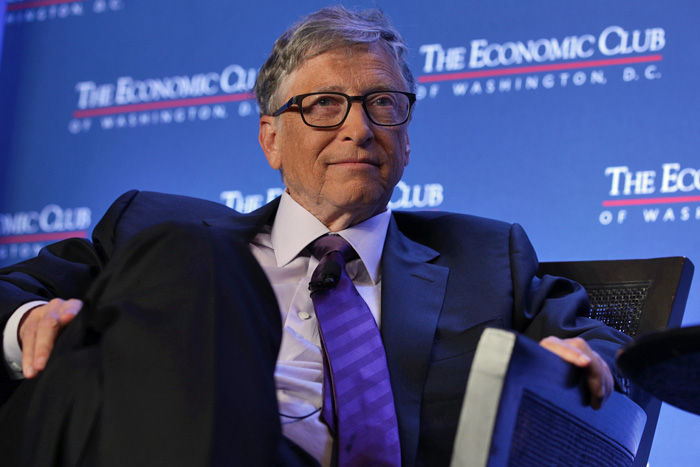
Does Bill Gates have a plan to give everyone the “mark of the beast?”

There are a number of problems with this type of thinking. First, fears about a chip implant are a bit late in the ball game. We already have a technological means of tracking people with a computer chip. You are probably using something like this to read this blog article.

It is called a smartphone.

Secondly, fears about the “mark of the beast” have a long, long history, of attempts to identify the “mark” with something that turned out to be nothing to fear. For example, when the New England Puritans, like Cotton Mather, started to promote inoculation against small pox, in the 1720s, a number of other Christians resisted such vaccination efforts. At one point, someone even firebombed Reverend Mather’s home in Boston, in protest. The vaccination itself left a permanent scar, on each person, which was nicknamed “the mark of the beast.” So, these type of prophecy speculations today are nothing new to church history. Thankfully, small pox today has been eradicated due to vaccinations, so we don’t have to worry about small pox anymore.

But the most difficult and third problem with all of this has to do with how we read the Bible.

The way to start is to read the relevant portion of Scripture. Some just look at Revelation 13:16-18, but a longer reading puts it all in context (Revelation 13:5-8, 11-18 ESV). Highlighted below are key phrases to consider:

And the beast was given a mouth uttering haughty and blasphemous words, and it was allowed to exercise authority for forty-two months. It opened its mouth to utter blasphemies against God, blaspheming his name and his dwelling, that is, those who dwell in heaven. Also it was allowed to make war on the saints and to conquer them. And authority was given it over every tribe and people and language and nation, and all who dwell on earth will worship it, everyone whose name has not been written before the foundation of the world in the book of life of the Lamb who was slain…. 
Then I saw another beast rising out of the earth. It had two horns like a lamb and it spoke like a dragon. It exercises all the authority of the first beast in its presence, and makes the earth and its inhabitants worship the first beast, whose mortal wound was healed. It performs great signs, even making fire come down from heaven to earth in front of people, and by the signs that it is allowed to work in the presence of the beast it deceives those who dwell on earth, telling them to make an image for the beast that was wounded by the sword and yet lived. And it was allowed to give breath to the image of the beast, so that the image of the beast might even speak and might cause those who would not worship the image of the beast to be slain. Also it causes all, both small and great, both rich and poor, both free and slave, to be marked on the right hand or the forehead, so that no one can buy or sell unless he has the mark, that is, the name of the beast or the number of its name. This calls for wisdom: let the one who has understanding calculate the number of the beast, for it is the number of a man, and his number is 666. 

The popular idea, when reading about the “mark of the beast,” is to think that some demonic figure (the “beast,” as in the first and/or second beast mentioned in this passage) will try to force everyone, including believing Christians, to have this “mark of the beast” implanted in our bodies. The implication is that Christians should do whatever they can to be wary of the imposition of such a mark, and resist it with every means possible…. even if it means rejecting something like a COVID-19 vaccine.

I have thought about adapting a maxim, that is surely appropriate for a blog article like this: Having an open mind on all things is surely good, yet on the whole, it is far better to follow the evidence we already do have, instead of speculating on the possibility of evidence we do not currently possess.

Here is what I mean by that.

The popular interpretation summarized above makes a number of assumptions. First, it assumes a futurist interpretation of the Book of Revelation. A futurist interpretation suggests that the bulk of what is described in Revelation corresponds to future events. Many Christians are not aware that there are other, faithfully-orthodox methods of reading Revelation that do not assume a futurist framework.

For example, we have good evidence to indicate that the prophecy regarding the “mark of the beast” has already been fulfilled in the past, specifically in the first century of the church. Interested students of the Bible might want to at least consider this preterist, or past-fulfillment based, approach to interpreting this passage, as a reasonable alternative to the futurist approach.

Furthermore, we also have evidence that suggests that a more symbolic approach to the “mark of the beast,” exemplified by either an historicist or idealist approach to interpreting this passage, might carry more weight than a futurist reading.

But let us lay all of the above aside, and assume for now that the futurist reading is correct. It very well might be. Even though it is nearly impossible to figure out evidence for something that might happen in the future, most evangelical Christians today take a futurist approach, so it is not without precedent nor credibility. Regardless of approach, a more thorough attention to the context of the “mark of the beast” will help to illuminate why more popular understandings are problematic.

Does even the futurist approach really line up with the popular idea of “the mark of the beast” being imposed on Christians?

Notice first, in the passage above, that “and all who dwell on earth will worship it,” namely the “it” being the first and/or second beast. Who are those “all who dwell on the earth?” Well, the next phrase in the highlighted verse tells us, “everyone whose name has not been written before the foundation of the world in the book of life of the Lamb who was slain.” In other words, those who are not believers in the Lord Jesus Christ will worship the beast.

This little nugget of Scriptural truth helps us to decipher what is meant later on by “the earth and its inhabitants [who] worship the first beast” and “it [the second beast] deceives those who dwell on earth.” The ones who are deceived by the beast are not believing Christians.

It is also helpful to realize what is meant by the “forehead,” which is where the mark of the beast might be placed. Elsewhere in the Book of Revelation we can read that the people of God, those who worship Jesus and put their trust in Him, will be “sealed” with a “seal” placed on their forehead (Revelation 7:3; 9:4; 14:1; 22:4 ESV), as in Revelation 7:3, “Do not harm the earth or the sea or the trees, until we have sealed the servants of our God on their foreheads.” Furthermore, “foreheads” alludes to the concept in Hebrews 10:16, that associates the covenant of God, placed upon the hearts of believers, as also being written on our “minds.”

In other words, those who worship and love Jesus will have this forehead seal. This is contrasted with those others who are “marked on the right hand or the forehead;” that is, those who have “the mark, that is, the name of the beast or the number of its name.” 

The “mark of the beast,” whether it be a literal or symbolic mark, represents those who have identified with the powers that oppose Christ. Consider the “mark of the beast” to be like an oath of allegiance. Or think of it as the mark of someone passing a loyalty test. It can not be coercively forced on someone else. Instead, the “mark of the beast” is taken upon someone willingly.

What do we conclude from all of this? Those who possess the “mark of the beast” are simply those who worship the antithesis of the Gospel. Those who reject Jesus, and subject themselves to worshiping that which is opposed to Jesus will be the ones who receive the mark of the beast.

So, should Christians be concerned that someone might force the “mark of the beast” upon Christians? NO, not according to what is taught in Scripture. Therefore, unless you are planning on committing apostasy anytime soon, followers of Jesus need not worry about any potential threat of having the “mark of the beast” imposed on them, against their will.

Should we be concerned about those influences associated with the power behind the “mark of the beast?” Absolutely. That which opposes the Gospel should not be taken lightly. In the case of vaccines, we should do what we can, as believers, to promote the development of a safe, effective vaccine, freed from the influences of those who might try to use something like this, as an act of bioterrorism, or for some other nefarious purposes.

Should we be concerned about others who might take upon themselves the “mark of the beast? Again, absolutely. But the way we are to go about this is by spreading the Gospel, the Good News of Jesus. We are to pray that the Holy Spirit might penetrate hearts, that others might turn from their rebellion against God, and embrace the Savior.

Despite whatever you may think of Bill Gates, followers of Jesus should support vaccination efforts, like his, that are intended to save lives. We have evidence that people, like Bill Gates, are at least trying to do good, to help people. Now, surely, Bill Gates is not perfect, but we do not have evidence for Bill Gates, that he wants to implant the “mark of the beast” on ChristiansSadly, such hyper-vigilance against the “mark of the beast” is associated with all sorts of conspiracy-type thinking, that mars the reputation of the Gospel, and invites an unbelieving world to view Christians with needless mockery and derision. Instead, let us all pray for the development of a safe and effective vaccine for COVID-19, as soon as reasonably possible.

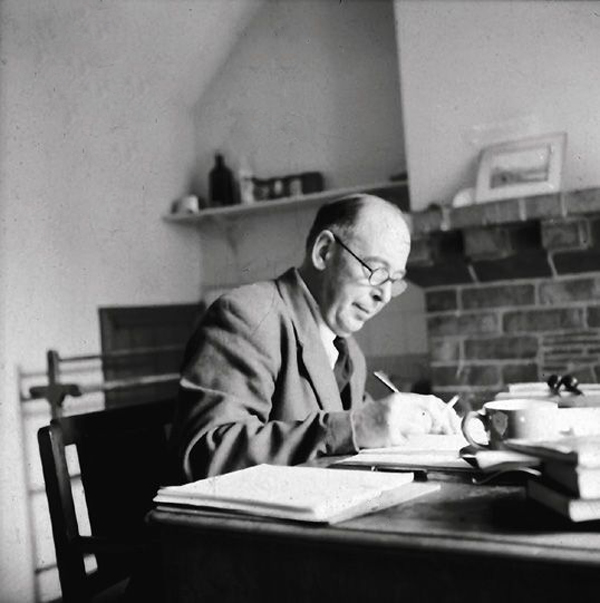


Blessed, by Kate Bowler: The Quandary of the Prosperity Gospel

My mother had been diagnosed with stage IV cancer, a deadly case of glioblastoma, or cancer of the brain. My heart sank when her doctor told me, over the phone, that even with surgery, the cancer had a near 100% probability of return, and it would be fatal. In her eighties, my mother had only a few months to live, at best.

My dad and I opted for the surgery, which would give her as much time as possible, to be with family, before her ultimate death. Radiation and chemotherapy would bring her more misery than healing. After living a full, wonderful, and vibrant life, it was best simply to allow her to say goodbyes to those who mattered most to her.

Yet after the surgery, when I would come by and visit her in the evening, in her skilled-nursing room, she would have the television on. Night after night, she would tune into watching a very popular Pentecostal preacher, out of Houston, Texas, or another similar preacher.  The message was subtle, but consistently positive: If my mom had the right thoughts, healing was just around the corner.

It is important to know something about my mom.

She went to church, but she was not someone who was avidly, evangelically minded, let’s just say. So, for her to be mesmerized by a television preacher was completely out of step for her. But these were not normal times.

She was dying of cancer.

If only she had faith, she was told, she would be healed….

…..the prosperity gospel offered her a chance of survival.


Reading Kate Bowler’s Blessed: A History of the Prosperity Gospel was not like reading a PhD thesis, even though she originally wrote this as her PhD thesis, while a student a Duke University’s graduate program, in religious history. I read; that is, listened to, Kate Bowler as she beautifully read her book to me, via audiobook, while in the midst of “lock down” mode, during the 2020 coronavirus pandemic. Blessed surveys the historical roots of the prosperity gospel, and how it continues to be a multi-billion dollar, church-based industry, filling up many of the largest megachurches, in the United States, and saturating the television airwaves, cable networks, and Internet podcasts. The influence of the prosperity gospel even extends up into halls of political power, in the United States White House.

I learned a couple of new things about the prosperity gospel. First, I realized that, contrary to common belief, the prosperity gospel is not really about learning how to become rich and wealthy, per se. Instead, the prosperity gospel primarily appeals to people who are just trying to survive. Folks in prosperity gospel churches typically do not mind if their pastor drives an expensive car, lives in a massive mansion, or wears outrageously fancy clothes. The pastor’s wealth is evidence, reassuring the faithful, that the prosperity gospel really works.

Adherents do get bothered when pastors embezzle funds, or practice deceit in gaining riches, because that would be a sign that those pastors really do not believe what they are preaching. For the prosperity gospel promises that it is God who will provide, and such provision is not a result of human contriving. Followers of the prosperity gospel look to their pastor’s genuine success as reassuring themselves that they might be able to get that long, lost promised promotion, or that nice, new house, to replace the cramped, rented place they are in now, or …. in the case of my mother…. an extension on a life, with a newly restored body, then currently riddled with cancer.

It helped me to have more compassion on those who are drawn to the prosperity gospel.

Secondly, the prosperity gospel is not always that easy to detect. There are what can be called “hard-sell” prosperity gospel preachers, who are pretty upfront in propagating “name-it-and-claim-it” rhetoric. One of the more popular 20th century prosperity preachers, Oral Roberts, used to talk about this concept of “seed-faith,” where believers need to think of “giving to God as a seed we sow, and not a debt we owe.”

In prosperity theology, God has established a contract with the believer. Prayer is a legal binding act. We can call upon God to enforce the terms of the contract by “demanding” God to act, because the believer is legally entitled to receive healing and wealth.

Early 20th century prosperity teacher E. W. Kenyon even taught that Jesus transferred the “power of attorney to all those who use his name.” By speaking out in “the name of Jesus,” that legal authority is given over to the person, who desires to see God act, through healing and other material well-being. For example, Kenyon replaced the “ask” in “ask, and it will be given to you” (Matthew 7:7), with the word “demand.” We can demand God to do things, because God has contracted himself to do them! Kate Bowler demonstrates that Kenyon’s message was an amalgamation of Christian theology, specifically as derived from the late 19th century Keswick spirituality movement, and the “New Thought Movement,” of the same era, a more loosely religious philosophy of “mind cure” and self-help.

But Kate Bowler shows that there are “soft-sell” prosperity gospel proponents, where the message is a lot more subtle. The prosperity gospel largely grew out of Pentecostal and charismatic movements, but not all Pentecostal/ charismatic churches can be called “prosperity gospel” churches, as such. Nevertheless, Kate Bowler identified a number of Pentecostal/charismatic-based ministries, that I believed were not “prosperity gospel” oriented, that upon closer examination, promoted this more toned down approach to prosperity theology

Even the famed Oral Roberts, left his Pentecostal Holiness background, to become a member of the United Methodist church, a more classically “respectable” denomination. In contrast with other, more “hard sell” prosperity gospel promoters, that sometimes eschewed modern medicine, Oral Roberts campaigned to build a large medical hospital, that would rival medical care given in more secular settings. Today, Oral Roberts University has a large percentage of undergraduates who go into graduate-level medical programs, in some of America’s leading medical schools. In other words, the line between prosperity gospel teachings and non-prosperity gospel teachings gets blurred in such “soft-sell” prosperity movements.

This lesson is all the more important to me, as I have often held a certain grudge against a form of cessationism, an evangelical interpretation of Scripture that teaches that the miraculous gifts of the Holy Spirit, such as a gift of performing miracles, possessed by a particular person, ceased to operate in the era of the 1st century Christian church. Cessationists, generally speaking, believe that while the New Testament was still being written, there was a definite need for miraculous gifts of the Spirit, such as speaking in tongues, to flourish. But once the New Testament was completed, and the last of the original apostles had died off, those miraculous gifts ceased to function. Everything a Christian ever needs now is found in the pages of the Bible. Speaking in tongues today is no longer expected.

Though I am not convinced that such an uncompromising cessationism is really Scripturally founded, I am now more sympathetic towards those who hold to this position, as many such cessationists tend to conflate the distorting influence of the prosperity gospel with nearly all forms of Pentecostalism and the charismatic movement.  I would argue that such a categorization is unfair, particularly in light of the fact that a number of Pentecostal and charismatic group explicit reject the prosperity gospel. But the pervasive presence of “soft-sell” prosperity theology so effectively blurs the line, that I can see why so many cessationists hold to the aggressively non-charismatic positions that they do.

The very slippery nature of the prosperity gospel, as it rose within the Pentecostal and charismatic movements, has therefore proven to be a quandary for me. Simply saying that “such-and-such is teaching the prosperity gospel” defies easy categorization.

I am therefore grateful for Kate Bowler’s work, as it helped me to have more empathy for those who are drawn to the prosperity gospel, and to realize that the fine line for drawing where the prosperity gospel really begins and ends, is not always easy to find. Yet what makes Bowler’s work the most poignant is that during the latter stage of her research into the prosperity gospel, she herself was diagnosed with Stage IV cancer, at the relatively young age of 35. Though apparently immunotherapy has extended her life thus far, the interests that originally plunged her into her PhD research, suddenly became deeply personal.

What is missing in Blessed is a clear, Scriptural exposition as to how the prosperity gospel falls short of solid, orthodox Bible teaching. For that, I have found a number of helpful blog posts (such as #1 and #2) written by Costi Hinn, a nephew of hard-sell prosperity Bible teacher, Benni Hinn, who left the prosperity gospel a few years ago. Costi Hinn, now a more Reformed-mind Bible pastor in Arizona, blogs occasionally at The Gospel Coalition. But I was not expecting Bowler’s PhD thesis to be a polemic, anyway. Blessed stands alone as an authoritative treatment on how the prosperity gospel came to be, and continues to flourish.

I eventually persuaded my mother to turn off the television. I read the Bible to her during my every other evening visits, while the cancer slowly took her life away. I knew that she desperately wanted to find healing, and she really wanted to believe that what the prosperity gospel teachers were saying were true. I honestly think that such prosperity preachers meant well. Believe me, I really wanted them to be right, too.

But it really frustrated me that the message she was hearing was promising something that could not be ultimately delivered. It really felt like the prosperity preachers were cheating my mother out of what was vastly more important. In fancy theological language, the prosperity gospel was offering an over-realized eschatology, promising something for her in this life, that only properly and fully belonged in the next. The prosperity gospel was a distraction, that while surely helpful in many ways, was ultimately obscuring the message of the True Gospel.

It was more important that my mom discover what it meant to be reconciled with God. I did pray for my mother that she might be healed. But I also prayed that during those final weeks, that she might have a genuine and rich encounter with the God who Created her, the great Redeemer, who bought her life with a price, that she might find lasting peace with Jesus.

My mother died soon thereafter.

I pray that her soul might be resting in that everlasting peace.

For more Veracity posts on Pentecostalism, the Charismatic movement, and the prosperity gospel, you might want to read the following posts. There is also a multipart blog series on “the baptism of the Holy Spirit.” You can start with a book review that introduces the whole series.


The Miracle of the Holy Fire?

The Holy Fire emerges from the tomb of Jesus, at the Church of the Holy Sepulcher (credit: Greek City Times)

I meant to post something about this last weekend, but this past Sunday was Pascha, the Eastern Orthodox celebration of the Resurrection of Jesus, otherwise typically known as “Easter” among English-speaking Western Christians. Different methods of calculating the day of Easter explains why the Eastern and Western churches are not always in sync, when it comes to celebrating the Resurrection.

But I am glad that I waited to post something until now, in that I ran across a very interesting article, by Rod Dreher, of The American Conservative, addressing a popular Eastern Orthodox tradition, associated with Holy Saturday, the day right before Pascha/Easter. Dreher is the author of the widely discussed book The Benedict Option, a prolific journalist, who converted to Eastern Orthodoxy several years ago.

As readers of Veracity might know, I believe that evangelical Protestants have a lot to learn from the Eastern Orthodox. Sadly, Eastern Orthodoxy remains an enigma to most evangelical Protestants, who tend to confuse Eastern Orthodoxy with Roman Catholicism, which only shows just how myopic some evangelical Protestants can be.

When the (once) popular evangelical apologist Hank Hanegraff was received into the Greek Orthodox church in 2017, you would have thought that he had renounced Christianity altogether, based on the criticism levied by some evangelical Protestants. Some even think that Mormonism is more theologically orthodox than Eastern Orthodoxy, which is a pretty laughable judgment.

To summarize those previous posts: Eastern Orthodoxy (abbreviated hereafter as “EO”) does have a lot going for it. Let me list a few of the reasons:

  • A generous posture towards “disputable matters,” for non-essential Christian doctrine: For evangelical Christians tired of the on-going theological debates among Protestant evangelicals, that never seem to go anywhere, EO is like a breath of fresh air. Among the EO, they do not get hung up on matters such as the minute details of the “End Times”, the age of the earth, or the dispute over God’s sovereignty vs. human responsibility. Even though the Book of Revelation is considered to be canonical Scripture, the EO refrain from being obsessive in parsing out the technical details of the book. When it comes to the first few chapters of Genesis, most EO have no problem with the use of metaphorical language to express great theological truth. The dispute between Calvinists and Arminians among evangelical Protestants is a mute point among the EO. On and on the list goes.
  • A consistent and awe-inspiring liturgy, that unites the faithful: For the EO, worship is theology and theology is worship. There is a strong emphasis on integrating doctrine with practical spirituality, something that is often missing in evangelical circles. A profound sense of reverence pervades the corporate worship experience. This is in contrast to a popular trend in many evangelical circles today, where Sunday worship looks more like a rock concert followed by a TED talk, than it does an attitude of awe of being in the presence of a Holy God.
  • A moderate and stable view towards “women in ministry” : Evangelical Protestants love to fight about the so-called “women in ministry” issue. Evangelical churches tend to divide from one another, with complementarians on the one side, opposing women serving as elders, in a local church, and egalitarians on the other side, promoting women to serve as elders. Mark my word, in a good twenty years, you will see even starker lines between complementarian and egalitarian evangelical churches, where you can tell the difference, just by examining what Bible translation is being used by that church. Such a trend does not bode well for the evangelical movement, as such a trend merely reinforces tribalism….  But among the EO, this issue has been settled for hundreds of years. Yes, only men are permitted to serve as priests, and preside over the administration of the sacraments. But in most of the EO churches I have seen, women are more involved in the leadership of the local community, than they are in many evangelical congregations today…. which is all the more ironic, in that the growing trend towards egalitarianism among evangelicals puts up yet another barrier to reconciliation among the Great Traditions of the church.

Yet like any other Christian tradition, EO is not perfect:

  • Nominalism is rampant. More than a few EO are Orthodox in name-only. While many EO Christians have a profoundly deep, even evangelical faith, a vast number of EO parishioners go to church simply because of family tradition, or because there is a sense of fear coming from the local priest or bishop. But then again, that happens in just about every Christian tradition.
  • EO theology sometimes seems fixed in the 8th century: The EO have not had a major church council meeting since the Seventh Ecumenical Council of 787 A.D. The EO emphasis on their long-abiding tradition often leaves them resistant to making certain changes, that would not necessarily compromise their core theological commitments. But a number of EO theological traditions strike evangelical Protestants today as being quite quirky, like the perpetual virginity of Mary.
  • EO churches tend to be more ethnocentric. This is easily seen in the United States. There is an Orthodox Church of America, that spawned off from Russian Orthodoxy, but still, the majority of EO movements in America are strongly tied to their non-American ethnic roots, like the Ukranian, Russian, and Greek Orthodox churches. This has made it hard for the EO to fully integrate into the broader American culture, inhibiting the EO from establishing an authentically American flavor of EO faith.

Anyway, what I wanted to highlight here is this popular tradition among the EO on Holy Saturday. Tradition has it that a miracle occurs every year at the Church of the Holy Sepulcher in Jerusalem, on Holy Saturday: the miracle of the “Holy Fire.” The story goes like this: a blue light emerges from the traditional location of Jesus Christ’s tomb, rising above a stone slab, where it is thought that Jesus’ body was laid on Good Friday evening. From the light, candles are lit and then taken outside of the tomb, so that other pilgrims can have their candles lit.

What was quite unusual in 2020 was that the Church of the Holy Sepulcher was officially closed this year, due to the COVID-19 pandemic, so there were only a handful of priests on-site to witness the miracle.

I must admit, I am a bit skeptical of this. But I appreciate the perspective shared by Rod Dreher, that his faith is not built upon such signs and wonders. Below is the video posted by Rod Dreher, showing the moment when the Holy Fire is used to light the candles, that are taken out of the tomb. What do Veracity readers think of this?