Category Archives: Topics

Is the Ukraine Crisis Revealing Russia’s Role in the End Times?

Events over the last few weeks in Ukraine have triggered a renewed interest in the End Times. Christians should pay attention to what is happening in the Ukraine, due to concerns about a possible World War III, for many reasons. But while the End Times could be near, it probably has nothing to do with the reasons why many Christians think Russia is a key player in future events.

Evangelist Pat Robertson recently entered the fray by suggesting that the Old Testament prophet Ezekiel predicted centuries ago that Russia would ultimately fulfill prophetic events associated with the Second Coming of Jesus. In fact, according to Robertson, Vladimir Putin is being “compelled by God” to invade Ukraine:

Pretty impressive, right? Well, let us take a closer look.

The story about Russia and the End Times finds its connection from a reference in Revelation 20:8, in the last book of the Bible, where “Gog and Magog” are associated with a great battle, that some say is elsewhere described in Revelation as Armageddon. The “Gog and Magog” reference points back to Ezekiel 38, where Ezekiel gives a prophecy about Gog and Magog, and a future invasion of Israel, led by these foreign powers.

There is a lot to unpack here, but we can just focus on where “Russia” is said to come in, at verse 2, in Ezekiel 38. Here is how the New American Standard Bible (1977/1995) and the New King James Version (late 1970s) render this verse:

Son of man, set your face toward Gog of the land of Magog, the prince of Rosh, Meshech and Tubal, and prophesy against him…” (NASB 1997/1995)

Son of man, set your face against Gog, of the land of Magog, the prince of Rosh, Meshech, and Tubal, and prophesy against him...” (NKJV)

Notice that the word “Rosh” is capitalized, which makes it a proper name, of a particular place. Many prophecy pundits will tell you that “Rosh” sounds like the word “Russia,” which would suggest Russia is somehow involved with this future invasion of Israel. Pat Robertson identifies “Rosh” with “Russia” on his map in the video. This gets a lot of attention: Is is possible that the Russian invasion of Ukraine is yet a prelude to a future invasion of Israel, that might signify the End Times?

Ah, but just compare the same verse with a few other translations, such as the ESV and the CSB:

“Son of man, set your face toward Gog, of the land of Magog, the chief prince of Meshech and Tubal, and prophesy against him…” (ESV)

“Son of man, face Gog, of the land of Magog, the chief prince of Meshech and Tubal. Prophesy against him…” (CSB)

And finally, let us consider the venerable KJV:

Son of man, set thy face against Gog, the land of Magog, the chief prince of Meshech and Tubal, and prophesy against him... (KJV)

Notice what is different. In these other translations, that word “Rosh” is instead translated as “chief.” In these other translations, “Rosh” is no longer a place name. In other words, “Rosh” is no longer “Russia.”

Let that sink in for a moment.

So, what is going on here?

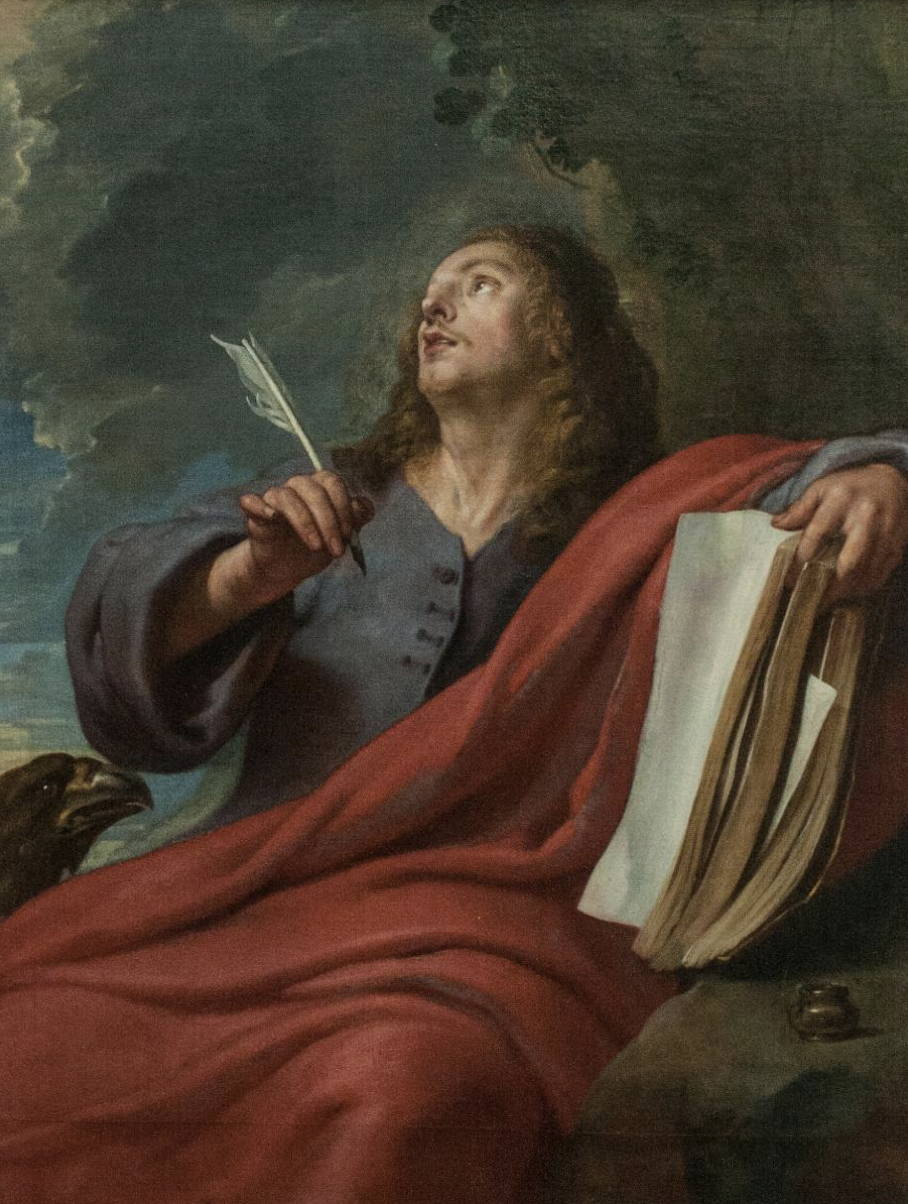
John of Patmos, receiving the Revelation, by Gasparde Crayer. The Book of Revelation makes a curious reference to “Gog and Magog,” somewhat cryptic names that go back to the Book of Ezekiel. Is the current Ukraine/Russia crisis somehow tied to the events of the Last Days?


Sorting Out the Whole “Russia” / Ezekiel / Revelation / End Times Quandary

Back in the 1970s, the United States and Russia (technically the U.S.S.R.) were involved in the height of the Cold War. Both the NASB and NKJV translations, as shown above, were developed in the 1970s, and these translations tended to reflect a lot of popular prophecy thinking of the time.

Interestingly, the venerable KJV, dating back to 1611, predated the Hal Lindsey craze of the “Late Great Planet Earth” by several centuries, and did not associate “rosh” with a place name, like Russia. That word “rosh” has an ancient Hebrew meaning of “chief” or “head,” and it appears over 500 times in the Old Testament. The KJV translators simply followed the traditional Hebrew “rosh” to mean “chief” in Ezekiel 38, following the example set by Jerome, in his translation of the Latin Vulgate, in the late 4th century.

So, what really drove the translators of the NASB and the NKJV to change the translation of the Hebrew “rosh” in Ezekiel 38 from “chief” to a place name, like “Rosh?” Well, they were not entirely crazy. It turns out that the Septuagint, the Greek translation of the Old Testament, dating back to a couple of hundred years before Jesus, translated the word to what appears to be a place name, simply “rosh” (or “Rhos” in some English versions). Therefore, the NASB and NKJV were not making this up. The “rosh” name translation is a real possibility. But how plausible is this translation?

Now, it must be said that ever since the discovery of the Dead Sea Scrolls, many scholars have come to the conclusion that the Septuagint might offer superior understandings of the original Hebrew text, thus suggesting that certain translated portions of the Greek Septuagint correspond to an earlier Hebrew text, that predates the Masoretic text, the Jewish Hebrew Bible that serves as the basis for most translations of the Old Testament today.

However, it is important to realize that this conclusion is complicated by the fact that there is no one, single Septuagint translation. There are actually multiple “Septuagints,” whereby various Jewish scribes over a good hundred of years, or more, put together different sets of Greek translations of the original Hebrew Scriptures. As a result, some Septuagint translations of certain texts work better than others.

The key to resolving this quandary is to try to locate where Ezekiel might have thought “Rosh,” as a geographical place, might have existed. This is where the massive stumbling block behind the “Rosh” as “Russia” argument really lies. To date, no one has been able to establish the location of “Rosh” anywhere in the ancient near east, or anywhere remotely near Russia, in any ancient record. Not a single reference. None.

Mmmmmm…..

Defenders of the “Rosh” as “Russia” thesis often make a rather bizarre argument that the name “Russia” comes from the phrase, “The Rus,” which is said to be the same as the Hebrew “Rosh.” The problem with this argument is “The Rus” actually comes from the Vikings, in the Medieval Period, when they came down from Scandinavia, and settled around Kiev, in the Ukraine, and parts of modern Russia. There is absolutely no connection between the ancient Hebrew “rosh” and the medieval Swedish “rus.”

This is just a form of bad logic, and faulty use of evidence. Just because a word in one language sounds the same as another word in a different language does not definitively mean that the two words mean the same thing. For example, flat-earthers take a Hebrew word, transliterated into English as “nasha”, which means “to deceive,” to mean that “NASA” is deceiving us in thinking that the earth is a sphere, simply because “nasha” and “NASA” sound alike. Really???

To make matters worse, some then go ahead and claim that the word “Meschech” in Ezekiel 38:2 and the word “Moscow” mean the same thing, because the words sound the same. There you go, Russia still is in Ezekiel 38, right?

However, is there any ancient historical evidence to support the claim that “Meschech” and “Moscow” are referencing the same geographical place?

Nope. We strike out again here.

The word “Meschech” (or “Meshech“) actually comes from the Table of Nations in Genesis 10:2, and in 1 Chronicles 1:5, and refers to an area in Asia Minor, in what we today call Turkey, which is on the south side of the Black Sea. Moscow is way, way far away to the north, on the north side of the Black Sea. We do not have a single scrap of ancient evidence that associates the area of modern Moscow with the ancient Hebrew “Meschech.”

The same goes for identifying “Tubal” with “Tobolsk“, a town in Siberia. The words sound the same, but “Tubal” is often paired with “Meschech” in the Bible, and was located in Turkey as well. Likewise, we have zero ancient evidence for linking “Tubal” to “Tobolsk.” This lack of evidence pretty much changes the possibility of Russia being in view, specifically, in Ezekiel 38, to that of being improbable.

Other arguments associating the story of Gog and Magog specifically with Russia pretty much go downhill from there. Here is the point: I personally do not find this to be a hill that I am willing to die on. I would much rather rely on evidence that we already have instead of depending on supposed evidence that we do not have. However, if it turns out that new evidence surfaces that clearly has an ancient source identifying “rosh” with a particular geographical location, way up north from Israel, then I am perfectly willing to change my mind. Furthermore, it is still possible that a great battle at the end of the age might still feature Russia as a major player in it. You just can not clearly get this from Ezekiel 38. So until we get more clarity, we probably do not need to stock up yet on a 3-month emergency food supply.

Looking forward to the ultimate Second Coming of Jesus Christ is something that all historically orthodox Christians anticipate. However, it is probably best to regard this “Rosh=Russia” issue as a matter of wishful thinking among a certain group of Bible commentators and prophecy specialists. For decades now, Russia has always featured prominently in Bible prophecy speculations. Russia fits neatly in many End Times schemes. Certain commentators have a lot invested in defending their future prophecy fulfillment timelines by placing Russia squarely in the center of the action. But as even progressive Christian scholar John Barton says, the Bible can be “shape shifted” to make it mean whatever you want it to mean.

Simply wanting something to be true, does not make it true.

For more information on this topic, I would suggest that Veracity readers check out Dr. Michael Heiser on his Naked Bible Podcast, number 152, where Heiser goes into the various place names discussed in Ezekiel 38, in great detail.  Regarding the Septuagint “rosh” translation in Ezekiel 38:2, Dr. Heiser concludes that the Septuagint translator simply did not know what to do with the Hebrew word “rosh” and therefore left it transliterated into Greek, without suggesting any particular meaning for the word. For a quick 8-minute summary on YouTube, you can listen here.

As an aside, it might be worth noting that the good folks at the Lockman Foundation, who produce the NASB translation, have since the 1970s made an update to the 2020 revision of the NASB. This change reflects the conclusion made by the KJV, ESV, and CSB translators, by rendering “rosh” as “chief” and not as a place name (In fairness to the earlier NASB translation, the “chief” translation is actually mentioned in a footnote. It just is not in the main text). If you go back and view that YouTube video with Pat Robertson, you will notice that they actually use this 2020 revision of NASB in that clip, where the place name “Rosh” is strangely absent, not even in a footnote! My guess is that my fellow Washington and Lee University graduate, Pat Robertson, and his crew at CBN, never picked up on that.

No matter what one thinks about the Ukranian/Russia crisis and its connection to the “End Times,” this utter tragedy in that part of the world is something that all of us as believers should be in prayer about, looking for ways to try to help people who have been bitterly impacted, and offer a ray of hope in a very dark time.


Saving a Forgotten Black Baptist Cemetery in Williamsburg, Virginia

Here is a story that just made national headlines, about my hometown, Williamsburg, Virginia.

Christianity Today magazine reported this week about “Black Baptists Discover Lost Cemetery in Virginia.” When I was in high school, my school bus would pass by a cemetery everyday. This cemetery just seemed to be in the middle of nowhere. There was no church building nearby. No other buildings. No houses. So, I always wondered what the story was about this place. No one on my school bus, a bunch of mostly white teenagers, knew anything about it either.

As it turns out, this particular cemetery was associated with an old black Baptist church, part of a community called Magruder, a few miles out of Williamsburg, near the current Interstate highway (I-64).

Magruder no longer exists.

Before the Civil War, several large plantations encompassed the area, along with a few small parcels of land owned by free African Americans. After the Civil War, slaves freed from these plantations stayed in the area and built these neighborhoods, all part of the Magruder community. The Oak Grove Baptist Church was founded there in 1887, when parishioners decided that walking a full three miles to attend Sunday services, at the First Baptist Church, in the Williamsburg town, was too inconvenient.

In 1941, as the United States entered World War II, the Navy eyed the property as the perfect place to build a Seabees training base for 26,000 officers and men, known as Camp Peary, which later became a CIA training facility. The African American families were forced to move, and the church buildings abandoned, leaving the cemetery behind. Many of those former Magruder residents settled in the community of Grove, on the other side of Williamsburg. A group from the Oak Grove Baptist Church moved to the area of Waller Mill, not too far from Camp Peary, and the large cemetery. But they had to vacate that property (again) when the new city reservoir was built.

During the time that the church was at Waller Mill, they acquired another parcel of land for another small cemetery. This small cemetery is the lost cemetery described in the Christianity Today article. Over the years, that church community has dwindled, and the site of that small cemetery was lost. In 2021, the lost cemetery was finally rediscovered. The Christianity Today article cites a William & Mary historian, Hannah Rosen, as saying that there might be over 1,000 lost African American cemeteries like this all over the country, most of them probably in a sad state of decay.

Recently, I wrote a blog post about the Confederate military general and educator Robert E. Lee. Controversy about various R.E. Lee statues and memorials have swirled around us for the past few years. But it is important to note that monuments to African American history are fairly rare. The remarkable thing about these Black church cemeteries is that they are mostly built with stone, which will make them more easily preserved, while they also serve as a powerful witness to how the Gospel has sustained these African American communities over the decades, despite being overshadowed by the history of racism in America. Making an investment in them is making an investment in preserving history.

A local television station tells part of the story about preserving the larger cemetery, that I passed by everyday on the bus to my old high school.


Better Days Will Come Again: A Brief Review

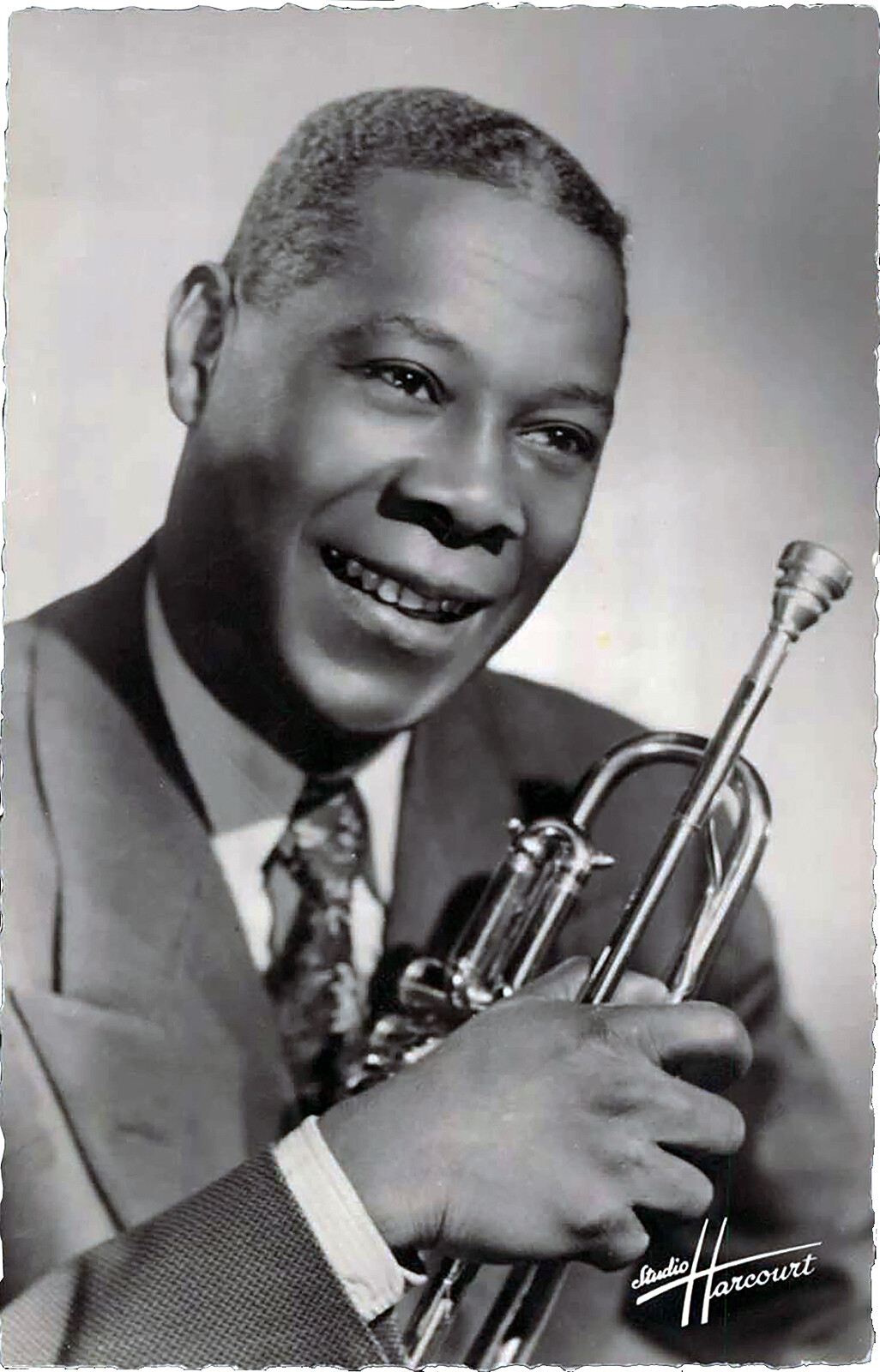
Arthur Briggs, the greatest jazz trumpet player in Europe, between the two world wars. His story is told in Better Days Will Come Again, by Travis Atria

A friend of mine is a great niece to Arthur Briggs, a jazz trumpeter, who was known as the greatest trumpet player in Europe, in the years from the end of World War I to World War 2. She asked me to read a book written about her great uncle, Better Days Will Come Again: The Life of Arthur Briggs, Jazz Genius of Harlem, Paris, and a Nazi Prison Camp, by Travis Atria, and I am glad I did.

To my embarrassment, I was completely unaware of Arthur Briggs, even though I DJ’ed a jazz show, on my college radio station, as an undergraduate. But there is a good reason why Briggs was so unfamiliar.

Though he was born on the island of Grenada, he made his way as a teenager to Harlem, during World War 1, and learned the art of jazz trumpet. However, America would not remain home for Arthur Briggs, as the pernicious effects of racism left him a strong distaste for American life. Briggs was most likely a descendant of London Bourne, an early 19th century African slave-turned-abolitionist, on the island of Barbados. Arthur Briggs had no patience for racist bigotry, so he no desire to stay living in America.

Arthur Briggs left America at the end of World War I to advance his career as a jazz trumpeter in Europe, where he finally settled in Paris, France. The years between the world wars were the hey-day for early jazz in Europe, and Briggs was at the top of his game. While the more familiar Louis Armstrong wowed audiences in America, Briggs toured nearly all of Europe with various jazz ensembles, but made his reputation primarily in Paris, where racism was much less an issue than it was in America. He played with the likes of guitarist Django Reinhardt and singer/dancer Josephine Baker. Briggs’ years in Europe explains why many like myself never knew of him.

The most challenging period of Briggs’ life was when Nazi Germany overran Paris in 1940. Briggs failed to escape Paris and was sent to a Nazi prison, at St. Denis, on the outskirts of the city, and spent the remainder of the war there. He experienced brutal dehumanizing conditions at St. Denis, along with the added insult of Nazi-imposed racism. Yet he survived the war, largely through the exercise of his extraordinary talents, which entertained his fellow prisoners, along with his Nazi guards and prison commanders.

Author Travis Artis introduces each chapter with a quote from the Bible, meaningful to Arthur Briggs, thus indicating a spiritual side to the great musician, but makes little emphasis on that aspect of Briggs’ extraordinary life. Better Days Will Come Again is a remarkable story of how one man stood up against the brutality of racism, excelling at his craft as a musician, as a crucial figure in the history of jazz.

Best (and Bittersweet) Wrapup of 2021 … Books and More

At the end of each year, I like to take some time looking back over some of best things I have learned, mainly from books (and podcasts), with a wrap-up of some of the biggest stories hitting the Christian world. But before I do that, I would like to report on the most bittersweet moment this past year.

It was the loss of our Italian greyhound, Digby. He was a rescue dog that we adopted, near the time when I learned that my mother was dying of cancer, back starting in 2014. He had been pulled out of a burning house, engulfed by a fire, and he needed a home. Friends who were traveling through Indiana picked him up for us, that we might give him a “forever home”. This sweet little guy gave my wife and I much joy for seven years.

He was in many ways a much better dog than Dooty, another Italian greyhound, whom we lost in 2013. In September, 2020, our newest “family member” was sadly diagnosed with chronic kidney failure. Dogs typically do not recover from this disease, but with certain types of medical treatment, they can live months, or even years after the initial diagnosis, with a good quality of life. Fourteen months later, though, in early November, it became apparent that the condition of this Italian greyhound was rapidly deteriorating. What made his death so much the more difficult was his genuinely sweet disposition to the very end. I marvel at the glory of God that was on full display by this creature.

We will miss this little guy. Hopefully, we will meet someone just like Digby in the New Heavens and New Earth (The first two following pics were from late 2020. The third was from September, 2021. The last one was from November, 2021).


Speaking of bittersweet, here is a remarkable story of forgiveness, displaying the power of the Gospel.  A Christian friend of mine, Debbie Smith, was sexually attacked in 1989, when a man entered her home and dragged her into the woods. He was eventually caught and convicted, after DNA evidence provided a positive match for the suspect. Earlier this year, Debbie spent five hours visiting this man, still in prison, where she told him that she had forgiven him.


Here is my wrap-up for 2021….

This will really show my age here, but just few weeks ago I learned that Michael Nesmith, the lead guitar player and primary songwriter for the 1960’s television pop-group, the Monkees, died at age 78. As a kid, I watched re-runs of that show, and I was drawn to Nesmith’s character, always wearing a wool hat, and who came across as the most pensive member of the band…. Just one little interesting factoid about Nesmith I recently learned: His mother invented Liquid Paper, the typewriter correction fluid, in 1954, as a divorced single mother, trying to raise her son Michael ….  Here is one of Nesmith’s musical creations, that he introduces in this silly video for the television show, “You Just May Be The One.” Mickey Dolenz, the drummer, is the only surviving member of the band:

—————————————————————————–

Onto some things of a more serious nature….

On the bright side, in the midst of disaster, it is really encouraging to see how Christians are working together to help the folks impacted by tornadoes in Kentucky, back in early December…. My wife and I visited family over this Christmas near where the worst tornado, which reached up to EF-4 strength, devastated the towns of Dawson Springs and Mayfield, Kentucky. You could see the damaged inflicted along the path the tornado took crossing Interstate 69 in several places. It made me appreciate the power of nature to inflict terrible damage, and impact many lives, as we could see debris for miles scattered over rural Kentucky…..

On the more problematic side of the church…..

One of the most significant developments that I have been seeing in the American church is the development of what might best be called “progressive Christianity,” as a contrast to “historically orthodox Christianity.” A generation or so ago, this distinction was primarily seen as the difference between “mainline Protestant Christianity” and “evangelicalism.” But with the looming collapse of the Protestant mainline, and the emergence of other churches that do not fit the older Protestant mainline mold, the category of “progressive Christianity” seems like a much more appropriate designation. Unlike in previous generations, when so-called “liberal Christians” went to “mainline churches” (with a few conservatives mixed in, here and there), and “conservative Christians” went to “conservative evangelical” churches, many churches today are a blended mix of everything, that defies easy boundary markers.

As some have said, this blending is an invitation to shallowness…..

We are now living in an age where the specific boundary between “progressive Christianity” and “historically orthodox Christianity” (certainly of the Protestant sort) can become slippery and elusive. On the one side, some doctrinal controversies can cause unnecessary division, and harm the unity of Christ’s body. Yet at the same time, the category of “disputable matters” can also become so broadly and loosely defined that the concept of knowable, absolute Christian truth becomes a meaningless enterprise. Some differences in belief and practice are simply stark and distinctive, and difficult to ignore. The following video dialogue between Sean McDowell (historically orthodox Christian) and Colby Martin (progressive Christian) provides an informative illustration as to what this chasm in the church looks like:


Speaking of controversy 😦   …..  When COVID started to emerge in the U.S., a little under two years ago, I first thought that this crisis might be the spark that would lead to a spiritual revival. Having people crammed up in their homes for weeks on end might encourage a massive wave of interest in spiritual things. But such was not the case. In fact, things have pretty much devolved into an unparalleled amount division in the culture… and 2021 was pretty much the wearisome ballooning of the same craziness that engulfed people in 2020!!

So much of this spirit of division is driven by the flood of post-modernism throughout the Western world. The shady world of fake news and deepfake technology has not helped matters, that is for sure (listen to this Holy Post podcast, if you are unsure what “fake news” and “deepfake technology” is)….. and our American educational system has pretty much robbed a whole generation of a vibrant appreciation of history, a situation that we have managed to export to places outside of the U.S., like the U.K, according to historian and The Rest is History podcaster, Dominic Sandbrook.

This state of affairs is pretty depressing, but there are signs of change in the air. Positive change. Even a gay atheist, like the venerable British historian, David Starkey, who last year ran afoul of the U.K.’s extreme “social justice warrior” movement and virtue-signaling “woke” crowd, laments our culture’s failure to pursue truth. What if every Christian possessed this type of desire to pursue truth?


Sadly, this depressing state of affairs permeates the church as well. Consider the case of Eric Metaxas. A few years ago, despite some earlier misgivings about some of his writings, I imagined that Eric was becoming the type of evangelical public intellectual who could soundly speak for the conservative evangelical movement as a whole. After reading his book on Dietrich Bonhoeffer, I was pretty excited about Eric Metaxas’ prospects as a popular-style, evangelical public intellectual. I was very hopeful about Eric, and here on Veracity I have linked to perhaps a good half dozen episodes of his talk show from YouTube (which have all since mysteriously vanished)…

…. and then 2020 came. …  Eric appeared to go off the deep end, uncritically embracing various conspiracy theories (as it would appear). WORLD News Group did an interview with Eric Metaxas in November, 2021, primarily regarding a new book authored by Metaxas, but also to ask the question that keeps popping up in my mind, “Whatever happened to Eric Metaxas?Give it a listen and make up your own mind.

Speaking of WORLD News Group, that sponsors the daily news podcast, The World and Everything In It, that my wife enjoys listening to daily, a shakeup there has everyone scratching their heads. WORLD has historically been on the more conservative side of conservative evangelicalism, under the editorial leadership of Marvin Olasky. I have had issues with some of WORLD’s reporting over the years, but I have also been grateful for WORLD taking controversial stands, in exposing various scandals inside the evangelical world, and Marvin Olasky was largely responsible for that type of journalism. Now, however, Olasky has announced his resignation from WORLD magazine, since a decision at WORLD was made to take editorial control of the magazine away from Olasky.

Olasky has his concerns about the future of Christian journalism: “The trend in journalism these days is to emphasize opinion, not reporting. Reporting is costly; opining is relatively cheap. It can lead to more ‘reader engagement’ in terms of clicks, likes, shares—and subscriptions. Challenging readers or donors can be costly: Supporting proclivities and prejudices is better at cementing loyalty. These days it makes a certain kind of economic and political sense to abandon Biblical objectivity and become known as a liberal or conservative organ.” For someone who is such a resolute conservative evangelical to make such a statement does not bode well for the state of the church.

I am continually being challenged to learn How to Have Impossible Conversations in a digital world where the social media algorithms steer us all into ideological corners, on both the right and the left, and thus facilitating outrage fatigue. Thoughtful, intelligent nonbelievers employ such conservational strategies, to avoid nonsense, but Christians would do well to do the same. Probably the best summary of this problem, from a pastor’s point of view, comes from this interview of pastor Matt Chandler by theologian Preston Sprinkle:

To get a feel for how difficult the situation is, just recently in December, 2021, the Pew Research Forum released an updated report chronicling the rise of the “Nones,” those who say that they no longer have a religious affiliation.  In 2007, the survey indicated that the “Nones” made up 16% of the American population, rising to 26% by 2019.  Now, just a few years later, we are at 29% for the “Nones.” That is almost 1 out of 3 Americans (about 3 out of 10, to be more exact), whereas this was just at 1 out of 6 Americans (about 3 out of 20), a little more than a decade ago.

On the whole, American Christianity does not seem to know what to do about this situation….


Now onto better things….

Before I hit the book review summaries, I like to put another plug in before the end of 2021 for the Cambridge House at the College of William & Mary. I am super-excited about what is going on there!!.This is a great effort to try to put a dent into the growing “Nones” trend, on just one local college campus, here in the United States.

Now, this is perhaps the most exhilarating story of the year… just in time for Christmas. The group of conservative Anabaptist missionaries that were held captive by gang members in Haiti for weeks made a daring escape away from their captors. Wow!! (One of the captive missionaries gives a one-hour testimony of his experience).


Some Book Reviews…..

If there is one thing I appreciate about bike commuting is the ability to listen to audiobooks (and podcasts) while I ride. Not only am I trying to get my body in shape, I am working on getting my mind (and hopefully, my heart) in shape as well. As we are s-l-o-w-l-y emerging out of the COVID pandemic, I have been able to sneak in some great listens during 2021.

First, let me say that I am trying to stay off the 24-hour news cycle, that I believe has been a detriment to the spiritual health of millions of people. We live in an age where evidence-based reasoning takes a backseat to whoever successfully can take advantage of the attention-getting algorithms propagated by social media networks like Facebook. I am thankful for a site like Ground News that takes the current headlines, and simply summarizes the stories, and organizes the reporting media based on an organization’s ideological bias. Another site, AllSides.com, does pretty much the same thing. Websites like these help to quickly cut through all of the garbage.

I want to next list off a few of my favorite podcasts. When it comes to Bible study, nothing else beats Dr. Michael Heiser’s Naked Bible Podcast. This is some of the best Bible teaching out there today, a combination of verse-by-verse exposition, apologetics, and an appreciation of current biblical scholarship, all wrapped up into one. If you think studying the Bible might be “boring,” then the Naked Bible Podcast is your antidote.

Preston Sprinkle has a wide variety of fantastic interviews on his Theology in the Raw podcast. Beyond theological topics, focusing on history, I have become a follower of The Rest is History, by British historians Tom Holland and Dominic Sandbrook, which is a lot of fun, as well as being educational. Premier Christian Radio’s C.S. Lewis podcast is a wonderful introduction to the great Oxford Don, Christian apologist, and children’s book author, featuring interviews with scientist/theologian Alister McGrath. Plus, if you have ever wondered what the whole Old Testament Apocrypha was all about, you should try the Bad Books of the Bible podcast, put out by Ancient Faith Radio.

Then there is a whole slew of YouTube channels, such as Sean McDowell’s channel, for great apologetics content; Gavin Ortlund’s Truth Unites, for an evangelical Protestant engagement with Roman Catholicism and Eastern Orthodoxy, and Matt Whitman’s Ten Minute Bible Hour, a Baptist look at the richness of different Christian traditions.

But hands-down, the most provocative podcast I have listened to this year has been Christianity Today’s The Rise and Fall of Mars Hill…. It is eye-opening, intense, soul-searching, spiritually challenging, and controversial, all at the same time…. In the wake of Ravi Zacharias scandals, The Rise and Fall of Mars Hill gave me a lot to think about how Christians have not handled celebrity pastor Christianity that well…..After just finishing listening to the whole series, with my small-letter “c” complementarianism in view, I confess that I am still drawn to the power, penetration, and conviction of Mark Driscoll’s message. But it is quite clear that Pastor Mark’s theological vision got hijacked by a type of control-freakish machismo that ultimately took down Mars Hill Church from the inside.

It would appear that the greatest threat to Christianity lies not in the surrounding culture, but right in the backyard of the church.

Who needs television and the 24-hour news cycle when you’ve got stuff like this to listen to?

But now for the books….

The Rise and Triumph of the Modern Self, by Carl Trueman. Best book of the year.

  • The Unseen Realm, by Michael Heiser. Trueman’s book only beat this Heiser book, because of the timeliness. But Michael Heiser’s research into the supernatural world of the Bible has completely shifted the way I read the Bible. The Unseen Realm, and its less-academic version, Supernatural, are destined to become classics in Biblical studies, revolutionizing how to approach the Bible as a whole, shaped by the historical context of Second Temple Judaism. I hope to be writing a lot about Dr. Heiser’s work in future blog posts. This has motivated me to dig into the Scriptures, with greater enthusiasm, than anything else I have read in the past 5 or 6 years. In my view, if we are praying for revival in the church, that might explode into a new “Great Awakening” in our culture, I believe it will start by grappling with some of the ideas and thoughts found Dr. Heiser’s books. Review here at Veracity.
  • Embodied, by Preston Sprinkle. This is the “go-to” book I would recommend to understand the crisis of gender identity overtaking the culture today, and its impact on the church, based on solid scientific research and biblical wisdom. However, unlike Trueman’s The Rise and Triumph of the Modern Self, Sprinkle’s Embodied is more focused on how to care for people wrestling with these deeply personal issues, instead dealing with the culture war questions. Embodied was also a very important personal book for me, too. Review here at Veracity.
  • The Two Popes, by Anthony McCarten. A provocative look at the relationship between the current pope, Francis, and the previous pope, Benedict. It is a great movie, too. Review here at Veracity.
  • Welcoming Justice, by Charles Marsh and John Perkins. A short but helpful book that sidesteps around the unhelpful categories of critical race theory and “wokeness” to get at the real story of how the church can effectively combat racism. Review here at Veracity.
  • The Bible With and Without Jesus, by Amy-Jill Levine and Marc Zvi Brettler. Two Jewish scholars help both Christians and Jews understand why both groups read the Bible, and particularly, the New Testament, so differently.  Review here at Veracity.
  • Finding the Right Hills to Die On, by Gavin Ortlund. When theological controversial erupts in your small group or church, Ortlund’s book is great resource to try to frame what is important and unimportant regarding how to navigate theological controversy. I found this book immensely helpful in trying to navigate a theological debate that has been tearing at my home church, for the past couple of years, and its impact on personal relationships. Review here at Veracity.
  • The Making of Biblical Womanhood: How the Subjugation of Women Became Gospel Truth, by Beth Allison Barr. An otherwise brilliant and illuminating study of the history of women in the church, making an important case for affirming the gifts of women in the life of the church, nevertheless comes up short when it comes to offering a cogent, exegetically compelling interpretation of the Bible concerning women in church leadership. To use a manner of speaking going back to J. I. Packer, Beth Allison Barr’s efforts are well-meaning, positively enlightening, challengingly corrective on certain matters… and yet still “wrong-headed” at certain crucial points. Review here at Veracity.
  • Judaism Before Jesus, by Anthony Tomasino. The best book that I have read that gives you an historical introduction to the “Time Between the Testaments,” between the Old and New Testament, otherwise known as the period of “Second Temple Judaism.”  Review here at Veracity.
  • Paul Among the People, by Sarah Ruden. A classicist scholar examines the writings of the Apostle Paul, and surprisingly concludes that Paul is not the “bad guy” that so many skeptics, and even liberal-minded Christians, think he is. Review here at Veracity.
  • Still Time to Care, by Greg Johnson. A history of the “Ex-Gay” movement, with a positive challenge for Christians to return to an ethic of care for those who experience unwanted sexual attractions, as opposed to an ethic of cure. Review here at Veracity.
  • To Think Christianly: A History of the L’Abri, Regent College, and the Christian Study Center Movement, by Charles Cotherman. An insightful history into the concept of a “Christian Study Center,” from Francis Schaeffer, to James Houston, to R.C. Sproul, and even to anticipating the new Cambridge House, near the College of William and Mary. Review here at Veracity.
  • Founding Brothers, by Joseph Ellis. A history of some significant moments in the lives of America’s Founding Fathers, and their relationships with one another. Review here at Veracity.
  • A Parent’s Guide to Smartphones (Axis Parent’s Guide). David C. Cook publishers has been putting a great little series of books, aimed at Christian parents, to help them raise their kids. Each book is short, and can be read in perhaps under an hour. I picked up one these via Kindle, A Parent’s Guide to Smartphones, and the material was brief, but entirely helpful. Other books in the series address topics ranging from “Internet Filtering & Monitoring”, to “Vaping”, to the television show “Stranger Things.” If you know of a parent who is swamped with the pressures of raising children in a digital age, books in this series would be a great gift for them.
  • Urban Legends of the Church History, Urban Legends of the Old Testament, and Urban Legends of the New Testament, respectively by John Adair and Svigel, by David A. Croteau and Gary Yates, and by David A. Croteau. These three books in the “Urban Legends” series, published by B&H Academic, do a great job dispelling a lot of the common “fake news” stories surrounding church history and the Bible. Hopefully, this book series will encourage the death of at least some of these fictions that afflict the church. Review here at Veracity.
  • Unbelievers: An Emotional History of Doubt, by Alec Ryrie. An historical study in how believers wrestle with doubt. For a “second guesser” like myself, Ryrie’s book has been exceedingly helpful on a personal level. Review here at Veracity.
  • The Legacy Standard Bible. As of December, 2021, the finishing touches have just been put on a new Bible translation (more background here), that has a good deal of momentum behind it, in some circles. The New American Standard Bible has been a favorite of many for decades, along with its cousin, The Amplified Bible, as developed by the Lockman Foundation (These translations are fine translations, but I tend to lean more towards the English Standard Version myself). Pastor John MacArthur, and the faculty at The Master’s Seminary, in Southern California, have taken the 1995 edition of the New American Standard Bible, and have modified it in a way that they hope will emphasize a very traditional outlook on English Bible translation. I have not read through the whole Legacy Standard version (available online), but looking at it so far, the LSB is for those who find themselves frustrated with all of the newer Bible translations. YouTuber Timothy Frisch has a helpful video describing the Legacy Standard, in more detail.

Michael Heiser’s Unseen Realm: Recovering the Supernatural Worldview of the Bible.  The Carl Trueman book was more timely, but Heiser’s book will probably have a deeper, longer lasting impact on me.  The second best book of the year I read in 2021.


I have already started on Allen Guelzo’s new biography of Robert E. Lee, and the first chapter or so is simply fantastic. I am looking forward to more good listens on my bicycle commutes in 2022!

For other reflections on the year 2021, see my post from the end of the summer.  Ah, now we await a new year, in 2022! Let us pray that God does a work in the hearts of his people for the sake of the Gospel!!

Before I sign off for 2021, why not another fun tribute to the Monkees, this time with Colt Clark and the Quarantine Kids playing “I’m a Believer”…. and to top it all off, here is the Queen of the United Kingdom, Elizabeth II, with her Christmas greeting. She is like the world’s grandmother.


Where Do “Live Nativity” Scenes Come From?

A typical nativity creche …. replete with Joseph, Mary, the baby Jesus, a shepherd and the “Three Kings of Orient are,” much like the one I grew up with. Historically accurate? Not so much. But it does give us food for thought.


Christmas is that time of year when many churches do their best to portray the Christmas story. In the era of COVID, indoor Christmas concerts have become tricky enterprises. But what about an outdoor venue to tell about the story of the Incarnation? What about bringing in live animals, too?!

Ah… Enter in the “live nativity”!

Saint Francis and the “Modern” Nativity

Throughout the history of church, the telling of the Christmas story has been a staple of Christian tradition. But the most well-known version of the “live nativity,” featuring shepherds and magi coming to worship at the feet of Jesus, along with “ox and ass” adoring the baby Jesus, can be traced back to 1223, in Greccio, Italy.

According to St. Bonaventure’s Life of Saint Francis, the famous 13th century evangelist created a manger scene in a cave near this Italian city, with human actors and animals playing various parts to tell the story of Christmas. Pope Honorius authorized the public display, and the popularity of the “live nativity” took off after that.

Yet while kids in particular enjoy nativity scenes today, the art of doing live nativity has some problems… and it is not about how to care for all of those animals! When astute observers read the nativity stories found in the Gospels of Matthew and Luke closely, they soon discover that placing the shepherds together with the wise men “from the East,” does not fit the chronology. However, Saint Francis, was primarily concerned about bringing in all of the various elements of the story, in order to tell a simplified, cohesive narrative, to a medieval European audience who were mostly illiterate, as opposed to following a strict chronology.

Nevertheless, this distortion of what is actually found in the New Testament has created fodder for generations of critics to cast a skeptical eye over the live nativity. While significant challenges for harmonizing the stories told by Matthew and Luke do exist, it is still possible to draw together a consistently whole, coherent narrative, albeit more complex than what St. Francis put together.

A close-up of part of Fra Angelico’s fresco, in Florence, showing the ox and ass peering in from behind their stalls, to catch a glimpse of the baby Jesus.


Animals Who Worship the Baby Jesus

One of the more interesting aspects of the St. Francis’ nativity scene, is the use of the “ox and ass.” The popular 14th century carol, “Good Christian Men, Rejoice,” has the well-known line, “Ox and ass before Him bow, And He is in the manger now. Christ is born today! Christ is born today.

The problem is that in the Gospels, the mention of “ox and ass” is nowhere to be found. But the theological development of this idea across the centuries is a fascinating topic.

An ox and donkey are mentioned in Isaiah 1:3: “The ox knows its owner, and the donkey its master’s crib, but Israel does not know, my people do not understand.” Christian theologians across the centuries have looked upon this as an appropriate metaphor explaining why so many do not accept the Christmas story, even today. 

However, if you combine Isaiah 1:3 with the Septuagint reading of Habakkuk 3:2, the connection with Christmas becomes more apparent. Most English Bibles today read Habakkuk 3:2 as based on the Masoretic, or ancient Hebrew text of the Old Testament, something like this (from the ESV):

O Lord, I have heard the report of you,
    and your work, O Lord, do I fear.
In the midst of the years revive it;
    in the midst of the years make it known;
    in wrath remember mercy.

First century Jews across the Greek speaking world, along with the earliest Christians, read from the Septuagint, the ancient Greek translation of the Old Testament, where the phrase “in the midst of the years” reads differently as “in the midst of two living creatures,” as in something like Sir Lancelot Charles Lee Brenton’s 1844 English translation of the Septuagint:

….thou shalt be known between the two living creatures, thou shalt be acknowledged when the years draw nigh; thou shalt be manifested when the time is come; when my soul is troubled, thou wilt in wrath remember mercy.

The first mention of connecting the ox and ass to the Christmas story can be then traced back to the Gospel of Pseudo-Matthew, otherwise known as The Infancy Gospel of Matthew, most probably written in the 7th century, as a speculation into some of the otherwise unknown events of Jesus’ life, before he enters his public ministry as an adult:

“And on the third day after the birth of our Lord Jesus Christ, the most blessed Mary went forth out of the cave, and entering a stable, placed the child in the stall, and the ox and the ass adored Him. Then was fulfilled that which was said by Isaiah the prophet, saying: The ox knoweth his owner, and the ass his master’s crib.The very animals, therefore, the ox and the ass, having Him in their midst, incessantly adored Him. Then was fulfilled that which was said by Abacuc the prophet, saying: Between two animals thou art made manifest. In the same place Joseph remained with Mary three days.”

Some may object that an historical look back into the origins of today’s popular “live nativity” might ruin certain elements of Christmas for them. But it need not be thought of that way.

Instead, an honest look at where certain Christian traditions come from should do three things:

  1. It serves as a reminder to non-believers that Christians are not so crazy to believe what they believe.
  2. It prompts the believer to dig more into their own Bibles to more adequately ascertain the truth of what Christians say they believe.
  3. It reminds us all that the story of Christmas is ultimately a great mystery to celebrate and enter into, as we consider the theological meaning of God becoming human, and entering our world.