Category Archives: Tools

Genesis: History, Fiction or Neither?

Many readers of Genesis 1-11 are not entirely sure how this part of the Bible relates to world and natural history. Creation? Nephelim? Flood? Babel? What is this all about? As the Christian community I am part of begins a “Summer Bible Study” series on this part of the Bible, these type of challenges are more important that ever. I can boil it down to this question: Are these chapters written from the perspective of a human eyewitness observer recording the events as they happen?

When it comes to the Gospels, the New Testament writers make it clear that we are dealing with eyewitness testimony. For example, Luke explicitly claims that he gathered the sources for his Gospel from eyewitnesses to the original events (Luke 1:1-4). But when we come to Genesis, things get a bit more vague. For example, the authorship of Genesis is traditionally attributed to Moses himself. But even the most conservative perspectives must acknowledge that Moses, who lived centuries after the events described in Genesis 1-11, was not sitting up in a tree in the Garden of Eden with his videocamera. So, then how do we understand Genesis 1-11 in relation to actual historical events?

Zondervan Publishers has released a book that tackles the topic, Genesis: History, Fiction or Neither?, as part of its Counterpoint series. The book editor, Houston Baptist University professor Charles Halton explains the purpose behind the book in the following video. The contributors include some veteran Old Testament scholars representing diverse points of views:

  • James K. Hoffmeier: Theological history.
  • Gordon J. Wenham: Proto-History.
  • Kenton L. Sparks: Ancient Historiography.

The book is important for not only Christians who are trying to make sense of the Bible but also skeptics who are trying to figure out if Christianity really makes any sense.
Continue reading


The Power of Context

Why is understanding the context so important when it comes to interpreting the Bible? Because it is very easy to think the Bible is saying something that is completely alien to what the original author had in mind. Here is a short but sweet video (less than 4 minutes) by Alan Shlemon at Stand to Reason ministries that helps to explain context.

Here are the Bible verses that Alan is talking about from John 14:  John 14:16 and John 14:26. For more detail regarding why Muslims see Muhammad as being predicted by the Bible, look here. Interpreting the Bible is all about understanding the basic concepts of hermeneutics, which is a fancy word that simply refers to the study of the interpretation of texts.

If you are not sure what the big deal is regarding context, see this earlier Veracity post on Taking the Bible “Literally.

HT: Josh Shoemaker at DiscovertheBible.wordpress.com.


Accessible Theology

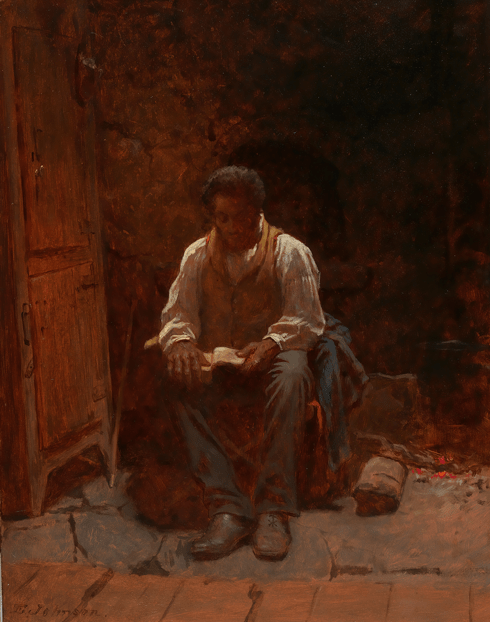
The Lord Is My Shepherd

“The Lord Is My Shepherd” by Eastman Johnson, 1863

We enjoy sharing art on Veracity. Art inspires thinking in a way that connects with the soul.

After several months of workaday grind and spending way too much time in front of computers, Marion and I took an Easter weekend trip to DC for some rest and relaxation. We toured the Smithsonian museums and attended the Nationals opening day game. A particular highlight of the trip was our visit to the Smithsonian American Art Museum.

Among the wondrous paintings on permanent display is Eastman Johnson’s masterpiece, The Lord Is My Shepherd, painted just after the announcement of the Emancipation Proclamation. Historians and art students have spent considerable energy interpreting this painting in the context of the struggle to abolish slavery in 19th century America. They cite Johnson’s sympathetic portrayal of slaves and Native Americans in many of his paintings, his abolitionist views, and his artistic, social, political, and Transcendentalist influences.

Regardless of the analysis, The Lord Is My Shepherd is an evocative portrayal of personal discipleship. However you interpret the historical and societal context, the painting depicts a man quietly reading the Bible. He is not reading the 23rd Psalm, as the title may suggest. He is at the beginning of the Bible—some have suggested in Exodus, given the theme of slavery. He is searching the Scriptures on his own. The title hints at his emotional frame of mind as he does so. Perhaps he is looking for comfort or reassurance in a time of great difficulty. Maybe there’s more to it than that. Maybe not. Either way, it’s personal discipleship.

In historical context, it used to be very difficult to study the Bible—even if you were among the privileged few who could read.

Accessible Theology

We have come a long way since 1863. Access to top-notch seminary classes is freely available—instantly. While a degree or certification may be out of reach for those who cannot afford the time or tuition costs, new Internet tools are available to help you if you just want to learn. For free.

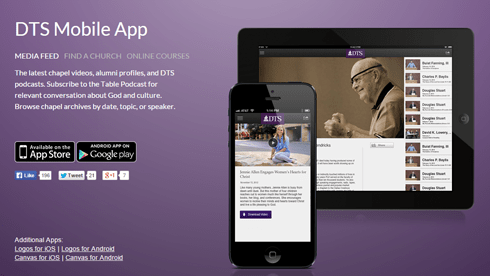
Dallas Theological Seminary records an impressive volume of classroom teaching sessions by some of today’s best instructors and theologians. They serve the videos and transcripts of these classes in a large, online catalog that can be accessed from their mobile app. Entire courses on a wide variety of topics from Old and New Testament surveys, to Jewish history, to the Reformation, to just about every kind of doctrine and theological topic you can imagine. Want to study heaven or hell? How about inerrancy, the reliability of the manuscript documents and translations, eschatology, development of the canon of Scripture, apologetics, religious pluralism, world religions, and so forth? What are your thoughts on cessationism, annihilationism, creationism, evolution, Arminianism, Calvinism, sacramentalism, eschatology, covenant theology, dispensationalism, and Eastern Orthodoxy? How well formed are your doctrinal beliefs? Maybe you just have a simple but deep question, like “How did we get the Bible?” Thanks to Dallas Theological Seminary, you can now freely audit courses that will inspire and help shape your beliefs and thinking.

To get the app, click on the image below and follow the instructions. Play around with the menu and find some courses or presentations that interest you. This app is a prerequisite for our next post on how we got the Bible. There is a particularly good session from Darrell Bock, a Veracity Top Scorer Award winner, on the New Testament canon that I would like to share with you. But you’ll need this app first. Enjoy!


Dallas Theological Seminary App


Personal Discipleship: Apologetic Reasoning

Week 4, Apologetic Reasoning

Click on the images inside this file to link to the online resources. (You may need to adjust your browser settings to allow the links to work, or open it in iBooks, or save it to your desktop and open it with Acrobat Reader.)

For those attending or following our personal discipleship class, here are the slides from this week’s session on apologetic reasoning.

The slides contain hyperlinks to videos and related material. In terms of resources, the most useful item might be the link to the 2015 Veracity’s Top 10 Scorers List. If you want a good grounding in apologetics, study these apologists, professors, theologians, philosophers, and authors.


Veracity’s Top 10 Scorers, 2015 Edition

Veracity's Top Scorer Award

It’s time again for that most prized of all personal discipleship honors, Veracity’s Top 10 Scorer Awards. (I know, I know…I can hardly stand the excitement either!)

There are lots of great resources for personal discipleship on the web and in bookstores, but these are the sources Clarke and I cite most frequently, and for good reason. They are the players who consistently “put the puck in the net.” No skating around the issues—just on-target discipleship. We listen to their podcasts, read their books, watch their debates, and benefit greatly from their teaching and personal examples. We don’t agree with everything each of them says or believes, and they wouldn’t want us to. But we are blessed by having studied them. They are, in our opinion, among the most influential proponents of the Christian faith today.

This year’s list includes pastors, philosophers, professors, theologians, apologists, an astrophysicist, several world-class scholars, some exceptionally gifted teachers, and a cop. (As in the past there are more than 10 winners on our Top 10 Scorers list because they all deserve the award.) Continue reading
