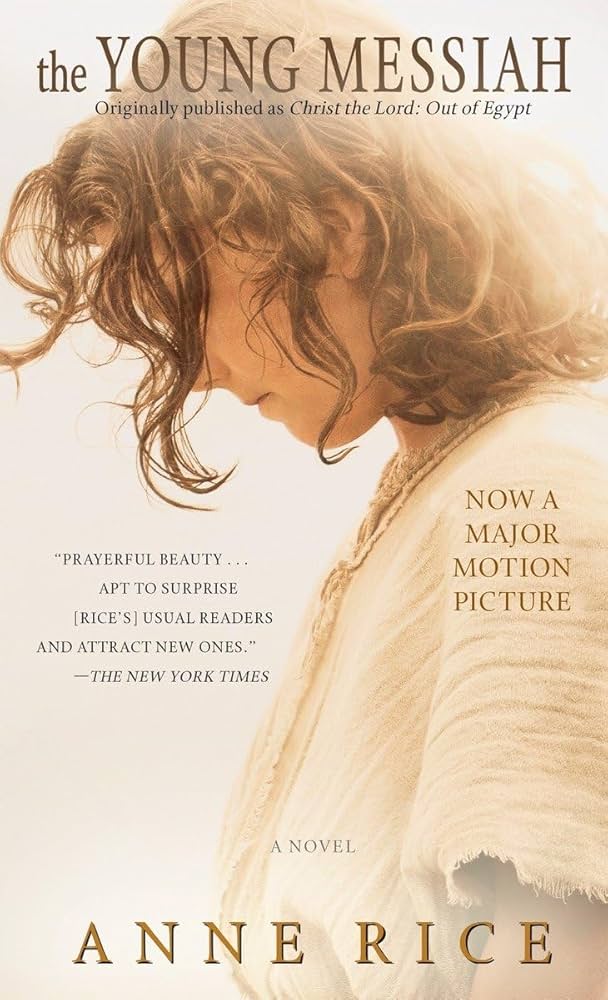
A couple of years ago, I finally got to see a fascinating movie, The Young Messiah. I do not claim to be a film critic, but I would recommend this film and here I want to explain why.
I was never much of a fan of vampire novels, but Anne Rice has been praised as being one among the finest American authors in recent memory, by Christian and non-Christian critic alike. In her book, for which The Young Messiah is based on, Anne Rice explores a possible historical narrative of what Jesus’ life might have looked like between the ages of 7 and 12. Sure, the storyline has some quirky parts to it, but it also teaches a valuable lesson as to how we can better understand Scripture, particularly with respect to Old Testament prophecy about the messiah.
Anne Rice’s 2006 novel about the childhood of Jesus, Christ the Lord: Out of Egypt, which was made into a movie about ten years ago, gives the viewer a good lesson about how biblical prophecy works in predicting the coming of the Messiah Jesus.
Vampire Gothic Novel Story Telling Meets the New Testament
The New Testament gives us very little detail about the early life of Jesus. Aside from the Virgin Birth stories in Luke and Matthew, we only know about a visit Jesus’ family took to Jerusalem, where he got separated as a boy from his parents. The vacuum of knowledge about those “lost” years in Egypt and later Nazareth created a variety of speculative interest in the early church, as Christians wondered about what happened in those pivotal years of Jesus’ upbringing. A film blogger at Patheos has written a screen guide for The Young Messiah, but I will try not to give out too many spoilers here in this blog post
In one 2nd-century apocryphal text, the so-called Infancy Gospel of Thomas, Jesus as a young boy, unaware of his supernatural powers, surprisingly kills two other boys who were tormenting him. Yikes! The bizarre and jolting weirdness of that story explains why you will not find the Infancy Gospel of Thomas in our New Testament!
But The Young Messiah plays off on that story, describing a time when Joseph, Mary, and young Jesus were hiding out in Egypt, presumably in the great Greek port city of Alexandria, waiting for events to calm down after King Herod’s death, before making safe passage to Nazareth. There in Alexandria, the movie tells about a young boy who had bullied Jesus. However, in this telling of the story, the bully accidentally died. The dead boy is then brought back to life.
Also in the Infancy Gospel of Thomas, Jesus turns some clay birds into living birds. The Young Messiah retells this story by suggesting that Jesus brought a dead bird back to life, as a basis for Jesus bringing the boy who bullied Jesus back to life. All of this is quite fanciful, but it helps to set up the main theme of the movie, a theological idea worth pondering.
The accidental death of the boy who bullied Jesus was prompted by a Satanic figure who appears on and off again throughout the film. This Satanic figure is invisible to everyone, except the boy Jesus. At such a young age, Jesus really does not know what to make of this Satanic figure, but neither does the Satanic figure understand what Jesus is really doing. The climax of the film is a retelling of when Jesus got separated from his parents, while on pilgrimage to the Temple in Jerusalem, as told in Luke 2:41-50.
The Satanic figure in the story is all along trying to get Jesus killed. At one point, the Satanic figure appears before Jesus and asks him a simple question: “Who are you?” (SPOILER ALERT: This clip can be slightly scary)
The astounding reality behind this, that the film and Anne Rice’s novel picks up on, is that the demonic powers never fully grasped what the mission of Jesus was all about. The demonic powers knew something about the promise of the coming Messiah, and they believed that for God to be defeated, they would have to put a stop to Jesus. But since they never really understood God’s plan in the first place, they inevitably fell into the trap laid out before them. For it was precisely the death of Jesus that turned out to be the undoing and defeat of the demonic powers.
So, why is this so important?
Why the “300 Prophecies” in the Old Testament about the Coming of the Messiah Jesus Are Not So Obvious
If I could produce a book that was written around 963 AD, prophesying that President John F. Kennedy would be assassinated in a country called the United States of America on November 22, 1963, people would flock to order the book and read it in amazement. However, we as believers have something far better than that. We often think of Christmas and its biblical events, but did you know that there are over 300 prophecies in the Bible concerning the first coming of Jesus Christ? According to statisticians, the probability of just eight of those coming true is 1 in 10,000,000,000,000,000,000,000,000,000. Now imagine what the odds are for the other 292 Bible prophecies coming true. The odds are astronomical, but they all happened precisely as written. That is overwhelming proof that the Bible is correct and that Jesus Christ is truly the Messiah, our Lord and Savior. Sadly, not many are flocking to examine the Bible as to its message and fulfilled prophecies.
Just look at some of the prophecies that were very precise and pointed and notice the differences with what generalities the prognosticators of our day predict. The Bible is always correct, and if we think we have found an error, just wait – with more investigation – you will find out that you were wrong and that the Bible is correct.
The Christian ministry which published this article is well-meaning. They have been faithfully upholding the Gospel of Jesus for decades. However, the above paragraph is quite a bold claim, if you stop and think about it. Is the failure to recognize that the Old Testament predicts the coming of Jesus as the Messiah simply a matter of people not doing the math? Is it really that simple, that these prophecies “were very precise and pointed” as the article claims?
Are those who have questions about Old Testament prophecies somehow incompetent when it comes to statistical probabilities?
Unfortunately, the above narrative suggests that understanding messianic prophecy in the Bible is but a matter of mathematics, “precisely as written.” It conjures up an image of Jesus walking around Israel, with a clipboard in hand, checking off Old Testament prophecies as he fulfills them.
Jesus, born of a virgin, as foretold in Isaiah 7:14….. CHECK!
Jesus, born in Bethlehem, as foretold in Micah 5:2… CHECK!
Jesus, rides a donkey into Jerusalem as King, as foretold in Zechariah 9:9 …. CHECK!
For another example, a purely mathematical, “precisely as written” perspective that the Old Testament predicts that the Messiah would be called a Nazarene (see Matthew 2:23), does not work very well, since the Old Testament never mentions the name of the town Nazareth. If you do not believe me, just google “is nazareth in the Old Testament,” and AI will give you the answer.
But before anyone goes “Oops!,” thinking that Matthew somehow made a mistake, just hang in there.
Instead, Matthew’s prophecy fulfillment results from a subtle combination of several texts together, perhaps Psalm 22:6–7 and Isaiah 53:3, suggesting that Nazareth had the reputation of being a despised town, or possibly highlighting the ambiguity of Isaiah 11:1, playing off the Hebrew word for “branch,” which has the same consonants as the word for “Nazareth.” The point is that the prediction associated with this prophecy is far from obvious. Instead, it is ambiguous. It takes some work to figure out what Matthew was getting at. Matthew has a more nuanced approach to biblical prophecy than what the “1 in 10,000,000,000,000,000,000,000,000,000” statistical narrative has in mind.
Christians are often taught that it is a “no-brainer” to believe that the Suffering Servant of Isaiah 53 and the promised Messianic king of Daniel 9, for example, are one and the same. But I can remember the first time I talked with a Jewish friend of mine about this, and I was dumbfounded by the response. I was told that a knowledgeable Jewish person will know that the Suffering Servant of Isaiah 53 is NOT the Messiah. Rather, the Suffering Servant of Isaiah 53 is the nation of Israel.
For my Jewish friend, identifying the Suffering Servant of Isaiah 53 with the nation of Israel was obvious!!
The most controversial and last of these messianic claimants around the time of Jesus was Simon bar Kokhba, the Judean military leader who resisted the Romans in 132 C.E. until he himself was killed. This bloody tragedy ultimately led to the death of nearly a million Jews, as estimated by some historians, the largest genocide of Jews, with the exception of the Nazi holocaust during World War 2. After the failed Bar Kokhba revolt, the Romans banned the Jews from entering Jerusalem and forbade them from trying to rebuild their temple.
The fact that so many Jews missed out on understanding who Jesus really was does not mean that these Jews were “stupid,” mathematically challenged, or something silly and insensitive like that. Rather, they did not see the full picture because it had not yet been revealed. It was the post-Easter community of Jesus followers who finally put all of the pieces together, when they encountered the Risen Jesus, and these revelations were recorded in the New Testament.
Many, if not most of the prophecies of the Messiah found in the Old Testament are like this. The fullest understanding of those prophecies remained undisclosed before Jesus’ day. According to the late Dr. Michael Heiser, there was a good reason for this. Not only were so many of the Jews unclear about God’s plan and purpose for the Messiah, many of the demonic powers were also in the dark about God’s true intentions. For if the prophecies about Jesus were truly “obvious,” as many Christians have assumed, then the powers of darkness would have responded differently to the coming of the Messiah, through the person of Jesus.
In Dr. Michael Heiser’s short work, What Does God Want?, an introduction to the Gospel, Dr. Heiser points out a passage of the Bible that somehow I had completely missed for decades…. mainly because I was never taught about it. Paul spells it out to the Corinthians, what he and his fellow apostles were trying to do in their preaching about Jesus:
‘“But we impart a secret and hidden wisdom of God, which God decreed before the ages for our glory. None of the rulers of this age understood this, for if they had, they would not have crucified the Lord of glory.‘ (1 Corinthians 2:7-8)
The “rulers of this age” is shorthand for the Apostle Paul to talk about the supernatural powers of this world, who were created by God. These supernatural beings were members of the Divine Council, as described in numerous places in the Old Testament, and yet there was a rebellion against God among some of these divine beings. Throughout the period of Old Testament Israel, culminating in the days of Jesus, these rebellious supernatural powers were intent on undermining God’s true purposes.
However, God was always one step ahead of his opponents. But to keep that one step ahead, God had to cloak the prophecies about Jesus underneath the ambiguity of the Hebrew text of Scripture. In other words, it was clear that God had a plan to defeat the powers of darkness, but God was not about giving away the secret of those plans to anybody ahead of the time of their fulfillment. This is why Paul says that the “rulers of this age” never understood what was really going on. For if they did, they never would have crucified Jesus.
Michael Heiser puts it like this:
The point is simple: Satan, demons, and the rival sons of God didn’t know what God’s plan was….
The Old Testament made it pretty clear that God still wanted a human family to rule with him just like the original idea of Eden. Satan and his buddies could have guessed Jesus was here to get that ball rolling. But they had no idea how. The logical thing in their view was to kill him. But that was the key to everything. God played them like fools (Heiser, What Does God Want, p. 36).
In their efforts to try to stop God’s plan of salvation, the evil powers of this world did the very things that set God’s plan into action, leading to the defeat of those evil powers.
Game. Set. Match.
…. And this explains why the Satanic figure in The Young Messiah, asked the young boy Jesus, “Who are you?”
So, if you ever get stuck trying to make sense of how the New Testament makes use of the Old Testament, please keep that in mind. For more on how all of this works, make it a point to pick up a copy of Dr. Michael Heiser’s book The Unseen Realm, or the less academic version of the version of the same, Supernatural.
It is regretful that Anne Rice’s experience in the church turned out to be so negative for her. But in many ways, this film, The Young Messiah, is a gift to those who wrestle with understanding the nature of biblical prophecy. Rice’s work framed a narrative which can help a student of the Bible to navigate through tough questions that many Christians rarely think deeply through.
Due to the expected snowstorm coming to Williamsburg, Frank Turek’s speaking event at William & Mary tomorrow night (Thursday, February 20, 2025), has been POSTPONED. A new date for Frank’s engagement will be announced at a later point in time.
For more information about the original announcement, see the recent Veracity blog post to learn more about Frank Turek. Frank’s appearance at the University of Nebraska in Lincoln, Nebraska got moved last week to a nearby church, after a snowstorm there closed the UNL campus, but you can view that talk with Q&A here. The YouTube page has timestamps marking the different questions students asked. You probably will not agree with every answer Frank gives, but I am impressed at how well he handles very controversial and thoughtful questions off the cuff from the floor.
Dr. Frank Turek, a Christian evangelist and apologist, will be speaking at the College of William and Mary, on Thursday, February, 20, 2025, 7pm-9pm, at the Commonwealth Auditorium, in the Sadler Center, the main student gathering place on campus.
Frank Turek is the author of I Don’t Have Enough Faith to Be an Atheist, co-authored with the late Norman Geisler. He gives talks at colleges and universities across the country covering the primary questions discussed in his book:
Does truth exist?
Does God exist?
Are miracles possible?
Is the New Testament true?
His talk at William & Mary will be followed by a Q&A session. This event is sponsored by the William & Mary Apologetics Club, and is open to the public.
From his CrossExamined.org website, “Frank is a widely featured guest in the media as a leading apologetics expert and cultural commentator. He has appeared on hundreds of radio programs and many top TV networks including: Fox News, ABC, and CBS. He also writes a column for Townhall.com and several other sites.
A former aviator in the US Navy, Frank has a master’s degree from George Washington University and a doctorate from Southern Evangelical Seminary. He and his wife, Stephanie, are blessed with three grown sons and two grandsons (so far).”
Frank hosts the CrossExamined radio program on American Family Radio, and has a Wesleyan theological background. He has publicly debated prominent atheists about the truth claims of the Christian faith, such as Michael Shermer and the late Christopher Hitchens. Frank gives thoughtful answers to a wide range of questions raised by skeptics and inquiring Christians from the floor.
The event maybe livestreamed. If so I will update with a link here.
Below is a 2-minute clip of one student asking Frank a question, followed with his answer:
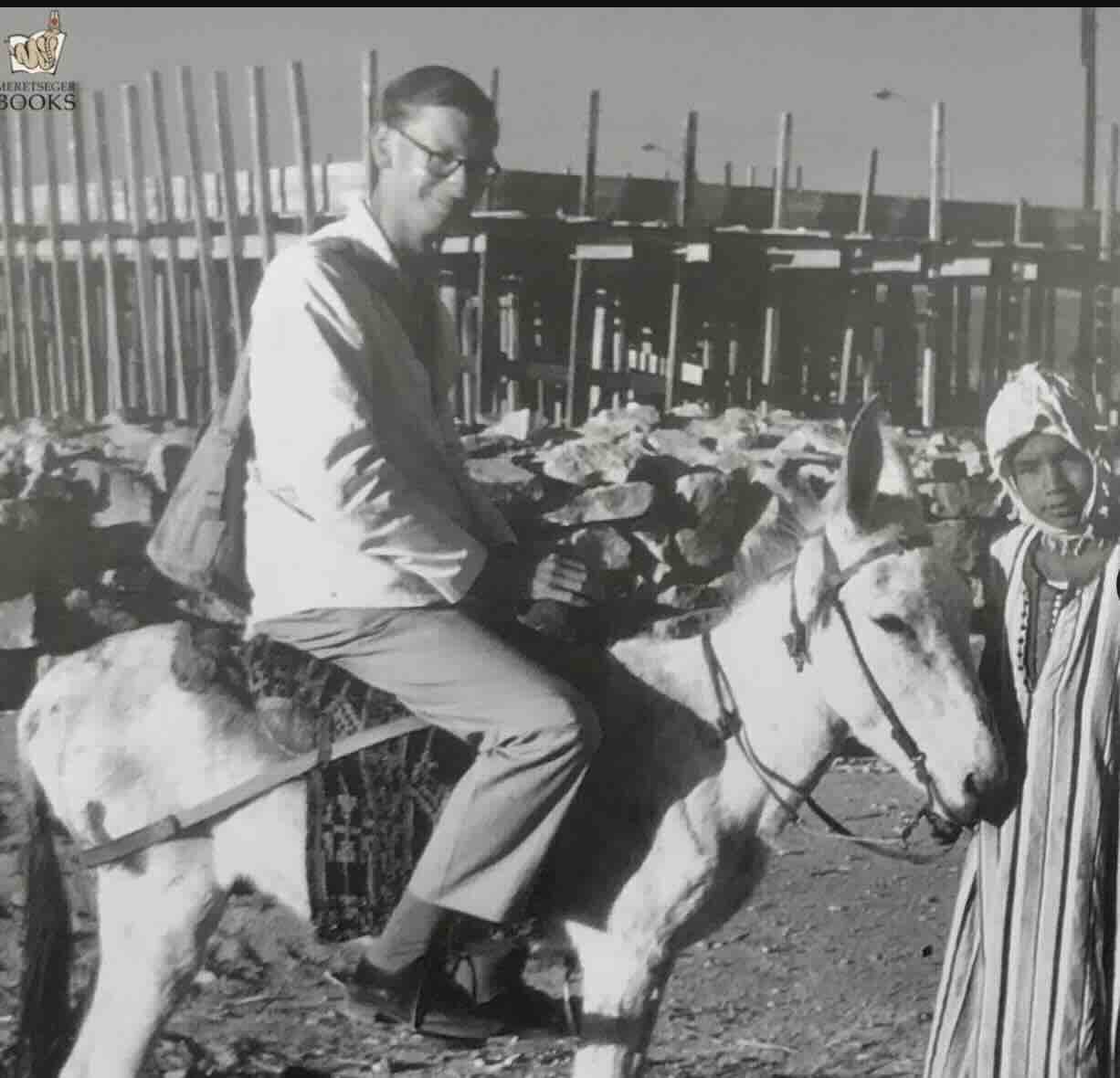
I just read today that one of the world’s most recognized Egyptologists, Kenneth Kitchen, died Thursday, February 6, 2025, at age 93. Kitchen was an idiosyncratic legend, an archaeologist who studied the Ancient Near East, specializing in ancient Egyptian history, and who upheld the Old Testament as a reliable source for understanding the history of the ancient world. In my mind, he was the “real Indiana Jones.”
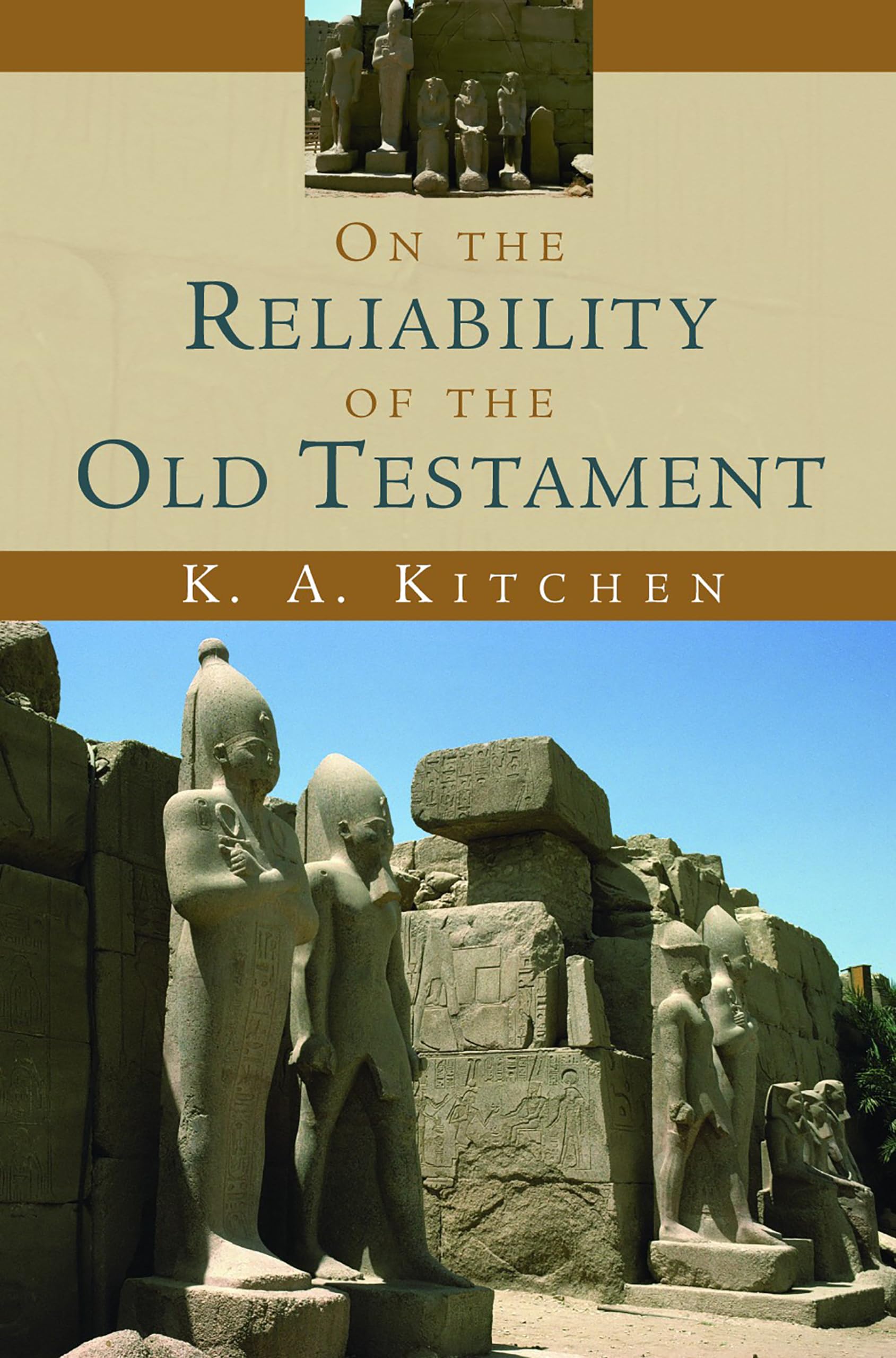
Few today would be dazzled by Kitchen’s study on The Third Intermediate Period in Egypt. But for the Christian interested in the intersection between the Bible and archaeology, his 2003 erudite defense of the Bible, On the Reliability of the Old Testament, stands squarely in the maximalist tradition, affirming the historicity of the Exodus and the biblical Patriarchs. I read his book almost twenty years ago and was blown away by the breadth and depth of his scholarship.
While many scholars today tend to be skeptical of the story of Moses and the flight of Israel out of Egypt, spending forty years wandering the Sinai desert, Kenneth Kitchen was resolute in marshaling detailed evidence to support the testimony of the Bible. Kitchen was careful not to say that the biblical stories of the Patriarchs could be “proved” by the archaeological record, but he likewise stressed that archaeology has not “disproved” this history as presented in the Bible either.
Kenneth A. Kitchen’s On the Reliability of the Old Testament is a modern classic defending the historicity of the Old Testament. Kitchen begins with the most recent period in Israelite history, working his way backwards towards the earliest Patriarchs, showing that figures like Moses and Abraham line up with what we read in the archaeological record.
Born in Scotland, the life-long bachelor Kitchen was a contrarian in several ways, and not afraid of being combative in his research. Not only did he take on minimalist colleagues, such as Ronald Hendel, who concluded that the historical Moses was a fictional product of Israelite imagination at least four or five centuries after the traditionally dated Exodus period, Kitchen was critical of even conservative Old Testament scholars for not reading the text carefully enough. He rejected the traditional, early date for the Exodus, in the mid 15th century BCE, around the year 1446, while Amenhotep I, Thutmose I, or Thutmose III served as Pharaoh, an interpretation which has been based on a non-metaphorical reading of the years described in 1 Kings 6. Archaeologists like Bryant Wood continue to hold to this traditional view.
Instead, Kitchen favored a late date alternative, about 200 years later in the 13th century BCE, when Rameses II served as Pharaoh. Kitchen argued that the early date has lacked sufficient archaeological support. Instead, the city of Rameses in Egypt was known in the 13th century, corresponding to what has been read from Exodus 1:11, and that archaeological evidence for the destruction of Hazor in the 13th century matched what has been described by Joshua’s conquest of the Promised Land in Joshua 11:10-11.
Kitchen also chided Old Testament scholars who insisted that the large numbers associated with texts like the census in Numbers 1-2, following a non-metaphorical interpretation of such numbers, did not match the archaeological data, which has supported a smaller, yet still sizable group of Israelites wandering the Sinai wilderness for some 40 years.
Kitchen’s views even went against the idiosyncratic proposal by atheist and fellow Egyptologist David Rohl, who has argued that a new chronology for Egyptian history should be adopted, which pushes the possible date for the Exodus earlier than what the late date proposes. David Rohl’s innovative hypothesis has been popularized by Tim Mahoney’s Patterns of Evidence franchise of documentary filmmaking. Kitchen rejected this view as “100% nonsense.”
What helped to win me over to the late date for the Exodus was the argument regarding the location of the slave city near a residence for the Pharaoh. The ancient city of Thebes, located near modern day Luxor, Egypt, was the primary residence for the Pharaohs during the Late Bronze Age. However, we have evidence that in the 13th century the city of Rameses, thought to have been a residence of a Pharaoh of the same name, was located in the Nile delta area. Rameses was in the northeast region of Egypt not that far from the modern city of Cario, and was built by slaves living in a nearby slave city, Avaris.
The journey from that slave city to Rameses would have been less than a few hours by foot, which makes sense of the many meetings that Moses would have had with Pharaoh mentioned in the Book of Exodus. However, any look at the map shows that a journey from the Nile delta to Thebes took at least 6 days to walk, which makes the late-at-night journeys that Moses took from the slave city to Pharoah’s residence rather ludicrous. Unless the Hebrews had built some nuclear-powered speed boat for Moses to travel quickly up the Nile to visit Pharaoh in Thebes, it is hard to imagine how Moses could have made such a relatively quick visit in the middle of the night to Pharoah.
Advocates for an early date for the Exodus might respond by saying a 15th century Pharoah might have built a residence within close walking distance near the 15th century slave city or encampment, but that we simply do not have evidence for such a residence…. at least not yet. But why appeal to evidence we do not currently possess when we actually have evidence that supports a different date, and that still affirms the testimony of Scripture? In my mind, this is a case of having a bird in the hand is worth two in a bush. It is better to hold onto the evidence you already have than it is holding out for evidence which you may never find. Kitchen was that type of evidentialist who opted for the former.
What I did not know about Kitchen was just how idiosyncratic he really was. As Tyndale House scholar Peter J. Williams puts it:
His abode was a small three-bedroom terraced house, without central heating or any modern appliance. [Kitchen] was very proud that nothing was connected to the internet so there could be no possibility of a virus destroying his work…..
Ken Kitchen basically didn’t have a kitchen: it was a tiny box room. Ken lived all his life without a refrigerator. He had milk delivered fresh, and had no need for the complexities of unnecessary equipment. He lived in the utmost simplicity….
Despite his great learning, Ken Kitchen was a man of a deep and simple faith in Jesus Christ as his Saviour and Lord. Though he knew a lot, he was also humble and aware of his own fallibility and frailty. He would want us in remembering him to think of the One he served. As I think about Ken’s life, as a bachelor living a life of ascetic discipline and dedication to scholarship, I find myself challenged by his work ethic and his incredible focus, even as I recognise that Ken was one of a kind. We will not see the like of him again.
Actually, in his later years, Kitchen finally was forced to get a refrigerator after he contracted food poisoning. His doctor strongly advised him to a get refrigerator, for his own safety.





 Veracity