This blog is topical and devotional--we post whatever interests us, whenever. If you want to follow in an orderly fashion, please see our Kaqexeß page.
“The Bible says it, I believe it, that settles it.” Really?!
Many theologians and pastors strongly disagree. If there was such a thing as a fantasy theology team, my top (living) draft picks would include: Dick Woodward, William Lane Craig, Hugh Ross, Ravi Zacharias, Matt Slick, Tim Keller, John Yates, Michael Card, Ray Vander Laan, Andy Stanley, Lee Strobel—and Daniel Wallace.
Here’s a slightly irreverent, very funny, and spot-on lecture by Dr. Wallace given at Dallas Theological Seminary about the “worst Christian slogan ever concocted” (my apologies in advance to people from Arkansas).
Seriously, how much research is there to corroborate Dr. Wallace’s observations and conclusions? How reliable are the Bibles we have today?
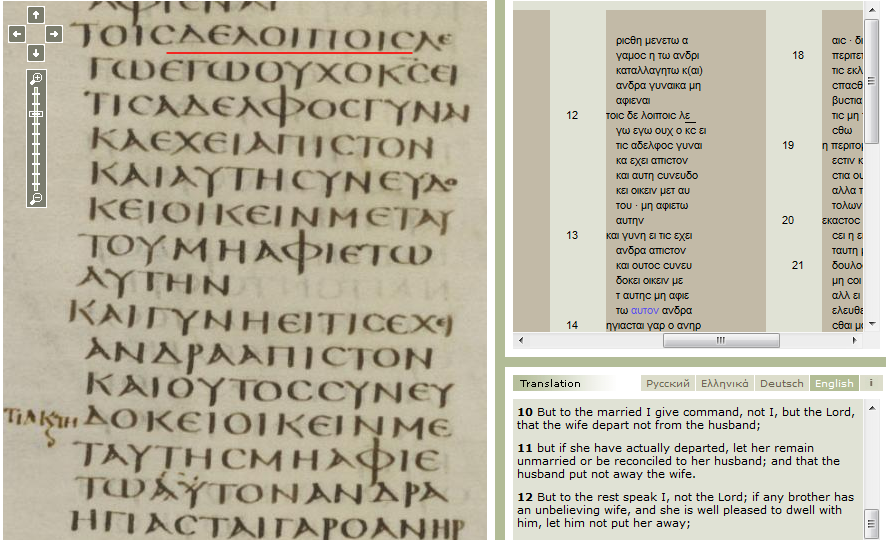
Scripture contains some amazing context clues that point to its trustworthiness. For example, consider the Apostle Paul’s words in his letter to the Corinthians:
To the married I give this charge (not I, but the Lord): the wife should not separate from her husband (but if she does, she should remain unmarried or else be reconciled to her husband), and the husband should not divorce his wife. To the rest I say (I, not the Lord) that if any brother has a wife who is an unbeliever, and she consents to live with him, he should not divorce her.
1 Corinthians 7:10-12 (ESV)
Paul makes a point of stating that verse 10 is from the Lord. But in the very next statement (verse 12) Paul writes, “I just want to add my thoughts here.” He makes it completely clear that these are not God’s words verbatim. This does not imply that Paul’s words should be deprecated or discredited in any way—quite the opposite. Paul was careful to differentiate that which was directly from God and that which was from Paul. Not exactly the approach of someone who is making things up or playing loose with the facts, is it?
This is not a post about divorce. Divorce has to be considered in the context of what Jesus said in the Sermon on the Mount, and Paul’s words here and elsewhere have to be read in context. But what is particularly exciting is the nature of Scripture that is revealed in these verses. Continue reading
According to a recent study, 80 percent of Americans never doubt the existence of God. No surprise really; there are many powerful arguments to support theism. The simplest arguments for God’s existence—and some of the most effective—involve the fine tuning we observe all around us. Nature gives us innumerable reasons to believe.
It’s no accident that gazing up into the firmament inspires awe for our Creator. Our Creator intended that it should. God clearly reveals himself in the world around us. Continue reading
It’s just not in our nature to accept losing. We hate to lose. But there are worse things that can happen. One of the pastors in the video below has a uniquely refreshing perspective on what really matters—and on being blessed for obedience.
My son, do not forget my teaching, but keep my commands in your heart, for they will prolong your life many years and bring you prosperity. Let love and faithfulness never leave you; bind them around your neck, write them on the tablet of your heart. Then you will win favor and a good name in the sight of God and man. Trust in the LORD with all your heart and lean not on your own understanding; in all your ways acknowledge him, and he will make your paths straight.
Proverbs 3:1-6 (NIV)
Here’s a follow-up to our previous Chi Rho post. (Don’t miss the comments at the end.)
The resurrection of Jesus is the basis for the Christian faith. No resurrection, no Christian faith—it’s that simple according to the Apostle Paul, who wrote half the New Testament. But how well does the resurrection stand up to historical scrutiny?
The Gospel accounts of Jesus’ burial and resurrection are found in:
Here’s a presentation on the historical reliability of these accounts by Dr. William Lane Craig, in which he uses analytic philosophy to get at the truth of the resurrection. If this sounds a bit intellectually over the top, check out our recent Apologetics 101 post where he explains the process—using logic, clear definition, and the careful enunciation of arguments, with an emphasis on the derivations of conclusions from premises. It’s a lengthy video, packed full of sound reasoning, and well worth the time it takes to watch.
Backstory
So how did William Lane Craig, one of the greatest deep thinkers of our time, come to faith in Christ? It must have been in response to the writings of someone like C.S. Lewis or Søren Kierkegaard, right? Maybe he read classical theologians like Augustine of Hippo, or reformists like Martin Luther, John Calvin, or Thomas Aquinas? Or maybe he read the Bible and found some special truth that appealed to his intellect?
Here’s Dr. Craig’s surprising answer (you just can’t make this stuff up).
He was “hit like a ton of bricks” by an annoyingly happy girl named Sandy. Go figure.






 Veracity