Author Archives: Clarke Morledge

About Clarke Morledge

Unknown's avatar
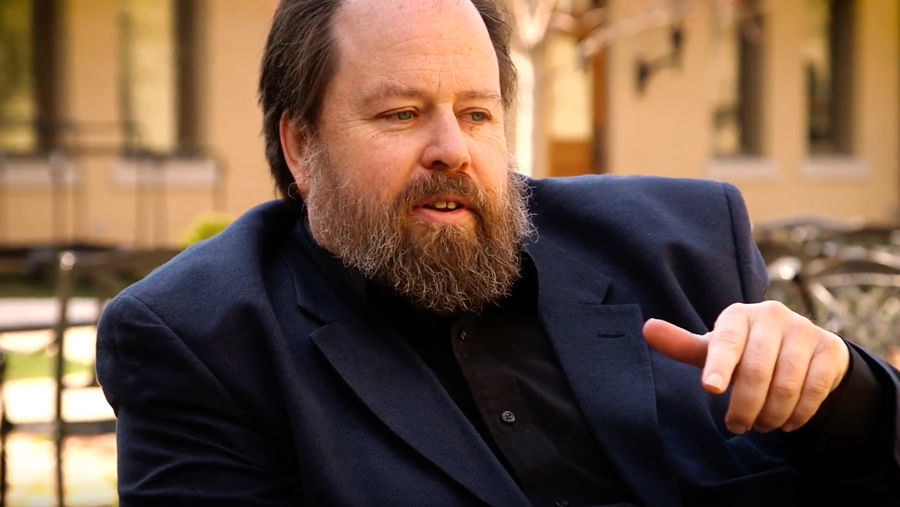
Clarke Morledge -- Computer Network Engineer, College of William and Mary... I hiked the Mount of the Holy Cross, one of the famous Colorado Fourteeners, with some friends in July, 2012. My buddy, Mike Scott, snapped this photo of me on the summit.

Do We Still Have Apostles Today, in the Church?

Did the gift of “apostleship” cease by the end 1st century? The answer is yes… and no. But I need to unpack this to explain.

We know that there were apostles running around the Roman Empire, during the 1st century, when the New Testament was written. Folks like the Apostle Paul, the Apostle Peter, and the Apostle James come to mind, right away. But what about today? Are there still apostles? Well, it all comes down to what the New Testament means by the term “apostle.”

“Apostles” versus “apostles”??

The Greek word apostolos is used a number of times within the New Testament. The term generally means “one sent as a messenger.”  This more generic sense of “messenger,” “representative,” or “envoy” is found in 2 Corinthians 8:23. But it also has a more specific sense, that of being one of the divinely appointed founders of the Christian church. That latter, more specific sense, most probably refers to those who had seen the Risen Christ, and who were charged by Jesus Himself to authoritatively articulate the message of the Gospel, to that first century world. Think of the original twelve disciples, minus Judas (Acts 1:2, 1:26), as well as Paul, based on his encounter with the Risen Jesus, on the road to Damascus.

A lot of Christians are very leery about acknowledging the presence of “apostles” in 21st century Christianity, and for a very good reason. The “big” apostles, like Paul, Peter, and James were accepted as being authorized to write the books of the New Testament. Only such apostles, or those who lived within that early apostolic circle, were recognized as legitimate writers of Holy Scripture. For example, Mark was not among the group of the named “big” apostles, but he knew Peter, who is the primary source for how we got the Gospel of Mark. Likewise, Luke moved around in that same, original apostolic circle, and thereby wrote the Gospel that bears his name, as well as Acts.

But we do not have writers of Scripture today. Contrary to what folks like the Mormons believe, there is no case to be made that there are to be any extra revealed books of the Bible, aside from what we already have in the Old and New Testaments. So, when you hear about movements like the New Apostolic Reformation, or other movements, commonly associated with some varieties of Pentecostalism, most evangelical Christians today are correct to cast a skeptical eye on such claims of apostleship. In this sense, there are no, capital “A” Apostles running around our churches today.

There are cases where Paul gives us some examples of capital “A” Apostles in the early church. For example, he includes himself in 1 Corinthians 15:9. There is also James, the brother of Jesus, who is called an apostle in Galatians 1:19, who was also the leader of the church in Jerusalem, and the author of one our books in the New Testament.

However, the New Testament does indicate that there were others in New Testament, who were described as apostles, but who lack that special sense of designated authority. For example, the Apostle Paul had several traveling companions or co-workers who were called “apostles,” either explicitly, or perhaps implied. Barnabas is explicitly mentioned as being one (Acts 14:14). Then there is Epaphroditus, who is called a “messenger” in Philippians 2:25, which is the same Greek word for “apostle.” Likewise, there are those like Apollos, Silas, and Timothy who served right alongside Paul in his ministry.

Yet we have no reason to believe any of these Christians ever had a post-Resurrection encounter with Jesus, in the same manner like Paul or Peter did. Then we have the case of a notable woman, Junia, who was considered “outstanding among the apostles” (Romans 16:7 NIV), according to Paul. Paul even names two other women Euodia and Syntyche, as co-workers, contending along Paul’s side, “in the cause of the Gospel” (Philippians 4:2-3). So, were all of these people, men and women alike, apostles?

At the very least, you could say that all of these co-workers of Paul, male and female, were what we would call today “church-planters,” which is consistent with the practice continued today, by many churches, to “send out” missionaries to go plant churches, as “messengers” of the Gospel, which is consistent with how the New Testament uses that Greek term, apostolos. In other words, they were little-a “apostles,” as opposed to being big-A “Apostles,” like Paul.

The argument from Scripture, therefore, indicates that we no longer have big-A “Apostles” today in the church. However, this should not be construed to rule out the existence of small-a “apostles.”

Surely, some will be concerned that the line between Apostle and apostle could become blurred, some twenty centuries after the New Testament was written. No one can write Scripture today. No one can supersede folks like the Apostle Paul, and claim the mantle of their authority. But most Christians I know surely acknowledge the presence of many, many gifted church planters today, who have been sent out as messengers, for the sake of spreading the Gospel, just as you read about them in the New Testament.

Simply put, you can not plant churches without church planters. Church planters exercise the gift of being “apostles,” in that they are sent out by Christian communities as messengers of the Gospel.

Therefore, some might feel more comfortable with speaking of such “lower case a” apostles as being “church planters” instead, in order to avoid confusion. In my mind, that is just quibbling with words, but I get the point. A distinction needs to be made. So be it. If refusing to call anyone today an “apostle” causes you grief, then go right ahead and come up with your own word. But the principle should be clear. In addition to the heavyweights, like Paul and Peter, the church of the New Testament had “lower case a” apostles, who were sent out to plant churches, built on the message of the Gospel. We still have those in that second category of “apostles” today.

Insight Into Yet Another, Thorny Issue That Divides the Church?

As a parallel, this distinction might help those who struggle with the whole question of having women preach or teach, in the local church. Many understand the Apostle Paul to say that women should not serve as teachers in the church, particularly where there are men present, according to 1 Timothy 2:12. Paul goes on to explain what he means by this in 1 Timothy 3, in describing the qualification for “overseers,” whom Paul calls “elders” in Acts 20.

But this directive of Paul’s should also be considered along with yet another directive of Paul, whereby men and women are to teach and admonish one another, in the local church, according to Colossians 3:16. In Colossians, Paul is specifically addressing his message to both men and women, and there is nothing that indicates that this message was limited to that particular church, in that particular time (Colossians 3:15-19). That all believers, including men and women, are encouraged to teach one another, is an idea that has universal scope and application.

The first type of “Teaching,” commonly associated with the authority of elders, or overseers, refers to the work of guarding against the infiltration of false doctrine, into the local church. This ties into the concept of “big-A” Apostleship, as the primary task of “big-T” Teachers ; that is, the elders of the church, is to make sure that the doctrine being propagated in the local church is in alignment with what was laid down by those first century “big-A” Apostles, who are responsible for our New Testament. As I have argued elsewhere, I would call this big-T “Teaching.”

The second type of “teaching,” such as is in the leading of Bible studies, giving an exhortation in a corporate worship service, under the supervision of the elders of the church, does not necessarily bear with it the sense of authority, generally attributed to elders. But it does recognize that there are specific gifts of teaching, that the Holy Spirit can give to men and women, that can be used under the oversight function of local church elders.

Some may object to the language of calling women as “teachers,” preferring other language such as calling women as “preachers.” But even the notion of women “preaching” might be too much for some. Others would prefer the terminology of the “passing on of information,” just as the Lord Jesus gave Mary Magdalene information to pass onto the male disciples, after the Resurrection. But despite whatever terminology is preferred, the principle remains the same, that both big-T “Teaching” and little-t “teaching” are part of every growing community of believers today.

Granted, this is a controversial idea for many in our #MeToo era, who bristle at even the thought of discrimination against women, when it comes to the office of elder and/or pastor in a local church. On the other side, many other Christians believe such little-t “teaching” can only be appropriate in an occasional or informal setting, and rarely, if ever, from a pulpit, or even an ongoing, adult Sunday school class, where men and women are both present.

Many evangelical Christians are divided over such issues.1  I would be hopelessly foolish to insist on being dogmatic. At the same time, it grieves me to think how we are quickly dividing the Body of Christ, when there is a modest, moderating alternative to the crisis of how churches should be governed, in evangelical circles.

Here I am suggesting a possible third-way through this impasse. It might be helpful to draw this parallel together, as I have done here, of contrasting big-A “Apostles” and little-a “apostles,” along with big-T “teaching” and little-t “teaching,” to give us a more thoughtful understanding of how we can see the gifts of apostleship and teaching at work today, in the contemporary church.2

Notes:

1. Southern California pastor John MacArthur set off a firestorm of criticism in October, 2019, at a conference, where he was asked to give a one or two word response to the name “Beth Moore,” a popular women’s Bible study teacher, in the Southern Baptist convention. He recommended that Beth Moore “go home,” which lit up the world of evangelical Twitter on fire. Pastor MacArthur explains his views here, in a sermon delivered shortly after the flair up.  MacArthur’s biggest exegetical error in this sermon, starting at the 54:23 mark, is by treating the topic of women praying and prophesying, 1 Corinthians 11:2-16, as NOT applicable to the context public, corporate worship, whereas Paul’s teaching later in the same letter, that “women are to remain silent,” in 1 Corinthians 14:34-35, is clearly applicable to the context of public corporate worship. The problem is that BOTH passages refer to the corporate worship life of the church, whether we like that or not, and we must deal with this tension accordingly. In 1 Corinthians 11:16, Paul declares that the orderly praying and prophesying by women IS within the context of public, corporate worship. To go against this is contrary to church practice. “If anyone is inclined to be contentious, we have no such practice, nor do the churches of God.”  The “churches” here, is from the Greek ekklesia, which specifically means the “assembly.” Nevertheless, like the perennial topic that persists and persists, and never goes away, there have been those on the other side of this, like on egalitarian theologian Scot McKnight’s Jesus Creed blog, who are greatly aggravated by MacArthur’s statements. Equally, on the more rigid complementarian side, bloggers like Grayson Gilbert have come to MacArthur’s defense.  A more, measured video response by International House of Prayer leader, Mike Bickle, can be found here. (For a slightly different view, that suggests that a complementarian can affirm women as a “pastor,” and not an “elder,” read Sam Storms here). On the other hand, I appreciate the more thoughtful, irenic dialogue between two different complementarian voices, Kevin DeYoung and John Dickson, regarding the topic of “women preaching.” The practice of those, like Tim Challies, who only allows men to read Scripture publicly in church, seems really over the top to me, and without sufficient grounding in the Bible. But other areas are more dicey, and less certain. My own response to those like Kevin DeYoung, who would not allow for women to lead adult Sunday school classes, on a regular basis, where men and women are present, even operating under the oversight of an all-male eldership, is for those who might be troubled by such practice can simply refrain from attending that particular Sunday school class, and attend a different class, assuming one is available. My main concern is that Christians should not interfere with the consciences with other believers, who hold to “disputable matters” that have brought about unnecessary division within our churches. The last thing we need is for yet another reason for churches to needlessly split, with egalitarian Christians on one side, and complementarian Christians on the other, or even a third-split, with yet moderate complementarians dividing from more extreme complementarians. Enough already!! We need to balance out the concerns of those who fear the increase of worldly feminism into our churches, while acknowledging the giftedness of women, as also taught in Scripture. For those interested in a more in-depth look at the “women in ministry” issue, see my 19-part blog post series, beginning with this post

2. I greatly appreciate the measured, irenic work of London-based pastor Andrew Wilson on the topic of “Apostles” versus “apostles”(see here and here). Wilson is thoughtfully consistent, principled, without being needlessly rigid, and fully rooted in God’s Word.  


Dois Rosser, Founder of ICM, Moves Onto Glory

Dois I. Rosser Jr., the 98-year-old founder of International Cooperating Ministries, died yesterday (November 12, 2019).

It was a unique partnership. Dois Rosser was a businessman, a Hampton Roads car dealer, when he met Dick Woodwood, pastor emeritus of my church. Dick was teaching at a men’s Bible breakfast, making the Bible accessible to many people in our local community, and Dois Rosser listened intently as Dick teached the Bible, week after week. Dois encouraged Dick to assemble his teachings into something called the Mini Bible College, and the teachings of the Mini Bible College were shared across the globe, via Trans World Radio.

Dois Rosser soon learned that many of Dick’s worldwide listeners did not have a church building to meet in. So, in 1986 Dois founded International Cooperating Ministries, whose purpose was and still is to help churches, grounded in the teachings of the Mini Bible College, to build church meeting places, within walking distances of their homes. By 2019, over 8,000 churches have been built, or are under construction, in nearly 90 countries, while the Mini Bible College has been translated into 56 different languages.

Dois Rosser’s wife, Shirley, died approximately one month before her husband. Learn more about Dois I. Rosser, Jr. here. Learn more about the ministry of International Cooperating Ministries here. The Mini Bible College lessons are available now on YouTube, with Dick sporting those 1970’s sideburns still into the 1980s. Classic stuff!


Intelligently Designed: Phillip E. Johnson

I had the privilege of joining the University of Berkeley legal scholar, Phillip E. Johnson, for dinner with some friends, several years ago, before he gave a lecture at our church on Intelligent Design. Johnson, who wrote the 1991 landmark book, Darwin on Trial, died in early November, 2019. Professor Johnson, a gracious and kind gentleman, nevertheless puzzled me. Why would Johnson, as a lawyer, spend so much of his intellectual energy, challenging Charles Darwin’s theory of biological evolution? Why would a lawyer bother with biological science?

Johnson had a been a successful legal scholar, rising to the top level of his career, when in his 30’s, his life began to fall apart. His marriage failed, and he felt like he was going nowhere in his academic career. He then became a Christian, he remarried, and he gradually decided to invest his life in something more, something that really mattered.

When he read Richard Dawkins’ The Blind Watchmaker, he was baffled by the logical argumentation employed by Dawkins’ all-encompassing evolutionary worldview. Johnson then made it his mission to understand and expose Dawkins’ logical flaws. In many ways, Phillip E. Johnson was the “godfather” of the contemporary Intelligent Design movement, reinvigorating the late 18th century (early 19th century) Christian apologetics of the British clergyman, William Paley, who first articulated the watchmaker analogy, promoting intelligent design.

By observing the behavior of the Ichneumonidae group of parasitoid wasps, that devour their hosts alive from the inside out, Charles Darwin had rejected William Paley’s argument: “I cannot persuade myself that a beneficent and omnipotent God would have designedly created the Ichneumonidae with the express intention of their feeding within the living bodies of caterpillars.” Darwin was most well-known for his Origin of Species, but he also extended his arguments in works like his The Descent of Man, suggesting that evolution was an “unguided” and “undirected” process.

Johnson believed that the “unguided” and “undirected” elements of Darwin’s theory had horrific implications that extended beyond the domain of biology. The “purpose-less-ness” advocated by modern defenders of Darwin, like Richard Dawkins, tore at the very fabric of Judeo-Christian culture. Johnson marshaled his legal training against Darwin, combatting against the pro-Darwinian trends within academia.

Johnson’s counter-arguments to Darwin gained sympathy among a growing cadre of intellectuals, including Christians like Michael Behe and Stephen Myers, and many non-Christians as well, including Jonathan Wells, a member of the Unification Church (the Moonies). This eventually encouraged the growth of the Discovery Institute, a think-tank dedicated towards refuting Darwinian evolution. In this sense, Phillip E. Johnson’s “Intelligent Design” movement is not specifically a Christian, biblically-based movement. Technically speaking, the “designer” in “Intelligent Design” need not be the God of the Bible. It could even be some super-intelligent life-form, from the reaches of outer space. Rather, “Intelligent Design” is but one apologetic strategy, that has been used by at least some Christians to defend a Christian, biblical worldview. Yet in many ways, Johnson’s broadly argued case for “Intelligent Design” has been a rallying point, a unifying effort to break the impasse that divides Young Earth Creationists and Old Earth Creationists.

Nevertheless, Johnson’s critique against Charles Darwin has been very controversial, even within the church. For one thing, even atheistic scientists concede that there are a number of elements of Darwin’s theory of evolution that are no longer accepted within the larger scientific community. For example, Darwin knew nothing about genetics. We have Austrian monk Gregor Mendel to thank for giving us the contemporary scientific consensus as to how genes actually work… NOT Darwin.

But among Christians, the controversy over Johnson’s work centers around the definition of that slippery word, “evolution.” By “evolution,” does one actually mean “micro-evolution,” whereby small changes within species happens? Or does one mean “macro-evolution,” with large scale biological changes among plants and animals? What is meant by “directed” or “undirected” evolution?

Most Christians are willing to concede the principle of “micro-evolution.” Yet even the most ardent Young-Earth Creationist will argue that “macro-evolution,” at the level of biological families (though NOT beyond that!), indeed did happen, in a highly accelerated manner, after the global flood of Noah, as a means of explaining the extraordinary biological diversity we see today. Proponents of “Intelligent Design” have fashioned themselves as opponents of “theistic evolution,” despite the claim that Michael Behe, one of “Intelligent Design’s” greatest advocates, is actually a “theistic evolutionist” himself! Christians are all over the map when it comes to defining what they mean by “evolution.”

Phillip Johnson’s efforts to see the Intelligent Design movement expand more into popular education stalled in 2005, when a judge in a Pennsylvania federal court, against the Dover School District, ruled that the teaching of “Intelligent Design” violated the Establishment Clause of the First Amendment to the U.S. Constitution.  But “Intelligent Design” still lives on, as a vital intellectual force, as evidenced by the popularity of such films as Ben Stein’s “Expelled: No Intelligence Allowed.”

Phillip Johnson’s arguments for “Intelligent Design” will surely survive his death. How well they will convince those living in the next generation yet remains to be seen. The larger consensus among academic scientists still rejects “Intelligent Design” as pseudo-science. Some theologians, who possess scientific training, such as Oxford’s Alister McGrath, are concerned that “Intelligent Design” leaves Christian apologetics vulnerable to a type of “God of the Gaps” theology, that does not adequately serve as the best way to defend the Christian faith. Nevertheless, best-selling books by Intelligent Design advocates, such as Stephen C. Myers, continue to be enthusiastically read. All the while, many Young Earth Creationists regard “Intelligent Design” as a halfway attempt to uphold Christianity, that does not go far enough in defending the Bible. I still have lingering questions myself, following my dinner with Phillip E. Johnson, some years ago. Nevertheless, the legacy of Phillip E. Johnson will continue to give many a lot to think about, for years to come.


His Dark Materials: The Seductive Power of Atheist Children’s Novels

I was greeted this morning by an ad for tonight’s premiere on HBO and AmazonPrime of Philip Pullman’s His Dark Materials. Adapted to film by the BBC from his series of childrens novels, His Dark Materials presents a fantasy world, just as captivating as J.K. Rowling’s Harry Potter and C.S. Lewis’ Chronicles of Narnia.

The symbolism evoked by Pullman’s “Magisterium,” the evil antagonistic empire, that the 12-year heroine, Lyra, must contend against, is meant to represent the Roman Catholic Church. But evangelical Protestants should not be too smug in Pullman’s denunciation of Rome as tyrannical. Mark my word, His Dark Materials is targeted as an attack on a Christian worldview, as a whole.

Soon after Pullman finished writing these children novels in 2003, he marveled at just how little criticism he received, in comparison to the scrutiny of J.K. Rowling’s novels. Pullman states, “Harry Potter’s been taking all the flak…. Meanwhile, I’ve been flying under the radar, saying things that are far more subversive than anything poor old Harry has said. My books are about killing God.”

Pullman does not hide the fact that His Dark Materials is meant to convey a world that is completely opposed to the Christian world of C.S. Lewis’ Narnia. Pullman has publicly characterized Lewis’ Narnia series as “blatantly racist,” “monumentally disparaging of women, “immoral,” and “evil.”  Yet some Christians have been generous in considering His Dark Materials as more of a critique of religious dogmatism, and less of a full-throttled subversion of Christianity, properly understood. Furthermore, while some readers of Lewis have at times accused the Chronicles of Narnia as being “preachy,” it could equally be said that His Dark Materials is just as “preachy,” if not more so, in promoting atheism.

Rumor has it that HBO/BBC’s His Dark Materials intends to remove the most objectionable parts of the story, that admittedly sank the 2007 movie, that first tried to bring Pullman’s novels to film. But no matter how well viewers will take to the new film series, His Dark Materials will most probably generate a lot of interest. Pullman is an engaging and exceptional writer, even if the message is deeply flawed, according to Christian literary scholar, Alan Jacobs. Christians should be prepared to think through how they should respond, when a new generation of young, children readers begin to consume Philip Pullman’s books.

Here is Christianity Today’s take on His Dark Materials.


When A Theologian Goes Rogue: David Bentley Hart’s Universalism

David Bentley Hart is one those theological minds that I have hesitated to dive into deeply.

It is not as though he is not erudite (which he is), nor that he is not polemical in the most insightful way (which he also is). It is because he is so well knowledgeable and so marvelously incisive that I think it almost impossible to explain the penetrating power of his intellect to the average evangelical lay person. Why waste all of the effort? Let the academics have at him, and leave the rest of us mere mortals alone. But alas, Hart’s latest book is extremely difficult to ignore. So this is fair warning that this blog post will sound quite dense and geeky. Here we go….

An Eastern Orthodox theologian, currently teaching at Notre Dame, after having picked up a doctorate of philosophy from the University of Virginia, along the way, David Bentley Hart is probably best known for his devastating critique of the New Atheism, of Dawkins, Harris, Bennett, and Hitchens, in his Atheist Delusions: The Christian Revolution and Its Fashionable Enemies

David Bentley Hart. Astute critic of the New Atheism, who has now tasted the confusing allure of universalism, and amazingly finds it satisfying.

Long time Veracity readers will know that I greatly benefit from the pithy, enjoyable, and learned blogs posts by Reformed charismatic pastor, Andrew Wilson, of Kings Church of London, England, at the Think blog. Just about anything Andrew writes about, I try to read. He is that good. Andrew got his blogging start working his way through Hart’s Atheist Delusions back in 2011, which offers an excellent summary of the high points of Hart’s argument (#1, #2, #3, #4, #5, #6, #7, #8, #9, plus a follow up essay, #10). Andrew’s blogs are a good place to start to get a taste of what David Bentley Hart is like.

But while Hart has served as a masterful champion of demolishing the New Atheism, in service to the greater Christian tradition, Hart has also applied his rhetorical, polemical skills against fellow Christian thinkers he finds to be petty and annoying. He can be over the top in some respects, but his criticisms deserve thoughtful responses. For example, he dismisses the greater classic evangelical Reformed tradition, embodied most broadly by the folks at The Gospel Coalition, as hopelessly fundamentalist, who are most likely guilty as “moral cretins.” That is a bit harsh, but for some on the far side of hyper-Reformed thinking, Hart may not be too far off.

Hart’s bristling does not end there. I am convinced that David Bentley Hart utterly despises N.T. Wright. While Wright, a British Anglican, who is perhaps the most well known New Testament scholar living today, may have captivated an entire generation of millennials, in seminaries, over the past twenty years, Hart will have none of Wright’s “idiosyncratic” style of New Testament translation methodology. Along with other critics, Hart believes that N.T. Wright’s enthusiastic embrace of the so-called “New Perspective on Paul” has led Wright down the path of injecting a false dichotomy into Paul’s doctrine of justification, a core doctrine in New Testament thought. Sample just this biting, scathing sentence from Hart’s rejoinder to an earlier critique by Wright, regarding one another’s work in doing New Testament Bible translation:

Regarding, for example, [Wright’s] insistence on rendering “dikaiosyne” by the cumber­some phrase “covenant righteousness” (a special hobby-horse of Wright’s, which he takes out for a gallop around the paddock whenever he can), I would be only one among legions in pointing out that this arbitrarily isolates a single dimension of a term [within] a far larger range of possible meaning in the text.

Wright’s translation of the New Testament could hardly be any more different from D. B. Hart’s version of the same (which is why the committee approach to how the English Standard Version, the New International Version, and the Christian Standard Bible were able to produce such excellent work, inviting millions of Christians to feast on their presentations of God’s Word, is far superior than any translation done by a solitary scholar…. but I digress).

Nevertheless, it is Hart’s latest volume That All Shall Be Saved: Heaven, Hell and Universalism that has caused the greatest amount of controversy. Here, Hart has moved away from the very center of Christian tradition, causing shockwaves among today’s theological intelligentsia.

Hart’s thesis here is built on the speculative work of the 4th century Cappadocian, early church father, Gregory of Nyssa, who advocated for a type of Christian universalism, that the doctrine of hell actually serves a more redemptive purpose, suggesting that, in the end, all humans will be saved. Unlike popular forms of universalism, that blithely claim that all humans bypass hell, Hart channels Gregory of Nyssa to say that, yes, there is indeed a hell, but its purpose is more like that of purgatory, a process after death whereby all sin is to be purged from every human, thereby ultimately resulting in everyone’s final reconciliation with God.

Now, before anyone gets too suspicious about Gregory of Nyssa, it should be noted that Gregory of Nyssa was mostly known for other teachings, that most Christians take for granted today. For example, among the early church fathers, Gregory of Nyssa was singularly outspoken in his belief that Christianity and the practice of slavery were incompatible with one another, in an age when slavery was an established norm in Greco-Roman society. Gregory of Nyssa was also one of the greatest champions of the doctrine of the Trinity. But when it came to universalism, Gregory of Nyssa speculated on certain ideas that later writers, such as David Bentley Hart, have taken and run with.

Contrary to a type of “hopeful universalism” of the 20th century Swiss theological, Karl Barth, that maintains that God’s ultimate purpose of saving “everyone” be held out as a theological possibility, with a number of caveats, David Bentley Hart takes a bolder approach. As St. Louis University theologian, and historical scholar of universalism, Michael McClymond, put it, Hart’s latest work casts aside the tentativeness of a “hopeful universalism” in favor of assertiveness. To think that God “might” save everyone in the end, as a type of optimism, while at the same time soberly recognizing an utterly just and final punishment of a hell, that can not be ignored, is something too weak for Hart to counsel.

Alas, defenders of Hart believe that Hart continues to be greatly misunderstood. Yet McGill University’s Douglas Farrow believes he understands Hart all too well, laying out his concerns in the pages of First Things, a (mostly) Roman Catholic think-tank journal:

David Bentley Hart, familiar to readers of these pages as an intellectual pugilist who floats like a butterfly and stings like a bee, has entered the ring for the Big Fight. Armed with his recent translation of the New Testament, he is ready to prove that no one suffers eternal damnation. Almost the entire Western tradition, backed by much of the East, is in the other corner. In his corner are fellow followers of Origen, the evangelical universalists, and a motley crew of sparring partners from the gyms where he has trained. As he approaches the ring, he strikes a Luther-like pose. Of course he wants nothing whatever to do with Luther, or any other product of the Augustinian stable. But he will stand where he must stand; he can do no other. The Church has backed the wrong man. She is about to be taught a lesson.

The man in question is Augustine, the bête noire of universalists everywhere. He wears the black trunks. Hart is in the white trunks, standing in for Gregory of Nyssa, the man the Church ought to have backed and didn’t…..

Other theologians have taken notice, and have weighed in. Peter Leithart, a featured blogger at First Things, wrote a partial review of That All Shall Be Saved, that Hart considered to be at least faithful to critiquing what Hart actually wrote. Nevertheless, Hart still found Leithart’s critique to be wholly lacking. Leithart, in return, offers a rejoinder to Hart’s response. Fellow Eastern Orthodox theologian, John Mark Reynolds, wishes to disown Hart from Eastern Orthodoxy. Others, acknowledging the puzzling depth of Hart’s thought, like Nicholas Frankovich, at the National Review, watches the sparks fly. Quirky-evangelical contrarian and blogger, Andrew Perriman, is intrigued by Hart’s argument, though not entirely convinced. The debate goes on. If you like spirited dialogue among academic theologians, it does not get any more exciting than this.

Pastor Andrew Wilson, mentioned above, who has greatly appreciated Hart’s previous works, regrettably describes Hart’s latest book as “Trump with a thesaurus.

It is as though David Bentley Hart completely slept through the controversy a few years ago, surrounding former megachurch pastor Rob Bell, when he wrote Love Wins. In Love Wins, Bell hinted at but never came out and explicitly endorsed universalism, as much as Hart does in That All Shall Be Saved. But Bell pretty much had to quit his megachurch pastor job in Michigan, to take up his surfboard in Southern California, and occasionally traveling across country for various book tours. Preaching universalism in an evangelical church can not pay the bills, for any pastor. Evangelical pastors who flirt too much with universalism should consider a new career. Hart admits that he is not a pastor, which makes me wonder how in the world anyone could ever preach his message, in any evangelical church, and survive past a single sermon!

The once brilliant theologian Hart has now gone rogue, reframing a theological argument that got the early church father Origen, for all practical purposes, branded as a heretic, at least regarding his views on the doctrine of hell. The conscious eternal torment view, embraced by a majority of Christians (though not all), through Christian history, is to be rejected by Hart, as being ultimately “unChristian.” Apparently, according to Hart, this great majority of Christian believers, across the centuries, never got the memo.

Furthermore, though viewed by many as suspect, in a less obtrusive manner, the conditional immortality, or annihilationalist, approach to hell, as offered by thinkers like John R.W. Stott and Edward Fudge, is left off the table as a viable alternative to either the traditional conscious eternal torment view, or a universalist view, for Hart. No, David Bentley Hart will have none of that. Hart has planted his flag firmly in this universalist camp. Hart is now placed in the column marked “beware.” A theologian of David Bentley Hart’s stature and intellectual talents can not be ignored. But his thesis in That All Shall Be Saved makes him highly suspect, a good example of what NOT to do, when doing theology.

What is most disturbing about Hart’s thesis is that he pretty much accepts the New Atheist complaint about the Old Testament at face value. For the New Atheist, the God of the Old Testament is capricious, unjust, and vindictive, and therefore, not morally worthy of being God. This is not an aberrant view, but rather an all-too-common criticism among learned, skeptical readers of the Bible today. A quick glance at EvilBible.com shows just how pervasive this New Atheist complaint has reached into our culture.

Consider the great flood of Noah. As much of traditional interpretation indicates, Genesis would have us to think that the vast majority of humans perished in that catastrophic event, a sign indicating that God takes judgment against human rebellion quite seriously. Ah, but observers will point out, this would presumably include small children, and mothers, pregnant with child, who were among those who drowned in the rising sea of God’s judgment. To critics, this would be genocide, with divinely sanctioned abortion built-in.

Other Christian thinkers offer nuanced responses, to this interpretive quandary, looking at the story of Noah within a broader Scriptural context (for example, consider this brilliant alternative, more theologically modest and centrist perspective, advocated by Eastern Orthodox theologian, Father Stephen De Young). But it would appear that in Hart’s estimation, the matter is more black and white. Hart rejects the historicity of the Noah story, but he does so on a basis that concedes this New Atheist critique of Christianity: An Old Testament God who inflicts such vindictive violence must be a caricature of the one true God (if there is a such a God). If God does not save everyone, then God can save no one.

But the New Atheist secularizes Hart’s argument, agreeing with Hart, and concluding that, yes, God can save no one, as such a God can not be ultimately trusted. Dawkins, Hitchens, and others, can easily respond: Why even bother with universalism? Just get rid of the whole concept of hell altogether, and the whole notion of final judgment, and be done with the whole problem…. while you are it, save yourself the trouble and deny the existence of God.

David Bentley Hart has touched a nerve, and his thesis deserves a thoughtful response. Yet Hart’s critics rightly pin him into a corner. Hart’s fellow Eastern Orthodox theological colleagues are not impressed by Hart’s theological innovations. Sure, I would love to think that in the end, even the most hardened sinner will embrace Jesus as their Savior. But to embrace such a view, as Hart has done so wholeheartedly, is sadly merely wishful thinking.

Even Douglas Farrow concludes his review of Hart thus, “Hart makes clear in conclusion that if Christianity requires belief in eternal punishment, then Christianity is false. Which prompts from this reporter an unhappy observation. If he really believes that, then the New Atheists, to whom he gave a thorough thrashing in earlier books, should demand a rematch. This time they might well win, and that by default.