Author Archives: Clarke Morledge

About Clarke Morledge

Unknown's avatar
Clarke Morledge -- Computer Network Engineer, College of William and Mary... I hiked the Mount of the Holy Cross, one of the famous Colorado Fourteeners, with some friends in July, 2012. My buddy, Mike Scott, snapped this photo of me on the summit.

Why Do Some Evangelical Protestants Convert to Roman Catholicism OR Eastern Orthodoxy?

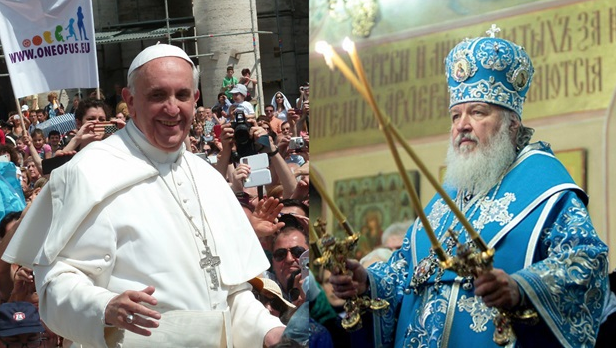
Roman Catholic Pope Francis and Russian Orthodox Patriarch Kirill made history in February, 2016, by meeting together, in an effort towards Christian reconciliation. (Photo credit: Edgar Jimenez / Flickr | Larry Koester / Flickr)

The vast majority of evangelical Protestants remain in such churches, once they become Christians. Also, quite a number of Roman Catholics and Eastern Orthodox convert and join evangelical Protestant churches, particularly if their faith was rather nominal to begin with.

But interestingly, some evangelical Protestants move in the opposite direction, and either join the Roman Catholic Church, or they join an Eastern Orthodox church.  So, why do some evangelicals bail out on Protestantism, to become members of these other churches?  When it comes to Roman Catholicism, is it not true that Protestants fought long and hard to try to reform Catholicism, only to find themselves outside of the church of Rome? When it comes to Eastern Orthodoxy…. well,… what is Eastern Orthodoxy, anyway?

Well, there are multiple reasons why some evangelical Protestants either “cross the Tiber” (a metaphorical way of saying that they become Roman Catholic…. the Tiber River cuts through the heart of the city of Rome), or “cross the Bosphorus” (a metaphorical way of saying that they become Eastern Orthodox…. the Bosphorus is a body of water that goes through Istanbul, Turkey, the traditional heart of the Eastern Orthodox world). One reason is that in both Roman Catholicism and Eastern Orthodoxy, the celebration of the Lord’s Supper is central to their corporate worship. Whereas, in much of Protestantism, the celebration of the Lord’s Supper often takes a back seat, when compared to the teaching of the Scriptures.

But perhaps one of the main reasons for leaving evangelical Protestantism is a disillusionment with how Protestants often handle the doctrine of sola scriptura, from the Latin, or “Scripture alone.”

The idea of sola scriptura assumes that Scripture, by itself, can be interpreted, without an authoritative magisterium, or teaching authority, like the Pope (Roman Catholic) or college of bishops (Eastern Orthodoxy). But when Protestants rely on the private interpretation of Scripture, confusion has often ensued. Protestant Christians, in the United States, have been often known to “vote with their feet,” once they run into perceived problems with a teaching pastor, who says something that does not line up with how they read the Bible.

You do not have that problem in either Roman Catholicism or Eastern Orthodoxy.

The “vote with your feet” syndrome, that commonly divides Protestant churches, can become quite weary for some Christians. When Protestants are unable to work through their differences, it can get rather tiresome.

So, on the other hand, it is pretty much a “package deal,” if and when you decide to join either the Roman Catholic or Eastern Orthodox communions. Both Roman Catholicism and Eastern Orthodoxy have their own authoritative magisteriums. Such conflicting understandings of teaching authority has created another whole set of problems, which would take a comprehensive look at church history, to fully digest.

Those “package deals” presented by both older communions have presented obstacles for those Protestants who have considered making the journey across the Tiber or the Bosphorus, but who end up not crossing one of those rivers (I would include myself in this latter category). For example, both Roman Catholicism and Eastern Orthodoxy hold to what is called the doctrine of the perpetual virginity of Mary. That is a big stumbling block that keeps many evangelical Protestants from seriously considering crossing “the” river.

If you want to learn more about why some Protestants look to Rome or Eastern Orthodoxy, these two short videos, respectively, help to explain why:


Little Richard


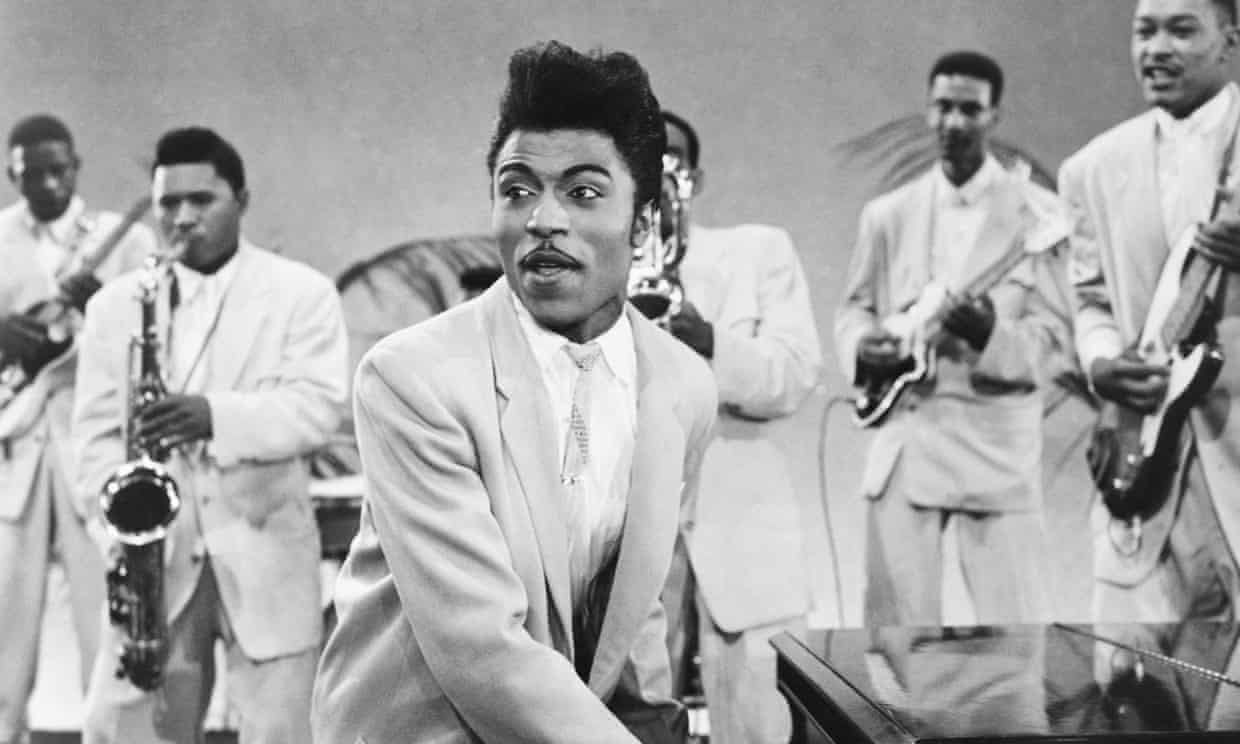
Richard Wayne Peniman, who died May, 9, 2020, was one of the founders of rock-n-roll. His 1950s hits like “Tutti-Frutti” and “Good Golly, Miss Molly” transformed the musical landscape of the 20th century.

Little Richard was raised as an Seventh-Day Adventist, but he became caught up in the indulgences associated with the world of rock-n-roll. Richard had a complicated history in relating his sexuality to his faith, but he did later on come back to his spiritual roots, even serving as an evangelist, becoming an outspoken opponent of hedonism in the music industry.

In 1993, Richard took his Seventh-Day Adventist faith in a new direction briefly towards embracing Judaism.  Seventh-Day Adventists share Sabbath observance on the same day that Jews do, on Saturday. But he eventually returned to his Seventh-Day Adventist beginnings. In one of his last television appearances on the 3ABN television network, Little Richard describes his faith in Jesus.


Billy Graham: A Moral and Spiritual Revival

Billy Graham will probably be remembered as the greatest evangelist, if not of all time, at least, of the 20th century. Graham was not simply an exemplary preacher. He was a leader, who helped to define the Neo-Evangelical movement, that rose up after World War 2, in the United States. In the words of historian George Marsden, an evangelical was “anyone who likes Billy Graham.”

My favorite video clip of Billy Graham is the 1969 interview he had with Woody Allen. Graham’s televised interactions with Woody Allen were a remarkable display of winsomeness, warm congeniality, and Scriptural integrity. But a more representative display of Billy Graham’s giftedness comes from an early televised, brief sermon he gave, in the early 1950s. It was a year of a pivotal election in the United States, and yet the direct preaching of Graham pointed listeners towards “a moral and spiritual revival.”

Billy Graham was one of the first evangelists to effectively use television as a medium for Gospel proclamation. Many of Graham’s crusade meetings were recorded, such as his historic crusade summer, at Madison Square Garden, in 1957, New York City.

He was known beyond America, particularly when he preached in England in 1954. This opened up the door for the Billy Graham Evangelism Association to have crusades all of over the world, through the second half of the 20th century:

Graham was not perfect, as he himself readily admitted. His enthusiastic friendship with President Richard Nixon, became a deep embarrassment for him, when audio recordings of Graham were heard, on the infamous Watergate tapes, from the Nixon White House. But it is truly remarkable that Billy Graham was able to avoid other potential scandals, that have derailed a number of evangelists before him, and after him.

In our Internet and social media age, one wonders if there will ever be another Billy Graham, a leader who successfully holds together an evangelical movement, prone to forces of division, that have threatened to undo this tenuous coalition of believers, who gather together under “big tent evangelicalism.” Nevertheless, the Graham legacy is truly a gift to the modern, evangelical church.

One final sermon, to highlight, that Billy Graham preached, back in 1983: “Is there a hell?”  A sobering topic for sure, but observe carefully how he frames his message. How well received would this message be received today, in the 21st century?:

For more on Billy Graham, read this Veracity review of Grant Wacker’s America’s Pastor: Billy Graham and the Shaping of a Nation.


“Fundamentalist” Rueben A. Torrey, and the “Faith Healing” Controversy at the Moody Bible Institute

Rueben A. Torrey (R.A. Torrey) is a name forgotten by many evangelicals today. But the influence of this late 19th to early 20th century evangelist can not be underestimated in American evangelical circles.

Rueben A. Torrey

Torrey was one of the major theological minds behind The Fundamentals: A Testimony to the Truth, a series of book-length journals, that were distributed to thousands of English-speaking pastors and other church leaders, from 1910 to 1915. We get the terminology of “Fundamentalist” from the publication of these journals, though the term did not catch on in popular culture until several decades later.

What I did not learn until recently is that R. A. Torrey was also the center of a firestorm of controversy in conservative evangelical circles, as the world entered the 20th century. In Timothy E. W. Gloege’s informative history of the Moody Bible Institute, Guaranteed Pure: The Moody Bible Institute, Business, and the Making of Modern Evangelicalism, Gloege clued me into an episode in Torrey’s life that almost dissolved his reputation, in evangelical circles, but that also reveals a ongoing tension that exists to this day, in evangelicalism.

R. A. Torrey had a rather privileged upbringing, finishing Yale University in 1875, and then Yale Divinity School, followed by graduate work in Germany. It was in Germany that Torrey was exposed to the “Higher Criticism” of the Bible, the foundational element of Protestant liberal theology, that eventually made its way to America, by the early 20th century.

As a Congregationalist pastor, Torrey was deeply conflicted over “Higher Criticism,” and he considered himself an “avowed liberal,” until he attended a meeting held by D. L. Moody, the most influential American evangelist in the late 19th century. Torrey was stunned by the spiritual power that Moody had, despite Moody’s sparse accomplishments, educationally.

Over the next several years, Torrey gave up his liberal theology for a more “plain” reading of the Bible, experiencing a sense of power in doing Christian work, that he did not have, during his more “liberal” years. He soon entered Moody’s orbit, with a focus on ministry to the working man. In 1889, Moody tapped Torrey to become the principal head of what would later become the Moody Bible Institute, in Chicago, Illinois.

It was during those years that Torrey developed a particular interpretation of the Bible, that designated the “Baptism of the Holy Spirit” as a type of “second blessing” moment, a crisis experience that Torrey believed that a Christian should pursue. The idea of a “second blessing” moment, in terms of a crisis experience, following some time after the moment of conversion, had become a staple of theology in the Holiness circles of the late 19th century. Though recognizing that not all were called to what might be classified as “Christian work,” Torrey believed that this “Baptism of the Holy Spirit” gives the Christian the Holy Spirit power required to be an effective evangelist of the Gospel. Without such Spirit Baptism, the Christian labored in vain to share the Gospel with others, with relatively little success.

Dwight L. Moody

Torrey got his beliefs from treating passages like Luke 11:13, Acts 2:1,38 (Pentecost), Acts 11:15-16 and Acts 19:6, not merely as descriptive episodes of history, but rather as prescriptive teachings to be followed today. In doing so, Torrey rejected the more standard teaching of tying the “Baptism of the Holy Spirit” together with conversion and regeneration, more commonly associated with a classically informed, Reformed approach to the Bible (see my blog series on Spirit Baptism, on Veracity).

But it was Torrey’s application of the theological principle of faith, standing behind this interpretation, that would eventually stir the controversy. Torrey became impressed with the British orphanage director, George Muller, who lived “by faith” by praying for his needs, and never soliciting others for financial and material support. However, Torrey’s experiment in living “by faith” did not end there.

Soon, Torrey went beyond that to favor an approach to “faith healing,” whereby he believed that sickness could be healed by prayer, and not by medical intervention. Torrey advised, somewhat cautiously to others at times, that a Christian should ignore doctors and rely on the prayer of faith, for God to miraculously intervene. This mistrust of doctors was not an altogether uncommon view, in the late 19th century, as modern medicine was still pretty much in its infancy, though new medical discoveries were just beginning to emerge.

For Torrey, God would only supply the needs of the believer, including medical ones, if that believer truly rested in prayer by faith. If the needs went unmet, then this was clearly an indication that there was some sort of spiritual error, committed by the Christian. Most commonly, this error was thought to be a lack of faith, on the part of the believer.

The real test of Torrey’s theology came in 1898, when Torrey’s 8-year old daughter, Elizabeth, became desperately ill due to diphtheria. Due to advances in treatment, there was a medically proven antitoxin that she could have taken, that would have surely helped cure her. However, Torrey insisted on trusting in God, and God alone, for a “faith healing.”

One evening, while Elizabeth’s sickness seemed somewhat under control, Torrey prayed and continued that evening to draft some summer landscaping plans. When Elizabeth’s condition rapidly declined, Torrey panicked and called for the doctor to bring in medicine. But by that time, it was too late.

Torrey was shaken by his daughter’s death. But his anguish was not because he wished that he had contacted the doctor sooner. Rather, he was in despair because he panicked, and called for the doctor out of his unbelief, and that it was this lack of trust in God, that led to his daughter’s death.

Shortly thereafter, Torrey’s 14-year old daughter, Blanche, became ill with a different sickness. But this time, Torrey completely relied on prayer. Blanche soon recovered, and Torrey’s confidence in “faith healing” was renewed. No medicine. No doctors.

But when D.L. Moody learned of these episodes in Torrey’s family life, the elder evangelist grew deeply concerned about Torrey’s radical views on “faith healing.” Moody shared Torrey’s theological position on the “Baptism in the Holy Spirit,” but he believed that Torrey’s views against using medicine and against heeding the counsel of medical doctors went too far. This is where the story of Henry Crowell enters the picture.

Henry Crowell was the founder of Quaker Oats, an incredibly successful brand of selling oats to consumers as packaged cereal. Prior to the market success of Quaker Oats, Americans were not accustomed to eating oats regularly, as they would typically buy their oats from a mill, scooping them out of a bag, barrel, or similar container. The quality was not always assured, and often oats were considered only suitable as feed for horses. But Crowell and his competitors sought to find ways whereby humans could enjoy oats for themselves. By pre-packaging oats in a round box, Henry Crowell was able to guarantee to his customers that the Quaker Oats brand was the safest and pure.

Henry Crowell’s success eventually led to a friendship with D. L. Moody. Unlike Moody, Crowell was not much of a public speaker, but he was a savvy and profitable businessman. Moody tapped Crowell to head the board of directors for Moody’s ministry, and remained chairman of the board of the Moody Bible Institute for 40 years.

Henry Crowell: Entrepreneurial founder of Quaker Oats cereal

Moody confided his concerns about Torrey with Crowell, prior to Moody’s death in 1899. Crowell agreed with Moody that the ministry should distance itself from such radical “faith healing” views. As with his attitude towards marketing a “guaranteed pure” brand of oats to a consuming public, Henry Crowell envisioned a Moody Bible Institute that offered a “guaranteed pure” presentation of evangelical Christian faith. Torrey’s anti-medicine views threatened to poison that purity.

It became increasingly clear that Torrey’s influence in Moody’s ministry was declining, so Torrey began a new period of service as an itinerant evangelist, culminating with him becoming the dean of the Bible Institute of Los Angeles (BIOLA), in 1912. During this period, Crowell was working to shift the direction of the Moody Bible Institute towards a more orderly and respectable evangelicalism, and away from Torrey’s confidence in “faith healing,” and other Pentecostal leanings.

Moving forward, Crowell urged his fellow evangelicals to go to the doctor when they got sick. Prayer for healing, had its place, for sure. But Crowell did not believe that such prayer was a legitimate substitute for the growing effectiveness of modern medicine.

It should not come as a surprise that when the Pentecostal movement sprang up in California, just a few years later, that the brand of theology at Moody Bible Institute cast a skeptical eye on the excesses of such less respectable theology, as found in Pentecostalism. In many ways, the greatest resistance to the “charismatic renewal” in evangelicalism was centered in the cessationist theology at Moody Bible, that taught that the gift of speaking-in-tongues ceased during the first century of the church. This theological judgment aligned with Moody Bible’s dispensationalist interpretation of Scripture, suggesting that such miraculous gifts were not part of the current dispensation of the 20th century church.

Interestingly, while Torrey still remained confident in his approach to “faith healing,” undergirded by his interpretation of the “Baptism of the Holy Spirit,” Torrey never fully endorsed the idea that the gift of tongues-speaking was the critical sign behind receiving the “Baptism of the Holy Spirit,” which was a distinctive teaching of those early Pentecostals. Pentecostals were able to make the claim that miraculous sign gifts, such as tongues-speaking, fit within their own dispensationalist paradigm, as being fully part of the current dispensation of the church (contra the Moody evangelicals). But the elevation of tongues-speaking, in particular, kept Pentecostalism from penetrating the evangelical mainstream.

R. A. Torrey went onto become a leading revivalist evangelist, in his own right, though his ministry was overshadowed by his mentor before him, D. L. Moody, and the energetic Billy Sunday, who continued the evangelistic legacy of Moody into the early quarter of the 20th century.

Torrey’s involvement in producing essays in The Fundamentals journals, of the early 1910s, sought to combat the increasing influence of German “Higher Criticism” and liberal theology, in otherwise evangelical Protestant churches. Torrey had been recruited to write for The Fundamentals project, guiding its progress as its last editor. Thanks to Torrey, his efforts helped to spur a new generation of Christians to resist the corrosive elements of theological “modernism.”

Yet Torrey would most probably bristle at the use of the term “fundamentalism,” with respect to how this concept was understood, by the late 1920s, and on into the 21st century. While Torrey was very much an advocate of halting the spread of theological liberalism, he was becaming resistant towards the tendency to view evangelical orthodoxy as being synonymous with dispensational premillennialism.

As a believer in the possibility of miracles today, Torrey was critical of those dispensationalists who downplayed the idea of God producing modern miracles, under the guise of saying that the miraculous gifts of the Holy Spirit were not part of today’s dispensation. Though still a committed premillennialist, Torrey would not insist on premillennialism as an essential dogma, largely because he showed no interest in the intricate end-time prophecy speculations, advocated by a number of those who claimed dispensational premillennialism as fundamental Christian doctrine.

Furthermore, Torrey was not overly concerned by the promotion of Darwinian evolution, in the churches. He would be rightly called a “progressive creationist,” seeing no difficulty in reconciling the Bible with the millions of years, required for evolution to work. But he did see a limit to evolution as an all-encompassing explanation for human origins. In his book-long defense of evangelical faith, What the Bible Teaches, Torrey explains that, “Whatever truth there may be in the doctrine of evolution as applied within limits to the animal world, it breaks down when applied to man.” The problem for Torrey, was not evolution, per se, but a philosophy of naturalism, that ruled out God’s intervention in history.

Here, the author of several essays in The Fundamentals stands in stark contrast with the purely dispensational premillennialism, and Young Earth Creationism, that would later become indelibly associated with so-called “fundamentalism.” Though surely a defender of conservative evangelical faith, later “fundamentalists” would surely brand Torrey as not “fundamentalist” enough, as they defined it. As Timothy Gloege concludes, in his essay “A Gilded Age Modernist: Reuben A. Torrey and the Roots of Contemporary Conservative Evangelicalism:”

“[Torrey’s] theological development suggests that at least one strand of conservative evangelicalism was more a product of modernity than a reaction to it. His mature theology was conservative to be sure, but it was also distinctively modern.”

Torrey’s largely positive legacy remains complicated. Torrey’s foray into the world of “faith healing” has left a few Christians, like his friend and ministry associate, D. L. Moody, disturbed. Torrey’s interpretation of the Baptism of the Holy Spirit sparked a manner of speculation, that deeply impacted his own personal family. By not heeding the medical advice right away, was he truly acting in the best interest for his daughter, Elizabeth? Or was he misunderstanding what it meant to truly have faith?

Nevertheless, R. A. Torrey’s reticence to fully endorse Pentecostalism, despite the similarities in views of Spirit Baptism, may partly explain why Torrey’s reputation among respectable evangelicals was eventually rehabilitated. His contribution to The Fundamentals stands as a hallmark for a type of moderately conservative evangelicalism, that stood in contrast with a more militant approach, characterized by what “Fundamentalism” would later become.


Does Bill Gates Want to Use a COVID-19 Vaccine to Give Us the Mark of the Beast?

Bill Gates is working on a vaccine for COVID-19. Is this the “mark of the beast,” that the Book of Revelation warns us about?

For a number of Christians, what Bill Gates is doing is alarming. If it is not a vaccine, laced with some possible hidden microchip technology, it could be some type of universal ID system, using a chip implant of some sort. Should Christians be concerned? Should Christians resist taking the vaccine?

Does Bill Gates have a plan to give everyone the “mark of the beast?”

There are a number of problems with this type of thinking. First, fears about a chip implant are a bit late in the ball game. We already have a technological means of tracking people with a computer chip. You are probably using something like this to read this blog article.

It is called a smartphone.

Secondly, fears about the “mark of the beast” have a long, long history, of attempts to identify the “mark” with something that turned out to be nothing to fear. For example, when the New England Puritans, like Cotton Mather, started to promote inoculation against small pox, in the 1720s, a number of other Christians resisted such vaccination efforts. At one point, someone even firebombed Reverend Mather’s home in Boston, in protest. The vaccination itself left a permanent scar, on each person, which was nicknamed “the mark of the beast.” So, these type of prophecy speculations today are nothing new to church history. Thankfully, small pox today has been eradicated due to vaccinations, so we don’t have to worry about small pox anymore.

But the most difficult and third problem with all of this has to do with how we read the Bible.

The way to start is to read the relevant portion of Scripture. Some just look at Revelation 13:16-18, but a longer reading puts it all in context (Revelation 13:5-8, 11-18 ESV). Highlighted below are key phrases to consider:

And the beast was given a mouth uttering haughty and blasphemous words, and it was allowed to exercise authority for forty-two months. It opened its mouth to utter blasphemies against God, blaspheming his name and his dwelling, that is, those who dwell in heaven. Also it was allowed to make war on the saints and to conquer them. And authority was given it over every tribe and people and language and nation, and all who dwell on earth will worship it, everyone whose name has not been written before the foundation of the world in the book of life of the Lamb who was slain…. 
Then I saw another beast rising out of the earth. It had two horns like a lamb and it spoke like a dragon. It exercises all the authority of the first beast in its presence, and makes the earth and its inhabitants worship the first beast, whose mortal wound was healed. It performs great signs, even making fire come down from heaven to earth in front of people, and by the signs that it is allowed to work in the presence of the beast it deceives those who dwell on earth, telling them to make an image for the beast that was wounded by the sword and yet lived. And it was allowed to give breath to the image of the beast, so that the image of the beast might even speak and might cause those who would not worship the image of the beast to be slain. Also it causes all, both small and great, both rich and poor, both free and slave, to be marked on the right hand or the forehead, so that no one can buy or sell unless he has the mark, that is, the name of the beast or the number of its name. This calls for wisdom: let the one who has understanding calculate the number of the beast, for it is the number of a man, and his number is 666. 

The popular idea, when reading about the “mark of the beast,” is to think that some demonic figure (the “beast,” as in the first and/or second beast mentioned in this passage) will try to force everyone, including believing Christians, to have this “mark of the beast” implanted in our bodies. The implication is that Christians should do whatever they can to be wary of the imposition of such a mark, and resist it with every means possible…. even if it means rejecting something like a COVID-19 vaccine.

I have thought about adapting a maxim, that is surely appropriate for a blog article like this: Having an open mind on all things is surely good, yet on the whole, it is far better to follow the evidence we already do have, instead of speculating on the possibility of evidence we do not currently possess.

Here is what I mean by that.

The popular interpretation summarized above makes a number of assumptions. First, it assumes a futurist interpretation of the Book of Revelation. A futurist interpretation suggests that the bulk of what is described in Revelation corresponds to future events. Many Christians are not aware that there are other, faithfully-orthodox methods of reading Revelation that do not assume a futurist framework.

For example, we have good evidence to indicate that the prophecy regarding the “mark of the beast” has already been fulfilled in the past, specifically in the first century of the church. Interested students of the Bible might want to at least consider this preterist, or past-fulfillment based, approach to interpreting this passage, as a reasonable alternative to the futurist approach.

Furthermore, we also have evidence that suggests that a more symbolic approach to the “mark of the beast,” exemplified by either an historicist or idealist approach to interpreting this passage, might carry more weight than a futurist reading.

But let us lay all of the above aside, and assume for now that the futurist reading is correct. It very well might be. Even though it is nearly impossible to figure out evidence for something that might happen in the future, most evangelical Christians today take a futurist approach, so it is not without precedent nor credibility. Regardless of approach, a more thorough attention to the context of the “mark of the beast” will help to illuminate why more popular understandings are problematic.

Does even the futurist approach really line up with the popular idea of “the mark of the beast” being imposed on Christians?

Notice first, in the passage above, that “and all who dwell on earth will worship it,” namely the “it” being the first and/or second beast. Who are those “all who dwell on the earth?” Well, the next phrase in the highlighted verse tells us, “everyone whose name has not been written before the foundation of the world in the book of life of the Lamb who was slain.” In other words, those who are not believers in the Lord Jesus Christ will worship the beast.

This little nugget of Scriptural truth helps us to decipher what is meant later on by “the earth and its inhabitants [who] worship the first beast” and “it [the second beast] deceives those who dwell on earth.” The ones who are deceived by the beast are not believing Christians.

It is also helpful to realize what is meant by the “forehead,” which is where the mark of the beast might be placed. Elsewhere in the Book of Revelation we can read that the people of God, those who worship Jesus and put their trust in Him, will be “sealed” with a “seal” placed on their forehead (Revelation 7:3; 9:4; 14:1; 22:4 ESV), as in Revelation 7:3, “Do not harm the earth or the sea or the trees, until we have sealed the servants of our God on their foreheads.” Furthermore, “foreheads” alludes to the concept in Hebrews 10:16, that associates the covenant of God, placed upon the hearts of believers, as also being written on our “minds.”

In other words, those who worship and love Jesus will have this forehead seal. This is contrasted with those others who are “marked on the right hand or the forehead;” that is, those who have “the mark, that is, the name of the beast or the number of its name.” 

The “mark of the beast,” whether it be a literal or symbolic mark, represents those who have identified with the powers that oppose Christ. Consider the “mark of the beast” to be like an oath of allegiance. Or think of it as the mark of someone passing a loyalty test. It can not be coercively forced on someone else. Instead, the “mark of the beast” is taken upon someone willingly.

What do we conclude from all of this? Those who possess the “mark of the beast” are simply those who worship the antithesis of the Gospel. Those who reject Jesus, and subject themselves to worshiping that which is opposed to Jesus will be the ones who receive the mark of the beast.

So, should Christians be concerned that someone might force the “mark of the beast” upon Christians? NO, not according to what is taught in Scripture. Therefore, unless you are planning on committing apostasy anytime soon, followers of Jesus need not worry about any potential threat of having the “mark of the beast” imposed on them, against their will.

Should we be concerned about those influences associated with the power behind the “mark of the beast?” Absolutely. That which opposes the Gospel should not be taken lightly. In the case of vaccines, we should do what we can, as believers, to promote the development of a safe, effective vaccine, freed from the influences of those who might try to use something like this, as an act of bioterrorism, or for some other nefarious purposes.

Should we be concerned about others who might take upon themselves the “mark of the beast? Again, absolutely. But the way we are to go about this is by spreading the Gospel, the Good News of Jesus. We are to pray that the Holy Spirit might penetrate hearts, that others might turn from their rebellion against God, and embrace the Savior.

Despite whatever you may think of Bill Gates, followers of Jesus should support vaccination efforts, like his, that are intended to save lives. We have evidence that people, like Bill Gates, are at least trying to do good, to help people. Now, surely, Bill Gates is not perfect, but we do not have evidence for Bill Gates, that he wants to implant the “mark of the beast” on ChristiansSadly, such hyper-vigilance against the “mark of the beast” is associated with all sorts of conspiracy-type thinking, that mars the reputation of the Gospel, and invites an unbelieving world to view Christians with needless mockery and derision. Instead, let us all pray for the development of a safe and effective vaccine for COVID-19, as soon as reasonably possible.