Clarke Morledge -- Computer Network Engineer, College of William and Mary...
I hiked the Mount of the Holy Cross, one of the famous Colorado Fourteeners, with some friends in July, 2012. My buddy, Mike Scott, snapped this photo of me on the summit.
How do you tell the difference between the Holy Spirit giving you guidance and a stomach ache? This is a profound spiritual question that I have wrestled with on and off throughout my Christian life.
There have been times where I have sensed God’s leading and direction: A mysterious realization of Christ’s presence. There have been other times when I have sensed God to be silent. Awfully silent. Philosophers describe this as the problem of “divine hiddenness.”
Tanya Luhrmann explores “How God Becomes Real,” a fascinating look at how believers experience God, from the perspective of a secular anthropologist.
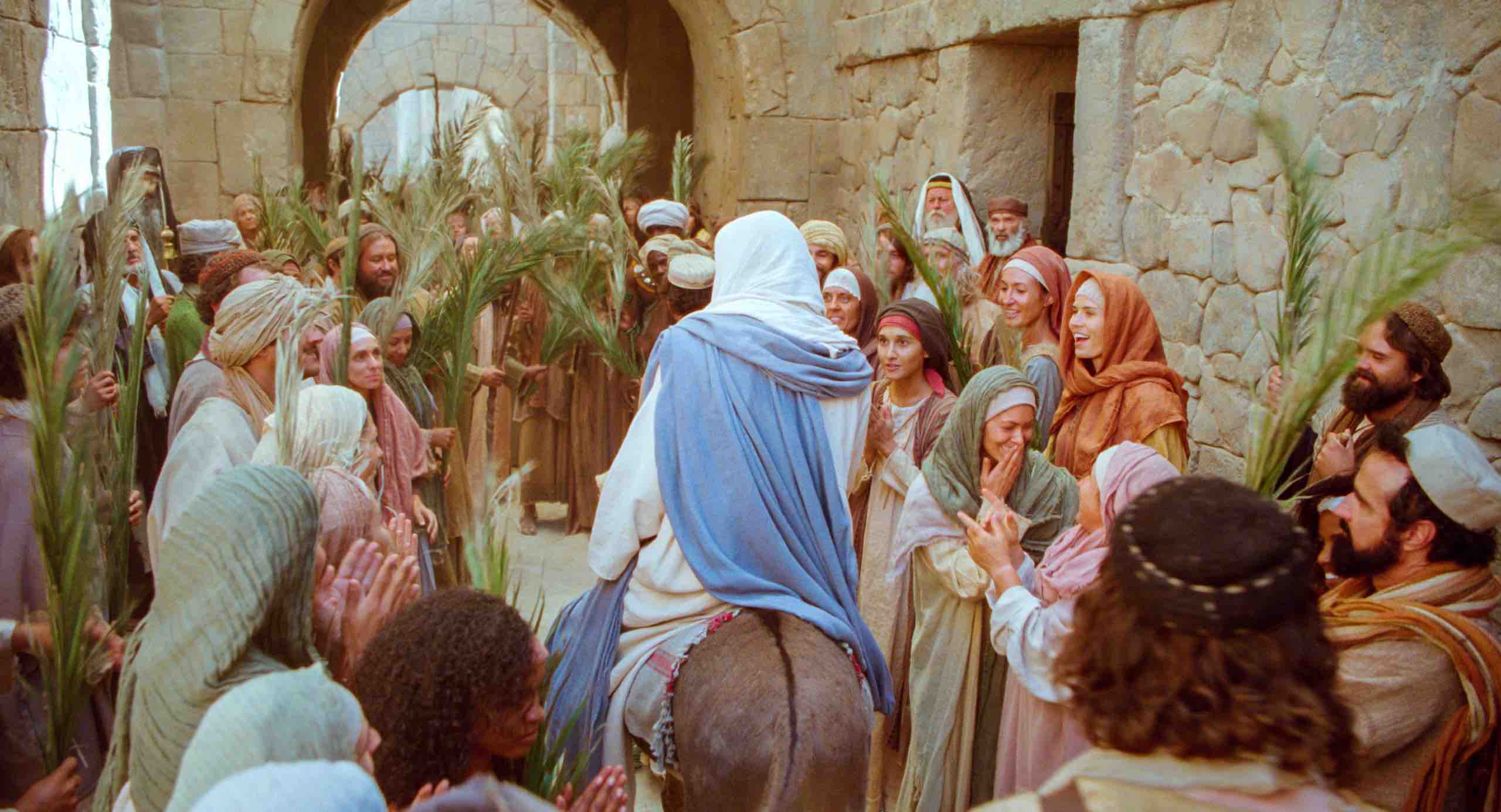
A common objection to the Bible raised by critics is that the Gospel accounts contradict one another. A most famous example is Jesus’ “Triumphal Entry” into Jerusalem, celebrated in many churches with children waving palm branches on Palm Sunday. While parents enjoy watching their kids fanning themselves with palm branches, wandering around the church sanctuary, such celebration obscures a very troubling passage common to all four of our Gospels.
How many donkeys did Jesus ride into Jerusalem? Perhaps much of the answer to this comes down to how well we understand what each Gospel writer was purposely trying to do.
A look at the various parallel passages reveals the problem. Here is Matthew 21:1-11 (ESV):
1 Now when they drew near to Jerusalem and came to Bethphage, to the Mount of Olives, then Jesus sent two disciples,2 saying to them, “Go into the village in front of you, and immediately you will find a donkey tied, and a colt with her. Untie them and bring them to me.3 If anyone says anything to you, you shall say, ‘The Lord needs them,’ and he will send them at once.”4 This took place to fulfill what was spoken by the prophet, saying,
5 “Say to the daughter of Zion, ‘Behold, your king is coming to you, humble, and mounted on a donkey, on a colt, the foal of a beast of burden.’”
6 The disciples went and did as Jesus had directed them.7 They brought the donkey and the colt and put on them their cloaks, and he sat on them.8 Most of the crowd spread their cloaks on the road, and others cut branches from the trees and spread them on the road.9 And the crowds that went before him and that followed him were shouting, “Hosanna to the Son of David! Blessed is he who comes in the name of the Lord! Hosanna in the highest!”10 And when he entered Jerusalem, the whole city was stirred up, saying, “Who is this?”11 And the crowds said, “This is the prophet Jesus, from Nazareth of Galilee.”
Some will derisively look at this passage and suggest that it is really bizarre and funny to think that Jesus tried to ride two animals at once, a donkey and a colt (a young donkey), as though trying to perform some circus trick. Riding one donkey might be hard enough, but straddling yourself across two donkeys simultaneously would be a feat that even the Messiah might find difficult to perform!
But that is only part of the problem. Compare Matthew with Mark’s version of the story (Mark 11:1-10 ESV):
11 Now when they drew near to Jerusalem, to Bethphage and Bethany, at the Mount of Olives, Jesus sent two of his disciples2 and said to them, “Go into the village in front of you, and immediately as you enter it you will find a colt tied, on which no one has ever sat. Untie it and bring it.3 If anyone says to you, ‘Why are you doing this?’ say, ‘The Lord has need of it and will send it back here immediately.’”4 And they went away and found a colt tied at a door outside in the street, and they untied it.5 And some of those standing there said to them, “What are you doing, untying the colt?”6 And they told them what Jesus had said, and they let them go.7 And they brought the colt to Jesus and threw their cloaks on it, and he sat on it.8 And many spread their cloaks on the road, and others spread leafy branches that they had cut from the fields.9 And those who went before and those who followed were shouting, “Hosanna! Blessed is he who comes in the name of the Lord!10 Blessed is the coming kingdom of our father David! Hosanna in the highest!”
In Mark’s version, there is only one animal mentioned, a colt (a young donkey), as opposed to two animals in Matthew’s version. Both Luke’s version (Luke 19:28-38 ESV) and John’s version (John 12:12-15 ESV) only mention one donkey as well.
So, what is the deal with Matthew, with Jesus riding two animals, as opposed to one mentioned by the other Gospel writers?
One possible way of answering this objection is to note a detail highlighted above in verse 7 of Matthew’s version:
They brought the donkey and the colt and put on them their cloaks, and he sat on them.
Notice how the text says that cloaks were placed on the two animals, and that Jesus “sat on them.” What is the “them?” A natural reading suggests a reference to the cloaks, and not the two animals. The cloaks were spread across the two animals, side by side to the other. Jesus could have easily seated himself on one donkey, on top of the set of cloaks spread out between the two donkeys. So, to think that the Bible is in error here because of how ridiculous it would have been for Jesus to ride two animals at the same time, can be easily addressed.
But what about the difference in number, between two animals (per Matthew) and one animal (per Mark, Luke and John)? It could simply be that Mark, Luke, and John only focused the spotlight in their narratives on the one donkey, and purposefully left out the second donkey as not being crucial for the telling of their respective stories. Presumably, Matthew could have included the second donkey, being the mother of the young colt which Jesus rode, as the mother would have provided the young colt some confidence in performing his task of parading Jesus through the streets of Jerusalem.
New Testament Bible scholar, Michael Licona, in his Why Are There Differences in the Gospels?, suggests that this literary technique of spotlighting was a common rhetorical, compositional device used in certain varieties of Greco-Roman literature (Licona, p. 131-32). First century authors would use spotlighting to focus their attention on certain details deemed to be important, while ignoring others.
YouTube apologist, Michael Jones, at Inspiring Philosophy, has a useful video explaining how all of this works with this supposed Bible contradiction:
While I think Michael’s solution is surely a viable one, I can understand why some critics may not be so easily convinced. Is there possibly a better, more plausible explanation for what is going on here?
Much of what we think about how certain Bible discrepancies can be resolved comes down to our understanding of biblical inerrancy. Someone who holds to what might be considered as a rather strict form of inerrancy, will be drawn to the solution that there were indeed two donkeys present at Jesus’ “Triumphal Entry,” according to Matthew, instead of one, whereby the second donkey was ignored by the other three Gospel evangelists. However, a more nuanced form of inerrancy will pay more attention to the intention of each author in telling their respective stories in the way that each one did.
Notice that in Matthew’s version of the story, he makes it a point to connect the story of the two donkeys with a prophecy, highlighted in Matthew’s verse 5, going back to Zechariah 9:9 (and partly also to Isaiah 62:11).
“Say to the daughter of Zion, ‘Behold, your king is coming to you, humble, and mounted on a donkey, on a colt, the foal of a beast of burden.’”
Interestingly, neither Mark nor Luke make any reference back to the Zechariah prophecy. Mark and Luke simply describe the acquisition of the donkey and Jesus’ riding the donkey scenes, with no reference to the Old Testament.
Matthew, on the other hand, wants the reader to know that the donkey episode is a fulfillment of Old Testament prophecy. Most scholars today believe that Mark’s Gospel was written first, and that Matthew most probably had a copy of Mark’s Gospel in hand when he wrote his Gospel. Matthew adds the detail about the second donkey to highlight the fulfillment of prophecy that Mark (and Luke) ignore.
But we have a different problem when it comes to comparing this to John’s story. John’s very brief version mentions the Zechariah 9:9 prophecy, but John still only mentions a single donkey, and not two (John 12:12-15 ESV):
12 The next day the large crowd that had come to the feast heard that Jesus was coming to Jerusalem.13 So they took branches of palm trees and went out to meet him, crying out, “Hosanna! Blessed is he who comes in the name of the Lord, even the King of Israel!”14 And Jesus found a young donkey and sat on it, just as it is written,
15 “Fear not, daughter of Zion; behold, your king is coming, sitting on a donkey’s colt!”
Some scholars suggest that Matthew made a mistake in interpreting Zechariah. John takes the last two lines of Zechariah’s prophecy, and folds them into one statement, that of “sitting on a donkey’s colt,” showing that both of these lines from Zechariah are speaking of but one donkey, and not two. An example of such critical scholarship can be found in what the Harper Collins Study Bible says for Zechariah 9:9, Matthew’s understanding “fails to take into consideration the parallelism of the Hebrew poetry (donkey is equivalent to colt) when it has Jesus riding on two donkeys at once.”
But this is not the most charitable way of reading Matthew’s text, nor does it acknowledge the fact that Jewish interpreters of the Old Testament in Jesus’ day did not have a univocal understanding of every passage which they read. As it turns out, there were two different interpretive traditions concerning Zechariah 9:9 among Second Temple Jews in Jesus’ day, and the Christian New Testament testifies to this reality (even the Inspiring Philosophy video notes this). Notice the difference in how a translation like the ESV has Matthew, in Matthew 21:5, quoting Zechariah 9:9:
“Say to the daughter of Zion, ‘Behold, your king is coming to you, humble, and mounted on a donkey, on a colt, the foal of a beast of burden.’”
And in how the NIV translation quotes it:
“Say to Daughter Zion, ‘See, your king comes to you, gentle and riding on a donkey, and on a colt, the foal of a donkey.’”
The ESV omits the “and” in the last phrase, suggesting that the “donkey” in the immediately preceding phrase is repeated again in the “colt” of the last phrase, suggesting that only one donkey is being discussed here. The NIV includes the “and” in the last phrase, suggesting that the “donkey,” and the “colt“; that is, the young (foal) of a donkey are in mind here, suggesting two donkeys, presumably a young donkey and his mother.
So, what are we dealing with here: one or two donkeys? That all depends on which interpretive tradition in Second Temple Judaism you follow. It would appear that Matthew is intending to address those who follow the “two donkey” tradition, whereas John is intending to address those who follow the “one donkey” tradition.
It is not that a certain evangelist (or evangelists) does/do not care about historical accuracy to the “n’th” degree, but rather they care more about crafting a reasonably historical narrative that meets their distinctly different intended purposes.
This may sound a bit confusing, but the point is that Matthew and John are addressing two different audiences, each audience following a different interpretive tradition concerning the prophecy in Zechariah. Mark and Luke, on the other hand, have no interest in connecting the donkey story with Old Testament prophecy, as the prophecy connection did not serve the intended purpose of either Gospel writer, as least not enough to mention it. In other words, our Gospel writers as a group are trying to cover all of the bases, serving different audiences.
Matthew could be more concerned with trying to convince readers with a “two donkey” mindset that Jesus was indeed fulfilling Zechariah’s prophecy, and less concerned about whether or not one or two donkeys were part of the story. Matthew probably was well aware that at least Mark’s Gospel assumed “one donkey” to be evidence of prophecy fulfillment, but that Matthew wanted to make sure that those who held to a “two donkey” view would realize that Jesus’ “Triumphal Entry” was indeed a fulfillment of prophecy as well. We really do not have enough evidence to figure that detail out with exact, technical precision.
Ultimately, whether we have two donkeys or just one donkey, Matthew and John are convinced that Jesus’ “Triumphal Entry” on Palm Sunday in Jerusalem fulfills prophecy. Furthermore, all of our four evangelists note that at least one donkey is involved in the historical narrative.
While this solution does not neatly solve the problem of two or one donkey(s), it tries to respect the intended purpose of each Gospel writer, acknowledging that there might be very good, but yet very different intended purposes being served by each evangelist. In other words, we are not dealing with a question of “who is in error here?,” but rather, we are dealing with the fact that each Gospel writer is doing what they are doing on purpose. Reading the text of each Gospel more carefully can help us to discern the intended purpose of each author, which in many ways is much more important than trying to establish a neat, easily harmonized, strict sequence of events.
Most Christians never bother to read parallel passages in the Gospels. This is unfortunate, as many skeptics of the Bible point to inconsistencies between such parallel passages, as part of their justification for rejecting the reliability of the Bible. It would behoove believers to make an effort to study parallel passages, in order to think through why different authors in Scripture have their differences! One can study such differences without necessarily abandoning the divinely inspired nature of all of Scripture. In fact, such study can help us to better appreciate the underlying motives of each author, as an aid to better understanding each text.
The ultimately takeaway for all Christians (and skeptics!) who study this Palm Sunday set of passages in the Bible is that Jesus comes riding into Jerusalem in a humble way, while simultaneously announcing that Jesus is the true King. The events which followed on that fateful week, that of Jesus’ Crucifixion and Resurrection, show to the whole world that Jesus is indeed the King of Kings.
Finally, in this last of a five part series, reviewing Bart Ehrman’s Forgery and Counterforgery, I want to play a bit of “devil’s advocate.” What if Bart Ehrman is correct about forgeries in our New Testament?
If the New Testament actually has a number of forgeries within its pages, as Bart Ehrman claims, what type of impact would that have on the truthfulness of the Christian faith? On the other hand, what if Bart Ehrman is wrong; that is, what if the early church got the New Testament right after all?
The special case of the pastoral letters of Paul. Of the thirteen letters attributed to the Apostle Paul, the most disputed regarding their authenticity are 1 Timothy, 2 Timothy, and Titus. Why some progressive Christian scholars accept some of the arguments presented by Bart Ehrman.
In this concluding post, I can begin by saying that in Forgery and Counterforgery Bart Ehrman is presenting evidence that is worth considering and wrestling with. While most Christians are probably unaware of these claims, Christians who ignore them are doing so at great peril. Ehrman is a highly-skilled, very persuasive scholar, certainly when measured in terms of book sales (as a New York Times best selling author) and the hundreds of thousands, and even millions of YouTube channel views.
It is quite common for Christian apologists to dump on Bart Ehrman, and as suggested by the second half of this blog post’s title, (“But Why He is Wrong Instead“), I am not ultimately persuaded by his thesis either. But in fairness, if you follow the methodology he takes, he does make certain arguments that require a measured, thoughtful response, which I hope to do here.
But first, in playing “devil’s advocate” I consider what might be the ramifications if Bart Ehrman’s case was proven to be correct. After that, I want to show why I do not find Bart Ehrman’s arguments, based on the method he uses, for forgery in our New Testament to be convincing in the long run. Granted, some particular lines of evidence advanced by Ehrman do give me some pause. Other lines of evidence do not. Nevertheless, the cumulative case Ehrman presents is not strong enough to make me dismiss any of our twenty-seven books from the New Testament. Rather, the cumulative case for supporting a “forgery-free” New Testament is still very strong.
In other words, the early church got the New Testament right.
Bart Ehrman’s Forgery and Counterforgery: The Use of Literary Deceit in Early Christian Polemics argues that up to 70% of the New Testament content is derived from forged documents. How well do the claims of Bart Ehrman stand up to scrutiny?
We are almost a month away from April Fool’s Day, but one of the latest viral videos on YouTube ain’t no joke. Satan’s Guide to the Bible points to the need for having Christian apologetics in our churches.
Satan’s Guide to the Bible is the work of independent filmmaker, Zeke Piestrup. The premise of the documentary film (mainly cartoon) is actually quite clever. Here you have a Sunday school class, with kids gathering around singing “This Little Light of Mine,” waiting for their Sunday school teacher to arrive. But the real teacher is not in class today, so a substitute arrives as the new teacher: SATAN!
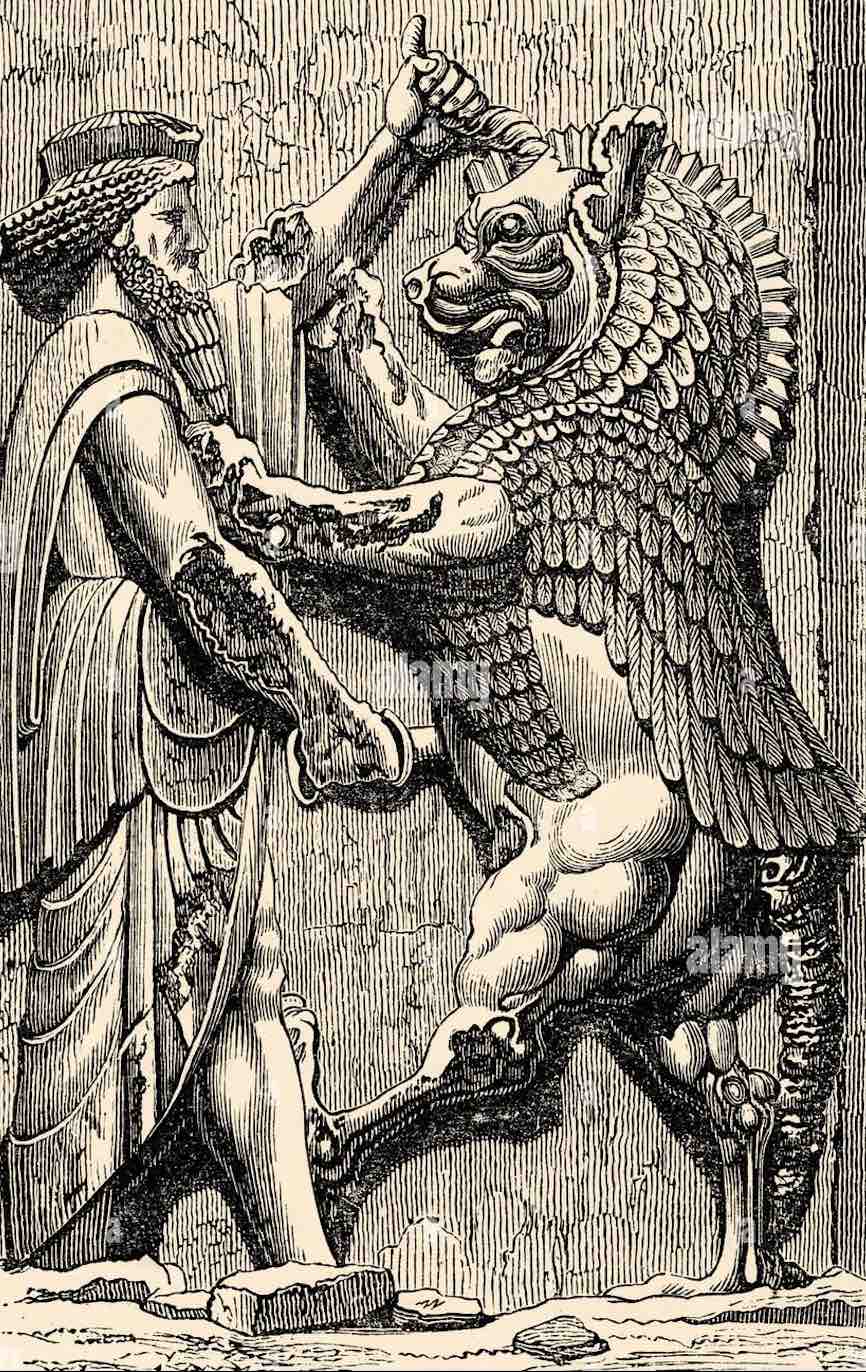
SATAN??? Where did he come from? …. In Persian Zoroastrian mythology, Ahura Mazda (the good diety on the left) was locked in combat with Ahriman (the evil deity on the right). Many scholars suggest that the concept of “Satan” was “borrowed” from this dualistic Persian mythology when the Jews were sent off to Babylon after the destruction of Jerusalem and its first Temple. The Persians, who conquered Babylon, allowed the Jews to return to Jerusalem, taking incipient ideas about “Satan” with them. However, a better answer to this is to say that the Jewish encounter with Persian religion served as the opportunity for the Jews to search their own Scriptures, for the source of angelic rebellion against the one True God: Yahweh. There was no need for Jews to “borrow” anything from Zoroastrianism. They had everything they needed in their Scriptures. But they did need to connect the dots to make sense of who “Satan” really was. Progressive revelation regarding the identity of the true rebel against God, “Satan,” the personification of evil, eventually emerged in the writings of the Christian New Testament. See Veracity review of Anthony J. Tomasino’s Judaism Before Jesus, for more background.
The Plot Line of Satan’s Guide to the Bible
Satan proceeds to instruct the children that today he will reveal to the student “Bible secrets.” These “Bible secrets” are secrets that the children’s pastor (“Mark”) knows, which he learned in seminary, but which he keeps hidden from the children, for fear of losing his job. For about the next hour and a half, Satan reveals these “Bible secrets” to the kids, ranging from the idea that the Exodus out of Egypt with Moses splitting the Red Sea never happened, to the controversy that many of the documents in our New Testament are in reality forgeries, meant to deceive the unknowing Bible reader. Here is the video (but skip on down if you want to get the response):
Satan’s Guide to the Bible uses a lot humor along the way, to keep the viewer engaged. Perhaps the most memorable line is when Jen, one of the kids who is the most skeptical about what Satan is saying, shouts, ““I rebuke you Satan!”
Satan’s response? : “Thanks, Jen. Noted.”
I have not worked my way through the entire video yet, but what makes the film so effective is the recorded interviews with leading critical Bible scholars, some of whom are atheists (like Bart Ehrman) and some of whom are progressive Christians (like Dale Allison). Zeke Piestrup has his interview-ees read from their published scholarly books, to reinforce the message. Plus, he pretty much hits just about every major controversial topic regarding the integrity of the Bible and Christian faith claims in general.
A lot of Christians will find the film frustrating, but it is worth asking the question: “What does Satan’s Guide to the Bible get right?” Well, it does point to a real problem, in that while some churches do offer educational opportunities regarding Christian apologetics; that is, learning how to develop an informed defense of the Christian message, many churches do not. Most Christians are woefully unprepared to answer the criticisms raised in this documentary, what the film calls “standard stuff.” But as more and more churches prioritize small group ministries at the expense of structured Christian education, the opportunities to talk about this “standard stuff” in many evangelical churches are few and far between.
It is true that much of what the documentary touches on is “standard stuff” discussed in mainline seminaries. More and more conservative evangelical seminaries also discuss this “standard stuff” today. But you do not have to go get an advanced degree to hear about this “standard stuff.” Most religion departments at secular universities expose their undergraduate students to such “standard stuff”…… And then there are social media platforms, like short Tik-Tok videos, and YouTube, which makes such “standard stuff” readily accessible to any teenager with a smart phone.
Part of what the Veracity blog tries to do is to fill in the gap often left by churches, and offer resources to try to address the criticisms raised in Satan’s Guide to the Bible. Here is a sample list of previous blog posts that address some specific criticisms highlighted in the video:
The YouTube world of Christian apologetics has responded to Satan’s Guide to the Bible. One of the first one’s to appear is by Mike Winger, which I will highlight below at the bottom of this blog post. Some of Winger’s critics say that Winger overuses the rhetoric of “propaganda” when describing Satan’s Guide to the Bible. Mike has a few technical problems in the first few minutes, and he probably does go overboard with the “propaganda” rhetoric a bit too much, but it is still worth considering what Mike has to say, and I agree with a good majority of Mike’s pushback.
Satan’s Guide to the Bible pokes fun at evangelical Christians, both scholars and apologists with day jobs (like me), so I had to take some jabs with watching the parts that I had gotten through the film already. But if Christians watch something like the Inspiring Philosophy response video above, or the Mike Winger video below, or keep reading Veracity, then this will help equip you to respond to such common criticisms of the Bible, as presented by skeptical non-believers like Zeke Piestrup. As a work of satire, the film provocatively gets its points across, quoting a lot of my favorite Christian scholars out-of-context along the way multiple times, leaving a lot of things left off in a rather one-sided manner.
So, what is that whole story about the “sons of God” having relations with the “daughters of men” in Genesis 6:1-4? This rather weird passage which has puzzled many readers for centuries actually holds a clue which unlocks the meaning of a number of New Testament passages which also confuse readers today. After a brief mention of Enoch who “walked with God” in Genesis 5:21-24, the next chapter begins like this (ESV translation):
When man began to multiply on the face of the land and daughters were born to them, the sons of God saw that the daughters of man were attractive. And they took as their wives any they chose. Then the Lord said, “My Spirit shall not abide in man forever, for he is flesh: his days shall be 120 years.” The Nephilim were on the earth in those days, and also afterward, when the sons of God came into the daughters of man and they bore children to them. These were the mighty men who were of old, the men of renown.
In short, Genesis 6:-14 is about the “sin of the Watchers.” After Enoch was taken away (Genesis 5:24), the “sons of God” were divine beings which came down to procreate the Nephilim with the “daughters of men.” This act wreaked havoc upon God’s created world, prompting the Flood of Noah. In addition to what Christians know about the sin of Adam and Eve, it was this divine rebellion in Genesis 6 that informed Jews of the Second Temple period as to the source of sin and evil in the world, as most clearly described in the Book of Enoch, a popular Jewish text written between the Old and New Testament eras.
So argues Michael Heiser in Reversing Hermon: Enoch, the Watchers, and the Forgotten Mission of Jesus Christ. Readers of the late Dr. Michael Heiser’s landmark work, The Unseen Realm, will appreciate Reversing Hermon as a follow-up to The Unseen Realm, which lays out the scholarly case for the theology of the Divine Council, a theme which has been known by scholars but which rarely gets communicated to the average Christian on a Sunday morning.
When I first heard of Michael Heiser and his ideas, I was quite skeptical. It took me awhile to warm up to him, and still to this day, there are a few things he taught of which I am not convinced, including a few ideas presented in Reversing Hermon. But after reading through Reversing Hermon now, I am convinced that Dr. Heiser has left the church a valuable contribution to help normal, everyday believers better understand the Bible. The worst part about the book is probably the subtitle “the Forgotten Mission of Jesus Christ,” which comes across as click-bait and sensationalist. But a careful read of Reversing Hermon is anything but that!
It has been a year since the death of Dr. Michael Heiser (February 20, 2023), a highly-skilled and respected Old Testament BIble scholar, who had a keen ability to take difficult concepts and put them on the “bottom shelf” for serious students of the Bible, who want more depth in their understanding of Scripture. Many people view the Bible as being incomprehensible and confusing, but the late Michael Heiser was committed to “making the Bible weird again,” in an effort to show that the Bible has some unique things to say to 21st century sophisticated Westerners. However, much of the unfamiliarity concerning the Divine Council and the rest of Dr. Michael Heiser’s teaching has not been without controversy. Continue reading







 Veracity