Monthly Archives: October 2024

Tribute to Dick Terman: Sep 8, 1929 – Oct 29, 2024

Just received word that a dear friend, Dick Terman, died two days before All Hallow’s Eve.  Will greatly miss him. Below is a repost of a tribute to Dick, from seven years ago in 2017……… (CORRECTION: Dick died two days before All Hallow’s Eve, not on All Hallow’s Eve)

In just a few weeks, Dick Terman, a dear friend and mentor of mine, will be moving away from Williamsburg, Virginia. I want to tell you about him.

Dick Terman grew up in the Midwest, in a Christian family. His grandfather was a Free Methodist pastor, and strict promoter of “Prohibition,” the 18th Amendment, that sought to ban alcohol in America. Dick describes his grandfather as a caring man, but boy, could he be strict. Dick remembers his grandfather (rightly) scolding him once, from the pulpit! As a kid, Dick took only a casual interest in spiritual matters.

When Dick was in high school, he was active in the Boy Scouts. However, he had trouble. Another boy in the troop loved to pester and irritate Dick. One day, on a troop hike, the boys were hiking the perimeter above a steep gravel pit. The thought crossed Dick’s mind that he could push this pestering boy off this high ledge. It would only take a few seconds, a strong shove, and Dick’s problem would be gone.

Dick restrained himself. But the angry temptation that filled his heart, scared the wits out of Dick Terman. He could have gotten rid of this bothersome boy, by pushing him over a hundred foot drop, to the boy’s death.

Dick could have been a murderer.

Dick had come face to face with his own sinful nature. He knew he had to get right with God. So, Dick kneeled in prayer before his Maker, admitted his need for a Savior, and gave his life in submission to the Lordship of Christ. Continue reading


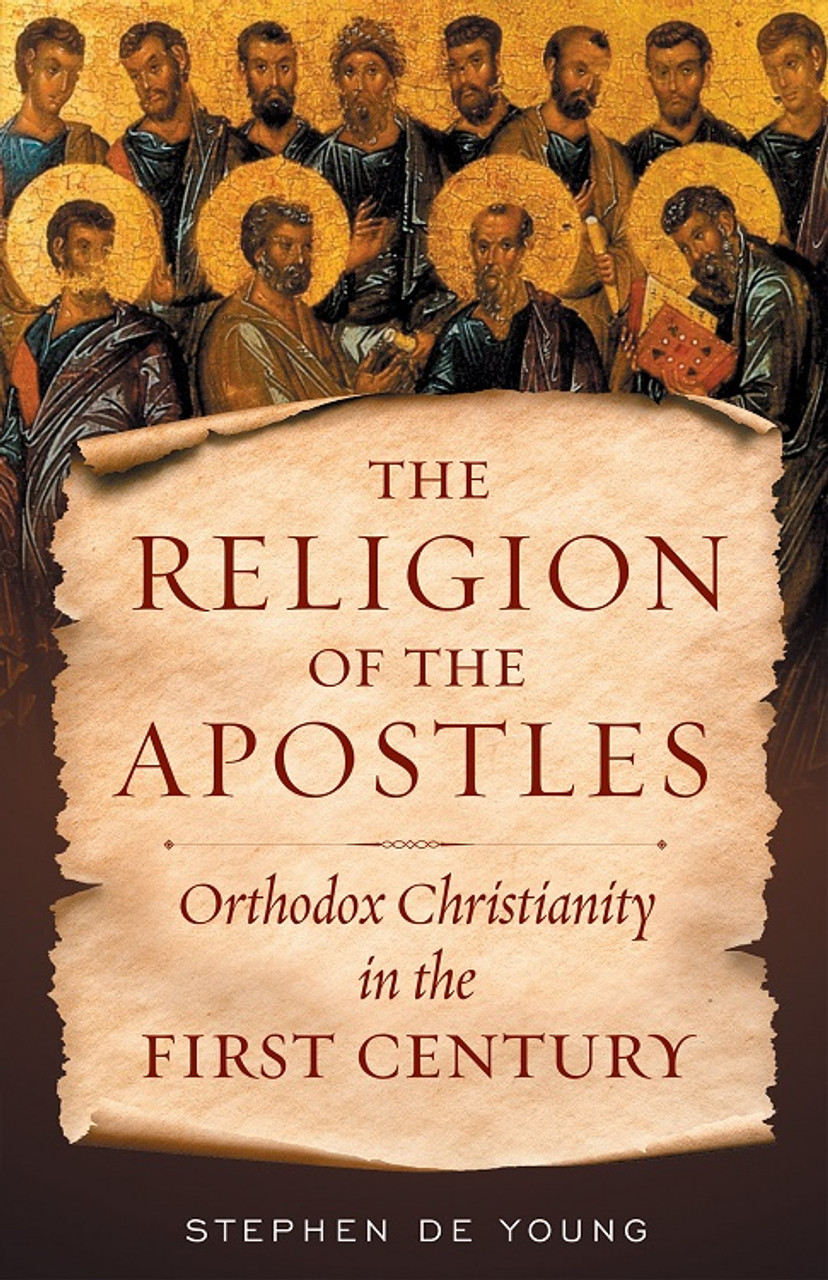
Religion of the Apostles, by Stephen De Young, a Multi-Part Review (#1 The Trinity)

How did the earliest apostles of the church understand the content of their faith and live it out?

Much of contemporary scholarship focuses on the idea of an evolutionary model for the development of Christian doctrine. Some critical scholars suggest that Christianity in the first century was a cacophony of conflicting voices, whereby what might be considered “historic orthodox Christianity” was but one voice among many, that eventually conquered and vanquished other contenders. As this story goes, what eventually became “historic orthodox Christianity” did so through a series of doctrinal developments, including a move from a pure Jewish unitarian monotheism to the Nicene Trinitarian concept of God articulated in the 4th century, incorporating bits and pieces of Greco-Roman thought along the way. This “evolutionary” model of doctrinal development presumes that the doctrinal features of Nicene orthodoxy had no precedent in Judaism.

Even in some conservative Christian circles, this “evolutionary” model is often uncritically assumed. For example, Mark is often considered to be our earliest gospel, and having a rather “low christology;” that is, a rather primitive view of Christ’s divine nature, if any at all. But by the time you get to the Gospel of John, our latest gospel, we see a “high christology,” having a full-blown doctrine of Christ’s divinity

Stephen De Young, in his The Religion of the Apostles: Orthodox Christianity in the First Century, aims to demolish this “evolutionary” model of Christian doctrinal development. Instead, De Young proposes that the earliest instantiation of Christianity draws from theological ideas and practices found in Second Temple Judaism. In other words, what we know as “historic orthodox” Christianity, most fully articulated by the great Council of Nicea in the 4th century, has its fundamental roots stretching back into the world of Judaism during the time of Jesus, before the Second Temple of Jerusalem was destroyed in the year 70 C.E. The Religion of the Apostles is a comprehensive look at what the early church believed and sought to practice. On paper, the book is still sizable at 320 pages, but it is jam packed with material, making it seem even bigger, a theological treat of treasures. As a result, I am breaking up the content over multiple posts (four total), in hopes of making this book review more easily digestible.

  • This post will consider how the early church drew upon the Old Testament to develop the doctrine of the Trinity, as a contrast to the typical “evolutionary” view of Christian doctrinal development.
  • The second blog post will look at how the early church thought about the “divine council,” a key idea found in the Old Testament, an idea often ignored by many conservative Christians, which then gets unfortunately (and wrongly) weaponized by some critical scholars to discredit historically orthodox Christianity.
  • The third blog post explores the doctrine of the atonement, in how the early church thought about what it meant for Jesus to die for our sins, and contrasts how a certain popular view grounded in historical critical scholarship conflicts with what the early church actually believed and taught.
  • The fourth blog post surveys some concluding topics; such as how the Ten Lost Tribes are connected to the Gentiles, how the Law of Moses pertains to the Christian life, and how the ordination of presbyters was drawn from the Old Testament, with some extended discussion as to why the early church only selected qualified men to serve as elders/overseers of the local churches, and not women. I offer some critical evaluation of the book in this final blog post, too.

This series is a deep-dive into how the early church appropriated Scripture in defining the beliefs and practices of a movement, which eventually shapes much of the world we live in today, even in the modern West.


The Religion of the Apostles, by Stephen De Young, shows how the beliefs and practices of the early church connect with the world of Second Temple Judaism, the historical context for Jesus of Nazareth and the New Testament.

Continue reading


October 7th, Jerusalem, and Biblical Prophecy Revisited

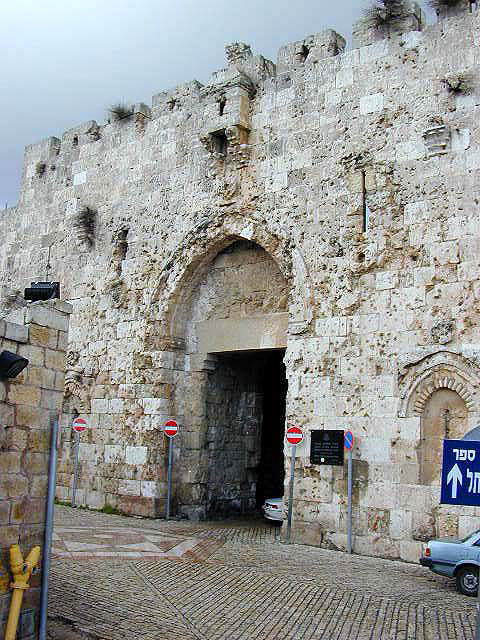
Bullet holes riddle the exterior of the Zion Gate in Jerusalem, a center of conflict during the wars of 1948 and 1967 for control of the Holy City.  I visited Jerusalem in December, 1993, and the sight of these bullet holes gripped me deeply.


It has been one year since Hamas led a surprise attack against the modern state of Israel. The situation in Gaza has been desperate and dire, while daily life in Israel continues under constant threats from Yemeni Houthis, Lebanon’s Hezbollah, and Iran. The fact that the original attack came 50 years plus a day after the Yom Kippur War of 1973 was no coincidence.

Hamas’ name for the October 7, 2023 attack was “Operation Al-Aqsa Flood.” Al-Aqsa is the name of the great mosque located on the Jerusalem Temple Mount. Israeli police had been limiting the number of worshippers who visit the iconic mosque, spreading concerns about access to the mosque.

Fears of the war spreading invite Christians to consider how all of this connects with biblical prophecy. As I write this, concerns about climate change in the wake of Hurricane Helene’s devastation of western North Carolina, with yet another storm bearing down on Florida recall Luke 21:25: “And there will be signs in sun and moon and stars, and on the earth distress of nations in perplexity because of the roaring of the sea and the waves.”

So, are we nearing “The End?”

Between 2014 and 2018, I spent about two-years on and off, on a deep-dive research project to look into the whole issue of “Christian Zionism,” reflecting on a common evangelical expectation that the Bible teaches that a restoration of national Israel, within its original borders as defined in the Book of Genesis, is part of God’s prophetic plan coinciding somehow with the return of Jesus. If there was anything I learned in doing this, it was that the issue of national Israel in prophecy is exceedingly complex.

Since then, my thinking has changed in the sense that the legacy of antisemitism is worse than what I thought before embarking on this study, and that this legacy sadly extends way back into the history of the Christian church. There is inherently a “supersessionist” element in Christian theology in the New Testament, particularly in the Book of Hebrews. In some sense, the message of the Christian faith supersedes the message of traditional Judaism, from whence the Christian movement came. There is no getting around the fact that Christianity has its roots in the world of the Old Testament. The debate is over what that whole notion of “superseding” actually entails, in terms of the ramifications of that type of thinking.

I thought it might be helpful to repost the “blog post compendium” all of that research, with links to other Veracity blog posts, in order to better navigate this complicated issue which crops up almost daily on our news feeds. I originally posted this in January, 2018. I hope at least someone finds this helpful, just as I have….

————————————————————————-


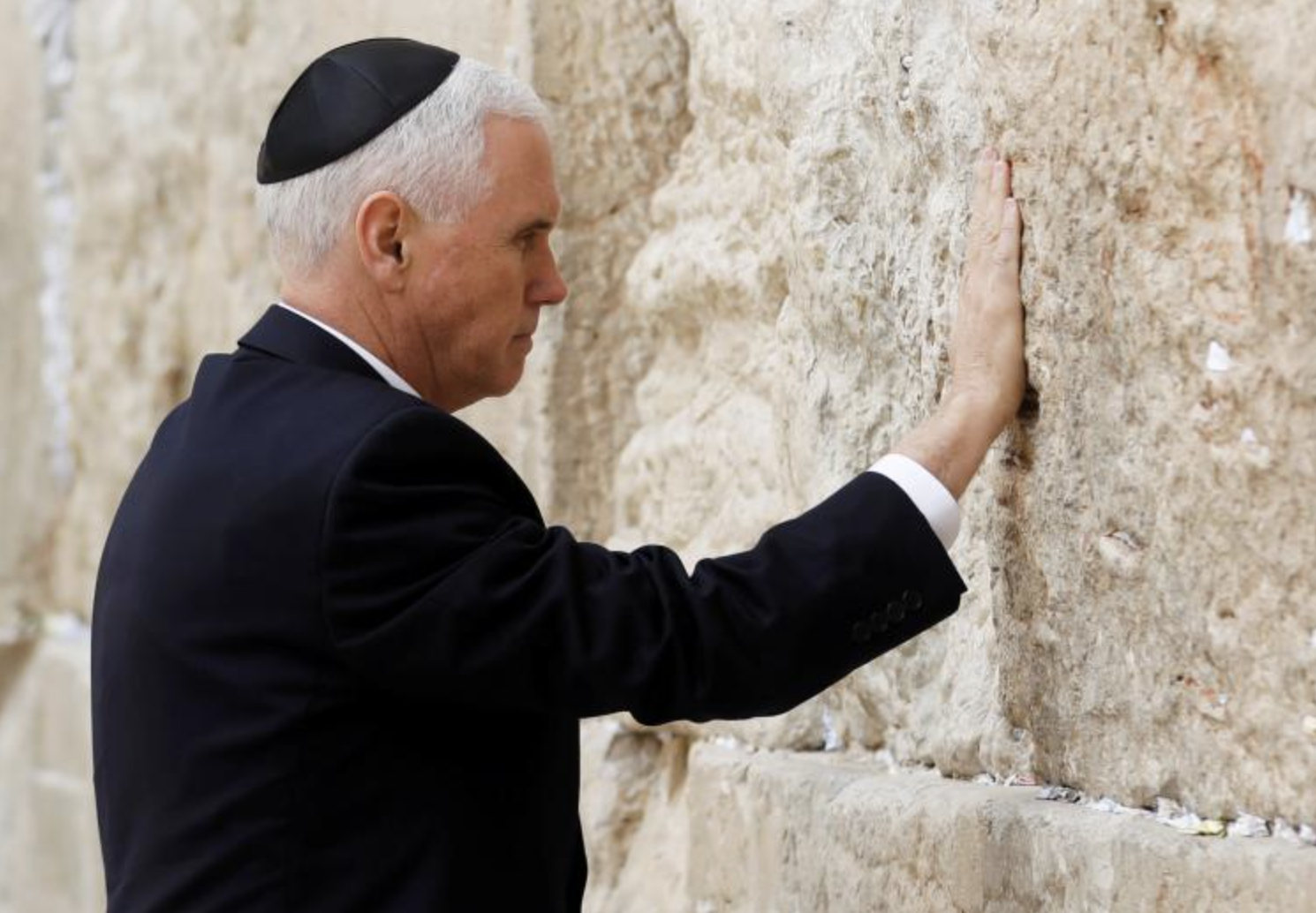
U.S. Vice President, Mike Pence, an evangelical Christian, at Jerusalem’s “Wailing Wall,” January 23, 2018. While many American Christians enthusiastically supported the visit of U.S. Vice President Mike Pence, to Jerusalem, many Middle Eastern Christian leaders refused to meet with him. Why the rebuff of the American leader, by fellow Christians? (photo credit: REUTERS, Ronen Zvulun)

U.S. President Donald Trump made news in December, 2017, by announcing that the United States would move their embassy from Tel Aviv to Jerusalem, to honor the Israeli claim that Jerusalem is truly the capital of that modern nation-state. For many Christians, when they read their Bibles, they think that this is a “no-brainer.” Jerusalem has been the center of Judaism since the days of the Old Testament. Why not now?

But a lot of other Christians, when they read their Bibles, beg to differ.

As British theologian Ian Paul writes, Theodore Herzl, the pioneer of modern Jewish Zionism, modestly envisioned Mount Carmel as the capital for a modern Jewish state, and not Jerusalem. Ben-Gurion, the first prime minister of modern Israel, was willing to accept the loss of Jerusalem as the price to be paid for having a homeland at all, for the Jews, in the Middle East.

The 1967, Six-Days War, whereby Israeli forces took control of all of Jerusalem, changed all of that.

The latest move by the United States, as many see it, is simply accepting what everyone knows is the reality behind modern day Israel.  Why pretend? Jerusalem is, and should be, the capital of Israel.

Well, others are quite uncomfortable with the idea, The planned implementation of U.S. foreign policy creates concerns that this move could lead (and in a few cases, has already led) to unnecessary violence..

They call Jerusalem, the “city of peace.” Why then, is it so controversial? What does the Bible have to say about all of this? Continue reading


A Trip to the Museum of the Bible

My wife and I spent an afternoon in Washington, D.C. this summer at the Museum of the Bible. If you have not been, it is definitely worth the visit.

The Museum of the Bible, in Washington, D.C., opened November 17, 2017

Situated just a few blocks southwest from the U.S. Capitol, the Museum of the Bible can easily take a full afternoon, or even a full day (as that is my wife’s pace) to explore everything. Or you could just go to watch people.

The afternoon we were there, I saw a group of Amish families, speaking Pennsylvania Dutch with a bunch of baby strollers in tow. There were, of course, white Anglo-Saxon Americans, like myself, but plenty of African Americans, and African visitors from across the ocean…. and even a few Southeast Asians. What a mix!

The idea of having a Museum of the Bible was ambitious, and it had a rough start. The Green family, founders of the Hobby Lobby arts and crafts store chain, carried the vision of the Museum of the Bible to reality. But along the way, the Greens ended up acquiring certain artifacts to place in the museum that had questionable provenance. This has happened with other museums of various types, as sometimes inexperienced museum collectors do not always know who to trust when you try to collect artifacts for a collection. In the case of the Museum of the Bible, some objects had to be returned to their rightful owners. As it turned out, all of the supposed Dead Sea Scrolls that the Museum had acquired were discovered to be fakes.

The good news is that the Museum of the Bible has since learned its lesson, setting more careful standards for antiquities acquisitions. Also, the Museum has managed to address concerns that it might be effectively captured by particular Protestant evangelical interests.  The Museum has worked hard to include scholarship from Roman Catholic, Eastern Orthodox, and Jewish sources to round out the interpretation of the Museum’s displays. The Vatican Library in Rome has given the Museum of the Bible some things to display, and I learned a lot about the history of Jews in colonial America. The Museum of the Bible appears to have a good mix of standard museum fair, with objects and written signage for adults and older students to read and see, along with immersive activities for kids and families.

Hey, there is even a display with Elvis Presley’s Bible! Elvis was known for being the king of “rock-n-roll” music, but he also recorded Gospel music, too. The Museum of the Bible rotates items in and out of its collection for public viewing, but you can also see it online, along with a history of how the Museum acquired Elvis’ Bible.

Here are just a few of the other things I saw that caught my eye, from the display about the history of the King James Bible. Back when the King James Bible was first printed, there was a discrepancy regarding how to interpret, much less print, Ruth 3:15. The ESV translation reads it like this:

And he said, “Bring the garment you are wearing and hold it out.” So she held it, and he measured out six measures of barley and put it on her. Then she went into the city.

But the King James scholars behind the KJV translation were befuddled by some confusion between the various Hebrew manuscripts available to them in order to produce the English translation. Did “she,” meaning Ruth go back into the city, as the ESV has it above, or should it be “he,” as in Boaz, who “went back into the city?”  Different printers varied in their printings of 1611:
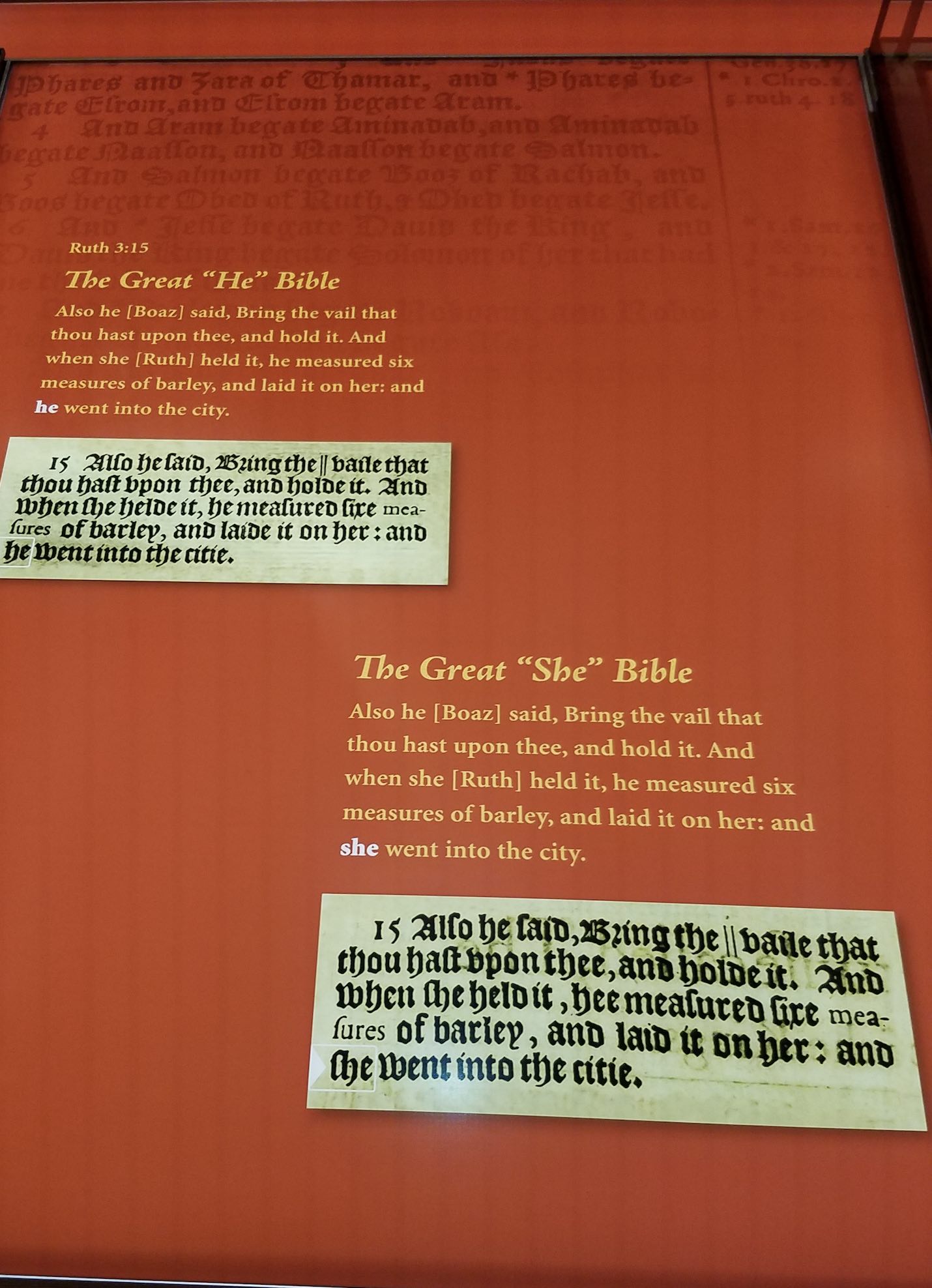
The “she” in the last line of the printing, on the bottom, is a little hard to make out as the English printers of the day would often print the so-called “long s” at the beginning of the word much like the letter “f”. You can see the same practice in the word “mea-sures” broken across two lines in this verse, where it looks like “mea-fures”.  See this video on “The 7 Forgotten Letters of the Alphabet” for an explanation.


There were also a number of Bible printings of the King James Version over the years that had some glaring errors in them.  One printing, nicknamed the “Killer” Bible, from the 1795 printing by R. Bowyer and J. Fittler of London, accidentally misspelled the word “filled” in Mark 7:27 as “killed.” This printing has Jesus saying, “Let the children first be killed.” Oooops! The Museum of the Bible has a copy of this Bible on display (zoom into the photograph to see the error at the top of the left hand page, in the right hand column):
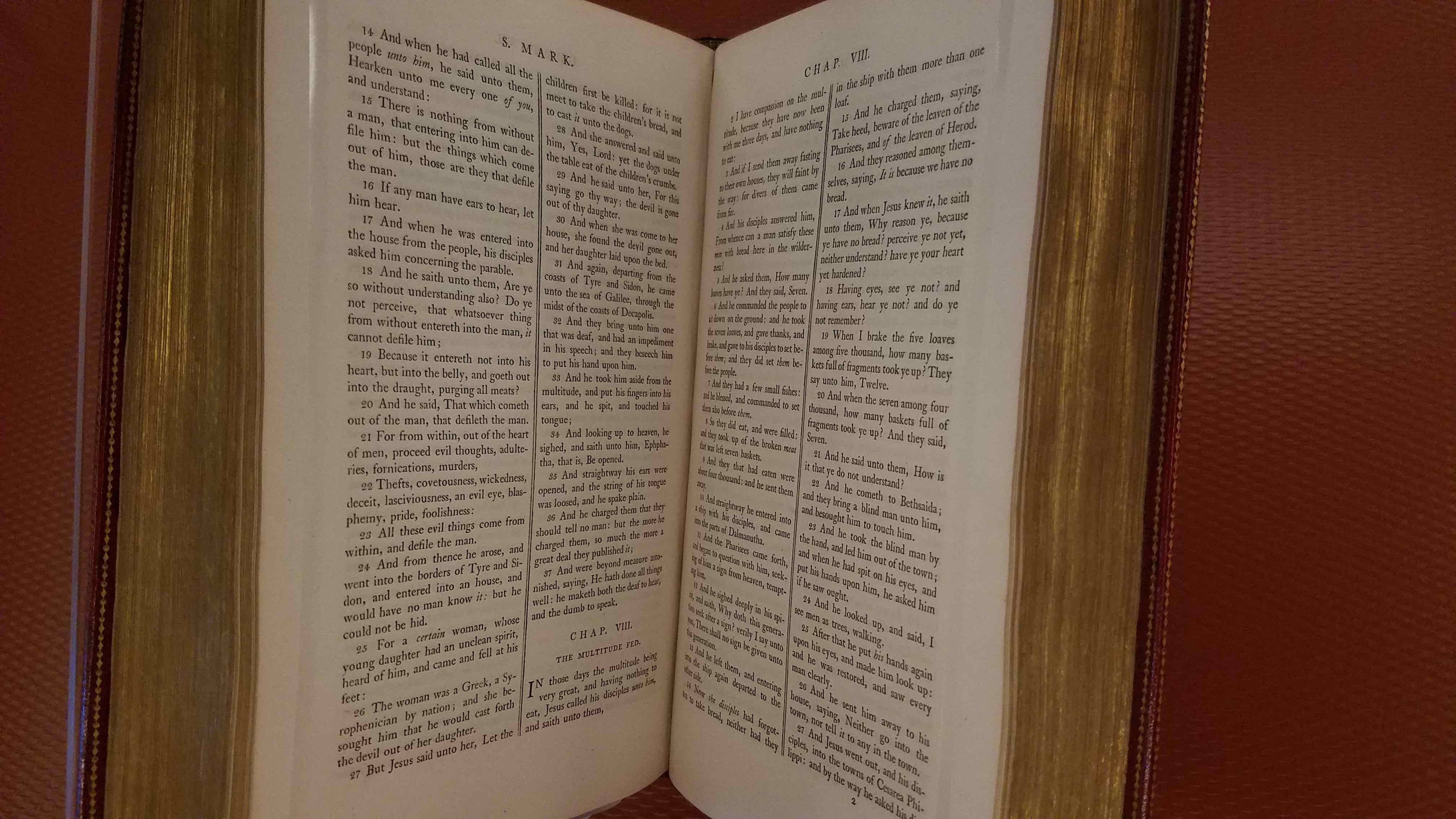
The Killer Bible.


Now here is something I have always wanted to see for myself. In 1631, the printer Robert Barker of London printed a Bible with a terribly embarrassing error in one of the Ten Commandments found in Exodus 20:14, “Thou shall commit adultery.”  The printer left out the word “not.” Now, that is a big OOOOPS!  They call it the “Wicked Bible.” It is a collectors edition now, as most copies of that printing were either corrected or destroyed. But the Museum of the Bible has their own rare copy!
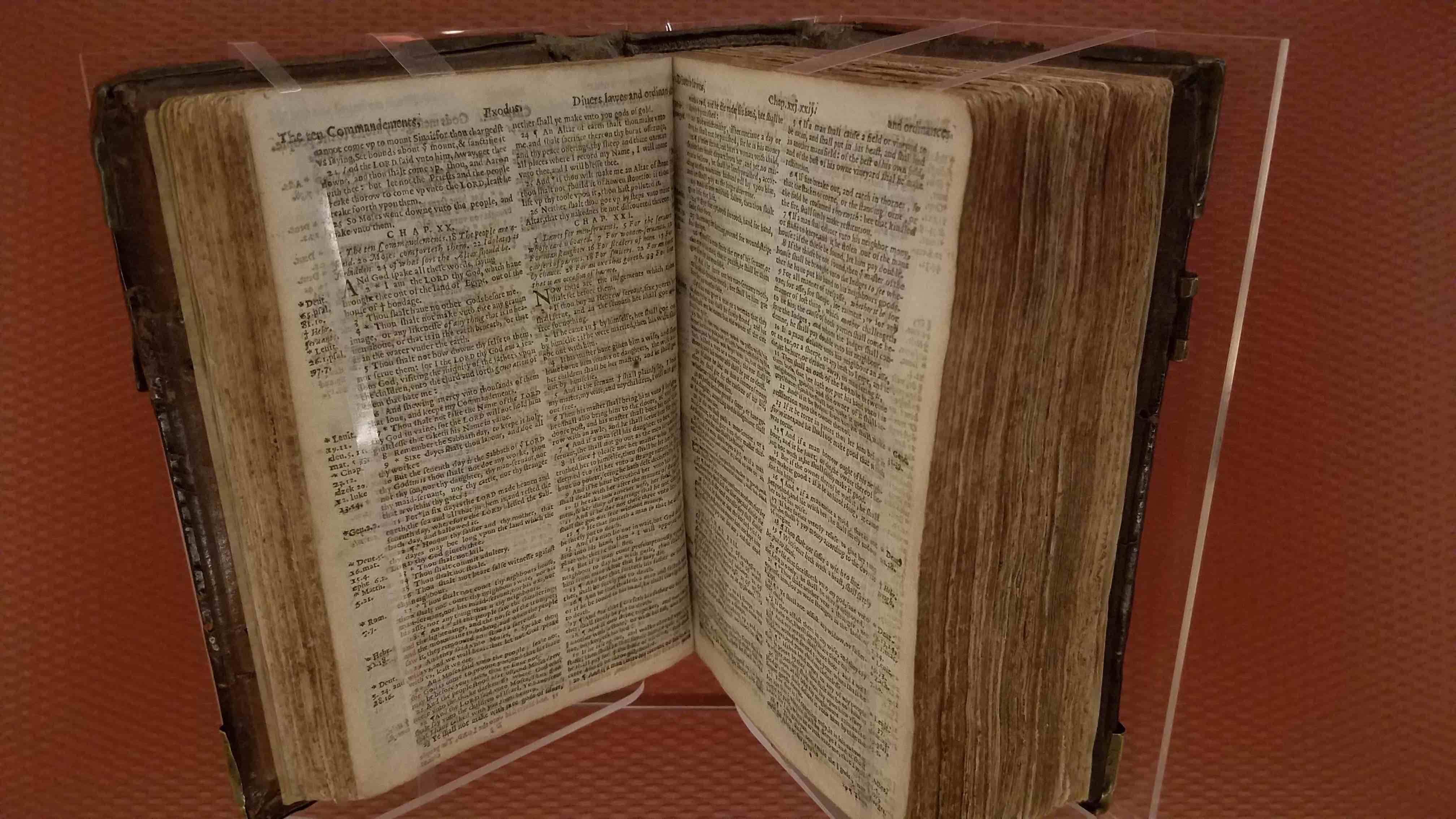
The Wicked Bible


If there was one thing I was disappointed with, it was that the displays often had a lot of facsimiles instead of the real documents on display.  A perfect example is a fragment from the Oxyrhynchus collection discovered in Egypt in the late 19th century of the so-called Gospel of Mary. The Oxyrhynchus collection is from an ancient garbage dump in Egypt where many of the unearthed fragments are still being analyzed over a century later.
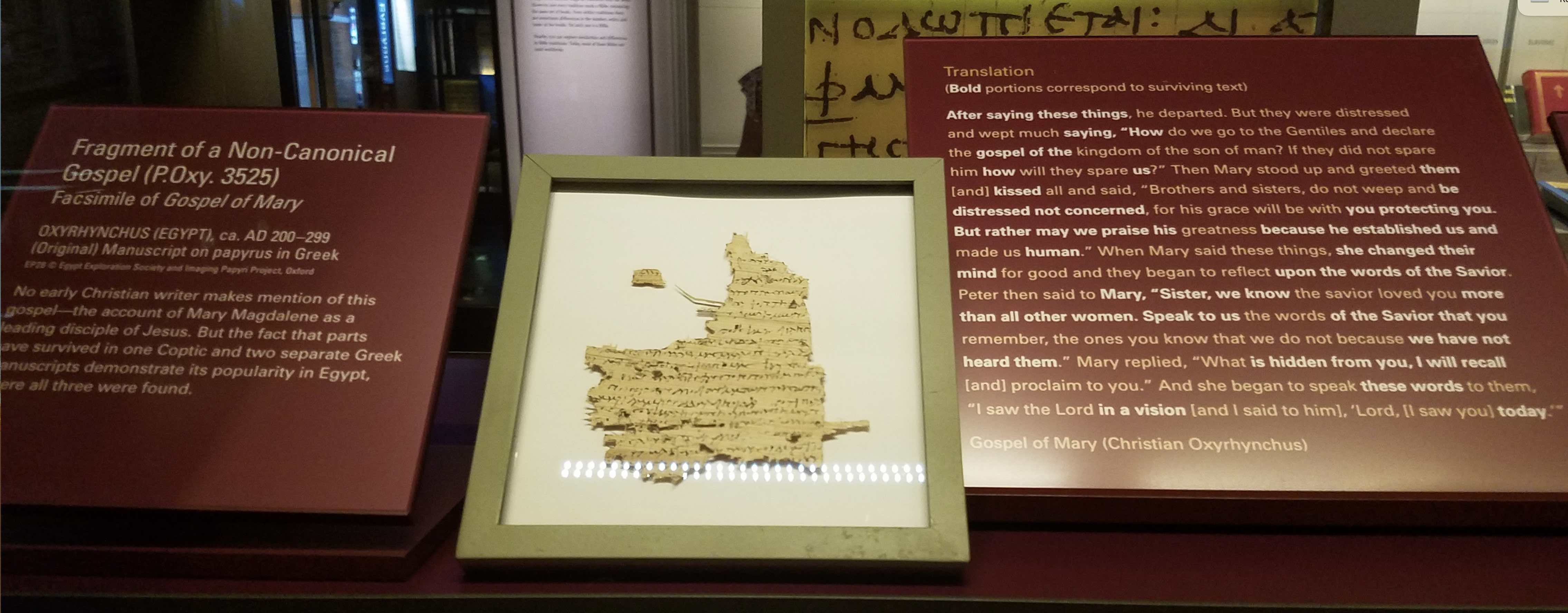
The Gospel of Mary.


The Gospel of Mary is not found in our canonical Bibles, but it was a popular text among the Gnostic Christians, particularly in the 3rd century.  In the Gospel of Mary, Mary Magdalene was featured has having a unique relationship with Jesus, whereby Jesus is said to have revealed things to Mary that Jesus did not reveal to the twelve male disciples/apostles. Some of what Jesus supposedly revealed secretly to Mary is strange, to say the least. A number of Gnostic Christian groups during the early church era had the rough equivalent of female presbyters in their churches (along with male presbyters), as opposed to the male-only presbyteriate in the orthodox communities. The display for the Gospel of Mary was quite informative, even though the fragment on the display was only a facsimile and not the real thing.

Was the Gospel of Mary facsimile on display simply because the Museum of the Bible does not possess the real thing? This was not clear to me. The Museum of the Bible seems like it is on good enough footing now that it might be able to acquire other artifacts for display without having to resort to so many facsimiles. Let us hope this happens!

Overall, there is a lot to explore at the Museum of the Bible. It is perfect for families and large groups to visit. In a day and age when biblical illiteracy is at an all time high, it is great that Americans and visitors to America have the Museum of the Bible available where the history and influence of the Bible on Western (and world) civilization can be surveyed.  Go visit the Museum of the Bible!!