
About five years ago, I wrote a Veracity blog post about 2 Kings 2:23-25 , the weird episode of Elisha and the She-Bears. This passage ranks right up there as one of the strangest, if not the most disturbing stories in the Old Testament. To tell the story most bluntly, the prophet Elisha is ridiculed by a bunch of young, little “boys” for the prophet’s “baldness.” Elisha returns the insults by issuing a curse on the boys, and then a pair of she-bears emerge from the woods to maul forty-two of the boys. Pretty weird, right?
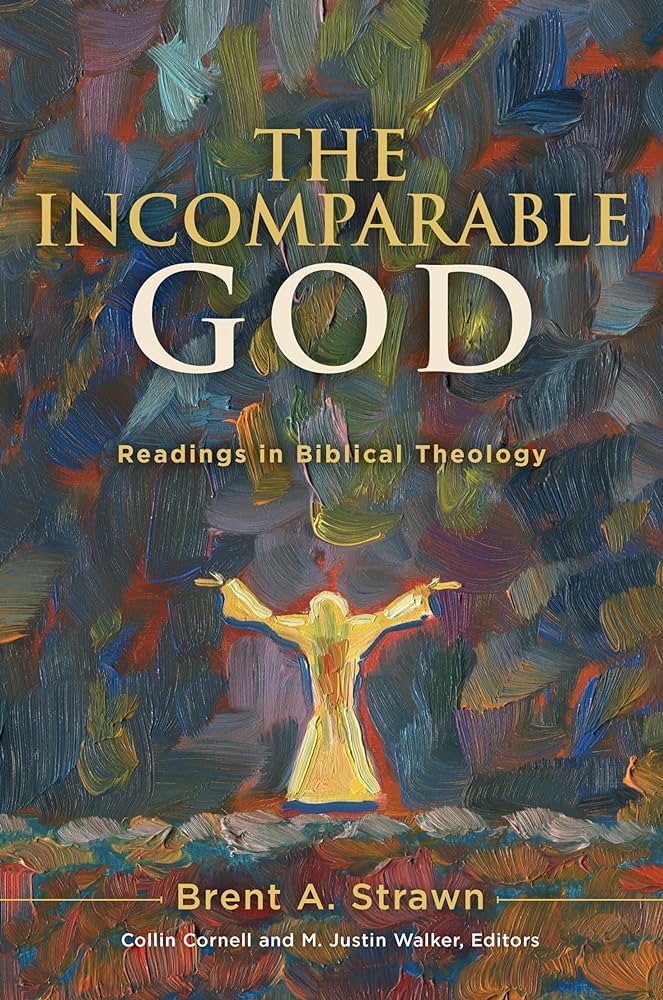
I recently ran across a volume of essays, The Incomparable God, by Brent Strawn, an Old Testament scholar at Duke Divinity School, covering various topics related to the Old Testament, including “Revisiting Elisha and the Bears: Can Modern Christians Read — That Is, Pray — the ‘Worst Texts’ of the Old Testament?” The Incomparable God is very helpful, scholarship of the highest caliber, but it is not for the faint of heart, as the reflections in these essays assume some working knowledge of the Hebrew language. While this is clearly in Brent Strawn’s wheelhouse, the average Christian might not be so well equipped to grasp the nuances of Hebrew waw-consecutive grammar.
If you are thinking, “Waw-what?,” then fear not. In this partial book review, I will do my best to put the cookies down on the lower shelf for you.
Nevertheless, when you try to make sense of something as crazy sounding as the Elisha and the She Bears story, it helps to go to the scholars for some assistance. Believe me, when I first focused my attention on this passage, I needed some help. Now with this new publication of Brent Strawn’s essays, it makes for a good opportunity to revisit this text. So please “bear” with me….. uh, pun intended!
A Very Difficult, Morally-Challenging Bible Passage
The difficult passage in question goes like this (from the English Standard Version, 2 Kings 2:23-25):
“23 He [Elisha] went up from there to Bethel, and while he was going up on the way, some small boys came out of the city and jeered at him, saying, “Go up, you baldhead! Go up, you baldhead!”24 And he turned around, and when he saw them, he cursed them in the name of the Lord. And two she-bears came out of the woods and tore forty-two of the boys. 25 From there he went on to Mount Carmel, and from there he returned to Samaria.“
Back when I was doing youth ministry several decades ago, a very bright female high school student asked me what I thought about this passage of the Bible. I was supposed to be the “Bible expert” but I was stumped.
I had to be honest with her that I had been a believing Christian for at least ten years and I had no clue as to what this was about. 1 and 2 Kings never caught my interest too much, books where Israelite king after Israelite king kept messing up and rebelling against God. Aside from some great stories about Elijah, like the big showdown in 1 Kings 18:16-45 between Elijah and the prophets of Baal at Mount Carmel, 2 Kings just seemed like a rehearsal of names of kings I could hardly pronounce.
I had read the Old Testament back in college for a religion class, but I did not remember reading that particular passage at the time. Perhaps I just skimmed over that part without paying much attention. What I do recall is that I had never heard a sermon preached about Elisha and the She-Bears in any evangelical church that I had been attending that entire ten year period. I read the passage more earnestly now, scratching my head all the way through it, thinking that I might have a good response to give to my high school student friend. But now that it was pointed out to me, I found it jarring. I was dumbfounded. I was stuck.
Elisha and the She-Bears in the History of Interpretation
As it turns out, I am not the only Christian who has felt this way about such a puzzling passage in the Bible. One of the first great heretics in early church history was a former shipping merchant, Marcion of Sinope. Marcion’s father was a churchman, and Marcion himself devoted himself to scholarship, particularly during those severe weather months when shipping was near impossible. After a very successful business career, Marcion had moved from a bustling shipping port on the shores of the Black Sea, to become a church leader in Rome, the center of not only the Roman Empire but perhaps the leading community of the early Christian movement in the mid-second century.
Marcion is often credited as putting together the first version of a Christian “New Testament.” Marcion’s teaching drew in a number of avid followers. He also made a sizable financial contribution to the church in Rome, which made him a welcome figure among Christians in that city.
However, Marcion’s efforts to assemble together a “Bible,” an authoritative collection of Scriptural texts, ultimately caused a ruckus within the Christian community of Rome. Among other things, Marcion had completely left out the entire Old Testament as part of the Bible. Ooops! …. Well, this was not really a mistake on Marcion’s part. This was intentional.
Marcion had concluded that the teachings of Jesus were completely incompatible with the God of the Old Testament. Therefore, Christians need not read the Old Testament. Marcion also favored a trimmed down version of a “New Testament”, a good part of it devoid of objectionable ideas he believed were derived from or linked to the Old Testament. Other Christian leaders, like Tertullian and Irenaus, became alarmed and wrote extensive tracts against Marcion’s teachings. Within a few decades after Marcion’s death, Marcion was branded as a heretic by the early church, as more historically orthodox Christians sought to encourage believers to retain the Old Testament as part of God’s Word.
Yet despite the censure, Marcion’s influence continued on. Marcion’s followers appealed to passages like the Elisha and the She Bears story as proof that the God of the Old Testament had nothing to do with the Jesus of the New Testament. On the face of it, who could blame them? In the Dialogues of Adamantius, one Marcionite follower wrote,
“The prophet of the god of generation told a bear to come out of a thicket and devour the children who met him, but the good Lord says, ‘Let the children come to me, for of such is the kingdom of heaven.”
Had the Marcionites discovered a Bible contradiction? The followers of Marcion were convinced that the God of the Old Testament who punishes little children can not be harmonized with the teachings of Jesus, the one who welcomed little children.1
Those who knew that the story of Jesus was fully integrated and consistent with the story of God told in the Old Testament could tell that something seriously was off with Marcion’s teaching. But to his credit, Marcion hit upon a very difficult passage, at least when you first look at it. Is there some deeper meaning behind the Elisha and the She-Bears story?
Caesarius of Arles (ca. 468–542), a venerated saint in the early medieval church, tried his best to dispel the skepticism of Marcionite-type critics of his day. Caesarius saw this passage as “prophetic of Christ’s passion, equating the double taunt of the children with the two-fold cry of the Jews, ‘Crucify him! Crucify him!’ and understanding the two bears to represent Vespasian and Titus who by his reckoning attacked Jerusalem forty-two years after Christ’s death.”2
Is the deeper meaning behind the number “42” in this passage, the number of boys attacked by the bears, a nod to the number of years following Christ’s death? Okay, Caesarius was probably a few years off in calculating the exact date of Christ’s death in relation to the Roman assault on Jerusalem. The Jewish Wars involving Vespasian and Titus were in the late 60s, in the first century A.D. Most scholars date Christ’s death to 33 A.D., and not to the late 20’s. But allegorical interpretation like this was the preferred way Christians, even in the late 5th century A.D., sought to handle such difficult passages in the Old Testament. Some like Eastern Orthodox YouTube apologist Jonathan Pageau still lean towards an allegorical interpretation.
However since the Protestant Reformation, allegorical interpretation of the Old Testament has often been rejected in favor of a more non-metaphorical, or “literal” approach to the Old Testament. Unfortunately, such efforts to de-allegorize traditional Christian readings of the Old Testament have had the unintended consequence of raising doubts about the integrity of the Bible in the age of social media.
If you spend much time online today, and scroll through TikTok, this story about Elisha and the She-Bears comes up frequently, as a means of discrediting the ethics of the Bible, emboldening the New Atheists, and others, promoting skepticism about historic orthodox Christianity. Apparently, the friends and followers of Marcion are still with us today, and they are armed with iPhones and Tik Tok social media accounts. (The “king” of critical biblical scholarship Tik-Tok, Daniel “all-right-let’s-see-it” McClellan, a progressive Mormon, gives viewers his take on the Elisha and the SheBears story in the following video. In the video after that, Christian philosopher Paul Copan in dialogue with YouTube apologist Alisa Childers explains the controversy surrounding this passage).
So, What Does a Christian Today Do With a Passage in Scripture Like This?
Most probably, neither Marcion of Sinope nor Caesarius of Arles knew much, if any, biblical Hebrew. By the second century (Marcion’s era), the Christian movement had become increasingly more Gentile in character, as the influx of Jews into the Christian movement began to stagnate and eventually decline. As the separation between Judaism and Christianity began to widen, the influence of the Hebrew language in Christian thought was diminishing along with that.
The Greek texts of the New Testament were written within a hundred years of Marcion, and so were more readily understandable. In comparison, the Deuteronomistic author of 2 Kings wrote his work hundreds of years earlier in Hebrew. Over time, the Christian movement had so distanced itself from the Hebrew language that most likely Marcion and Caesarius would not have been familiar with Hebrew idiomatic expressions, if indeed, they knew any Hebrew at all. Thankfully, modern scholarship has given us better access to the thought world of the Old Testament, which is where Brent Strawn comes in to provide some help.
Two former students of Dr. Brent Strawn, Collin Cornell and M. Justin Walker, assembled together this collection of essays written by Brent Strawn in The Incomparable God: Readings in Biblical Theology. Strawn is most well known for his 2017 The Old Testament is Dying: A Diagnosis and Recommended Treatment, as well as his most popular and accessible book, the 2021 Lies My Preacher Told Me: An Honest Look at the Old Testament, reviewed last year here on the Veracity blog. Brent has also served as the academic advisor at Duke Divinity School for a doctoral dissertation written by a pastor friend of mine, Travis Simone.
The Incomparable God includes a wide ranging set of essays, from an analysis of Psalm 137, one of the “infamous” imprecatory psalms where the psalmist prays for Babylonian babies to be dashed against the rocks, to how the theology of the Trinity may better inform our way of reading the Old Testament, to a comparative analysis of the orcs from J.R.R. Tolkien’s Middle-Earth stories with the Canaanites of the Old Testament. But here in this shorter review, I focus on Strawn’s essay, ‘Revisiting Elisha and the Bears: Can Modern Christians Read —That Is, Pray—the “Worst Texts” of the Old Testament?’
Brent Strawn, who has great exegetical skill in interpreting sacred texts, acknowledges a limitation of modern scholarship, particularly when it comes to something like Elisha and She Bears. In the end, Strawn wants to see how attention to exegetical detail should lead the Christian to prayerfully engage with such difficult texts. This is a noble task, but in an age when apologetics has become so tightly intertwined with evangelism, I find it also important to think through how such a difficult text can make it into our Bibles. Why learn how to prayerfully engage with a text that strikes so many as hopelessly immoral? Strawn gives us some points of analysis to help us out.
Setting the Historical Context for Elisha and the She-Bears
The passage in question focuses on Elisha’s journey up to Bethel, a worship center in the northern kingdom of Israel, which separated from the southern kingdom of Judah, after the royal reigns of David and Solomon. Earlier in 2 Kings 2, as a prelude to our passage, Elisha was with his mentor, Elijah, as they journeyed earlier “down to Bethel” (verse 2). Soon thereafter, Elijah journeyed to Jericho, and then to cross the Jordan River. Elisha stayed with him every step of the way. Soon Elijah was taken up by a whirlwind into heaven while standing by the Jordan (verse 11).
Elisha was clearly distraught upon losing this immediate connection to his mentor. Elisha had become attached to his mentor, enjoying a deep friendship. Joshua had lost his Moses. Bilbo Baggins had lost his Gandalf. Nevertheless, Elisha in his grief knew that he had to move on, without Elijah’s close assistance. Elisha then repeats the same movements he made together with Elijah in reverse, first crossing back over the Jordan, then stopping at Jericho, and then making his way back “up” to Bethel.
Strawn cites an essay by another scholar, Joel Burnett at Baylor University, which suggests that Bethel is a “special place of scorn” in Israelite history, told from a Deuteronomistic point of view.3
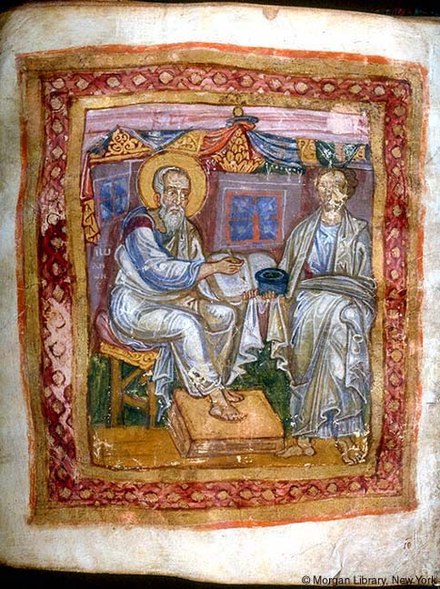
Apostle John (left) and (according to Eisler) Marcion of Sinope (right), from Morgan Library MS 748, 11th century. Marcion’s face was rubbed out at a later point in time, due to his status as an arch-heretic. Followers of Marcion have used their critique of the Elisha and the She Bears story in order to drive a wedge between the Old Testament and New Testament view of God.
The “Cosmic Geography” of “Going Up” and “Going Down”
The late Old Testament scholar, Michael Heiser, and author of The Unseen Realm understands Burnett’s essay as highlighting a particular theological importance associated with the location of Bethel, what Heiser calls a type of “cosmic geography.”4
In “cosmic geography,” different places in the Holy Land correspond to different supernatural realities as described in the Old Testament. We can unpack what this means for the author of 1 & 2 Kings.
Heiser and Burnett observe that the description in 2 Kings 2:2 that Elijah and Elisha “went down” from Gilgal to Bethel has puzzled scholars for centuries. The weirdest part about the direction of going “down” to Bethel is that Bethel is actually a “high place” associated with improper worship. It makes no sense to say that anyone would be able to go “down” to Bethel as Bethel is on a raised part of Israel’s physical geography. No one goes “down” to climb up a hill! While some might suggest a textual error, it is more likely that the reference to going “down” to Bethel was done intentionally, thereby signaling to the reader that something more is going on here than what a purely surface reading would indicate.
In 1 Kings 12:26-33, the Israelite northern kingdom ruler, Jeroboam, is threatened that his people might go to Jerusalem, in the Israelite southern kingdom of Judah, in order to worship there. If the people do that, they might switch their allegiance to the ruler of Judah, Rehoboam.
To counter that threat, Jeroboam sets up alternative worship sites, one in the north at Dan, and then one further south at Bethel. The priests of these improper worship sites were not even of the tribe of the Levites, the only official people group who could legitimately serve as priests in Israelite worship. Therefore, in terms of “cosmic geography,” Bethel was a place of idol worship opposed to the worship of the true God of Israel, Yahweh, at the temple in Jerusalem. Behind the surface reading of the text is a message about spiritual warfare, the worship of Yahweh versus the worship of false gods. Heiser and Burnett surmise that the reference to Elijah and Elisha having “went down” to Bethel was a negative judgment made by the author of Kings about the spiritually degraded status of Bethel.
This would imply that Elisha’s journey back “up” to Bethel, in our difficult passage, the reverse of the going “down” to Bethel earlier in the chapter, plays a very important role in the narrative. Now that Elijah is gone, Elisha picks up the mantle left by the departed Elijah such that Elisha now goes up to challenge the false worship being practiced at Bethel. This frames the context for where the “small boys” who taunt Elisha play their role in the story.
The “Small Boys” Who Taunt Elisha
The additional challenge for the Christian apologist is to understand what is meant by these “small boys.” Here we can review the salient points made by Dan McClellan in the first above video.
The Hebrew word for “boys” in verse 23 has a wide range of semantic meaning. These “boys” could be anyone from a very, very young age, even a toddler, up to a young man, around the ages of 20 to 25. This ambiguity is reinforced by the use of a different word for “boys” in verse 24, but the age range again is very broad. However, certain critics like McClellan will say that the word “small,” as in “small boys” in verse 23, limits the meaning of “boys” to rather young children, as opposed to older teenagers, or even young men. This Hebrew word for “small” in the immediate context of this passage therefore restricts the meaning of “boys” to a young age, as opposed to the upper end of the age range.5
However, such critics are missing the larger context associated with the purposes of the narrator of 1 and 2 Kings, who is opposed to false worship being offered at Bethel. The word “small” could be easily seen as figurative, suggesting that Elisha’s opponents are just acting like bratty little children, in need of some discipline. Brent Strawn himself does not come down with a definitive judgment of the ages in view of these “small boys,” though he cites Burnett again who argues these youths are “not children but a group of young adult males connected with the royal sanctuary of Bethel.”6
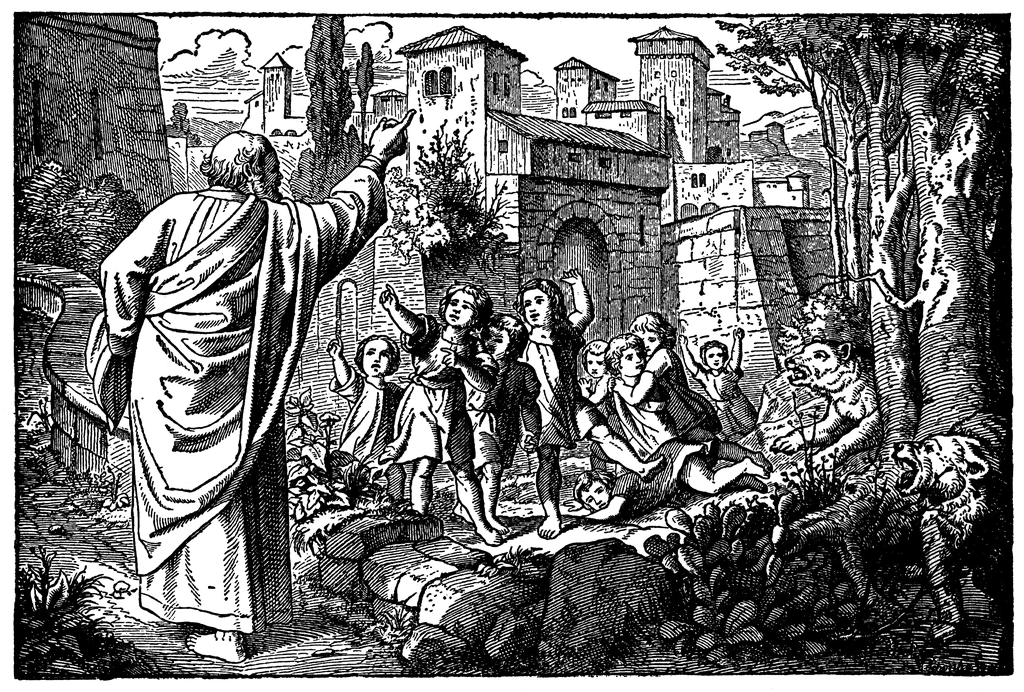
This is up there in near the top of “Weird Stories of the Bible,” when Elisha curses a group of young boys, who taunt him. But does this image really correspond to the message that the Scriptural writer is meaning to convey?
“Small Boys” as a Metaphor For the Priests of Baal at Bethel? Most Likely
Burnett’s reasoning is compelling in my view. Given the rhetorical aims of the author of 2 Kings as a whole, the “cosmic geography” of 2 Kings 2 along with the repeated use of “boys” throughout 1 & 2 Kings plays a much larger role in determining the historical context than what Dan McClellan would allow.
It is quite possible, if not more probable, therefore, to conclude that these “small boys” could be young priests who approve of the false worship at Bethel, and who are engaged in taunting Elisha and his “brand” of Yahweh worship. There is good reason to think that the “boys” in verse 24 were either such young priests associated with false worship, or otherwise closely aligned to the apostasy practiced at Bethel, most likely the worship of the Canaanite god Baal. Remember the story about Elijah challenging the prophets of Baal at Mount Carmel? Now it is Elisha’s turn to challenge the prophets of Baal who have corrupted the worship at Bethel, a sign of God’s judgment against the northern kingdom of Israel.
If the false worship at Bethel in the northern kingdom was a problem, what did the author of 1 & 2 Kings think of the worship practice in Judah, the southern kingdom? As it turns out, this same Hebrew word for “boys” is found twice in 1 Kings 12:8 and verse 10 whereby the ruler of Judah, Rehoboam, is rebuked by the narrator for abandoning “the counsel that the old men gave him and took counsel with the young men who had grown up with him and stood before him” (1 Kings 12:8). In this context, these “boys” are “young men.” In other words, it is not only the Israelites of the northern kingdom who have strayed away from the true worship of Yahweh. The narrator of 1 and 2 Kings has some sharp criticism for the failure of those in the southern kingdom of Judah as well, whereby the “young men” have abandoned the wise counsel from their elders. Viewed within the framework of this larger narrative, it makes little sense for the “boys” in the Elisha and the She Bears passage to be mere non-metaphorical children.7
There are multiple reasons why the double taunting message of “Go up, you baldhead! Go up, you baldhead” in 2 Kings 2:23 by these apostate Israelites would have driven Elisha to utter a curse against them, due to the issue of baldness. However, one reason that Strawn cites as a possibility that catches my attention is that Elisha’s baldness could easily have been a sign of mourning for the disappearance of Elijah, Elisha’s dear mentor. In other words, Elisha could have shaved his head out of his grief for the departed Elijah. Elisha is now all alone, and so the apostate Israelites could have seen this as a golden opportunity to discourage Elisha in continuing his prophetic mission.8
The emergence of the bears from the woods indicates other significant data points. Do the two bears correspond to the two taunts coming from the mouths of the boys?
It is important to note that the bears simply appear from the woods, with no further detail as to why they appeared in the first place. Strawn observes that it is really odd that the two bears were able to successfully maul 42 of the boys. Would not the majority of the boys have been able to run away after the first bear attack or two? All it takes is for a survivor to outrun the slowest boy being chased by an attacking bear. Furthermore, it is not even clear that anyone was really killed in this incident. The fact that the bears “tore” at the “boys” may not have been lethal at all. Strawn sees this bear mauling of the 42 as clear evidence of hyperbole with some type of symbolic reference in the mind of the narrator.9
With this exegetical analysis, a fair reading of this text can be summarized: The prophet Elisha has now taken up the mantle from his mentor, Elijah. It is a difficult task before him that Elisha must attend to, prophetically challenging the false worship at Bethel, thereby calling the apostate Israelites to repentance and restoration. God wants those at Bethel to return to the worship of the one true God. But those who favor the apostasy of Bethel taunt Elisha in hopes of getting the prophet to sidetrack his calling, and give up his prophetic task. Despite his insecurities, Elisha clings to the name of the Lord in cursing his opponents. His opponents are stopped by divine intervention, a sign that despite the obstacles that he must face, Elisha puts his trust in the Lord, and his Lord delivers him. Those who condone the apostate worship at Bethel have been put on notice.
In conclusion, 2 Kings 2:23-24 is not about God cruelly and mercilessly killing defenseless young children, due to some self-righteous arrogance of the prophet. Far from it. Objection overruled.
This is a lot of space to go through to cover just a couple of Old Testament verses. But hopefully a more thoughtful analysis of the text will spur Bible readers to have more charitable view of the Old Testament, particular when they encounter TikTok videos aimed at ridiculing or otherwise being needlessly dismissive of the Old Testament.
Hey, Marcion! Do you want to rethink your efforts to get rid of the Old Testament now?
As an alternative, Brent Strawn wants to get Christians to read their Old Testament!

Brent Strawn, Old Testament scholar, Duke Divinity School
Praying Through the Elisha and the She-Bears Story
What might be the lesson of prayer learned from the story of Elisha and the She-Bears? Brent Strawn offers a type of prayer to offer near the conclusion of this essay that is worth quoting to a certain extent:
I am no prophet, nor the son of a prophet, but I can still situate myself with Elisha in my reading. Am I as single-minded as he in the work God has called me to do? Certainly not. Am I intimidated, stymied, and stopped up short by the sins of my youth or of others? Constantly. Do I fear or care overmuch about what those strong, jeering voices say about me and my vocation, often loud enough that others might overhear? All the time. Do I have the same sort of trust in the strong name of the Lord that Elisha had? Rarely. And what about this additional and difficult question: Do I dare curse in God’s name? In truth, the answer to that question is probably yes, and likely too often, and not in the manner of Elisha, but only in my own manner: cursing about and against those people or things that are in my own way, to my own displeasure, not which prohibit or frustrate the work and way of the God who calls. That situation raises even more profound questions: Do I even know my calling anymore? Am I pursuing it to the places it leads me, even if fraught with danger? I worry about the honest answers to both of those questions.
These latter considerations suggest that I ought not, first and foremost, read myself in the place of the great prophet Elisha. Instead, it seems far better, far safer, and far more accurate to identify as one of the youths, quick to critique the called of God. Maybe I, like those youths, too frequently pose hindrance to, even withhold assistance from (are those the same?), the people who grieve on their way to God’s house or travel to places of God’s divine work, past and future. Maybe those bears will come for me. Maybe they are coming for me. Maybe they should come for me. Will I survive the encounter? Perhaps I, too, will be split in pieces with only two legs or a piece of an ear left over from an all-too-close meeting with the Divine Bear (cf. Amos 5:19; Hos 13:8; Lam 3:10), the God who cannot be mocked (Gal 6:7). But maybe, just maybe, the worst, taunting, unhelpful, and unfaithful parts of me will be ripped away forever in the process. If only!
This is the type of prayerful answer I wish I could travel back in time to give to my high school student friend, who challenged me with a passage of Scripture that stopped me in my tracks. Hopefully, this will help someone else who might be sincerely puzzled by such a difficult passage in the Bible.
Some Pushback and a Recommendation
One of the strengths of The Incomparable God, at least regarding to what is going on with this particular essay on 2 Kings 2, is that Brent Strawn offers a commendable display of exegetical humility. Brent Strawn is not trying to brow-beat the reader to accept any particular conclusion regarding the interpretation of this passage which stands on shaky grounds. That being said, there are a few times when in the name of exegetical humility that Brent Strawn is reluctant to offer his studied opinion as to what is the best and most probable interpretation to take regarding certain elements of the Elisha and She Bears story, particularly those elements that have been misused by other scholars to cast a negative light on the moral integrity of the Old Testament. I think Brent could have stepped up just a tad bit more on that score.
Perhaps one of the reasons the “Old Testament is dying,” as Brent Strawn has written about previously, is that not enough scholars have come to mounting a vigorous defense of the Old Testament and its rightful place within the Christian canon of Scripture. In an age when the descendants of the Marcionites today, whether they be New Atheists or progressive Christians, tend to disregard the Old Testament as hopelessly stuck in an antiquated, morally suspect era of the Bronze Age, it would behoove the Christian scholar to give us more confident reasons for why the Old Testament still matters. In that respect, The Incomparable God offers the reader many nourishing rewards, particularly those with a more nerdy bent.
I have not yet closely examined the other essays in The Incomparable God, so I can not comment on the rest of the book. However, while this review of this one essay in The Incomparable God does not do complete justice to the whole of Brent Strawn’s collection of essays, it does suggest the type of high quality of argumentation and illumination that Dr. Strawn brings to bear on some of the most challenging texts of the Old Testament, and even certain elements found in the New Testament.
Notes:
1. Adamantius 18:16, quoted from M. David Litwa, The Evil Creator, p. 81. Litwa is trying to rehabilitate Marcion as a genuine Christian, who has been maligned by those like Tertullian and Irenaeus in the early church. Litwa himself earned an MDiv degree from Candler School of Theology, and taught for about a year at the College of William and Mary .↩
2. Brian P. Irwin, Tyndale Bulletin 67.1 (2016) 23-35 THE CURIOUS INCIDENT OF THE BOYS AND THE BEARS 2 KINGS 2 AND THE PROPHETIC AUTHORITY OF ELISHA
↩
3. The books 1 and 2 Kings are part of “Deuteronomistic” history, written in association with a connection to the Book of Deuteronomy. Strawn, footnote 46, citing Joel S. Burnett, “‘Going Down’ to Bethel: Elijah and Elisha in the Theological Geography of the Deuteronomistic History,” JBL 129 (2010): 281–97, particularly p. 282↩
4. Michael Heiser, Naked Bible Podcast, Episode 110, Q&A 15, transcript. See Michael Heiser’s groundbreaking book The Unseen Realm for a full description of “cosmic geography.” If you have not read The Unseen Realm, you really should, or start with less academic version of Heiser’s works, Supernatural. ↩
5. Dan McClellan, a progressive Mormon and scholar of the Bible, makes the argument that any attempt to interpret “small boys” as anything other than young male children is a distortion of the text. McClellan suggests that the context for this passage requires a more non-metaphorical, rather restrictive interpretation. As will be suggested, Brent Strawn sees this restrictive interpretation of “small boys” as possibly being rather too restrictive. Consider the other alternatives that other scholars of the Bible make. ↩
6. Strawn, The Incomparable God, “Revisiting Elisha and the Bears: Can Modern Christians Read —That Is, Pray—the “Worst Texts” of the Old Testament?”, footnote 46. See also Burnett, “Going Down’ to Bethel, p. 297. Contra Dan McClellan, Brian Irwin notes that there is a more common word in Hebrew used to refer specifically to a “child” of a young age: “Elsewhere in the Hebrew Bible, the more common term for ‘child’ is ַטף . It may be that the depiction here of the mockingְ נָעִרים ְקַטִנּים from Bethel is intended to contrast with the. אְַנֵשׁי ָהִעיר of Jericho who seek out the advice of the prophet([2 Kings] 2:19).” See Irwin, Tyndale Bulletin 67.1 (2016) 23-35 THE CURIOUS INCIDENT OF THE BOYS AND THE BEARS 2 KINGS 2 AND THE PROPHETIC AUTHORITY OF ELISHA, p. 24. ↩
7. Strong’s Concordance for “yeled”, entry H3206, translated in the ESV as “boys” in 2 Kings 2:24 includes the notion of “apostate Israelites” as a figurative usage of that Hebrew term, which fits in well with the passage under scrutiny. Further, this same phrase of “small boy” from 2 Kings 2:23 is used to describe Solomon as the beginning of his kingly rule as a “little child” (1 Kings 3:7). Read within this larger context, it is fitting to see how the “small boys” of 2 Kings 2:23-24 would easily have a more sarcastic identity given to them by the narrator. ↩
8. Strawn, The Incomparable God, “Revisiting Elisha and the Bears: Can Modern Christians Read —That Is, Pray—the “Worst Texts” of the Old Testament?”, footnote 64.↩
9. Joel Burnett’s essay identifies several possible references in the Old Testament where the number 42 signals divine intent, suggesting that 42 has symbolic significance within the narrative.↩




 Veracity
August 7th, 2025 at 3:33 pm
LikeLike