Monthly Archives: August 2024

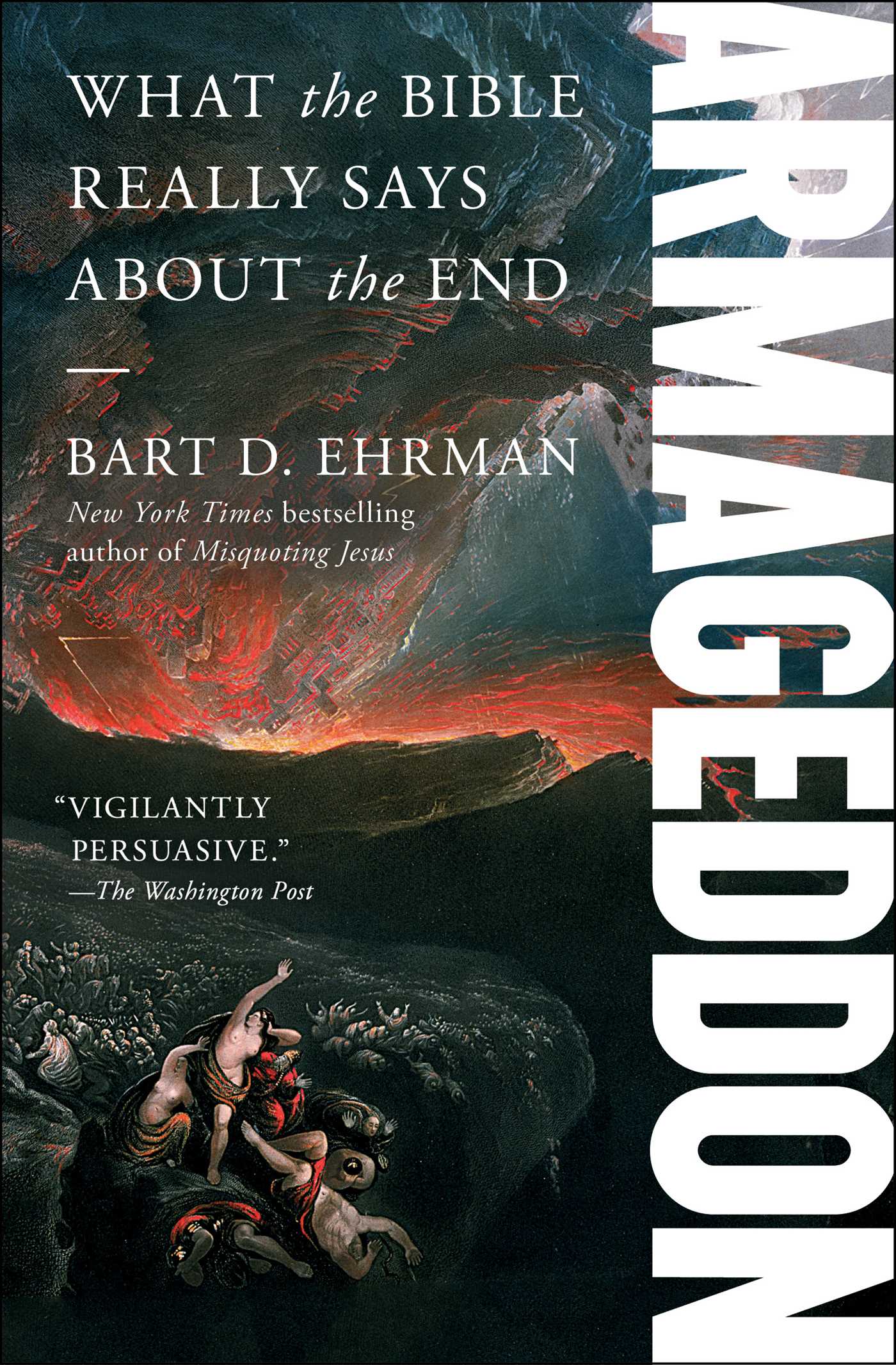
Reviewing Bart Ehrman’s Armageddon, Part One: Why is the Book of Revelation So Violent?

Did Jesus want a woman raped and her children killed in the Book of Revelation?

To start off this post with such a question is shocking. But it was just as shocking to me when I heard this claim made in Bart Ehrman’s 2023 best seller, Armageddon: What the Bible Really Says About the End. What follows is a PG-13 rated Veracity book review.

The Book of Revelation is one of the most difficult books of the Bible to understand. It is also one of the most fascinating books of the Bible. Over the past ten years, a number of Christian bible studies in my town across multiple churches have tried to tackle this last book of the Bible, in order to figure out its enigmatic teachings. From the blowing of trumpets, to the bowls of God’s wrath, to the mark of the beast, etc., the images we read of in Revelation have both disturbed and inspired Christians down through the ages. Revelation is of particular interest in the cultural moment of our day, when political controversies in the United States have been tearing people and families apart, cultural change sparked by social media ripples across society, and reports of civil unrest and horrific wars across the world come across daily in our news feeds.

Are we living in the end times? It sometimes feels like it. People look to the Book of Revelation to try to find the answer.

Continue reading


Moses is Dead, by Travis Simone. A Review.

Life transitions are hard. Particularly when it comes to the death of someone special to you.

When my two parents died within nearly a year from one another, I felt like the world shifted underneath my feet. I thankfully had some good friends over the years, along with numerous cousins, and I had been married for about fifteen years. However, these relationships only encompassed certain portions of my life. My parents on the other hand were there over the entirety of my life up to that point.

Though I was closer emotionally to my mom, losing my dad after my mom turned out to be harder. My mom remained pretty sharp until her cancer incapacitated her in her last two months. Yet my dad’s advancing dementia spanned well over a year. Seeing him slip over that period eventually led to my despair the day he died, when I finally realized that the only person left who knew me during my whole life was gone. What was going to happen next?

One of the last persons to visit with my dad before he died was pastor Travis Simone, just three days before I got the phone call that my dad was dead. As I recall, a few days later Travis came by my house and brought me a Tim Keller book on suffering. I appreciated that Travis was there to help me through my life transition at a critical time.

I think about that transition time as I have read Travis’ D.Min doctoral paper, Moses is Dead: Strategies for Pastoral Transition. Just as the death of Moses eventually allowed the “baton to be passed” to Joshua, Travis had experienced his own transition, just a few years prior to my parents’ death.

Our church had suddenly lost our then lead pastor for several decades, due to an uncomfortable and unresolved controversy. Though not a physical death, the loss of the lead pastor was still a kind of death, an experience that was both shocking and unsettling. Many congregants who had made the church their Christian home for years were traumatized.

As a less senior member of the pastoral staff, Travis was suddenly asked to step forward as the interim pastor of a rather large congregation. If there was such a thing as a “megachurch” in Williamsburg, Virginia, hardly a large city, it was our church: the Williamsburg Community Chapel. Travis had to help our church navigate that difficult period, and he eventually was selected by the church membership to be the next lead pastor of this independent church, which had no denominational backing or predetermined succession plan. The church had been a part of a loose network of churches, a “consortium”, made up of other “community chapels” in the greater Hampton Roads Virginia area. But for the most part, that relationship at that particular moment was rather quite loose, so our church was pretty much on its own. It was a tough task to take on.

Life transitions are hard. Sudden church leadership transitions included.

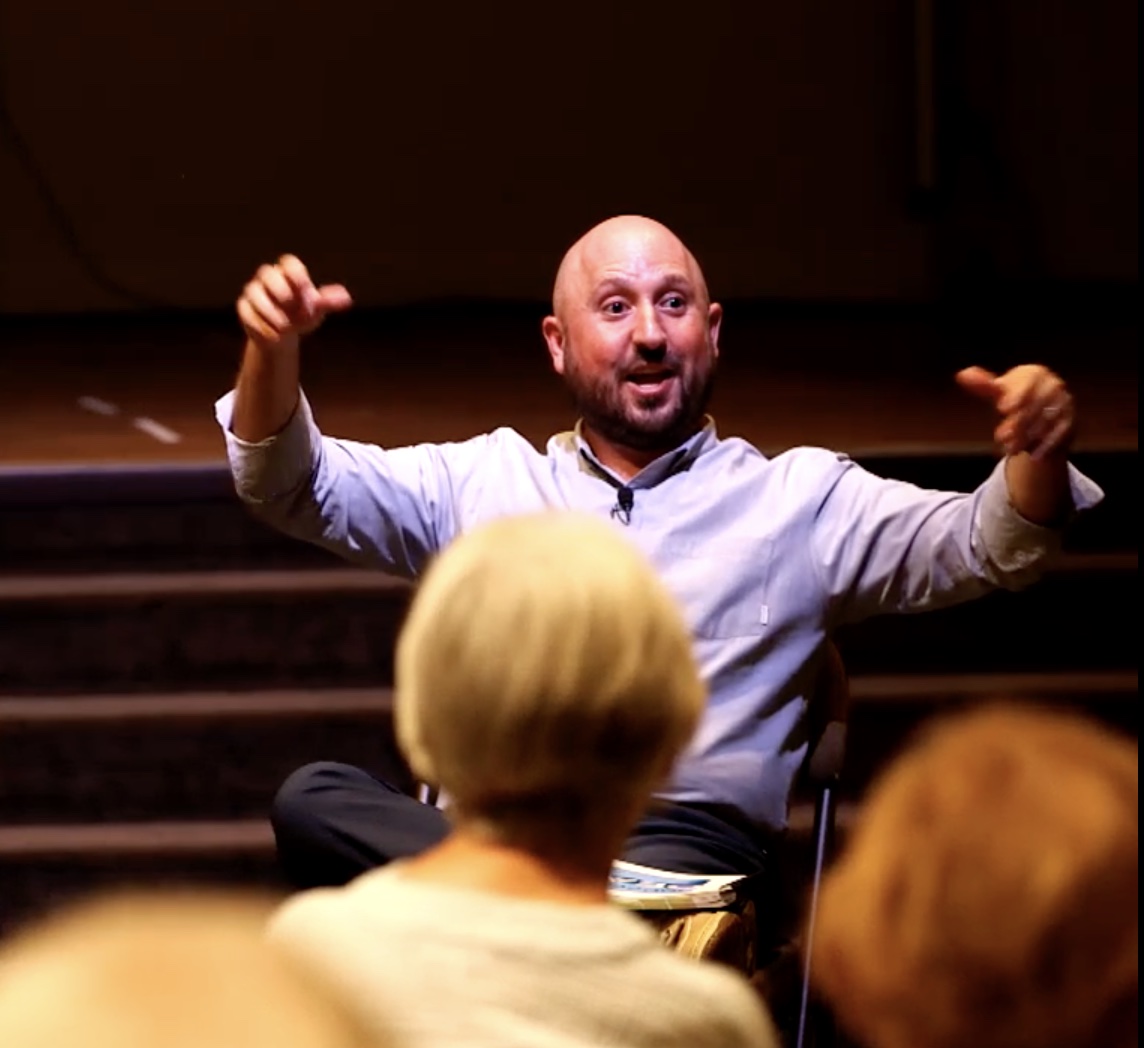
Pastor Travis Simone, leading a book club discussion for his recent D.Min. dissertation entitled Moses Is Dead: Strategies for Pastoral Transition in the summer of 2024, at the Williamsburg Community Chapel.

Continue reading


The Incomparable God, by Brent Strawn. Making Sense of Elisha and the She-Bears

About five years ago, I wrote a Veracity blog post about 2 Kings 2:23-25 , the weird episode of Elisha and the She-Bears. This passage ranks right up there as one of the strangest, if not the most disturbing stories in the Old Testament. To tell the story most bluntly, the prophet Elisha is ridiculed by a bunch of young, little “boys” for the prophet’s “baldness.” Elisha returns the insults by issuing a curse on the boys, and then a pair of she-bears emerge from the woods to maul forty-two of the boys. Pretty weird, right?

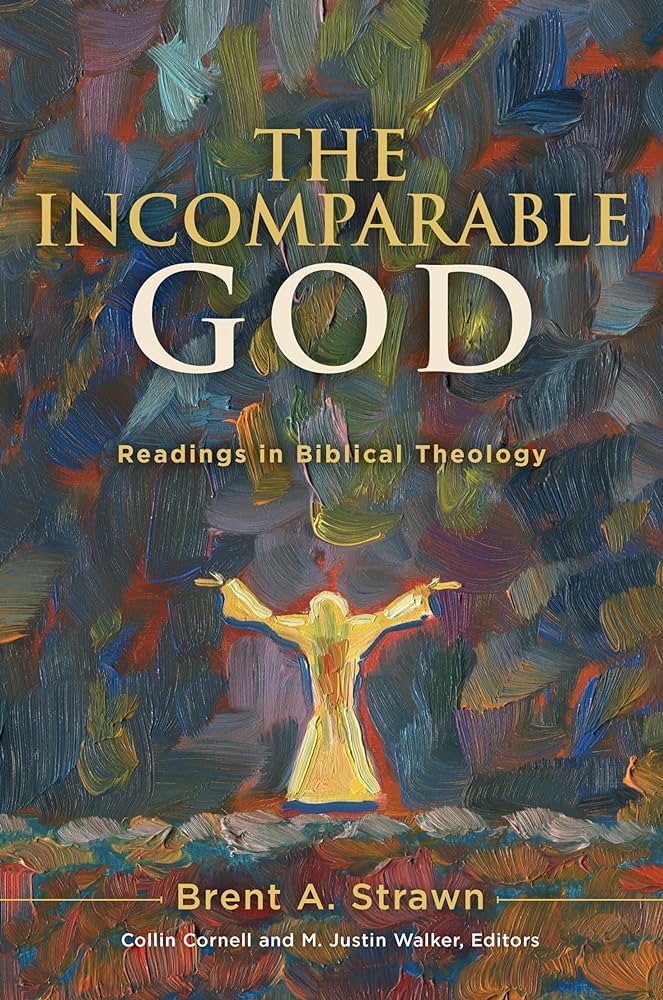
I recently ran across a volume of essays, The Incomparable God, by Brent Strawn, an Old Testament scholar at Duke Divinity School, covering various topics related to the Old Testament, including “Revisiting Elisha and the Bears: Can Modern Christians Read — That Is, Pray — the ‘Worst Texts’ of the Old Testament?” The Incomparable God is very helpful, scholarship of the highest caliber, but it is not for the faint of heart, as the reflections in these essays assume some working knowledge of the Hebrew language. While this is clearly in Brent Strawn’s wheelhouse, the average Christian might not be so well equipped to grasp the nuances of Hebrew waw-consecutive grammar.

If you are thinking, “Waw-what?,” then fear not. In this partial book review, I will do my best to put the cookies down on the lower shelf for you.

Nevertheless, when you try to make sense of something as crazy sounding as the Elisha and the She Bears story, it helps to go to the scholars for some assistance. Believe me, when I first focused my attention on this passage, I needed some help. Now with this new publication of Brent Strawn’s essays, it makes for a good opportunity to revisit this text. So please “bear” with me….. uh, pun intended!

A Very Difficult, Morally-Challenging Bible Passage

The difficult passage in question goes like this (from the English Standard Version, 2 Kings 2:23-25):

“23 He [Elisha] went up from there to Bethel, and while he was going up on the way, some small boys came out of the city and jeered at him, saying, “Go up, you baldhead! Go up, you baldhead!”24 And he turned around, and when he saw them, he cursed them in the name of the Lord. And two she-bears came out of the woods and tore forty-two of the boys. 25 From there he went on to Mount Carmel, and from there he returned to Samaria.“

Back when I was doing youth ministry several decades ago, a very bright female high school student asked me what I thought about this passage of the Bible. I was supposed to be the “Bible expert” but I was stumped.

I had to be honest with her that I had been a believing Christian for at least ten years and I had no clue as to what this was about. 1 and 2 Kings never caught my interest too much, books where Israelite king after Israelite king kept messing up and rebelling against God. Aside from some great stories about Elijah, like the big showdown in 1 Kings 18:16-45 between Elijah and the prophets of Baal at Mount Carmel, 2 Kings just seemed like a rehearsal of names of kings I could hardly pronounce.

I had read the Old Testament back in college for a religion class, but I did not remember reading that particular passage at the time. Perhaps I just skimmed over that part without paying much attention. What I do recall is that I had never heard a sermon preached about Elisha and the She-Bears in any evangelical church that I had been attending that entire ten year period. I read the passage more earnestly now, scratching my head all the way through it, thinking that I might have a good response to give to my high school student friend. But now that it was pointed out to me, I found it jarring. I was dumbfounded. I was stuck.
Continue reading