Monthly Archives: February 2024

Reversing Hermon, by Michael Heiser. A Review

So, what is that whole story about the “sons of God” having relations with the “daughters of men” in Genesis 6:1-4? This rather weird passage which has puzzled many readers for centuries actually holds a clue which unlocks the meaning of a number of New Testament passages which also confuse readers today. After a brief mention of Enoch who “walked with God” in Genesis 5:21-24, the next chapter begins like this (ESV translation):

When man began to multiply on the face of the land and daughters were born to them, the sons of God saw that the daughters of man were attractive. And they took as their wives any they chose. Then the Lord said, “My Spirit shall not abide in man forever, for he is flesh: his days shall be 120 years.” The Nephilim were on the earth in those days, and also afterward, when the sons of God came into the daughters of man and they bore children to them. These were the mighty men who were of old, the men of renown.

In short, Genesis 6:-14 is about the “sin of the Watchers.” After Enoch was taken away (Genesis 5:24), the “sons of God” were divine beings which came down to procreate the Nephilim with the “daughters of men.” This act wreaked havoc upon God’s created world, prompting the Flood of Noah. In addition to what Christians know about the sin of Adam and Eve, it was this divine rebellion in Genesis 6 that informed Jews of the Second Temple period as to the source of sin and evil in the world, as most clearly described in the Book of Enoch, a popular Jewish text written between the Old and New Testament eras.

So argues Michael Heiser in Reversing Hermon: Enoch, the Watchers, and the Forgotten Mission of Jesus Christ. Readers of the late Dr. Michael Heiser’s landmark work, The Unseen Realm, will appreciate Reversing Hermon as a follow-up to The Unseen Realm, which lays out the scholarly case for the theology of the Divine Council, a theme which has been known by scholars but which rarely gets communicated to the average Christian on a Sunday morning.

When I first heard of Michael Heiser and his ideas, I was quite skeptical. It took me awhile to warm up to him, and still to this day, there are a few things he taught of which I am not convinced, including a few ideas presented in Reversing Hermon. But after reading through Reversing Hermon now, I am convinced that Dr. Heiser has left the church a valuable contribution to help normal, everyday believers better understand the Bible. The worst part about the book is probably the subtitle “the Forgotten Mission of Jesus Christ,” which comes across as click-bait and sensationalist.  But a careful read of Reversing Hermon is anything but that!

Reversing Hermon: : Enoch, the Watchers, and the Forgotten Mission of Jesus Christ, by Dr. Michael S. Heiser, continues with the ideas first outline in his groundbreaking The Unseen Realm. I recommend reading Reversing Hermon, but I also recommend reading The Unseen Realm before Reversing Hermon.

It has been a year since the death of Dr. Michael Heiser (February 20, 2023), a highly-skilled and respected Old Testament BIble scholar, who had a keen ability to take difficult concepts and put them on the “bottom shelf” for serious students of the Bible, who want more depth in their understanding of Scripture. Many people view the Bible as being incomprehensible and confusing, but the late Michael Heiser was committed to “making the Bible weird again,” in an effort to show that the Bible has some unique things to say to 21st century sophisticated Westerners. However, much of the unfamiliarity concerning the Divine Council and the rest of Dr. Michael Heiser’s teaching has not been without controversy.
Continue reading

Why History Matters: That Tucker Carlson – Putin Interview

Here is a quick blog post about the recent Tucker Carlson exclusive interview with Vladimir Putin. I finally made my way through the entire 2-hour video, and I had one big takeaway part.

The posts that I write for the Veracity blog are mainly about Christian apologetics (how to defend your faith in an age when many hold Christian convictions to be rather suspect), but I also write about church history. It is not simply because I am a fanatic about history as a subject (a description I willfully accept), but because I fervently believe that historical amnesia is destructive to the church. The Tucker Carlson – Vladimir Putin interview is Exhibit A in making my case.

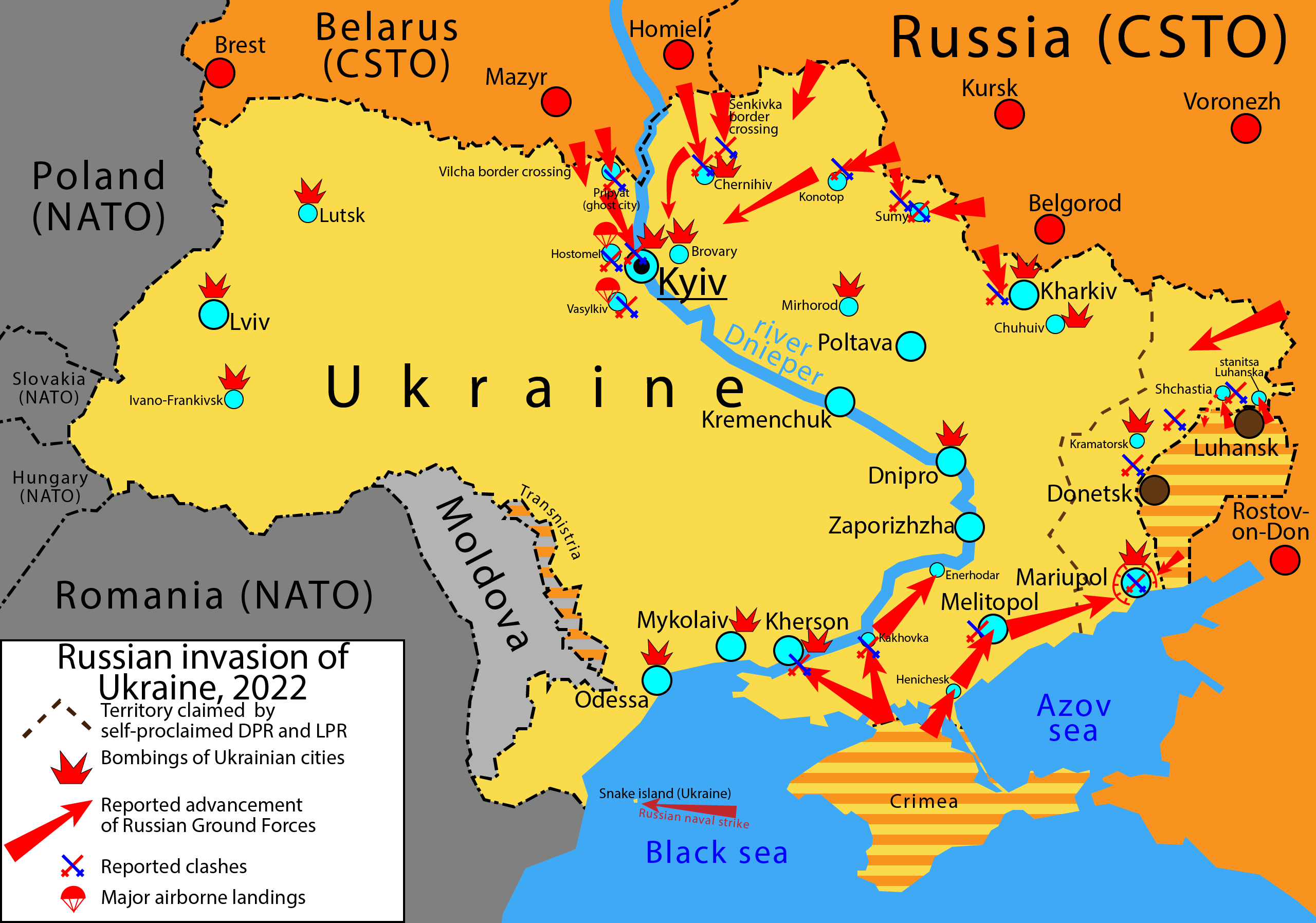
In the interview, President Putin took up about the first half an hour of the interview giving an historical justification for why Russia began attacking Ukraine two years ago.  Putin’s historical argument goes back over 1,000 years, to make the case that Ukraine is really part of Russia. But the argument is not just about ethnic identity. There is a deeply seated theological interpretation of history at work here.

Church history now bubbles up to the top of the 24-hour news cycle.


President Putin is convinced that Russian Orthodox Christianity also binds Russia and Ukraine together into an inseparable bond. The current war in Ukraine is a kind of “civil war” between different factions within the same Russian ethnic and religious family.

Nothing Putin said in the interview is really anything new.  But as historian Tom Holland comments in his reaction to the Carlson – Putin interview, the church history argument being advanced by President Putin is akin to the idea of the British government somehow coming up with a scheme to justify a complete takeover of the whole of Ireland because Saint Patrick came from Britain centuries and centuries ago to establish Christianity in Ireland.

Others have offered additional analysis of Putin’s assertion of certain “facts,” but Tom Holland’s utterly perceptive comments raises a crucial point. When an ideology becomes so strong that it keeps someone from entertaining the possibility that they might be wrong in their understanding of certain historical “facts,” then the consequences can be devastating.

Well over half a million casualties can be associated with the war in Ukraine over the past two years, with hundreds more being killed or wounded every day.

We see the same thing in the Israeli/Gaza conflict, as the body count increases daily, spawned by competing historical and theological narratives that extend back hundreds if not thousands of years.

We see this in disputes in church history, as different flash points continue to divide Christians today, due to theological differences which all look for historical justifications for such divisions.

Why does history matter, and even church history, in particular? Because without a proper grasp of history, the consequences can be devastating.


Christmas in Europe: A Tour of Cambridge, England

My wife and I were able to tack on a few extra days, after our Christmas stay in Belgium, to go and visit friends staying in Cambridge, England.

Jon Thompson, the director of the Cambridge House at the College of William and Mary, had taken his family back to Cambridge, where he had previously studied philosophy, before eventually coming to Williamsburg, Virginia. A wide-ranging group of believers in Williamsburg had prayed for several years for the founding of a Christian Study Center at William and Mary, so it has been wonderful to see how God brought Jon Thompson and his family to Williamsburg less than two years ago, to oversee the work at the Cambridge House.

Our Christmas in Europe made it possible to meet up with Jon and his family in his old “stomping grounds” in Cambridge, England. Sickness made traveling quite difficult for us, but Jon was able to take me on a tour of the university town of Cambridge one afternoon.

Jon Thompson, director of the Cambridge House, at the College of William and Mary, took me on tour of the namesake for the Cambridge House, the university town of Cambridge, England, in January, 2024. We are standing in front of the residence the Thompsons’ had while in Cambridge for a few weeks.


Part of Jon’s interest in coming to Williamsburg to serve as the director of the Cambridge House at the College of William and Mary stems from his experience as an intern at the Round Church, a medieval church building in the very center of Cambridge, which now serves as a Christian Study Center for the academic community of Cambridge. This was also where we began our tour of the town of Cambridge, England.

William and Mary Cambridge House director, Jon Thompson, in front of the Round Church, now a Christian Study Center, in Cambridge, England.


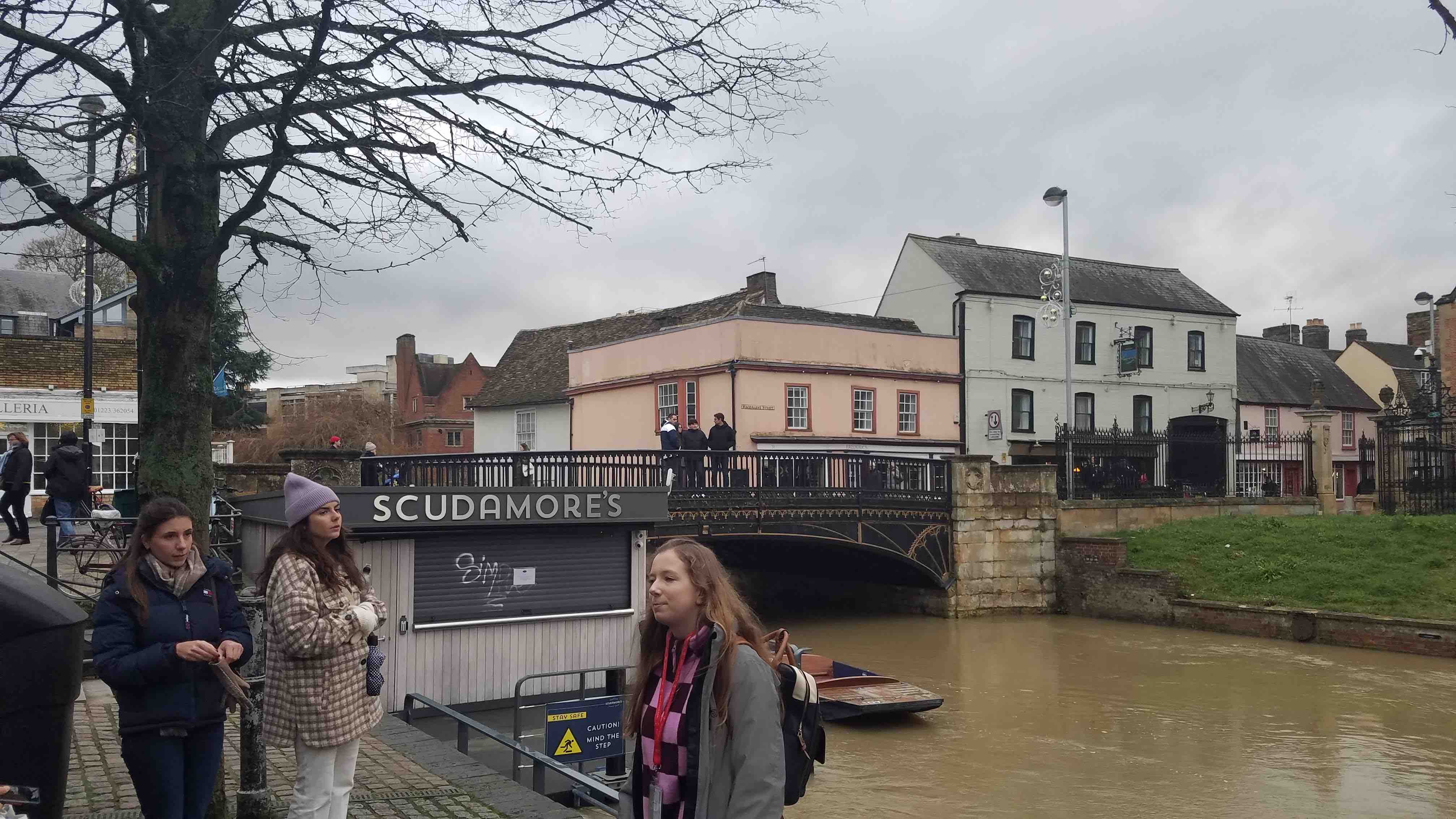
Cambridge, England is an interesting college town, as it is actually a network of loosely affiliated colleges, all part of the Cambridge academic community. The famous Christian apologist and Oxford scholar, C.S. Lewis, spent the last nine years of his life as the Chair of Medieval and Renaissance English for Magdalene College, one of the many colleges that are part of Cambridge. Our official tour guide for a “Christian Heritage” tour of Cambridge, was a wonderful young lady who told us about Lewis’ teaching career at Magdalene, as we gazed across the river Cam, looking at the Bridge that crosses the river, hence the name of the city: “Cam-Bridge.”


Visitors to Cambridge often will go “punting” along the River Cam to view colleges that dot its shoreline. However, the river was running quite high while we were in Cambridge, and the cold weather discouraged us from any “punting” experience.


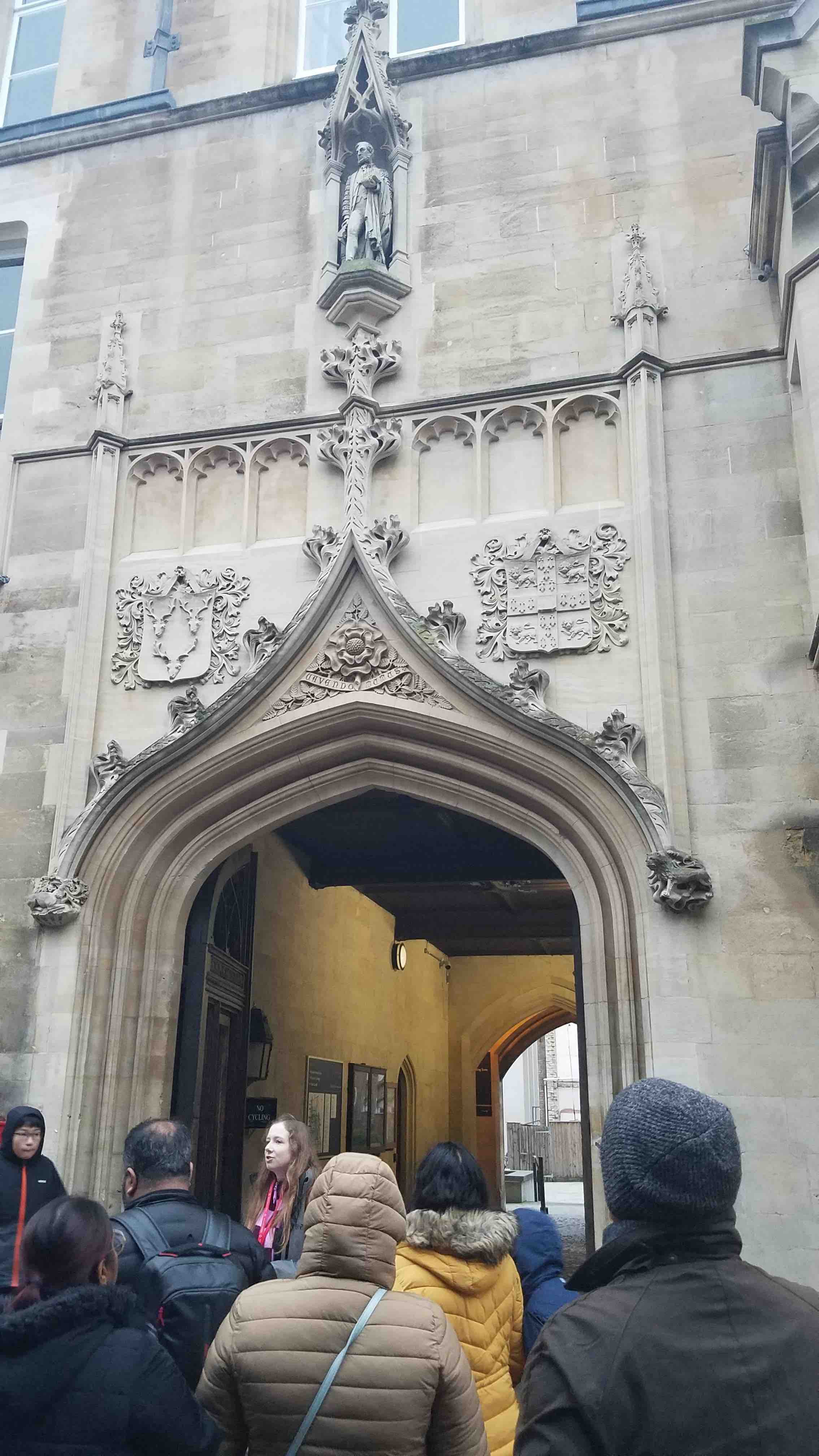
The neat thing about this “Christian Heritage” tour is that we got the opportunity to visit inside some of the various colleges, where several of the colleges typically charge separate fees to visit. Some of greatest names in church history are tied to the Cambridge community, not just C.S. Lewis. For example, William Wilberforce, the 19th century evangelical Christian leader and outspoken advocate for getting rid of the British slave trade, attended St. John’s College. We were able to walk the grounds of St. John’s College and even take a few minutes to visit inside of the beautiful Chapel at St. John’s:

The courtyard of St. John’s College in Cambridge, England. Several Christian leaders in the early 19th century attended college at St. John’s, including William Wilberforce.


St. John’s Chapel at St. John’s College, in Cambridge, England.


We even had the opportunity poke our heads in and glance at the Cavendish Laboratory, led in its early years by James Clerk Maxwell, a leading Scottish scientist of the late 19th century and devout evangelical Christian, whose meditation on the doctrine of the Trinity helped to inspired him to develop his field theory of electricity and magnetism.  His work on “Maxwell’s equations” directly influenced Albert Einstein to develop his theories of relativity. Einstein described Maxwell’s work as the “most profound and the most fruitful that physics has experienced since the time of Newton.” It was at Cavendish Laboratory that the existence of the electron was first discovered:

Entrance to the Cavendish Laboratory, historically one of premier physics labs in the world.


What a treat it was walk along the same streets that some of the greatest names in intellectual history have walked: from Isaac Newton to William Wilberforce to James Clerk Maxwell to Clives Staples Lewis.

I will have more photos from our Christmas in Europe trip in future Veracity blog posts.

Emmanuel College, in Cambridge, England. The school was founded by Puritans, with one of its pupils being Thomas Harvard, who would later travel to New England and establish the first English-speaking college in the Americas, which still bears his name.