A common critique against Christianity that I run into is that the New Testament promotes a certain degree of antisemitism; that is, a kind of hatred towards the Jews. This may sound strange and offensive to some Christians today, but history has shown us that anti-Jewish statements by supposed followers of Christ, and actual acts of persecution, have indeed tarnished the image of the Christian church. If you have Jewish friends who know about Jewish history, they can probably tell you all about it.
For example, the late Jewish intellectual Richard Rubenstein grew up in New York City. In the mid-20th century, groups of Roman Catholic young people streamed through Jewish neighborhoods after Good Friday Masses yelling “Christ-Killers!” That is pretty intense!
A few other points of evidence stick out in people’s minds:
- The Jewish holocaust perpetrated by Nazis during World War II. Germany had a reputation for being a stronghold of Christianity for centuries, yet Adolph Hitler was able to find fertile ground for his poisonous ideas in the early-to-mid 20th century, that led to the murder of 6 million Jewish people. How could that have happened?
- The great Protestant Reformer, Martin Luther, who articulated so beautifully the doctrines of salvation by grace, and grace alone, wrote several antisemitic tracts towards the end of his life. For those who have visited the United States Holocaust Museum in Washington, D.C., you will learn that these antisemitic tracts were circulated and read by many across Europe for several centuries. What warped Luther’s otherwise Gospel-saturated mind during the twilight of his life?
- Even into the 21st century, some who say that they are followers of Jesus have stirred up controversy over their antisemitic statements. Anti-Jewish prejudice did not simply die off during the Nazi era. It is sadly alive and well today. I mean, what will Adidas do with $1.3 billion worth of unsold Yeezy shoes??
However, the charges become more poignant when we find certain passages in the New Testament that have what appears to be an anti-Jewish edge to them. Here is one of the most controversial, from the Apostle Paul:
(13) And we also thank God constantly for this, that when you received the word of God, which you heard from us, you accepted it not as the word of men but as what it really is, the word of God, which is at work in you believers. (14) For you, brothers, became imitators of the churches of God in Christ Jesus that are in Judea. For you suffered the same things from your own countrymen as they did from the Jews, (15) who killed both the Lord Jesus and the prophets, and drove us out, and displease God and oppose all mankind (16) by hindering us from speaking to the Gentiles that they might be saved—so as always to fill up the measure of their sins. But wrath has come upon them at last! (1 Thessalonians 2:13-16 ESV)
The language Paul uses is quite strong. So, is the Apostle Paul being antisemitic here?

Paul in prison, by Rembrandt (credit: Wikipedia)
Should We Conclude that the Apostle Paul is Antisemitic? …. Not So Fast
The issue came to mind a number of weeks ago when I was listening to an episode of Mere Fidelity, one of Timothy Keller’s favorite recommended theological podcasts. I am a big enthusiast for Tim Keller, and this particular episode grabbed my attention, because frankly, I have read 1 Thessalonians several times before, but the issue had never crossed my mind. However, my CSB Apologetics Study Bible had a note about the controversy in it, so it caught my attention. This passage provides a good opportunity to look at out how some very good resources, several of which are freely available on the Internet, can help us study the Scriptures more fruitfully.
In case the gravitas of the difficulty does not hit you, consider the following quote from a 19th century German Bible scholar, Ferdinand Christian Baur:
This passage has a thoroughly un-Pauline stamp. It agrees certainly with the Acts, where it is stated that the Jews in Thessalonica stirred up the heathen against the apostle’s converts, and against himself; yet the comparison is certainly far-fetched between those troubles raised by the Jews and Gentiles conjointly and the persecution of the Christians in Judaea.1
Baur, known to most Bible scholars simply as “F.C. Baur,” was an early champion of the so-called “higher criticism” of the Bible, falling under the broader category of the “historical criticism” of the Bible. One of my first religion classes in college required me to read quite a bit of F.C. Baur’s writings.
Like many other advocates of the tradition of “higher criticism,” Baur was tired of all of the often conflicting and contradictory interpretations foisted upon the Bible, by various denominational traditions, and so he sought to use the principles of scientific investigation, that in the 19th century was beginning to unlock many of the mysteries of the physical sciences, in fields like chemistry and physics, and apply those same kind of principles to the study of the Bible, in hopes of trying to arrive at a scientific interpretation of the Bible. 200 years later, people are still trying to follow F.C. Baur’s example, but with decidedly mixed results.
Despite a number of drawbacks about Baur’s approach, Baur did make some good observations here that are worth noting, namely that Acts 17:13 shows that the believers in nearby Berea had been persecuted by other Jews from Thessalonica:
But when the Jews from Thessalonica learned that the word of God was proclaimed by Paul at Berea also, they came there too, agitating and stirring up the crowds.
The comment about the passage having a “thoroughly un-Pauline stamp ” stems from the evidence that Paul was not antisemitic for several reasons. First, Paul was Jewish. Christians often forget this simple fact, that has become the topic of considerable debate, as to what the ramifications of this fact suggests. But the main point is that Paul did not throw his entire Jewish tradition away, once he became a Christian.
Secondly, Paul had a tremendous heart for his fellow Jews, that they might come to know Jesus as their Messiah:
I have great sorrow and unceasing anguish in my heart. For I could wish that I myself were accursed and cut off from Christ for the sake of my brothers, my kinsmen according to the flesh. (Romans 9:2-3 ESV)
Far from being antisemitic, Paul grieved that many of his fellow Jews had not yet embraced Jesus as the Christ. If anything, Paul still held to the notion of a type of preeminence that the Jews had with respect to the Gentiles. True, the Gospel was for both Jew and Gentile equally. Nevertheless, the Jew was still first when it came to the Gentile, regarding the order of God’s saving purposes. This did not mean that Jews were somehow better than Gentiles, or that Gentiles were somehow inferior to Jews.
For I am not ashamed of the gospel, for it is the power of God for salvation to everyone who believes, to the Jew first and also to the Greek. For in it the righteousness of God is revealed from faith for faith, as it is written, “The righteous shall live by faith.” (Romans 1:16-17 ESV)
This suggests, for some, the exact opposite of antisemitism, that might be wrongly confused with Paul having actually a lower view of the Gentiles, in comparison to the Jews: Paul evidently believed that God focused on presenting the story of the Gospel through the Jewish people, but why? What makes them so special? Paul speaks of the relationship between the Jews and the Gentiles (non-Jews) in the economy of salvation, in terms of an order, but he frankly admits that this is a “mystery.”
Lest you be wise in your own sight, I do not want you to be unaware of this mystery, brothers: a partial hardening has come upon Israel, until the fullness of the Gentiles has come in (Romans 11:25 ESV)
It is curious that Paul uses the word “mystery” here to describe the order of God’s salvation plan. When I come to things like this, I like to consult the StepBible to dig a little deeper. For this passage, you can go right to the chapter, Romans 11, and then go down to verse 25 and hover your mouse over the word “mystery,” and it will give you some word analysis of this Greek word, “musterion,” which is “a matter to the knowledge of which initiation is necessary; a secret“. Interestingly, in Saint Jerome’s translation of the Bible, the famous Vulgate, he translated that word into Latin as “sacramentum,” from which we get the English word, “sacrament.”
This word “mystery” is used elsewhere in the New Testament to describe other “mysteries,” such as the picture of Christ’s relationship to the church, which serves as an analogy to help us understand the meaning of marriage (Ephesians 5:32) and God’s overall plan of salvation (Ephesians 3:9). With respect to Paul’s understanding of the relationship between Jew and Gentile, it opens up a deeper way of appreciating Paul’s thought:
There is neither Jew nor Greek, there is neither slave nor free, there is no male and female, for you are all one in Christ Jesus. (Galatians 3:28 ESV).
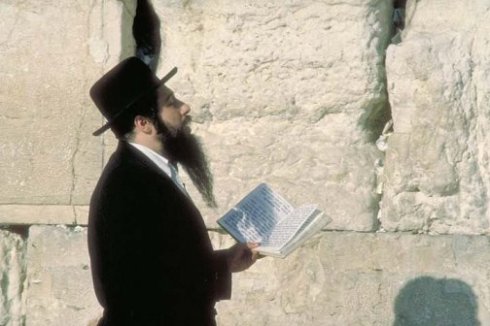
Is Paul turning his back on his own people, the Jews, in 1 Thessalonians? Veracity investigates the claim, and suggests a better answer.
What To Do with This Passage in 1 Thessalonians? Does it Really Belong Here?
Going back to F.C. Baur, conservative evangelical scholars have taken issue with Baur’s insistence that the comparison is “certainly far-fetched” in associating the persecution of Thessalonian Christians with the persecution of believers in Judea. First, it is important to rightly observe the types of persecution in 1 Thessalonians 2:14 suffered by (a) the Thessalonian believers from their “own countrymen;” that is, Jews in Thessalonica who were not convinced by Paul’s message, and (b) that suffered by the Judean believers from “the Jews.”
Note that this reference to “the Jews” at the end of verse 14 is not about all Jews everywhere and at all times. Rather, Paul’s focus is on the Jews back in Judea, living in and around Jerusalem, who opposed the Christian message about Jesus being the Risen Messiah. This is not an ethnic slur against “all Jews.”
Still, the real sticking point for F.C. Baur comes in the last verse of this perplexing passage.
(14) For you, brothers, became imitators of the churches of God in Christ Jesus that are in Judea. For you suffered the same things from your own countrymen as they did from the Jews, (15) who killed both the Lord Jesus and the prophets, and drove us out, and displease God and oppose all mankind (16) by hindering us from speaking to the Gentiles that they might be saved—so as always to fill up the measure of their sins. But wrath has come upon them at last!
That phrasing of “so as always to fill up the measure of their sins” is harsh enough, but it is puzzling to consider what is meant by the last phrase, “But the wrath has come upon them at last.”
In Baur’s view, Paul’s statement seems over-the-top. Baur argued that this passage was actually an interpolation, a fancy word used by scholars to suggest that someone else added this passage into Paul’s letter, long after Paul had written the letter, so that over the years copyists of the New Testament simply just included the passage into the main body of the text, assuming that this actually came from the pen of Paul.2
Whoops!!! How did that sneak in there??
A fundamental problem with Baur’s hypothesis as that we have no existing manuscripts that indicate these verses were ever left out of the New Testament. It is quite tempting to be drawn to an interpolation hypothesis when you run into verses in the Bible that come across as objectionable. If everyone were to call out verses of the Bible as being “invalid” insertions, simply because they were objectionable, we might end up with a Bible a lot thinner than the one we already have!! Nevertheless, it is worth considering Baur’s further reasoning here.
As evidence for this late addition into the text, Baur argued that this interpolation hypothesis makes sense since relationships between the Jewish and Christian communities were still fairly positive in the early days of the church, at the time Paul had written this letter, roughly about the year 49 C.E. Despite notable conflict between Christian and traditional Jews, Jews were still coming into the Christian community. However, by the time of the destruction of the Jerusalem temple in 70 C.E., the relationship between Jews and Christians began to strain severely. Decades later, in the time of the Bar Kokhba Revolt in 132 C.E., the flow of Jews into the Christian church practically slowed down to a mere trickle, if not completely stopped.
Many Christians had concluded that the destruction of the Temple was a sign of God’s judgment against the Jews, more broadly speaking. More than any other event in the 1st century C.E., the destruction of the Temple in Jerusalem was the equivalent of America’s 9/11, in the early 21st century, with the destruction of the Twin Towers of the World Trade Center, in New York. The psychological blow to America in many ways echoes the type of negative psychological impact that the Jews felt with respect to the destruction of their central religious site in Jerusalem. Therefore, Baur proposed that the statement of wrath against the Jews, here in 1 Thessalonians, reflected a view held by Christians decades after Paul wrote this letter.
In other words, someone stuck this passage into a copy of 1 Thessalonians in order to give Paul a certain anti-Jewish edge, according to F.C. Baur, and others sympathetic to Baur’s reasoning.
As it turns out, Baur’s interpolation proposal begins to weaken further once you understand other possible factors involved, based on other evidence. That same year that Paul wrote this letter, which many scholars suggest is indeed Paul’s earliest letter, Emperor Claudius had expelled the Jews from the city of Rome. Also that same year, a riot in Jerusalem during Passover led to the death of thousands of Jews. There was also a great famine in Judea in the previous years. Paul probably had one if not more of these events in mind.3
Nevertheless, there are still those who believe that these incidents in 49 C.E. do not necessarily rise to the level of citing God’s wrath in the severe way that Paul does so in this passage. However, a better solution might be to suggest that Paul is making use of typological interpretation to emphasize the point that opposition to the Gospel in Paul’s current day actually points toward a more fulfilling future event.4
In the typological interpretation of Scriptural prophecy, a particular event (or person) in history serves as a “type” of that which is to come, “the real thing,” sometime in the future. The classic use of typological interpretation by Paul can be found in Romans 5:12-14, where Paul speaks of Adam as a “type of the one who was to come,” that is, Christ. Adam is the first Adam, and Jesus is the second Adam. Jesus was able to fulfill the task that Adam failed at doing. The use of typology was a common interpretive method used, not only by the writers of the New Testament, but by other Jewish writers in the period of Second Temple Judaism.
The language of God’s wrath in this passage might indicate that Paul saw that events like the expulsion of Jews from Rome and/or the death of many Jews at Passover in Jerusalem served as a type of judgment against the Jews that anticipated a yet future event of even greater significance, a catastrophe that would have lasting impact on the Jewish community. In this case, the destruction of Jerusalem and its Temple, some 20 years after this letter was written would fit the bill.
This interpretation is reinforced by other translations that suggests that Paul had this typological thinking in mind. BibleGateway.com allows you to see footnotes in various English translations. For the Christian Standard Bible, you can find a note under 1 Thessalonians 2:16 that reads that “and wrath has overtaken them at last” could be better translated as “and wrath has overtaken them to the end,” which more clearly demonstrates Paul’s prophetic insight, linking the current events of his day with God’s coming future judgment.
I can reference a few other resources for those who wish to dive deep into this perplexing passage:
On the weekend when so many Christians in the West ponder the meaning of the death of Jesus on the cross, Christians should always consider that for centuries the ancestors of our Jewish friends have felt the sting of being called “Christ-killers.” Instead of giving into an antisemitic impulse, we as believers today, whether from a Jewish or Gentile background, probably would have championed for the death of Jesus, if we had been among those Jewish leaders who condemned Jesus 2000 years ago.
In summary, the argument that this passage in 1 Thessalonians 2:13-16 is antisemitic, while at first might seem plausible, in its full analysis does not have the full force of the evidence in its favor. Paul is not antisemitic, nor is it warranted to say that this passage was somehow slipped into the letter by later Christians who wanted to make Paul sound anti-Jewish. Instead, it is quite probable that this passage offers a prophetic glimpse into the type of persecution that believers in Jesus will experience, and that such persecutors will eventually have to face accountability for their actions against those who seek to be faithful to the Truth they received as revealed in Jesus. Paul was no more singling out a particular group of Jews than he was pagan opponents who also sought to persecute the early Christian movement. As verse 13 states, Paul is thankful to God “constantly for this, that when you received the word of God, which you heard from us, you accepted it not as the word of men but as what it really is, the word of God, which is at work in you believers.” May that be true of all believers who experience opposition to their faith in Christ.
Notes:
1. Quoted from Peter C. Hodgson, The Formation of Historical Theology (New York, 1966). See The Harvard Theological Review, 1971, Volume 64, No.1, pp.79-94, “1 Thessalonians 2:13-16: A Deutero-Pauline Interpolation” by Birger A. Pearson. ↩
2. Another example of possible interpolation into Paul’s letters can be found in 1 Corinthians 14:34-35. See earlier Veracity posting about that passage. ↩
3. See discussion in Charles A. Wanamaker, The Epistles to the Romans,. p. 30. Josephus reports in Antiquities 20.112 and Jewish Wars 2.225 that twenty to thirty thousand people were killed in that riot. Many scholars believe that Josephus’ numbers are inflated, but this is still a major event. ↩
4. An exploration of how the New Testament writers used the typological method of interpreting prophecy can be found in an earlier Veracity blog post. It is also important to note that the verb in verse 16, “the wrath has come upon them at last,” is in the Greek aorist tense, a past tense, describing an action without indicating whether it is completed, continued, or repeated. This suggests that the events in 49, though in the past, might point yet forward to a future event. ↩







 Veracity