
Announcing the third post in our summer blog series….
When you read 1 Corinthians all the way through, you run into a big problem trying to reconcile 1 Corinthians 11:2-16 with a quirky, often overlooked passage in 1 Corinthians 14. In 1 Corinthians 11:2-16, Paul is saying that women are praying and prophesying in church. He wants to urge these women to have some type of head covering, but the point is “mostly” accepted that the women are not silent in church. They are active participants in the communal worship experience.
The problem is that 1 Corinthians 14:34-35 on the surface says the exact opposite: “the women should keep silent in church….” concluding with, “….For it is shameful for a woman to speak in church.”
It looks as though Paul is contradicting himself. Critics of the Bible easily jump on this to say that the Bible can not be trusted because of its internal contradictions. I wrote a blog post a few years ago that explores this “Corinthian Conundrum” in detail, that hopefully makes better sense of this difficult passage, so I will not repeat the discussion here, other than to conclude that most interpreters have discovered that a completely flat reading of 1 Corinthians 14:34-35 does not fit the evidence at hand.1

Everything about head coverings in 1 Corinthians 11 (well, maybe not “everything,” but we try to hit the highlights here at Veracity)
However, there is a school of thought that goes about reconciling 1 Corinthians 11:2-16 and 14:34-35 in a completely different direction. It might be called the “Hyper-Conservative” view of 1 Corinthians 11:2-16, or just simply the “John MacArthur View.” The reason why I call it the “John MacArthur View” is because I first saw this in John MacArthur’s Grace Community Church in Los Angeles about 25 years ago.
A “Hyper-Conservative” Argument Regarding Head Coverings
I had come from a church background where women participated in various ways during the worship service. We did not have women serving as elders, but women were leading in worship through singing, offering public prayers, and sharing testimonies. So it was striking when I visited John MacArthur’s church once and I noticed that the women were practically silent in the worship service, except when the choir was singing. For example, a missionary couple came up to talk about their outreach efforts in another country. The husband spoke the entire time, even when praying, while the wife looked on, saying nothing! I wondered if she might have laryngitis, or something like that.
As it turns out, this practice fits within John MacArthur’s reading of 1 Corinthians. MacArthur takes it axiomatically that women are never to speak in church, based on 1 Corinthians 14:34-35, under any circumstances (… well, almost…. singing is okay). So, what do you do with 1 Corinthians 11:2-16 where women are praying and prophesying; that is, speaking during church?
MacArthur’s solution is to say either one of two things: (1) This passage is not about the behavior of women in general at church, but rather about the wife at home with her husband. MacArthur does have a point in that the Greek word for “woman” is the same as for “wife,” along with the fact that “man” could easily refer to a “husband.” In John MacArthur’s judgment, the context is about a wife praying or prophesying with her husband at home.
But there is a second option that MacArthur considers, too: (2) This passage could also be about the woman proclaiming her faith through prayer and/or prophecy outside the church meeting, in the marketplace for example. So when a Christian woman went out into marketplace to buy food, or sell food herself, she was permitted to pray and prophecy in those public spaces, though she needed to have her head covering available when doing so.
Taking either option, the point here is that the prohibition of women speaking only applies to church worship settings, and not in the home or in the marketplace. The consistency problem between 1 Corinthians 11 and 1 Corinthians 14 is solved!
This Hyper-Conservative view takes the Traditional view and pushes it to a particular extreme. It assumes an understanding of male “headship” which suggests a strong relationship of a husband’s authority over his wife.
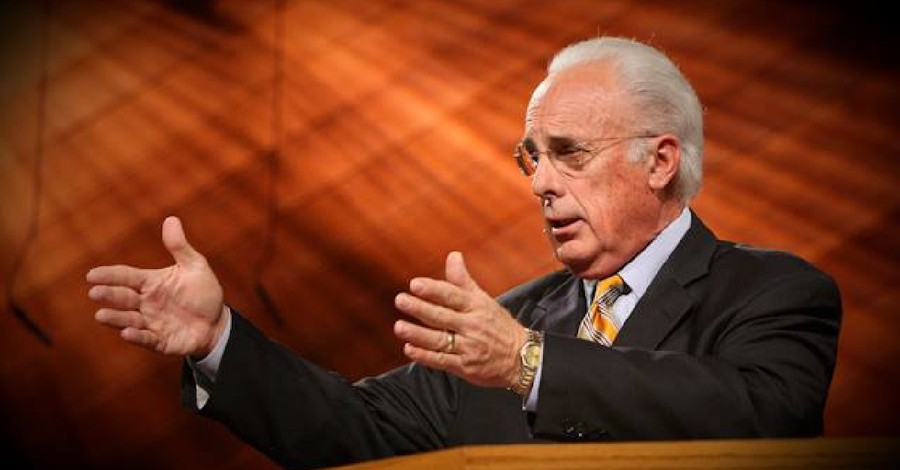
Southern California pastor, John MacArthur, a popular Bible teacher who excels in expository preaching, takes an unusually conservative interpretation of 1 Corinthians 11:2-16, which even many Traditionalists have a hard time accepting.
Pushback Against the Hyper-Conservative View?
John MacArthur has served the church faithfully for many decades, and he has been appreciated by many warm-hearted, godly, gracious, Bible-believing Christians. Veracity has highlighted his expository skills in other blog posts. John MacArthur was the main driving force behind the Legacy Standard Bible, a new Bible translation that has been received well by many churches. On numerous occasions, I have benefitted greatly from his preaching. MacArthur is normally a very fine exegete of Scripture in many ways, but there is a glaring problem with his view of this passage.
The context of 1 Corinthians 11:2-16 is well established within a local church worship gathering. It is not about married life at home, nor is it about life in the marketplace. In the preceding chapter 10, Paul is admonishing the Corinthians to flee from idolatry (1 Corinthians 10:14) and treat the celebration of the Lord’s Supper with dignity and respect for the one true God:
You cannot drink the cup of the Lord and the cup of demons. You cannot partake of the table of the Lord and the table of demons. (1 Corinthians 10:21 ESV)
Paul takes a little aside in 1 Corinthians 10:23-33 to address the eating of food sacrificed to idols, but this is only a wider application of Paul’s teaching against idolatry, and not some mutually exclusive change of setting apart from the corporate worship context.
Likewise, the section following our puzzling 1 Corinthians 11:2-16, namely 1 Corinthians 11:17-34, explicitly contains instructions about the Lord’s Supper again, which suggests a contextual link with 1 Corinthians 10’s instructions about the Lord’s Supper, which is specifically about a corporate worship context. If that were not enough, our passage 1 Corinthians 11:2-16 ends with an appeal not be contentious:
If anyone is inclined to be contentious, we have no such practice, nor do the churches of God. (1 Corinthians 11:16 ESV)
That word “churches” comes from the Greek word, ekklesia, which is rooted in the secular concept of an “assembly” of people. In this case of 1 Corinthians 11:16, the ekklesia is the assembly of believers gathering together for worship. Again, the context of a local church community assembled together for worship is the context for 1 Corinthians 11:2-16. While some commentators conclude that the head coverings passage is somewhat of a digression, there is no strong evidence to show that the immediate context of a church worship gathering has somehow changed.
In other words, against the Hyper-Conservative view, 1 Corinthians 11:2-16 is sandwiched between two sections that are contextually identical; that is, a congregation worship environment, so to say that 1 Corinthians 11:2-16 is somehow completely different makes for a pretty strange sandwich. It is like taking two pieces of bread and putting a piece of aluminum foil between them and calling it a “sandwich.” That does not sound very appetizing, nor does it make much sense.
A basic principle in bible interpretation is that unless there is a lack of clarity in a particular passage, the immediate context of that passage takes precedence over the context of some other passage farther removed from the passage under consideration. However, in John MacArthur’s interpretation, the non-worship context for 1 Corinthians 11:2-16 is established three chapters later, at the end of 1 Corinthians 14. It would appear that John MacArthur believes that it is okay to take the context of a different passage, three chapters away from the passage under discussion, and let that override the immediate context already established from the preceding and following passages, and within the concluding verse of the passage under examination.
Unless I have completely misjudged John MacArthur, that just comes across as a bizarre exegetical handstand to me.

Women should be silent in the churches… all of the time? But perhaps only wear head coverings in the marketplace and/or at home?
Implications for the Complementarian/Egalitarian Debate?
Skepticism about the Hyper-Conservative View comes down to the straight-forward exegesis of Scripture. It has nothing to do with any hidden “feminist” agenda that someone might have, or anything like that. However, I do have to admire the consistency of the Hyper-Conservative view: When a woman is in church, she is to keep her mouth shut…. (except when singing). Outside of the church meeting, women can pray and prophesy as much as God leads them. Nevertheless, a hair covering in Paul’s context is required, yet even John MacArthur concludes that the wearing of a head covering is not necessarily required today, as it is a cultural expression of a theological principle, in which the cultural expression may change from culture to culture.2
Nevertheless, this view is difficult to defend from the text. Whether one is complementarian or an egalitarian, the message should be clearly recognized: Women have a voice in the assembly of the believers, and it even can be argued that women exercise at least some form of leadership in the local church. Women prophets, like Deborah, existed in ancient Israel, and they continued to exist in the New Testament era. Whether or not women are instructed to refrain from serving as presbyters (elders) in the church is of considerable debate within evangelical circles today, an issue dealt with elsewhere on the Veracity blog. We cover this controversial topic in a series of blog posts from several years ago. But according to 1 Corinthians 11:2-16, it can not be denied that women are free to speak in church.3
One last thing before I sign off on this blog post….
Some might object to my classifying this view as “Hyper-Conservative.” This deserves some explanation. Just a week or so before I finished editing this blog post, the media spotlight fell on the 2023 Southern Baptist Convention (SBC) annual meeting, where there was a showdown between Rick Warren, the former lead pastor of Saddleback Church, which was one of the largest Southern Baptist Churches in the United States, until the Southern Baptist Convention disfellowshipped Saddleback, and Albert Mohler, the president of the Southern Baptist Seminary, one of the largest Christian seminaries in the world.
Saddleback was removed from the SBC for violating the Baptist Faith and Message statement, for having installed a female pastor. The statement prohibits SBC churches from having female pastors/elders in local churches. A flurry of media stories surrounded the controversy.
This is an explosive issue within evangelicalism, with extreme voices on both sides weighing in on the controversy. There are “hyper-liberals” just as there are “hyper-conservatives” when it comes to a topic like this. At times like these, it is helpful to consider if there might be a more moderate voice that could lower the temperature on such debates. I would urge readers, if they have time, to listen to the following video with Gavin Ortlund, himself a Baptist pastor, who urges against giving into the vitiriol. Gavin Ortlund is the author of Finding the Right Hills to Die On: The Case for Theological Triage, a great book that I reviewed a couple of years ago on Veracity.
Ortlund encourages those who object to having women pastors/elders to refrain from always thinking that advocates of women ordained as pastors/elders are all theological “liberals.” They are not. On the other side, Ortlund likewise encourages those who favor women pastors/elders to refrain to classifying their opponents as wholly “abusive” and “misogynistic.” They are not. Give a listen below as to why Gavin Ortlund describes this issue as a second-order issue among believing Christians. He even touches on how this subject intertwines with the topic of this summer blog series, on head coverings.
In the next blog post in this series, we will consider a view that goes in a completely different direction: the Symbol of Protection view. Perspectives on head coverings shared by teachers like John MacArthur, and even more moderate teachers, hold to what might called a “Symbol of Authority” view. The “Symbol of Protection” is a completely different kind of animal.
Stick around to find out what it is!!
Notes:
1. Here is a brief summary of the views of 1 Corinthians 14:34-35, as discussed in a previous Veracity blog post. Three main views dominate the discussion: (a) 1 Corinthians 14:34-35 is an addendum to the previous passage about the evaluation of prophecy, indicating that women are not to participate in the evaluation of prophecy, which is an activity to be reserved for qualified male elders to discern. Otherwise, women are encouraged to speak in church through their prayers and prophecy as taught in 1 Corinthians 11:2-16, (b) 1 Corinthians 14:34-35 is an “interpolation”; that is, a passage which was inserted later into the copying process of the New Testament by a later scribe, and not something original to the Apostle Paul, and (c) 1 Corinthians 14:34-35 is a rhetorical device used by the Apostle Paul to quote and then refute a Corinthian saying, which would indicate that “women should be silent in the churches” is not something originating from Paul, but that this is something which Paul rejects. In that previous Veracity blog post, I argue that position (c) has the weight of the evidence in its favor. ↩
2. See Tom Schreiner in his IVP Tyndale commentary on 1 Corinthians, p. 304. “Some scholars, seeing a contrast contrast with 14:33b–36, think that private home meetings are under consideration in 11:2–16 and formal church assemblies in 14:33b–36. We have no evidence, however, of separate private meetings, especially since the church typically gathered for its meetings in homes. There is no basis, then, for distinguishing the gathering here from what we find in 14:33b–36.” Note that Tom Schreiner is a complementarian, who is not persuaded by the arguments of more extreme traditionalists. ↩
3. Okay, I have to admit something here…. John MacArthur can be really funny at times. This Babylon Bee video which promotes the Masters University is downright funny, in my opinion. Is my sense of humor twisted??? ↩




 Veracity
What do you think?