
Ligonier Ministries R.C. Sproul gives a quick rundown of what the Reformation was all about, and what it means for Christians today, in less than three minutes. For more on the 16th century Reformation at Veracity, just search for the keyword “reformation,” and explore various blog posts on relevant topics.
Monthly Archives: October 2017
Erasmus and His Revolutionary Greek New Testament
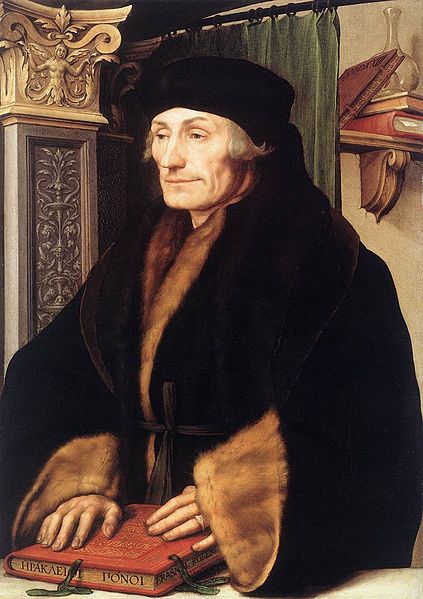
Desiderius Erasmus of Rotterdam (1466-1536), by Holbein. Influential scholar of medieval Christian humanism (credit: Wikipedia)
As we remember the 500th anniversary of Martin Luther’s nailing of his Ninety-Five Theses, to the Wittenberg church door, we must not forget the contribution of Desiderius Erasmus of Rotterdam. Without Erasmus’ breakthrough in the study of the New Testament, Luther’s protest against indulgences might never have happened.
Erasmus, an illegitimate son of a Dutch priest, was a well educated young man, when his mother died. His guardians stole his inheritance, and thus, poverty forced him to enter monastic life. It was a terrible experience, and he hated being a monk.
Historian Diarmaid MacCulloch believes that Erasmus had a same-sex, physical attraction to a fellow monk, and the frustration and moral anguish that this caused, prompted him to find some way out of the monastery. Erasmus was unusually gifted with languages, and he was able to receive a special papal dispensation, to relieve him from his monastic vows. Instead, he was able to focus all of his energies as a single man into scholarship. He became an author, widely read throughout Europe, largely due to the new invention of movable type in printing.
Adagia (1500) was a collection of ancient Latin and Greek proverbs, including memorable phrases like “to walk the tightrope,” “a necessary evil,” and “to sleep on it.” In Praise of Folly (1511) was an attack on superstitious religiosity among medieval Europeans, satirically describing various excesses of the veneration of saints and Mary, and the bizarre collections of relics. For example, did milk really ooze out of the marbled, statued breasts of the Holy Virgin, in shrines across Europe? Erasmus contemptuously thought this to be utterly ridiculous.
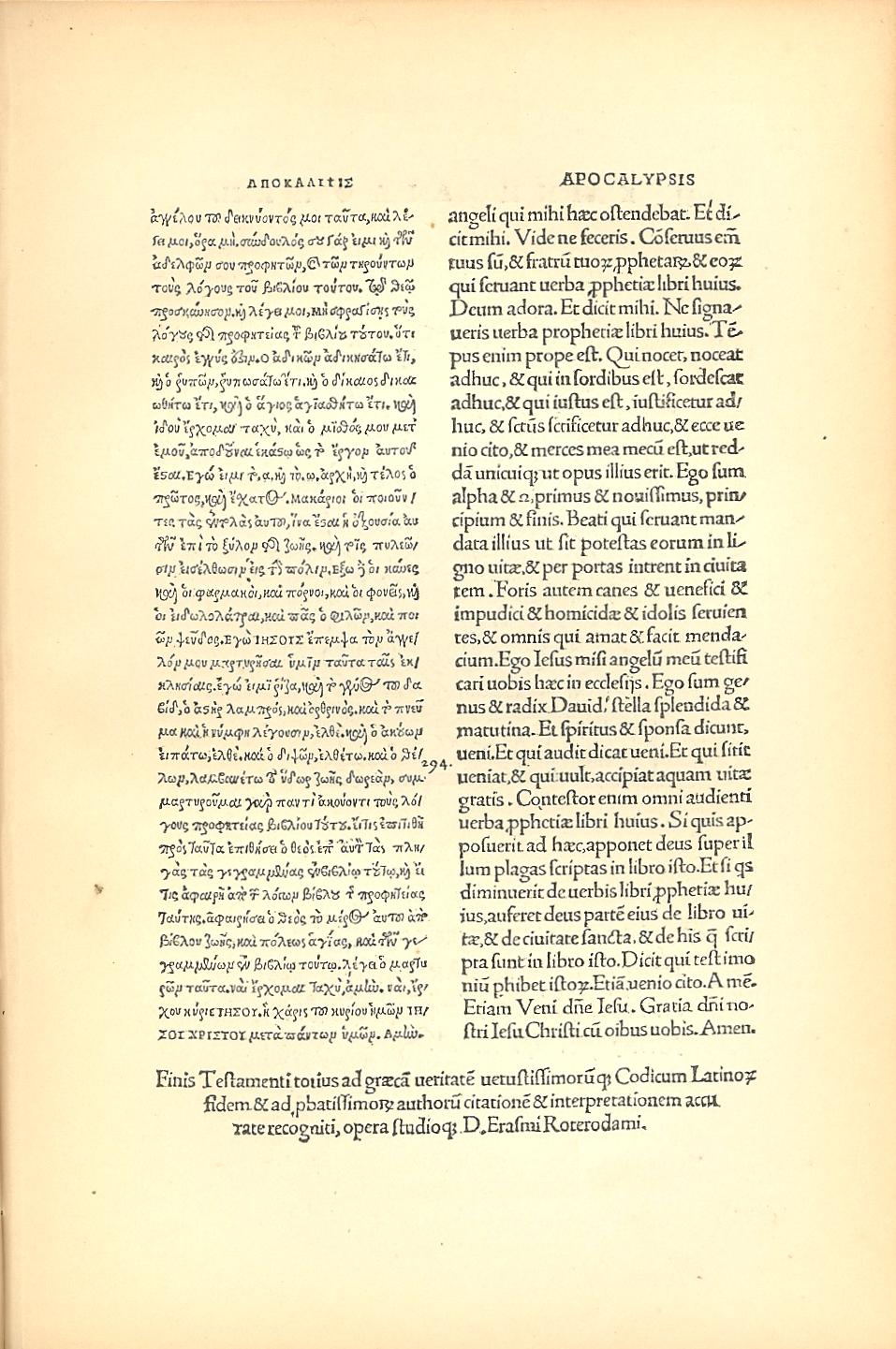
The last page of Erasmus’ Greek New Testament. The Dutch scholar had no Greek access to the last six verses in the final chapter or Revelation, so he had to back-translate those verses from the Latin into the Greek.
Erasmus considered himself to be a humanist scholar, in the sense of wanting to recover the classics. In those days, humanism was a Christian movement. The humanist mantra during this medieval period was the Latin, ad fontes, or “back to the sources.” Erasmus’ greatest achievement, with respect to the coming Protestant Reformation, was his work on developing an authoritative Greek text of the New Testament.
Prior to the age of Erasmus, the ancient Greek sources standing behind the official Latin translation of the Bible for Western Christians, the Vulgate, were obscured in complete disarray. A Spanish project to reconstruct the original text of the Bible, the Complutensian Polyglot Bible, was underway, and it inspired Erasmus to work on the New Testament. Delays in the Spanish project soon gave Erasmus the opportunity to step forward, and make his mark on history.
When he completed the first edition of Novum Instrumentum omne (1516), it became a best seller among scholars all throughout Europe. Erasmus’ work, through successive editions, was pioneering in the field of textual criticism, the study of the original text of the Bible. Novum Instrumentum omne became the basis for the textus receptus, the Greek text that nearly a century later guided the King James Version translators for the English Bible.
What jolted scholars is that Erasmus’ Greek text revealed that various errors had crept into the official Latin Vulgate. Some of these errors that Erasmus exposed had potentially explosive theological implications. Here is a sample:
- The Vulgate used the word sacramentum to describe marriage in Ephesians 5:31-32. Erasmus thought the Greek musterion simply meant “mystery.” Perhaps, marriage was not really a “sacrament” after all?
- For Matthew 4:17, the Vulgate read, “Do penance, for the Kingdom of God is at hand.” Erasmus thought that the word “Repent, for the Kingdom of God is at hand,” was closer to the original Greek text.
- Medieval theologians had argued that the Virgin Mary was a reservoir of grace, that could be tapped into as necessary. The Vulgate had read the angel Gabriel’s declaration to Mary, in Luke 1:28 as “the one who is full of grace.” Erasmus, on the other hand, had it as “the one who has found favor.”
- Then there was the whole controversy of the Comma Johanneum, in 1 John 5:7-8, that has been discussed before here at Veracity.
Luther Discovers Erasmus
The inwardly conflicted, German theology professor, Martin Luther, bought his copy of Erasmus’ work, shortly after it was published. Luther was immediately amazed and absorbed the work of the Dutch humanist. The lack of a clear theology from the Bible, to support the medieval practice of granting indulgences, stood out for Martin Luther. For if “doing penance” was central to the doctrine of indulgences, and “do penance” was not in the Bible, as Erasmus showed in Matthew 4:17, then the theology of Rome was in serious trouble. By the end of the following year, 1517, Luther’s protest against the “sale of indulgences” would spark the beginnings of the Protestant Reformation.
However, despite Luther’s debt to the work of Erasmus, the great scholar of the Netherlands would never go as far as Luther did in seeking reforms within the medieval church. Luther soon came to believe that the entire edifice of Papal Rome’s theology was built on a crumbling foundation, contrary to the teaching of Scripture. Erasmus, on the other hand, only believed that the actual practices of Christian piety, as derived from the Roman church, were being abused. He did not think that the undergirding theology of the Church had been corrupted.
Some had their suspicions of Erasmus, but throughout his whole life, this influential scholar remained in good standing with the church of Rome, despite his criticisms of excesses in various devotional practices. Erasmus would never embrace the revolutionary spirit of a Martin Luther.
Erasmus eventually came into head to head conflict with Martin Luther over the issue of predestination, Erasmus affirming a higher place for human free will, in cooperating with the grace of God, than what Luther would allow. But the Wittenberg reformer severely rebuked the Dutch humanist, thus breaking the cordiality of their relationship.
But it is difficult to imagine how Martin Luther might have gone as far as he did, without the scholarly work of Erasmus to support him. For that reason, Erasmus remains a central figure in the history of the 16th century Reformation, one of the greatest Bible scholars in the history of the Christian movement. That is pretty remarkable for someone, born out of wedlock, who was cheated out of his inheritance, and who wrestled with same-sex desire.
This blog post inspired by reading Alister McGrath’s Reformation Thought and Diarmaid MacCulloch’s The Reformation: A History.
Our Lady of Kibeho
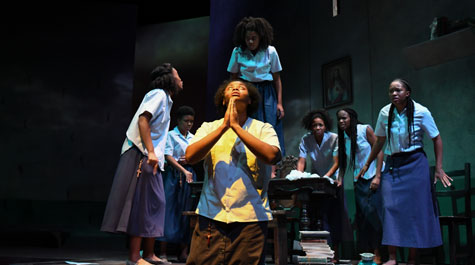
From William and Mary’s production of Our Lady of Kibeho
Are apparitions of Mary real? What do they signify?
When I viewed a recent College of William and Mary theatrical production of Our Lady of Kibeho, written by Katori Hall, I pondered these questions. Based on a true story, in 1981, there were reports of at least three girls in a Rwandan Catholic school, who all claimed to have received visitations from the Virgin Mary. At first, these visions were positive in character, emphasizing the love of God. But soon, the visions turned dark, depicting a future time when the land of Rwanda would become killing fields, overwhelmed with violence. The visions were warning the people to repent. Initial skepticism of these visions eventually gave way to fear.
Thirteen years later, in 1994, Rwanda descended into mass genocide, where somewhere between 500,000 and 1,000,000 Tutsi’s were murdered by Hutu tribes people, which was soon followed by reprisals and civil war. The 2004 film, Hotel Rwanda, tells the story of these atrocities. Some say that the visitations of Our Lady of Kibeho were prophetic warnings that predicted this immense human tragedy. In 2001, a local Roman Catholic bishop deemed these Marian apparitions to be authentic.
Immaculée Ilibagiza, whose family was killed during the genocide, survived this ordeal, hiding in a pastor’s bathroom, along with several other women, for weeks. Ilibagiza was a speaker at the Bill Hybel’s Global Leadership Summit, that our church, Williamsburg Community Chapel, satellite hosted, this past summer. Ilibagiza, herself a Roman Catholic, travels the world, sharing her story, the challenge of forgiveness, and the story of the Catholic school girls involved with the Our Lady of Kibeho visitations.
As a Protestant evangelical, affirming the principle of sola scriptura, I have my doubts about the authenticity of visitations by the Virgin Mary. I see nothing in the Bible that would lead us to expect the Mother of Jesus to make visionary appearances to Christians in our day and age. To claim such apparitions to be authentic must somehow account for that fact that there are no such visitations to Protestant Christians, at least to my knowledge.
Nevertheless, these African girls did see something. I know that some Protestant Christians might think of these extraordinary experiences as being something demonic, but given the message of the visitations, a more moderate and positive view makes more sense. The call to the Rwandan people to repent of their racism was prophetic, and entirely consistent with the teaching of the Scriptures. It is sadly horrible to think that so many people of Rwanda, many who called themselves Christians, were unable to hear and obey that call to repentance.
But such a warning should not be limited to Rwandans. Jeremiah 17:9 points to the problem that all humans have, and not just the Rwandans involved in perpetrating the genocide: “The heart is deceitful above all things,and desperately sick; who can understand it?” I may not be able to fully explain the claims of the Marian apparitions, but I can affirm the teaching of the Scriptures that calls sinful humanity to repentance.
William and Mary’s production of Our Lady of Kibeho was an A+, in my view. If you ever have the opportunity to see Our Lady of Kibeho, you should do so, even considering the fact that the subject matter is indeed disturbing. The following two videos flesh out some of the stories I highlight here, first a three-minute interview with the William and Mary actors, explaining why the story of Our Lady of Kibeho needs to be told, followed by a twelve-minute CBS interview with Immaculée Ilibagiza.
Why People Hate the Sermon on the Mount (Virginia Stem Owens)

Virginia Stem Owens
Our church is studying the Sermon on the Mount this fall, from Matthew 5-7. In this past week’s sermon, one of our associate pastors, Rich Sylvester, found an essay by Virginia Stem Owens, an English professor who was teaching a class at Texas A&M University, 25 years ago. When Owens asked her students to read the Sermon on the Mount, she was a bit stunned by the written responses of her students:
- “I had expected them to have at least a nodding acquaintance with the reading and to express a modicum of piety in their written responses. After all, Texas has always been considered at least marginally part of the Bible Belt.The first paper I picked up began, “In my opinion religion is one big hoax.” I was mildly surprised since this came from a student who had never expressed a single iconoclastic notion the entire semester. I glanced at the opening sentence of the next paper: “There is an old saying that ‘you shouldn’t believe everything you read’ and it applies in this case.”
Owens realized that very few students had ever read the Sermon on the Mount before. Not only that, whether her students were familiar with the Bible or not, the consensus of the class was that they found the sermon to be quite offensive. Blogger Andy Naselli posted a copy of Owens’ paper online. It is worth reading over and praying over.
HT: Andy Naselli
Eric Metaxas on Martin Luther
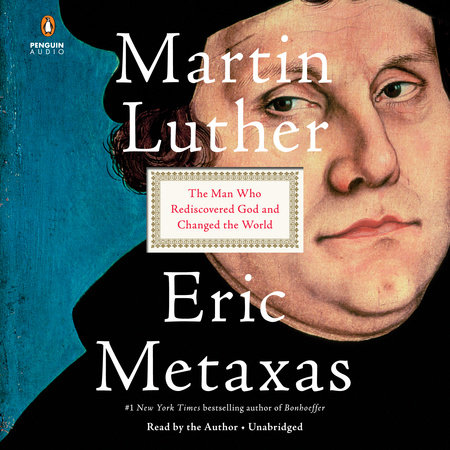
October, 2017 is a big month for Christians, as we remember the 500th anniversary of Martin Luther’s nailing of the Ninety-Five Theses to a Wittenberg church door, kickstarting the Protestant Reformation. In a secular world, where spiritual topics are often taboo, talk of Martin Luther can be a great conversation starter for Protestants, Roman Catholics, and Eastern Orthodox… even with unbelieving friends, co-workers and family members. Luther is big everywhere. Even though Germany is mostly nominally Christian now, Luther is still recognized as a national hero. For Westerners in general, Luther is a prominent historical personality, regardless of one’s religious identification (or lack thereof).
But, if you are clueless about Martin Luther, where do you start to learn more?
Eric Metaxas is a popular Christian author and talk show host. He is a type of public intellectual, who keeps things down on “the bottom shelf.” Plus, he is funny. As author of bestselling books on William Wilberforce and Dietrich Bonhoeffer, Eric Metaxas writes in a very accessible style. His latest book, Martin Luther: The Man Who Rediscovered God and Changed the World, would be a good introduction to those who look upon the Protestant Reformation as an unfamiliar, foreign country. Though I do not agree with everything Metaxas writes, his popularization of scholarly research is nevertheless very engaging.
Roland Bainton’s 1950s classic, Here I Stand, is still my favorite biography on Luther. But if I get a chance to dip into Metaxas’ new book, I might revise that. In the following video, Eric Metaxas, who comes from an Eastern Orthodox background, gives a talk summarizing his new book on Luther, at a recent National Religious Broadcaster’s meeting. As Metaxas says, Luther “rediscovered God and changed the world.” For a cheery take on Luther, please enjoy!
Feel free to share our book…

Join the Conversation
Clarke Morledge on The Council of Nicaea Demythol… Clarke Morledge on From Genesis to Junia: An Hone… Clarke Morledge on From Genesis to Junia: An Hone… Clarke Morledge on From Genesis to Junia: An Hone… Clarke Morledge on From Genesis to Junia: An Hone… Clarke Morledge on From Genesis to Junia: An Hone… Clarke Morledge on Is the Apostle Paul Being Anti… Clarke Morledge on Reversing Hermon, by Michael H… Clarke Morledge on What About Those “Lost S… Clarke Morledge on Is the Virgin Birth Prophecy a… Clarke Morledge on The First Thousand Years, by R… Mark on The First Thousand Years, by R… Clarke Morledge on Reversing Hermon, by Michael H… Jim Long on Reversing Hermon, by Michael H… Clarke Morledge on Bart Ehrman’s Jesus: Apo…


 Veracity