Monthly Archives: September 2016

The Final Update to the English Standard Version (ESV)

Plumb LineCrossway Publishers recently announced that they have arrived at a permanent revision of the English Standard Version (ESV) of the Bible. This last revision, conducted in the summer of 2016, involves just 52 words out of 29 Bible verses, as detailed on Crossway’s website.

I bought my first ESV translation of the Bible in 2008. Even though the first edition came out 2001, there had been rumors of a Study Bible being produced. I am glad that I waited. This is now my favorite Bible to use, as it contains a wealth of resources and maps to aid the student of Scripture (though I also really like the Zondervan NIV Study Bible, too). Unlike some other study Bibles produced by a single Bible teacher, the ESV Study Bible was produced by a team of evangelical scholars across a wide set of backgrounds, thus making sure the reader is not limited to one person’s view of the Bible.

The original vision of the ESV translation committee was to produce a modern, and yet permanent, alternative to the venerable King James Version (KJV) of the Bible, for English readers. The idea of having a fixed text that would stand the test of time was the primary reason why the church that I am a part of selected the ESV as our new pew Bible.

But not every initial printing of a new Bible is perfect, and so the ESV made allowances for some changes since 2001. The largest set of changes were announced in 2011, and while I could not find those changes listed anymore at Crossway.org, another blogger at Bible-Researcher.com has still hung onto them (PDF format), 500 words out of 275 verses. Before the ESV Study Bible appeared, another set of changes were made in 2007 (If you know of any other previous changes, let me know, as I would like to link to them here).

But it looks like the ESV translators are now finished with their work. Note that the “final” version of the King James Version of the Bible was not fixed until 1769, 158 years after the KJV was originally produced.

ChristianityToday has an article about the summer 2016 changes to the ESV here.   I blogged about how believers can navigate through their decision on what Bible translation they should use, the ESV vs. NIV 2011, in a earlier Veracity post. Blogger Jon Burnett details some of the recent 2016 changes. For you total Bible geeks, Old Testament professor Claude Mariottini has reviewed these changes (spoiler alert: Mariottini does not like some of the changes. One of his biggest gripes deals with an issue related to the complementarian/egalitarian debate, which is pretty current in evangelical circles and explored at Veracity here). And finally, blogger Scot McKnight addresses the most controversial change.

UPDATE: September 15, 2016. Dave Rudy, a faithful Veracity follower, sent me this link to a post by blogger/theologian Denny Burk interacting with Scot McKnight, defending the ESV’s permanent revision.

UPDATE: September 30, 2016. Crossway has reversed their decision. Details here.

Is Islam a Religion of Peace?

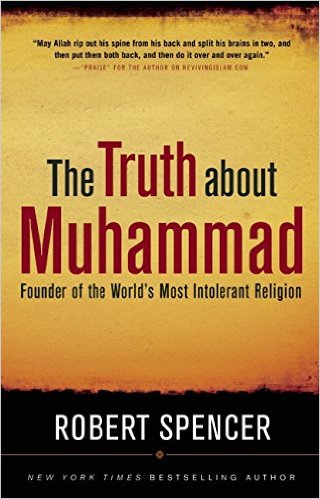
Robert Spencer's The Truth about Muhammad paints a very different portrait of the founder of Islam, as compared to the work of popular author Karen Armstrong, who describes Islam as a religion of peace. How do you figure out who is telling the right story?

Robert Spencer’s The Truth about Muhammad paints a very different portrait of the founder of Islam, as compared to the work of popular author Karen Armstrong, who describes Islam as a religion of peace. How do you figure out who is telling the right story?

Within a few weeks of the 911 attack on the World Trade Center, Karen Armstrong, a former Catholic nun, who now specializes as a scholar of comparative religion, and very popular author, wrote an essay for TIME magazine. In the essay, Armstrong makes the case that the terrorists who destroyed the twin towers did not represent the true face of Islam. The prophet Muhammad, she argues, sought to heal the rifts between different, warring tribal factions in 7th century (A.D.) Arabia.  In portraying true Islam as a religion of peace, she concludes:

The vast majority of Muslims, who are horrified by the atrocity of Sept. 11, must reclaim their faith from those who have so violently hijacked it.

I have been listening to an audiobook by a Catholic popularizer of contemporary scholarship, who specializes in Islamic history, Robert Spencer. Listening to The Truth About Muhammad: Founder of the World’s Most Intolerant Religion has been a challenging experience. Spencer notes that while some Koranic texts do suggest that in Muhammad’s early career, the prophet did seek to promote peace, the story of his later life suggests a more complicated, and much darker story. According to Spencer, the theology of jihad, or “struggle,” was used to justify violence against Jews, Christians, and others who resisted Muhammad’s message towards the end of his prophetic career. This tradition is still appealed to today by the followers of extreme Islamic groups, such as ISIS, who are demonstrating their commitment to erase Christian believers from much of Syria and Iraq.

Karen Armstrong, who champions efforts to bring peace between different religious traditions, and who wrote her own book about the life of Muhammad, begins her review of Spencer’s book this way, “Like any book written in hatred, his new work is a depressing read. Spencer makes no attempt to explain the historical, political, economic and spiritual circumstances of 7th-century Arabia, without which it is impossible to understand the complexities of Muhammad’s life.”  Spencer, the intellectual force behind JihadWatch.org, and no stranger to visceral public debate, responds with:

“Reading this, I doubt Armstrong actually read the book. Or maybe she just wants to make sure no one else reads it.” (retrieved from jihadwatch.org).

So, which narrative is correct? Is Islam a religion of peace, or a religion of violence?

Strangely, I know many Christians who never give much thought to the study of religious history, considering the matter to be of little consequence to their daily lives. Yet I would contend that such ignorance provides little consolation to the families of those who lost loved ones during the 911 attacks, or to the millions of Syrian refugees fleeing ISIS, looking for sanctuary in Western countries in our current time.

Lurking behind this debate over Islam is the debate among Christians as to the history of violence even in the Bible. I have been studying the Book of Joshua for the past few weeks, and I am struck by the message that God gave to Joshua to drive the Canaanites out of the land, and to claim the ancient land promise given to Abraham and his descendants (see these Veracity posts on Christian Zionism). Here are some vital questions for believers today:

  • Is the Book of Joshua a justification of ethnic genocide, or was it a directive by God to execute judgment against the wickedness of the Canaanites? Would God ever command Christians to do the same today?
  • What does it mean to “trust God” in the face of evil and wickedness, and to what extent are believers to engage in combating such evil and wickedness?
  • What should be our priority, sharing our faith with non-believers, or doing what we can to prevent or restrain acts of violence?

Such questions require thoughtful consideration by Christians. The questions are complicated because people are complicated. For example, while it is surely true that Islamic extremists threaten with acts of violence, the vast majority of Muslims regard their faith as essentially peaceful. Islam is not a monolithic movement. But should our view of Islamic extremism cause us to love our Muslim friends and neighbors any less? I hope not. I hope that we as believers would make the sharing of our faith, the Good News of the Gospel, our highest priority.

Where do we go to sort out these things? For me, I have been strongly encouraged by the testimony of Nabeel Qureshi. Qureshi grew up in high school in Virginia Beach, Virginia, in a family of Muslims who belong to an Islamic sect that strongly believe Islam to be a religion of peace. Yet when Qureshi attended Old Dominion University, he met a Christian friend who challenged his understanding of Islam. After several years of friendly, yet intense, back and forth dialogue, Nabeel Qureshi became a follower of Jesus. Over the years, Qureshi has had a powerful ministry with Ravi Zacharias, encouraging other Muslims to reconsider their understanding of Islam and consider afresh the claims of Christianity. Below is a five minute clip where Qureshi addresses the tough questions (PLEASE NOTE: Nabeel Qureshi recently announced that he has been diagnosed with stomach cancer and his survival chances over the next few years is quite low. Please pray for him and his family).


VIDEO: Romans 9-11 Panel Discussion Night Two

Veracity thanks everyone who participated in the panel discussion over the past two weeks in the Williamsburg area, those on the panel, as well as everyone who put their questions forward. I personally learned a lot, and it prompts me to study God’s Word even more! Hopefully, this will be a blessing for those who wrestle these issues, engaging the heart and the mind.

UPDATE: 10/19/2016

Hunter Ruch went to the trouble of going through the video and marking the time segments, allowing you to skip to particular questions you are interested in.  Thanks, Hunter (though it was his wife’s idea to do this)!

WEEK 2 (9/4):

  • Introduction, Review & Definition of Terms by Clarke Morledge (0:00-23:11)
  • Question #1: Election and Salvation? Why do I need to understand the theory of election? (23:12-34:11)
  • Question #2: Clarify the use of “Hebrew,” “Israelites,” and “Jews.” (34:12-42:26)
  • Question #3: The Land of Israel? (42:27-1:00:45)
  • Question #4: One or Two Paths to God? (1:00:46-1:02:44)
  • Question #5:  The Dangers of Neglecting Ethnic Israel? (1:02:45-1:08:49)
  • Question #6: Obsession vs. Negative Views of Israel? (1:08:49-1:18:57)
  • Conclusion by Travis Simone (1:18:58-1:37:44)


Who is the “All Israel” in Romans 11?

Is the secular nation state of Israel a fulfillment of Bible prophecy? Veracity tackles a "hot potato."

Who is the “all Israel” in Romans 11? Is it the church? Is it ethnic Jews? Or something more nuanced?

One of the most difficult set of verses in the Bible to understand is found in Romans 11:25-26a:

Lest you be wise in your own sight, I do not want you to be unaware of this mystery, brothers: a partial hardening has come upon Israel, until the fullness of the Gentiles has come in. And in this way all Israel will be saved….(ESV).

There is a lot going on in these verses, so in this post I would like to focus on the meaning of two words, found in verse 26: “all Israel.” This is a crucial part of the Bible as this passage comes near the end of Romans 9-11, where Paul is making an extensive argument, trying to explain why so few Jews in his day were accepting Jesus as their Messiah. Paul is demonstrating that God has indeed kept his promises to Israel, and in these key verses, he is drawing his argument to a conclusion.

However, there are very different views as to who is meant by this “all Israel.” What does Paul mean by this? Let us examine the views and see if some sense can be made about this question.
Continue reading