Monthly Archives: December 2013

Lawrence of Archaeology

T. E. Lawrence, a British intelligence officer in World War I who became an Arabian legend. But how many folks know about his work in Biblical archaeology?

T. E. Lawrence, a British intelligence officer in World War I who became an Arabian legend. But how many folks know about his work in Biblical archaeology? (Imperial War Museum, London)

Back when I was in college, I worked as an usher at a drama theatre. One night, I caught this guy trying to sneak in after the show started. “Sir, may I see your ticket please?” My demeanor startled the guy, but then he flashed me his official guest badge. On the badge read “PETER O’TOOLE”.

I took the famous actor to his seat for the performance. But then I thought to myself, “I just met Lawrence of Arabia!

The 1962 film, Lawrence of Arabia, is one of my all-time favorite movies. But I have always wanted to know who the real T. E. Lawrence was. In the following article, I discovered that Lawrence was an illegitimate child. His father ran off with the governess. His father and his mother (the governess) were never able to legally marry as his father never secured a divorce from his legal wife. Lawrence’s mother eventually, torn by her guilt, found relief when she came to know Jesus Christ as her Lord and Savior. She was determined that her children would have a Christian education. Lawrence’s mother and a brother later went to China as missionaries.

T.E. Lawrence never really embraced his mother’s faith, but he did gain a love for the Holy Land from what he was taught from the Bible. It was this fascination with the ancient Middle East that led him to pursue archaeological work across the Palestinian landscape and beyond, eventually giving him the opportunity to serve in British intelligence to aid the Arabs to rise up against the Ottoman Turks nearly a hundred years ago. Read Stephen E. Tabachnick’s full article on BiblicalArchaeology.org to learn more.

Here is one of my favorite scenes with Peter O’Toole from the movie, where he first meets the character played by Omar Sharif:
Movement: Chuck Smith

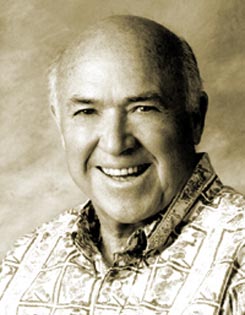
Chuck Smith (1927-2013). A pastor on the move.  A passion for the lost, but not without conflict.

Chuck Smith (1927-2013). A pastor on the move. A passion for the marginalized, but not without some conflict along the way.

In the 1960s, most American Christian churches wanted to have nothing to do with hippies. A young Southern California pastor, Chuck Smith, was determined to change all of that.

When an older member of the church posted a sign in the sanctuary with “no bare feet allowed”, Smith ripped it down. Smith believed that the church was called to reach out to the counter-culture community, even if it meant exchanging the standard suit and tie of the evangelical preacher for a more casual dress.

Chuck Smith’s critical moment came unexpectedly when he befriended a long-haired, bearded hippie teenager, Lonnie Frisbee. Frisbee became a pastor himself in Chuck Smith’s Calvary Chapel in Costa Mesa. From there, by the sheer providence of God, the Jesus Movement was born.
Continue reading


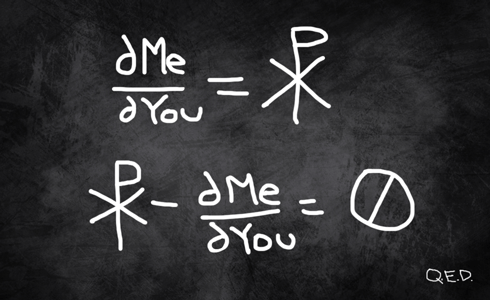
Christmas Calculus

Christmas Calculus


I am thankful for the mechanism
that lifts anger off the rails of contention
and offers instead a calculus of peace.

Because it occurs to me
that the change in me
with respect to you
was modeled by Jesus Christ.

His equation for anger can be found
in the handbook for our self-obsessing culture—
a testable model for peace.

Because if we genuinely put our anger
next to Jesus Christ
it leads to forgiveness,
and no anger remains.

Absent anger, love can change the intractable,
and save the cost of cleaning up emotional fallout—
leaving energy for peace.

Because there is no peace in anger,
you and I desperately need
a Chi Rho to make it work—
and that’s why Christmas is so necessarily beautiful.


Christmas Wars: Then and Now

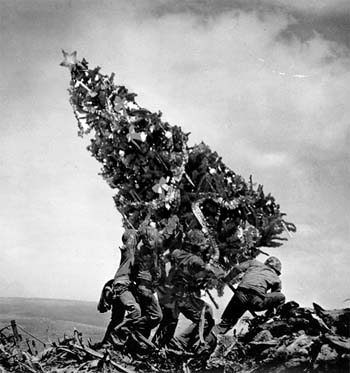
The "War on Christmas"? Are we missing something here? Perhaps a look at church history might help.

The “War on Christmas”? Are we missing something here? Perhaps a look at church history might help.

It is that time of year again, December, when Christians in America face an annual existential crisis: Do you wish people a “Merry Christmas”… or not?

I must confess that I am not crazy about fighting amongst the shopping hordes at the mall, and the year after year pressure of finding the right gift can be really stressful. Sure, shopping online helps a teeny bit, but what I am talking about here is a more fundamental cultural anxiety. Increasingly over the past few years, I have heard Christians grumble throughout the month of December over how “they have taken Christ out of Christmas!” I have read angry letters in the local newspaper complaining how store operators are greeting customers more and more with the shallow and inadequate “Happy Holidays”. Where have the traditional nativity scenes at the community fire station gone? Have a “Joyous Winter Solstice”? What is that all about?

Folks. Let’s face it. We are moving more towards to a post-Christian society with every passing year.

Deal with it.

We could continue to get mired in frustration and disgust, or we can see this as a providential opportunity to reflect on what God is calling us to do as witnesses for the Gospel. What does this look like? Might I suggest some lessons from church history?
Continue reading


That All Men May Know His Work

“He seals up the hand of every man; that all men may know His work.”
Job 37:7 (NKJV)

While on a recent international fact-finding mission (OK…actually just a trip to Toronto for a family wedding), Marion and I visited the Royal Ontario Museum. Imagine the Sydney Opera House crash landing on the Smithsonian and you’ve pretty much got the setting. (Canadians do have a sense of humor.)

Royal Ontario Museum Entrance

Royal Ontario Museum, Toronto, Ontario (Photo credit: Elli Davis)

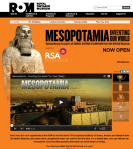
We walked up from the subway having no idea what we were going to see. The cashier asked if we wanted tickets to the Mesopotamia exhibit (featuring artifacts on loan from the British Museum), so we were treated to a couple of hours of a really, really good history lesson.

Mesopotamia

Mesopotamia Exhibit

While we were buying our tickets, the cashier at the counter position next to us (his name was Rex) made some impious statement to a visiting couple about how glad he was that his parents hadn’t imposed any religious beliefs on him.  (Rex apparently hasn’t thought much about atheism as a religion.) I mention Rex’s sound bite because it followed me around the museum for quite a while; a sad reminder of how people can bristle right past the evidence.

The Mesopotamia exhibit was spectacular. This is the kind of stuff that was printed in my junior high history text, but went right over my head due to my lack of effort and interest. It turns out I missed a lot. Come to think of it, maybe I shouldn’t be so hard on atheists. Continue reading