Tag Archives: women

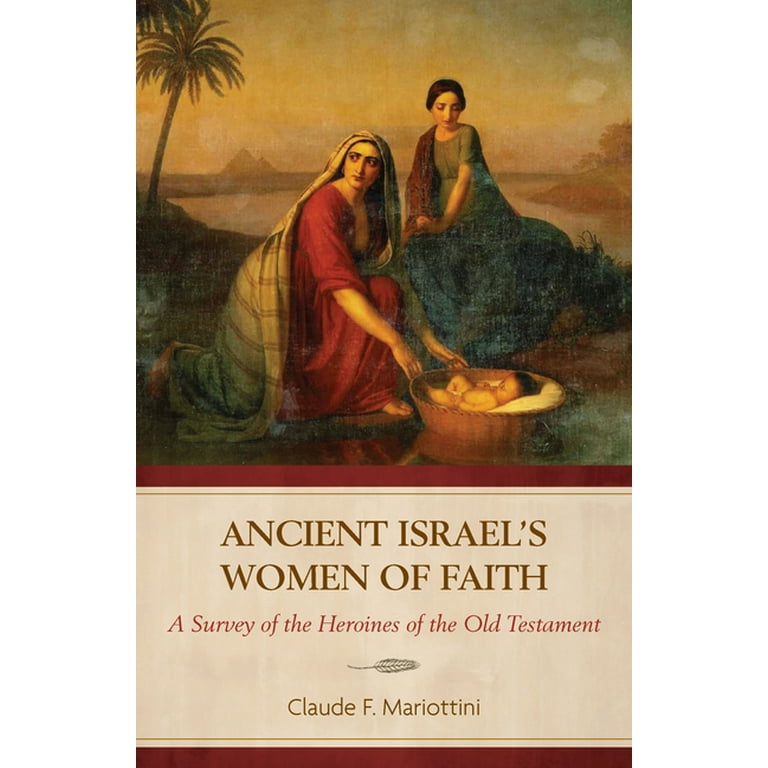
Ancient Israel’s Women of Faith, by Claude Mariottini. A Review

Looking for a thoughtful, challenging book to read over the Christmas holidays? Here’s a suggestion.

Much of what we read in the Old Testament is about the contributions of men to the life of ancient Israel. We typically think of the big names, like Abraham, Moses, David, Isaiah, and Jeremiah. But what about the women?

Often the stories of women in the Old Testament are sidelined in favor of male figures. In some stories, women are even cast as villains. However, more recent scholarship suggests women stand out better in at least some of those cases, more so than previously thought.

A Cheating Wife? Or an Abusive Husband? What is the Real Story?

One often neglected story is about the Levite and his concubine of Judges 19:1-30. No matter what way you look at it, the story is tragically shocking, one of the more graphic episodes in the entire Bible.

Typically, a concubine served as a second wife for a man, in this case an Israelite Levite. The more traditional reading suggests that the Levite’s concubine was unfaithful to him, assuming that the concubine became a prostitute. In becoming a prostitute, the concubine had committed adultery, a capital offense. The concubine had fled the house of the Levite, and went back to her parents’ home. But eventually the Levite went out to pursue his concubine and bring her back to his home.

After several nights staying with the concubine’s family, he was able to retrieve his concubine from her parents’ home. On the way home, the Levite and his concubine managed to spend the night with an old man in the town of Gibeah. But during the night, men from the city came to threaten the Levite. The Levite saved himself by giving his concubine over to the men of Gibeah, who in turn sexually violated the Levite’s concubine to near the point of death. When the Levite finally returned home with the lifeless body of his concubine, he cut up her body into twelve pieces, and sent the remains throughout the land of Israel.

It is a pretty awful story. But the traditional reading has some serious problems. The traditional reading hinges on an ambiguous verse, Judges 19:2, at the outset of the story.  The ESV translation reads:

And his concubine was unfaithful to him, and she went away from him to her father’s house at Bethlehem in Judah, and was there some four months.

The KJV is even more direct, implicating the adultery of the concubine:

And his concubine played the whore against him, and went away from him unto her father’s house to Bethlehemjudah, and was there four whole months.

However, some other translations read differently. Consider the NASB, revised in 2020 (as compared to the earlier 1995 revision, which was more like the KJV):

But his concubine found him repugnant, and she left him and went to her father’s house in Bethlehem in Judah, and remained there for a period of four months.

Or the NRSVUE:

But his concubine became angry with him, and she went away from him to her father’s house at Bethlehem in Judah and was there some four months.

It turns out that the Hebrew word, zana, can be translated in different ways. The traditional reading has the word meaning to be “unfaithful” (as with the ESV) or to “commit adultery.” However, the Septuagint, the ancient Greek translation of the Hebrew text, has zana to mean to be “angry” with (as with the NRSVUE). The second meaning does not imply any sexual infidelity on the part of the concubine. Instead, it suggests that the woman had some reason to be angry with the Levite, angry enough to leave him and return home to her parents, without any hint of prostitution or other infidelity, as the KJV states.

Dr. Claude F. Mariottini, Professor Emeritus at Northern Baptist Seminary, suggests that translations like the NASB and NRSVUE get it right. The text does not tell us why the concubine found her Levite husband to be “repugnant.” While the reason for the concubine’s “anger” is never stated, it easily implies that her husband was abusive, and that she sought to return to her parents to get away from an abusive man. In an age when spousal abuse is getting a lot of attention, as with the #metoo movement, this should spark our interest more in the 21st century. There are some good reasons to accept this alternative reading.

The following verse may contain some clues, as there is ambiguity in Judges 19:3 as well. The ESV follows the traditional reading:

Then her husband arose and went after her, to speak kindly to her and bring her back. He had with him his servant and a couple of donkeys. And she brought him into her father’s house. And when the girl’s father saw him, he came with joy to meet him.

You get the impression that the Levite wants to try to persuade his concubine to return back to him. Was the Levite offering his love and forgiveness towards her? Here it is the woman who took her husband, the Levite, into her father’s house. Why did she do this? It is possible that she felt obligated to do so, for if she was unfaithful to her husband, she may have felt it was her responsibility to seek reconciliation. But there is more to the story. The NLT translation reads differently:

…. her husband set out for Bethlehem to speak personally to her and persuade her to come back. He took with him a servant and a pair of donkeys. When he arrived at her father’s house, her father saw him and welcomed him.

In this translation, there is no mention of the woman bringing her Levite husband into her father’s house. Only the father-in-law receives the Levite.  Furthermore, the NLT suggests that the Levite husband was on a mission to try to talk her back into coming home to his house, which is behavior consistent with an abusive husband. Curiously, the concubine and the Levite’s father-in-law tried some stall tactics for several nights which prevented the Levite from leaving with his concubine wife to take her back to his home. Were the concubine and her father hoping that the Levite would eventually just give up and go back home without her?

The incident in Gibeah raises other problems for the traditional view which casts the concubine as an adulterer. When the men of Gibeah threatened the Levite in Judges 19:25 , the ESV says that the Levite “seized” his concubine and sent her out to be sexually abused by the men of Gibeah. If the Levite truly loved his concubine, would he really “seize” her to be handed over to these violent men? The text purposely uses this word to convey a meaning which is certainly not a gentle way to treat a wife.

To make matters worse for the Levite, Judges 19:22, in a manner much like the story of the men in Sodom with Lot, these men of Gibeah declared their intentions to “know” the Levite, a euphemism for having sexual relations. But when the Levite relates his version of the story in Judges 20:5-6, the Levite says that the men were intent on killing him, which was not the case.

The story gets even worse. If the Levite really loved his concubine, and wanted her back, it seems really creepy and unloving for the Levite to chop her dead body up and send her body parts all across Israel. All of these pieces of evidence suggests that the standard portrayal of the concubine as a wayward woman hides the real story, namely that she was an innocent victim of a Levite husband who abused her, and in the process, she ultimately lost her life.  What a tragic story!!

Mariottini’s interpretation of this difficult passage is compelling. It demonstrates that the Bible is quite aware of the problem of “toxic masculinity,” whereby men can abuse their power and destroy the women in their lives. The story of the Levite and his concubine serves as both a warning and a rebuke against such morally perverse behavior.

Claude Mariottini’s newest book, Ancient Israel’s Women of Faith: A Survey of the Heroines of the Old Testament, is collection of stories about many of the amazing women of the Old Testament, offering insights that will be helpful to many men and women today.


Women of Faith in Ancient Israel

Claude Mariottini has written a vitally helpful book: Ancient Israel’s Women of Faith: A Survey of the Heroines of the Old Testament, to highlight the often forgotten contributions of women in the story of the Old Testament, with a single chapter focused on the story of the Levite and his concubine. Thankfully, Professor Mariottini’s book has more positive stories to offer to highlight the valuable contributions made by women to the story of ancient Israel. Professor Mariottini has for years written a blog which focuses on the best of Old Testament scholarship, making the story of the Old Testament more accessible to lay persons and scholars alike. While a good deal of the material found in the book can be discovered on his blog, his new 250 page book brings the wealth of that material to one place in one text.

As Mariottini says, the influence of women in the Old Testament is often obscured by how our sources came to us, filtered through male perspectives and priorities. Make no doubt about it, ancient Israel was a patriarchal society, where women were subordinated at home, with limited autonomy, and even treated as property. Nevertheless, as the Old Testament narrative unfolds we read how women were given a greater voice and were at times vindicated in the face of injustice, which can serve as an inspiration to women today.

Mariottini does not sugar-coat the story. The men typically take center stage in Israel’s narrative.

But then certain women come at critical points in the Old Testament, to make a difference. There are fairly well-known women, like Sarah, Abraham’s wife; Deborah; a prophetess and a judge; and Rahab, who hid and rescued the Hebrew spies at Jericho.  Then there are lesser known women, like Sheerah, who was a builder of cities (1 Chronicles 7:22-24). Jehosheba, the daughter of King Jehoram of Judah, protected the young Joash, the Davidic heir to become king, from being killed (2 Kings 11:20). Huldah, a prophetess, was consulted by King Josiah, who had rediscovered a book of the law found in the Temple, bringing it to Huldah to verify that the book was indeed authentic (2 Kings 22:15-20).

Professor Mariottini follows standard insights into the Old Testament held among nearly all evangelical scholars today, insights which are not always well understood by the average church-going Christian. He acknowledges the concept of Yahweh’s “Divine Council,” whereby the uncreated and supreme Yahweh presides over a fellowship of other created divine beings, often described as “gods” or “sons of god” in the Old Testament, a concept in the academic world popularized most recently by the late Dr. Michael Heiser (Mariottini, p. 25). Mariottini acknowledges that the Pentateuch, the first five books of the Bible, was written in stages, such that a text like Deuteronomy acts as an inspired revision to earlier material. Identifying Moses as the originator of the Pentatuech tradition need not rule out the activity of divinely inspired editors in later centuries,  or even just Moses himself later in his life, working to keep the Mosaic law tradition up to date, in light of new challenges to the people of Israel over time.

Mariottini offers several examples, by showing how Deuteronomy provides more protections for women as compared to earlier texts in the Pentateuch. In the days of King Josiah, in the seventh century before Christ, Deuteronomy was cited to prescribe these protections.

In Exodus 20:17, the tenth commandment reads:

“You shall not covet your neighbor’s house; you shall not covet your neighbor’s wife, or his male servant, or his female servant, or his ox, or his donkey, or anything that is your neighbor’s.”

However, in Deuteronomy 5:21, the same commandment reads:

And you shall not covet your neighbor’s wife. And you shall not desire your neighbor’s house, his field, or his male servant, or his female servant, his ox, or his donkey, or anything that is your neighbor’s.”

Even though the Exodus version does not relegate the position of the wife to that of a slave, it nevertheless is ambiguous enough to indicate that the wife belongs to the husband, as though the wife is the possession of her husband (Mariottini, p. 39).

Yet the Deuteronomy version rearranges the original Exodus version, splitting the command not-to-covet into two separate commands, first that of not coveting a neighbor’s wife, and the second, that of not to covet (or desire) anything which is a possession of the husband, like a house, a field, a servant, a domestic animal, or any other possession. This gives greater clarity and explicit force to suggest that a wife is not to be treated in this same way as a man’s piece of property  (Mariottini, p. 42-43). Deuteronomy gives more explicit recognition of women having their own voice in the life of the Israelite community.

A similar pattern is observed when considering the Pentateuch’s code regarding the release of a Hebrew slave. In Exodus 21:2-6, a male Hebrew slave was to be released after six years of labor. But if that male slave enters the slave relationship as a single man, and the master gives him a wife, that woman will remain with the master even after the male slave is allowed to go free. However, in the Deuteronomy 15:12-18 version of the same rule, the woman is allowed to go free with the freed Hebrew slave, and remain the wife of that Hebrew slave (Mariottini, p. 44-47).

Perhaps the most important contribution Mariottini makes is in his highlighting of the Book of Deuteronomy, as giving us a clearer expression of addressing injustice against women in ancient Israel.

Some Critique of Mariottini

Ancient Israel’s Women of Faith is a great book, but a few criticisms are in order. There is at least one minor error whereby the NRSV’s translation of 1 Chronicles 25:5-6 is said to read: “God gave Heman fourteen sons and three daughters. All these men were under the supervision of their father for the music of the temple of the LORD.” Actually, this translation is what the NIV 2011 has for this passage. The NSRV actually substitutes the phrase “all these men” with “they were all,” a more gender accurate translation of the verse, acknowledging the inclusion of both Heman’s sons and daughters in helping to lead the worship music in the temple (Mariottini, p. 56-57).

A more serious problem arises when Mariottini expands his treatment on this passage later in the book. Here he corrects the earlier misquote of the NSRV translation of the passage, which suggests that both men and women participated in leading worship music in the temple (Mariottini, p. 83).

Mariottini describes this as the “egalitarian” reading, thus indicating that “although sin created a distortion of [this] mutuality [resulting from men and women being created equal], the gospel of Jesus Christ has abolished this distortion and that now both men and women are equally called to serve God” (Mariottini, p. 84) He contrasts that with the CSB (Christian Standard Bible) and NIV 1984 (despite the fact that the NIV 2011 keeps the same translation regarding gender), which reads “all these men.” This latter reading Mariottini says is exemplar for the “complementarian” position, that “God has set apart men to hold political and religious leadership in Israel.” This explains why the CSB and NIV suggest that the daughters of Heman were “not part of the music ministry of the temple” (Mariottini, p. 83).

However, this analysis is misleading as the complementarian position is not as monolithic as Mariottini assumes. While some complementarian churches do restrict women from leading music in a worship service, not all complementarians hold to such a broad restriction.

These other complementarians allow women to serve in such leadership roles, though these same churches nevertheless still hold that the office of elder specifically be held only by qualified men, according to what is found in 1 Timothy 2 & 3, and Titus 1. Other leadership functions in the church, like that of deacon, worship leader, etc. are open to both men and women. This reality is reflected in the fact that the ESV translation echoes in similarity the NRSV reading: “God had given Heman fourteen sons and three daughters. They were all under the direction of their father in the music in the house of the Lord with cymbals, harps, and lyres for the service of the house of God.”  In other words, men and women participate in the leading of worship music.

The ESV (English Standard Version) is rarely described as an “egalitarian” Bible translation, and is instead popularly known as the most influential complementarian-leaning Bible translation today in the English speaking world. Nevertheless, Mariottini is right to conclude, along with the ESV and NRSV, that women were allowed to participate in the music ministry of the temple, and that should anticipate later Christian worship practice.

The question of whether or not women can serve as elders, much less other leadership positions in the church, is a contentious issue today in evangelical churches. As a moderate complementarian myself, the idea of having only qualified males to serve as elders is not a slight against women, as women clearly can exercise leadership in other ways in Christian ministry. Rather, the gender “restriction” regarding elders is more about encouraging men to act as spiritual leaders in the church, modeling what should be done in the home. Even in our supposedly morally-advanced 21st century culture in the West, typically men much more than women tend to abdicate in taking spiritual leadership in their families, relegating such a task to their wives, who are often already overburdened with other responsibilities. When husbands and fathers take more responsibility in a positive, supportive way to spiritually lead in the home, everyone in the family is enabled to benefit.  (As a side note, I spent about four years writing on the complementarian/egalitarian controversy which is dividing evangelical churches today. You can read my research referenced here. Just this past year, yet another church in my town of Williamsburg, Virginia divided over this same issue. In my estimation, there are extremes on both sides of this issue which has tragically led to such church divisions).

It is curious how Mariottini cites some scholarship which challenges the traditional translation of Genesis 3:16 (Mariottini, p. 33).  The ESV has controversially rendered this verse as:  “Your desire shall be for your husband, and he shall rule over you.”  In fairness, the ESV also includes a footnote which suggests an alternative translation: “Your desire shall be to (or toward, or even against) your husband, and he shall rule over you.” But Mariottini cites Allen H. Godbey’s translation: “Thy longing shall be toward thy husband; and he shall be likewise toward thee.”  Godbey’s translation is completely new to me, and I am not familiar with other scholars commenting on Godbey’s view.

Some of the chapters in Ancient Israel’s Women of Faith tend to be repetitive at certain points. This is because a number of the stories highlighted by Mariottini tend to overlap, which indicates that the book is more of a reference book, where the chapters can be read in any order, whereby the reader can select what stories might interest them, while coming back to other stories later. This is probably fine for most readers, who want to read a short chapter that interests them, and then read some other short chapter elsewhere in the book. But for someone who wants to read the book from start to finish, the repetition might be bothersome.

Aside from a handful of problems like these, Claude Mariottini has given us a book which assists Christians to discover how many of the forgotten women of the Old Testament expressed their voices and have made significant contributions to the story of ancient Israel. Ancient Israel’s Women of Faith will be a helpful read for those who tend to think that the Old Testament has a purely negative view of women. May these stories continue to inspire us regarding the faith of these amazing women of the Old Testament.

One more thing: As I have read Claude Mariottini before, I am a bit partial to his work. However, there is another book out now which covers the same theme of women in the Old Testament, along with a brief look at women in the New Testament. Ingrid Faro’s Redeeming Eden: How Women in the Bible Advance the Story of Salvation has received some good reviews, too, so that might also be worth checking out.


Why “Red Letter” Christianity Short-Changes the Full Story of the Gospel

Well done, good and faithful slave.”

How would you like that to read on your tombstone? Most Bible translations of this verse, Matthew 25:21, read “good and faithful servant,” or something less provocative. The Legacy Standard Bible is one of the few translations today that reads “good and faithful slave.”

Slave??? Jesus said that?”

Skeptics will confront me to say that the New Testament condones slavery. How do I respond? Well, on this particular point, with respect to Matthew 25:21, the skeptics have a valid point to make. But this needs a bit more unpacking to explain, as the complaint from skeptics is misleading.

Frederick Douglass, born February, 1818, into slavery. Photo colorization by Marina Amarai. Many associate “slavery” as found in the Bible with what Frederick Douglass experienced in early 19th century America. The story of “slavery” in the Bible, like other issues with respect to social justice (and other aspects of the problem of evil), is more complicated than what many Christians and skeptics typically think.


“Red-Letter” Christianity??

There is a movement among many Christians called “Red-Letter Christianity.” As explained from a previous Veracity blog post, the idea arose from the fact that just over a hundred years ago, some Bible publishers began to print the words spoken by Jesus in red, to distinguish the sayings of Jesus from the rest of the New Testament text. The venerable King James Version (KJV) of the Bible contains no quotation marks, so it is difficult to discern when someone is speaking and when an author is simply giving narration. Yet despite its problems, having the words of Jesus highlighted in red has been helpful to many over the past decades.

Efforts like “Red-Letter Christianity” can be well-intended, seeking to soften the edge of a lot of supposedly Christian rhetoric these days deemed to be harmful to others. A lot of times, the way we express the truths found in the Bible matters just as much, sometimes even more, than the actual truths themselves. The Bible can be easily weaponized to hurt people, so it is understandable to a certain degree that “Red-Letter” Christianity pushes back against such misuse of Scripture.

Some who describe themselves as “Progressive Christians” would also call themselves “Red-Letter” Christians. For example, when push comes to shove, many such “Red-Letter” Christians will say that they will take the words of Jesus over the letters of Paul, or other writings in the New Testament, any day. However, such efforts that try to elevate the words of Jesus like this have their own downsides to them.

So-called “Red Letter Bibles” were probably a good idea in the beginning, but they have sure made a mess of things.


Noah curses his son Ham, a 19th-century painting by Ivan Stepanovitch Ksenofontov.  The so-called “Curse of Ham” in Genesis 9:25 was the foundational prooftext used to defend the institution of slavery in the ante-bellum American South. Contrary to popular opinion, Jesus never comes out to explicitly condemn slavery. This blog post seeks to explain why, and to offer a better approach to how the New Testament deals with slavery.


Some Potentially Embarrassing “Red Letters” of Jesus

A focus on the “Red Letter” speeches of Jesus has good intentions behind it, but a careful examination of these red letters should give us some pause. Consider the “Red Letters” of Jesus found In Revelation 2:22-23, where the writer John is retelling a vision he has of Jesus speaking out against a female false teacher in one of Revelation’s seven churches, Thyatira, who is propagating a number of bad ideas in that Christian community:

Behold, I will cast her into a bed, and them that commit adultery with her into great tribulation, except they repent of their deeds. And I will kill her children with death; and all the churches shall know that I am he which searcheth the reins and hearts: and I will give unto every one of you according to your works.

Yikes. Even with the archaic language of the KJV, this sounds pretty harsh. I can hear the objection of the skeptic now: “Well, your Jesus wants to murder children. I know that, because the words of Jesus are printed in red.”

Those red letters suddenly begin to look like red flags.

It is important to concede something here. There are a number of disturbing things Jesus says in this passage, but I highlighted the number one thing that bothers me: “And I will kill her children with death.” The ESV translation renders this phrase, “I will strike her children dead.” For this Christian who is pro-life, particularly with respect to abortion, this red-letter snippet from Jesus can be jarring. Does Jesus really want to kill a woman’s children, even if this woman is a heretic?

However, a proper understanding of the literary context of any book of the Bible is essential to interpreting the Bible responsibly. Some Christians will staunchly defend the idea that they take the Bible “literally,” without a careful examination of what “literally” even means. Instead, it is better to consider what is the literary genre of a book like Revelation. The Book of Revelation falls within the peculiar genre of apocalypticism, a group of writings that grew out of Judaism that are heavily laced with hyperbole and metaphor. The Book of Daniel in the Old Testament is another example of apocalyptic literature, where parts of Daniel have a very similar feel to what is read in Revelation.

It can be well argued that Jesus is not hyper-literally favoring abortion or infanticide here, but rather is condemning the bad fruit of the false teaching associated with this “Jezebel” from Thyratia.  In other words, this reference to “Jezebel’s” children metaphorically symbolizes the corruptive result of this woman’s incorrect doctrine, which distorts the truth, a distortion which Jesus intends to do away with.

Oh, and lest we forget, more than anyone else in the entire New Testament, Jesus speaks about the doctrine of hell the most. Depending on the Bible translation, the word “hell” appears anywhere from 13 to 23 times in the New Testament, the majority traced back to the lips of Jesus, even in the Book of Revelation. In comparison, the letters of Paul barely mention “hell” at all. The concept of eternal lostness, one of the most despised concepts of Christianity in our contemporary world, is found primarily in the “Red Letter” words of Jesus.

Yes, the “Red Letter” Jesus does speak about love, goodness, and kindness towards others. But that same “Red Letter” Jesus also speaks words of judgment against a hard-hearted and disobedient people.

Chapel Mural

In the Gospels, Jesus calls all of the little children to come unto him and loved them (Mark 10:13-16). But in Revelation 2:22-23, Jesus threatens to “kill the children” of a woman described as a false teacher in the church. A more responsible reading of the so-called “Red Letters” of Jesus is needed that values the original literary context of the New Testament. (From a mural painted at the Williamsburg Community Chapel).


Smoothing Over Some the “Red Letters” of Jesus?

In comparison to the Book of Revelation, the Gospels are quite a different form of biblical literature.Yet even in the Gospels, Jesus used hyperbole and metaphor rather frequently. Just think about Jesus’ instruction to “hate” your own family (Luke 14:26). However, there is a tendency to try to smooth over some of those “Red Letters” of Jesus which make us feel even more uncomfortable.

Philip Jenkins, an historian at Baylor University whose work I have reviewed a few times on this blog, has written a very insightful article about Matthew 25:21. As Jenkins informs us, the problem is that we often read parts of the Bible through our own cultural lens, and when it comes to “slavery,” the experience of racial-based, chattel slavery in American history immediately comes to mind. But the “slavery” during the New Testament period was different. The Romans never paid any attention to skin color when it came to slavery. If your cultural group was defeated by the Roman army, then your group became perfect candidates for Roman enslavement in an effort to make reparations for war debts, regardless of the pigment of one’s skin. But nevertheless, slavery is slavery.

To be a slave in Jesus’ day was to be considered a piece of property in the eyes of the master. Furthermore, in the world of the first century Roman Empire, slavery was a big deal, and the Roman province of Israel was no exception. Historians estimate that roughly one out for three persons living in the Roman Empire in the time of Jesus was a slave.

People looking to “Red Letter” Christianity to find a message from Jesus condemning slavery will be hard pressed. The Legacy Standard Bible, a translation produced by the seminary founded by John MacArthur, a pastor in Southern California, uses the English word “slave” for the Greek “doulos.” Some translations will use the word “bondservant” or “servant,” to try to convey the same idea.

These translations work to a certain extent. Indentured servitude, where slaves could work off their debts to earn their freedom, commonly known as “debt bondage,” was more widely practiced in the ancient Roman empire than what you find with cradle-to-grave slavery in the antebellum American South. However, the use of  “bondservant” or “servant” may obscure the original meaning as it was originally heard by Jesus’ hearers in first century Galilee or Jerusalem. Sure, it makes me squirm a bit, but the text is still authoritative and worth considering, if you read it within the longer context of the global history of slavery. Read Jesus’ speaking in Luke 12:47-48, from the Legacy Standard Bible:

And that slave who knew his master’s will and did not get ready or act in accord with his will, will receive many beatings, but the one who did not know it, and committed deeds worthy of a beating, will receive but a few. From everyone who has been given much, much will be required, and to whom they entrusted much, of him they will ask all the more.

That comes straight from a modern equivalent of your “Red Letter” Bible, folks. However, statements like these can be balanced by other sayings made by Jesus: “You shall know the truth, and the truth shall set you free” (John 8:32). But this is speaking more of slavery in metaphorical terms, as in spiritual slavery, and not so much about physical, chattel slavery. So, what are we to think about this?1

A Better Way to Think About the New Testament’s Approach to Slavery

The reality is that the only New Testament message which challenges chattel slavery can be found in the writings of the Apostle Paul, but you will not find Paul’s letters written in red in any Bible I know about. Granted, Paul is not as explicit in condemning slavery as we would like, as he never directly challenges slavery as a system. Paul’s teaching in Ephesians thankfully went against the grain of typical Greco-Roman treatment of slaves (Ephesians 6:5-9), by calling masters to not “mistreat their slaves.” Nevertheless, slaves are still called to obey their masters, in Paul’s letters. Paul simply assumes the slavery system to be the societal norm. However, it is important to recognize neither Paul nor anyone else in the Bible refers to slavery as part of God’s created order. We get the “slavery from creation” idea from Aristotle, and not from the Bible.

Still, we see indirect evidence that Paul did not imagine slavery to be part of God’s ultimate plans and purposes. In 1 Corinthians 7:21, Paul encourages Christians who are slaves to pursue their freedom from slavery, if they have the opportunity. In Philemon 1:8-16, Paul considers the runaway slave, Onesimus, to be like a son and a brother, and encourages Philemon, the slave owner of Onesimus, to do the same. To call a slave a “son” or “brother” would have been revolutionary in the Greco-Roman culture, which saw slaves as merely being pieces of property.

One other example can be added to the list, though it is controversial among some scholars. In 1 Timothy 1:9-10, the KJV reads Paul as condemning “men-stealing.” Here is how the English Standard Version renders the passage:2

…the law is not laid down for the just but for the lawless and disobedient, for the ungodly and sinners, for the unholy and profane, for those who strike their fathers and mothers, for murderers,the sexually immoral, men who practice homosexuality, enslavers, liars, perjurers, and whatever else is contrary to sound doctrine…..

The ESV reads “enslavers” instead of the KJV’s “men-stealers,” but the ESV includes a helpful note describing “enslavers” as “those who take someone captive in order to sell him into slavery.” Other translations render this Greek word as “kidnappers,” which pretty well describes a lot that has gone along in the history of slavery for how slaves had been obtained in the first place, such as from the African slave trade during the American colonial era. It would be too much to call the Apostle Paul a full-on “abolitionist,” but you have to be blind to these verses to claim that Paul was a sold-out apologist for slavery.

All this being said, Paul is our best resource in the New Testament for pinpointing the evils of slavery. You just do not find such a resource in the so-called “Red Letter” words of Jesus. Those “Red Letters” do not go far enough.

That is right. We have to look to Paul, that man who is often described as supposedly “gay-hating,” “woman-hating,” etc., in order to build a Christian theology that works to address the evils of something as bad and as unjust as slavery. Jesus as presented in the so-called “Red Letters” of the Gospels and Book of Revelation does not help us much at all. Thankfully, Jesus did designate Paul to be the apostle to the Gentiles, and Jesus’ advocate for a more just and equitable world (See Galatians 1:11-12). It was this Gospel message that Paul preached throughout the Roman empire that ended up changing the world, and handing down the ethics of the New Testament over multiple generations to our present day some 20 centuries later, despite efforts in recent decades to overturn certain elements of New Testament ethics.

Christians are called to try to correct injustices in society, to work towards caring more about the environment, to fight against racism, and to advocate for the poor and needy. But we need the  whole story of the New Testament to do that, and not just the “Red Letters” of Jesus.

So-called “Red Letter” Bibles that seek to highlight the spoken words of Jesus in red were probably a good idea a century ago. But today, such Bibles can often cause more problems than what they try to solve.


The “Red Letters” of Jesus vs. the More Emancipating Letters of Paul, Regarding Women… and Gentiles

Here is another point: An exclusive focus on the words of Jesus are not always as helpful when it comes to concerns about women, as compared to Paul. While Jesus’ primary financial supporters were wealthy women like Mary Magdalene, Johanna, and Susanna (Luke 8:2-3), his inside top-ministry team of twelve were all men. Some argue that Jesus was simply “accommodating to a patriarchal culture” in limiting the roles of women in leadership. I have often made this type of argument in the past myself!

However, this is difficult to square with the revolutionary attacks Jesus made against Jewish cultural standards. Why would Jesus be so timid in encouraging women to be his top leaders, when he went smack dab up against the standard Jewish practice of strict Sabbath observance and in challenging the very Temple establishment itself? This idea that Jesus did not want to “upset the apple cart” of first century Judaism regarding the role of women, or that Jesus was some kind of “closet feminist,” may sound appealing to some, but it lacks solid evidence. Whatever Jesus’ motivation was, feminism was not on his highest agenda list.

Some may fault Paul for not having women serve as elders/overseers in his churches (a much disputed teaching today: read this in-depth Veracity blog series), while others support more historically-grounded, traditional readings of Paul on this issue as being still applicable today. However, despite the controversy regarding women serving as elders/overseers in local churches, Paul regularly worked alongside fellow women missionaries, as described in Romans 16. Euodia and Syntyche were regarded, not just as friends or supporters, but actual co-workers for the sake of the Gospel with Paul (Philippians 4:2-3). Paul recognized a woman named Nympha, who led a gathering of Christians in her home (Colossians 4:15).

Surely, Jesus had female friends in the Gospels. Yes, Jesus valued the women around him highly. Mary Magdalene has for centuries been regarded as “the apostle to the Apostles,” for being the first to proclaim the Good News of Jesus’ Resurrection.  Jesus’ mother Mary is probably one of the greatest, if not THE greatest, and most celebrated woman in all of world history. But none of these women have been described as Jesus’ “co-workers” like what we find with Paul.

A number of “Red Letter” Christians get incensed with Bible translations that say that Paul insists that an elder must be the “husband of one wife,” suggesting that only men are qualified for that job description (Titus 1:5-6 ESV). But the objection is overblown. For even though historical tradition going back to the early church controversially reserved the office of “elder/overseer” of a local church to qualified men in 1 Timothy 2:11-3:7, and certainly not all men are qualified, that same historical tradition affirmed both men and women as “deacons” (1 Timothy 3:8-13; Romans 16:1-2). Paul even instituted a special order of ministry among women, the “widows” of 1 Timothy 5:1-16. Paul evidently affirmed that both men and women are to serve as spiritual “fathers” and “mothers” in the church, respectively.

One more data point: There is nothing in the “Red Letters” of Jesus to suggest that it was possible to be a true follower of Jesus and not be circumscribed. As presented in the Gospels, Jesus was Jewish and expected those who follow him to adhere to the tenets of Judaism, including circumcision. With just a few exceptions, most of Jesus’ ministry was with his fellow Jews, and not Gentiles.

Jesus himself stated that he “was sent only to the lost sheep of the house of Israel” (Matthew 15:24 ESV). No mention of Gentiles here.

You read that right, folks. In “Red Letter” Bibles, Jesus’ focus was on his ministry towards the Jews, and not the Gentiles. Living in an age where many in America value “diversity” and “inclusion,” Jesus’ message in the Gospels can be a bit uncomfortable to accept.

Paul in prison, by Rembrandt (credit: Wikipedia). Jesus personally selected Paul to pioneer outreach to the Gentiles with the Good News of the Gospel, expanding out from Jesus’ ministry to primarily his fellow Jews.


Towards the Full Story of the Gospel

The story changes dramatically once we get to Paul. For years it had bothered me that Paul seemed to make a big deal about his apostolic calling to go preach the Gospel to the Gentiles. Case in point: Read 2 Corinthians 10:8…. “For even if I boast a little too much of our authority, which the Lord gave for building you up and not for destroying you, I will not be ashamed.” Paul seems to boast a lot about his apostolic calling in 2 Corinthians 10. Was Paul just being arrogant?

But I have since learned that this was not about Paul trying to make a name for himself. Rather, this was about honoring the fact that Jesus had personally selected Paul to be his representative to the Gentiles, and remove the circumcision requirement for becoming members of Christ’s family. Others who claimed to be associated with the Jesus movement rejected Paul’s message, and insisted that Gentiles must undertake circumcision in order to follow Christ. For if it was not for Paul, the expansion of Christianity would not have made it very far into the Gentile world, as the “Red Letter” message of Jesus in the Gospels had not yet paved a way for the Gentiles to enter into the covenant people of God without circumcision.

We have Paul to thank for that, in his obedience to share the Gospel the way he did with the Gentiles, as revealed to him by Jesus!

So, when I meet up with Christians who tell me that they like Jesus, but do not care much about Paul, I want to remind them of this reality: Without Paul, we simply would not have Christianity as we know it.

I am all for the idea that we should put our focus first and foremost on Jesus as believers. Of course we should. Jesus alone is our King, our Lord, and Savior. Jesus is the founder of Christianity. But if we are honest with what we read about in the New Testament, we owe a great debt to the revolutionary message given to us through Jesus’ “slave,” the Apostle Paul (see Romans 1:1). For without the story of Paul we would not have the full story of the Gospel. Jesus personally selected Paul to fulfill this vital task. Let us not short-change the Gospel by just reading the “Red Letters” of the Bible.3

Ponder this idea for a moment. Perhaps this was God’s plan all along. God probably already knew that having the Son of God walking around in human flesh in first century Israel, preaching and teaching, might be a tough sell for a people accustomed to the slavery system, despising Gentiles, etc. But after the Resurrection, things would become clearer as to what the Gospel message was all about. So it would have been fitting for Jesus to then commission Paul to spread the fullness of the Gospel message that God had intended to communicate all along.

Here is the bottom-line of this whole exercise: Too many Christians want the Bible to say things the Bible really is not saying. Skeptics of Christianity often know this, so when Christians proceed to pretend things to be true about what the Bible is saying, but the evidence points in a different direction, it only reinforces the skepticism of the skeptic (I keep having to learn this lesson the hard way myself!!).  Instead, making more modest claims about what the Bible says goes a lot farther in making a defense of the Gospel than making extraordinary, overstated claims that are very difficult to support from the evidence. When we simply allow the Bible to speak for itself, we discover things that may have never been seen before. Then these discoveries can become great opportunities to have an honest conversation with a skeptic, and wonderful things can happen.

“Red Letter Christianity” gives us truth about the Gospel. But it only gives us a partial truth. In the worst cases, it can even distort the truth. To focus only or even primarily on the “Red Letters” of Jesus undermines the full story of the Gospel. To get the full story of the New Testament faith we need the rest of the New Testament, including the story of the Apostle Paul.


If you appreciated this blog post, you might want to check out other Veracity articles on Christian approaches from an historically orthodox perspective to such hot topics as slavery, justice, climate change, racism, women in the church and the home, homosexuality, reaching out in love towards our LGBTQ friends, and protecting the poor and the needy. Be sure to subscribe to new blog posts via email, on the right side of the page (unfortunately, the Twitter method of following Veracity does not work well any more).

Notes:

1. Even if an appeal is made to Jesus’ statement in Luke 4:18 about him being sent “to proclaim liberty to the captives,” this is only of marginal help as the original context of where Jesus is quoting from Isaiah 61:1-2, is speaking of war captives, but not necessarily slaves.  

2. Philip Jenkins does not think that the NIV’s rendering of the “men-stealing” terminology in 1 Timothy 1:10 as “slave traders” is correct. Dr. Jenkins cites a Greco-Roman source demonstrating how some forms of slave trading in the Roman empire were legal and others were not. I am not persuaded that Dr. Jenkins has it completely right that Paul is only condemning certain kinds of illegal slave trading in the Greco-Roman world, as though Paul is only listing vices that were illegal in Greco-Roman law, if I understand Dr. Jenkins correctly. To the contrary, the practice of homosexuality was legal in Greco-Roman society, and it is hard to figure out why Jenkins would include deviation from sound Christian doctrine as being against Greco-Roman law. Contrary to Dr. Jenkins, Paul is making reference to Old Testament Law when describing the list of vices to be avoided, not necessarily Greco-Roman law. Granted, you could argue that there was a legal form of acquiring slaves even in Old Testament Law in terms of making war reparations, which would not fit in the category of “slave trading,” itemized in 1 Timothy 1. But in the New Testament we have no prescriptive teaching that addresses slavery in the context of making war reparations. However, the New Testament does talk quite a bit about forgiving others, as in the Lord’s Prayer (“forgive us our debts, as we forgive our debtors“) . While slavery still exists today, as in the exploitation of children and the sex trade, many of the traditional motives for slavery today have been rendered moot in light of the advances in technology, particularly with farming,  and in modern complex economic systems, which mitigate against the need for traditional means of obtaining war reparations.   I also need to pushback on how Dr. Jenkins thinks through 1 Corinthians 14:34-35, as I would argue that there is a convincing argument for a better way to read this text..

3. This blog post complements a similar theme from a few years in another Veracity blog post.  For more on how Christians wrongly picked up the idea that slavery was somehow a part of God’s plan, see this previous Veracity blog post on that topic.  For more on how the New Testament treats women, see my book review of Andrew Bartlett’s Men and Women in Christ.  For more on the history of “Red Letter” Bibles, see this previous Veracity blog post.  


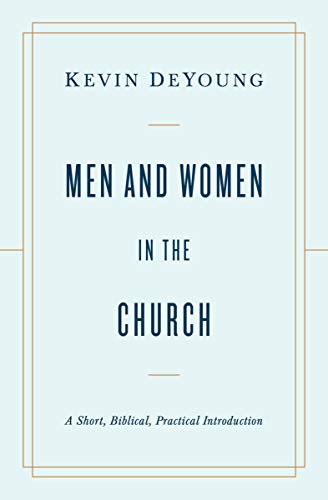
A Complementarian Vision? : Kevin DeYoung on Men and Women in the Church

How are men and women to relate to one another, in the church and in the family?

When we read the Bible, we find various statements about men and women that seem to be at odds with one another. Galatians 3:28 sees no distinction between male and female, whereas 1 Timothy 2:12 seems to place a restriction on women that men do not have, when serving in the church. 1 Corinthians 7:1-5 has Paul saying that husbands and wife share mutual rights with one another, whereas Ephesians 5:22-33 suggests some type of priority husbands have in relation to their wives, in terms of who submits to whom.

What is a biblically faithful Christian to do with this?  Select a certain group of texts has having priority over others, thus having a “canon within the canon” approach to Scripture, …. or find a way of integrating the whole of the Scriptural material?

A debate rages among evangelical Christians as to how to resolve the tensions that various Scriptural passages like these present to us. On the one side are the egalitarians, who sense a profound embarrassment over anything in the Bible that appears to be misogynistic, and thus emphasize the equality between men and women. For egalitarians, the liberating message of Jesus for women takes center stage. On the other side are the complementarians, who recognize gender equality, but who refuse to shy away from those passages that might suggest otherwise. Complementarians instead see such difficult passages as offering clues into the complementary relationship between male and female. Instead of embarrassment, complementarians see a beauty being expressed in the gender complementarity of the Bible.

It is important to say at the outset that Christians of good faith, can and indeed do disagree on these matters. Nevertheless, the positions we do take on how male and female relate to one another do have an impact on both marriages and the structure of a local church, and in how we think about gender more generally.


Continue reading


The Shift from “Science” to “Women”: Why 21st Century People Reject Biblical Authority Today

In the 21st century, we have witnessed a major cultural shift with respect to why there are those who reject the Bible today. A lot of it comes down to how people think the Bible treats women.

I could also add that many today find difficulties in the Bible regarding racism, sexuality, and gender identity. But for the sake of simplicity, let us just stick with the topic of misogyny for this discussion (after all, March is “Women’s History Month”)…. Let me explain.

…. another in a series of blog articles on “historical criticism”….

In the 20th century, Christians wrestled with the supposed conflict between science and the Bible. While such concerns still exist, a shift has taken place in terms what causes many people to resist the claims of the Christian faith

The Shift from “Science” to “Women”: 20th to 21st Century

In previous generations, particularly in the 20th century, it was the denial of the supernatural that most motivated critiques against the Christian faith and the integrity of the Bible. In certain cases, such critiques of excesses were justified. At times, Christians have resisted scientific progress out of a fear of having their faith come under attack.

For example, when Benjamin Franklin did his famous research on electricity using his kites to study lightning, some Christians resisted Franklin’s efforts. Some claimed that Franklin’s research was attacking how the providence of God worked in the life of a Christian. Historian Thomas S. Kidd, author of Benjamin Franklin: The Religious Life of a Founding Father, summarized a typical response against Franklin from some of his Christian critics. “Lightning, in the early American world, seemed like one of the most obvious ways that God intervened to show his displeasure. (We still sometimes speak of the threat of people getting “blue bolted” for disrespectful talk or behavior.)

Yet since Franklin, and particularly since the 20th century, many Christians rarely overwork everyday occurrences as being supernatural interventions by the hand of God. Most Christians today simply think of lightning strikes as part of God’s natural order of things, and that we need not sacrifice our confidence in God’s providential care simply because we appreciate the scientific lessons learned from our understanding of electricity and lightning.

In other words, Christians put lightning arrestors on buildings today, not because they are questioning God’s providence, but because they better understand how the laws of physics, that God himself created, actually work with lightning.

Just because someone claims that a supernatural “miracle” has happened does not mean that such claims should be automatically accepted. Even today, when we hear some fellow Christian believers rejoice that God “opened up a parking place” for them, many other Christians show a certain amount of skepticism for that type of display of piety. Nevertheless, every truly Scriptural-informed Christian continues to pray, seeking the Lord for His guidance in their daily lives.

Furthermore, since the medieval era, certain claims about “what the Bible teaches” no longer could be defended, nor such claims needed to be defended in the first place.

Rarely will you find a Christian today who believes that a geocentric model for the universe, where everything orbits around a fixed planet earth, including every other planet, sun and star, should be defended in order to somehow protect the authority of Scripture. Psalm 93:1 says that “the world is established; it shall never be moved” (ESV), but how many Christians, for the past century or more, believe that the Bible teaches that the earth rests at a fixed, unmovable point within the universe?

Generations of Christians up through the medieval period prior to Galileo were convinced that the fixed nature of the earth was essential to a proper defense of the Bible. Martin Luther completely rejected Copernicus’ critique of geocentrism out of hand, as being contrary to Scripture, complaining, “But that is how things are nowadays: when a man wishes to be clever he must . . . invent something special, and the way he does it must needs be the best!

Today, it is sufficient to say that a heliocentric view of the solar system, with an earth moving around the sun, is perfectly consistent with the teaching of the Bible. So when the Book of Joshua talks about the “sun standing still, many Christians today will differ on exactly what that means, but nearly all find it quite acceptable to say that this is not about the sun ceasing to move in its orbit around the earth. Nearly every Christian I know understands that when the “sun rises” and the “sun sets,” as the Bible so often says, as in Ecclesiastes 1:5, these are metaphors that describe astronomical phenomena. They are not statements that scientifically teach that the Bible forces Christians to hold to a geocentric view of the solar system.

At the same time, a belief in the supernatural has remained a core feature of Christian belief. Christians still debate whether certain events as recorded in the Bible are truly supernatural in character. For example, is the awakening of “zombies” in Matthew 27:51-53 an historical occurrence, where dead persons were awakened on Good Friday, who then took strolls through Jerusalem, after Christ’s Resurrection, or was it a metaphorical vision, anticipating the Resurrection that is to come? Historically orthodox Christians ponder the interpretation of these type of reports, and disagree amongst themselves, but they are unwavering in affirming other supernatural events found in Scripture.

Historic orthodoxy still affirms a Bodily Resurrection of Christ, the Virgin Birth, and the Second Coming of Jesus, which are all inherently supernatural events. Attempts by progressive-minded Christians to water down these central miraculous claims in the Bible, in order to make the Christian faith more palatable to modern ears, have proven counterproductive as a means of somehow “defending the Bible.”

Rudolf Bultmann, 1884-1976, was probably the most influential New Testament scholar of the 21st century. Bultmann considered himself as a churchman, yet he vigorously championed the “demythologizing” of the Bible as an apologetic for defending the Christian faith. Looking back on his apologetic program, it did not work.

Rudolf Bultmann and His Failed “Demythologized” Apologetic for Christianity

For example, Rudolf Bultmann was a 20th century German New Testament scholar, perhaps the most influential New Testament scholar of that century. Bultmann had been thoroughly schooled in the discipline of “historical criticism” of the Bible. I once had a professor in seminary who had a doctoral advisor, who himself had been mentored by Bultmann. My professor told me that his doctoral advisor was convinced that Rudolf Bultmann was the rough equivalent of an evangelical German “Billy Graham.” If you knew nothing of Bultmann’s published work, you would think that he was a revivalist preacher, thundering with a message echoing along on the sawdust trail. But for those evangelical Christians who have heard the name of Rudolph Bultmann, and do know about his writings, they would have hardly described Bultmann as being anything like an evangelical Christian.

Rudolf Bultmann considered himself to be a Christian, and yet he felt compelled to try to defend his vision of Christianity by “demythologizing” the Bible. People in Bultmann’s generation were quite eager to dismiss Christianity as being superstitious and “unscientific,” so Bultmann sought to try to remove those barriers. This meant excising the Bible of its supernatural content, and reinterpreting difficult passages in a more naturalistic light. For Bultmann, the concept of miracles was simply too much for modern people to swallow.

For Bultmann, you could no longer talk about a physical, bodily resurrection of Jesus of Nazareth. Instead, you could only talk about a spiritual resurrection of Jesus in the heart of a Christian believer. In other words, the spirit of the risen Jesus lives in the Christian, but Jesus’ body is rotted away and most probably disintegrated somewhere in or around Jerusalem.

You would be hard pressed to find any Christian these days who is convinced that Rudolf Bultmann’s argument for a spiritual resurrection offers an acceptable apologetic defense for the Christian faith. Many would even go so far as saying that Bultmann was no real Christian at all!

The concerns that motivated Bultmann stem from arguments that were articulated forcefully in the 17th century, by philosophers like Baruch Spinoza. Church and synagogue leaders were unable to resolve doctrinal and political disputes among themselves in Spinoza’s day. Therefore, Spinoza proposed that science must lead the way in adjudicating controversies surrounding biblical interpretation. In order to do that, the ascendancy of science required that the supernatural claims found in the Bible needed to be rejected. From the Virgin Birth to the Resurrection of Jesus, such claims of the miraculous needed to be dismissed as an embarrassment to the Christian faith.

Nevertheless, the history of the Christian movement since the age of Bultmann has shown that churches that follow Bultmann’s “demythologizing” program are on a near irreversible decline, whereas churches that continue to uphold the supernatural claims of the Virgin Birth and the Resurrection of Jesus continue to grow. The future of Christianity does not belong to the dying Protestant liberal mainline. Rather, it belongs to more conservative forms of the Christian faith. Nevertheless, a different philosophical movement is underway in our day.

Misogyny as the Greater Concern about the Bible, as Opposed to the Supernatural

When people share their skepticism about the Bible today, what stands out as the primary reason? Is it the supernatural claims in the Bible, as with the Bodily Resurrection of Jesus? What about Biblical inerrancy, whether or not the Bible has errors in it, particularly when it comes to science? Yes for some, these questions are still of great concern. But for a growing number of 21st century people, social justice type issues have become way more important.

In the 21st century, concerns about the supernatural and science has shifted away towards more sensitive concerns about social justice issues, as they relate to the Bible. A case in point: It matters less what the Bible says about supernatural miracles, but it matters more as to what the Bible says about the value and treatment of women.

In particular, claims about an inherent misogyny laced throughout the Bible have caused distress among believers who wish to defend the integrity of the Scriptures. The effects of the “#MeToo” movement over the last decade continue to reverberate throughout the church.

On the one hand, Christians need to be honest that there have been times when the Bible has been used as a weapon against women. Here is a good example: The evidence we now possess clearly shows that Nympha was a woman who hosted a church in her home, as described in Colossians 4:15. Sadly however, medieval scribes did change the gender of the female “Nympha” to the masculine “Nymphas,” in order to obscure the contribution of female leadership in the early church, in favor of only men serving in certain leadership roles. This does not necessarily imply that Nympha was an “elder” (or presbyter, from the Greek), a designated officer in her local church, but it does indicate that Nympha had some kind of leadership function in her community. Regrettably, the stalwart legacy of the King James Version of the Bible preserves this perversion of the text, that hides the true female identity of Nympha. Thankfully, modern Bible translations are correcting that.

At the same time, the importance of upholding the differences between the sexes remains a crucial tenet, in a historical, orthodox Christian view of human nature, coupled with a belief of the equality between male and female. Attempts by progressive-minded Christians to water down those differences that exist between male and female, as found in the Bible, in order to make the Christian faith sound more palatable to today’s postmodern ears, are proving to be counterproductive as a means of somehow defending the Bible.

A brief excursus to other areas is warranted here: Legitimate concerns about the treatment of women, can also be extended towards concerns about the treatment of gay and lesbians persons, as well as transgendered persons, as these discussions pertain to the topic of gender more broadly. Christians in many churches have not always done very well in serving and offering loving support to such persons. Over and over again, I keep hearing heart-wrenching reports of people wrestling with same-sex attraction, being thrown out of their churches and their Christian families, even though such persons never acted upon their same-sex attraction. The Bible has often been used to browbeat those associated with LGBTQ. The hurt and damage done is painfully real. The Christian church needs to do better here.

Nevertheless, the growing acceptance of same-sex marriage and transgender ideologies in the society at large, as well as in the church, is grounded in the notion that gender is merely a social construct, that there is no fundamental differentiation to be found between male and female. Even advocates for same-sex marriage and transgender ideologies differ among themselves as to how gender exactly functions in our world today. In summary, the motives behind efforts to advocate for those women who have been hurt by the church, or to advocate for same-sex attracted persons and transgendered persons who have experienced hurt in the church are indeed well-intended.

However, if such efforts lead to the watering-down of Biblical teaching on gender, then it will have the opposite effect of what is intended. Just as 20th century efforts to water-down the Biblical teaching on miracles and the supernatural actually undermined people’s confidence in the truthfulness of the Bible, it is quite possible that today’s efforts to marginalize Biblical teaching on gender might further fuel a different kind of loss of confidence in the truthfulness of the Bible. But it is a loss all the same, as 21st century persons tend to care more about social justice concerns than they are about claims regarding miracles and how science relates to the Bible.

Much of the shift that we see regarding social justice type issues can be traced to developments in academia over the past few decades. James Lindsay and Helen Pluckrose, authors of Cynical Theories: How Activist Scholarship Make Everything about Race, Gender, and Identity — and Why This Harms Everybody, document how certain critical theories emerging from the radical wing of 1960s civil rights protests made their way into the halls of academia in the 1970s and 1980s. Since the 1990s, such “cynical theories” have dominated certain fields in the humanities, with a curious mixture of anti-racism, critical race theory, feminist, and NeoMarxist ideologies, that has also been making an impact even in the sciences, within the last ten years or so.

What was once a legitimate desire to critique xenophobia, homophobia, racism, and for our purposes here, misogyny, has morphed into a kind of a new religion. Columbia University linguistic professor John McWhorter, author of Woke Racism: How a New Religion Has Betrayed Black America, himself an atheist, calls this new religious faith “woke” religion. This new “woke” religion clashes with historically orthodox Christian faith, judging Christianity as being hostile to diversity, hopelessly exclusive, and undermining the quest for equity. The rapid emergence of diversity, inclusion, and equity programs in university administrative structures signals the rise of such ideological constructs as being almost a normative part of everyday life concerns.

Focusing again on the treatment of women, Christians who revere the teachings of Scripture want to work towards a better world, where women are highly valued and appreciated, where we can rightfully acknowledge the competence of women to perform tasks that have been historically associated with men. But just as many 20th century Christians, who wanted to appreciate the contributions of modern science, would look with embarrassment on some parts of the Bible, there are a growing number of 21st century Christians, who want to better support women, who look with embarrassment on certain passages of the Bible.

A good case can be made that such social justice concerns, such as with misogyny, are more important reasons why people resist Christian truth claims in the 21st century, as compared to concerns about inerrancy, science, and the supernatural. In other words, people today might be more inclined to accept the possibility of miracle regarding the Resurrection of Jesus, but they might be more hesitant to accept Christianity because of certain Bible passages that they perceive to be misogynistic in character, treating women as being somehow “second-class” citizens.

Nevertheless, we should heed the warnings of our 20th century predecessors. Bultmann may have had good intentions in trying to defend the Christian faith, by attempting to purge its pages of the supernatural. But his program has since failed. Christianity that has followed Bultmann’s path has weakened, whereas those who have embraced the strange and weird parts of the Bible in responsible ways continue to see a renewed growth in faith, and vibrancy in church life.

Likewise, 21st century Christians face a similar challenge with social justice concerns targeted towards fighting against the denigration of women. The question is whether or not Christians will fall for yet another Bultmann-like defense of Christianity, and water down their faith, when it comes to social justice issues, as with valid concerns over misogyny.

We do more harm than good when we try to hide or obscure certain passages in the Bible that on first glance seem to denigrate women. Those who tend to look upon such challenging Bible passages with embarrassment might find themselves looking at a shrinking church decades from now, just as the once enthusiastic disciples of Rudolf Bultmann have experienced since the mid-20th century.

In the next post in this series, we will examine a particular case study, following new trends in historical criticism, that shows how such embarrassment about the Bible can actually backfire on a truly Christian apologetic for the faith.