Elisabeth Elliot was widowed now for a second time. Elisabeth Elliot was forty-six years old when her husband, sixty-four year old Addison Leitch died after a nearly year long difficult battle with cancer.
Almost exactly half of her life was over, with another half remaining by 1977. Going through another period of grief reinforced the reality of suffering, a theme which recurred several times in her extensive writing career. This last period of Elisabeth Elliot’s life catapulted her even further into the public eye, with her advice directed mainly towards women through her radio program “Gateway to Joy,” and more books. Yet it is arguably the most controversial period of her life as well.
Here in this final blog post reviewing several biographies of the life of the iconic 20th-century missionary and author, Elisabeth Elliot (previous blog posts here and here), we examine this last period of her life as told by her biographers.
Elisabeth Elliot’s Mid-Life Crisis
Towards the end of Addison Leitch’s life, Elisabeth began to take on boarders in her home, initially to assist her as she nursed her husband in his final days. Little did she know then that two of these boarders would eventually occupy major roles in her life.
Walter Shephard was a son of missionary parents serving in the Democratic Republic of the Congo. Upon returning to the United States, Walter Shephard as a young adult lived a prodigal life, quite far away from the Christian life modeled by his devout parents. A near deadly car accident got his attention and he eventually gave his life over to Christ. He ended up at Gordon-Conwell Seminary, and took a room in Elisabeth Elliot’s home. He got along extraordinarily well with Elisabeth Elliot, but he soon developed a close friendship with young Valerie, Elisabeth Elliot’s daughter, when she was home from college one semester. The two were married shortly after Valerie graduated from Wheaton College.
Lars Gren was in many ways quite far apart from Walter Shephard. A former salesman who in mid-life decided to go to seminary to become a hospital chaplain, Lars Gren never knew anything about Elisabeth’s fame as the wife of the martyred missionary, Jim Elliot, until after he became a boarder in Elisabeth Elliot’s home. Unlike Walter Shephard, Lars was not a great conversationalist. He did not have the most exciting personality. But what he did have was a sense of faithfulness and loyalty to Elisabeth, having a strong desire to please her, and he seemed always available. He was always there.
Lucy Austen’s Elisabeth Elliot: A Life, a one-volume biography of Elisabeth Elliot’s life. Along with Ellen Vaughn’s two volume work about Elisabeth Elliot, both authors have some surprises towards the end their work about Elisabeth’s third marriage to Lars Gren.
I am taking a break from my two-part book review of Bart Ehrman’sArmageddon to address some significant news in the evangelical world. It involves biblical scholar Richard B. Hays on one side, and popular author Rosaria Butterfield on the other. This is probably the one blog post I have made this year, which I really did not want to write. But sadly I find it necessary.
As I wrote about late in the spring of this year, it was announced that a new book by a prominent New Testament scholar would come out this fall that would shake up a lot of people, particular evangelical thought leaders and teachers: “Most Christians probably have no clue who Richard B. Hays is. But when it comes to the Bible, Hays is big news. Think the Tim Tebow of the National League Football, or the Caitlin Clark of women’s basketball, or the Taylor Swift of pop-music, ….. or the John Piper of evangelical pastors. Richard B. Hays is THAT big when it comes to New Testament studies. He is a rock star.” I would urge you to go back and read that post for further context for this blog post.
Richard B. Hays is the rough American equivalent to the British New Testament scholar, N.T. Wright. His son, Christopher, teaches Old Testament at my alma mater, Fuller Theological Seminary. Yesterday, the elder Hays and the younger Hays released The Widening of God’s Mercy: Sexuality Within the Biblical Story. What is remarkable about this book is that it marks a reversal in Richard B. Hays’ position in the 1990s, where he then concluded (at least tentatively) that the New Testament does not allow for any concept of affirming same-sex marriage as a legitimate option for the Christian. The elder Hay’s book, The Moral Vision of the New Testament: A Contemporary Introduction to New Testament Ethics, was the touchstone for many in what is often described as a “Side B” approach to same-sex attraction.
A definition at this point is vitally important.
At the risk of being too brief, a “Side B” approach to same-sex attraction is that it acknowledges that some people experience a kind of sexual attraction to members of the same-sex, in which at least some (if not many) who experience this same-sex attraction find it difficult to completely shake off. Though quite debatable in “Side B” circles, some, if not many, or perhaps even most in this category, live with this condition their entire lives. Understood this way, “same-sex attraction” is not an identity, as though “same-sex attraction” competes with one’s identity as a Christian. Neither is it equivalent to sexual lust, though it could lead to same-sex lust, which is described as sin in the Bible. Rather, “same-sex attraction” as an “identity” is simply an acknowledgment of one’s experience in contrast with heterosexuals who never experience same-sex attraction. It does not automatically imply that someone is actively involved in some kind of sexual activity with a member of the same sex.
Richard B. Hays. One of the top New Testament scholars on the planet. Has he changed his mind on what the Bible teaches about human sexuality?? A new book suggests he has, but his argument is complicated.
Richard B. Hays (Father) and Christopher Hays (Son) on Christian Sexual Ethics
Reviews are starting to come out taking a hard look at the new book, The Widening of God’s Mercy: Sexuality Within the Biblical Story. As many reviewers have indicated, Richard B. Hays has changed his mind regarding the legitimate, biblical boundaries for sexual behavior, a viewpoint which his son, Christopher, also supports. A couple of reviews favorable to the conclusions made by the Hays can be found here:
Rebecca McLaughlin, for The Gospel Coalition. McLaughlin acknowledges she experiences same-sex attraction, but that she is committed to upholding an historic Christian sexual ethic, which honors marriage as being between one man and one woman.
All five reviews are worth reading, particularly as preparation for someone who wishes to read the new Hays and Hays book. However, the most detailed and engaging review is the last one by Preston Sprinkle. The conclusion Sprinkle makes is worth quoting in full:
I have to admit, the scholarly side of me was excited when this book was first announced. Some Christians immediately trashed the book on social media—something no thoughtful Christian should ever do with books they haven’t read—but I was genuinely excited to read it. Richard is a brilliant scholar (I wasn’t familiar with Christopher’s work), and his article on Romans 1 in particular was one of the most thorough and exegetically responsible treatments of this tough passage. I was deeply curious how he was going to refute his previous argument. I also wondered if The Widening of God’s Mercy would tease out a fresh argument for same-sex marriage that hadn’t yet been made.
To my surprise, the book did neither. Instead, it simply repackaged an old trajectory argument to make a questionable logical leap: since God welcomes foreigners, eunuchs, tax collectors, and sinners, therefore sex difference is no longer part of what marriage is.
At the risk of oversimplifying, all of these reviews suggest that the exegetical work Richard B. Hays did in the 1980s and 1990s, which demonstrates that the New Testament does not affirm same-sex marriage, is interestingly still intact. In a nutshell, the New Testament affirms marriage as being between one man and one woman, thereby indicating that a marriage between two men, or between two women, can not qualify as within the boundaries of what constitutes a biblical marriage.
However, the message of the new book suggests that God can, and indeed, has changed his mind. While same-sex marriage has been rightly condemned as outside of accepted historic, orthodox Christian understanding for almost 2,000 years, God has in the 21st century moved through the action of the Holy Spirit to now affirm a broader perspective on marriage. This is equivalent to what is often known as a “Side A” approach to same-sex attraction and marriage.
The idea that God can and has changed his mind is provocative. It is also an argument that can act like a wild tiger which can not be tamed, or like the proverbial bull in a china shop.
How Do You Know When God Changes His Mind… After the New Testament Has Been Completed?
But the argument can easily go in directions which will surprise Christians and non-Christians alike. The rise of the Enlightenment in the late 18th century suggested that we can essentially dispense with the concept of the supernatural. Why? Because perhaps God has changed his mind.
Follow this thought experiment: Back in the New Testament era, people were naive enough to believe in things like miracles, so God used the belief in the resurrection as a way of convincing premodern people to accept the Christian message. However, now we live in the modern (even post-modern) era, where science tends to reign supreme. We can give up on the whole concept of the supernatural as essential because God has basically changed his mind. No one needs to make any decisions based on supernatural beliefs anymore because the secularization process of society has made those supernatural beliefs irrelevant.
This is effectively what the Hays father and son team have done. There is nothing new here.
One might then argue that both secularization and new understandings of marriage in the civil sphere are inevitable results of the trajectory of contemporary Western culture, and could have potential advantages. Perhaps there is some good after all if the ethical framework of Christendom takes a backseat culturally. But theologically, these new supposed “movements of the Holy Spirit” are a disaster for the church. Where can the justification that God has revealed a change of mind be found? In the writings of a pair of United Methodist biblical scholars?
Richard B. Hays has in the past, and even now, ultimately told us the truth about the what Bible says about same-sex attraction and marriage, but in this new book with his son Christopher it would appear that what the Bible says really does not matter. Because God has changed his mind.
The father and son Hays team would probably push back against this. They might say that the Christian ethic of love supersedes the ethical teachings of the New Testament written in the first century. They might say in the sovereignty of God, God has every right to change directions ethically in the 21st century, even at the expense of what we read in Scripture. But as an evangelical Protestant who looks at the Bible as the final authority for faith and practice, it is really difficult to square the contention made by the father and son Hays team that the Bible condemns all same-sex erotic relations as going against Scripture, while simultaneously saying that 2,000 years later this no longer applies, simply because God has since changed his mind.
On the one hand, I appreciate the efforts by Richard B. Hays and Christopher Hays to look for a compassionate way to accept LGBTQ people as people who are genuinely loved by God, thereby rejecting the ways that the church has condemned such persons in the past, simply because they experience some form of same-sex attraction, whether they act on it or not.
But the main problem is not simply their conclusion, but rather, it is the method by which they arrive at their conclusion. In the end, for the Hays, it is not Scripture which remains ultimately authoritative for determining Christian ethics. Instead, it is human experience which trumps Scripture. But in making this argument, Hays and Hays are adopting a kind of progressive Christianity that goes beyond simply affirming same-sex marriage. They are undermining the basis for determining what faithful Christian discipleship and theology has looked like for 2,000 years.
For if the Bible teaches that same-sex marriage is permissible, then that would be one thing. Instead, they argue that Paul and the rest of the New Testament writers got the doctrine of marriage wrong. In their argument, we need new revelation today to fix what Paul and the other apostles messed up.
I do not doubt the Christian commitment of either the senior or younger Hays. Yet as far as I am concerned, it just seems like it would be a whole lot more honest to say that Christianity got some stuff so fundamentally and horribly wrong, that it would be wiser to reject Christianity as purely wishful thinking and leave it at that. To think that the Christian church for nearly 20 centuries got the fundamental doctrine of marriage wrong is a really big “OOPSIE!!!”
Perhaps we could just preserve the supposedly good parts of what the Bible teaches, and safely discard the rest. Perhaps a kind of “cultural Christianity” is all we can really hope for. Perhaps we could set up a committee to try to negotiate through acceptable versus unacceptable moral claims in the Bible. But who gets the authority to carve those things out and make such decisions?
Is this really about telling the truth about same-sex attraction, marriage, and one another?
It would be better to be an atheist, an agnostic, or generic theist instead of trying to stuff the square peg of Richard B. and Christopher Hays version of Christianity into the round hole of 2,000 years of historic orthodox Christianity. But as I believe that the central core claim of Christianity, that Jesus rose from the dead, is indeed true, I am driven to conclude that there must be a better way to describe what Christianity looks like than what the father and son Hays team would have us believe. Even if the Bible teaches something I do not fully understand, I still need to learn to trust that God knows what he is doing, and not try to pretend that twenty centuries after the Incarnation, that I suddenly know better.
I hope to at some point read The Wideness of God’s Mercy, to make sure I have not misrepresented the authors, but for now I would suggest reading some of the reviews that have come out, to whet your appetite for wrestling with the arguments of the book. If you are not much of a reader, you should consider watching or listening to a YouTube video by Preston Sprinkle, where he goes into some detail into what he agrees with about the book and ultimately disagrees with about the book. In a world where the traditional Christian doctrine of marriage has come under relentless attack from the culture, it is refreshing when you have someone telling the truth about what Scripture is saying, and doing so in a respectful way that honors the best of intentions that others possess.
——————————————
An Addendum…. About Rosaria Butterfield’s Fives Lies of Our Anti-Christian Age….And A Plea for Speaking the Truth
This final part of the blog post addresses the other side of the conversation taking place in evangelical spaces in the church today.
I highlight Preston Sprinkle’s video because near the beginning of the video Preston urges Christians to do their best to accurately understand the arguments presented by someone who fundamentally disagrees with you. For if a Christian fails to faithfully represent what someone else believes or says, that Christian is breaking the Ninth Commandment not to bear false witness against one’s neighbor. Lying about what someone actually believes is an immoral act. Christians who lie about others in this way need to repent of such behavior.
For example, I was intrigued and interested to read Rosaria Butterfield’s recent book Five Lies of Our Anti-Christian Age. Rosaria Butterfield was involved in a lesbian relationship for years, and she was an extremely active anti-Christian activist before Jesus got hold of her life. Several of her earlier books are very good, including her phenomenal The Secret Thoughts of an Unlikely Convert, a book I reviewed 11 years ago briefly at Veracity. I only read parts of her next book Openness Unhindered, but that was helpful, too.
In The Secret Thoughts of an Unlikely Converttells of her “train wreck” conversion story, and how simple acts of Christian hospitality drew her to read the Bible slowly and carefully over a few years, assisted by caring, non-judgmental Christian friends, who welcomed her into their lives. Rosaria’s story is gripping and encouraging. I highly recommend learning about her testimony.
Rosaria Butterfield – An unlikely convert to Christian faith, touched by the art of hospitality…. What has happened to her since?
The Good Stuff in Rosaria Butterfield’s Five Lies of Our Anti-Christian Age
At first I found much to learn from in Five Lies of Our Anti-Christian Age. Rosaria effectively summarizes the five lies being aimed against Christianity today:
Lie #1: Homosexuality is normal.
Lie #2: Being a spiritual person is kinder than being a biblical Christian.
Lie #3: Feminism is good for the world and the church.
Lie #4: Transgenderism is normal.
Lie #5: Modesty is an outdated burden that serves male dominance and holds women back
She also has some excellent advice about distinguishing between sympathy and empathy, which encouraged me to keep reading. Rosaria even had a helpful critique of certain aspects of the “Side B” movement, where some have advocated a controversial idea of certain kinds of “spiritual friendships” where such relationships function a lot like marriage without the sex part. That does sound a bit fuzzy.
This has raised a number of questions in my mind, and in my earlier analysis of the Revoice movement, it was not clear as to who associated with Revoice supports that way of thinking and who does not, and what they actually mean by “spiritual friendship.”
I have come to see that Rosaria Butterfield is correct to call out a particular definition of “spiritual friendship” as unbiblical , when such “friendships” mimic marriage. At the very least, this is confusing and unhealthy. Friendship is one thing. Marriage is different. This appears to be her strongest objection to the Revoice movement (Butterfield, Five Lies, p. 59). In many ways, some of this critique is correct, at least in the early years of the Revoice conference.
We believe that all Christians have the capacity for both sinful (i.e., fleshly) and holy (i.e., Spiritual) desire for relationship with other people; that intimate friendship between believers can be a means of sanctification; and that the Holy Spirit can direct and shape affection for other image-bearers in ways that honor their dignity and celebrate their unique personhood. We believe that Christians should seek wisdom and prudence when entering any relationship marked by greater intimacy, and that believers must exercise care and resolve to avoid all forms of temptation. We believe that Christians must actively resist and turn away from every thought, action, desire, or behavior that does not align with God’s revealed intentions for human sexuality, since we are not our own, but belong—body and soul, both in life and in death—to our faithful Savior, Jesus Christ. (Rom. 8:12–13; Col. 3:5)
If someone has questions about “intimate friendship,” then the phrasing towards the end urging believers to “actively resist and turn away from” anything that “does not align with God’s revealed intentions for human sexuality,” sounds pretty orthodox to me. I do wonder if Rosaria has read this page from Revoice’s website.
The Not-So-Good in Five Lies
I agree that all five of the lies Rosaria outlines are indeed impacting the church in negative ways. The problem with Five Lies comes down to some of the details Rosaria articulates in her book, and how she interacts with other authors writing in this area.
First, it would appear that not everyone defines all “spiritual friendships” in the manner Rosaria puts it. People can live without sex, but they can not live without friends. Even early on in the book, Rosaria makes multiple statements that simply do not resonate with what I know about so-called “Side B” understandings of same-sex attraction:
“Side A rejects the Bible as inerrant, infallible, sufficient, and authoritative, while Side B rejects the biblical doctrines of sin, repentance, and sanctification” (Butterfield, p.67).
“Side B errs on its handling of matters of salvation and sin, forgetting that the first word of salvation is repent—“Repent,” declares Jesus, echoing John the Baptist, “for the kingdom of heaven is at hand” (Matt. 4:17). Side B redefines gay sin merely as sexual action and denies that sin acts with affections, feelings, attractions, and desire. Both Sides A and B believe that homosexuality is fixed and that the gospel might change people in smaller ways but never in the deep matters of sexual desire ” (Butterfield, p. 74)
The logic here resulting from a confusion of terminology and their definitions is difficult to follow: Rosaria rejects both “side A” and “side B” in favor of what might be called “side X,” but it could be instead that she is advocating “side Y,” supposedly somewhere in between “side B” and “side X.” As some define it, “side X” conflates “same-sex attraction” together with lust for the same sex, something which is sinful and needs to be repented from, as opposed to a temptation which is to be resisted, or otherwise something someone should flee from, as when Joseph ran away from Potiphar’s wife, when she propositioned him. Is what I define as “side B” really “side Y” instead? According to GotQuestions.org, perhaps my “side B” is really “side Y.” Are you confused yet?
Rosaria is correct to say that that “side A” believes homosexuality as an orientation to be “fixed,” but not everyone in the “side B” camp would agree with that. It would appear that Rosaria Butterfield defines “sexual attraction” as being equivalent with sexual lust, which is not at all what I have read is consistent with what advocates of a “Side B” approach take.
Even if Rosaria is correct, I do not see the evidence for her position demonstrated in her book. Rosaria Butterfield operates with her own definitions of terms like “sexual attraction,” “side B,” and “sexual orientation” that do not align with how other authors use that terminology. As a result, these different definitions of key terms and ideas distorts her readings of other writers.
For example, in Greg Johnson’s book, Still Time to Care, which I have reviewed on Veracity, he argues that both same-sex attraction and opposite-sex attraction have disordered elements to them, this side of Adam’s fall. Not only is same-sex attraction, in the most sexual sense, disordered, on the opposite-sex attraction side, polygamy is a sign of disorder as well. However, in her review of Johnson’s book, Rosaria Butterfield responds:
Because Johnson rejects the natural and good pattern of heterosexuality, he believes that there is no point or hope in striving for it. Johnson writes, “There is no reason to believe that the ordinary progress of spiritual growth would involve the replacement of sinful homosexual temptation with sinful heterosexual temptation.” (Butterfield, p. 71).
But this misrepresents the argument with Greg Johnson is making in his book. For one thing, for Johnson, the desire on the part of someone who experiences same-sex attraction to want to become opposite-sex attracted is quite natural (contra Rosaria), but it is not the same thing as sanctification; that is, “spiritual growth” from this quote. Johnson’s point is also to say that those who experience opposite-sex attraction can experience temptation and sin just as much as those who experience same-sex attraction, just in different ways.
Exchanging one form of temptation to sin for another form of temptation to sin is not a sign of progress in one’s sanctification. Regardless of the temptation, or the sin such temptation tries to move us towards, we are called to flee from all temptation and repent of all sin.
Rosaria’s argument as I read her implies that part of Christian sanctification is seeking the transfer of same-sex temptation in someone’s experience over to opposite-sex temptation in their experience. Does this really mean that a same-sex attracted person should strive after a different kind of temptation, that of heterosexual temptation? How about not striving after any kind of temptation at all? What ever happened to that phrase from the Lord’s Prayer, “lead us not into temptation?”
The irony is that in Rosaria’s own writings and interviews she has given acknowledges that she still experiences same-sex attraction at times. How this squares with her view of Christian sanctification is not made clear in her book. Rosaria also agrees with her fellow author, Christopher Yuan, that the object of Christian sanctification is holiness and not heterosexuality, which appears to be in complete contradiction with what she says about Greg Johnson’s book. Again, Greg Johnson’s book emphatically argues that the goal of Christian sanctification for a same-sex attracted person is holiness, not heterosexuality.
The logical disconnect here is incredibly frustrating. Rosaria’s misreading of Greg Johnson’s book is not the first time this happens in Five Lies. This happens several other times with other authors with whom she interacts. If I am wrong about this, I would like to be corrected.
Continually running into roadblocks like this in Five Lies of Our Anti-Christian Age, over and over again, has proved to be very discouraging, making the reading of Rosaria’s book to be more of a slog than a spiritually encouraging process, despite some of the genuinely helpful places in her book where I actually agree with her. The final straw for me came in how she treats author Preston Sprinkle.
Rosaria offers a review of one of Preston Sprinkle’s books, where Preston talks about the kind of close, intimate friendship that David and Jonathan had in the Old Testament. Many on “side A” of the discussion believe that David and Jonathan were in fact gay lovers in the most sexual sense. But Preston Sprinkle takes a different approach. Preston relates the story of David and Jonathan using the initials “K.D.” to refer to King David and using the name “John” to refer to Jonathan. Rosaria’s take on Preston’s reading of the story is odd to say the least:
Sprinkle is casting King David (“K.D.”) as an effeminate poet and Jonathan (“John”) as his unrequited love. In keeping with postmodernism, Sprinkle tips his hat to the false claim that David and Jonathan were probably gay. Playing with the Bible in this way is meant, I suppose, to make it friendlier to sexual minorities (Butterfield, p. 240).
However, if she had read Preston’s book more carefully, she would have read the explicit statement made by Preston Sprinkle on the previous page, “the Bible gives no evidence that David and Jonathan were in a sexual relationship.” (Preston Sprinkle, Embodied, p. 78). If she had bothered to read an earlier book or a later book by Preston Sprinkle, she would have read even more explicit statements as to the nature of David and Jonathan’s friendship:
David and Jonathan weren’t gay. But they did experience deep-seated, same-sex affection, and nonsexual intimacy toward each other. Same-sex oriented Christians experience similar desires only to a greater degree. (Sprinkle, People to Be Loved, p. 146).
David does say that Jonathan’s love was “more wonderful than that of women” (2 Sam. 1:26), but this doesn’t mean their relationship was sexual, since the ancients didn’t automatically equate “love” to “sex,” unlike many modern westerners. (Sprinkle, Does the Bible Support Same-Sex Marriage?: 21 Conversations from a Historically Christian View, p. 63).
For Preston Sprinkle, the kind of “same-sex affection” David and Jonathan had for one another is not identical with “same-sex attraction” in the erotic sense. David and Jonathan instead shared a deep, non-sexual friendship bond with one another. What possessed Rosaria Butterfield to read Preston Sprinkle so badly?
Yet the most alarming thing is that Rosaria has refused to engage with Preston in a conversation to sort out the matter. From Preston’s blog post:
I also wish I could be having this conversation directly with Butterfield. In fact, I reached out her via email to invite her to have a private, good-faith conversation about these matters. (Not a debate; just a clarifying conversation.) Her husband, Kent, who is also one of her pastors, responded with an email he and his co-pastor had written, declining on her behalf. When I asked for permission to quote publicly from their reply, Kent requested that I not do so and provided me with this public statement: “Rosaria’s pastors stated there is a difference in understanding of the gospel and therefore see no basis for discussion.”
The final public statement made by Rosaria’s elders is disturbing as it is inconsistent with the actual data. All of us make mistakes, get things wrong, misunderstand people, etc. I do it quite often, and try to do my best to repent of such sinful errors when I can. But when someone publicly makes a claim about what someone else believes or says, which turns out to be false, and then refuses to discuss or even acknowledge the error, then this is a violation of the Ninth Commandment, which forbids a follower of our Lord to bear false witness against one’s neighbor.
Perhaps what Rosaria is saying is true about her own experience. But when it comes to telling the truth about same-sex attraction, marriage, and one another more generally, something appears to be amiss.
I do hope and pray that Rosaria will rethink her posture, write a letter or email, and make some effort to clear up the matter. For the sake of honoring the Ninth Commandment, she should do so. But to date, Rosaria has done no such thing. This is all very troubling.
Ditching What I Was Hoping Would Be an Edifying Book
That pretty much did it for me.
I finally decided to give up on trying to finish Five Lies of Our Anti-Christian Age. The work required to try to constantly reframe how she defines terms like “sexual attraction,” “side B,” “sexual orientation”, and others and try to mesh them into how other authors uses those same terms was just exhausting. I really wanted to like this book, considering a number of positive reviews from others whom I respect, but I just got worn out by all of the mental gymnastics and contortions.
It made me long for wanting the “old” Rosaria of The Secret Thoughts of an Unlikely Convertback from 11 years ago. I miss that Rosaria. Back then, Rosaria was more the compassionate voice who prized hospitality as the gateway for allowing God to work and change lives, as opposed to the full-on culture warrior posture she now takes in Five Lies of Our Anti-Christian Age.
In her favor, I still marvel at the courage that Rosaria Butterfield had in giving up her lesbian relationship, and the very social world that supported her and simultaneously isolated her from Christian community, in order to give her all-in-all to follow Jesus, no matter what the cost. Rosaria is truly a model for radical, Christ-loving discipleship. But for some reason, her tendency towards radicalism has caused her to slip into yet another deadly sin, that of bearing false witness against one’s neighbor. I pray that the Lord will open her eyes so that she might do the right thing some day, and return to telling the truth about others.
The Unfortunate Tie Which Unites Richard B. and Christopher Hays with Rosaria Butterfield
Circling back around to the Richard B. Hays and Christopher Hays book The Wideness of God’s Mercy, it would appear that their book is meant to be kind of a strong pushback to the rather militant culture warrior posture of a Rosaria Butterfield’s Fives Lies of Our Anti-Christian Age. I pray that Hays and Hays would see the error of their posture, but I doubt that such a move will happen anytime soon.
The unfortunate tie which unites Richard B. and Christopher Hays with Rosaria Butterfield is the notion that same-sex attraction inevitably leads to the acceptance of same-sex marriage, forming a symbiotic relationship between the two. For the Hays, this notion is viewed positively. Same-sex attraction is a gift from God which paves the way for God to honor same-sex marriage. The trajectory that starts with same-sex attraction eventually works to redefine marriage. Why? Because God has changed his mind.
For Rosaria Butterfield, this notion is viewed negatively. Same-sex attraction is not merely a temptation, it is the embodiment of a kind of sin itself. There is no difference between temptation and the sin that might result from giving into that temptation. Same-sex attraction is just as much a morally-culpable sin as same-sex marriage is. For Rosaria, same-sex attraction does not merely entail a potential temptation to be resisted, but rather it is a sin to be repented from.
In Rosaria’s anthropology, the trajectory associated with the same-sex marriage movement in the wider culture works in the opposite direction. Because same-sex marriage is a sin that has been normalized, the only way to fight the trajectory is to fully assign same-sex attraction itself into the category of sin as well. Since same-sex marriage is sin, then anything that has the possibility of leading to that sin must be dealt with as sinful itself. Anything short of this radical categorization of same-sex attraction is a concession towards sin which can only be addressed through repentance. Any acknowledgment of a “same sexual orientation” that might never change in a person’s life is simply believing at least one of the “five lies.”
What we are witnessing in our current cultural moment is a “hardening of the categories,” as a top-of-the-line New Testament scholar moves against an historically orthodox Christian ethical position, while a heroic former-lesbian-activist turned evangelical Christian now issues takedowns of other fellow believers who do not follow her exact mindset. Like a “hardening of the arteries,” which endangers the health of the physical body, a “hardening of the categories” pits the timelessness of God’s moral standards against the call to love with compassion and mercy, which endangers the health of the Body of Christ.
Neither side appears to leave much room for a third-way mediating position that seeks to uphold the Christian virtues of hospitality, listening well, and not telling lies about other people, while also upholding an historic, orthodox Christian ethic regarding sexual ethics, and the doctrine of Christian marriage as being between one man and one woman. This is a sad state of affairs. There is a whole generation of LGBTQ+ folk who long to hear the Christian message of both love and truth expressed to them in a way that they can understand.
It is time that we as Christians learn to do a better job in telling the truth about same-sex attraction, marriage, and one another.
UPDATE Monday, September 23, 2024:
Less than two weeks after I published this blog post, Gavin Ortlund of Truth Unites sat down with Rebecca McLaughlin to discuss the controversy regarding the new Hays & Hays book on human sexuality.
If you think “progressive Christianity” has no relevant impact on evangelical churches, then you really need to pay attention to this blog post…. I hope you stay with me until I get to the Richard Dawkins point at the end…
Most Christians probably have no clue who Richard B. Hays is. But when it comes to the Bible, Hays is big news. Think the Tim Tebow of the National League Football, or the Caitlin Clark of women’s basketball, or the Taylor Swift of pop-music, ….. or the John Piper of evangelical pastors. Richard B. Hays is THAT big when it comes to New Testament studies. He is a rock star.
I read Richard B. Hays’ influential The Moral Vision of the New Testament back in the 1990s, when I was a seminary student. I had several dear Christian friends who were wrestling with same-sex attraction. I wanted to know how best to walk with them in their struggles, and help them navigate through a lot of the harmful messages being heard in some conservative evangelical churches, while still being faithful to Christ and Scripture.
To be honest, I was conflicted inside: What do you do and say when a friend tells you that they are “gay?” But in reading Hays’ book, it encouraged me that one could have compassion towards those who wrestle with same-sex attraction, while still embracing a traditional sexual ethic, with the time-honored doctrine of marriage between one man and one woman consistent with historic orthodox Christianity. Hays’ The Moral Vision of the New Testament: A Contemporary Introduction to New Testament Ethicsis still regarded as one of the seminal texts affirming what is now sometimes known as a “Side B” approach to human sexuality. In that book, Richard B. Hays recounts a moving conversation he had with a friend who was nearing death, who for years had wrestled with same-sex attraction while living a celibate life out of obedience to Christ. That conversation gripped me as I have had several conversations like this myself with friends over the years.
Richard B. Hays. One of the top New Testament scholars on the planet. Has he changed his mind on what the Bible teaches about human sexuality?? What type of impact might this have on evangelicalism?
Rethinking the Moral Vision of the New Testament?
The Moral Vision of the New Testament covers a number of topics, taking certain positions which might not sit well with some readers. For example, The Moral Vision of the New Testament takes a more pacifist approach to the question of non-violence and war. But this is not what the book is most known for. In The Moral Vision of the New Testament, Hays tackles a lot of the revisionist scholarship championed by John E. Boswell, a 1970’s graduate of the College of William and Mary. Boswell eventually became an influential scholar at Yale, advocating an ethical position in support of same-sex marriage in the church and society at large. Just a few years ago, William and Mary named a building in Boswell’s honor. In a previous essay which served as the impetus for much of what Hays wrote in The Moral Vision, Hays had this to say:
“John Boswell’s influential interpretation of Rom 1:26-27 is seriously misleading in several important particulars. A careful exegesis of the passage shows that Paul unambiguously describes homosexual behavior as a violation of God’s intention for humankind. Responsible interpretation must first recognize that Paul condemns homosexuality and then ask how that condemnation bears upon the formation of normative ethical judgments.”
Now, almost thirty years later, it appears that Richard B. Hays is now backtracking on what he wrote back in 1995/1996. Get the full story from Ian Paul’s Psephizo blog, but here is a summary: Advanced promotion from the publisher, Yale University Press, has announced a new book, co-authored with his son, Christopher Hays, The Widening of God’s Mercy: Sexuality Within the Biblical Story. The book is not even out yet, but as of April, 2024, it ranked as the “#1 New Release in Gender & Sexuality in Religious Studies” on Amazon’s website. If the news reports are accurate, a shift in the thought of the senior, Richard B. Hays, is nothing short of earth-shattering. Richard B. Hays is thought by many to be the American equivalent of the British New Testament powerhouse scholar, N.T. Wright. The fact that Richard B. Hays and N.T. Wright are not just colleagues but good friends is even more significant.
Generally, one should not comment about a book without reading it. But the following endorsement blurb from another scholar who has read an advanced copy of the book is both telling and astonishing:
“This book is an event of historic significance. Senior New Testament scholar Richard Hays here renounces his very widely-quoted (and exploited) non-inclusive treatment of human sexuality from thirty years ago. His son, Old Testament scholar Christopher Hays, of Fuller Theological Seminary (!), here clearly and boldly embraces LGBT+ inclusion, surely at the risk of his employment. Their case is made based on biblical materials, notably a trajectory-type vision emphasizing the ever-widening range of God’s mercy across the canon. Traditionalists will not be convinced by the exegesis. Those who have been wounded by the church’s rejection, and their allies, will see this book as occasion for celebration.”—David P. Gushee, Mercer University
Over the recent decades, David Gushee moved away from his conservative evangelical upbringing to embrace a more progressive Christianity. Today, he is one of the most outspoken ethicists to embrace the acceptance of same-sex marriage within the church. So, if Gushee is going to endorse a book, you can pretty much guarantee it is not going to endorse a traditional view of marriage as being between only one man and one woman.
Crisis in Mainline Protestantism…. Coming Towards More Towards Evangelical Spaces?
In one sense, despite the recognized stature of Richard B. Hays among conservative evangelical Christians, I am not surprised that Hays has rethought his earlier position. Hays is ordained in the United Methodist Church (UMC). Over the past couple of years, the United Methodist Church has gone through perhaps its worst split in its 200+ year history. Roughly one out of four churches left the United Methodist Church to join the Global Methodist Church, aligned more with the rapidly growing Methodist church outside of the United States, notably in Africa. There are still conservative United Methodist Churches out there, while others try to promote an “agree-to-disagree” posture, but the situation has dramatically changed within the last few years. At one time, the Methodist church was the largest denomination movement in the United States.
Now, the controversy over the doctrine of marriage has reduced the footprint of the UMC in the United States significantly. Miracles do happen, but if the UMC follows the well-worn path of other major denominations changing their doctrine of marriage, then it is simply a matter of time before the UMC ceases to exist as an American Christian institution. The current situation will raise a lot of questions about the future of the Methodist seminary system, with schools like Duke Divinity School in North Carolina and Candler School of Theology in Atlanta. Technically, the UMC bans their clergy from performing same-sex weddings (well, at least until this past week). But the ban has never been effectively enforced, which explains the exodus of churches out of the UMC towards the Global Methodist Church over the past few years.
If Hays desires to stay within the UMC, there will be a lot of pressure put on those like him to rethink their views on human sexuality. In contrast, colleges and seminaries either loosely or closely affiliated with the more conservative Global Methodist Church are seeing revivals (like Asbury College) and/or increased enrollments (like Wesley Biblical Seminary), situations which you do not even find in moderate interdenominational or non-denominational evangelical institutions, which are downsizing. The UMC is meeting in a General Conference in the current weeks to flesh a lot of these issues out. (UPDATE June 17, 2024: The UMC has within the past month reversed course on supporting traditional marriage between one man and one woman. Over a million Methodists in Africa have since left the UMC, and more across the globe are expected to leave. The fallout from the UMC change of direction is nothing short of catastrophic).
It is one thing to see issues like these raised in mainline Prortestant churches, which have tended to tilt in a progressive direction anyway, over the past half a century. It hits a bit closer to home for me when you see this in evangelical institutions like Fuller Seminary.
Perhaps David Gushee has not read his advanced copy of the new Hays and Hays book accurately. We must wait and see if this is the case. But if Gushee is right, then it is difficult to see how the Hays will be able to effectively backtrack from a statement like “Paul unambiguously describes homosexual behavior as a violation of God’s intention for humankind.” More likely, the “trajectory-type vision” ascribed to the new book means that somehow the Hays will acknowledge that Paul unambiguously rejects same-sex relationships of all kinds as permissible within the will of God. But then they must follow the “trajectory” somehow to say that Paul is hopelessly antiquated with out-dated moral values associated with the Bronze age, or just plain wrong, nevertheless. That would be the honest way to go about it.
But to say that the Apostle Paul got his doctrine of human sexuality and marriage wrong is quite an extraordinary claim. The ramifications of such a claim are significant.
The “trajectory-type vision” mode of interpretation has a lot of appeal among some. It assumes that just as God changed his mind regarding making circumcision a requirement for becoming a follower of Jesus, then God can easily change his mind regarding other matters that followers of the Judeo-Christian tradition have held for thousands of years. Here is a quick sketch of the “trajectory-type vision.”
Some have suggested that because Jesus never condemned slavery, that Jesus was in some sense wrong, but that the trajectory of the Bible message puts an end to slavery, indicating that God has changed his mind. Some have made arguments that the early church wrongly marginalized women in terms of restricting the office of elder to only qualified men, thus saying that the trajectory of the Bible message suggests that God has changed his mind for the future of the church, in our day and age. The same type of argument has been used to say that Paul did condemn certain types of same-sex relationships, but he remained silent about the concept of same-sex marriage. The latter idea never entered Paul’s mind. The trajectory argument is then employed to say that the “wind of the Holy Spirit” has been moving today to affirm same-sex marriage as being a legitimate expression of God’s purposes for human sexuality, despite how certain so-called “clobber passages” in the Bible against all same-sex relations have been used in previous generations of Bible-believing Christians.
The “wind of the Holy Spirit” is a “go-to” feature of a “trajectory-type vision” hermeneutic. However, it is a pretty bold claim to know how the Holy Spirit is moving in such an extraordinary way, 2000 years beyond the apostolic era of the first century.
The “Trajectory-Type Vison” Hermeneutic at Work
Some have looked for support for this “trajectory-type vision” in the Bible by appealing to the story of the daughters of Zelophehad in Numbers 27. In summary, Zelophehad had no sons, only five daughters. The inheritance law at the time made no provision for inheriting the estate of the father, when there were no sons in the picture. The five daughters of Zelophehad petitioned Moses and the other Israelite leaders to say that without a male heir, none of the five daughters would receive any of the father’s inheritance, and that this was not fair to the daughters. God then instructed Moses to say that the daughters of Zelophehad had a point to make, and provision was made for the inheritance of the father’s estate to be distributed among the daughters of Zelophehad.
An evangelical scholar, like Gordon J. Wenham, in his commentary on Numbers, says that the episode with the daughters of Zelophehad served the purpose of showing the Israelites how case law developed in the early Israelite period. However, other scholars see something more to the story. Such scholarly adherents to a “trajectory-type vision” of biblical morality suggest that the case of the daughters of Zelophehad establishes the idea that God can change his mind on moral matters. So while same-sex relations were forbidden not only in the era of the Old Testament, but also in the era of Paul and the New Testament, the situation has changed today. Perhaps God has changed his mind regarding the sanctity of same-sex marriage.
To be fair, this brief sketch of the “trajectory-type vision” is vastly over simplified. For example, there are certain evangelical scholars today who make no use of a “trajectory-type vision” to argue for having women serve as elders in local churches today. See my friendly (and in-depth) dialogue with Andrew Bartlett, author of Men and Women in Christ,hosted here on Veracity, in several parts. Bartlett refreshingly and wisely rejects the “trajectory-type vision” approach. I have difficulties with some of the argumentation Bartlett uses to arrive at his conclusions, which appear idiosyncratic to me. But thankfully at least he avoids the temptation to embrace a “trajectory-type vision” hermeneutic.
Those who favor same-sex marriage as permissible for the Christian, coming from this interpretation perspective, are typically making their appeal based on an argument from silence. You could say that while the New Testament does not endorse same-sex marriage, it is not necessarily condemning it either. For example, the evidence from early church history shows that the earliest Christian communities paid relatively little attention one way or the other to what we would today call “same-sex marriage.” This is a claim advanced by John Boswell in his influential Christianity, Social Tolerance, and Homosexuality.
Arguments from silence are difficult to sustain. Advancing such arguments where there is no long-standing tradition opposing the position being argued for is one thing. But advancing an argument from silence regarding a 2,000 year tradition upholding marriage as being only between one man and one woman is something different.
But in the case of Richard B. Hays, readers like me who have looked to Hays’ The Moral Vision of the New Testament have concluded that Paul makes no exegetical room for arguing for same-sex marriage as a valid Christian option. The argument from silence approach gains very little traction here. The only real alternative is some type of “trajectory-type vision” briefly mentioned by David Gushee in his endorsement of the upcoming book. It will be very, very interesting to see how the new book will be received.
The life of a single, gay Christian, who wants to honor Christ with his/her life, can be a lonely journey. More than anything else, people who struggle with same-sex desires need friendships, people who will simply listen to their stories (credit: image from Christianity Today‘s review of Single, Gay and Christian). Such is the ethical theme found in Richard B. Hays 1996 work, The Moral Vision of the New Testament.
Why the Situation with Richard B. Hays Matters
The debate over same-sex marriage within the church has been going on for several decades now. For most of the Protestant mainline churches, the debate has swung over into the favor of a progressive Christianity, though you still find holdouts in these once much-larger denominations. It is doubtful that this new book will have much of an impact in those circles. To many theological progressives in these circles, Richard B. Hays’ book on The Moral Vision of the New Testament has been thought to cause great harm within the LGBTQ circles. The Widening of God’s Mercy: Sexuality Within the Biblical Story probably will not change the suspicions many progressives have about Richard B. Hays.
Neither will this new book due to be released this fall have a big impact in more solidly theological-minded evangelical churches, which have worked to try to craft a vision of traditional marriage in their churches. Some of these churches support those who wrestle with same-sex attraction well, while many do not. Either way, the Hays book will unlikely sway these types of churches.
Where the impact might be felt the most is in those non-denominational or inter-denominational churches where LGBTQ concerns are often rarely discussed, at least publicly. Many of these churches have pastors and other church leaders who have looked up to the esteemed Richard B. Hays as a more moderate voice, upholding a traditional position on marriage while making a sincere effort to offer a compassionate voice and listening ear to those somewhere along the LGBTQ spectrum. For if someone as highly revered as Richard B. Hays backtracks on what he wrote nearly 30 years ago, it might prompt some within the evangelical fold to follow suit.
Most evangelical Christians will never bother to read Richard B. Hays, focusing more on trying to make ends meet, running a taxi service for their kids’ athletic programs, providing food in the refrigerator, and keeping the grass cut. But chances are, many of these evangelical Christians attend churches where Richard B. Hays has been a theological “North Star” for their pastors in their seminary education. A big shift in such a “North Star” scholar may cause some pastors and/or elders in a local church to rethink for themselves matters of sexuality.
Has the esteemed American New Testament scholar, Richard B. Hays backtracked on what he wrote in this book from some 30 years ago? What might the ramifications be?
A Reflection… With Some Help From Another Richard…. Richard Dawkins
There is a good reason to explain this phenomenon of churches in decline. As certain churches move away from historically orthodox theological and moral positions, people begin to realize that while the outside veneer of these churches still look Christian, what is going on underneath the hood of these churches is falling apart. Some people have no problem with this, as the “trajectory-type vision” which typically undergirds the theological shifts is fine with them. In other words, it is fine to say the Bible can be horribly wrong about something, and that is okay. We can still salvage some semblance of Christianity by saying that the trajectory of the Bible’s message gets rid of some of the supposed “crud” endorsed within its own pages in order to retain some worthwhile gem in its core. We can peel off what we think is rotten in the Bible in order to preserve a vital kernel, and say “hey, it is still all about Jesus.”
I get the motivation behind what attracts people to the “trajectory-type vision” in interpreting the Bible. Some people are trying hard to rebuild and retain their faith when a certain part of their theological construct crashes and burns. Yet I am convinced that much of what is behind this deconstruction process is from those who have grown up in some particular strand of Christianity, which has essentially butchered the interpretation of the Bible, passing itself off as orthodox when it is nothing of the sort. One easy example to cite are those “KJV-Only” movements which teach that all modern Bible translations, like the ESV and NIV, are “tools of the devil” bent on corrupting the pure truth supposedly found in the KJV alone. The message is this: “Only the KJV-Only people are right. Everyone else is wrong.” That is quite a head trip. My heart goes out to people like that. I had my own close brush with that in my teenage years.
But the “trajectory-type vision” hermeneutic can take a much deeper cut. Because once you adopt a “trajectory-type vision” hermeneutic, its application often knows no boundary. Try this on for a thought experiment: Perhaps the Bible does teach that Jesus is the only way of salvation. But we can rest easy to say that while the Bible has been wrong about that, the trajectory of the Bible’s message affirms that all expressions of religion outside of Christianity are perfectly acceptable to God. Perhaps the Bible does teach that there is a hell which can separate people eternally from God. But we can rest easy to say that while the Bible has been wrong about that, too, the trajectory of the Bible’s message affirms that universalism is true, and everyone will ultimately be saved in the end (Hitler and Stalin, too).
I could go on about the dangers of a “trajectory-type vision,” despite the appeal, but hopefully you get the point. A slippery-slope is a logical fallacy, for sure. But in the affairs of life, a lot of folks slide rather easily down a slipper-slope.
Almost Done… But Hang in There… This is The Most Important Part
OK. I am bound to get flack for saying this, but this really needs to be said and considered carefully. This pretty much nails where I am at on topics like these, though I am sure others are at different places. I welcome the conversation feedback 🙂
A more insidious way of applying the “trajectory-type vision” hermeneutic is to say that we really can not determine what the Bible says with much confidence about the uniqueness of Jesus regarding salvation, the existence of hell, the role of men and women in the church, God’s view on marriage, how we view our sexual identity, or a whole host of other significant issues. An approach like this is spiritually treacherous: It insists that the Bible just is not clear on such issues, the vocabulary is vague, the debates seem confusing and endless, and so we really can not come to an accurate understanding of what the original apostolic leaders who stood behind the New Testament were really saying. With that type of ambiguity, we can simply choose an interpretation which fits what we want to believe, and leave it at that.
Christians do indeed differ regarding how old the earth is, the exact timing and order of events associated with the Second Coming of Christ, or any number of these type of issues. We can hold to certain informed opinions, while grasping them loosely while we converse with one another. But these nitty gritty debates, while still important, do not always have immediate impact with how we live our lives as Christians. However, there are these other issues which do impact how we organize our churches, structure our family life, raise our kids, relate to our neighbor, etc. To simply throw up our hands and say, “The Bible is not clear on such matters. So just choose what you want to believe, and do that,” can be a recipe for confusion.
Frankly, in my view, when you get to that stage of thinking, which seems more and more common these days, you do not have much of a Christian faith left. I have more respect for people who ditch the faith altogether, whether they call themselves atheists or agnostics, than I have for people who persist in hanging onto some watered-down substance of Christianity, which is effectively no different than the secular world around them. While in principle the idea of being free to “agree to disagree” in the Christian church is not only correct but admirable as well, there are limits to that for holding congregations together. The million dollar question comes down to figuring out where those boundaries and limits can be drawn. What hills are you willing to die on, and why?
Deconstructing one’s faith need not lead to a full deconversion from Christianity. But at some point, deconstructing too far leaves not much ground to stand on in keeping one’s Christian faith. Faith then becomes more like fantasy, an escape from reality.
I would much rather embrace the truth, even if it could be shown that Christianity was false, instead of trying to convince myself that I could make Christianity into something I want it to be, sticking my head into the sand to keep from considering that I might be wrong, or at the very least succumbing to wishful thinking. There is nothing wrong with wanting Christianity to be true. But sticking one’s head into the sand to try to avoid one’s doubts is not very satisfactory for me… and not very healthy either.
In comparative terms, I have much more admiration for people who do not find Christian faith to be believable, but who appreciate the moral values traceable back to Christianity and/or the aesthetic value of Christian music, art, architecture, and Christmas carols. In many ways, I have more in common with them than I have for those who go to great lengths to pretend Christianity to be true, while trying to ignore elements of Christian faith that do not fit the narrative they want their Christian faith to have.
My response is to say that I seek to trust that what God says in Scripture, (rightfully interpreted, mind you), to be true, even when there are things in Scripture which I do not fully understand. I simply must trust in God and his goodness, that God knows what he is doing, and will ultimately do the right thing, even when from my time bound, 21st century American limited perspective, it looks like something is way off at the present time. If I was in charge of writing the Bible, I probably would have said certain things differently. But God did not put me in the position of writing inspired Scripture. I do not have that kind of authority. Neither do I think that famous 21st century New Testament scholars have that authority either. That takes a lot of chutzpah I simply do not have. Therefore instead, I must put my confidence in what the apostolic authors of the New Testament have given us, and go with that.
I am a believing evangelical Christian, who wrestles with big questions, but I very much still believe. Perhaps this is just the way I am wired, but I have more in common with the “cultural Christianity” of the scientist Richard Dawkins than I do with those progressive Christians who have effectively diluted faith to being something totally innocuous. By “believe” I mean that I take the witness of the early church regarding the Resurrection to be true. I “know” Christianity to be true in that I hold the evidence for the Resurrection to be the best explanation for what happened with Jesus on Easter morning, given all of the alternatives. Everything else regarding the truthfulness of the Christian faith flows from the reality of the Resurrection.
The following discussion between Richard Dawkins and a U.K. journalist has been on my mind for weeks. Richard Dawkins is naive to think you can really have “cultural Christianity” for long without having genuine Christianity undergirding it, but he makes more sense than the progressive Christianity which tries to pretend something is Christian when it really is not. While I do not hold to Richard Dawkins’ skepticism about Christianity, he seems a lot more authentically genuine than the vicar who could not answer the question posed by the 2-year-old son of the journalist:
So, if the endorsements behind the new Hays book turn out to be correct, it will be disappointing. Progressive Christian readers of Veracity will probably be ticked off at me for urging for a renewed look at the ethical vision of The Moral Vision of the New Testament, upholding marriage between one man and one woman, described by Richard B. Hays back in the 1990s. Others on the extreme conservative side will be ticked off at me for not being somehow “tougher” enough with LGBTQ. I guess that comes with the territory when you write a controversial blog post like this.
We just have to wait until The Widening of God’s Mercy: Sexuality Within the Biblical Story comes out in print in the fall to know how the father and son team of Hays and Hays approaches their topic.
How does an evangelical Christian respond to all of this? In defending the Unconditional Conference sponsored by Embracing the Journey, Andy Stanley has got some things right, while also getting some other things wrong.
Megachurch pastor Andy Stanley. Promoter of Biblical truth… or compromiser?
What Andy Stanley Gets Right
First, let us consider what Andy Stanley got right. Aside from the confusion experienced by many young people themselves today questioning their sexual and gender identity, the trauma that many Christian parents of such children face, trying to figure out how best to respond and love their children, can be extremely difficult and bewildering. Aside from a few pockets here and there, a long history of full-blown hatred against LGBTQ+ persons is finally starting to disappear, but there are still problems with the emerging, hopefully more-compassionate, less-combative approaches.
Unfortunately, there seems to be two paths currently taken in certain evangelical circles these days. One path might best be called the “stick your head in the sand” approach. Many such Christians simply want the LGBTQ+ discussion to go away. But that simply will not do. The data is not fully in yet, but some suggest that as many as one out of four young people today, growing up in the age of social media, wrestle with either a sense of sexual attraction to the same sex, or experience a sense of discomfort or anxiety about their own gender identity. Do the math. At least one out of five, but perhaps even one out of four. The sheer numbers are staggering. The LGBTQ+ discussion is not going away anytime soon.
The other path is to at first write into a church’s statement of faith or covenant a commitment for membership to only support traditional marriage, between one man and one woman. While this honorable stand for 2000 years of church teaching is taken, the church then sadly provides very little in terms of helping young people work through these questions of sexual and gender identity, as well as not providing sufficient resources for parents and other family members of such young people to work through their questions and struggles.
In this sense, Andy Stanley was right to break out of both the “stick your head in the sand” approach as well as the purely moral posturing approach, which offers little to no practical help. Andy Stanley was right to sponsor a conference intended to offer pastoral help and assistance for parents who want to know what to do when their son or daughter does not know if they are a “son” or a “daughter,” or if their son or daughter finds themselves attracted to members of the same sex. Parents need a safe space where they can share their stories, and listen and learn from one another, so that they can better know how to support their children.
According to a Sean McDowell video posted below, Alan Shlemon of Stand to Reason attended the conference and reported that some of the sessions were very helpful in creating that kind of safe space, which is so desperately needed today. Thankfully, there are more and more resources available today that can help parents be equipped to better deal with these issues in their parenting. One that I can recommend is the Center for Faith, Sexuality and Gender. I was able to convince just a few of the staff at my church to attend such a training event a few years ago. I wish I could have gotten a few more to attend, but a few is much better than nothing!
Andy Stanley’s most knee-jerk critics should keep these positive points in mind before piling on against Andy.
What Andy Stanley Gets Wrong
On the other hand, there are some other things that Andy Stanley got wrong. I will note one thing in particular. Some of the speakers at the Embrace the Journey conference affirm a traditional, historically orthodox view of marriage and gender identity. That is great. However, not all of the speakers do so.
According to Shlemon, two of the speakers were gay men already participating in what is commonly known today as same-sex marriages. While there was no overt attempt to try to argue against a traditional view of marriage by the speakers, promotional material written by such speakers at the conference was made available to participants, seeking to challenge the traditional view of marriage.
In a Sunday sermon, Andy Stanley offered a response to critics, noting that North Point Community Church still teaches an historic view of marriage as being between one man and one woman, while still defending hosting the Embracing the Journey conference. As he put it, the Embracing the Journey conference was not a theology conference. Rather, it was a pastoral conference.
Here is the problem which Andy Stanley faces. On the one hand, theologically, Andy Stanley appears to be saying that his church still affirms an historic orthodox view of Christian marriage in its teaching. So far, so good. At the same time, the church is hosting a conference where several of the speakers hold a position on marriage which is out of step with the official position of the church. This is confusing.
Was North Point Community Church offering a conference where the speakers were being “platformed” by the church? Or was the conference simply an invitation to “have a conversation?”
I am all for the idea of dialogue. I am all in support of having conversations with people with whom I disagree. Churches should not be afraid to sponsor such conversations. But there is a huge difference between “having a conversation” and actually giving a platform for a speaker, who holds views which are contrary to the teaching of the church. Even if the speaker is not expressing their contrary views at such a speaking event, it really lacks a sense of clarity and transparency as to what the purpose of the event actually is. The outrage over the Embracing the Journey conference, given such lack of clarity and transparency, is not surprising. It might prove to be very difficult for Andy Stanley to recover from this situation.
Where were the elders of North Point Community Church when the decision was made to host the Embracing the Journey conference? Did they know if they were simply sponsoring an event, “having the conversation?” Or did they know that they might be platforming controversial speakers, who have publicly let the world know that they hold theological positions which go against the teaching of the church?
Chances are, even if Andy Stanley and the elders of North Point had effectively communicated beforehand that the conference was a only a conversation with contrary voices, and not a platforming event, Andy Stanley would probably still have his critics. There is not much you can do about that. However, when churches like North Point fail to follow sound-principles of discernment they only generate a sense of mistrust of their leaders.
The irony of all of this is that Andy Stanley is known for hosting a Leadership podcast. Well, with all due respect, the way the Embracing the Journey conference was handled was not good leadership.
Andy Stanley means well, but this is one specific area where Andy Stanley got things wrong.
Grace and Truth in the LGBTQ+ Conversation
Not all Christian leaders who hold to an historic, orthodox Christian sexual ethic offer the same type of assistance to Christian parents. Voices ranging from Rosaria Butterfield and Christopher Yuan to Gregory Coles and Wesley Hill handle the pastoral issues quite differently, but they all recognize the consistent witness of Scripture regarding the definition of marriage held throughout the centuries. I lean towards approaches advocated by authors like the latter Gregory Coles and Wesley Hill, as the former voices tend to view “same-sex orientation” as some type of modern myth, which is hard to comprehend why they see the issue that way. Nevertheless, regardless of the approach, it is important that churches handle LGBTQ+ concerns with both grace and truth. The controversy at Andy Stanley’s church is not the first time confusion like this has shaken Christians. Nor will it probably be the last. Nevertheless, we can do better.
Andy Stanley is a high-profile Christian leader in evangelicalism, pastoring one of the largest churches in the United States. He is basically a household name in evangelial Christianity. If local churches can follow the positive trend set by Andy Stanley, to offer better resources to parents wrestling with LGBTQ+ concerns in their family, then this would be a very good demonstration of grace. However, there is a negative side. For if local churches do not sufficiently uphold truth with clarity, then more confusion will inevitably result, with the unintended consequence of making grace less accessible, to where it is needed most.
Discerning the nature of the conference is crucial; that is, was this an invitation to “have a conversation,” or was it a platforming event offering an implicit endorsement of views contrary to North Point’s stated position? Many have already concluded that this was a platforming event, and I can understand why. Many have already written off Andy Stanley as a false teacher.
I do wish more churches would provide conferences and support for parents of LGBTQ+ as North Point has tried to do. But sadly the confusion over the nature of the conference, and even some points raised by Andy towards the end of his sermon, will potentially discourage families who need help the most to avoid churches that are trying ways to stay true to Scripture while simultaneously creating those safe places for sharing deep personal struggles. Church leaders need to communicate clearly when they are platforming a speaker, and by association, the message they stand for, versus hosting a conversational dialogue with those who do not subscribe to the teachings aligned with that church. I have seen this scenario of confusion played out in other contexts that need not be discussed here.
Have a listen to the Sean McDowell and Alan Shlemon discussion, as well as Andy Stanley’s sermon, and decide for yourself what Andy Stanley got right, and got wrong.
I did not know much about Vladimir Putin, but for years, what I knew about him was somewhat positive. Sure, he was a former KGB man, and he still harbored some socialist ideals. But he had renounced communism, which was a big improvement over the days of Soviet Russia. He appeared, at least for awhile, to be a supporter of the Christian faith in Russia. Former U.S. President George W. Bush said that he was able to get “a sense of [Putin’s] soul.” That seemed promising.
Under Putin’s presidency, things with Russia became light years ahead of the dark days of Bolshevikism and the U.S.S.R., and the constant threat of nuclear annihilation I feared as a kid growing up during the Cold War. Like many Enlightenment-guided Westerners, I was convinced that the days of World War II style naked aggression were over. He was not perfect, but at least, under Putin, the threat of nuclear war was remote.
Even Boris Yeltsin, the Russian president during the 1990s, and Putin’s predecessor, who sought to make Russia into a modern democracy, had confidence in Vladimir Putin, believing that Putin would carry on the reforms in the post-U.S.S.R. era.
I really wanted Vladimir Putin to be a “good guy.”
However, the events of the last month or so have shattered that. Though I wanted him to be a “good guy,” I discovered that he was not. I have since learned that he is a nationalist, or more accurately, an empire builder/wanna-be restorer, who cares nothing about the lives and aspirations of thousands, if not millions, of Ukrainian people. In Mariupol alone, we have reports that 90% of the buildings in that city have been damaged or even demolished, leaving civilians without food, water, electricity and heat. The horror of effectively destroying such a beautiful country, like Ukraine, and causing over a million to become homeless, does not seem to register in the mind of Putin as being a moral atrocity. The fact that Putin’s cover for this “military operation” had been blown for weeks before Russian troops crossed the border into the Ukraine, and that Putin went ahead with the “military operation” anyway, is ghastly.
What makes it all the worse is that Mr. Putin’s version of a politicized Christianity plays into the whole tragedy. Apparently, Vladimir Putin has been enamored by the concept of a “Holy Rus,” a vision of one unified Russian people, with one great church holding everyone together, made up of Russians AND Ukranians. This ideology is traceable back to 988 C.E., when Prince Vladimir chose to be baptized into the Christian faith, thus introducing Christianity to the Slavic peoples. Prince Vladimir, along with his warriors and families, were baptized altogether in the Dnieper River, in Kyiv. When the Mongols swept through destroying Kyiv a few centuries later, Moscow became the new seat of north Eastern European Christianity. With the conquest of Constantinople in 1453 to the Turks the mythological status of Moscow as the “Third Rome” took hold.
Now, in the wake of the collapse of the U.S.S.R., Mr. Putin wishes to restore that Moscow as the “Third Rome” once again, hoping to restore the glory of pre-U.S.S.R. ancient Czarist Russia. If you read Putin’s hour-long speech that he gave, upon the eve of the invasion, you can begin to appreciate the inner working of his logic. One might argue that Putin’s vision of a grand “Christian empire” may have been at one time well-intended, but as we see this story play out, the dark side of this has been revealed. Christianity has again been hijacked by the State, and millions are suffering in its wake. Thankfully, many Christians, including many Eastern Orthodox have condemned the violence, but Putin shows no signs of backing down.
The issues behind the Ukraine/Russia conflict are very complex, and very few people are aware of the spiritual/religious aspects that are deeply rooted in the history of the region. The Gospel Simplicity YouTube channel, started by Austin Suggs, as a theology student at Moody Bible Institute, features an interview with John Strickland, an Eastern Orthodox priest in America and historian on Russia, who dives deep into history behind the conflict, describing details that few even know about.
I was blinded by my own wishful thinking about Vladimir Putin. My wishful thinking kept me from seeing and understanding the truth.
Wishful thinking makes us feel better. Wishful thinking can help us to think we are good persons: moral, upright, and justified. But it comes at a cost.
Wishful thinking can easily blind any of us. Sometimes a reality check is what we need to cure us of wishful thoughts, that while surely well intended, do nothing but lead us along a path of deception.
This can be a really hard thing to accept, as I hate to be wrong about anything. But there have been times where evidence presented against my wishful thinking has forced me to change my perspective. It has not always been easy.
Sometimes, the costs of such misguided wishful thinking are not too terrible. In my younger years, I wished that I could be a successful guitar player, and even be a rock star. Reality set in, and I instead became a computer geek. I still play guitar, but I no longer fantasize about being the next Jimi Hendrix. I am quite okay with that now.
At other times, misguided wishful thinking can get you into serious trouble. For Westerners who believed that Vladimir Putin was merely bluffing about invading Ukraine, that type of wishful thinking has become deadly. Putin himself has quite a bit of wishful thinking himself, describing the Russian aggression as freeing Ukraine from the domination of “Nazis” and “fascists.”
Putin’s narrative is this: Ukraine was, and is, and will always be part of Russia. End of discussion. This is the world that Putin wants to live in. It makes him feel good about himself. It makes him feel moral, upright, and justified.
Wishful thinking can deceive even world leaders, like Vladimir Putin. When we so desperately want something to be true, when the reality suggests otherwise, calamity is not too far behind.
The Corrective to Wishful Thinking: Fairly Evaluating the Evidence
In spiritual matters, wishful thinking that is not grounded in truth, as established by the evidence, can have undesired consequences, too. Much of what I say here will sound controversial to some. For the rest of this blog post, I will summarize where my thinking has either deepened, or even changed, on certain theological topics that I have explored over the last few years. A number of you may not like where I eventually land on these topics. Regardless of where you ultimately stand on these difficult topics, and how you evaluate the evidence, I hope you might appreciate the posture that I trying to take, as woven around this particular theme of “wishful thinking.”
Wanting for something to be true simply does not make it true.
There are times, surely, where we want something to be true, and it turns out that it is! However, wishful thinking can also deceive. What makes the difference is a fair evaluation of the evidence. This requires a willingness to rethink our assumptions and then follow the evidence wherever it leads.
Unfortunately, a lot of supposed “evidence” for a position are actually assertions, that lack sufficient merit. In this particular case regarding the deepfake Zelensky video, it was outright propaganda.
But how many people unknowingly and willfully are drawn into accepting these messages to be true, when their wishful thinking steers them in that direction?
The Dangers of Wishful Thinking: Universalism
For example, let us consider a very serious spiritual matter. On this, my thinking has not changed much over the years.
I really wish I could be a universalist. I wish everyone, even a Vladimir Putin, could be converted and come to know Jesus in the end, and hell could be emptied. Even before I became a Christian believer, I could not imagine why anyone would want to believe in an eternal hell.
But as I have taken an honest look at the Holy Scriptures, it just seems near impossible for me to read the Bible and conclude that universalism is true. God’s judgment, as presented in the Bible, does not seem to work like that. As Revelation 22:15 teaches, those who “love and make lies” will be barred from entering the New Jerusalem. It is really difficult to get around all of that.
So, let me state this clearly again: I wish I am wrong about the evidence against so-called “Christian Universalism.” I wish all could be saved in the end. Perhaps I will be proven wrong at the end of all time, but I am not convinced that I will be.
Wanting for something to be true simply does not make it true.
The Dangers of Wishful Thinking: Some Touchy Theological Issues (National, Ethnic Israel)
Are you ready for more?
I started off with the universalism issue because it helps to frame a compassionate, honest way of thinking through these type of issues that I will address below. I mean, you really have to be a moron if you gleefully want people to perish in hell. Nevertheless, the question of truth matters. There is a certain sense of anguish that anyone with a pulse should be feeling, as they wrestle with such difficult matters. The same sentiment applies on a lot of these other issues.
Before we get into some really touchy issues in our day, that get us even farther away from the Ukraine/Russia crisis, I will briefly address a relatively easier issue first: As a young believer in college, I was immersed in a type of dispensationalist teaching that really championed the modern nation/state of Israel. However, in the mid-1990s, I took a trip to the Holy Land, and frankly, I was deeply disillusioned with what I saw.
Israel looked a whole lot like “Sodom and Gomorrah” and a lot less like the Jewish, deeply spiritual population group that my college church envisioned Israel to be. Aside from visiting a lot of places where Jesus walked, etc., I just sensed that the country was a spiritually dark place. I was most deeply bothered by how poorly so many Palestinian Christians felt treated by the Israeli government. So, I abandoned my dispensationalist mindset and embraced covenant theology, which at that time seemed to be the best, theologically orthodox alternative to dispensationalism. It was not like I completely rejected any type of future for national, ethnic Israel. It was just that I was not convinced that the modern nation state of Israel had that much to do with it.
Then about 15 years later, a friend of mine challenged me on my beliefs. Frankly, I did not want to be challenged. I wanted my newer beliefs to be true, and I really did not want to be questioned.
But in 2014, I began about a four-year project, with about a two-year break in the middle, to study this topic of Israel (and Christian Zionism, in particular), and to set aside the wishful thinking that I had adopted, and be open to the truth, following the evidence, wherever it led me. Here is a link to the starting place of my research journey. I ended up in a more nuanced position, somewhere between the dispensationalist theology of my college years and the covenant theology of my post-Israel visit. It was a very humbling process, but looking back, I am glad I went through it.
Wanting for something to be true simply does not make it true.
The Dangers of Wishful Thinking: Some Touchy Theological Issues (Slavery)
Now, here is something that is really touchy.
For years, I believed that Jesus’ teachings in the Gospels, and not Paul’s letters, were the best source for addressing the evils of slavery. After all, the “Golden Rule” taught by Jesus seemed like an obvious defeater for slavery. Jesus’ love for the poor and outcast seemed to me to outshine anything I read from Paul. Paul’s teaching in various places about slaves being obedient to their masters made me uncomfortable, so I tended to want to favor the “red letter” Christianity of where Jesus was quoted in the Gospels, in so-called “Red Letter Bibles.”
The inconvenient truth is that there is nothing in the Gospels that indicates Jesus saw anything about slavery as being evil. Slavery was quite common in the first century Roman empire, but Jesus never spoke out against it.
Go ahead. Search through the Gospels yourself. See if you can find any explicit statement, or even an implicit one, where Jesus condemns slavery. Instead, you will find numerous places where Jesus simply assumes slavery to be a given reality in human society.
I hated to admit that to myself. But the silence in the Gospels about the evils of slavery is deafening.
Instead, one must look to the writings of Paul, Jesus’ designated spokesperson to the Gentiles, for any critique of slavery in the New Testament. While Paul does tell slaves to obey their masters, he also tells masters not to mistreat their slaves, which was quite out of step with the pater familias ethic of Roman households, where the predominate male of the house had complete, absolute control over everyone in the household, including slaves.
But the real clincher for Paul is found in his shortest letter in the New Testament, the letter to Philemon: When Paul returned the runaway slave, Onesimus, to his master, Philemon, he challenged Philemon to adopt the same attitude Paul had developed towards Onesimus, that of treating him as both a brother and a son.
Some treat Paul’s statement here as a kind of rhetorical flourish, but it really is much more than that. Paul’s Jewish heritage, grounded in the Hebrew Scriptures, had informed him that it was morally wrong to enslave a fellow believer, much less a family member, thereby cutting at the very foundation as to why people should ever become slaves in the first place. Paul also knew the story of the Hebrew slaves being set free from underneath the rule of Pharaoh. It is no surprise then, that such a prominent early church father, like Gregory of Nyssa, became such an outspoken critic of slavery, a thousand years before the first African slave ever stepped foot on American soil.
True, Paul never comes out explicitly to tell Philemon to free Onesimus. Paul’s failure to do so might explain why it took so many centuries before slavery would be finally rejected as a moral evil, and why so many secularists today are dismissive of the Bible as not being more forceful in condemning slavery. But the fact that slavery gradually and eventually did become a moral evil to be rejected in civilized society can be traced back to Paul’s letter to Philemon (Thanks to Sarah Ruden, who helped me to understand this).
Sure, we still have slavery in the modern world, albeit in illegal ways. Thankfully, in our day, no morally responsible person, influenced by the Christian message, enslaves their own brother or son, and since we live in a world where the Gospel message can make anyone into a brother or sister in Christ, the enforcement of a slavery system becomes a mute issue. Alas, we find very little of this in the teachings of Jesus in the Gospels. But thankfully, we have Paul!
I wanted Jesus to be a slavery abolitionist, and leave Paul out of the discussion. One can infer truths like “love your neighbor, as yourself” as being abolitionist in intent, but history has shown that many slaveholders over the centuries have had no problem accepting Jesus’ teaching here, while still retaining ownership of another human being. But had those Christians really meditated on Paul’s short, little letter to Philemon?
Like many Christians have been tempted to want to believe, I had much preferred Jesus over Paul. However, the truth is that it all lands on Jesus’ spokesperson, Paul, and not Jesus himself, to voice that New Testament truth that undercuts the slavery system.
Wanting for something to be true simply does not make it true.
The Dangers of Wishful Thinking: Some Touchy Theological Issues (Non-Violence)
For a long time, I wanted to believe that the Bible strictly teaches an ethic of non-violence. I have sincere and wonderful Anabaptist friends who hold strongly to this belief. I still find myself looking away at some of the more violent passages of the Old Testament (I have a book on my reading list that I hope to review on this topic and report on, later this year).
Pacifists like Martin Luther King, Jr., and India’s Mahatma Gandhi have been heroes to me, and I still believe that there are cases where non-violence offers the best moral solution. I pray, pray, pray for peace. But in looking at the example of German theologian, Dietrich Bonhoeffer, a man who wrestled with the ethic of non-violence, he eventually concluded that it was morally right and indeed necessary to throw “a spoke in the wheel” to try to stop Adolph Hitler’s murderous efforts to eliminate the Jews, as a follower of Jesus. Likewise, as far as I am concerned, the current efforts by the people of Ukraine to use military force to repel the Russian invasion, as best as I can understand the issues, adequately meets Saint Augustine’s criteria for a just war.
Wanting for something to be true simply does not make it true.
The Dangers of Wishful Thinking: Some Touchy Theological Issues (Loving Those Who Experience Same-Sex Attraction)
I have been bothered by the fact that some dear friends of mine have struggled with same-sex attraction. I wrestle with trying to understand why these friends have been subjected to this costly struggle, through no fault of their own. Some of these friends have since convinced themselves that foregoing the traditional Christian sexual ethic, and embracing same-sex marriage, is somehow “OK” with God. In many ways, I wish I could believe that. I want my friends to be happy, and if same-sex marriage brings them that happiness, I wish for them to experience that happiness.
The problem is that I find no room in the teaching of Scripture for sanctioning and blessing same-sex marriage, within the Christian church. Instead, I trust that God can provide other ways for my friends to experience intimacy and fulfilling friendship, without same-sex erotic relations, in a manner that brings God the glory. One can live without sex, but one can not live without friendship. Because I am tethered to the authority of Scripture, that is the position that I must take (Look here for an expansive treatment on this issue).
Wanting for something to be true simply does not make it true.
The Dangers of Wishful Thinking: Some Touchy Theological Issues (Women Serving as Elders in a Local Church??)
Here is another divisive issue in some quarters, though not nearly as serious as the previous topic of same-sex marriage. This is not a hill I am going to die on, yet I have some important concerns about how the Scriptures are interpreted: For years, I wanted to believe that God desired women to serve in the same ways that men serve in the leadership of the church. I was actually a pretty opinionated egalitarian, believing that women can and should serve as elders/overseers, or presbyters, in a local church, which is in contrast with nearly all forms of complementarian theology.
Before anyone misrepresents my position (see this series of blog posts that examine this issue in great detail), I am still convinced that Scripture allows for and encourages women to serve in an incredibly wide variety of leadership functions, ranging from deacons, to church planters, to parachurch ministry workers, to ministry directors, to small group teachers and leaders, to members of a church board of directors, to theologians, to Bible scholars, and to prophets (Some of my more conservative complementarian friends these days think that my list is way, way too broad!). In fact, a lot of the research done, particularly over the past thirty years by egalitarian Bible scholars, has brought about a better sense of balance in our modern Bible translations. However, when I began to focus on the question of women serving specifically as elders/overseers in local churches, I have had to really rethink through the arguments and evidence presented in the New Testament.
I have many, many dear Christian friends of mine who are convinced in their own minds that Paul’s restrictions against women serving as elders/overseers in a local church, as found in 1 Timothy and Titus, are merely temporary commands, or otherwise they are commands limited to specific cultural circumstances and concerns found in first century Ephesus and Crete, respectively (where Timothy and Titus were). I held that view for a long time, too, so I am very sympathetic and respectful of such viewpoints. Those who disagree with me truly love Jesus, care deeply about winning others to the Gospel, and seek to honor and love the Scriptures.
In fact, I would argue that probably the best argument for an egalitarian reading of 1 Timothy 2:8-15 suggests that Paul is only forbidding the women of Ephesus from exercising spiritual authority and teaching because they might have been promoting Gnostic heresy. I just no longer find that argument convincing. So, I must respectfully “agree to disagree” here with my egalitarian brothers and sisters in Christ, despite how much it pains me that we lack unity in this area.
But as I have studied the evidence more I have come to the conclusion that Paul’s view against having women serve as elders is not limited to the 1st century church in Ephesus or Crete, nor is this a temporary decree. Women have served in leadership in a wide variety of ways, particularly during the early church era. For example, the evidence for women serving as deacons, as early as the first decade of the second century, is overwhelming. However, the only time you find women specifically serving as elders/overseers during the early church era was in some extraordinary corner cases, and more commonly in heretical Christian movements, such as the Arians, the Montanists, and the Gnostics, that were condemned across the board by the early leaders of the Christian church. Otherwise, the early church rejected the notion of having women serve as local church elders. Such evangelical luminaries as Tim Keller agree with me on these observations, as well as Francis Chan. (A quick note: this has nothing to do with women serving in the marketplace. Extreme complementarians try to force the Bible to inappropriately restrict women here… whoops, just made some complementarians mad! Oh, well!!)
Furthermore, aside from certain evangelical egalitarian scholars, you will not find any scholars today, either conservative or liberal, who accept the arguments that the Paul of 1 Timothy and Titus would have endorsed women serving as elders/overseers in a local church. Instead, I have come to see that there is a powerful sacramentalist understanding of why Paul thought the way that he did, that does not fit the stereotype of chauvinism. Rather, a sacramentalist interpretation celebrates the mystery of the difference between male and female. Now, I can understand why other Christians are so troubled by the thought that Scripture forbids women to serve as local church elders. I wish I was wrong here, and perhaps new evidence will emerge that changes the story, but I find it necessary to follow the evidence that we already have.
Wanting for something to be true simply does not make it true.
Wishful Thinking In the Midst of Struggle
Do I still struggle with issues surrounding the doctrine of hell, slavery, non-violence, how best to support my same-sex attracted friends, and charges of misogyny in the Bible? Sure I do. Only the most hardened conservative would fail to wrestle with these difficult issues. But hiding behind the thin veneer of wishful thinking has caused more harm than good.
When Christians are willing to fudge the data in order to make a case for something important to them, even if the intentions are good, it casts some serious doubt on the reliability of the Christian witness. It can come across as cheating. A bad apologetic can become fuel for the fire for the skeptic of Christianity.
Analyzing the Evidence for the Most Important Teaching in the Bible: The Resurrection
There are much more fundamental matters at stake. The bedrock of the Christian faith is the Bodily Resurrection of Jesus Christ. If the Resurrection of Jesus is true, then Christianity is true, period! But if the Resurrection of Jesus did not happen, then even the Apostle Paul admits that our faith would be in vain.
But how do we know if Jesus really rose from the dead? Is that, too, also a product of wishful thinking? Is there sufficient evidence to support the truthfulness of the Resurrection of Jesus?
I have non-believing friends of mine who have challenged me with this question: “What would it take to prove to you, Clarke, that your belief in Christianity is a false belief? What would convince you that the Resurrection was untrue?”
My first instinct is to say that if you can produce the bones of Jesus, that would convince me that the Resurrection of Jesus was false. But in thinking about it some more, this is a bit of cheating. For how could you reliably find out if you actually had the bones of Jesus? How would you go about doing DNA testing, to figure out if you even had a match on Jesus’ bones? That is a pretty unrealistic way to try to falsify something.
A more realistic way of trying to falsify a belief in the Resurrection of Jesus would be to focus on the reliability of those early witnesses to the Risen Jesus. For if one can demonstrate that those witnesses were somehow unreliable and deceptive, it would cast some serious doubt on the Resurrection claim.
We still have good evidence that indeed the Resurrection of Jesus Christ is true, and not merely a product of wishful thinking.
When evaluating evidence for any truth claim, we must always keep in mind that we all have experiences that cause us to weight certain type of evidence as being more crucial than other types of evidence. We all have biases that can cloud our thinking. We all make certain assumptions that tend to shape the method we use, in which we discover truth.
But one of the most important challenges for us is to be willing take a reality check on our wishful thinking, to see if the evidence really stacks up in favor of what we believe, and often more honestly, what we want to believe is true.
This blog post has been a really L-O-N-G introduction to what might possibly the most important debate of all time. This might seem like an exaggeration, but here are the details.
Bart Ehrman is probably one of the world’s most recognizable skeptics of the Bible, a former Christian, who does not believe that Jesus bodily rose from the dead.
Michael Licona is an evangelical Christian, and a New Testament scholar, who has written one of most cogent defenses of the Bodily Resurrection of Jesus.
Both Bart Ehrman and Michael Licona have debated one another several times, and they are both friends, even though they strongly disagree with one another about the historicity of the Resurrection.
On April 9, 2022, Ehrman and Licona will debate the topic once again, but this time, it will be “The Debate to End All Debates!” This debate is scheduled to last SEVEN HOURS. That’s right: 7 hours!!
To view the debate, you need to sign up for pay-per-view, which will give you lifetime access to the debate material.
Check out the following video by Michael Licona, describing how the debate will work.
Join me in praying for Michael Licona, for what will be an incredibly informative and thoughtful debate, that will test the stamina of both scholars!





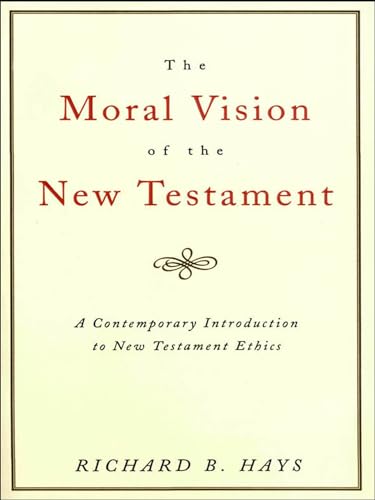





 Veracity