
Which parts of the Law of Moses found in the Book of Leviticus are still binding on the Christian today? Christians from diverse traditions debate this most controversial topic. Jonathan Edwards, perhaps America’s greatest theological mind, had this to say:
“There is perhaps no part of divinity attended with so much intricacy, and wherein orthodox divines do so much differ, as stating of the precise agreement and differences between the two dispensations of Moses and Christ.”1
Leviticus is essentially a law book, detailing the specifics of the Old Covenant, which defined the standards for the ancient Israelite community. But what exactly are the elements from that Old Covenant that have been brought forward into New Covenant? And even if particulars of certain Old Covenant regulations from Leviticus are not binding on New Covenant believers, might there still be lessons in Christian obedience to be learned from them today?
Protestant evangelicals are divided on such issues: Is tithing carried forward under the New Covenant? Does the Bible allow Christians to get tattoos? What about Saturday Sabbath observance? Hebrew Roots Movement enthusiasts bring forward as much from the Old Covenant as they can, even without a standing temple in Jerusalem. Progressive Christians do just the opposite, and jettison as much of the Old Covenant as they can, when certain moral prescriptions are deemed out-of-date. The diversity of such practical applications in interpreting Leviticus can be bewildering.
I came across the teaching of the late Dr. Michael Heiser several years ago, through his Naked Bible Podcast. An expert in Semitic languages and the Old Testament, he did an audio series on the Book of Leviticus, which were transcribed to form the book Notes on Leviticus: From the Naked Bible Podcast. As the author of The Unseen Realm, one of the most groundbreaking books I have read in recent memory, having influence across multiple denominations and Christian traditions, Heiser walks the student of Leviticus through the text in ways that opened up the book for me, with a lens that helps to better understand so many other parts of the Bible. As I have noted at several points, I am not always convinced by Dr. Heiser’s thinking, but he is way far more right than wrong in what he says, and he challenges me to think more deeply on crucial issues concerning the Bible. The tens of thousands of thoughtful Christians who follow Heiser’s YouTube channel surely agree with me.
Heiser’s premise is that Christian readers have often read Leviticus through presuppositions they bring in from their understanding of the New Testament, often confusing things in the process. Alternatively, Heiser proposes that we should learn to read Leviticus from the perspective of an ancient Israelite. What did Leviticus mean to a follower of Yahweh centuries before Jesus came on the scene?
One of the major themes in Leviticus is the concept of atonement. I am publishing this post on Good Friday, which in the Christian calendar commemorates what Jesus accomplished on the cross for us. Many theologians link Good Friday to the concept of atonement, the focus of this final post in this series. But the exact meaning of atonement has stimulated a significant debate among scholars: What does it mean to say that Jesus died for our sins?
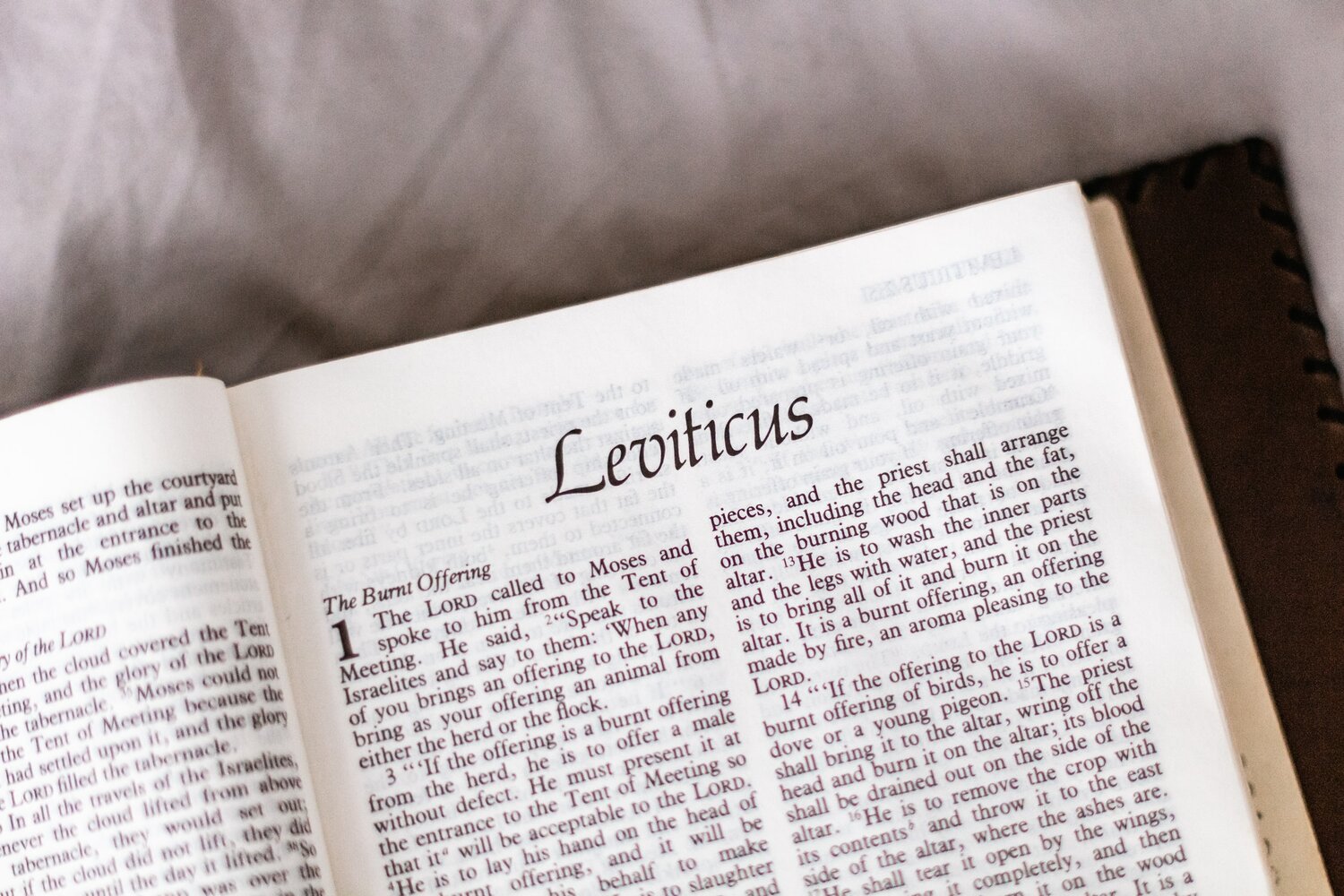
On the late Michael Heiser’s Naked Bible Podcast, this Old Testament scholar brings out important highlights, accessible to everyday Christians, who want to have a better grasp on Leviticus, one of the least studied, least understood, and least read books in the Old Testament.



 Veracity