
From the Christianity Along the Rhine blog series…
How did Christianity grow during the first thousand years, since the time of Christ?
During a recent trip to Europe featuring a river cruise down the Rhine River, my wife and I got to explore a lot a history. From cities like Basel, Strasbourg, Mainz, to Trier (up on the Moselle River), you can essentially travel back in time through the centuries, imagining what it was like to witness the destruction of World War 2, to walk along the cobblestone streets of the medieval period, and even to envision how the Romans built their fortifications some 2,000 years ago. One archaeological site I saw in Mainz from the Roman period has been dated to within a few decades of Christ’s birth, an event which we will celebrate within a few days at Christmas. So I decided to read a book which covered a good chunk of this history, much of it focused on events which took place in the Holy Roman Empire, where the Rhine River was a major thoroughfare.
Historian Robert Louis Wilken is a professor emeritus of Christian history at the University of Virginia. Back in 2013, Wilken wrote The First Thousand Years: A Global History of Christianity, a fine survey into the first half of the Christian movement’s history. Wilken has a general audience in mind (no footnotes!!), and is great to listen to as an audiobook.
Two factors standout for The First Thousand Years, as compared to other similar histories. First, while my main interest was in the European part, Wilken’s book is very much a “global” history of the Christian movement, a story which often ignores the contribution of the Christian East, in other history retellings. Secondly, Wilken includes several chapters regarding the growth of Islam and its impact on Christianity, going into detail more than other texts generally do. The closest book that I know of which covers a lot of the same type of material is Philip Jenkins’ The Lost History of Christianity: The Thousand-Year Golden Age of the Church in the Middle East, Africa, and Asia–and How It Died, another book that I can highly recommend which I read more than a decade ago, before I started blogging.
Wilken’s work is chock full of scholarly insights into significant moments of church history, without getting too technical. Here is one section of the story that I liked a lot: I had been reading Wilken throughout 2025, the 1700th anniversary of the Council of Nicaea giving us the Nicene Creed. Wilken fills out a lot of details that are often missing in popular presentations about the Nicene Creed.
For example, in the early 4th century, when Constantine became one of the emperors of Rome, he built an assembly hall in today’s Trier, Germany, which eventually became a Christian church. My wife and I had the privilege to visit this Basilica of Constantine when we visited Trier. The Basilica lost its roof during the bombing of Trier in World War 2, but since then it has been beautifully restored.
It was through the influence of Constantine when Christianity essentially began to take over the whole of the Roman Empire, within a few hundred years. I was amazed to think that part of this Christian influence spread as far north in Europe as Trier, Germany, at such an early time in European history.
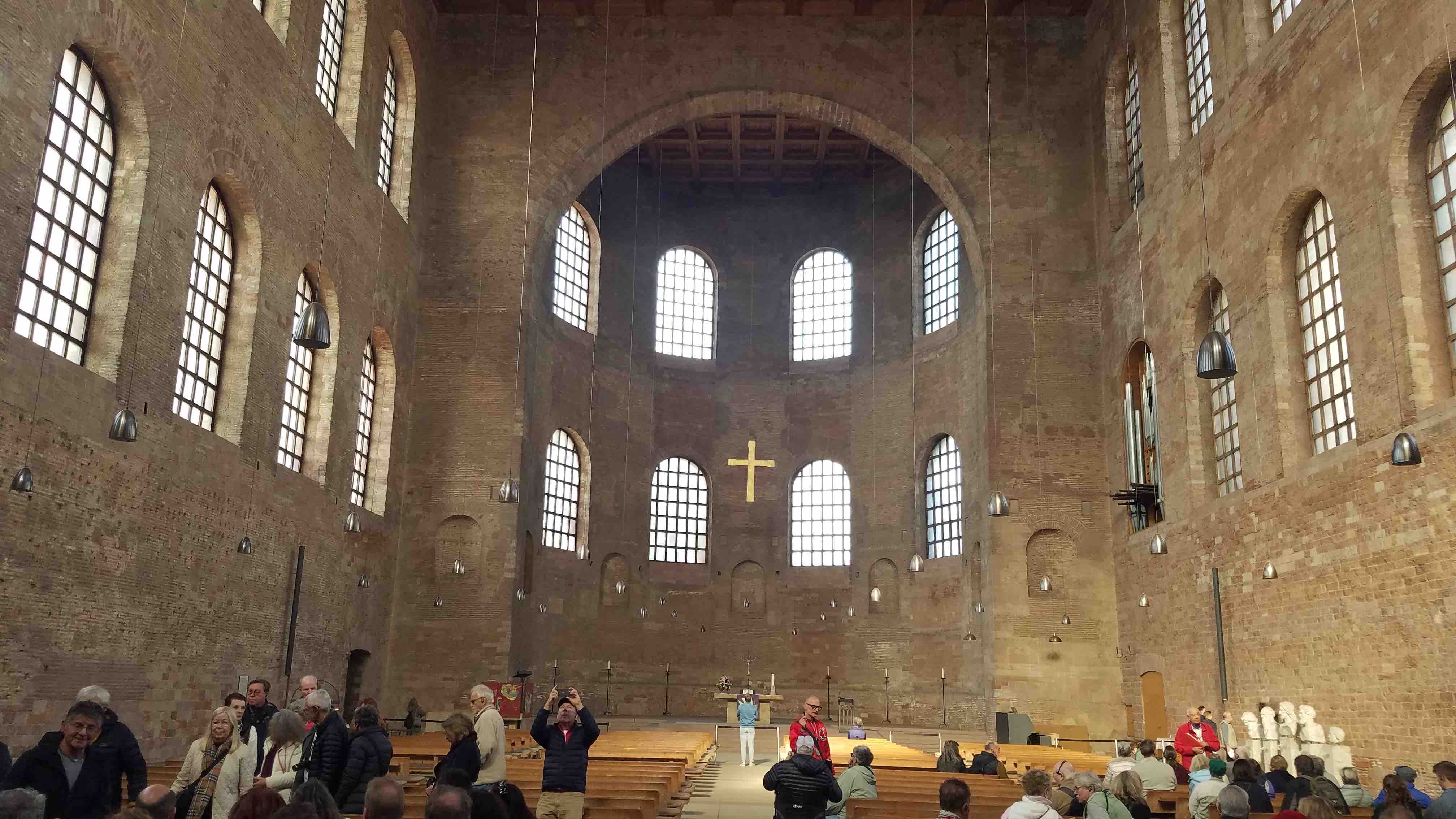
Inside the Basilica of Constantine, which Constantine established in Trier, Germany, in the early 4th century. Part of the brick work in the church has survived since that early Roman period. I could imagine that the Nicene Creed was recited here within a couple hundred years of the Council of Nicaea. My photo from October, 2025.
Robert Louis Wilken on the Story of the Nicene Creed
But all was not without controversy in the Christian movement in those days. This is where the story of the Nicene Creed which Wilken describes in The First Thousand Years comes into play.
When emperor Constantine finally vanquished his last competitor to the claim of emperor, Licinius, in 324, he had learned of an uproar in Alexandria, Egypt. Over the past few years, a controversy was brewing between the local bishop there, Alexander, and a nearby presbyter, Arius. Arius was teaching that while the Son of God was indeed divine, the Son was actually a creature created by the Father.
Alexander believed this to be heresy. The rumors of heresy were spreading across Christian communities in the Roman empire, and it had the emperor worried that the political fallout of such a theological controversy would make it difficult for him to govern effectively. Constantine, on the other hand, considered the whole matter to be “small and trivial” and the dispute an “idle question.” Constantine called the great Council of Nicaea, involving a little over 200 bishops from all over the Roman empire, to settle the matter and restore peace in the Christianity community of the imperial realm (Wilken, p. 90-91).
Constantine thought the controversy had ended once the meeting at Nicaea was over. But for the next several decades, Christians debated one another about the content of the creed, as the matter was far from settled, contrary to Constantine’s expectations. The Arian controversy and the Nicene proposal dominated imperial politics for several decades, involving several Roman emperors.
When Theodosius, who was friendly to the pro-Nicene party, became emperor in 379, he deposed an Arian bishop, Demophilus, from his office as bishop in Constantinople. Apparently, in many Roman cities at this time, you could find both an Arian (or Semi-Arian) and a Nicene bishop, a situation which brought great confusion to ordinary Christians (Wilken, p. 95).
Advocates of the Nicene Creed saw the ascension of Theodosius as an opportunity to reassert the orthodoxy of the Nicene formulation. Theodosius then called yet another council in 379-381, to be held this time in Constantinople, to reaffirm the creed from 325, and bring some resolution to issues that had caused contention over the creed, during the intervening years. Though the Council at Constantinople is considered to be an ecumenical council, all of the bishops who attended were from the Christian East, as opposed to the Council of Nicaea, which drew bishops from both the East and West (Wilken, p. 96).
Interestingly, the final text of the Nicene Creed formulated at Constantinople has not survived from that meeting. What we know of as the Nicene Creed today was actually recorded at the Council of Chalcedon, some seventy years later, as preserved in the minutes from that council in 450.
Wilkens is careful to note at Constantinople, the language of the Son being “begotten of the Father” (John 1:14, 1:18, 3:16, 3:18; Hebrews 1:5; 1 John 4:9) and the Spirit who “proceeds” from the Father (John 15:26) helped to establish the difference between the Son and the Holy Spirit. The original creed at Nicaea, in 325, merely mentioned the Holy Spirit, but gave no details as to how a Christian was to think about the Spirit, as the Spirit related to the Father and the Son. However, the controversial phrase regarding the Son as being of the “same substance” (homoousion) as the Father, used at Nicaea, was not used to speak of the Holy Spirit at Constantinople. Wilkens reports that 36 bishops at Constantinople argued that the Spirit should not be worshipped as God in the same way Christ is worshipped, though both were considered to be divine. The final creed is explicit in saying that the Spirit is to be worshipped and glorified “with the Father and the Son.” This gives us the doctrine of the Trinity as we know it today (Wilken, p. 97).
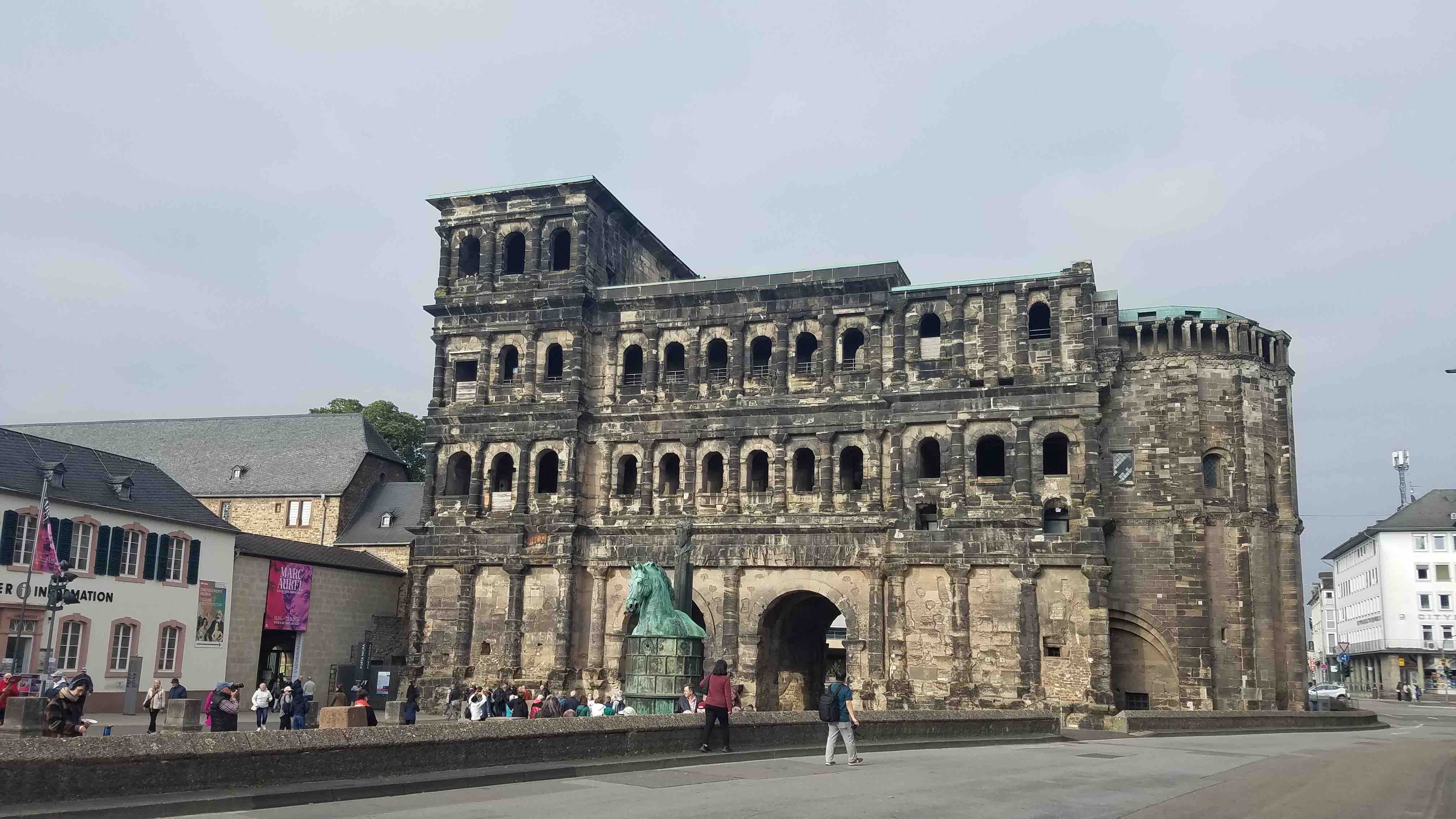
Porta Nigra is one the best preserved Roman gate to the city of Trier, Germany. The gate dates back to 170 CE, before Christianity had thoroughly spread across the Roman Empire. My photo from October, 2025. The link here is a then-and-now shot comparing the World War 2 look with today.
Other Nuggets of Church History Gold from the First Thousand Years
Loads of other anecdotes fill out the narrative of the growth of global Christianity during this period. I will just highlight a few more which stuck out for me.
Wilken explains why the Quartodeciman controversy, concerning how to determine the exact date for the yearly celebration of Christ’s resurrection, was so difficult to resolve (Wilken, p. 38…. I will have a future blog post which will dive into the Quartodeciman episode in a more detail).
Wilken has a whole chapter dedicated to Origen of Alexandria, perhaps one of the greatest Christian intellectuals of the early church era, who often gets dismissed by Christians today because of his universalistic doctrine, whereby he argues from 1 Corinthians 15:28 that all of humanity will ultimately be reconciled to God, thus emptying hell (Wiken, p. 61). Origen dropped the ball with his teaching on universalism, but in other respects, Origen was one of the first great towering intellectuals of the early church.
Origen was a master of multiple languages, one of the few early church fathers after the first century who made a concerted effort to understand the Hebrew language, the original language of the Old Testament. The Hebrew version of Genesis 2:4 reads: “These are the generations of the heavens and the earth when they were created,” whereas the Septuagint, the Greek translation of the Hebrew Bible, reads: “This is the book of the generation of heaven and earth when they were made,” adding the work “book,” which is missing in the Hebrew. Origen supposed that the Jewish Greek translator added the word “book” since the same phrase “the book of the generations” appears in Genesis 5:1. This inspired Origen to make a learned study of the Hebrew language. The church remains indebted to Origen’s scholarship, despite having been censured for his views of universalism, a few centuries after his death (Wilken, p. 59).
Little did I know that Constantine’s famous “Edict of Milan” was actually a misnomer. The “Edict of Milan” was not an “edict” but rather a “letter” posted by the rival of Constantine, Licinius, who wrote the letter from his residence as emperor in Nicomedia, in modern day Turkey, but that the contents of the letter reflected the thought of Constantine as well (Wilken, p. 85).
Wilken is far from painting the early church as faultless. He acknowledges that the highly esteemed Bishop Ambrose of Milan was one of the greatest doctors of the church. In 388, a group of Christians set fire to a Jewish synagogue, at the border military town of Callinicum, on the Euphrates River. Emperor Theodosius ordered the local bishop of Callinicum to rebuild the synagogue out of the bishop’s own funds. Yet Ambrose intervened against the emperor, urging that the synagogue not be rebuilt, citing that the synagogue was “an abode of unbelief, a house of impiety, a shelter of madness under the damnation of God Himself.” Ambrose argued that it would be wrong for Christians to rebuild a Jewish synagogue. Theodosius relented. Scholars have debated the morality of this controversial act, on the part of Ambrose (Wilken, p. 134). Yet in my mind, it casts a shadow over the great bishop’s otherwise remarkable legacy. For if the arsonists were let off the hook for their actions, then it would not be just.
Wilken dedicates whole chapters focusing on architecture and art (with some helpful photos in the book), music and worship, and a history of how the bishopric of Rome became “pope.” Through this I learned that the Christian calendar actually arose much later than I originally thought. A late 5th/ early 6th century monk in Rome, Dionysius the Short, took the traditional Julian calendar, which was linked to the reigns of Roman emperors, and anchored the Christian calendar (or at least attempted to do so) to the birth of Jesus, anno Domini, “in the year of our Lord.” The Synod of Whitby in England in 664 formally approved of the new calendar, but it still took a few more centuries for it to be adopted across the Christian world (Wilken, p. 180).
Wilken clearly favors the influence of Saint Augustine of Hippo, describing him by saying “that during his lifetime [Augustine] was the most intelligent man in the Mediterranean world” (Wilken, p. 183). Augustine is known in the West for his conflict with Pelagius. But what I did not know is that charges of heresy against Pelagius were dropped by a council of Eastern bishops in Palestine in 415. Augustine was not satisfied by that judgment, and finally persuaded the Roman emperor Honorius to issue a condemnation of the Pelagians in 418 (Wilken, p. 192). Apparently, Augustine was not afraid of mixing church affairs with the affairs of the state, a mistake in my view, but one that became very common during the medieval era.
Whereas the early church largely grew organically, from neighbor to neighbor, worker to worker, family member to family member, the latter half of the first millennium was marked by a more top-down approach to church growth. Without the support of the king of a region, Christianity made little to no headway in expanding. Wilken relates the story of how Christianity spread to various places, particularly in the east, among the Ethiopians, the Slavs, and as far away as China. In each case, the regional king played a pivotal role in the global development of Christianity.
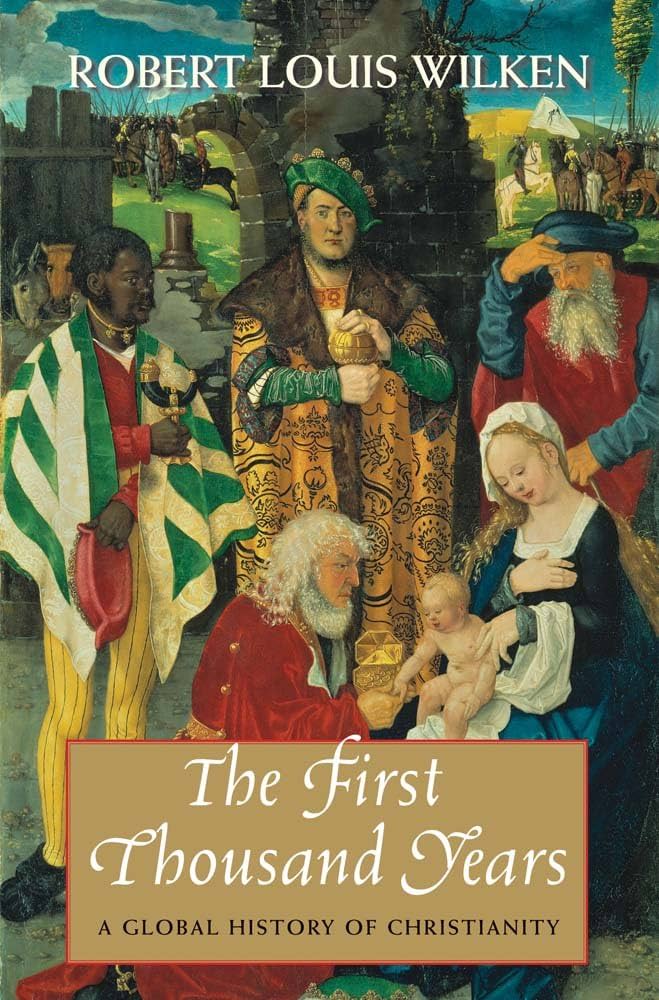
The First Thousand Years: A Global History of Christianity, by Robert Louis Wilken, tells the story of the first half of the history of the Christian movement, much of it which took place in Europe, but not only in Europe. Much of the forgotten story about the first thousand years of the church happened elsewhere around the world.
A Global History
Yet it was a risky endeavor, as sometimes Christianity took off and remained vibrant, whereas in other cases the church stagnated and even declined, as in the case of China. Christianity managed to reach China in the 7th century, growing quickly, before fizzling out within a few more centuries. The whims of the ruler often proved decisive.
Wilken dedicates a lot of attention to the emergence of Islam. The author shows how Christianity in some cases survived and even thrived under Muslim rule, as with the Copts of Egypt, and where it declined, as in the case of Asia Minor, known now as modern day Turkey.
The story overall of the first thousand years of Christianity is one of remarkable growth followed by decline, particularly in the Christian East. Only once the growth of Islam was challenged did Christianity grow again, and the future of that growth was in the Christian West. But that is the story of the next thousand years of Christian history.
Robert Louis Wilken’s historical survey of the first thousand years of church history is a “must-read” for those interested in learning about the history of the first half of Christianity’s existence.




 Veracity