Tag Archives: reformation

On a Mission from God: The Jesuits

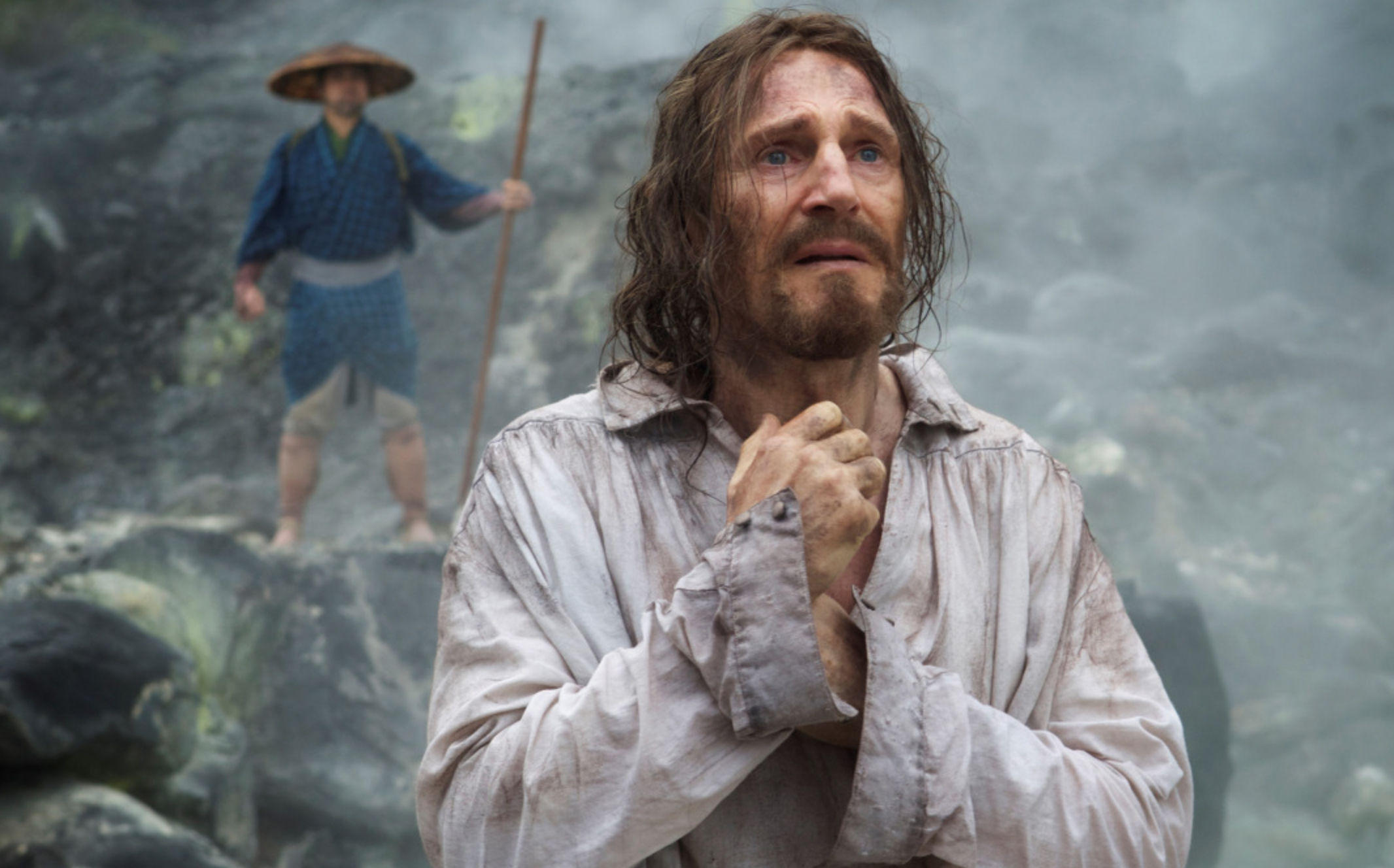
Martin Scorsese’s 2016 film, Silence, tells the story of Jesuit priests caught in the thick of Japanese shogun persecution of Catholic Christians, in the early 17th century. This critically acclaimed film is based on a book, of the same name, by Shūsaku Endō.

While 16th century Reformation Europe was embattled with conflict between Roman Catholics and Protestants (and at times, between Protestants and other Protestants), the growth of Christianity exploded across the “New World,” with missionary enterprises extending from the Americas, to the far corners of Asia.

With only a few exceptions, Protestants were generally too preoccupied by their conflicts with Rome, and their own internal conflicts, to be fully engaged in this world missions effort, at that present time. Instead, the Roman Catholic church, following the discoveries of new trade routes and new lands, sent missionaries out in great numbers, to bring the message of Christianity to the world.

One of the main engines behind this missionary zeal was due to the founding of the Society of Jesus, otherwise known as the Jesuits, in the 16th century. In 1521, the same year as Luther’s famous appearance before the emperor Charles V, at the Diet of Worms, a Spanish soldier was severely wounded in the legs, thus ending his military career. Ignatius of Loyola spent months in recovery, where he had access to a theological library, to bide his time, while he was on the mend. It was here where he underwent a spiritual conversion, and developed the Spiritual Exercises, a manual for Christian growth.

Ignatius went onto study theology in France, which was just then enveloped in turmoil, due to the Reformation, causing another student, John Calvin, a few years later, to flea the country, to Geneva, Switzerland. But Ignatius was suspicious of the Reformation, with its emphasis on private Bible interpretation, and held to Roman Catholic ideals. Nevertheless, Ignatius was bothered that so few priests and members of existing monastic orders had very little in the way of theological education. Along with a group of friends, Ignatius found favor with the Pope to form the Society of Jesus, in 1540, as a new monastic order, that aimed at combining advanced theological education, with Christian mission.

The Jesuits have been known to be very loyal in their service of the papacy. In some cases, their loyalty has proved to be overzealous. The 16th century Roman Catholic Queen of England, Mary, has been known as “Bloody Mary” among Protestants, to this day, due to her execution of some 300-400 Protestant leaders, in her efforts to force England back into Roman Catholicism. However, in later years, Protestant Queen Elizabeth I, of England, exceeded the brutality of her half-sister, Mary. What is often not known, is that Elizabeth had perhaps 1,000 Roman Catholics executed, during her reign. Many of those executed were members of the Jesuit order, as some of those Jesuits had been involved in assassination attempts against Elizabeth’s life, thus encouraging the Queen to crack down on the presence of Jesuits in England.
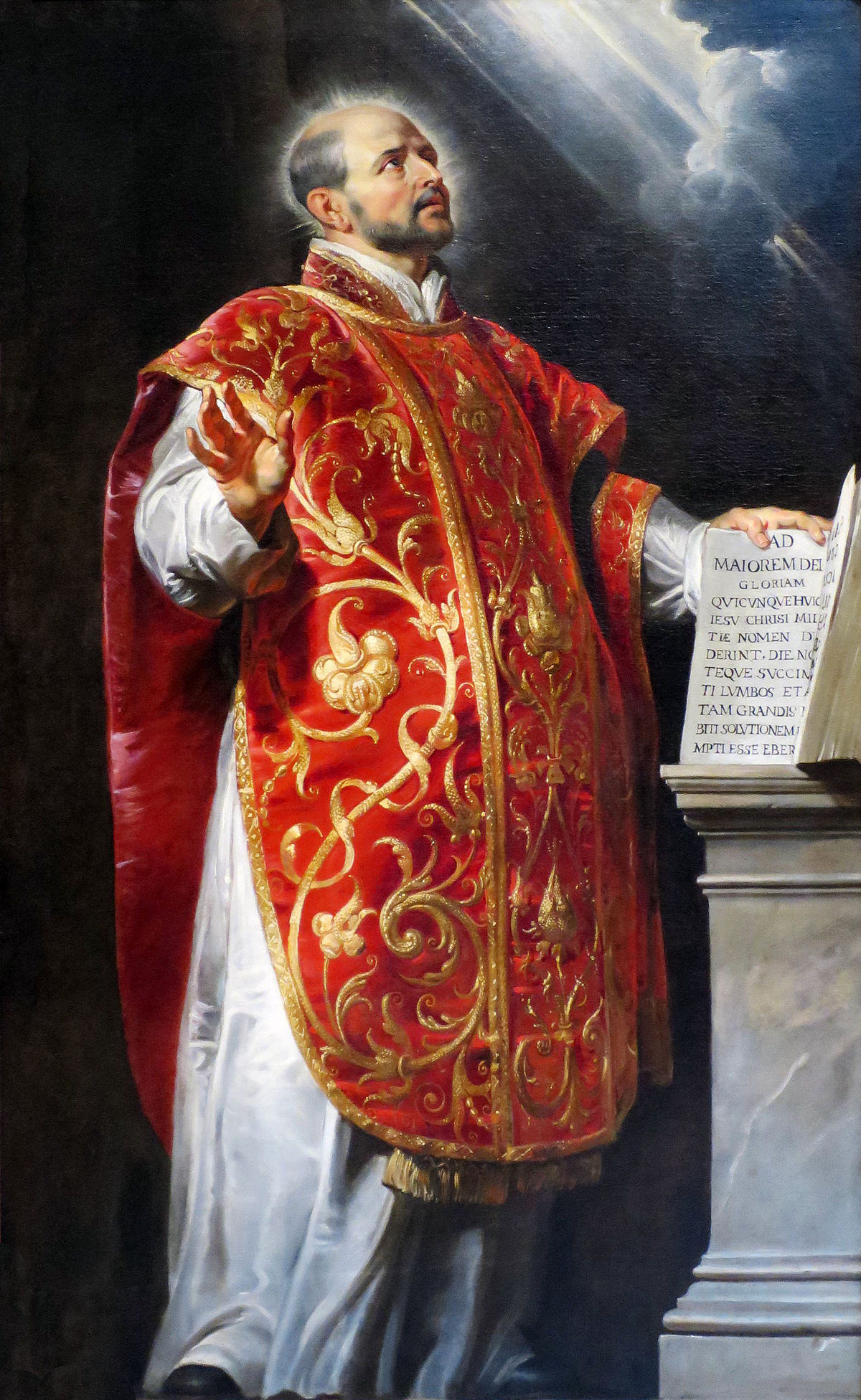
Saint Ignatius of Loyola. 1491-1556. (Credit: Wikipedia)

However, the Society of Jesus, in the 16th century, was mainly known for their extensive missionary efforts across the world. Frances Xavier, one of Ignatius’s friends, baptized thousands, all across Asia, in the name of the Christian faith. The missionary strategy of the Jesuits was quite remarkable: If you focus your energies on reaching the leaders of a nation, or ethnic group, and they become Catholic, then the rest of their people, under the leader’s authority, will follow in their footsteps. This is why Roman Catholicism continues to be the dominant Christian faith across the world, from Latin America to the Philippines.

The strategy proved effective across much of Asia. But it backfired tragically in Japan. Jesuit missionaries made efforts to reach leading families of shogun elite in Japan, as early Portuguese traders made their way into the western Pacific. Thousands received Christian baptism. But when in-fighting began among these shogun families, the missionary efforts of the Jesuits came under suspicion. The situation was not helped by the growing presence of newer Franciscan missions, that took a different strategy, focusing their efforts on reaching the poor, and thus encouraging those poor to rise up above their oppressive situations. On top of that, Dutch and English Protestants warned the Japanese leaders about reported subversive tendencies of the Jesuits. Little did the Dutch and English know that the Japanese understood nothing of the distinctions between Protestant and Roman Catholic, and soon, all of Christianity in Japan was under attack.

By the early 17th century, and within a fairly short period of time, all Christian missionaries were banned, thus ending the Western Christian missionary enterprise in Japan. The new Japanese leadership embarked on the most severe and brutal campaign of Christian persecution, nearly wiping out all of the new professing Christians, with literally thousands and thousands of crucifixions, mocking the central feature of Christian faith: Jesus’ death on the cross.

The tiny, surviving Christian community went underground after that, only re-emerging when the American military made contact with Japan, in the mid-19th century. Today, the nation of Japan is one of the least open cultures to the Gospel, with less than 2% Christians, and Japan is sometimes called “the graveyard of Christian missions.”

Nevertheless, church planting efforts in Japan today are starting to show fruit, through God’s providence. But the work is often slow, and the workers are few.

The vibrant era of Jesuit missionary work in the 16th century, across the world, highlights the significance of what historians now call the “Catholic Reformation.” Previous historians, mainly Protestant, have called this the “Catholic Counter-Reformation” instead, thus indicating that the growth of movements like the Society of Jesus were a response to Protestantism. There is some truth to this. But this designation takes away from the fact that there were efforts, with varying levels of degrees, and varying levels of success, that tried to reform the medieval Roman Catholic Church from within.

As my longtime high school friend, Virginia Woodward, recently blogged, Ignatius of Loyola leaves us an enduring legacy. Here are some of Virginia’s favorite quotes from Ignatius of Loyola, the founder of the Jesuits:

“Go forth and set the world on fire.”
“Laugh and grow strong.”
“He who carries God in his heart bears heaven with him wherever he goes..”


Here is the trailer to the Martin Scorsese move, Silence:


Parking Space 23, and The Story of John Knox

(Editor’s Note: I have been trying to get an avid Veracity reader to write this blog post for several years, as he has personally been to Scotland to see “Parking Space 23.” But alas, in this, the 500th anniversary of the start of the Protestant Reformation, I could wait no longer…)

If you go to Edinburgh, Scotland, today, you might have trouble finding the grave of Scotland’s greatest Protestant Reformer of the 16th century, John Knox. Hidden away, underneath the asphalt of parking space 23, lies the body of one John Knox, who paved the way for the Reformation to transform the country of Scotland. A plaque embedded in the pavement reads:

“The above stone marks the approximate site of the burial in St Giles graveyard of John Knox, the great Scottish divine who died 24 Nov 1572.”

Why would John Knox’s grave be found in a parking lot? Just imagine if the Jefferson Memorial in Washington, D.C. were bulldozed over, and converted into a parking garage.

In much of secular Scotland today, the Christian faith of the Reformation era is largely forgotten. Yet John Knox is unquestionably the founder of modern Presbyterianism, as he resolutely preached his way throughout Scotland, moving this northernmost segment of the British Isles away from Roman Catholicism towards a Protestant faith. Within a few centuries, the Scottish church would become one of the greatest missionary sending communities of all time, establishing Christian witness over all the world.

Was there something about Knox himself that contributes to this historical neglect? Though a fiery evangelist, with a great love for the Gospel, John Knox was also known to be rather severe. Was it because he acted as a bodyguard to another Scottish preacher, for a time? Was it because he suffered for two years of oppressive prison labor, aboard a French galley ship? Was it because he actively opposed the idea of having a woman as a secular ruler?

Yet it might be time to restore John Knox, Scotland’s greatest Reformer, from this historical neglect.

The film Knox explores these questions, and tells his story. Here is the trailer:

For a review of Jane Dawson’s recent scholarly biography of John Knox, consult the resources at the Gospel Coalition.


Menno Simons in Eight Minutes

A Dutch Anabaptist, Dirk Willems, was chased across a frozen pond, by one of his persecutors. When his persecutor fell through the ice, and feared for his life, Willems had compassion on the man, and pulled him out of the frozen waters to safety. Willems was then apprehended, and days later, was executed for his Anabaptist beliefs…. So, who are these Anabaptists? A brief look at one of their prominent leaders, Menno Simons, tells their story.

Menno Simons, the founder of the “Mennonites,” was enjoying the “good life” of a typical medieval priest, in the 16th century. Yes, he had his religious duties, performing baptisms and the Mass, but he also had a “good time” drinking with his friends, and partying into the wee hours of the night.

But his conscience had gripped him, when he knew of neighbors who had died as martyrs, clinging to a belief in the Bible, as the true source for what it really meant to be a Christian. Menno, even though he was indeed a priest, knew nothing of the Bible.

“[My friends] and myself spent our time daily in playing, drinking, and all manner of frivolous diversions, alas! as it is the fashion and way of such useless people; and when we were to treat a little of scripture, I could not speak a word with them without being scoffed at; for I did not know what I asserted. Thus concealed was the word of God to my understanding. At length I resolved that I would examine the New Testament attentively.”

Menno eventually became convinced of “Believer’s baptism,” a key feature of the “Anabaptist” movement. He embraced the discipline of a scholar, spending several years, in trying to understand the Bible. But some of his new Anabaptist friends had gone down the wrong track, embracing the error of violence. The Holy Spirit was still working on Menno’s hardened heart:

“I could find no rest in my soul. I reflected upon my carnal, sinful life, my hypocritical doctrine and idolatry, in which I continued daily under the appearance of godliness. I saw that these zealous children willingly gave their lives and their estates, though they were in error, for their doctrine and faith. And I was one of those who had discovered some of their abominations, and yet I myself remained satisfied with my unrestrained life and known defilements. I wished only to live comfortably and without the cross of Christ.”

After seeking after the Lord, and through his study of the Scriptures, Menno Simons finally discovered the grace of God:

“Thus have I, a miserable sinner, been enlightened of the Lord, converted to a new mind, fled from Babel, entered into Jerusalem, and finally, though unworthily, called to this high and arduous service…..He who, purchased me with the blood of his love, and called me, who am unworthy, to his service, knows me, and knows that I seek not wealth, nor possessions, nor luxury, nor ease, but only the praise of the Lord, my salvation, and the salvation of many souls.”

Many of the Anabaptist leaders of the Radical Reformation were killed during the 16th century. Menno Simons survived, preaching and teaching from the Scriptures, and those who have been drawn to his teachings are now scattered all over the world. We know these particular Anabaptists today as “Mennonites.”

Christian history professor, Ryan Reeves, gives an eight-minute overview of Menno Simons’ life (For more on Menno Simons personal testimony, read here).


A Who’s Who of the Reformation

When people think of “the Reformation,” typically the name of Martin Luther comes to mind. After all, it was in 1517, 500 years ago, when he began his campaign against the sale of indulgences. But Luther was not the only player. In fact, there were a number of other key personalities, that made the Reformation happen.

I have taken a list of twelve historical figures, four of them prior to the Reformation, and eight of them during the 16th century, that interested Christians need to know about, in order to understand the story of what the Reformation was all about, and why it happened (Links and images via Wikipedia).

If you want to discover more about some of the other leading players, of the Protestant Reformation, I would highly recommend listening to the Here We Stand podcast, by DesiringGod.org, for a 31-day set of short, podcasts, six-minutes long each, for a different Reformer each day. Continue reading


The “Five Solas” of the Reformation: What Do You Believe?

What are the great principles that guide historically Protestant, Evangelical Christianity? They can be summarized by considering the “five solas,” five Latin phrases, that define the very heart of the 16th century Reformation.

Five hundred years after the beginning of the Protestant Reformation, the place of the Gospel in the church is just as tenuous as ever. Every generation must diligently seek to recover the Gospel anew, lest it be lost in a sea of religiosity, theology “fads,” and the indifference of hearts calloused towards the Truth. The first three “solas” were watchwords of the 16th century, and the last two “solas” have been adopted over time.

What do you believe?

Sola Scripture: Scripture alone is the final authority, in all matters of Christian faith and practice. The Western medieval church tended to rely on church leaders and councils, that sometimes obscured the teaching of Scripture. Folks like the German Reformer, Martin Luther, have placed the Bible, and the Bible alone, at the fountainhead of all spiritual authority, over against human traditions. Church tradition does play a role in our understanding of the Bible, but it should never cancel out the Bible itself.

Sola Fide: Salvation is experienced through faith, and faith alone, and not through works. Yet as John Calvin, the 16th century French/Swiss Reformer, is said by some to have remarked, “Faith alone justifies, and yet the faith that justifies is never alone.” Good works will always accompany genuine faith in Christ.

Sola Gratia: By “grace alone” we are saved. The Western medieval church, over a period of centuries, was drawn to the idea that while salvation is indeed through grace, that grace could only be mediated through the sacraments of the institutional church. The 16th century Reformers contended that while the sacraments, instituted by Christ are indeed important, the church, as an institution, does not control the means by which people receive the grace of God. The Gospel is bigger than that.

Sola Christus: Christ is the sole mediator between humans and God. Martin Luther championed the idea of the “priesthood of all believers,” that human beings can have direct access to God, through Christ, without having to pass through a human, priestly go-between.

Sola Deo Gloria: When it comes to salvation, who gets the glory? Does God alone receive it, or does human effort dilute the praise that belongs solely to God? The Reformation endeavored to see that God, and God alone, is supremely honored.

My Roman Catholic and Eastern Orthodox friends might prod and question some, if not all, of the “five solas.” But the discussion is an important one for all Christians to have.

Are these “five solas” hallmarks in your life? Do they define for you, the basic theological principles supporting the truth of the Gospel? What do you believe?
