
If there is one established fact that both conservative and liberal scholars admit about Jesus, it is that Jesus died a death on a cross by means of Roman crucifixion. However, in Islam, such a belief about the fate of Jesus is rejected.
In the Quran, Surah 4:157, states that the Jews “killed him not, nor crucified him, but so it was made to appear to them.” It was thought to be unbecoming for such a prophetic figure to die such a horrific death. But where did this belief denying the crucifixion of Jesus come from?
Perhaps the most likely source was associated with a Gnostic Christian teacher from Alexandria, Egypt, in the 2nd century, Basilides, who lived about the time of 117 to 161 C.E. According to Irenaeus, the 2nd century heresiologist who sought to expose the theological errors of Gnosticism, Basilides largely accepted the Gospel narratives about Jesus, but takes an unusual interpretive turn when it comes to the lead up to the crucifixion of Jesus.
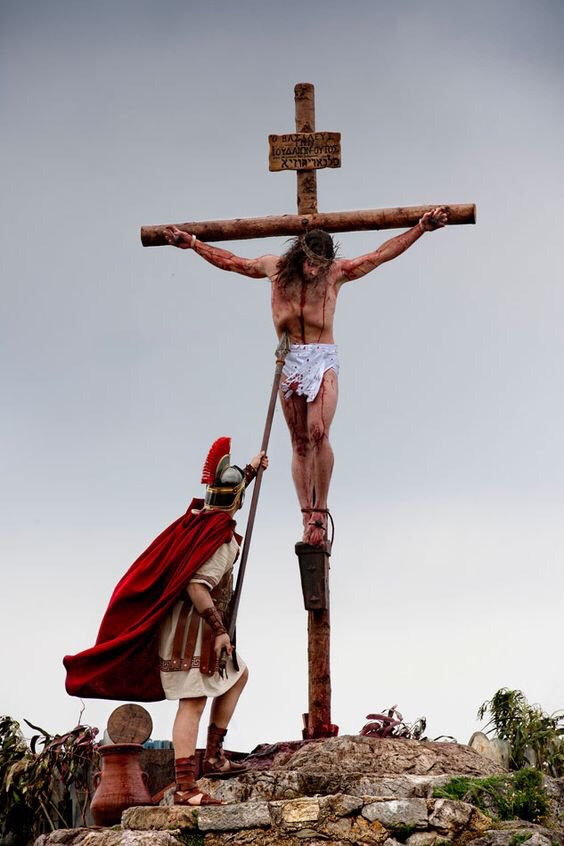
Was Jesus really crucified on the cross? Or did someone trick the Romans with a switcheroo, and having Simon of Cyrene crucified instead? Many Muslims hold to the idea that something like this really happened, and that Jesus was never crucified, and that someone else was crucified in Jesus’ place. Where did this Islamic belief about Jesus really come from?
In Mark 15, Jesus is mocked and beaten by the Roman soldiers and then led out to be crucified. But at one point:
“21 …they compelled a passerby, Simon of Cyrene, who was coming in from the country, the father of Alexander and Rufus, to carry his cross. 22 And they brought him to the place called Golgotha (which means Place of a Skull). 23 And they offered him wine mixed with myrrh, but he did not take it. 24 And they crucified him and divided his garments among them, casting lots for them, to decide what each should take. “
Evidently, Jesus was struggling to carry his cross, so another man, Simon of Cyrene, was pressed into service to carry Jesus’ cross for him. Nevertheless, the traditional historical reading is that Jesus was brought to the place called Golgotha where he was crucified.
But Basilides (pronounced “ba-SIL-ih-deez“) saw some ambiguity in verse 22 of Mark’s Gospel (or the corresponding passage in Luke 23). Who was the “him” brought to Golgotha? If Simon of Cyrene was swapped out to carry the cross, would it not have been Simon of Cyrene who was then crucified, and not Jesus?
According to Irenaeus’ story, Basilides believes that the physical features of Simon of Cyrene and Jesus were swapped, to make it look like Jesus was crucified, when it really was Simon. As Simon was crucified, it was Jesus who stood by, laughing and ridiculing what was going on.
However, in M. David Litwa’s Basilides: The Oldest Gnostic, Litwa makes the argument that Ireneaus has confused the record of Basilides’ teachings with another Gnostic-influenced text, the Second Treatise of the Great Seth. Litwa maintains that Basildes actually believed that Jesus was crucified, and there was no supernatural switcheroo between Jesus and Simon of Cyrene at the crucifixion.
To complicate matters, the Second Treatise of the Great Seth itself is ambiguous enough to suggest that Jesus was not swapped with Simon at the crucifixion, and that Jesus’ “laughing” was not at Simon’s expense, but rather at the ignorance of those who ended up crucifying Jesus. Did Irenaeus misinterpret something here?
Litwa suggests that Irenaeus must have somehow mixed up the details of these reported events, thereby portraying Basilides as having denied the saving work of Christ’s death on the cross. Still, the damage done by Irenaeus, according to Litwa, continued to live on, and made its way into Islamic counter-narratives about the life and teachings of Jesus centuries after Irenaeus. Islamic apologists today still defend this claim, that Jesus was not crucified, though explanations from different Muslim commentators vary on the details.
In contrast, in Bart Ehrman’s Lost Scriptures, Ehrman holds to the view that Ireneaus did not distort the stories of Basilides or the Second Treatise of the Great Seth, reviewed elsewhere on the Veracity blog. Litwa’s work, however, argues that indeed Basilides still held to the orthodox view that Jesus was indeed crucified, while still acknowledging that Ireneaus was correct in describing a number of other Gnostic views of Christianity which conflicted with Ireneaus’ orthodox perspective on Christianity.
We have other sources outside of Irenaeus, where certain tangential Christian groups denied the crucifixion of Jesus, early on in the history of the church. The Apocryphal Acts of John, briefly examined before on the Veracity blog, holds to a docetic view of Jesus, one who is divine but only appears to be human. In these Acts of John, Jesus is incapable of suffering, which lends support to the idea that Jesus could not have been physically crucified. In the Acts of John, Jesus’ crucifixion on the cross was merely an illusion. The Second Council of Nicaea in the 8th century officially condemned these apocryphal Acts of John as being heretical.
Does Dr. Litwa successfully make his case, that the traditional story about Basilides handed down through the centuries was distorted by Irenaeus? Yes and no. When it comes to tracing back the claim that there was a switcheroo between Jesus and Simon of Cyrene when it came to the crucifixion, the evidence that Litwa presents is quite compelling. Basilides probably did accept the traditional story of Jesus’ crucifixion, without a switcheroo. In fact, when it comes to the canonical Gospels’ presentation about the life of Jesus, Basilides does sound quite orthodox. Perhaps Irenaeus’ critique of Basilides was overly harsh in certain places.
On the other hand, there is just enough crazy stuff in Basilides’ worldview that firmly plants him in a Gnostic mindset, enough to justify Irenaeus classifying Basilides as being a heretic, even without the Simon of Cyrene crucifixion switcheroo story. Aside from Irenaeus’ report, this is what we know:
Basilides believed that angels created this material world. Furthermore, he believed that there was a complex hierarchy of 365 heavens. For Basilides, salvation comes not through faith, as commonly understood, but through knowledge. For Basilides, faith is really a form of higher perception and thought, and not a conscious choice. Though Basilides claims to have received this teaching from Saint Matthias, who replaced Judas Iscariot among the Twelve Disciples following the resurrection, ideas like those that Basilides promoted became common features of Christian Gnosticism.
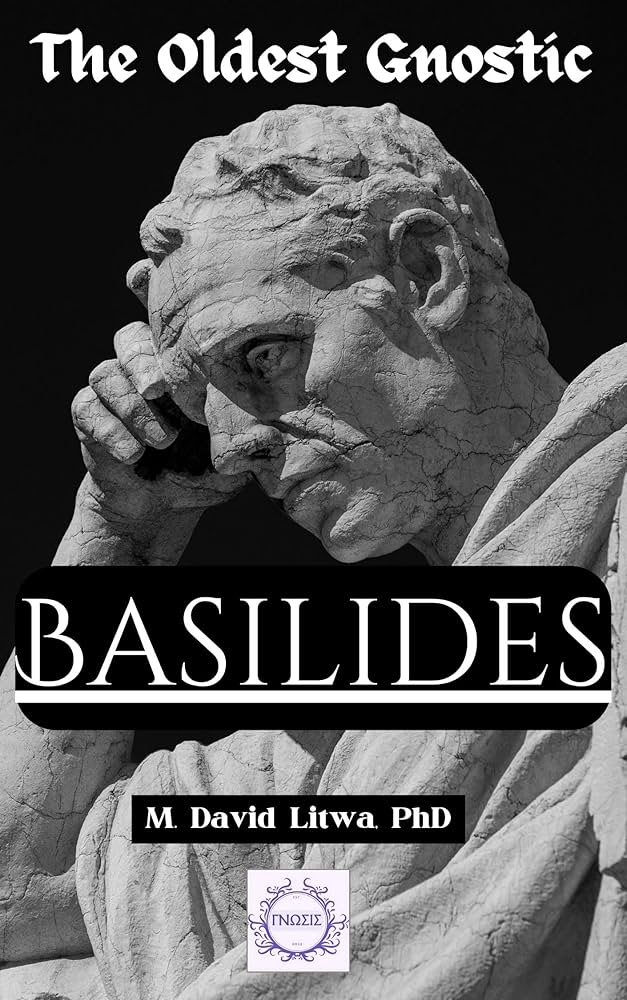
M. David Litwa’s Basilides: The Oldest Gnostic examines what we can know and what we do not know about perhaps the earliest Christian Gnostic, often associated by the church father Irenaeus, as the originator of the story that Jesus was never crucified. Litwa challenges the long held view that Irenaeus accurately described this teaching by Basilides.
Part of the problem with getting an accurate portrait of Basilides is that very little survives from what he wrote. Irenaeus in the late 2nd century gives us the most information, whom Litwa says was misinformed at key points. Litwa shows that about 36% of the claims made against Basilides by Irenaeus are contradicted by other source material. Much of what else we have come from fragments attributed to his son and true disciple, Isidore, preserved primarily from other orthodox sources like Clement of Alexandria. Basilides apparently drew on the same New Testament material that the orthodox community did, but Basilides had an expanded canon of authoritative teaching derived from Greek thought, such as Plato.
For example, Basilides accepted the concept of the transmigration of souls; that is, reincarnation, based on a particular interpretation of Deuteronomy 5:9:
“You shall not bow down to them or serve them, for I the Lord your God am a jealous God, visiting the iniquity of the fathers on the children to the third and fourth generation of those who hate me” (ESV).
For Basilides, one could only receive punishment for one’s own sins, and not the sins of others. Therefore, Basilides understands Deuteronomy as assuming that a sinful person would receive punishment for their sins in a future “generation;” that is, in some future next life, indicating a reincarnation of the soul.
However, most scholars interpret Deuteronomy as not affirming reincarnation, and that the Old Testament rejection of the transmigration of souls made its way into and was preserved by orthodox Christian thought.
Litwa also shows that some 64% of the claims against Basilides made by Ireneaus are unconfirmed by other sources. But since Ireneaus got 34% wrong, he should not be relied upon as an accurate source. Perhaps Litwa is right on that, but still, without other source material to challenge Ireneaus’ other claims, it is difficult to say.
Dr. Litwa, who once lectured at the College of William and Mary, where I work, and who received an advanced theology degree from Candler School of Theology, is a highly proficient scholar who is reviving interest in alternative Christian voices from the early church era. Dr. Litwa is quite drawn to the school of thinking pioneered by early 20th century German bible scholar Walter Bauer, that historic orthodox Christianity was but one voice in the world of early Christianity, competing against Gnostic voices like Basilides. For Bauer, what became Christian orthodoxy was simply one theological tradition among many different Christian traditions.
The Bauer historical project convinces a number of scholars today, if not the vast majority of academics who study and teach religion at secular universities and colleges in the United States. However, Bauer’s thesis is problematic, a subject too involved to get into here, but addressed elsewhere on Veracity. Nevertheless, to his credit, M. David Litwa does well in correcting some misunderstandings of Gnostic teachers, giving us a broader history of the early Christian movement.
Dr. Litwa’s book Basilides: The Oldest Gnostic is a fairly short read, coming in at well under 200 pages. I listened to the Audible version of the book in less than a few hours.
Back to the question posed by the title of this blog post: Despite what Islamic apologists like to say, we have very good evidence that Jesus indeed was crucified. Jesus’ death on the cross is at the core of Christian confession, and it is well attested by evidence accepted by both Christian and non-Christian scholars alike.




 Veracity