
Did Jesus keep kosher? Did he hold to all of the food laws observed by orthodox Jews today, or did he use his authority to declare that kosher regulations were no longer binding on his followers?
I had not thought of this before, but it does raise a number of questions that most Christians (like myself) have never thought about. Those familiar with Acts 10:9-16 will know that after Jesus’ ascension, Peter received a vision instructing him that the Jewish food laws were no longer binding on followers of Jesus…. At least, that is the traditional view (More on that below).1
What is “kosher” about, anyway? In Judaism, the concept of kosher is known from the Hebrew term: kashrut. One “Judaism 101” website defines kosher like this:
Kashrut is the body of Jewish law dealing with what foods we can and cannot eat and how those foods must be prepared and eaten. “Kashrut” comes from the Hebrew root Kaf-Shin-Reish, meaning fit, proper or correct. It is the same root as the more commonly known word “kosher,” which describes food that meets these standards. The word “kosher” can also be used, and often is used, to describe ritual objects that are made in accordance with Jewish law and are fit for ritual use.
As a young Christian, with no Jewish background, I had been taught from Acts 10:9-16 to think it was okay now for a believer such as Peter to eat shellfish. I love shrimp, crab, lobster, and oysters, so I am glad that the New Testament teaches us that such food is permissible to eat! I say this a bit “tongue in cheek,” as the purpose of the Old Testament food regulations originally was less about prescribing a particular diet and more about reminding the Israelites that they are a separate people, called out by God to fulfill a particular purpose and mission.

If they had actually had something like a cheeseburger in the first century, would Jesus of Nazareth ever eaten one? Probably not. The Old Testament has three passages that teach that “You shall not boil a young goat in its mother’s milk,” the rationale for why even Orthodox Jews today do not eat cheeseburgers, the most common interpretation for these Jewish food regulations (Exodus 23:19, Exodus 34:26; Deuteronomy 14:21).
So How Jewish Was Jesus…. Really?
Nevertheless, Peter’s story creates a problem. Many Christians assume that Jesus dismissed kosher rules during his earthly ministry. Many of us just assume that if they had cheeseburgers back then, Jesus probably would have eaten them, even with a slice of bacon on top! (Eating meat products with dairy products is against kosher, and anything from a pig is strictly off the kosher list). After all, Jesus preached against the legalism of the scribes and the Pharisees, and the food laws sure sound legalistic, right? But if this is the case, and Peter was on-board with Jesus’ program, why did Peter initially resist the voice of the vision, after Jesus’ ascension?:
13 And there came a voice to him: “Rise, Peter; kill and eat.” 14 But Peter said, “By no means, Lord; for I have never eaten anything that is common or unclean.”
Wait a second. If Peter had never deviated from kosher until after this post-ascension vision, then what did he do with this claim that Jesus himself did not keep kosher during his earthly ministry? Was he not paying any attention to Jesus when our Lord gave Peter the new dietary instructions during Christ’s earthly ministry?
Some might push back and say that even though Jesus had abrogated the kosher food regulations, that he himself still kept to kosher food practices, as he did not want to upset the apple cart too much and cause any of his Jewish disciples to freak out over any blatant disregard for the food laws. But then this raises another problem: For Jesus was well known for creating controversy, so it would be difficult to explain why Jesus would blast away at the Pharisees for their legalism regarding the Law of Moses, while conforming to a “legalistic” practice regarding the food laws himself.
Furthermore, it is quite clear from Galatians 1-2, particularly in Galatians 2:11-24, that the conflict the Judaizers had with Paul was partly over the kosher food laws, which typically kept Jews from having table fellowship with non-Jews (Gentiles). Certain followers of Jesus insisted that Jewish believers in Jesus must continue to keep kosher, and not eat with Gentile believers in Jesus, well into the early church period. Where would these Judaizers get the idea that the kosher food regulations were still in force? They would have known this from either Jesus’ own example, or from what they had learned from Jesus’ earliest disciples.
Nevertheless, Paul was pretty annoyed with these Judaizers. Had they not heard of what Jesus said in Mark 7, long before Jesus’ crucifixion? Was this not being effectively taught among the earliest followers of Jesus?
In Mark 7, Jesus is challenging certain practices of the Pharisees, including how they interpreted the purity laws of the Old Testament. After having this confrontation with the Pharisees, we find a parenthetical statement, perhaps a commentary by Mark, summarizing Jesus’ teaching with respect to the cleanliness of food:
“(Thus he declared all foods clean.)” (Mark 7:19b)
At the surface, it would appear that Jesus is concluding that the kosher regulations are no longer applicable to his followers. This happens several years before Peter experiences his vision of reptiles, birds, and other forbidden foods being let down in front of him on a sheet, with a voice saying, “Get up, Peter. Kill and eat” (Acts 10:13), some time after Jesus’ ascension. This interpretation of Mark 7 is commonly taught in many evangelical churches.
But is this the right way to interpret this passage? A Jewish scholar, Daniel Boyarin, at the University of California Berkeley, takes a contrarian view in his The Jewish Gospels: The Story of the Jewish Christ. Boyarin contends that what Jesus is attacking in this passage is not the Jewish kosher food laws per se, but rather how the Pharisees had interpreted the application of the food laws.
Pardon the pun, but there is a lot of food for thought here.
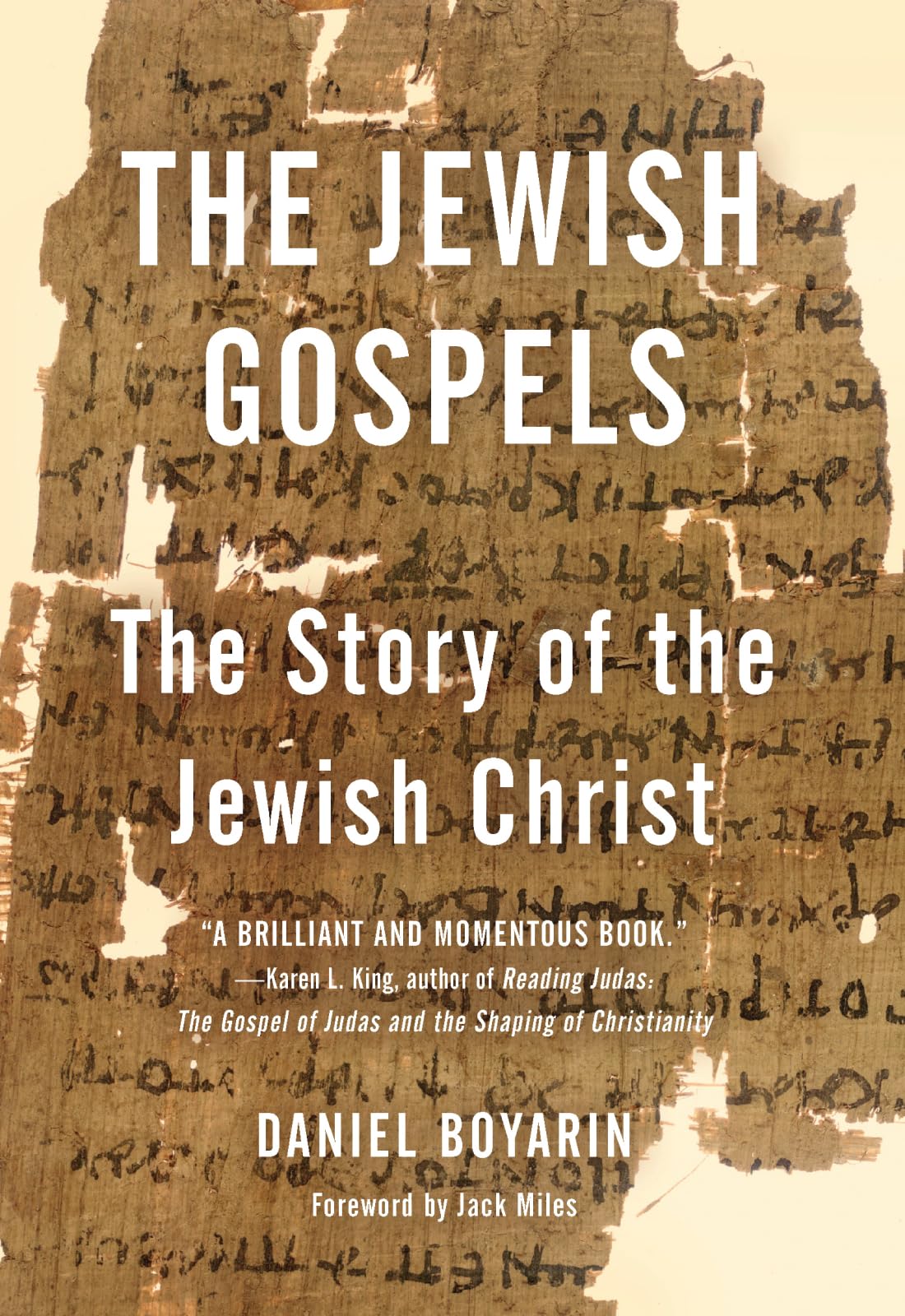
The Jewish Gospels: The Story of the Jewish Christ, by Jewish scholar Daniel Boyarin, helps us to better understand the New Testament’s development regarding the Jewish food laws. Under apostolic authority, Paul taught that Gentile Christians were not required to keep kosher as believers in Jesus. However, Jesus in his earthly ministry, kept kosher regarding the Jewish food laws. Veracity explores the controversy.



 Veracity