
I just read today that one of the world’s most recognized Egyptologists, Kenneth Kitchen, died Thursday, February 6, 2025, at age 93. Kitchen was an idiosyncratic legend, an archaeologist who studied the Ancient Near East, specializing in ancient Egyptian history, and who upheld the Old Testament as a reliable source for understanding the history of the ancient world. In my mind, he was the “real Indiana Jones.”
Few today would be dazzled by Kitchen’s study on The Third Intermediate Period in Egypt. But for the Christian interested in the intersection between the Bible and archaeology, his 2003 erudite defense of the Bible, On the Reliability of the Old Testament, stands squarely in the maximalist tradition, affirming the historicity of the Exodus and the biblical Patriarchs. I read his book almost twenty years ago and was blown away by the breadth and depth of his scholarship.
While many scholars today tend to be skeptical of the story of Moses and the flight of Israel out of Egypt, spending forty years wandering the Sinai desert, Kenneth Kitchen was resolute in marshaling detailed evidence to support the testimony of the Bible. Kitchen was careful not to say that the biblical stories of the Patriarchs could be “proved” by the archaeological record, but he likewise stressed that archaeology has not “disproved” this history as presented in the Bible either.
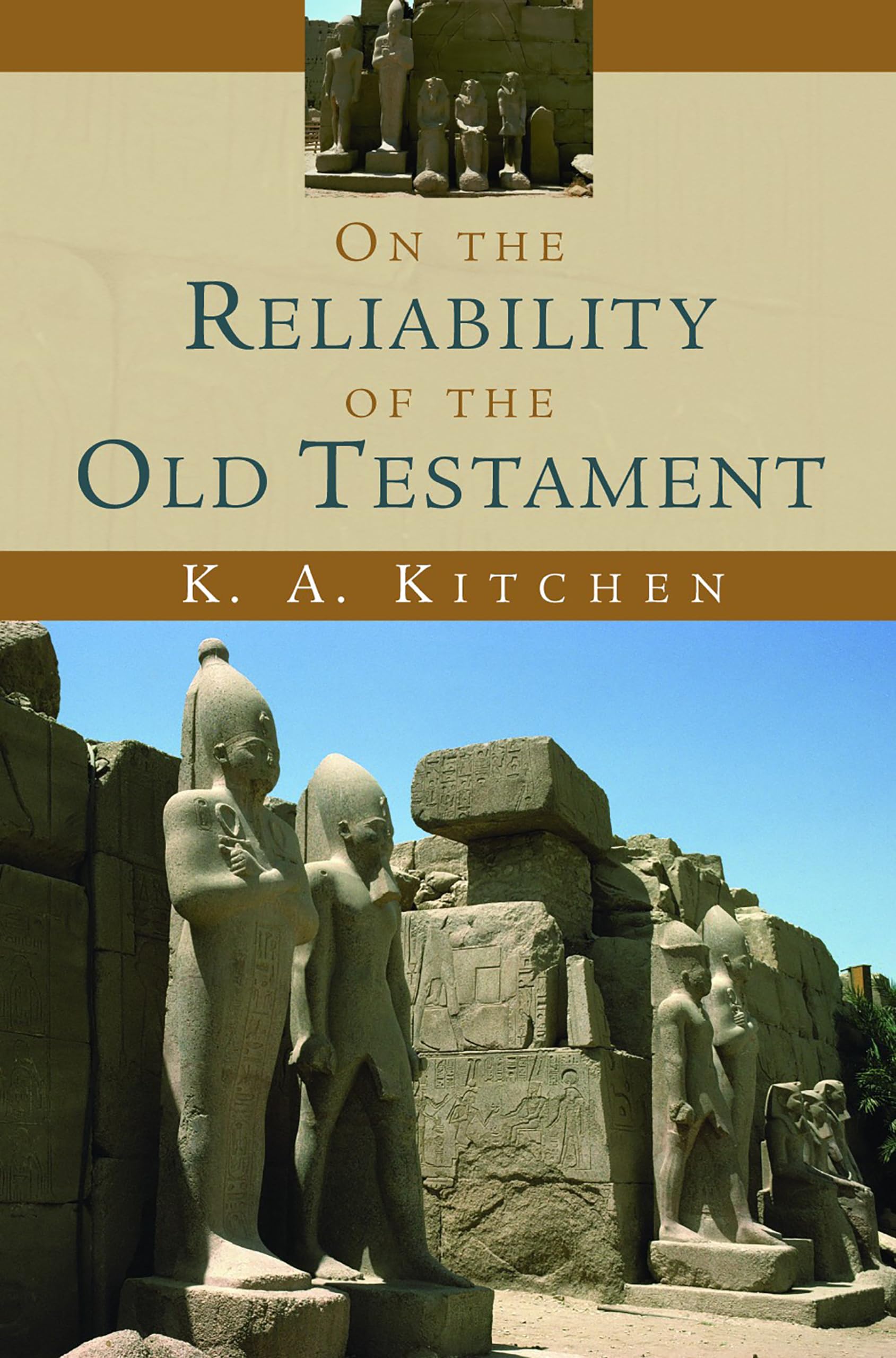
Kenneth A. Kitchen’s On the Reliability of the Old Testament is a modern classic defending the historicity of the Old Testament. Kitchen begins with the most recent period in Israelite history, working his way backwards towards the earliest Patriarchs, showing that figures like Moses and Abraham line up with what we read in the archaeological record.
Born in Scotland, the life-long bachelor Kitchen was a contrarian in several ways, and not afraid of being combative in his research. Not only did he take on minimalist colleagues, such as Ronald Hendel, who concluded that the historical Moses was a fictional product of Israelite imagination at least four or five centuries after the traditionally dated Exodus period, Kitchen was critical of even conservative Old Testament scholars for not reading the text carefully enough. He rejected the traditional, early date for the Exodus, in the mid 15th century BCE, around the year 1446, while Amenhotep I, Thutmose I, or Thutmose III served as Pharaoh, an interpretation which has been based on a non-metaphorical reading of the years described in 1 Kings 6. Archaeologists like Bryant Wood continue to hold to this traditional view.
Instead, Kitchen favored a late date alternative, about 200 years later in the 13th century BCE, when Rameses II served as Pharaoh. Kitchen argued that the early date has lacked sufficient archaeological support. Instead, the city of Rameses in Egypt was known in the 13th century, corresponding to what has been read from Exodus 1:11, and that archaeological evidence for the destruction of Hazor in the 13th century matched what has been described by Joshua’s conquest of the Promised Land in Joshua 11:10-11.
Kitchen also chided Old Testament scholars who insisted that the large numbers associated with texts like the census in Numbers 1-2, following a non-metaphorical interpretation of such numbers, did not match the archaeological data, which has supported a smaller, yet still sizable group of Israelites wandering the Sinai wilderness for some 40 years.
Kitchen’s views even went against the idiosyncratic proposal by atheist and fellow Egyptologist David Rohl, who has argued that a new chronology for Egyptian history should be adopted, which pushes the possible date for the Exodus earlier than what the late date proposes. David Rohl’s innovative hypothesis has been popularized by Tim Mahoney’s Patterns of Evidence franchise of documentary filmmaking. Kitchen rejected this view as “100% nonsense.”
Kenneth Kitchen’s work has been echoed with support by Trinity Evangelical Divinity School emeritus professor, archaeologist, and Egyptologist, James K. Hoffmeier, and on YouTube, a younger student who studied under Kitchen, Egyptologist David A. Falk, hosts the channel Ancient Egypt and the Bible. Falk has a recent YouTube stream remembering his mentor, Kenneth A. Kitchen.
What helped to win me over to the late date for the Exodus was the argument regarding the location of the slave city near a residence for the Pharaoh. The ancient city of Thebes, located near modern day Luxor, Egypt, was the primary residence for the Pharaohs during the Late Bronze Age. However, we have evidence that in the 13th century the city of Rameses, thought to have been a residence of a Pharaoh of the same name, was located in the Nile delta area. Rameses was in the northeast region of Egypt not that far from the modern city of Cario, and was built by slaves living in a nearby slave city, Avaris.
The journey from that slave city to Rameses would have been less than a few hours by foot, which makes sense of the many meetings that Moses would have had with Pharaoh mentioned in the Book of Exodus. However, any look at the map shows that a journey from the Nile delta to Thebes took at least 6 days to walk, which makes the late-at-night journeys that Moses took from the slave city to Pharoah’s residence rather ludicrous. Unless the Hebrews had built some nuclear-powered speed boat for Moses to travel quickly up the Nile to visit Pharaoh in Thebes, it is hard to imagine how Moses could have made such a relatively quick visit in the middle of the night to Pharoah.
Advocates for an early date for the Exodus might respond by saying a 15th century Pharoah might have built a residence within close walking distance near the 15th century slave city or encampment, but that we simply do not have evidence for such a residence…. at least not yet. But why appeal to evidence we do not currently possess when we actually have evidence that supports a different date, and that still affirms the testimony of Scripture? In my mind, this is a case of having a bird in the hand is worth two in a bush. It is better to hold onto the evidence you already have than it is holding out for evidence which you may never find. Kitchen was that type of evidentialist who opted for the former.
What I did not know about Kitchen was just how idiosyncratic he really was. As Tyndale House scholar Peter J. Williams puts it:
His abode was a small three-bedroom terraced house, without central heating or any modern appliance. [Kitchen] was very proud that nothing was connected to the internet so there could be no possibility of a virus destroying his work…..
Ken Kitchen basically didn’t have a kitchen: it was a tiny box room. Ken lived all his life without a refrigerator. He had milk delivered fresh, and had no need for the complexities of unnecessary equipment. He lived in the utmost simplicity….
Despite his great learning, Ken Kitchen was a man of a deep and simple faith in Jesus Christ as his Saviour and Lord. Though he knew a lot, he was also humble and aware of his own fallibility and frailty. He would want us in remembering him to think of the One he served. As I think about Ken’s life, as a bachelor living a life of ascetic discipline and dedication to scholarship, I find myself challenged by his work ethic and his incredible focus, even as I recognise that Ken was one of a kind. We will not see the like of him again.
Actually, in his later years, Kitchen finally was forced to get a refrigerator after he contracted food poisoning. His doctor strongly advised him to a get refrigerator, for his own safety.
Read more of Peter Williams’ obituary remembering the “real Indiana Jones,” Kenneth A. Kitchen.
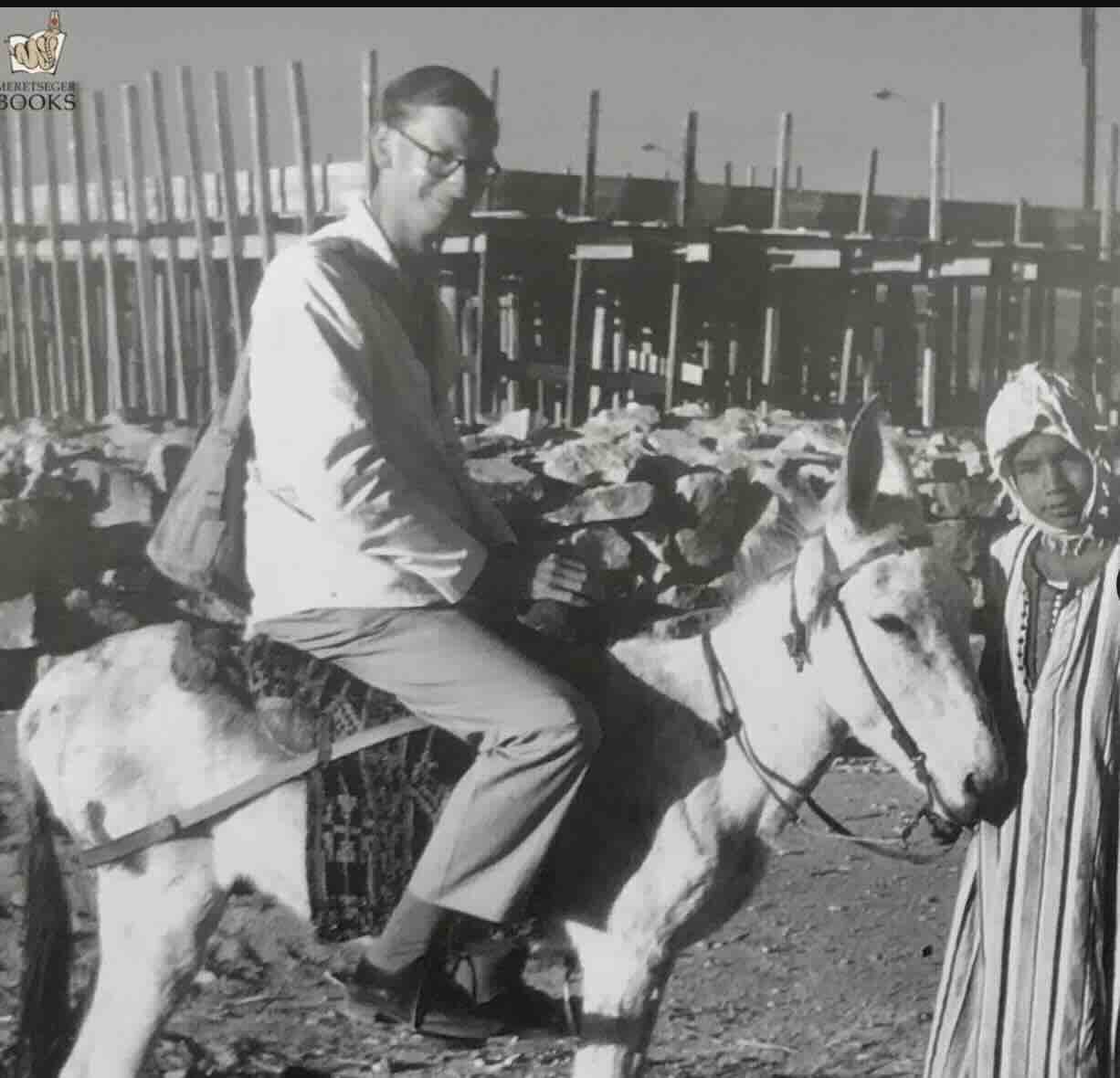
A young Kenneth A. Kitchen doing field work for his Egyptological studies.
Here are some links to older Veracity articles about the Exodus, the conquest of Canaan and the problem of large numbers, the difference between maximalists and minimalists in relating archaeology to the study of the Bible, the status of the city of Jericho in biblical history, a review of a Patterns of Evidence film, by Tim Mahoney, and the fringe archaeology of the late Ron Wyatt, who portrayed himself as a kind of evangelical Indiana Jones.
NOTE: The original blog post had a title with his death in “1925,” instead of “2025,” which was obviously a typographical error.



 Veracity