
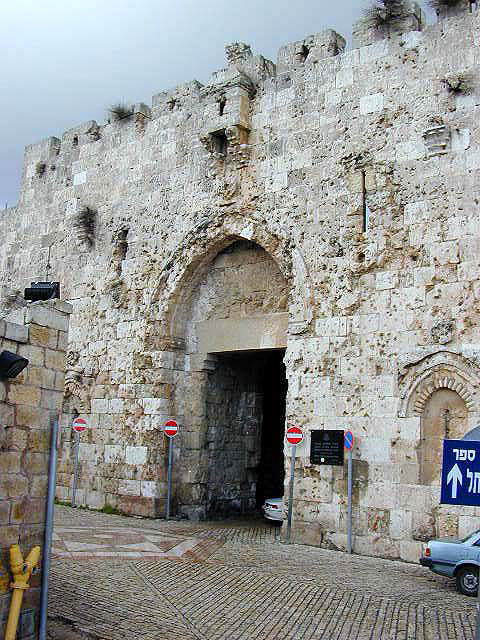
Bullet holes riddle the exterior of the Zion Gate in Jerusalem, a center of conflict during the wars of 1948 and 1967 for control of the Holy City. I visited Jerusalem in December, 1993, and the sight of these bullet holes gripped me deeply.
It has been one year since Hamas led a surprise attack against the modern state of Israel. The situation in Gaza has been desperate and dire, while daily life in Israel continues under constant threats from Yemeni Houthis, Lebanon’s Hezbollah, and Iran. The fact that the original attack came 50 years plus a day after the Yom Kippur War of 1973 was no coincidence.
Hamas’ name for the October 7, 2023 attack was “Operation Al-Aqsa Flood.” Al-Aqsa is the name of the great mosque located on the Jerusalem Temple Mount. Israeli police had been limiting the number of worshippers who visit the iconic mosque, spreading concerns about access to the mosque.
Fears of the war spreading invite Christians to consider how all of this connects with biblical prophecy. As I write this, concerns about climate change in the wake of Hurricane Helene’s devastation of western North Carolina, with yet another storm bearing down on Florida recall Luke 21:25: “And there will be signs in sun and moon and stars, and on the earth distress of nations in perplexity because of the roaring of the sea and the waves.”
So, are we nearing “The End?”
Between 2014 and 2018, I spent about two-years on and off, on a deep-dive research project to look into the whole issue of “Christian Zionism,” reflecting on a common evangelical expectation that the Bible teaches that a restoration of national Israel, within its original borders as defined in the Book of Genesis, is part of God’s prophetic plan coinciding somehow with the return of Jesus. If there was anything I learned in doing this, it was that the issue of national Israel in prophecy is exceedingly complex.
Since then, my thinking has changed in the sense that the legacy of antisemitism is worse than what I thought before embarking on this study, and that this legacy sadly extends way back into the history of the Christian church. There is inherently a “supersessionist” element in Christian theology in the New Testament, particularly in the Book of Hebrews. In some sense, the message of the Christian faith supersedes the message of traditional Judaism, from whence the Christian movement came. There is no getting around the fact that Christianity has its roots in the world of the Old Testament. The debate is over what that whole notion of “superseding” actually entails, in terms of the ramifications of that type of thinking.
I thought it might be helpful to repost the “blog post compendium” all of that research, with links to other Veracity blog posts, in order to better navigate this complicated issue which crops up almost daily on our news feeds. I originally posted this in January, 2018. I hope at least someone finds this helpful, just as I have….
————————————————————————-
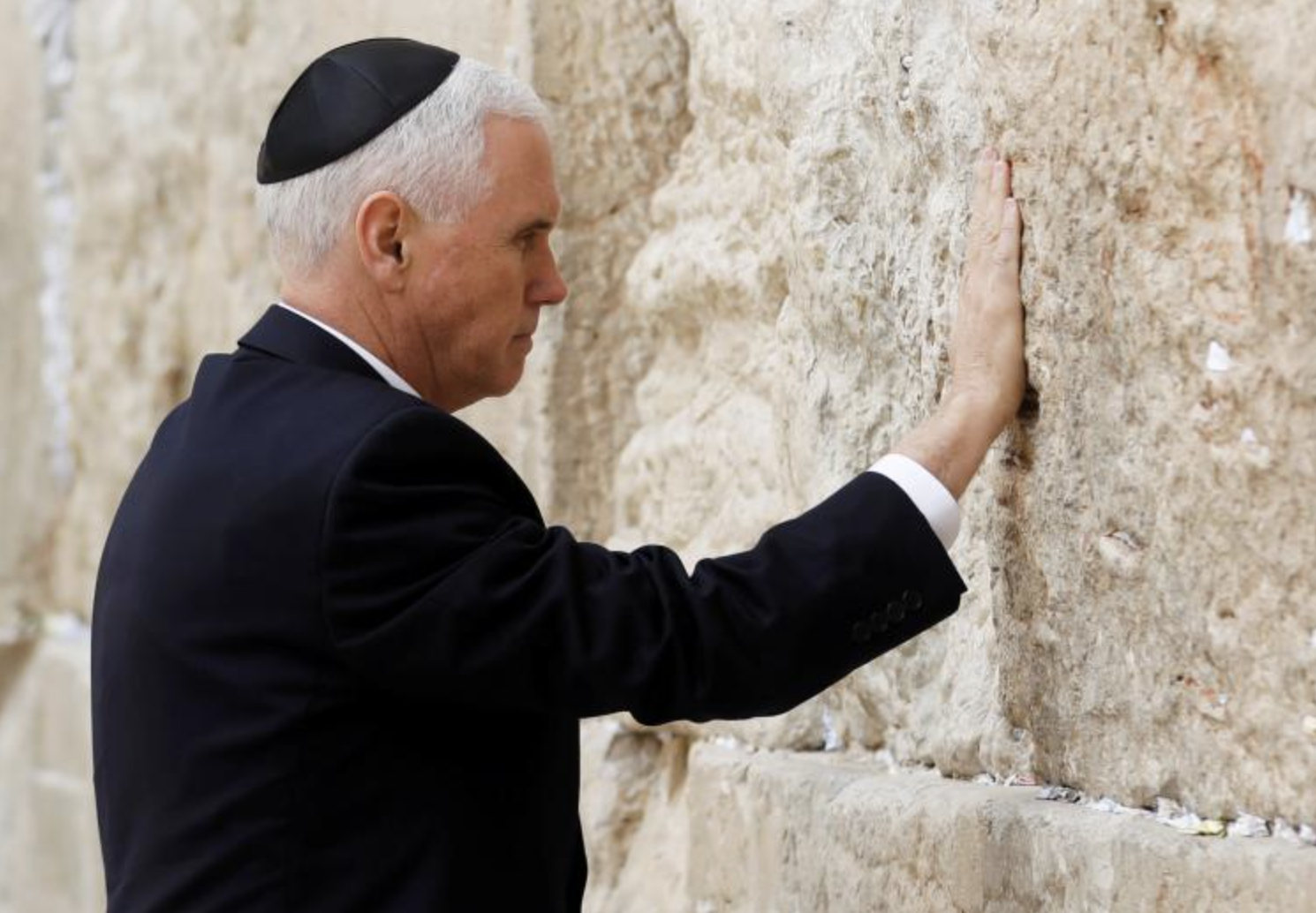
U.S. Vice President, Mike Pence, an evangelical Christian, at Jerusalem’s “Wailing Wall,” January 23, 2018. While many American Christians enthusiastically supported the visit of U.S. Vice President Mike Pence, to Jerusalem, many Middle Eastern Christian leaders refused to meet with him. Why the rebuff of the American leader, by fellow Christians? (photo credit: REUTERS, Ronen Zvulun)
U.S. President Donald Trump made news in December, 2017, by announcing that the United States would move their embassy from Tel Aviv to Jerusalem, to honor the Israeli claim that Jerusalem is truly the capital of that modern nation-state. For many Christians, when they read their Bibles, they think that this is a “no-brainer.” Jerusalem has been the center of Judaism since the days of the Old Testament. Why not now?
But a lot of other Christians, when they read their Bibles, beg to differ.
As British theologian Ian Paul writes, Theodore Herzl, the pioneer of modern Jewish Zionism, modestly envisioned Mount Carmel as the capital for a modern Jewish state, and not Jerusalem. Ben-Gurion, the first prime minister of modern Israel, was willing to accept the loss of Jerusalem as the price to be paid for having a homeland at all, for the Jews, in the Middle East.
The 1967, Six-Days War, whereby Israeli forces took control of all of Jerusalem, changed all of that.
The latest move by the United States, as many see it, is simply accepting what everyone knows is the reality behind modern day Israel. Why pretend? Jerusalem is, and should be, the capital of Israel.
Well, others are quite uncomfortable with the idea, The planned implementation of U.S. foreign policy creates concerns that this move could lead (and in a few cases, has already led) to unnecessary violence..
They call Jerusalem, the “city of peace.” Why then, is it so controversial? What does the Bible have to say about all of this? Continue reading






 Veracity