The fifth in the summer blog series on head coverings in 1 Corinthians 11:2-16…
Is 1 Corinthians 11:2-16 really about cloth head coverings…. or something else?
The Traditional, Hyper-Conservative, and Symbol of Protection views discussed thus far all suggest that the head coverings referenced in 1 Corinthians 11:2-16 are about some type of cloth covering the head. Or perhaps a hat of some sort? But what if the hair covering is simply the hair itself? The basic idea behind the so-called “Hairstyle” view of 1 Corinthians 11:2-16 is that whenever you see something like “head covering” in this passage you should think “hairstyle” or “hair length” instead.
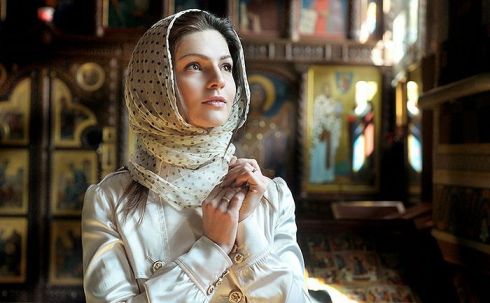
Everything about head coverings in 1 Corinthians 11 (well, maybe not “everything,” but we try to hit the highlights here at Veracity)
Hair as a “Head Covering?”
This may over-simplify the argument for some, but there are two fundamental premises that underline this view. First, nowhere in 1 Corinthians 11:2-16 does Paul tell us the exact nature of this extra head covering that women are to wear. Readers often assume a type of cloth or hat, but Paul never explicitly says that.
Second, the key to unlocking this view is found in the concluding statement Paul makes about head coverings in verses 14-15:
Does not nature itself teach you that if a man wears long hair it is a disgrace for him, but if a woman has long hair, it is her glory? For her hair is given to her for a covering.
Paul says that a woman’s longer hair IS the head covering. There you go. Therefore, Paul is only talking about hairstyle when he is talking about head covering. Mystery solved!… (well…. sort of…. I will explain below).
Nevertheless, how this is all worked out in the rest of the passage requires a good amount of unpacking. Here is an outline used by egalitarian scholar Philip Payne as to how his interpretation of the hairstyle view works in 1 Corinthians 11:2-16:
- 11:2 Praise for upholding the traditions Paul had taught them
- 11:3 Theological introduction, establishing the basis for respecting for one’s source/head
- 11:4-6 Critique of hairstyles which symbolize inappropriate sexual freedom in the Corinthian church
- 11:7-10 Theological basis for not adopting these hairstyles symbolizing sexual freedom
- 11:11-12 Affirmation of the equal standing of woman and man in Christ
- 11:13-15 Argument from nature against adopting hairstyles symbolizing sexual freedom
- 11:16 The churches do not have a custom of displaying sexual freedom through wild hair
To avoid getting too far into the weeds, we can just hit some of the main issues: For example, in what sense is hair itself a head covering? Some suggest that when the hair itself is “done up” in a particular way that this is the head covering. Others simply say that keeping a woman’s hair long is the head covering. The main point is to say that the Hairstyle view rules out the need to have some type of cloth or other means to cover the head.
Philip Payne suggests that verses 4-6 are primarily about discouraging sexual immorality. For a man in Corinth, long hair was a sign of him trying to be effeminate, and possibly leading to homosexual practice; that is two persons of the same sex engaging in physical intimacy with one another, which Paul definitely did not agree with. For a woman in Corinth, loose hair hanging down was a sign of sexual promiscuity, and abuse of the Christian’s freedom. Paul does not come out directly and say that sexual immorality is the problem, because he is trying to be discrete and not be crude, in his rebuke of the Corinthians.
The bottom line, as briefly noted in verse 16, concludes the passage by suggesting that in all of Paul’s churches men wear their hair short and women wear their hair long (or “done up”). Paul therefore wants the Corinthians to follow the same practice as found in all of the other Christian communities, and not argue about it.
What is interesting about this view is that there are egalitarians like Philip Payne, and even some complementarians, who agree that this passage is about hairstyles and/or hair length, and not a cloth hair covering. Furthermore, to make the discussion even more spicy, a lot of the research available today suggests that we have evidence for both men and women wearing cloth head coverings as part of pagan worship practices. But there are other cases where cloth head coverings were not to be worn. Mmmmmm…… The implications for how all of this should illuminate what is going on in 1 Corinthians 11:2-16 is disputed among scholars.

Is 1 Corinthians 11:2-16 teaching about a woman’s “head covering” with respect to the hairstyle, as opposed to a piece of cloth? Is long hair itself a “head covering?”
Hair as Long or Hair as “Done Up?”
But which perspective is Paul advocating for women? Wearing the hair long, or wearing the hair “done up? Regarding the Hairstyle view, if one drills down a little deeper in verse 15, you can get at the heart of the debate between the “long hair” for women position and the hair “done up” position. Let us quote the verse again (ESV):
…but if a woman has long hair, it is her glory? For her hair is given to her for a covering.
Compare with the NIV 2011:
…but that if a woman has long hair, it is her glory? For long hair is given to her as a covering.
Note that the NIV 2011 interprets a bit more for us by repeating the reference to “long hair,” despite the fact that “long” is not actually in the second half of the verse. In that second half, it simply reads “hair” in the Greek, which is ambiguous, thus the ESV simply leaves the ambiguity in there, thus omitting the reference to the hair being “long.” Some then read this to say that having “long hair” is sufficient to indicate that having long hair is the covering.
However, those who say that the hair needs to be “done up,” so as to deter sexual immorality for the woman, wrestle with that word “covering” at the end of the verse, in Greek peribolaion , a peculiar word which will become VERY important to yet another perspective we will consider later in this blog series.
The generally accepted definition of peribolaion is “that which is thrown around.” Those who argue for the cloth head covering view contend that this should not be taken figuratively, since it makes sense to say that a cloth is what can be thrown around the hair. But the hair “done up” proponents say that it should be taken figuratively, in that hair that is “done up” on top of underlying hair should be best understood as “thrown around.” Proponents of this view, particularly Philip Payne, argue therefore that the “thrown around” aspect of wearing the hair “thrown around” itself, rules out the idea that Paul would approve of women wearing long hair by itself. Instead, a woman’s long hair should be “thrown around” itself, in much the same way a woman might wear a cloth covering.1
The details do get a bit tricky.
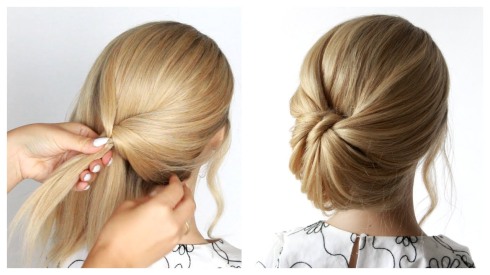
An example of a woman’s hair being “done up” consistent with the Hairstyle view of 1 Corinthians 11:2-16
No Cloth Head Covering?
It is helpful to note that the question of hairstyle versus a cloth head covering is fairly irrelevant for even certain complementarian interpreters of the passage. For them, cloth or no cloth, the issue has to deal with male headship, which involves either a more top-down view of authority, or a milder understanding having to deal with preeminence or prominence in the male-female relationship.
Nevertheless, the main idea associated with the Hairstyle view should be evident. In the Hairstyle view, this passage is not about a cloth hair covering. Rather, it is something about hair, either the hair length or how the hair is worn.
In our next installment in this summer blog series, we will look at the Quotation/Refutation view of 1 Corinthians 11:2-16. Listen up and buckle up, because the Quotation/Refutation view gets very, very interesting. Stay tuned!!
Notes:
1. In the Mike Winger video referenced in this first blog post of this series, Mike indicates that the evidence favors that it is cloth head coverings that Paul has in view. For a different approach that favors the hairstyle view, I would suggest investigating Andrew Bartlett’s study in chapter 7 of his Men and Women in Christ, reviewed recently on Veracity. Andrew Bartlett primarily follows the research by Philip Payne to conclude that cloth head coverings are not in view, thus favoring the hair “done up” position. See this discussion for an elaboration of Philip Payne’s Hairstyle view on his website.↩







 Veracity