From the Christianity Along the Rhine blog series…
How did Christianity grow during the first thousand years, since the time of Christ?
During a recent trip to Europe featuring a river cruise down the Rhine River, my wife and I got to explore a lot a history. From cities like Basel, Strasbourg, Mainz, to Trier (up on the Moselle River), you can essentially travel back in time through the centuries, imagining what it was like to witness the destruction of World War 2, to walk along the cobblestone streets of the medieval period, and even to envision how the Romans built their fortifications some 2,000 years ago. One archaeological site I saw in Mainz from the Roman period has been dated to within a few decades of Christ’s birth, an event which we will celebrate within a few days at Christmas. So I decided to read a book which covered a good chunk of this history, much of it focused on events which took place in the Holy Roman Empire, where the Rhine River was a major thoroughfare.
Historian Robert Louis Wilken is a professor emeritus of Christian history at the University of Virginia. Back in 2013, Wilken wrote The First Thousand Years: A Global History of Christianity, a fine survey into the first half of the Christian movement’s history. Wilken has a general audience in mind (no footnotes!!), and is great to listen to as an audiobook.
Wilken’s work is chock full of scholarly insights into significant moments of church history, without getting too technical. Here is one section of the story that I liked a lot: I had been reading Wilken throughout 2025, the 1700th anniversary of the Council of Nicaea giving us the Nicene Creed. Wilken fills out a lot of details that are often missing in popular presentations about the Nicene Creed.
For example, in the early 4th century, when Constantine became one of the emperors of Rome, he built an assembly hall in today’s Trier, Germany, which eventually became a Christian church. My wife and I had the privilege to visit this Basilica of Constantine when we visited Trier. The Basilica lost its roof during the bombing of Trier in World War 2, but since then it has been beautifully restored.
It was through the influence of Constantine when Christianity essentially began to take over the whole of the Roman Empire, within a few hundred years. I was amazed to think that part of this Christian influence spread as far north in Europe as Trier, Germany, at such an early time in European history.
Inside the Basilica of Constantine, which Constantine established in Trier, Germany, in the early 4th century. Part of the brick work in the church has survived since that early Roman period. I could imagine that the Nicene Creed was recited here within a couple hundred years of the Council of Nicaea. My photo from October, 2025.
Robert Louis Wilken on the Story of the Nicene Creed
But all was not without controversy in the Christian movement in those days. This is where the story of the Nicene Creed which Wilken describes in The First Thousand Years comes into play.
When emperor Constantine finally vanquished his last competitor to the claim of emperor, Licinius, in 324, he had learned of an uproar in Alexandria, Egypt. Over the past few years, a controversy was brewing between the local bishop there, Alexander, and a nearby presbyter, Arius. Arius was teaching that while the Son of God was indeed divine, the Son was actually a creature created by the Father.
Alexander believed this to be heresy. The rumors of heresy were spreading across Christian communities in the Roman empire, and it had the emperor worried that the political fallout of such a theological controversy would make it difficult for him to govern effectively. Constantine, on the other hand, considered the whole matter to be “small and trivial” and the dispute an “idle question.” Constantine called the great Council of Nicaea, involving a little over 200 bishops from all over the Roman empire, to settle the matter and restore peace in the Christianity community of the imperial realm (Wilken, p. 90-91).
Constantine thought the controversy had ended once the meeting at Nicaea was over. But for the next several decades, Christians debated one another about the content of the creed, as the matter was far from settled, contrary to Constantine’s expectations. The Arian controversy and the Nicene proposal dominated imperial politics for several decades, involving several Roman emperors.
When Theodosius, who was friendly to the pro-Nicene party, became emperor in 379, he deposed an Arian bishop, Demophilus, from his office as bishop in Constantinople. Apparently, in many Roman cities at this time, you could find both an Arian (or Semi-Arian) and a Nicene bishop, a situation which brought great confusion to ordinary Christians (Wilken, p. 95).
Advocates of the Nicene Creed saw the ascension of Theodosius as an opportunity to reassert the orthodoxy of the Nicene formulation. Theodosius then called yet another council in 379-381, to be held this time in Constantinople, to reaffirm the creed from 325, and bring some resolution to issues that had caused contention over the creed, during the intervening years. Though the Council at Constantinople is considered to be an ecumenical council, all of the bishops who attended were from the Christian East, as opposed to the Council of Nicaea, which drew bishops from both the East and West (Wilken, p. 96).
Interestingly, the final text of the Nicene Creed formulated at Constantinople has not survived from that meeting. What we know of as the Nicene Creed today was actually recorded at the Council of Chalcedon, some seventy years later, as preserved in the minutes from that council in 450.
Wilkens is careful to note at Constantinople, the language of the Son being “begotten of the Father” (John 1:14, 1:18, 3:16, 3:18; Hebrews 1:5; 1 John 4:9) and the Spirit who “proceeds” from the Father (John 15:26) helped to establish the difference between the Son and the Holy Spirit. The original creed at Nicaea, in 325, merely mentioned the Holy Spirit, but gave no details as to how a Christian was to think about the Spirit, as the Spirit related to the Father and the Son. However, the controversial phrase regarding the Son as being of the “same substance” (homoousion) as the Father, used at Nicaea, was not used to speak of the Holy Spirit at Constantinople. Wilkens reports that 36 bishops at Constantinople argued that the Spirit should not be worshipped as God in the same way Christ is worshipped, though both were considered to be divine. The final creed is explicit in saying that the Spirit is to be worshipped and glorified “with the Father and the Son.” This gives us the doctrine of the Trinity as we know it today (Wilken, p. 97).
Other Nuggets of Church History Gold from the First Thousand Years
Loads of other anecdotes fill out the narrative of the growth of global Christianity during this period. I will just highlight a few more which stuck out for me.
Wilken explains why the Quartodeciman controversy, concerning how to determine the exact date for the yearly celebration of Christ’s resurrection, was so difficult to resolve (Wilken, p. 38…. I will have a future blog post which will dive into the Quartodeciman episode in a more detail).
Wilken has a whole chapter dedicated to Origen of Alexandria, perhaps one of the greatest Christian intellectuals of the early church era, who often gets dismissed by Christians today because of his universalistic doctrine, whereby he argues from 1 Corinthians 15:28 that all of humanity will ultimately be reconciled to God, thus emptying hell (Wiken, p. 61). Origen dropped the ball with his teaching on universalism, but in other respects, Origen was one of the first great towering intellectuals of the early church.
Origen was a master of multiple languages, one of the few early church fathers after the first century who made a concerted effort to understand the Hebrew language, the original language of the Old Testament. The Hebrew version of Genesis 2:4 reads: “These are the generations of the heavens and the earth when they were created,” whereas the Septuagint, the Greek translation of the Hebrew Bible, reads: “This is the book of the generation of heaven and earth when they were made,” adding the work “book,” which is missing in the Hebrew. Origen supposed that the Jewish Greek translator added the word “book” since the same phrase “the book of the generations” appears in Genesis 5:1. This inspired Origen to make a learned study of the Hebrew language. The church remains indebted to Origen’s scholarship, despite having been censured for his views of universalism, a few centuries after his death (Wilken, p. 59).
Little did I know that Constantine’s famous “Edict of Milan” was actually a misnomer. The “Edict of Milan” was not an “edict” but rather a “letter” posted by the rival of Constantine, Licinius, who wrote the letter from his residence as emperor in Nicomedia, in modern day Turkey, but that the contents of the letter reflected the thought of Constantine as well (Wilken, p. 85).
Wilken is far from painting the early church as faultless. He acknowledges that the highly esteemed Bishop Ambrose of Milan was one of the greatest doctors of the church. In 388, a group of Christians set fire to a Jewish synagogue, at the border military town of Callinicum, on the Euphrates River. Emperor Theodosius ordered the local bishop of Callinicum to rebuild the synagogue out of the bishop’s own funds. Yet Ambrose intervened against the emperor, urging that the synagogue not be rebuilt, citing that the synagogue was “an abode of unbelief, a house of impiety, a shelter of madness under the damnation of God Himself.” Ambrose argued that it would be wrong for Christians to rebuild a Jewish synagogue. Theodosius relented. Scholars have debated the morality of this controversialact, on the part of Ambrose (Wilken, p. 134). Yet in my mind, it casts a shadow over the great bishop’s otherwise remarkable legacy. For if the arsonists were let off the hook for their actions, then it would not be just.
Wilken dedicates whole chapters focusing on architecture and art (with some helpful photos in the book), music and worship, and a history of how the bishopric of Rome became “pope.” Through this I learned that the Christian calendar actually arose much later than I originally thought. A late 5th/ early 6th century monk in Rome, Dionysius the Short, took the traditional Julian calendar, which was linked to the reigns of Roman emperors, and anchored the Christian calendar (or at least attempted to do so) to the birth of Jesus, anno Domini, “in the year of our Lord.” The Synod of Whitby in England in 664 formally approved of the new calendar, but it still took a few more centuries for it to be adopted across the Christian world (Wilken, p. 180).
Wilken clearly favors the influence of Saint Augustine of Hippo, describing him by saying “that during his lifetime [Augustine] was the most intelligent man in the Mediterranean world” (Wilken, p. 183). Augustine is known in the West for his conflict with Pelagius. But what I did not know is that charges of heresy against Pelagius were dropped by a council of Eastern bishops in Palestine in 415. Augustine was not satisfied by that judgment, and finally persuaded the Roman emperor Honorius to issue a condemnation of the Pelagians in 418 (Wilken, p. 192). Apparently, Augustine was not afraid of mixing church affairs with the affairs of the state, a mistake in my view, but one that became very common during the medieval era.
Whereas the early church largely grew organically, from neighbor to neighbor, worker to worker, family member to family member, the latter half of the first millennium was marked by a more top-down approach to church growth. Without the support of the king of a region, Christianity made little to no headway in expanding. Wilken relates the story of how Christianity spread to various places, particularly in the east, among the Ethiopians, the Slavs, and as far away as China. In each case, the regional king played a pivotal role in the global development of Christianity.
The First Thousand Years: A Global History of Christianity, by Robert Louis Wilken, tells the story of the first half of the history of the Christian movement, much of it which took place in Europe, but not only in Europe. Much of the forgotten story about the first thousand years of the church happened elsewhere around the world.
A Global History
Yet it was a risky endeavor, as sometimes Christianity took off and remained vibrant, whereas in other cases the church stagnated and even declined, as in the case of China. Christianity managed to reach China in the 7th century, growing quickly, before fizzling out within a few more centuries. The whims of the ruler often proved decisive.
Wilken dedicates a lot of attention to the emergence of Islam. The author shows how Christianity in some cases survived and even thrived under Muslim rule, as with the Copts of Egypt, and where it declined, as in the case of Asia Minor, known now as modern day Turkey.
The story overall of the first thousand years of Christianity is one of remarkable growth followed by decline, particularly in the Christian East. Only once the growth of Islam was challenged did Christianity grow again, and the future of that growth was in the Christian West. But that is the story of the next thousand years of Christian history.
Robert Louis Wilken’s historical survey of the first thousand years of church history is a “must-read” for those interested in learning about the history of the first half of Christianity’s existence.
Exactly 1700 years ago this year, back in 325, a gathering of Christian leaders at the modern lake-side city of Iznik, Turkey began a process which took almost a century for the brightest minds in Christendom to hammer out the basic idea of the Triune nature of God. Even still, what the Nicene Creed summarizes regarding the doctrine of God has generated volumes of theological works down through the ages. Millions of Christians (though not all!) recite the core features of the Trinity expressed in the Nicene Creed every week during worship services. But once you go beyond the idea of “One God in Three Persons”, it can be intimidating to try to think through what it all means.
The doctrine of the Trinity is one of the most central doctrines of the Christian faith, but it is also one of the hardest theological concepts to grasp without falling off the edge into heresy. As a young Christian myself, I early on adopted the analogy of water to explain the Trinity: one substance with three distinct states: a gas like steam, a liquid like water, and a solid like ice. It sure made sense to me back then. Little did I know that such an easy formulation is regarded as a heresy by some of the most brilliant theologians in the church.
Ouch.
While some authors, like the 5th century African Saint Augustine of Hippo, have written classic works on the Trinity, others have distorted the doctrine or rejected it as unimportant. The father of 19th century Protestant liberalism, Frederick Schleiermacher, pretty much dismissed the doctrine of the Trinity as a metaphysical waste to be easily disposed of. In response, more than any other theologian of the 20th century, the Swiss thinker Karl Barth recovered the doctrine of the Trinity as part of the core teaching of Christianity, rescuing it from Schleiermacher’s attempts to discard it. Conservative evangelical theologians since then have taken a renewed interest in articulating this doctrine of God for the postmodern era. Some get it right, but according to Matthew Barrett, a professor at Midwestern Baptist Theological Seminary, some have gotten it terribly wrong.
Simply Trinity: The Unmanipulated Father, Son, and Spirit. Baptist scholar Matthew Barrett wants to revive the classic doctrine of the Trinity, keeping the doctrine of God unmanipulated by contemporary social concerns.
Recovering the Classic Doctrine of the Trinity
In Simply Trinity: The Unmanipulated Father, Son, and Spirit, Matthew Barrett is concerned that even in some of our best evangelical seminaries that many have fallen into a kind of “trinity drift,” whereby Christian thinkers have ever so increasingly veered away from the classic formulation of the Triune doctrine of God, as articulated in the famous Nicene Creed. While some of the terminology and names associated with the great 4th century debate over the Father, the Son, and the Holy Spirit will be unfamiliar to some, Matthew Barrett wants to make the doctrine of the Trinity accessible to interested lay persons who do not know who either Arius or Athanasius was.
Oddly enough for a serious book on theology, Simply Trinity is actually a fun read. Barrett tosses out enough pop culture references to engage his audience, mainly ordinary Christians who want some type of fairly easy read to try to make sense of a complex doctrinal topic. Simply Trinity is not only educational, it is entertaining, listening to it in Audible audiobook form.
Harkening back to the movie classic, Back to the Future, Barrett invites the reader regularly to go “back to the DeLorean,” to meet some of the figures in church history who wrestled with terms like “essence” and “person,” when we think about the Father, the Son, and the Holy Spirit. Barrett apparently loves basketball, so he envisions a kind of “Dream Team” to champion the cause of Nicene Orthodoxy. The NBA has had its Magic Johnson and Larry Bird, but the church has had its Athanasius and Thomas Aquinas. Did you know that the Puritan theologian John Gill was the “Patrick Ewing” of trinitarian authors, or that Augustine of Hippo was the “Michael Jordan” of the early church? It is a clever way for Barrett to introduce some deep ideas. I think it works.
In Simply Trinity, Barrett, the host of the Credo Magazine podcast, wants to argue that what makes the doctrine of the Trinity so beautiful and essential to faith is its simplicity. In summary, the Father is unbegotten, the Son is begotten, or generated from the Father, and the Spirit is spirated, or breathed out, from the Father. These qualities have to deal with the internal character of the persons in terms of their origins, often called the “immanent” Trinity. God also acts in history, which displays his external relations to the creation, what is often called the “economic” Trinity. The “immanent” Trinity is about who God is, whereas the “economic” Trinity is about what God does.
Yet as Barrett sees it, the problem with a lot of modern understandings of the Trinity is that ideas have been invented by theologians regarding the “economic” Trinity, and that these ideas have been imported back into the “immanent” Trinity, thereby causing distortions as to who God really is.
“To be blunt, they have not revived the Trinity, but they have killed it, only to replace it with a different Trinity altogether – a social Trinity – one that can be molded, even manipulated, to fit society’s soapbox” (Barrett, 92).
Barrett is bothered by what he understands to be conceptions of a “social doctrine of Trinity,” emphasizing what God does, as a model for human interpersonal relationships, whether these be principles for governance and politics, economic structures, the organization of the church, and how Christians should think of marriage and family.
Jürgen Moltmann, the great German Reformed theologian of the late 20th century, though not fully a conservative evangelical, pioneered the concept of a “social trinity.” Moltmann developed this theology in an effort to provide a Christian basis for relations within society, and other causes, ranging from care for the environment to a critique of economic systems, like capitalism. Theologians, both liberal and conservative, have followed Moltmann in his wake to apply the model of “social trinity” to other areas of human communal life.
To make his case against a “social trinity,” Barrett sufficiently rehearses the history of the Nicene controversy of the 4th century, and how some of the best theologians since then have reaffirmed the truth of the classic Nicene doctrine of the Trinity. Names like Arius and Athanasius emerge, helping to form the narrative for this ancient theological battle of ideas. Along the way, Barrett illustrates his points through a fictive admirer of Jesus, a Jewish woman named Zipporah, who narrates her own encounter with Jesus and the religious leaders who opposed him. It is a pretty creative way to educate people about the classic doctrine of the Trinity, without diving too much into sophisticated theological jargon.
However, the zinger comes when Barrett attacks the efforts of “social trinitarian” scholars who inadvertently distort the classic doctrine of the Trinity. He chides evangelical egalitarian scholars who base the relations within marriage, between husband and wife, on the supposedly social arrangement within the Triune persons in the Godhead. A husband and wife are essentially equal in their relations to one another because the social trinitarian theologian says that this mirrors the essential equality between the persons of the Godhead. But this is all wrong, says Barrett, because this way of talking about God is really a manipulation of the doctrine of God to serve a kind of social arrangement within human communities. Keep it simple, says Barrett, in response. Do not distort our understanding of God by introducing elements within trinitarian thought that no one before the modern era ever considered.
The Eternal Functional Subordination of the Son (EFS) as an Unhelpful Modern Theological Innovation
But Matthew Barrett saves his most stinging critique to take down the modern concept of the Eternal Functional Subordination (EFS) of the Son, advanced by scholars like Bruce Ware and Wayne Grudem (chapter 8). In the EFS view, God is ultimately defined in terms of a pattern of authority and submission within the Godhead. For example, the Father is in authority and the Son is in submission to the Father. Why is this important? Because it explains the earthly human pattern as to how a wife is to submit to the authority of her husband.
Classically understood, when the Son became incarnate as Jesus the Messiah, the Son was indeed submissive to the authority of his Father. This activity of God through the incarnation is about what God has done, but the EFS theologians have projected this functional arrangement of the Father in authority and the Son in submission back into the very immanent, ontological aspect of God in all eternity. The EFS theologians maintain that such an arrangement is gladly accepted by both the Father and the Son, therefore there is a kind of equality within God, so it has the appearance of orthodoxy. But Barrett makes the case that the EFS view ultimately veers away from the classic doctrine of God by projecting something from the economic activity of God towards humanity back into God’s very internal relations, a violation of Christian truth which has been received down through the ages.
What really shocked me was to learn about the EFS tendency to suggest that each person of the Trinity has a will of their own (chapter 10). For when one speaks of an eternal function of subordination of the Son to the Father, it implies that the Son has a will distinct from the Father’s will, with the same idea applying to the Spirit. This does border on tritheism, as the early church fathers aligned with Nicaea argued for the singularity of the divine will, and not three distinct wills.
What makes Matthew Barrett’s critique so striking is that Barrett acknowledges that he is fully committed to a complementarian view of marriage and church office, namely that the husband is the head of the wife, and that only qualified men are to serve as elders of a local church. But Barrett is fully convinced that what EFS theologians have done is to try to bolster their particular brand of complementarian theology by wrongly drawing on a false view of the Trinity, in order to support their views.
Regarding his criticism of the Eternal Functional Subordination of the Son (EFS), Matthew Barrett makes a most compelling case that EFS is off-the-mark. Back in 2016, evangelical Twitter exploded in controversy when another complementarian Bible scholar raised the spectre of EFS as being “heresy,” which generated hundreds and hundreds of comments online back and forth. Now that the air has cooled down several years later, in 2021 Matthew Barrett has written a very careful, sober case for why EFS, despite whatever good intentions it may have had initially, is simply barking up the wrong tree. Is EFS heresy? Well, if it is not, it sure leans in a direction away from the received tradition of the church, and we need a course correction, if we are going to have a fully robust, and simpler view of the Trinity as Matthew Barrett proposes.
Other reviews of the book are mostlyvery positive. However, defenders of EFS will probably say that Matthew Barrett has straw-manned their position, and misrepresented what they are trying to say. Perhaps this is the case, but I am not so sure. It is quite telling that such a committed complementarian thinker regarding marriage and local church elders would argue so strongly against the EFS view. One reviewer even acknowledges that Matthew Barrett once held to an EFS-like view, though Simply Trinity makes the case that he has now repented of that wrong viewpoint. So, I find it hard to believe that Barrett would so badly mischaracterize the weakness of the EFS position, if he indeed once held it himself.
On the other side of the gender debate, egalitarian critics of Matthew Barrett’s position argue that a complementarian view of male/female relations collapses without the EFS doctrine of the Trinity. But this alternative view does not hold up very well. An egalitarian must still find an explanation for passages like 1 Corinthians 11:2-16 and 1 Timothy 2:8-3:15, which are difficult passages that simply can not be easily waved away. Long before EFS became fashionable in evangelical circles, Christians have historically held to some kind of complementarian view of gender relations, between male and female. The fact that many complementarian scholars agree with Matthew Barrett testifies to the fact that complementarian theology is not tied to the hip of an EFS doctrine of the Trinity.
The strongest takeaway for me is in Barrett’s critique as to how advocates of EFS misuse 1 Corinthians 11:3, their primary New Testament prooftext, to defend the Son’s eternal functional subordination to the Father:
…when Paul says the “head of a wife is her husband, and the head of Christ is God” (11:3), he has in view the incarnate, suffering servant, who fulfilled his mission by means of his obedient life, death, and resurrection as the Messiah (Christ). There is absolutely nothing in the immediate or wider context that says anything at all about the Son apart from creation and salvation within the immanent Trinity. To infuse and impose discussions of immanent Trinity on this text is a failure to treat the context with integrity. Paul has in view the salvific lordship of the anointed One, the Messiah (Barrett, chapter 8).
For if the EFS advocates were correct, Paul would have said that the head of the Son is the Father, and not what he did say, “the head of Christ is God.” Paul intentionally speaks of the Son’s incarnate ministry as the Messiah, and not the internal relations between the Son and the Father. Without 1 Corinthians 11:3, the support for the EFS view basically falls apart.
Critical Engagement with Matthew Barrett’s Book on the Trinity
The book is not perfect, as there are a few places in Simply Trinity that left me twitching a bit. In chapter 10, Barrett flies his Reformed tradition colors rather proudly with his reference to the “doctrines of grace” embodied in the “five points of Calvinism.” That right there is enough to send non-Calvinist Christians into fits. But what was so odd is that I really did not get how Barrett’s appeal to the “doctrines of grace” really tied into the substance of his argument regarding the inseparability of the persons of the Trinity. Barrett could have just as easily made his point without annoying his non-Calvinist readers.
In his chapter 9 on the “spiration” of the Spirit (which in most versions of the Nicene Creed is called the “procession” of the Spirit), Barrett has a sidebar discussing the vexing issue of the filioque. In 589 C.E., about two hundred years after the Nicene Creed was finally formalized, the Council of Toledo in the West modified the Nicene Creed to say that the Spirit “proceeds from the Father and the Son.” That last phrase, “and the Son” isfilioque in Latin. Originally, the Creed as agreed upon by both East and West simply read that the Spirit “proceeds from the Father.”
The insertion of the filioque has been regarded as heresy by the Eastern church ever since the Great Schism of 1054 C.E., as it unilaterally changed the Creed without the full participation of the East. Most Christians in the West are completely oblivious to this controversy. But if you ask an Eastern Orthodox Christian, who converses with Western Christians, the filioque controversy stands out as a real sore point. I think our Eastern Christian friends are right to register their protest.
Oddly, Barrett justifies the action of the Council of Toledo, appealing to Anselm’s reasoning that the addition of the filioque protects against any slippage of the church back into the heresy of Arianism, which compromises the fully divine nature of all three persons in the Godhead. But this justification seems like a contradiction of the main thesis Barrett is advancing in the Simply Trinity, that we should not be monkeying with the doctrine of the Trinity that was originally formulated in the 4th century by the early church fathers. For if you are going to be consistent and poke holes at modern innovations like EFS, you should also poke holes at earlier post-Nicene innovations from the 6th century, like the filioque.
Barrett criticizes modern translations, which the older KJV translated as “only begotten,” now as simply “only,” as John 3:16′s “For God so loved the world he gave is only Son.” But one need not drop the concept of God the Father “begetting” the Son because the Greek word monogenes is translated in a less interpretive manner in today’s translations. Later in chapter 7, Matthew Barrett does come back to acknowledge this: The idea that Jesus is God’s “only begotten Son” can be inferred from this and other passages. It is sufficient to ground the language of the Son’s “only begotten-ness” in other concepts aside from the contested analysis of the Greek word monogenes.
These criticisms aside, my takeaway is that Simply Trinity has changed my mind in a more general way. Back in the 1990s, I held to an egalitarian view of marriage and church structure with respect to elders, and I largely based it on the kind of “Social Trinitarian” theology being advanced back then in evangelical egalitarian circles. But Matthew Barrett has convinced me that whether promoted by egalitarian scholars or by complementarian scholars, trying to use the Trinity as a model for how to conceptualize male-female relations in either marriage or the local church is a wrong-headed way of thinking, in that it invariably leads to a distorted way of thinking about God.
More generally, Matthew Barrett as an evangelical Protestant makes a strong appeal to the “Great Tradition,” the confluence of thought found in Protestant, Roman Catholic, and Eastern Orthodox traditions, which can be traced back to the Council of Nicaea. He laments that a number of evangelical scholars in the name of what Barrett calls a ‘narrow, crude biblicism” have jettisoned the Great Tradition’s formulation of the Trinity in favor of something novel. This is refreshing, as in my mind, too many evangelical Protestants have confused their understanding of sola scriptura; that is, scripture and scripture alone as the final authority for matters of Christian faith and practice, with a kind of “nuda scriptura“; that is, scripture naked, whereby the Bible is stripped of certain understandings of tradition which have served the church well going back to the era of the early church fathers.
This is not to say that the patristic tradition, associated with early Christian luminaries like Saint Augustine and Ireneaus are infallible. Historically orthodox Christian faith was formed within the crucible of the early church. However, it is to say that if you feel compelled to ditch a traditionally received interpretation of the Scripture going back to the era of the early church, the evidence in favor of a revised view should be able to pass a high bar for acceptance. In the case of social Trinitarian models of theology, whether that be EFS or even egalitarian interpretations which Barrett critiques, those revisionist solutions have not met that high bar standard. Matthew Barrett has convincingly shown that novel concepts, such as the Eternal Functional Subordination of the Son, have set the bar far too low, thereby compromising the integrity of the Great Tradition. In effect, theological positions like EFS have managed to tweak the doctrine of the Trinity to serve purposes that were never envisioned by the 4th century architects of Nicaea who hammered out the classic doctrine of the Trinity.
Even if you lay the controversial chapter 8 aside, there is much in the other chapters of Simply Trinity that can help any Christian have a more confident view about the doctrine of the Trinity. A Christianity Today magazine review hails Simply Trinity with this: “For anyone who has read confusing blog posts about the Trinity in recent years, the book will help you regain your theological bearings.” Each chapter has helpful key point summaries, to keep the reader from getting lost, and interesting sidebars contain juicy nuggets, which helps to retain the reader’s focus. From even a purely devotional perspective, Simply Trinity is just a joy to read. The book captured my attention from beginning to end. I wish all theology books read like this one!!
As 2025 is the 1700th anniversary of the Council of Nicaea (or “Nicea,” as some spell it), look for a few more blog posts commemorating this all important date in Christian history.
The folks at Remnant Radio have a good interview with Matthew Bates about Simply Trinity. Enjoy!
When we say that Jesus died for sins, what do we mean by that exactly?
Stephen De Young in his The Religion of the Apostles: Orthodox Christianity in the First Century dives into this topic, which has at times caused some friction between evangelical Protestant and Eastern Orthodox Christians. But perhaps both sides have more in common than many realize. In the interest of Christian apologetics, both Protestant and Eastern Orthodox Christians together have an answer to give to those secular and progressive critics who say that Christians invented their doctrine of atonement, based on the assertion that atonement had nothing to do with the message that Jesus taught.
The Religion of the Apostles, by Stephen De Young, shows how the beliefs and practices of the early church connect with the world of Second Temple Judaism, the historical context for Jesus of Nazareth and the New Testament.
Forgiveness Without Atonement?
Bart Ehrman, a religion professor at University of North Carolina at Chapel Hill, perhaps the most influential living skeptic of historically orthodox Christianity, makes an argument which will probably shock the average Christian. For Ehrman, Jesus preached a message of forgiveness, whereas Christianity as an organized faith teaches a message of atonement, which are two completely different things.
In Ehrman’s mind, Jesus was all about forgiveness, whereas his followers, particular those who followed the Apostle Paul, changed Jesus teaching in order to stress an atonement for sin instead. For example, in Mark 2:1-12 when Jesus heals the paralytic lowered through a roof in Capernaum, Jesus forgave the man’s sins. There was no mention of atonement. There was no mention of needing to go to the Temple to make a sacrifice. No sacrifice was necessary. God, through Jesus, simply forgave the man.
Ehrman goes on saying that in the Gospel of Luke, and even in the Book of Acts, there is no doctrine of atonement. In Acts following Jesus’ death and resurrection, Jesus’ death is frequently mentioned, but it is never connected with atonement. As Ehrman argues, for Luke, “Jesus’ death makes you realize how you have sinned against God and you turn to God and beg his forgiveness, and he forgives you. No one pays your debt; God simply forgives it.”
It was not until we get to the Apostle Paul, and perhaps others in the early Jesus movement, that we get the sense of atonement as being the full basis for why forgiveness is possible from a Christian perspective. Repeatedly, Paul makes the case that Jesus’ death actually paid some sort of debt. In Romans 5:8, “God shows his love for us in that while we were still sinners, Christ died for us.” In Ephesians 5:2, “Christ loved us and gave himself up for us, a fragrant offering and sacrifice to God.” In Galatians 3:13, “Christ redeemed us from the curse of the law by becoming a curse for us.”
If Bart Ehrman is correct, then it would appear that a certain group of Christians, which eventually became the “orthodox” party of the early church, essentially invented a theory of atonement to explain the relationship between Jesus’ death with the forgiveness of sin. The implication should be obvious. From Ehrman’s vantage point, the message of Jesus is ethically superior than the message of Paul: Crudely put, Jesus offers forgiveness for free, while Paul’s brand of forgiveness comes at the cost of a life, human or some other animal.
However, there are some very good reasons for saying that Bart Ehrman is quite wrong about his assessment that Jesus’ message of forgiveness was in stark contrast with the later, supposedly “invented” teaching of the church, associated with Paul.
One of the great benefits Stephen De Young’s The Religion of the Apostles: Orthodox Christianity in the First Century is that it offers a convincing apologetic for why a theology of atonement is fully integrated into the teachings of Jesus, as seen through the lens of Second Temple Jewish thinking. WhileReligion of the Apostlesdoes not directly address Bart Ehrman’s critique of Pauline Christianity, as being morally inferior to the teachings of Jesus, Stephen De Young lays down a foundation for why the forgiveness of sins is intricately connected with the concept of atonement. Far from being an invention of the early church, the New Testament doctrine of atonement is drawn from centuries of Jewish meditation on the Old Testament Scriptures.
“The Scriptures and the Fathers understand Christ’s atoning death as the revelation of His divine glory. Atonement as it took place in the Old Covenant, as described in the Hebrew Scriptures, represents a partial and preliminary revelation of the glory of Christ, which comes to its fullness in His death on the Cross” (DeYoung, p. 192)
In other words, Christianity did not invent atonement and decades later bolt it somehow onto the teachings of Jesus concerning forgiveness. Rather, the life, death, and resurrection all stand within the steady stream of Jewish thought during the period when the Second Temple was still standing in Jerusalem. The New Testament shows us how Jesus fulfills and thereby transcends certain older ways of thinking about atonement, something not limited to the world of Judaism in the first century and its Temple in Jerusalem. The sacrifice of Jesus on the cross enables the message of God’s forgiveness of sins to be a universal message, empowering a universal message of forgiveness with respect to God (vertically) and with one’s neighbor (horizontally).
For Stephen De Young, there have been a number of theories about atonement discussed in Christian theology which are either only partially supported by Scripture, or some even not found in Scripture at all. In this third blog post in this book review series, we now take a closer look into De Young’s defense of an Old Testament-grounded theology of atonement which the early church adopted through divine revelation. De Young’s full treatment in his apologetic has some minor problems, as I see it, but in the long run, his understanding of the early church view of atonement offers an adequate answer to Bart Ehrman’s skepticism.
Forgiveness Is Not As Easy As Some May Think
Here is an anecdote to show why Bart Ehrman’s viewpoint is unsatisfactory: About 13 years ago, my wife took our Italian greyhound out for a walk in the neighborhood, as she normally did. We live in a rural area, where few dog owners in our neighborhood keep their dogs on a lease. Suddenly, one of our neighbor’s dogs, a rather large one, jumped out onto the road where my wife was strolling along with our rather small, 10-pound greyhound. This big dog mauled our little greyhound, grabbing him by the throat, thrashing him around. The big dog finally let go, but our Italian greyhound was permanently injured by the incident.
The combination of the physical and the emotional trauma led to a severe decline and eventually an early death of our little dog less than two years later.
We were able to forgive our neighbors for allowing their dog to go free without a leash, and then attack our dog, but it was difficult. We spent hours and hours trying to nurse our dog back to health, not to mention the costly visits to the vet, only to watch our dog slowly lose his zest for life due to the trauma.
Our neighbors received our forgiveness, but it was not easy for them to fully accept it. Their big dog had himself experienced some abuse earlier in his life, so it was not altogether unexpected for him to lash out on our Italian greyhound. They had tried other ways help their big dog to become healthier and better behaved, but that proved to be very difficult. I am not sure what exactly happened with that dog, but the dog did not remain very long in our neighborhood after that.
No amount of money for vet visits could have ever fully helped out our little Italian greyhound come back to full health. I am convinced that our neighbors continued to feel guilt about the incident for years to come, as they were reminded about it every time they saw my wife or myself trying to walk our dog down the street again, much slower than before the attack.
We paid a price to extend our forgiveness. Our neighbors paid a price in terms of the guilt they experienced.
Chances are, as you are reading this, you can think of examples in your own life where it was difficult to forgive someone else for some wrong committed against you. You might even think of examples when someone tried to forgive you of something you did, and you still ended up feeling guilty.
Forgiveness is costly. It is not as easy as some may think.
The idea that forgiveness can be extended or obtained without paying some sort of price, as Bart Ehrman suggests, is unrealistic.
Atonement in the Early Church
In The Religion of the Apostles, Stephen De Young rejects the idea of different “models” to describe Christ’s atonement, which he sees is a movement away from “describing” what Christ accomplished on the cross towards “explaining” how and why Christ accomplished what he did (De Young, p. 191). To his point, we can get so bogged down with which model best explains the atonement that we miss the big picture. That the atonement works is what ultimately matters, more so than trying to tease out how it works.
Nevertheless, De Young’s rejection of various models, like that of penal substitutionary atonement, seems to this reviewer to be a bit of special pleading. Everyone has a theory of how atonement works, whether one realizes it or not. But happily this reviewer agrees with De Young that a Christian need not pick one model and thereby reject other models. There is a richness in understanding how Christ’s atonement for sin works, drawing from multiple models, each one potentially offering a different dimension of thought not fully addressed by other models. Stephen De Young is sensitive to this, and rightly so.
For example, later in the book, De Young notes that the Jewish Passover, which is connected to Christ’s own sacrifice had no concept of substitution associated with the ritual:
“There is no indication that the lamb is being killed instead of a firstborn human losing his life. This is clear for several reasons when the text is read carefully. No attention is paid by the ritual text to the killing of the lamb. This means that its death is incidental to the ritual, not part of it. Rather, the focus is on how the lamb is to be cooked and eaten (Ex. 12:3–11)” (De Young, p. 234).
But this need not indicate that Christ’s sacrifice lacked any sense of substitution, as there are other elements in Jewish atonement tradition which are substitutionary in character. In Eastern Orthodoxy, there is a general sentiment that penal substitutionary atonement is to be rejected. Well, at least the penal concept is rejected, while retaining the substitutionary atonement part. Historically, the penal substitutionary model has been the standard evangelical Protestant view of Christ’s atonement. However, in the modern period, a number of Protestants have grown squeamish about penal substitution today as well.
But much of this sentiment against the standard Protestant view of atonement relies on a caricature of penal substitution. This caricature wrongly assumes that the loving Son of God is killed on the cross in order the appease the anger of God the Father against human wrongdoing. It carries the sense of a kind, loving Son who has to somehow assuage the uncontrolled wrath of an angry Father, who is royally ticked off at humanity.
This caricature was driven home to me when I heard it preached at a youth evangelistic event years ago. The speaker pictured God the Father as being so angered by sin that he acts as a judge and executioner who must impose punishment on the sinner. The Father has a gun and must shoot the sinner, standing in as a representative for “us;” that is, all of humanity, in order to satiate his anger. However, at the last minute, the kind and sacrificial Son steps into view, the Father turns the gun towards the Son, and takes the bullet on our behalf.
Looking back, I know that the speaker had meant well, and no illustration of the meaning of the cross is perfect. But this type of illustration is pretty terrible.
To the contrary, Jesus as the Son of God is just as angry with human sin as the Father is. Likewise, the Father is just as loving towards humanity as the Son of God is. The key to understanding the doctrine of atonement, and its relationship to the forgiveness of sins, is that Jesus’ death on the cross is an act of self-sacrifice. Because of God’s self-sacrificial love for us, not only are we forgiven of our sins, we are also enabled and empowered as humans to self-sacrificially extend forgiveness towards others who have hurt us.
De Young’s efforts at “describing” Christ’s atonement show that a broad array of Scriptural themes can be brought to bear on the meaning of Christ’s atonement, including elements that make up the doctrine of penal substitution; that is, the teaching that Jesus died in our place in order to pay the penalty for our sins. Admittedly, some evangelical Protestants wrongly focus exclusively on penal substitution, so in this sense, Stephen De Young’s closer look at how Second Temple Judaism influenced the early church offers a very helpful corrective to the typical Protestant caricature of the doctrine of atonement.
God’s Wrath and a Better Understanding of Propitiation
De Young acknowledges the role the wrath of God plays in purifying the sinner of sin, as in a purifying fire, and he helpfully points out the Old Testament language of God being “slow to anger,” which is rooted in a Hebrew idiom of being “long of nose” (De Young, p. 194). De Young accepts the concept of propitiation, which is often seen as the heart of the doctrine of penal substitutionary atonement. Perhaps as an Eastern Orthodox priest, Stephen De Young is not far off from an historic, standard Protestant view of atonement? But helpfully, he notes that propitiation has a simple meaning:
“it means to render someone propitious, or favorably disposed. At its most basic level, it refers to an offering that is pleasing to God” (De Young, p. 203).
The pagan form of propitiation does not map well onto the biblical form of propitiation. For in pagan sacrificial ritual, the killing of an animal is required to satiate the wrath of the gods. But in the Bible, “attempting to import this concept into the sacrificial system established in the Torah is simply impossible. Much of the sacrificial system of the Law does not even involve the killing of an animal, even though the offerings it calls for are always food” (De Young, p. 203). Instead, it is the pleasing aroma that is offered up to God that matters. The actual killing of the animal itself is not tied to the propitiation towards Yahweh.
‘Some sort of punishment or suffering on the part of the sacrificial animal was no part of the ritual. Even in the case of whole burnt offerings—which stipulated that the entire animal be burned and thereby given to Yahweh—it is not sacrificed alive but is killed first, unceremonially……. The more common language used in the Scriptures for God’s appreciation for His portion of sacrificial meals is that these sacrifices are a pleasing aroma (as in Gen. 8:21; Lev. 1:9, 13; 2:2; 23:18). This same language is applied to the sacrifice of Christ in the New Testament (in Eph. 5:2 and the Father’s statement that in Christ He is “well pleased”)’ (De Young, p. 203).
This more mature view of propitiation goes against the common misunderstanding about propitiation, pedaled by those such as Bart Ehrman. Ehrman’s false view wrongly links biblical propitiation with some “barbaric” requirement of an animal death meant to satiate the supposed bloodthirsty demands of an angry god. This is the worst caricature of all regarding the doctrine of atonement in Christianity. As the late Michael Heiser has said, “It is not that God is thirsty for blood.”
De Young also links God’s justice less with retributive justice, whereby criminals are merely punished for their crimes, and more with distributive justice, which is more linked to civil law. Someone has been wronged, and therefore an attempt is made to try to rectify the wrong so that the injured party can be made whole (De Young, p. 196).
While the following analogy does not work well for vegetarians, the analogy that I can think of to best begin to explain this is the experience of eating a good steak on a grill. What makes someone happy, or pleased, or “propitious” about a good steak meal is not the fact that a cow had to be killed to supply the meat. What makes for a pleasing or “propitious” steak meal is the aroma of a freshly cooked steak on the grill, and the eventual eating of that steak. This is reasonably close to the idea that the pleasant aroma of a cooked sacrificial meat is what is “propitious” in God’s perspective, not the killing of the animal to supply the meat. This is the basic difference between a biblical view of propitiation versus a pagan view of propitiation which celebrates the killing of an animal.
Propitiation, rightly understood therefore, is not about God’s supposed inner need to kill someone or some animal, or have someone or some animal killed to make God happy. Israel’s pagan neighbors had that understanding but not Israel herself. Rather, as Joel Edmund Anderson puts it in his review of The Religion of the Apostles, propitiation celebrates “the restoration of relationshipand a demonstration of His justice and righteousness.”
Other Dimensions of Atonement Theology
De Young highlights Colossians 2:14 as an expression of atonement theology: ““He canceled the handwriting in the decrees against us, which were opposed to us. And He has taken it from our midst, by nailing it to the Cross.” Sin is here associated with the concept of debt, in that Christ’s death canceled the debt of sin (De Young, pp. 206ff). De Young goes on to say that this made perfect sense in Paul’s first century context, as the slavery system of the time was employed as a means of paying off debt.
“Slavery in the ancient world was not primarily an instrument of racial or ethnic oppression. Rather, it was primarily an economic institution. With no concept of bankruptcy in the modern sense, the means by which a debt that could not be paid would be settled was indentured servitude. A person would work off the debt by becoming a slave” (De Young, p. 207)
This understanding of slavery is helpful in that it is a stark contrast with the type of slavery practiced in the American antebellum South, which was specifically racial in character. While not answering every question about what the Bible has to say about slavery, De Young frames the discussion in a way that can assist us to get past many of the polemical critiques against Christianity today.
Interestingly, De Young shows that certain strands of Eastern Orthodoxy have preserved certain Second Temple Jewish understandings of atonement, that are typically unknown to Protestants: “Texts such as the Apocalypse of Abraham, which has been preserved in Slavonic by the Orthodox Church, describe an ultimate eschatological Day of Atonement” (De Young, p. 218).
Another Second Temple Jewish tradition linked to atonement theology, associated with the figure of “Azazel,” can be found in the Book of Enoch. In the Enoch literature, Azazel is identified as the leader of angels which rebel from Yahweh, those members of the divine council that sought to subvert God’s ultimate rule (DeYoung, p. 125).
1 Enoch 10:8 says, “The whole earth has been corrupted through the works taught by Azazel; to him credit all sin” (compare 1 John 3:8; 5:19). (DeYoung, p. 125).
One other particular observation that De Young makes is very intriguing: Several translations of Leviticus 16:8 link Azazel with the scapegoat, sent out into the wilderness as part of the Jewish atonement rituals. “And Aaron shall cast lots over the two goats, one lot for the Lord and the other lot for Azazel” (Lev. 16:8 ESV, De Young p. 218). Compare with the NIV translation that renders “Azazel” with “scapegoat” instead. The goat is sent out into the wilderness, from where the sins of the people came, back to the spiritual evil powers who instigated those sins (De Young, p. 217-218). Oh, and yes, the concept of a scapegoat is inherently substitutionary in character (at least that is my read on it. De Young is not clear on this point).
What is apparently clear is that that this substitutionary aspect of the scapegoat does not involve a bloody sacrifice. Jesus is our scapegoat, who by way of substitution takes our sins upon himself, thereby achieving atonement through Christ’s work on the cross.
Frankly, of all of the chapters in The Religion of the Apostles, De Young’s chapter on atonement is perhaps the most challenging and difficult to assess. On the negative side, De Young tends to fall back on this caricature of an historic Protestant view of atonement at various points. But to De Young’s credit, on the positive side, he ultimately lands in the right place as far as I can tell. The Religion of the Apostles may not satisfactorily resolve the differences between historical Protestant and Eastern Orthodox understandings of the atonement, but it takes the conversation into a very constructive direction. I intend on revisiting this chapter again in the future, to make sure I have understood Stephen De Young correctly.
De Young’s conclusion in this chapter finally connects the concept of atonement with the restoration of Adam. Adam was originally sent on a mission to rule the world, but the problem of sin short-circuited that mission. The work of Christ on the cross puts humanity back on the right track. This work of Christ accomplished something that the Jewish ritualized system of atonement was not able to fully do. In turn, Christians today are given the privilege to participate in the reality of Christ’s finished work through ritual:
The New Testament narrative of Christ’s atoning work is enacted, made real, and participated in by members of the Church as community through ritual. This participation produces repentance, which brings about forgiveness, cleansing, and the healing of sin.
For Israel and Judea, ritual represented a curse postponed and a deadly infection managed. Christ through His acceptance of the curse has removed His people from it. He has removed the threat of death and ended the exile by restoring humanity to Paradise in coming, as God, to dwell in our midst (De Young, p. 215).
The Christian church is then called upon to proclaim and embody that message to the whole world:
“The entire creation is now the possession of our Lord Jesus Christ, who wields all authority within it. We, as His assembly the Church, bring that rule and its effects to realization within the world as we receive God’s creation, bless it, and hallow it” (De Young, 229).
Stephen De Young does not come right out and say it, but the doctrine of substitutionary atonement is clearly present in Eastern Orthodoxy, and certainly goes back to the apostolic era, and beyond into ancient Judaism. Some will surely debate and quibble about the “penal” association with substitutionary atonement, but it is helpful to know that the Western and Eastern understanding of Christ’s atoning work may not be so far apart as it is often described.
I have just attempted to pull out the best takeaways from Stephen De Young’s approach to atonement. Trying to tease all of the data points out from this chapter of The Religion of the Apostles, and synthesizing them is too difficult to do in this book review. Hopefully, this survey will whet the appetite of the reader to go out and get a copy of Stephen DeYoung’s book and meditate on what he writes in his chapter on atonement.
Forgiveness and Atonement Are Bound Together
Real forgiveness involves restoration, and such restoration is costly. We as humans often miss this because we are finite creatures with limited resources whereas God is infinite, possessing unlimited resources. Still, the atoning work of Christ on the cross actually cost God something, though we have trouble seeing this. My earlier example of our little Italian greyhound suffering an attack by a big dog belonging to one of our neighbors should make more sense now.
This emphasis on connecting forgiveness with restoration helps to explain that even if you have wronged someone else, and that other person has supposedly “forgiven” you, it does not always feel right. You can still feel guilty, even if the other person whom you have wronged “lets you off the hook.” It only feels right when full restitution has been made somehow. This ultimate restoration of all things gets at the heart of what Christ’s atoning work on the cross is all about.
In contrast to Bart Ehrman’s view, Stephen De Young sees that the concept of atonement is tied together with Jesus’ teaching of forgiveness. We see this even in the Lord’s Prayer.
“Depending on the Gospel, the Lord’s Prayer asks for the forgiveness either of “debts” or of “trespasses.” The Lord’s Prayer as rendered by St. Matthew’s Gospel refers to the forgiveness of our debts as we forgive our debtors (Matt. 6:9–13). Immediately thereafter, however, as an interpretation of the prayer, Christ says that if we forgive the trespasses of others, then our trespasses will likewise be forgiven (vv. 14–15). Saint Luke, however, phrases the Lord’s Prayer as referring to the forgiveness of our sins as we forgive our debtors (Luke 11:4). The concepts of debt and transgression are so closely aligned in Second Temple-era thought that they can be used interchangeably. In describing the forgiveness of sins, Christ uses debt in several of His parables (see Matt. 18:23–35; Luke 7:36–47)” (DeYoung, p. 207).
The point is that forgiveness is only made possible because of atonement. Jesus was able to forgive the sins of the paralytic because Christ in a sense knew that his ultimate mission was to pay for the sins of the whole world through his upcoming death. The paralytic did not need to offer a sacrifice because Jesus’ death was still a few years off into the future, a death which thereby paid off the debt of sin incurred by the paralytic. Likewise, today we can receive God’s offer of forgiveness just as the paralytic did.
As Jesus’ disciples were wandering the hills and pathways with the Christ in Galilee, they were not ready to fully understand the meaning of Jesus’ death until after it actually happened. This would explain why the Gospels often talk about Jesus forgiving people of their sins, with no direct reference to atonement. That sense of atonement was something that would not fully come together until Christ’s being nailed to the Cross. It would take decades for the early church to ultimately work through what this all meant and weave this theology into the pages of the New Testament.
We see this principle of atonement intimately connected with forgiveness in terms of how we are to forgive our neighbor when they sin against us. It is extremely difficult simply to forgive someone else of wrongdoing when we have been hurt. If someone recklessly runs over your pet with their car, or cheats you out of your money at the store, or steals your online identity and empties your bank account, that can make it exceedingly difficult to say to anyone, “I forgive you,” even if the one who violated you promises to amend their ways. For even if your offender does show contrition and repents from their wrongdoing, that does not bring your pet back to life, it is no promise that you will get your money back, and it in no way compensates for all of the hours you have to spend trying to clear your name and get control of all of your stolen online assets.
Back to the story about the sad encounter of our little Italian greyhound with a neighborhood dog, the idea of atonement makes sense. It was difficult for me to forgive our neighbor. But the more I reflected on how Jesus paid the penalty for my sin, through his atoning death on the cross, the easier it was for me to eventually forgive my neighbor. Forgiveness did not come right away. I had to work through my own anger, frustration, and sadness quite a bit, but by meditating on Jesus and the cross, forgiveness finally came.
Bart Ehrman’s idea of a Jesus who simply offers forgiveness, without any sense of atonement, in terms of making restitution or otherwise paying off a debt, does not seem very realistic anymore, once you take a closer look at it.
The next and last post in this multi-part blog review of The Religion of the Apostles will cover an assortment of topics in the rest of Stephen De Young’s book, plus a critical interaction with the book overall.
Protestant YouTube apologist, Gavin Ortlund, suggests a view of penal substitutionary atonement that goes back to the early church, and not something introduced into Western Christian ways of the thinking through some supposed innovation by Anselm.
What is the “Divine Council?” Is it some strange heresy…. Or is it something grounded in the worldview of the New Testament and the earliest Christians?
The concept of the “Divine Council” often confuses people. It goes back to a Hebrew word “Elohim,” used for “god/gods”, occurring over 10,000 times in the Old Testament, found even in very first verse in the Bible, Genesis 1:1.
In the beginning, Elohim created the heavens and the earth.
The word itself is plural, and depending on the context of the verse this could be another name for God, as is the case in Genesis 1:1, or likewise, as in the singular “Yahweh,” or it could refer to a plurality of divine beings, as in a “Divine Council,” among other things.
Scholars have debated what “Elohim” means, but the language of a “Divine Council” is frequently discussed. Some see the “divine council” as something akin to polytheism (the worship of many gods) or henotheism (where there is a high god, with lower gods residing under the high god). But the use of these popular terms do not reflect how the earliest Christians thought of the “Divine Council,” as grounded in the thought of Second Temple Judaism, the next topic covered by Father Stephen De Young, Eastern Orthodox priest and author of The Religion of the Apostles: Orthodox Christianity in the First Century.
Readers unfamiliar with or suspicious of “Divine Council” theology might not be convinced as to what Stephen De Young teaches, but it is worth giving a hearing to the Scriptural evidence, and how it was received by the early church. A common idea in certain streams of historical critical scholarship today says that the “divine council” represents part of the evolutionary development of Israelite religion, beginning with polytheism, which then morphed into henotheism, and then finally arrived at monotheism. I got my first taste of this in my Religion 101 class back in college, and it was a shocker.
Yet when faced with the challenge of these strands of historical criticism, the Divine Council theology of the early church as described in De Young’s The Religion of the Apostles ironically provides the best apologetic for historic orthodox faith: Protestant, Roman Catholic, and Eastern Orthodox alike. As Stephen De Young impacts it, the story of Divine Council theology is profound.
The Religion of the Apostles, by Stephen De Young, shows how the beliefs and practices of the early church connect with the world of Second Temple Judaism, the historical context for Jesus of Nazareth and the New Testament.
The Divine Council as Understood By the Early Church
Stephen De Young engages the biblical evidence for a divine council in the New Testament, a topic that will be readily familiar to readers of the late Michael Heiser’s works (see Veracity review of Heiser’s The Unseen Realm). We encounter such a divine council in the language of the “heavenly host,” like we read about in Revelation 4:1-11 and in the birth narrative of Jesus in Luke 2:13.
Throughout the New Testament, ideas like John’s “heavenly host,” or even Paul’s use of “powers” to be defeated (1 Corinthians 15:24-25) and those in “heaven” who will bow before Jesus (Philippians 2:10-11), indicate that the New Testament writers are not actually strict monotheists, believing that only one “God” even exists. Rather, there is a multiplicity of created divine beings, some in obedience to the uncreated God (Yahweh) and others in rebellion to that God.
In the Book of Revelation, as elsewhere in the Old Testament (like Isaiah 14:13), the “mountain of assembly” is not associated with any one particular mountain in Israel, but it is the place where Yahweh dwells, with his “divine council” surrounding him. In Hebrew, this “mountain of assembly” is known as “har moed,” which is transliterated into Greek in the Book of Revelation as “harmageddon,” known to most English readers as “armageddon.” ‘Saint John’s reference in Revelation 16:16 frames the final siege of God’s holy mountain in terms reminiscent of the first such siege, when the Amalekites assaulted Israel at the foot of Mount Sinai and dared lay “a hand on the throne of Yahweh”’ (Ex. 17:16; De Young, p, 83). This connection is often missed by those fascinated by so-called “End Times” prophecies.
The “Most High God” is another key term associated with the Divine Council, which identifies the uncreated Yahweh as presiding over other created “gods”. Isaiah 14 and Ezekiel 28 both show challenges to Yahweh as the “Most High God.” We see this language echoed in the New Testament where angels and demons refer to God as the “Most High God” (Mark 5:7; Luke 1:32, 35, 76; 8:28; Acts 16:17; De Young, p. 83).
Psalm 82 is cited as a central Old Testament passage showing how Yahweh presides over other divine beings, members of the Divine Council. The terminology of “gods” is used to reference these divine beings that make up these members of the Divine Council. De Young notes that “the final verse of this psalm is sung in the Orthodox Church on Holy Saturday to celebrate the victory of Christ over the dark powers and the beginning of God’s inheritance of all the nations” (De Young, pp. 86ff).
Correcting Misunderstandings About Satan, and the “Three Falls” of the Old Testament
De Young corrects a lot of misunderstanding about the identity of “Satan,” much as Michael Heiser has done, though Heiser and De Young differ on some of the details (De Young, pp. 113ff, and pp. 131ff). Like Heiser, De Young essentially follows the Enochian interpretation of Genesis 6:1-4, which describes a great rebellion among certain members of the Divine Council, leading to the progeny of the Nephilim. 1 Enoch and other documents recovered from the Dead Sea Scrolls identify these “Nephilim” as “giants,” overlapping with the Babylonian tradition of the apkallu. The Goliath of the famous “David and Goliath” story is known as one of these giants, as well as the stories about the “Anakim,” encountered during Israel’s desert wanderings and even into the period of the Israelites settlement in the land of Canaan (De Young, pp. 108ff).
Again, much as to what readers of Michael Heiser will know, there are not one, but rather three separate “falls” that have brought havoc among humans. In addition to Adam’s fall in Genesis 3, we have the “sons of God” having sexual relations with the “daughters of men” in Genesis 6, and finally the Tower of Babel incident in Genesis 10-11 (De Young, pp. 102ff).
It is important to note that while Christians believe that the Apostle Paul articulates the Christian understanding that the root of the human sin problem goes back to Adam (Romans 5), Paul was not the first nor the only Jewish thinker of his day to articulate this. Other authors associated with Second Temple Jewish tradition said pretty much the same thing:
O Adam, what have you done? For though it was you who sinned, the fall was not yours alone, but ours also who are your descendants. (4 Ezra 7.118).
For, although Adam sinned first and has brought death upon all who were not in his own time, yet each of them has been born from him has prepared for himself the coming torment. (2 Baruch 54.15).
De Young follows the Eastern Orthodox theological tradition which emphasizes that the sin of Adam is what led to human mortality, and thus enabling human corruption (De Young, p. 103). De Young summarizes that each of the three falls result in three different problematic consequences; namely, first death, secondly sin, and thirdly the dark principalities and powers, respectively (De Young, p. 104). In turn, the New Testament tells of how God dealt with each of these three problems, through the coming of the Messiah Jesus. First, Jesus conquered death (1 Corinthians 15). Secondly, Jesus purified and cleansed us from sin and corruption, applied through baptism (1 Peter 3:20-21). Thirdly, Jesus defeated the dark principalities and powers, the completion of Christ’s work (Acts 1:1; De Young, p. 106).
As a result, Stephen De Young argues that Saint Augustine led the Christian West to depart from this trifold schematic of Christ’s saving work, when he rejected the Enochian interpretation of Genesis 6:1-14 as being about an angelic rebellion. As a result, the Christian West has tended to front load all of humanity’s problems on the sin of Adam at its very root, thereby neglecting what Genesis also teaches in the stories of sons of God having children with the daughters of men, and the story of the Tower of Babel (De Young, p. 121).
De Young dedicates a chapter describing the “saints in glory,” essentially associating the Eastern Orthodox view of salvation, or “theosis,” with the Second Temple Jewish tradition of the Divine Council, arguing that redeemed humanity will be brought to participate in God’s Divine Council. This argument is grounded in the Old Testament examples of Enoch and Elijah:
‘Therefore the notion that Enoch “went to heaven without dying” is misleading, because those who died in the Old Covenant were not seen to “go to heaven” at all. Enoch, rather, was chosen by God to join the divine council as the Prophet Elijah (also known in the Orthodox Church as St. Elias) later would’ (De Young, p. 142)
As other scholars have argued, the traditional interpretation of New Testament believers in Christ as “saints” tends to obfuscate the real meaning of the Greek. Instead, the English “saints” should probably be better translated as “holy ones” (De Young, p. 145). This signifies that believers in Christ will be drawn into fellowship with the Triune God, along with the faithful members of God’s Divine Council.
Becoming Partakers of the Divine Nature: Sanctification in the Early Church
Reading The Religion of the Apostles will help evangelical Protestants who feel squeamish about the Eastern Orthodox view of sanctification, expressed in the language of “theosis.” The theological term “theosis” is often put in quotes as there is just a natural aversion to using the word “god” (in Greek, “theos”) to refer to anything other than Yahweh, the God of the Bible, when it comes to the English language. At one level, this is understandable, but it does not explain why many English-speaking Christians then have little difficulty with believing in “angels.” At its most simple level, a created “god” and an “angel” can in many cases be thought of as the same thing. Nevertheless, the language can easily trip people up, as “theosis,” simply means “divine state.”
In “theosis,” the Christian believer is gradually being made more into becoming one with God, or in union with God, sometimes called the process of “deification.” Before anyone freaks out about the terminology put in quotes as “deification,” the idea is drawn from 2 Peter 1:4, whereby Peter teaches that believers “may become partakers of the divine nature.”
But once one sees in the New Testament where “son/sons of God” language is associated with the “holy ones” (or “saints”), then it becomes easier to notice that God’s desire to bring humanity into fellowship within the Divine Council flows out of this strand of Second Temple Jewish thought. While this understanding of “deification” sounds alarming to at least some Protestants, it is not so controversial once someone carefully examines the Second Temple Judaic sources, which provides the ideas that feed into our New Testament. It is important to note that this has nothing to do with the Mormon theological fantasy invented by Joseph Smith in the 19th century of man somehow becoming a “god” to rule their own planet or universe, nor is it about ideas of “deification” found in New Age theology.
A passage like John 1:12-13 illustrates what this really is:
“But to all who did receive him, who believed in his name, he gave the right to become children of God, who were born, not of blood nor of the will of the flesh nor of the will of man, but of God” (ESV).
While the gender inclusive impulse in many contemporary Bible translations are well intended to show how “sons of God” should be understood as “children of God,” this can tend to obscure the connection between the “son of God” language of the New Testament and Divine Council theology found in the Old Testament. It would help to know that one of the primary differences between the understanding Jesus as “the” Son of God, versus Christian believers as “sons of God,” whereby Christians become partakers of the divine nature (2 Peter 1:4), is that “the” son of God, known through the incarnation of Jesus in his divinity is not a creature, whereas Christian believers are creatures, a distinction of utmost importance in the understanding of “theosis” which most Protestant critics typically miss.
As Saint Athanasius, the most vocal proponent of Nicene Trinitarian orthodoxy of the 4th century, put it: “For the Son of God became man so that we might become God,” in his classic work, On The Incarnation (chapter 54, sentence 3). Stripped out of its Second Temple Jewish and early church context, such a statement might come across as being Mormon in some way. Yet properly placed within its historical context, Athanasius’ statement is a good summarization of how the early apostolic leaders of the Christian movement understood sanctification, something that every Christian, whether they be evangelical Protestant, Roman Catholic, or Eastern Orthodox, would find worthy and Scripturally accurate to embrace.
The importance of this evidence from the early church, drawing on certain strands of Second Temple Judaism, can not be underemphasized. Many skeptics assume that Christianity is based on a modified form of Judaism, which itself was derived from an ancient form of pagan polytheism. In other words, the concept of a single “God” actually had its roots in a world of multiple gods, not one “God.” As noted earlier, much of modern historical criticism since the 19th century has argued that the story of the Bible is evolutionary regarding the doctrine of the divine, beginning with a kind of polytheism (many gods, all of equal status), which morphs into henotheism (one god, ruling over other gods), which then morphs into monotheism, which then in the centuries after the New Testament is transformed into trinitarianism. Much of this 19th century narrative assumes that the Old Testament Jews simply borrowed concepts of god/gods from their pagan neighbors, only to channel that theology through the sieve of Persian Zoroastrian monotheism to produce a unique brand of Jewish monotheism. Then the New Testament borrows a variety of pagan concepts to produce the doctrine of the Trinity.
In contrast, Stephen De Young’s argument is that we have Yahweh, the uncreated God, who created these other divine beings in the Divine Council, and this framework remains consistent throughout the whole Old Testament, from start to finish, and into the New Testament. In the previous blog post in this series, De Young’s argument suggests a kind of progressive revelation, an unfolding of our knowledge of God eventually leads to the disclosure of One God in Three Persons, which emerges in the early centuries of the church. The roots of the Bible are drawn from the soil of Ancient Near East Israel through Second Temple Judaism, and not some borrowing of pagan mythology. De Young’s narrative regarding the Divine Council and the doctrine of the Trinity stands in stark contrast with the evolutionary narrative which grew out of the liberal theology and historical criticism of the 19th century.
How did the earliest apostles of the church understand the content of their faith and live it out?
Much of contemporary scholarship focuses on the idea of an evolutionary model for the development of Christian doctrine. Some critical scholars suggest that Christianity in the first century was a cacophony of conflicting voices, whereby what might be considered “historic orthodox Christianity” was but one voice among many, that eventually conquered and vanquished other contenders. As this story goes, what eventually became “historic orthodox Christianity” did so through a series of doctrinal developments, including a move from a pure Jewish unitarian monotheism to the Nicene Trinitarian concept of God articulated in the 4th century, incorporating bits and pieces of Greco-Roman thought along the way. This “evolutionary” model of doctrinal development presumes that the doctrinal features of Nicene orthodoxy had no precedent in Judaism.
Even in some conservative Christian circles, this “evolutionary” model is often uncritically assumed. For example, Mark is often considered to be our earliest gospel, and having a rather “low christology;” that is, a rather primitive view of Christ’s divine nature, if any at all. But by the time you get to the Gospel of John, our latest gospel, we see a “high christology,” having a full-blown doctrine of Christ’s divinity
Stephen De Young, in his The Religion of the Apostles: Orthodox Christianity in the First Century, aims to demolish this “evolutionary” model of Christian doctrinal development. Instead, De Young proposes that the earliest instantiation of Christianity draws from theological ideas and practices found in Second Temple Judaism. In other words, what we know as “historic orthodox” Christianity, most fully articulated by the great Council of Nicea in the 4th century, has its fundamental roots stretching back into the world of Judaism during the time of Jesus, before the Second Temple of Jerusalem was destroyed in the year 70 C.E. The Religion of the Apostles is a comprehensive look at what the early church believed and sought to practice. On paper, the book is still sizable at 320 pages, but it is jam packed with material, making it seem even bigger, a theological treat of treasures. As a result, I am breaking up the content over multiple posts (four total), in hopes of making this book review more easily digestible.
This post will consider how the early church drew upon the Old Testament to develop the doctrine of the Trinity, as a contrast to the typical “evolutionary” view of Christian doctrinal development.
The third blog post explores the doctrine of the atonement, in how the early church thought about what it meant for Jesus to die for our sins, and contrasts how a certain popular view grounded in historical critical scholarship conflicts with what the early church actually believed and taught.
The fourth blog post surveys some concluding topics; such as how the Ten Lost Tribes are connected to the Gentiles, how the Law of Moses pertains to the Christian life, and how the ordination of presbyters was drawn from the Old Testament, with some extended discussion as to why the early church only selected qualified men to serve as elders/overseers of the local churches, and not women. I offer some critical evaluation of the book in this final blog post, too.
This series is a deep-dive into how the early church appropriated Scripture in defining the beliefs and practices of a movement, which eventually shapes much of the world we live in today, even in the modern West.
The Religion of the Apostles, by Stephen De Young, shows how the beliefs and practices of the early church connect with the world of Second Temple Judaism, the historical context for Jesus of Nazareth and the New Testament.

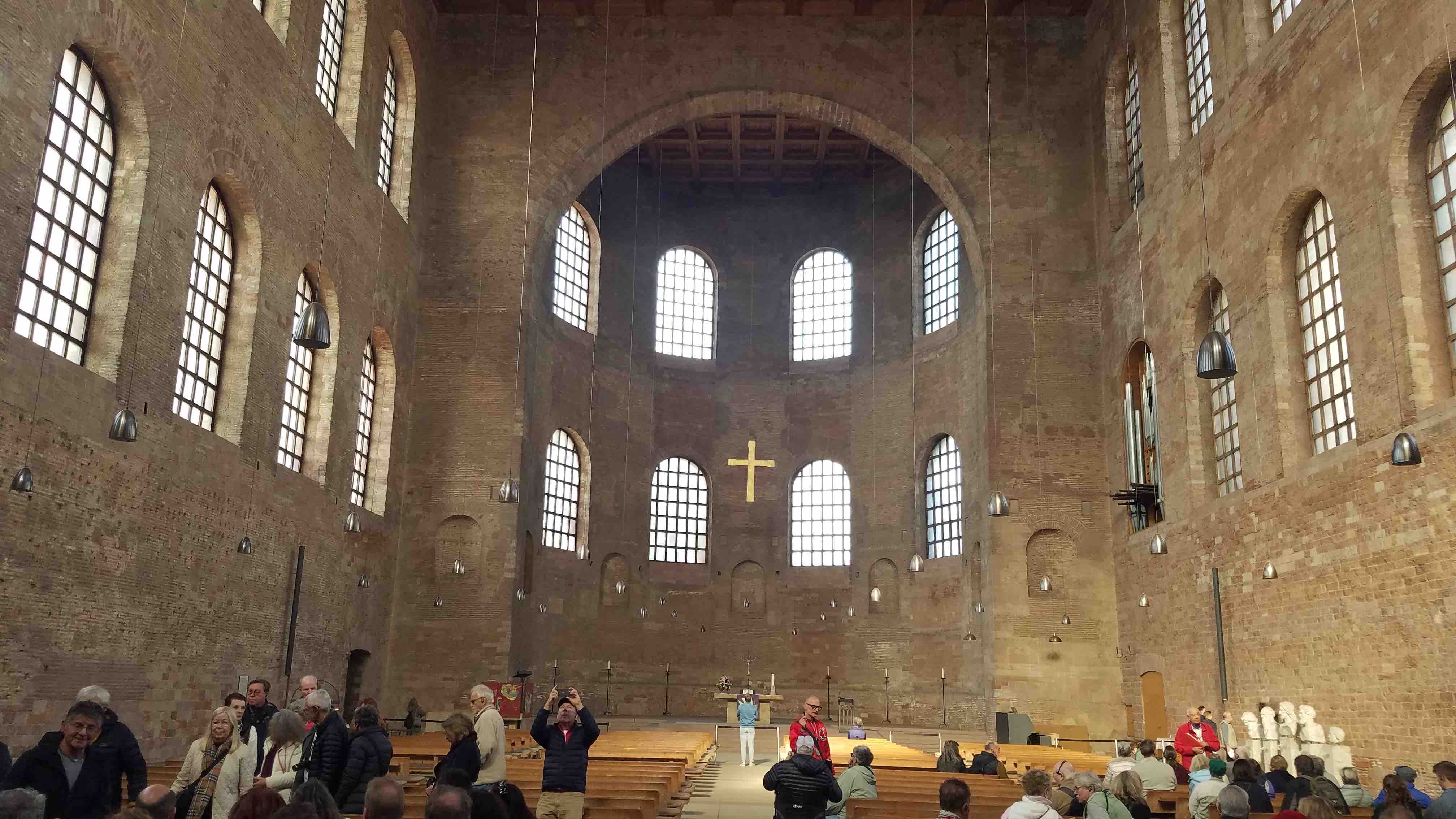




 Veracity