Tag Archives: divine violence

Christmas in Europe: Ypres and Dunkirk

Time for another installment of looking back at a trip my wife and I took this past Christmas to Europe…. I know we are now in mid-April and spring is here, but I still have Christmas on my mind.

Ah, Belgium! Waffles and fries! Unfortunately, both my wife and I got sick within a few days after arriving in Belgium. At first, I was still in better shape than she was, and I was pretty determined to make the most out of our Christmas adventure in Europe. So, while she rested up, I went with our friends Andrew and Shannon to take a “World War 1 & 2” tour day.

Clarke with friends Andrew and Shannon, in front of Cloth Hall, in Ypres, Belgium, which was restored after WWI. A fantastic museum in the Cloth Hall chronicles the story of the Western front in WWI, and the town of Ypres was right on the front lines of the action.


It was only about an hour’s drive from where our friends were living (a bit southwest of Brussels) to get to Ypres, a town that dates back to Roman times, which has seen more than its fair share of battles over the centuries. But the worst of it was in World War I, where Allied (French, British, Canadian, and eventually American) forces exchanged machine gun fire with German forces, in an exhausting effort to move the front line, one way or the other.  When Belgium was attacked by Germany in 1914, it triggered a series of alliance treaties which catapulted France and the British Empire into the war, and within weeks Ypres became a highly contested piece of real estate, a situation which lasted pretty much the entire war lasting four long years.

Ypres was one of the first sites on “the Western front” where chemical weapons, such as chlorine and mustard gas, was first used as a weapon of war. April 22, 1915 marks the day when during the Second Battle of Ypres a war power (Germany, in this case) first successfully used chlorine gas to dislodge enemy troops.  While chemical weapons are technically outlawed by international law now, such was not the case during World War I.

Yet the most bloody battle was the Battle of Passchendaele, where Allied forces were able regain just a few miles of territory from the Germans, but at the cost of some half a million casualties.  Well over a million battle casualties happened among the Flanders Fields surrounding Ypres  during the course of the war, with dozens of cemeteries scattered across the area, where people still visit today. Ypres is once again a beautiful place now, but a little over a hundred years ago, it was devastation. The town was almost completely flattened, and the towering Cloth Hall, pictured above was almost all but obliterated (see below):

Cloth Hall Tower, Ypres, [ca. 1918], Photographer Unknown, Canadian Expeditionary Force albums, Reference Code: C 224-0-0-9-1, Archives of Ontario, I0004760

After touring the museum at the restored Cloth Hall in Ypres, we drove yet another hour west to the English Channel, at Dunkirk, a port and beach resort town in France, for a stop to think about World War II. The story of Dunkirk is most remembered as the last place the retreating British Expeditionary force stood on mainland Europe’s soil in 1940, in the face of encroaching and overwhelming German troops. The then new British Prime Minister, Winston Churchill, insisted that remaining French troops be rescued, along with British troops, and this whole story is associated with the call for private shipping vessels to assist in the miraculously successful evacuation of thousands of military personnel across the English Channel.

The beaches of Dunkirk, France. Thousands of British, and eventually French troops waited on these beaches to be evacuated across the English Channel, as they faced a superior German fighting force, in 1940, in the early years of WW2.


Standing on the beaches of Dunkirk, which in the typical summer months is still a popular resort location, it was hard for me to imagine the helpless feeling many of those soldiers felt, pinned down on these beaches, as occasional German fighter planes sought to strafe the beaches, with RAF fighters in pursuit.

You would think that the horrors of the great world wars of the 20th century would have convinced humanity that guns and bombs do not solve social problems, but the human rebellion against the ways of Christ demonstrate that we are all in need of a Savior. Followers of Jesus do not all agree on how to respond to the dilemmas which wars present, but to make an end of them should be our ultimate goal. While chemical weapons are still a concern, the even more terrible threat comes with nuclear weapons, and there are credible rumors that such weapons might be developed to be used in space, to knock out satellites and cause electromagnetic surges, that can wipe out sensitive electronics here on earth, putting the lives of those who depend upon such sensitive electronics at tremendous risk. With two other major wars happening across the globe right now; namely, the Israeli/Gaza war and the Ukraine/Russia war, there is much that Christians can do to pray for peace. We live in difficult, difficult times.

One more reflection about Ypres is in order….

Ypres was also one of the sites where the “Christmas Truce” of 1914 was celebrated, a brief respite from the atrocities of war, as French, British, and Germany soldiers put down their rifles and played soccer in “No Man’s Land.”  Folk singer John McCutcheon wrote a song about the “Christmas Truce,” which is one of my favorites.

I will have a few more posts looking back on our trip to Europe this past Christmas later in the spring.

Responding to Satan’s Guide to the Bible

We are almost a month away from April Fool’s Day, but one of the latest viral videos on YouTube ain’t no joke. Satan’s Guide to the Bible points to the need for having Christian apologetics in our churches.

Satan’s Guide to the Bible is the work of independent filmmaker, Zeke Piestrup. The premise of the documentary film (mainly cartoon) is actually quite clever. Here you have a Sunday school class, with kids gathering around singing “This Little Light of Mine,” waiting for their Sunday school teacher to arrive. But the real teacher is not in class today, so a substitute arrives as the new teacher: SATAN!

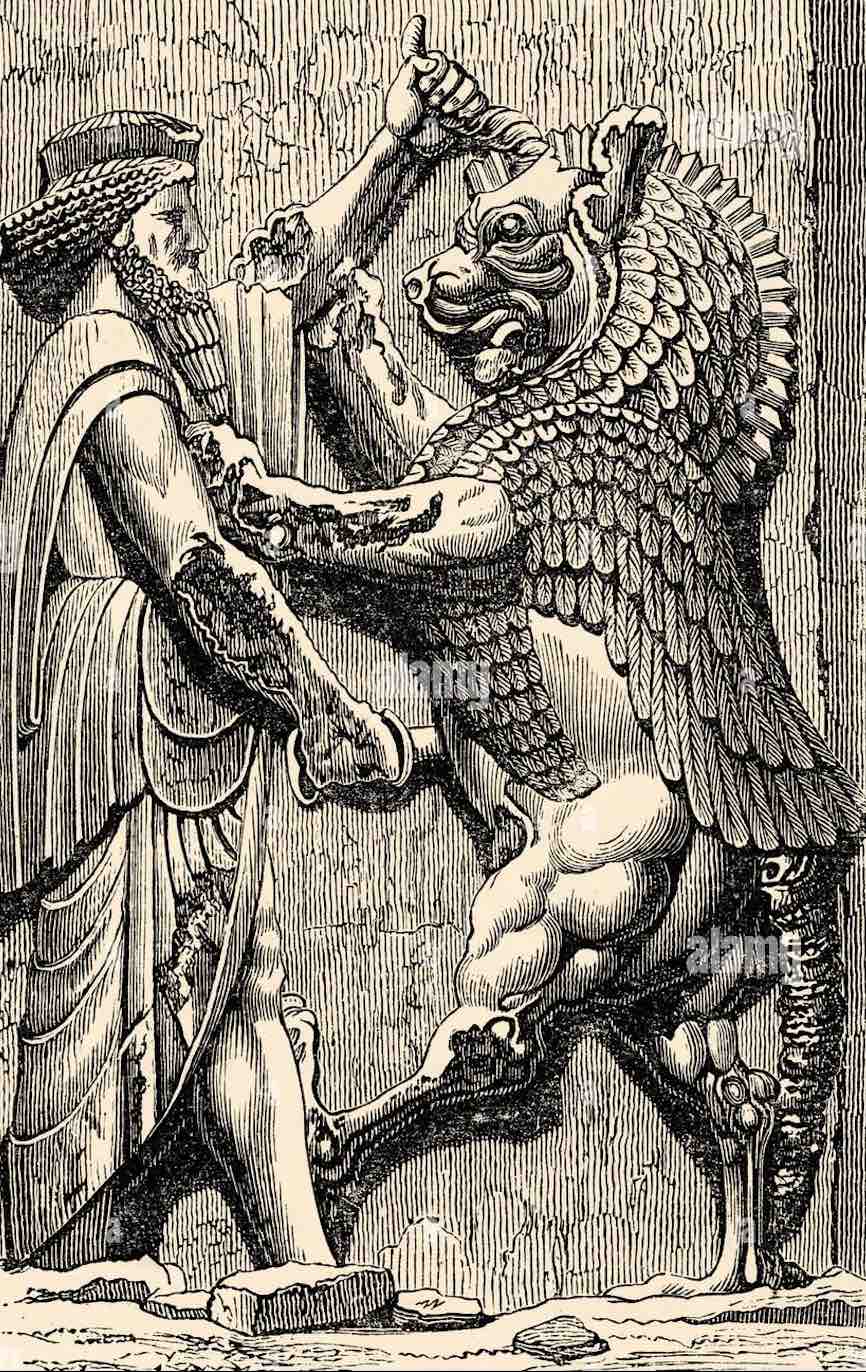
SATAN??? Where did he come from?  ….  In Persian Zoroastrian mythology, Ahura Mazda (the good diety on the left) was locked in combat with Ahriman (the evil deity on the right). Many scholars suggest that the concept of “Satan” was “borrowed” from this dualistic Persian mythology when the Jews were sent off to Babylon after the destruction of Jerusalem and its first Temple. The Persians, who conquered Babylon, allowed the Jews to return to Jerusalem, taking incipient ideas about “Satan” with them. However, a better answer to this is to say that the Jewish encounter with Persian religion served as the opportunity for the Jews to search their own Scriptures, for the source of angelic rebellion against the one True God: Yahweh. There was no need for Jews to “borrow” anything from Zoroastrianism. They had everything they needed in their Scriptures. But they did need to connect the dots to make sense of who “Satan” really was. Progressive revelation regarding the identity of the true rebel against God, “Satan,” the personification of evil, eventually emerged in the writings of the Christian New Testament.  See Veracity review of Anthony J. Tomasino’s  Judaism Before Jesus, for more background.


The Plot Line of Satan’s Guide to the Bible

Satan proceeds to instruct the children that today he will reveal to the student “Bible secrets.”  These “Bible secrets” are secrets that the children’s pastor (“Mark”) knows, which he learned in seminary, but which he keeps hidden from the children, for fear of losing his job. For about the next hour and a half, Satan reveals these “Bible secrets” to the kids, ranging from the idea that the Exodus out of Egypt with Moses splitting the Red Sea never happened, to the controversy that many of the documents in our New Testament are in reality forgeries, meant to deceive the unknowing Bible reader.  Here is the video (but skip on down if you want to get the response):

Satan’s Guide to the Bible uses a lot humor along the way, to keep the viewer engaged. Perhaps the most memorable line is when Jen, one of the kids who is the most skeptical about what Satan is saying, shouts, ““I rebuke you Satan!

Satan’s response? : “Thanks, Jen. Noted.”

I have not worked my way through the entire video yet, but what makes the film so effective is the recorded interviews with leading critical Bible scholars, some of whom are atheists (like Bart Ehrman) and some of whom are progressive Christians (like Dale Allison). Zeke Piestrup has his interview-ees read from their published scholarly books, to reinforce the message. Plus, he pretty much hits just about every major controversial topic regarding the integrity of the Bible and Christian faith claims in general.

A lot of Christians will find the film frustrating, but it is worth asking the question: “What does Satan’s Guide to the Bible get right?” Well, it does point to a real problem, in that while some churches do offer educational opportunities regarding Christian apologetics; that is, learning how to develop an informed defense of the Christian message, many churches do not. Most Christians are woefully unprepared to answer the criticisms raised in this documentary, what the film calls “standard stuff.” But as more and more churches prioritize small group ministries at the expense of structured Christian education, the opportunities to talk about this “standard stuff” in many evangelical churches are few and far between.

It is true that much of what the documentary touches on is “standard stuff” discussed in mainline seminaries. More and more conservative evangelical seminaries also discuss this “standard stuff” today. But you do not have to go get an advanced degree to hear about this “standard stuff.” Most religion departments at secular universities expose their undergraduate students to such “standard stuff”…… And then there are social media platforms, like short Tik-Tok videos, and YouTube, which makes such “standard stuff” readily accessible to any teenager with a smart phone.

Part of what the Veracity blog tries to do is to fill in the gap often left by churches, and offer resources to try to address the criticisms raised in Satan’s Guide to the Bible.  Here is a sample list of previous blog posts that address some specific criticisms highlighted in the video:

The YouTube world of Christian apologetics has responded to Satan’s Guide to the Bible. One of the first one’s to appear is by Mike Winger, which I will highlight below at the bottom of this blog post. Some of Winger’s critics say that Winger overuses the rhetoric of “propaganda” when describing Satan’s Guide to the Bible. Mike has a few technical problems in the first few minutes, and he probably does go overboard with the “propaganda” rhetoric a bit too much, but it is still worth considering what Mike has to say, and I agree with a good majority of Mike’s pushback.

For a deeper dive into the criticism of Satan’s Guide, I would suggest the 3+ hour response video by Michael Jones (and friends) at Inspiring Philosophy (I have it queued up here at the beginning of their discussion regarding the possibility of forgeries being in our New Testament). Here are some of the other timestamps in the response video (roughly) that address certain topics of interest:

Or consider the (much shorter) YouTube review by Roman Catholic apologist, Trent Horn, or explore an even deeper dive with the YouTube playlist by Ratio Christi, a Christian apologetics ministry found on a number of college campuses.

Satan’s Guide to the Bible pokes fun at evangelical Christians, both scholars and apologists with day jobs (like me), so I had to take some jabs with watching the parts that I had gotten through the film already. But if Christians watch something like the Inspiring Philosophy response video above, or the Mike Winger video below, or keep reading Veracity, then this will help equip you to respond to such common criticisms of the Bible, as presented by skeptical non-believers like Zeke Piestrup. As a work of satire, the film provocatively gets its points across, quoting a lot of my favorite Christian scholars out-of-context along the way multiple times, leaving a lot of things left off in a rather one-sided manner.

Is it purely propaganda? I will let you decide.


Why History Matters: That Tucker Carlson – Putin Interview

Here is a quick blog post about the recent Tucker Carlson exclusive interview with Vladimir Putin. I finally made my way through the entire 2-hour video, and I had one big takeaway part.

The posts that I write for the Veracity blog are mainly about Christian apologetics (how to defend your faith in an age when many hold Christian convictions to be rather suspect), but I also write about church history. It is not simply because I am a fanatic about history as a subject (a description I willfully accept), but because I fervently believe that historical amnesia is destructive to the church. The Tucker Carlson – Vladimir Putin interview is Exhibit A in making my case.

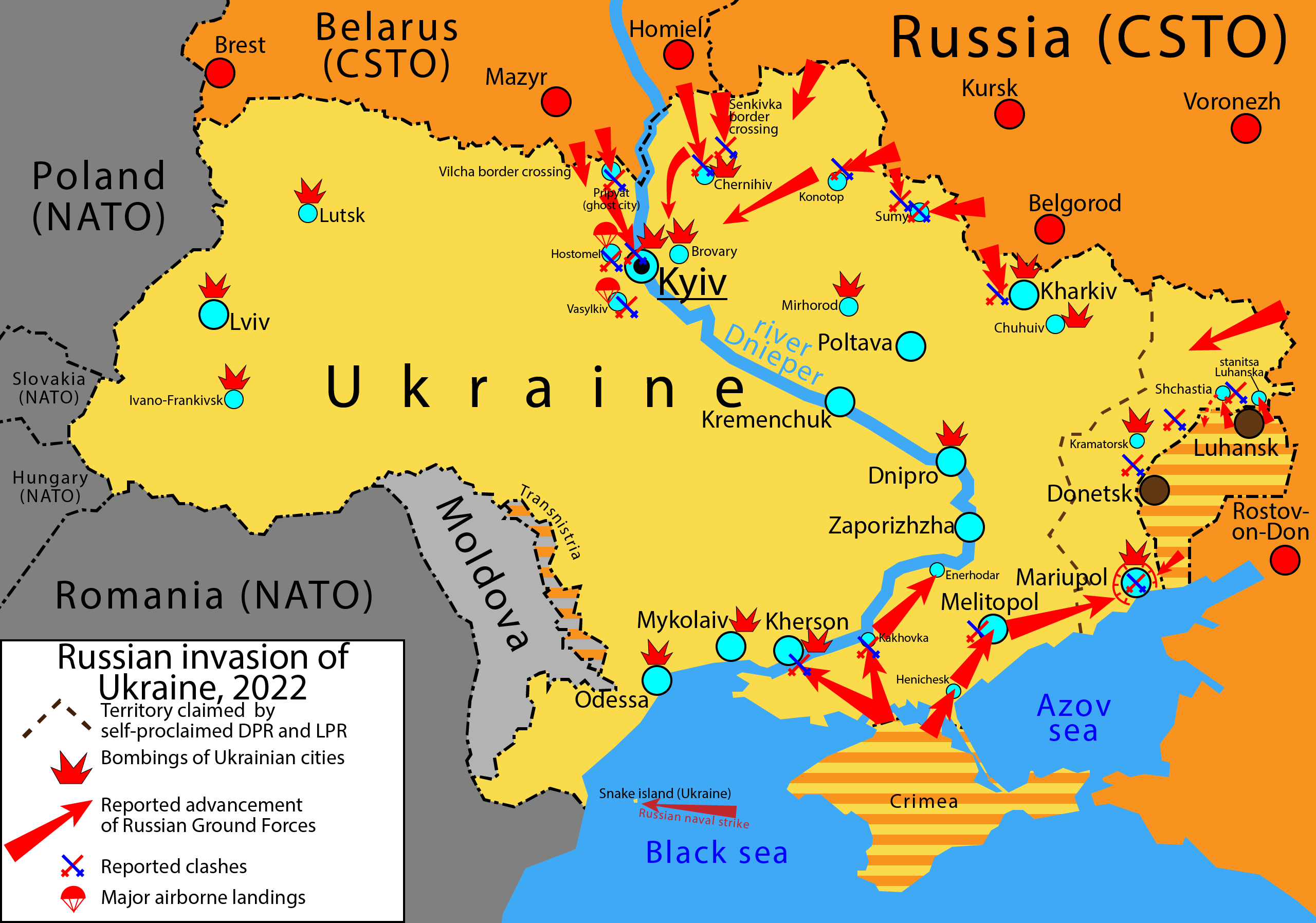
In the interview, President Putin took up about the first half an hour of the interview giving an historical justification for why Russia began attacking Ukraine two years ago.  Putin’s historical argument goes back over 1,000 years, to make the case that Ukraine is really part of Russia. But the argument is not just about ethnic identity. There is a deeply seated theological interpretation of history at work here.

Church history now bubbles up to the top of the 24-hour news cycle.


President Putin is convinced that Russian Orthodox Christianity also binds Russia and Ukraine together into an inseparable bond. The current war in Ukraine is a kind of “civil war” between different factions within the same Russian ethnic and religious family.

Nothing Putin said in the interview is really anything new.  But as historian Tom Holland comments in his reaction to the Carlson – Putin interview, the church history argument being advanced by President Putin is akin to the idea of the British government somehow coming up with a scheme to justify a complete takeover of the whole of Ireland because Saint Patrick came from Britain centuries and centuries ago to establish Christianity in Ireland.

Others have offered additional analysis of Putin’s assertion of certain “facts,” but Tom Holland’s utterly perceptive comments raises a crucial point. When an ideology becomes so strong that it keeps someone from entertaining the possibility that they might be wrong in their understanding of certain historical “facts,” then the consequences can be devastating.

Well over half a million casualties can be associated with the war in Ukraine over the past two years, with hundreds more being killed or wounded every day.

We see the same thing in the Israeli/Gaza conflict, as the body count increases daily, spawned by competing historical and theological narratives that extend back hundreds if not thousands of years.

We see this in disputes in church history, as different flash points continue to divide Christians today, due to theological differences which all look for historical justifications for such divisions.

Why does history matter, and even church history, in particular? Because without a proper grasp of history, the consequences can be devastating.


Divine Violence and the Character of God: by Claude Mariottini. A Review

I had not planned on reading a book on violence in the Bible this year. Then came the crisis in the Ukraine.

Those who know Russian history and Vladimir Putin will tell you that Putin’s reasoning behind the “special military operation” in Ukraine is an effort to revive that ancient vision of a Holy Orthodox Russia, Ukrainians and Russians together as one people, with Moscow at its ecclessial and political center.  Many devout Eastern Orthodox Christians are divided on this perspective, some being on one side and some on the other. But apparently Vladimir Putin accepts this narrative wholeheartedly, and he is willing to commit military boots on the ground to fulfill this vision.

Within a few weeks after the start of the war in the Ukraine, which began in February, 2022, the Russian Orthodox Patriarch Kirill gave a sermon that a number of analysts have interpreted as sanctioning Putin’s efforts to take over Ukraine. Kirill cited what he understood to be “a test of loyalty to [a] new world order… the world of excess consumption, the world of false ‘freedom’.” In particularly, Kirill singled out the Gay Pride parade, which has become a large annual event in the Ukraine, as that litmus test of loyalty. The annual June event was relocated from Kyiv to Poland this year, due to the war. In Patriarch Kirill’s words, “If humanity starts believing that sin is not a violation of God’s law, if humanity agrees that sin is one of the options for human behavior, then human civilization will end there.”

Reconciling conflicted branches of Christianity, as between the Ukrainian and Russian Orthodox churches, is something that every Christian should pray and strive for. Furthermore, many Christians like myself, including many Eastern Orthodox ones, will agree with the Russian Patriarch that same-sex marriage is contrary to God’s purposes, as set forward in the Bible. Division with the Christian church and the secularizing trend of the West is continuing to marginalize historically Christian views of morality, and Ukraine has been no exception. Christians will differ as to how we as believers should respond to the changing moral compass in the world of Western democracies, and how to respond politically. But does any of this serve as a justification for the violence we have been witnessing in the Ukraine for these many months?

Obviously, there are many other reasons why the Ukraine and Russia are at war with one another, that have nothing directly to do with the overtly theological justifications that I am addressing here. There are concerns about NATO expansion, corruption on both sides, etc. that complicate matters. I do not pretend to be a political analyst. But I am most concerned with how the Bible is used, or more properly speaking, misused as a pretense for justifying this war.

In an attempt to justify the war against the Ukraine, Russian President Vladimir Putin quoted from Jesus in John 15:13 for support: “…this is where the words from the Scriptures come to my mind: ‘There is no greater love than if someone gives his soul for his friends.’ ”  To make an appeal to Jesus, as an excuse for an ever expanding list of documented potential war crimes, particularly when many victims of Putin’s war are God-fearing Ukrainian Christians, is a perversion of the worst kind. Furthermore, the threat of a nuclear disaster looms large when Ukrainian power plants have been under the control of Russian forces, where Ukranian workers are under incredible stress and safety concerns are paramount.

When the “culture war” is transformed into a war with tanks and missiles, I can not think of a more dreadful misuse of the Bible than this. Instead of drawing nonbelievers to the Gospel, this type of thinking only repels people from Christianity. Thankfully, there are many, many Christians who are not convinced by President Putin’s application of Jesus’ teachings, and instead insist that the justification for war against Ukraine is a denial of the very Gospel itself.

Most American Protestant Evangelicals probably completely missed the schism in Eastern Orthodoxy back in 2018, when the Ukrainian Orthodox Church split from Russian Orthodoxy after being together for more than 300 years. But I never would have imagined that this theological crisis within Christianity would have precipitated Putin’s decision to wage war in Ukraine just four years later. It just goes to remind me that ideas really matter, especially theological ones.

Continue reading