Tag Archives: complementarian

Elisabeth Elliot: A Life, Becoming, and Being (Part Three)

Elisabeth Elliot was widowed now for a second time. Elisabeth Elliot was forty-six years old when her husband, sixty-four year old Addison Leitch died after a nearly year long difficult battle with cancer.

Almost exactly half of her life was over, with another half remaining by 1977. Going through another period of grief reinforced the reality of suffering, a theme which recurred several times in her extensive writing career. This last period of Elisabeth Elliot’s life catapulted her even further into the public eye, with her advice directed mainly towards women through her radio program “Gateway to Joy,” and more books. Yet it is arguably the most controversial period of her life as well.

Here in this final blog post reviewing several biographies of the life of the iconic 20th-century missionary and author, Elisabeth Elliot (previous blog posts here and here), we examine this last period of her life as told by her biographers.

Elisabeth Elliot’s Mid-Life Crisis

Towards the end of Addison Leitch’s life, Elisabeth began to take on boarders in her home, initially to assist her as she nursed her husband in his final days. Little did she know then that two of these boarders would eventually occupy major roles in her life.

Walter Shephard was a son of missionary parents serving in the Democratic Republic of the Congo. Upon returning to the United States, Walter Shephard as a young adult lived a prodigal life, quite far away from the Christian life modeled by his devout parents. A near deadly car accident got his attention and he eventually gave his life over to Christ. He ended up at Gordon-Conwell Seminary, and took a room in Elisabeth Elliot’s home. He got along extraordinarily well with Elisabeth Elliot, but he soon developed a close friendship with young Valerie, Elisabeth Elliot’s daughter, when she was home from college one semester. The two were married shortly after Valerie graduated from Wheaton College.

Lars Gren was in many ways quite far apart from Walter Shephard. A former salesman who in mid-life decided to go to seminary to become a hospital chaplain, Lars Gren never knew anything about Elisabeth’s fame as the wife of the martyred missionary, Jim Elliot, until after he became a boarder in Elisabeth Elliot’s home. Unlike Walter Shephard, Lars was not a great conversationalist. He did not have the most exciting personality. But what he did have was a sense of faithfulness and loyalty to Elisabeth, having a strong desire to please her, and he seemed always available. He was always there.

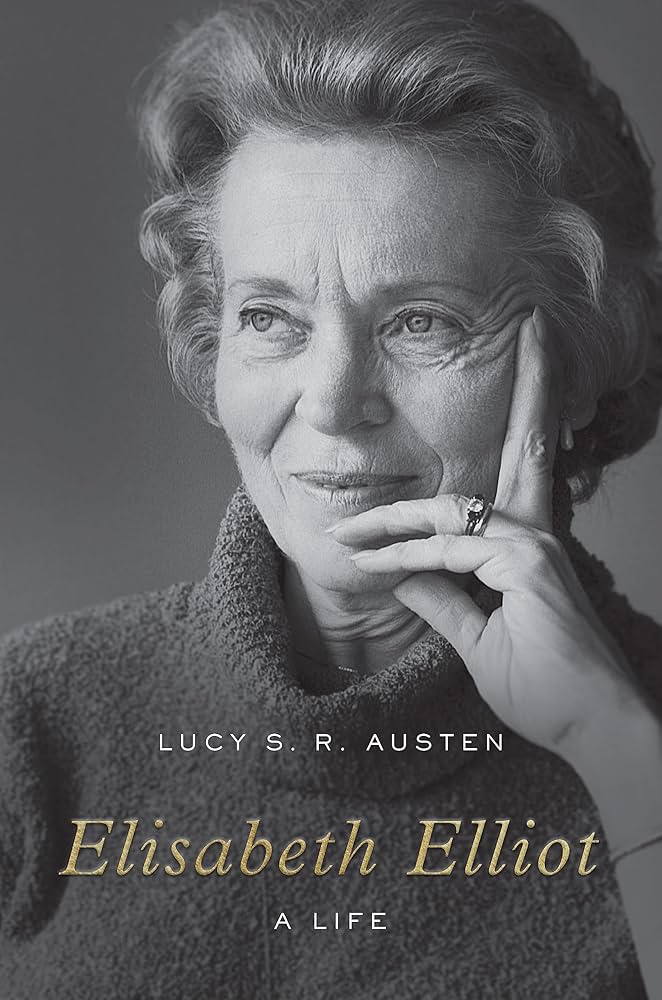
Lucy Austen’s Elisabeth Elliot: A Life, a one-volume biography of Elisabeth Elliot’s life. Along with Ellen Vaughn’s two volume work about Elisabeth Elliot, both authors have some surprises towards the end their work about Elisabeth’s third marriage to Lars Gren.

Continue reading


Elisabeth Elliot: A Life, Becoming, and Being (Part Two)

As a female author and speaker, Elisabeth Elliot stands as one of the most well-known and influential evangelical women in the 20th century. It was after her service for a little over a decade in Ecuador when Elisabeth Elliot returned to the United States in 1963, to her family home in New England, to pursue her work as an author and missionary speaker.

Before her permanent move back to the United States, Elisabeth Elliot had written three books, the first about the five missionaries killed by the Waorani, Through Gates of Splendor, then her biography of her late husband, Jim Elliot, Shadow of the Almighty: The Life and Testament of Jim Elliot, and finally a follow-up book about her missionary work with the Waorani, The Savage, My Kinsman.

Upon returning to New England, she wrote her first and only novel, No Graven Image, and a biography about Kenneth Strachan, the founder of the Latin American Mission,  titled Who Shall Ascend: The Life of R. Kenneth Strachan of Costa Rica. Her 1968 book about her ten weeks in Israel right after the Six-Days War, Furnace of the Lord, sparked controversy, but as she would put it, she was only concerned about “telling the truth,” and letting consequences follow. She would eventually write several other books on various topics, and even becoming a contributor to the New International Version Bible translation project.

Her speaking career gave her opportunities to travel widely, appearing before church gatherings, college student meetings, and other settings where she was asked often to talk about her life as a missionary in Ecuador. Elisabeth Elliot could be quite harsh in her criticism of certain practices by some evangelical missionary agencies, such as the tendency to inflate the number of converts in distant lands in order to raise more money. On more than one occasion, she had conflict sharing the stage with insecure men, who were bothered with the idea of sharing a speaking platform with a woman. Nevertheless, her speaking engagements became a significant component for much of the rest of her life.

But perhaps the most important event in her life during this period was her marriage to a college and seminary professor, Addison Leitch, the focus of this second of a three part series reviewing her life through the lens of her biographers, primarily Lucy Austen and secondarily Ellen Vaughn.

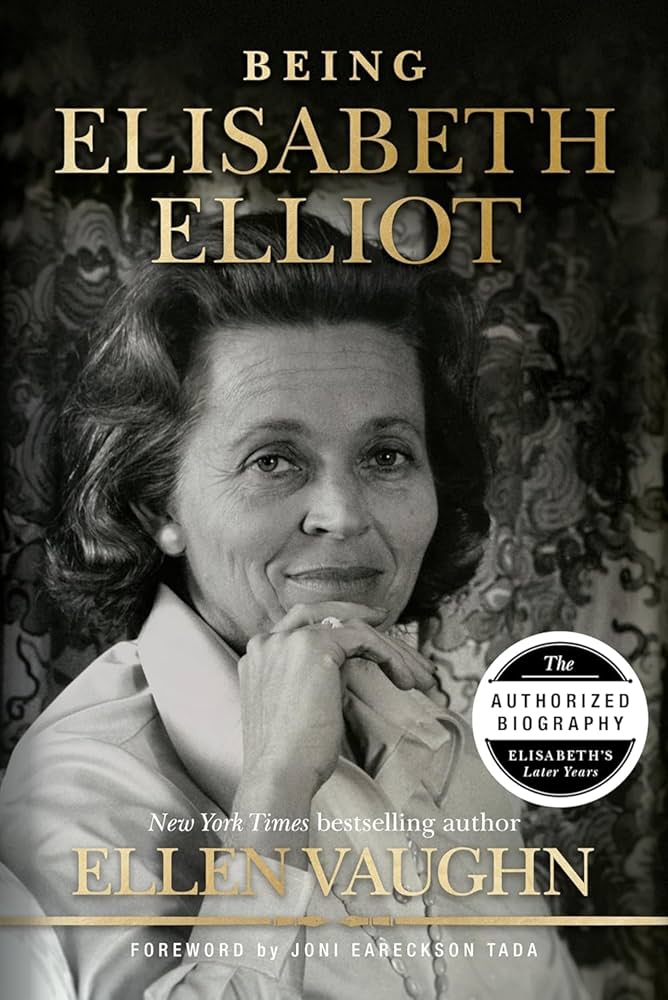
Being Elisabeth Elliot, is the second volume of a two-book biography on the life of Elisabeth Elliot, by Ellen Vaughn. Ellen Vaughn serves on the board for International Cooperating Ministries, founded mainly by Dois Rosser, inspired by his well-loved Bible teacher, Dick Woodward. Vaughn also wrote the book Jesus Revolution, along with Greg Laurie, which became a popular movie in 2023

Continue reading


Elisabeth Elliot: A Life, Becoming, and Being (Part One)

This is your friend, Elisabeth Elliot“….

If you could name just one woman as the most influential evangelical Protestant “saint” since World War 2, Elisabeth Elliot would probably be her.

Elisabeth Elliot was the wife of martyred missionary, Jim Elliot, who along with four other men, died in their attempt to share the Gospel with Ecuador’s reclusive Waorani tribe in the 1950s. After her husband’s death, heavily publicized by Henry Luce’s LIFE magazine, Elisabeth wrote the evangelical classics, Through Gates of Splendor (1957) and Shadow of the Almighty: The Life and Testament of Jim Elliot (1958), catapulting her to be one of the most sought after authors and speakers in the evangelical publishing and speaking world.1

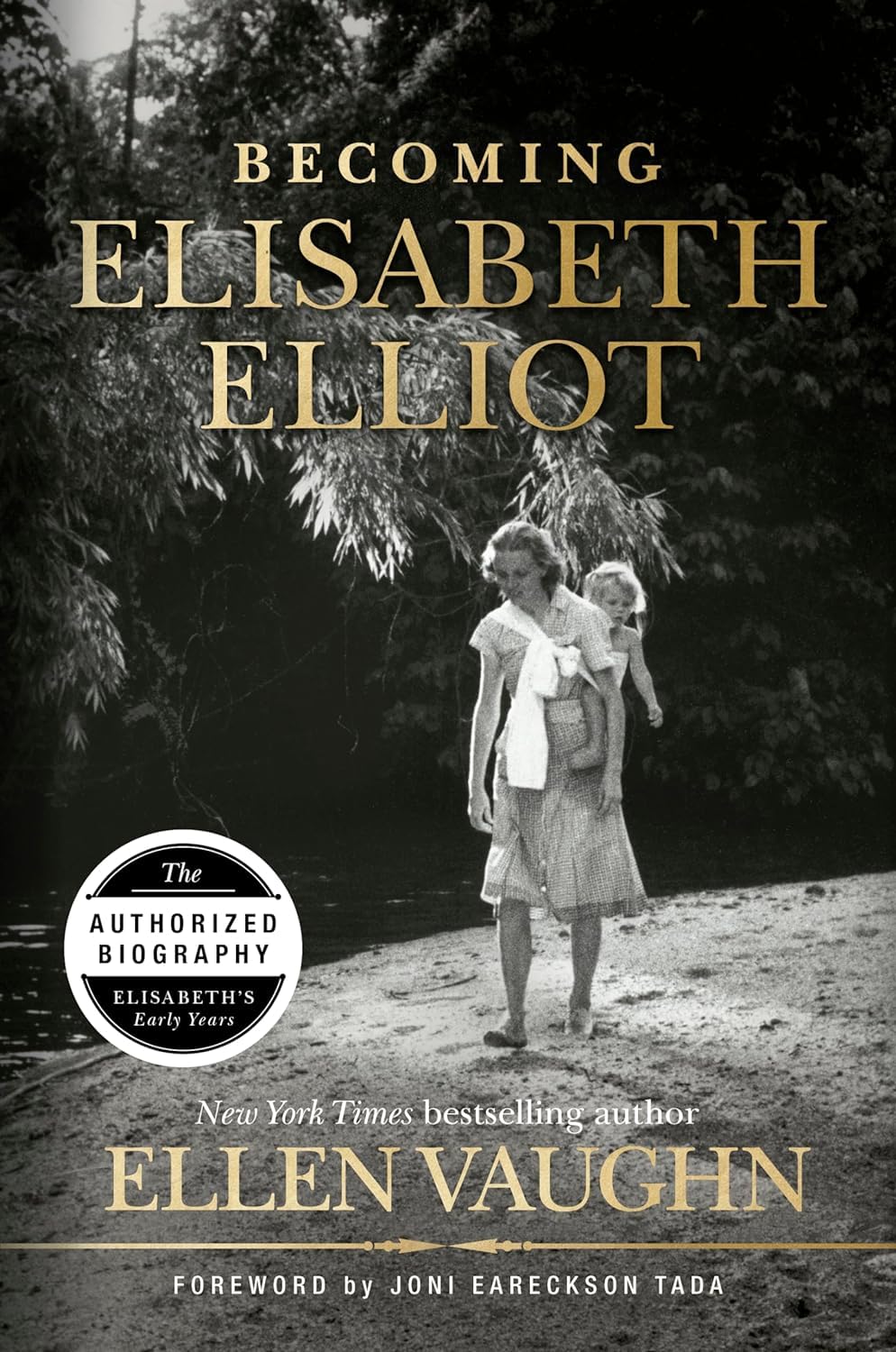
One of the biographies by Ellen Vaughn, about Elisabeth Elliot, which I read for this Veracity blog post series. Becoming Elisabeth Elliot covers the early years of Elisabeth’s life.

Before she died in 2015, Elisabeth Elliot had been a regular speaker at InterVarsity Christian Fellowship’s national conferences. In fact, in the 1970s, she was the first woman to be highlighted as a plenary speaker at the Urbana Missions conference, which InterVarsity holds every three years for college students. Her 1984 Passion and Purity: Learning to Bring Your Love Life Under God’s Control influenced the courtship movement popularized particularly in the 1990’s. Elliot was also a staple in the world of evangelical radio, with her syndicated “Gateway to Joy” program, which ran for 13 years. Elliot was practically minded in her teaching, and yet an intellectual at the same time.

My wife still listens to daily reruns of “Gateway to Joy” on the Bible Broadcasting Network. The tag line in each episode is permanently etched in my mind: “This is your friend, Elisabeth Elliot.”

Fascinatingly complex, Elisabeth Elliot was both an inspirational and polarizing figure. She championed the cause of missionary work, a direct influence on me as I read Shadow of the Almighty back in my college days, a recollection of her first husband and missionary, Jim Elliot. I marveled at the courage and conviction of Jim and Elisabeth Elliot, their mutual heart to reach lost people with the Good News of Jesus, and their willingness to do difficult things for the sake of following Christ.

One of Jim Elliot’s quotes was, “He is no fool who gives what he cannot keep to gain what he cannot lose,” from a journal entry Elisabeth preserved and shared to readers as an author of more than 30 books. She was a profound influence on the lives of many evangelical thought leaders, like Joni Eareckson Tada, and Timothy and Kathy Keller. In her later years, she regularly spoke at homeschooling conferences and Bill Gothard’s Institute in Basic Life Principles events. A young author, Josh Harris, wrote the 1990s evangelical blockbuster I Kissed Dating Goodbye, with a prominent endorsement given by Elliot, one of the primary texts in that decade promoting “purity culture.”

Elliot’s legacy is still revered in many evangelical circles, but this legacy has since come under scrutiny, particularly among younger and more disillusioned readers. Controversially, Josh Harris has since renounced his Christian faith and persuaded the publisher to stop selling copies of I Kissed Dating Goodbye. Harris had become convinced that Elliot’s theology, which promoted “purity culture,” was severely misguided. Bill Gothard, once a well-sought-out resource person for Christian homeschoolers, was forced to step down from Christian ministry, due to accusations about sexual harassment and grooming. Undoubtedly both attractive and controversial, Elisabeth Elliot’s life was anything but boring.

Elisabeth Elliot was a household name for about 50 years for many American Christians until her radio broadcast ended in the early 2000’s. Yet despite her influence, there are still many Christian young people growing up today who know nothing about Elisabeth Elliot.2

It is a complicated legacy, but one worth telling, acknowledging that Elisabeth Elliot was a remarkable, exemplary Christian figure, while still possessing very human faults.


Continue reading


2023 in Review (…. and Book of the Year, Andrew Wilson’s Remaking the World )

We hit near the end of 2023….so, they canceled Christmas in Bethlehem this year….

Just when you thought that the world was trying to get past the COVID pandemic, all sorts of other craziness breaks loose and gets worse. The Ukraine/Russia conflict drags on into its second year, and in recent months, the Israel/Palestinian crisis just explodes.

The horribly inhumane October 7 attacks by Hamas upon Israeli civilians shock us, while Israel’s efforts to eradicate Hamas from Gaza has led to thousands of deaths of Palestinian non-combatants. Has Israel really done enough to avoid civilian casualties? Has there not been some better way to protect children and hospitals? How should we respond to the reports of abuse of Palestinian prisoners in Israeli jails? What about attacks from Israelis against Palestinians who continue to build illegal settlements?  Even the minority of Christians in Gaza have been targeted, caught in the crossfire,  or at least confused with being Hamas. When we learn that 19 of the remaining 1,000 Christians in Gaza have been killed since the beginning of the war, it can not be good.

On the other hand, what do we make of the pro-Palestinian protests chanting “From the river to the sea, Palestine will be free?” Do people really understand what that even means? Are there really that many people who seriously want the complete destruction of Israel? Has anti-semitism all of a sudden shot off the scale?

Maybe so. A December article in the Economist shows the upsetting results of a recent poll: one in five young Americans (between the ages of 18 and 29) believe that the Jewish holocaust in World War II was a myth. Almost no one in my age group or older dismisses the Holocaust as a non-event, but apparently nearly a quarter of American young people today believe that “the Holocaust has been exaggerated.” Seriously ??! Simply mind-blowingly sad how we are raising a generation of youth today who have no adequate comprehension about basic historical facts. Look at the Economist survey for yourself.

We apparently live in very crazy times.

In the background behind these political debates stands the complex history of the land in the Ukraine, and in the Middle East, and how people read the Bible. I spent approximately two years (2014-2016) blogging about the Israel/Palestine situation, and I walked away from that with some changes to my thinking (BONUS LINK: Read about the history of how the name “Palestine” got attached to this Middle Eastern land area).

However, I have no real “silver bullet” solution to something like the current Gaza crisis. But this should not be used as a excuse to stick one’s head into the sand. It is frankly impossible to understand anything about the Israeli/Gaza crisis without digging deep into the Bible. Part of my passion in writing on the Veracity blog is to prod myself to better learn about history and think more deeply about the Bible, in hopes that others might do so as well.

2023 Book of the Year: Andrew Wilson’s Remaking the World: How 1776 Created the Post-Christian West.

Continue reading


A Last Word From Andrew Bartlett

Followers of Veracity will observe an ongoing dialogue that I have had with Andrew Bartlett, the author of Men and Women in Christ: Fresh Light from the Biblical Texts. A barrister from the U.K., Andrew has written a very thorough treatment of the complementarian/egalitarian controversy which continues to divide evangelical churches today, regarding how men and women are to relate with one another in the family and in the church.

Andrew lands on what might be considered as a “moderate egalitarian” position, whereas I am more of a “moderate complementarian,” though I prefer the term “sacramental complementarian.” I can positively recommend his book as it offers a number of thoughtful critiques of my position, even though I am not fully persuaded by his.

I originally wrote a review of Andrew’s book posted here on Veracity. About a month or so ago, Andrew wrote a very engaging rejoinder, which I posted on Veracity. In that blog post, I also offered a response to Andrew’s rejoinder.

I extended an offer to Andrew to “have the last word” in the discussion, and I am posting that here below, which he emailed to me this morning! I originally thought about simply appending Andrew’s final response to the previous blog post, but that was already rather long. So instead I am posting his last rejoinder here in full. Hopefully, I have formatted everything correctly!! As you will see, Andrew and I have much in common, but there are significant differences in our views. But as agreed, I will resist the temptation for further comment here, and refer the reader to our previous engagements in earlier blog posts for my interactions with his view. To get the full-breadth of my engagement on this very important topic, see this introduction with an index of blog posts which I began in 2019

Happy Reformation Day, everyone!  I hope that everyone will look for “fresh light from the biblical texts,” just as the Protestant Reformers did, and just as Andrew Bartlett invites us to do, while simultaneously striving to heal the rifts which divide Christians today, some of which were sadly exacerbated by even the Reformation itself.

Thank you, Andrew Bartlett, for such an engaging conversation!! Without further ado, here are Andrew Bartlett’s “concluding words.”


Continue reading