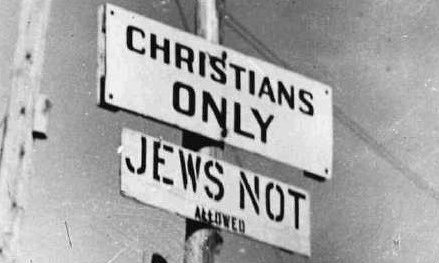
The specter of “replacement theology” still haunts the history of “covenant theology.” But does that necessarily mean that covenant theology is inherently antisemitic?
So, does covenant theology over-allegorize God’s promises to Israel, thus explaining away those promises? Does covenant theology fall susceptible to the charge of “replacement theology?”
When covenant theology talks about the one people of God throughout the whole of the Bible, dispensationalists will often cry foul. To say that the Israel of the Old Testament becomes the church of the New Testament smacks of “replacement theology.” In such a “replacement theology,” it would appear that God has done away with national Israel, in favor of a different people. Old Testament Israel now no longer serves any purpose within God’s ultimate plan, in the era of the New Testament church.
If so, it would appear that God has abruptly canceled His own promises given to Israel. Worse yet, this type of theology lays the groundwork for antisemitism, the hatred of Jewish people.
These are serious claims. How does covenant theology respond? Continue reading
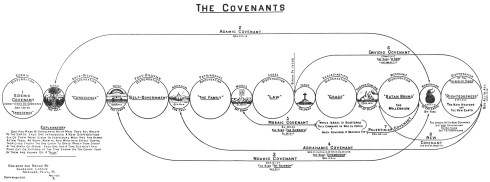
Dispensationalist Bible teacher Clarence Larkin taught the covenants of the Bible, but not in the same manner as the older “covenant theologians” have taught. Click on the image for more detail.
Now, we come to discuss the covenant theology perspective regarding the promise of the land.
Covenant theology has a very long history, going back to the period of the early church. It has been embraced in some form by all of the major Christian traditions, ranging from Roman Catholicism, Eastern Orthodoxy, to the Protestant Puritans of early America. Dispensationalism, on the other hand, is the “new kid on the block,” dating back to about the 1830s.
Covenant theology is based on the idea that there have been a series of covenants that God has established throughout history as described by the Bible. There has been a covenant with Adam, with Noah, with Abraham, with Moses, and so on, but eventually culminating with the covenant of grace as founded by Jesus Christ. But connecting all of these distinct covenants is a central theme that stands in contrast with dispensationalism.
Covenant Theology and the One People of God
Unlike dispensationalism, covenant theology emphasizes that there has been always one, and only one, people of God. The nation of Israel, the Jews, were God’s one people in the Old Testament. In the New Testament, this concept of God’s people has been expanded to include, not just Jews, but also Gentiles. The church of the New Testament is therefore made up of Jews and Gentiles together, all united in one faith in one God, with one salvation. In other words, the ground is level for everyone at the foot of the cross.
Covenant theology rejects the tendency in dispensationalism to try to divide up the people of God into two separate categories, one being “Israel” and the other being the “church.” Such a division threatens to compromise the oneness of the people of God. If that is the case, what does covenant theology say about all of those Old Testament promises made to Israel?
Covenant theology would argue that the promises made to Israel have already been fulfilled by Jesus Christ, or that they will be fulfilled in the future by Jesus Christ. As the Apostle Paul observes when he quotes Genesis 22:18 in Galatians 3:16:
Now the promises were made to Abraham and to his offspring. It does not say, “And to offsprings,” referring to many, but referring to one, “And to your offspring,” who is Christ (ESV).
Covenant theology therefore understands that the promises made to Abraham and his offspring, are not directed primarily to a corporate people, like Old Testament Israel, but rather to the one, Jesus Christ Himself. Yet Jesus Christ has a corporate presence in the world, namely the church of the New Testament, through the indwelling presence of the Holy Spirit. The church is the body of Christ (Romans 12:5). Unbelieving Jews did not recognize Jesus as their Messiah, but some Jews did. The New Testament describes then how believing Gentiles were added to their number to give us the church. 1
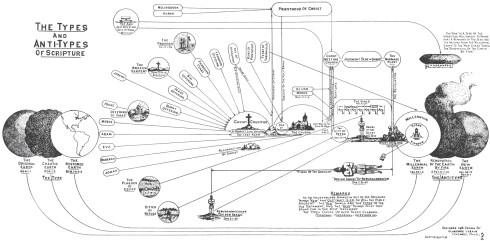
How is covenant theology able to say this? Covenant theology relies heavily on the classic Biblical idea of typology. Typology in Scripture shows us that there are themes in the Bible that prefigure or anticipate the full revelation given later in Scripture. For example, the Apostle Paul says that Adam was a type of the one who is the come, namely, Jesus Christ. Jesus is the “real thing,” whereas Adam points toward Christ, and finds his full purpose and identity fulfilled in Christ.2
Another way that Paul puts it is that he describes many of the things associated with Judaism as but a shadow of the real thing. For example, when talking about the celebration of Jewish festivals and the Sabbath, Paul says:
“These are a shadow of the things to come, but the substance belongs to Christ” (Colossians 2:17).
So, what then, is to be made about the specific promise of the land, as given in the Old Testament to Israel? This promise finds its fulfillment in Jesus Christ, as Christ has revealed that His people will inherit a “new heaven and new earth,” with a “new Jerusalem” (Revelation 21:1-2). The promise is given not to Israel alone, but rather to the church, including both Jew and Gentile (2 Peter 3:13). It is no longer just the land surrounding the Jordan River that is in need of restoration. Rather is the entire whole of creation that is current groaning, awaiting the revealing of the sons of God (Romans 8:18-22). God’s promise of land is no longer limited to a patch of real estate in the Middle East. That promise has now been greatly transformed to include the new, restored creation, available to not just the Jew, but also to the Gentile, through Christ’s body, the church. Race and ethnicity is no longer a point of distinction that can divide us in this new land.3
Therefore, there is no need to wait for God to fulfill a separate land promise to a separate Jewish people. The land of Israel is but a type or shadow of what is to come. God has already fulfilled and will continue to fulfill such a promise among the one people of God, the church, through Jesus Christ. God has kept, and will continue to keep all of His promises, because of the faithfulness of Jesus Christ. For this reason, this approach to covenant theology is sometimes called “fulfillment theology.”4
Covenant theology raises some big questions in the mind of the dispensationalist, as we will explore in our next post.
Notes:
1. See Stephen Sizer, on his commentary of Galatians 3:16 and Genesis 22:17-18. Yet notice the dispensationalist response to this understanding of the singularity of the Abraham’s seed. Michael Rydelnik makes the intriguing counter-argument that the seed has both a singular and collective sense. Genesis 22:16-17a refers to the collective sense of Abraham and his many descendants; that is, Jewish national Israel, whereas in the second half of 17 and Genesis 22:18, as appealed to by Sizer, the sense of seed shifts to the singular. See Michael Rydelnik, The Messianic Hope, p. 143., and the observations noted by this blogger on Rydelnik’s book. But in order for Rydelnik’s view to work, of a dual singular and collective sense of seed, it would require one to interpret Galatians in light of Genesis; that is, interpreting the New Testament in light of the Old. From my perspective, this just seems a rather backwards way of reading the Bible. The traditional approach to Bible interpretation, for almost two millennia, across the two testaments, has normally been the other way around: We are to interpret the Old Testament in the light of the New Testament. But suppose, in this instance, I could be wrong, and Rydelnik is correct? ↩
2. Dispensationalism also relies on typology to tie different parts of the Bible together, but covenant theology is more heavily dependent on the concept of typology. For example, Barry Horner argues that while the Mosaic covenant is indeed a type that anticipates the coming of Christ, the covenant with Abraham is different. Specifically, for Horner, the land promise is never considered to be a type that is fulfilled in the New Testament. Hebrews 8:13 does teach that the old Mosaic covenant has been superseded by the new covenant in Christ, but the Abrahamic covenant, which includes the land promise, is not mentioned, therefore it is still applicable to national Israel’s future (Future Israel: Why Christian Anti-Judaism Must Be Challenged, p. 238-239). How you understand the biblical language of type and its application within Scripture, largely determines how a Christian views the role of Israel. ↩
3. The Christ at the CheckPoint Conference, sponsored several times by the Bethlehem Bible College in Palestine, has produced a set of presentations from different perspectives, many of which discuss the application of covenant theology, within the context of the land promise towards Israel. Hank Hanegraaff is a Christian apologist, known to many radio listeners across the world as “The Bible Answer Man.” In the following video, while he does not use the explicit language of “covenant theology,” Hanegraaff makes his case that Christian advocacy for Zionism is not supported by the Bible. Notes are not available for Hanegraff’s talk, but some of his written views can be found at equip.org, or you can find them in book form in The Apocalypse Code: Find out What the Bible Really Says About the End Times and Why It Matters Today. In fairness, it should be noted that since this video was recorded, Hank Hanegraff converted to the Eastern Orthodox tradition, much to the chagrin of many of his Protestant evangelical supporters. ↩
4. I will get to the question of “replacement theology” in the next post. After the Hanegraff video, you might want to view Gary Burge’s talk at the same conference. Burge is the Christian scholar who debated Michael Rydelnik in the radio show that Rydelnik mentioned in his talk in the previous post, in this blog series. Critics of Hanegraff and Burge say they make too much of an appeal to geopolitical analysis to make their cases. Let the viewer be the judge in the light of the Scriptures:↩
Clarence Larkin was a famous dispensationalist Bible teacher in the 20th century, largely due to his influential charts, such as this one about typology in the Bible. More on the role of typology in our understanding of Israel and the land in the next post in this series. Click on the image for more detail.
As a general rule, when different godly Bible teachers, who seek to honor the Bible as God’s Word, are unable to agree on particular details of Scripture interpretation, then some discretion is in order. Believers should avoid unnecessary dogmatism.
Nevertheless, this does not mean that the underlying issues in the debate are inconsequential. God often uses vigorous discussion to open our eyes more deeply to His Truth.
When it comes to God’s promises, Israel plays a central role in Holy Scripture, so we need to listen to what God’s Word is telling us. Plus, there are still geo-political, cultural issues in the background that often obscure what Scripture teaches in these debates. Therefore, we need to facilitate good conversation in our churches to try to grapple with the larger, broader themes of our underlying interpretive “grids.” So, now we begin to approach the promise of the land, starting from the interpretive “grid” of dispensationalism. Continue reading
I am going partially “off-the-grid” for a few weeks, but I am going to do something different with the Veracity blog, during the meantime…..
I have gone through a number of fits-and-starts, but I am once again returning to a blog post series I started a few years ago, on the topic of “Christian Zionism.” I got interested in this almost 25 years ago, when I took a trip to the Holy Land. During my years in college, I heard quite a bit about “Israel” at church, and the role “Israel” has in Bible prophecy. But my tour to the land of Jesus left me with a lot of questions, as I met some other believers, who complicated my previous narrative about “Israel.” They were reading their Bible in a much different way than did my church in college.
I learned that two people can be “Bible-believing” Christians, and yet look at “Israel” in very different, even conflicting, ways. As with other controversial topics, such as predestination vs. free-will, the age of the earth, the exact nature of the “End Times,” charismatic gifts in the church, women in ministry, etc., such debates can be difficult to work through. As an exercise in learning how to appreciate a different Scriptural perspective, I decided to take some time to really dig into “Israel,” in particular, looking into what the Bible had to say about “Christian Zionism”; that is, what view should New Testament believers have regarding national, ethnic Israel, and God’s ancient promise to Abraham, and his descendants, about the land.
That study eventually led to a series of 18 blog posts (that I never finished… I stopped at #10) on the main topic, with a number of rabbit trail side trips. To narrow the focus, I started the series by way of asking the question, “Was the year 1948, with the founding of the modern-day, nation-state of Israel, a fulfillment somehow of biblical prophecy?” Two years ago, my church held a two-week panel discussion with our pastors, on Romans 9-11, that sought to get at the underlying biblical themes, by attempting to answer that question, broadly speaking (week#1 and week#2).
If you want to get the full-flow of what I have been working on …… you can catch up here…. or start here…. stay tuned to the remaining eight posts in the series, with one post coming every two or three days. As always, please feel free to leave your comments, questions, and challenges….. I will be back after that with something new and different…
Veracity thanks everyone who participated in the panel discussion over the past two weeks in the Williamsburg area, those on the panel, as well as everyone who put their questions forward. I personally learned a lot, and it prompts me to study God’s Word even more! Hopefully, this will be a blessing for those who wrestle these issues, engaging the heart and the mind.
UPDATE: 10/19/2016
Hunter Ruch went to the trouble of going through the video and marking the time segments, allowing you to skip to particular questions you are interested in. Thanks, Hunter (though it was his wife’s idea to do this)!
WEEK 2 (9/4):
Introduction, Review & Definition of Terms by Clarke Morledge (0:00-23:11)
Question #1: Election and Salvation? Why do I need to understand the theory of election? (23:12-34:11)
Question #2: Clarify the use of “Hebrew,” “Israelites,” and “Jews.” (34:12-42:26)
Question #3: The Land of Israel? (42:27-1:00:45)
Question #4: One or Two Paths to God? (1:00:46-1:02:44)
Question #5: The Dangers of Neglecting Ethnic Israel? (1:02:45-1:08:49)
Question #6: Obsession vs. Negative Views of Israel? (1:08:49-1:18:57)





 Veracity