About five years ago, I wrote a Veracity blog post about 2 Kings 2:23-25 , the weird episode of Elisha and the She-Bears. This passage ranks right up there as one of the strangest, if not the most disturbing stories in the Old Testament. To tell the story most bluntly, the prophet Elisha is ridiculed by a bunch of young, little “boys” for the prophet’s “baldness.” Elisha returns the insults by issuing a curse on the boys, and then a pair of she-bears emerge from the woods to maul forty-two of the boys. Pretty weird, right?
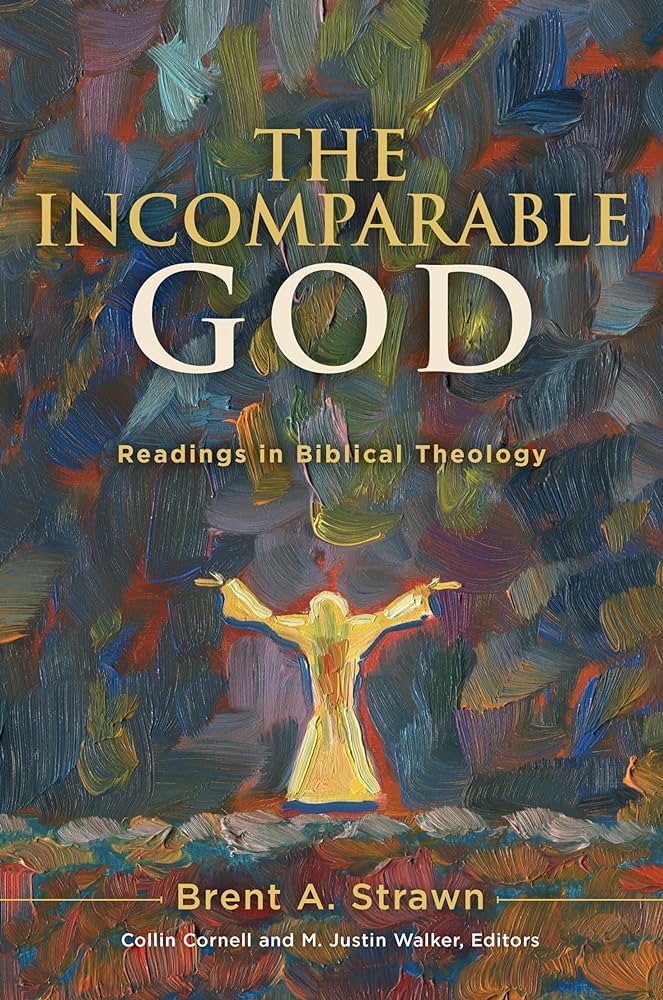
I recently ran across a volume of essays, The Incomparable God, by Brent Strawn, an Old Testament scholar at Duke Divinity School, covering various topics related to the Old Testament, including “Revisiting Elisha and the Bears: Can Modern Christians Read — That Is, Pray — the ‘Worst Texts’ of the Old Testament?” The Incomparable God is very helpful, scholarship of the highest caliber, but it is not for the faint of heart, as the reflections in these essays assume some working knowledge of the Hebrew language. While this is clearly in Brent Strawn’s wheelhouse, the average Christian might not be so well equipped to grasp the nuances of Hebrew waw-consecutive grammar.
If you are thinking, “Waw-what?,” then fear not. In this partial book review, I will do my best to put the cookies down on the lower shelf for you.
Nevertheless, when you try to make sense of something as crazy sounding as the Elisha and the She Bears story, it helps to go to the scholars for some assistance. Believe me, when I first focused my attention on this passage, I needed some help. Now with this new publication of Brent Strawn’s essays, it makes for a good opportunity to revisit this text. So please “bear” with me….. uh, pun intended!
A Very Difficult, Morally-Challenging Bible Passage
“23 He [Elisha] went up from there to Bethel, and while he was going up on the way, some small boys came out of the city and jeered at him, saying, “Go up, you baldhead! Go up, you baldhead!”24 And he turned around, and when he saw them, he cursed them in the name of the Lord. And two she-bears came out of the woods and tore forty-two of the boys. 25 From there he went on to Mount Carmel, and from there he returned to Samaria.“
Back when I was doing youth ministry several decades ago, a very bright female high school student asked me what I thought about this passage of the Bible. I was supposed to be the “Bible expert” but I was stumped.
I had to be honest with her that I had been a believing Christian for at least ten years and I had no clue as to what this was about. 1 and 2 Kings never caught my interest too much, books where Israelite king after Israelite king kept messing up and rebelling against God. Aside from some great stories about Elijah, like the big showdown in 1 Kings 18:16-45 between Elijah and the prophets of Baal at Mount Carmel, 2 Kings just seemed like a rehearsal of names of kings I could hardly pronounce.
I had read the Old Testament back in college for a religion class, but I did not remember reading that particular passage at the time. Perhaps I just skimmed over that part without paying much attention. What I do recall is that I had never heard a sermon preached about Elisha and the She-Bears in any evangelical church that I had been attending that entire ten year period. I read the passage more earnestly now, scratching my head all the way through it, thinking that I might have a good response to give to my high school student friend. But now that it was pointed out to me, I found it jarring. I was dumbfounded. I was stuck.
Have you ever been told that if you are reading the Old Testament you are reading someone else’s mail? If that preacher also tells you that instead the New Testament was mail written to you, then this is a lie your preacher has told you.
While much of the Old Testament was written to ancient Israelites, some of Paul’s letters were written to first century Corinthians. Greco-Roman Corinth culture is far away from the 21st century, says Old Testament scholar Brent Strawn. When we read anything in the Bible, yes, we are reading someone else’s mail, written to people in ancient times, but that same correspondence was also written for us today as Christians.
The fact is that the very issues we run into while reading the New Testament are also present when we read the Old Testament. But not only that, the New Testament is constantly recalling the message of the Old Testament. For without a good understanding of the Old Testament, the message of the New Testament becomes hard to grasp. That is a good argument for not ignoring the Old Testament.
Taking a More Honest Look at the Old Testament
Brent Strawn teaches the Old Testament at Duke Divinity School, and in Lies My Preacher Told Me: An Honest Look at the Old Testament, the author is spinning off from the well-known title by James W. Loewen, Lies My Teacher Told Me: Everything Your American History Textbook Got Wrong. It is a bit of a click-bait title, as Dr. Strawn admits that he has had some wonderful Bible teachers and preachers in his own life. But we as Christians can all use some correction now and then in making changes to bad reading habits of the Bible.
Lies My Preacher Told Me is written in the style of similar short books written by scholars writing for a general public audience, like Dr. Michael Heiser’s 60 Second Scholar series, or the Urban Legends series, pioneered by David A. Croteau, among other scholars in that series. In Dr. Strawn’s short and concise book, he outlines ten mistruths that are in need of correction:
Mistruth 1: The Old Testament is “someone else’s mail.”
Mistruth 2: The Old Testament is a boring history book.
Mistruth 3: The Old Testament has been rendered permanently obsolete.
Mistruth 4: The Old Testament God is mean . . . really mean.
Mistruth 5: The Old Testament is hyper-violent.
Mistruth 6: David wrote the Psalms [and other simplistic historical assertions]
Mistruth 7: The Old Testament isn’t spiritually enriching.
Mistruth 8: The Old Testament isn’t practically relevant.
Mistruth 9: The Old Testament Law is nothing but a burden, impossible to keep.
Mistruth 10: What really matters is that “everything is about Jesus.”
Brent Strawn is not just an author of a short pithy book like Lies My Preacher Told Me. He is also a well-respected Bible translator, most significantly the editor of the Old Testament portion of the Common English Bible.
Dr. Strawn has done a great service to the church for exposing and correcting these ten mistruths. Nuggets of truth are sprinkled throughout Lies My Preacher Told Me.
How about this one on page 23?: Whenever I have read Jesus’ Sermon on the Mount, Jesus goes through a series of “you have heard it said, but now I tell you this...” sayings. For years I thought that all of them, such as “love your neighbor,” were all in our Old Testament. But the second half of that one found in Matthew 5:43, “hate your enemies,” simply is not found in the Old Testament.
Shocker of shockers!! So, where did this “hate your enemies” come from? It actually comes from the Community Rule of the Dead Sea Scrolls, 1QS 9.21, to be more precise, which endorses hating those who are wicked. Did the Jewish community at Qumran subscribe to the idea that this Community Rule was also part of Sacred Scripture? This little nugget suggests that the definition of what constituted Jewish “Scripture” among some Jewish groups in Jesus’ day was perhaps slightly broader than what we have in our Old Testament today.
Though hidden in one of the very few footnotes in the book, Dr. Strawn succinctly handles a rather difficult question regarding the nature of the Old Testament canon of Scripture. Many Christians often assume that the list of books included in our Old Testament today was well settled by the time of Jesus. Not so. It took another century or more after the days of Jesus before the Jewish community finally settled on a definitive list of books to be included in their Hebrew Scriptures, a listing that eventually was picked up and settled upon by the Protestant movement, in the 16th century. However, if this makes someone nervous, it is abundantly clear that the books of our Old Testament today were all composed before the time of Jesus, and enjoyed their authoritative status in Jesus’ day.
In mistruth #9, Dr. Strawn tackles the common misperception that for the Jews the Old Testament Law was impossible to keep, which is why Christianity teaches a message of grace, as opposed to the Jewish message of salvation by works. However, the Apostle Paul tells us in Philippians 3:4-6 that prior to being a Christian, as a Pharisee he was “blameless” under the Law.
“Blameless?” How could Paul say that if indeed the Law was impossible to keep? Rather, it is Jesus, in the Sermon on the Mount, who insists that no one can enter God’s Kingdom without exceeding the righteousness of the scribes and Pharisees. Jesus himself sets the higher standard, thereby exposing everyone’s need for grace, Jew and Gentile.
In the final mistruth, Dr. Strawn gives a more modest and accurate estimate of what constitutes Old Testament prophecy concerning the coming of Jesus. A number of Christian apologists tend to over-inflate claims about how much the Old Testament predicts the coming of Jesus as the Messiah. So while certain Old Testament texts could be read in a way such that we can find somewhere around “300” to even “400” Old Testament prophecies being fulfilled in the New Testament by Jesus, Dr. Strawn estimates that the number should be more modestly put at around thirty-nine. Though not zero, 39 is significantly less than 300 or 400.
But why only about 39? Why not 300 or 400? Well, a lot of the mismatch has to do with how Christians believe a prophecy is being fulfilled in Jesus. It turns out that the interpretation of prophecy is generally more complicated than that depicted by popular thinking.
Having worked previously with a Jewish colleague for a number of years, I have come to realize that while a strong case can still be made for predicting the coming of Jesus from the Old Testament, overzealous attempts to read Jesus almost anywhere into the Old Testament can backfire when conversing with a Jewish person well-informed about their Hebrew Scriptures. A modest defense for the Christian faith is far more effective than making extravagant claims which can be easily shot down by a non-believer better informed than we are.
One Pushback For Lies My Preacher Told Me
Alas, if I had but one pushback against Lies My Preacher Told Me, it would be this: Brent Strawn makes plentiful use of the Common English Bible when quoting from Scripture in his book, page after page, which is both good and not so good.The “not so good” might limit the outreach capability of Dr. Strawn’s book. I hesitate to pick on an esteemed scholar who has poured himself so much into a bible translation. It feels like telling someone that their baby is both cute and ugly at the same time. Yikes. I do not mean to do that so I hope this comes across in the right way.
First, the good: The Common English Bible (CEB) is quite a fine translation in that it offers a very accessible level of reading without becoming too loose, as paraphrases tend to be. Something like Eugene Peterson’s The Message is very readable, but the Common English Bible (CEB) is just as readable as The Message, if not more so, but the CEB stays much closer to the actual Scriptural text. I think of the CEB as the “entry level” version to the more academic New Revised Standard Version (NRSV) of the Bible. Nerdy Bible geeks like me generally like the NRSV, but busy soccer moms on the go will find the CEB more suitable. I like reading the CEB when desiring to tackle longer portions of the text, and I value its freshness and willingness to break out of a traditional mold.
Read Ezekiel 23:20 if you want a good jolt…. Just do not read it with your small children present….
….Trust me on this one.
On the downside, the Common English Bible (CEB) is marketed more towards mainline Protestant churches and less towards conservative evangelical, Roman Catholic, and Eastern Orthodox churches. So while a number of evangelical scholars like Brent Strawn contributed to the making of the CEB, the main publishing houses for the Common English Bible are associated with the Disciples of Christ, the Presbyterian Church U.S.A., the Episcopal Church, the United Church Christ, and the United Methodist Church, which are perhaps the most theologically liberal denominations in America today. As noted in a recent “Ready to Harvest” YouTube video, the Pew Center reports that these mainline Protestant churches sadly are heading towards a speedy decline over the next few decades. Miracles can still happen, but it is unlikely that the CEB will have the widest reach when its primary reading audience gets smaller and smaller every year.
Furthermore, in an effort to make the text more readable there are times when the CEB over-interprets the text in ways that can obscure rather than clarify. For example, the CEB likes to use the terminology of “the Human One” when giving an alternative to the more traditional “the Son of Man,” the former which seems a little gender-inclusively clunky.
Towards a Better Way of Reading and Appreciating the Old Testament
But do not let this one pushback dissuade the reader from picking up a copy of Lies My Preacher Told Me. The chapters are short but the content found therein is rich with golden nuggets that can nourish the reader and get them excited about the Old Testament.
The second century heterodox preacher in Rome, Marcion, will forever be associated with the sometimes unfortunate Christian dislike, or even hatred, of the Old Testament. Marcion is known to be the first churchman to draft a list of what he considered to be canonical Scripture for Christians, and yet he conveniently scratched the entire Old Testament off of his list. For Marcion, the Old Testament God was not the God of the New Testament. That made his Bible significantly shorter, but the historically orthodox Christian community believed that Marcion stripped out the riches of the Old Testament, thus emasculating the Bible as a whole. Marcion was rightly condemned for his heresy. Be ye aware, there are Marcions still lurking around in many corners of the church today.
Brent Strawn is committed to encouraging the revived use of the Old Testament among Christians. Lies My Preacher Told Me serves as a pithy, clear, and helpful resource for promoting an increase of interest in the Old Testament, something Marcion would surely have hated.
I suggested to Brent that he should have a portrait of Marcion in his home, and use it as a dart board. Perhaps he will make a meme out of that, and we might find it in his next book. We shall see!
.
For the “real” Bible nerds, you might be interested in the following interview with Dr. Brent Strawn. Enjoy.






 Veracity