Tag Archives: atonement

Did God Kill Jesus? The Cross of Christ, by John R. W. Stott, A Review

All Christians believe that Jesus died for our sins. But what exactly does that mean? Christians disagree as to how Jesus died for our sin. Getting our theology right about the meaning of the cross tells us a lot about how we view the Gospel.

I first read John R. W. Stott’s The Cross of Christ some thirty years ago. Stott, one of the most respected evangelical leaders of the late 20th century, died fifteen years ago in 2010, having been one of the U.K.’s finest and most influential preachers. Stott teamed up to support evangelist Billy Graham for crusades across the United Kingdom in the 1950s, to pioneer the Lausanne movement which championed world missions. But Stott was also a prolific author, and in my view, The Cross of Christ stands as his finest book, giving us a mature, robust understanding of what it means to say that “Jesus died for our sins,” defending in irenic fashion the doctrine of penal substitutionary atonement against various critics.

The Cross of Christ has a message that is needed today. There are very good reasons why The Cross of Christ is a classic, and why Christians should continue to read it.
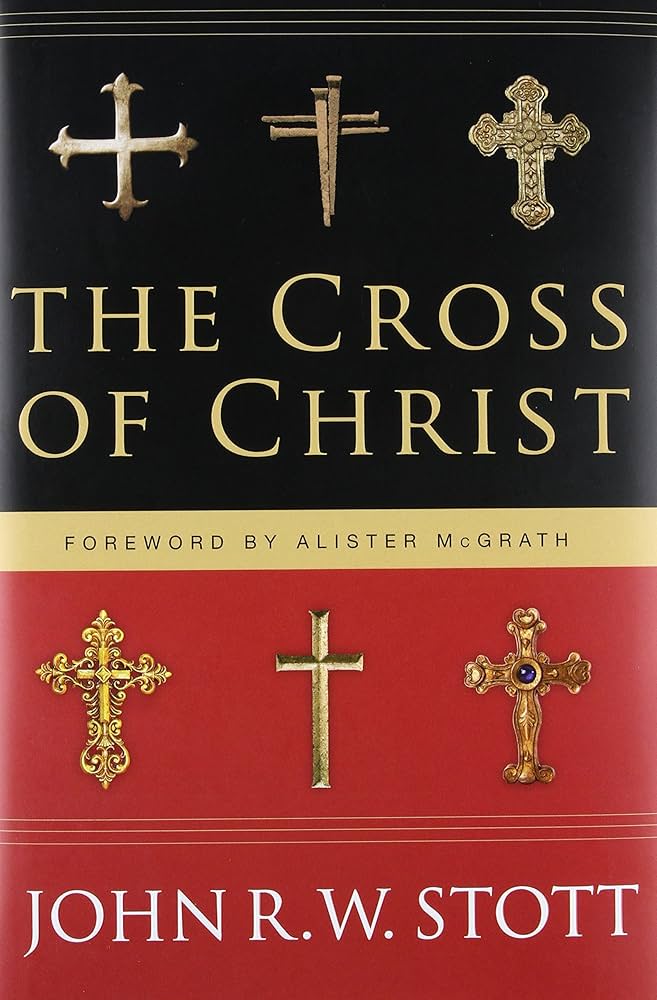
 

John R. W. Stott’s The Cross of Christ remains a classic defense of an evangelical view of the atoning work of Christ on the cross, offering a nuanced perspective on penal substitutionary atonement theory.


The Controversy Over Penal Substitutionary Atonement

The idea of “penal substitutionary atonement” is controversial today, even in evangelical circles. Google’s AI engine tells us that penal substitutionary atonement, abbreviated here as “PSA,”  is a “theological concept explaining Jesus Christ’s death on the cross as a substitutionary punishment for humanity’s sins. It posits that Christ bore the penalty (punishment) that humanity deserved for sin, satisfying God’s justice and allowing for forgiveness and reconciliation.” To talk about “penal substitutionary atonement” (PSA) is a mouthful, and as result, can be a bit confusing to figure out.

For example, Missouri pastor Brian Zahnd acknowledges the atonement work of Christ on the cross, but he rejects the concept of “penal substitution.”  Jesus died for our sins, but not in a PSA way. Zahnd believes that the concept of “penal substitution” makes God into a monster, a monster who would kill even his own Son:

Elsewhere, Zahnd has written:

“Some theories [of atonement] are merely inadequate, while others are repellent. Especially odious are those theories that ultimately portray God as sharing the petty attributes of the primitive and pagan deities who can only be placated by the barbarism of child sacrifice….. The cross is many things, but it is not a quid pro quo to mollify an angry God….

…. The cross is not a picture of payment — the cross is a picture of forgiveness. Good Friday is not about divine wrath — Good Friday is about divine love. Calvary is not where we see how violent God is — Calvary is where we see how violent our civilization is. The cross is not where God finds a whipping boy to vent his rage upon — the cross is where God saves the world through self-sacrificing love…

…. When the cross is viewed through the theological lens of punishment, God is seen as an inherently violent being who can only be appeased by a violent ritual sacrifice.”

Is PSA about finding a “whipping boy” to vent God’s rage upon? Zahnd rejects the penal language about atonement, such as  “the theological lens of punishment,” and the language of substitution does not fare much better. If all you heard or read about PSA was from Brian Zahnd, you might think that he is right, and that PSA is not a good way to think about the cross of Christ.


Christians Singing About Penal Substitutionary Atonement

And yet, Christians sing about it all the time. All of the buzzwords which Zahnd finds as “odious” are embedded in dozens of worship songs sung nearly every week in evangelical churches.

Consider the “wrath” of God in Stuart Townend’s and Keith Getty’s widely sung “In Christ Alone”:

“On that cross, as Jesus died, the wrath of God was satisfied.”

Or consider the language of “payment,” as in various contemporary versions of the 19th century hymn “Jesus Paid It All,” originally written by Elvina Marble Hall, in 1865:

“Jesus paid it all, all to Him I owe, sin had left a crimson stain, He washed it white as snow”

And this other line:

Oh, praise the One who paid my debt,  And raised this life up from the dead.

Or even a fairly recent song by Shane and Shane, “All Sufficient Merit”:

“It is done, it is finished, no more dеbt I owe
Paid in full, all-sufficient merit now my own”

Reach back into 18th century for this classic from Charles Wesley, “And Can It Be?

And can it be that I should gain
An int’rest in the Savior’s blood?
Died He for me, who caused His pain?
For me, who Him to death pursued?
Amazing love! how can it be
That Thou, my God, should die for me?

Lots of substitution language in Wesley’s famous hymn. Too much for Brian Zahnd?

You would have to purge hymnals and Powerpoint slides of projected screen lyrics of a lot of standard worship song phrases to remove the references which Zahnd finds objectionable.


Will The Real “Penal Substitutionary Atonement” Please Stand Up?

But is Zahnd somehow onto something? Much of the controversy comes down to how key terms like “penal” and “substitutionary” are defined which makes the difference.

Frankly, you can find evidence to support Zahnd’s critique by listening to various sermons given by some vigorous defenders of PSA. Minneapolis preacher John Piper has given the following explanation as to when Caiaphas, the high priest of the time of Jesus’ crucifixion, in John 11:50, said that was better to have Jesus killed than it was that the whole nation should perish:

“In the mind of Caiaphas, the substitution was this: We kill Jesus so the Romans won’t kill us. We substitute Jesus for ourselves. In the mind of God, the substitution was this: I will kill my Son so I don’t have to kill you. God substitutes Jesus for his enemies.”

Did God really kill Jesus? Did the Father really kill his Son? Zahnd would probably interpret Piper as saying yes, that God, the Father, killed the Son,  in order to satisfy the wrath of the Father against sinful humanity. For Zahnd, Piper’s explanation makes Jesus, as the Son, into “a whipping boy to vent [God’s, the Father’s]  rage upon,” the very idea which Zahnd rejects as being the core of PSA.

This is where Stott’s chapter on “The Self-Substitution of God” is alone worth the price of the book.  Take note of what John Stott says about certain well-intended defenders of PSA, who end up delivering a caricature of what the work of Christ is really about on the cross:

“In the one [caricatured] case Christ is pictured as intervening in order to pacify an angry God and wrest from him a grudging salvation. In the other [caricature], the intervention is ascribed to God, who proceeds to punish the innocent Jesus in place of us the guilty sinners who had deserved the punishment. In both cases God and Christ are sundered from one another: either Christ persuades God or God punishes Christ. What is characteristic of both presentations is they denigrate the Father. Reluctant to suffer himself, he victimizes Christ instead. Reluctant to forgive, he is prevailed on by Christ to do so. He is seen as a pitiless ogre whose wrath has to be assuaged, whose disinclination to act has to be overcome, by the loving self-sacrifice of Jesus.

Such crude interpretations of the cross still emerge in some of our evangelical illustrations, as when we describe Christ as coming to rescue us from the judgment of God, or when we portray him as a whipping-boy who is punished instead of the real culprit, or as the lightning conductor to which the lethal electrical charge is deflected.”  (Stott, The Cross of Christ, p. 149-50)

Ah, here we see Zahnd’s despised “whipping-boy” complaint against PSA. However, in contrast, Stott sees certain “whipping-boy” illustrations as indicative of caricatures which distorts a genuine understanding of PSA. It makes the casual observer wonder what PSA really is all about.


It Is Possible to Misread the Bible in Support of PSA

Furthermore, Stott is careful not to overstate his case. For example, it is quite common in evangelical circles to say that Jesus paid the debt for our sin in full on the cross, as many worship songs declare. In support of this view, Jesus’ last words on the cross as recorded in John 19:30, as “it is finished,” is translated from the single Greek word tetelestai.

Many bible teachers have been taught, and pass onto their congregations, particularly over the past hundred years, that this word tetelestai  in an economic context means “paid in full,” which fits in nicely with the motif of penal substitutionary atonement. In the early 20th century, it was commonly thought that tetelestai was found on ancient papyri receipts in Egypt denoting a paid off debt or taxes.

Unfortunately, newer research has shown that this identification for the word “tetelestai” is actually erroneous. Such papyri receipts have a word close to tetelestai  on them, but it is indeed different from what is cited as Jesus’ last word(s) in John 19:30. In other words, neither Jesus’ hearers nor John’s readers would have readily picked up on the idea that Jesus acknowledged paying off a sin debt by uttering these word(s).

Thankfully, John Stott does not lead the reader down that rabbit hole, which is actually a dead end. Stott goes along with the majority of English translations today of John 19:30 to argue that tetelestai  simply means “it has been and will for ever remain finished” (Stott, p. 82). Like previous interpreters such as Leo the Great in the 5th century and Martin Luther in the 16th has suggested, for Jesus to have said “it is finished” would sufficiently mean that the work of Christ, however it would be understood, was finished, and that Scripture was indeed fulfilled.

We may still conclude that Jesus paid off our sin debt in full, after deeper reflection. But it would be overstating the case to argue that Jesus’ last statement on the cross specifically says this.


Self-Substitution On God’s Part Regarding the Cross

The key to grasping how John Stott can defend penal substitutionary atonement, while rejecting well-intended yet misguided caricatures, is in Stott’s concept of self-substitution, whereby God the Father through his Son offers himself as the very substitute to satisfy his own wrath against human sin.  In Stott’s framework, there is no need to pit the wrath of the Father against the love and mercy of the Son. The Son and the Father are not working at cross purposes against one another. The Son shares in the wrath of the Father against sin. Likewise, the Father shares in the love and mercy of the Son on behalf of sinful humanity.

As Stott would go onto say:

“We must not, then, speak of God punishing Jesus or of Jesus persuading God, for to do so is to set them over against each other as if they acted independently of each other or were even in conflict with each other. We must never make Christ the object of God’s punishment or God the object of Christ’s persuasion, for both God and Christ were subjects not objects, taking the initiative together to save sinners. Whatever happened on the cross in terms of “God-forsakenness” was voluntarily accepted by both in the same holy love that made atonement necessary…There was no unwillingness in either. On the contrary, their wills coincided in the perfect self-sacrifice of love.”  (Stott, p. 151)

In a certain broad sense, John Piper might be correct to say that out of respect to God’s sovereignty and his providential activity in the world that “God killed Jesus.” But the saying is misleading. Saying that “God killed Jesus” is not that much different from saying that when your dear grandmother dies of cancer that “God killed your grandmother.” Really? With all due respect to John Piper, Piper’s comments are highly problematic.

The danger in making such an assessment is that it invites the kind of caricatures which critics of PSA, such as Brian Zahnd , will make against the PSA position as a whole.  Honoring the sovereignty of God as part of a theodicy, which says that even in the face of evil, God’s will remains supreme, arguably means well. But if it leaves the impression that God is somehow a capricious monster, whose anger must be placated in a manner no different than the pagan gods, then the assessment is counterproductive at best, a horrific scandal at worst.

Rumors of that scandal only encourages preachers like Brian Zahnd to double-down on their critique of PSA, as a corruption of pure Christian doctrine.

Thankfully, John Stott’s position avoids the pitfalls exposed by both misguided attempts to rescue the pure atoning work of Christ away from the supposedly painful grip of “penal substitution,” on the one hand, and overzealous apologetics which say that “God killed Jesus,” on the other.  I have had to re-read these sentences from John Stott several times to let it all sink in, as Stott sprinkles in quotes from P. T. Forsyth, the late 19th and 20th century Scottish theologian:

“[God] was unwilling to act in love at the expense of his holiness or in holiness at the expense of his love. So we may say that he satisfied his holy love by himself dying the death and so bearing the judgment which sinners deserved. He both exacted and accepted the penalty of human sin. And he did it ‘so as to be just and the one who justifies the man who has faith in Jesus’ (Rom. 3:26). There is no question now either of the Father inflicting punishment on the Son or of the Son intervening on our behalf with the Father, for it is the Father himself who takes the initiative in his love, bears the penalty of sin himself, and so dies. Thus the priority is neither ‘man’s demand on God’ nor ‘God’s demand on men’, but supremely ‘God’s demand on God, God’s meeting his own demand’ “(Stott, p. 152).

Does Stott’s characterization of God’s “self-substitution” regarding the cross of Christ go against any traditional sense of penal substitutionary theory? Is Stott redefining terms like “penal,”  “substitution,” or even “atonement” to make PSA as traditionally understood unrecognizable? To my knowledge, Stott stands firmly within the traditional camp while rightfully rejecting extreme, excessive expressions of the traditional PSA view. I find it curious that contemporary critics of PSA, including those acting in good faith who are not merely throwing stones at PSA with overworn tropes (like saying that Jesus’ death on the cross was an act of “cosmic child abuse”), rarely interact with Stott’s classic work on the topic.  If I am wrong about this, I would like to be corrected.


Applying the Doctrine of the Cross of Christ

While Stott’s careful discussion about God’s self-substitutionary act of atonement through the work of Christ on the cross is the most valuable contribution of Stott’s book, The Cross of Christ has many other benefits. Stott finds that the language of penal and substitutionary atonement is complemented by other biblical ideas that flesh out the doctrine in full.

Stott reminds Christians of the oft forgotten aspect of Christ’s defeat over the powers of sin, death, and evil, which was recovered for Western Christians by the early-to-mid 20th century Swedish theologian, Gustav Aulen, through his influential 1930 work Christus Victor. The Christus Victor motif puts emphasis on Christ’s victory over the powers of darkness, a feature long held prominent in Eastern Orthodoxy (Stott, p. 228ff).

Stott also finds value in certain aspects of Peter Abelard’s “moral influence” theory of the atonement. In the “moral influence” view, Christ’s death on the cross is an expression of the love of God, in which Christians are called to emulate that same kind of love, in our relationships with God and others. Jesus laid down his life for us out of love, therefore we are to lay down our lives for others. Abelard was reacting against his contemporary fellow 12th century theologian colleague Anselm, who pioneered the language of “satisfaction,” for describing the work of Christ, with respect to uphold God’s honor (Stott, p. 217ff). Stott finds some fault with Anselm, who “should have laid more emphasis on God’s love” (Stott, p. 221).

However, Stott finds some fault with those critics like Abelard and Aulen, for their focus on their respective efforts to emphasize the subjective aspect of atonement at the expense of the objective aspect of atonement, championed by Anselm. It is the objective character of the atonement that enables the subjective aspect. In other words, penal substitution is not at odds with either Christus Victor or moral influence motifs, but complement each other. Yet Stott suggests that penal substitution makes Christus Victor and moral influence possible. As Stott says, “the cross can be seen as a proof of God’s love [the subjective element] only when it is at the same time seen as a proof of his justice [the objective element]” (Stott, p. 220).

The last portion of The Cross of Christ focuses on the application of the doctrine of the cross for Christian practice. Because of the cross of Christ, Christians are called to sacrificially love others just as Christ has shown his love towards us. It is through meditation on the cross of Christ where we are enabled to love even our enemies. When we partake of the Lord’s Supper, we are reminded of the suffering of Christ which helps the believer to find support when we experience times of suffering for Christ’s sake.

Some have criticized that the doctrine of penal substitutionary atonement has led Christians to not “take up our cross and follow him.” A careful read of Stott’s pastorally rewarding last portion of the book should alleviate such concerns. A full appreciation of Christ’s work on the cross will lead the believer to follow in Christ’s footsteps, as opposed to walking the other way. A whole host of other practical nuggets show that the doctrine of atonement is not merely an abstract set of concepts.


Some Critique of Stott’s Exposition of the Cross of the Christ

Despite its strengths, The Cross of Christ has missteps in a few places. In analyzing the 1856 century Scottish work The Nature of the Atonement, by John McLeod Campbell, Stott acknowledges that Campbell upholds the substitutionary aspect of the cross while saying that Campbell dismisses the penal aspect of the cross. Stott claims that for Campbell, substitution dissolves “into vicarious penitence, instead of vicarious punishment.”  As a result, Stott dismisses Campbell’s effort to “retain the language of substitution and sin-bearing, while changing its meaning.” Such effort “must be pronounced a failure. It creates more confusion than clarity.” (Stott, pp. 141-143).

Stott’s critique is not entirely fair. While the substitutionary aspect of Campbell’s approach remains sound, the penal aspect of atonement we should admit is harder to defend, primarily because it is so easily misunderstood. Is God’s wrath concerning sinful humanity directed towards sinful humans or sin itself? While it might seem more pious to say that God’s wrath is directed towards sinful humans, this is only because sin has become so regretfully intertwined in humanity that it becomes exceedingly difficult to separate our sin from our core human identity.  Yet a more proper way is to say that God mainly focuses his wrath against sin itself, and not the people for whom Christ has died.

Stott also has very little discussion, if any, analyzing the difference between ritual purity and moral impurity, two fundamental concepts standing behind the sacrificial system described in the Book of Leviticus. Any genuine New Testament theology of cross is indebted to the Book of Leviticus. But the concept of atonement as described in Leviticus is quite complex and nuanced, and Stott only makes scattered references to it. More recent research shows that Christian interpreters have tended to overlook or minimize Jewish views regarding atonement and the Levitical ritual impurity system when articulating the doctrine of the cross. For example, numerous scholars today hail the work of the Jewish scholar Jacob Milgrom on Leviticus as transformative, most of Milgrom’s work on Leviticus having been published after Stott published The Cross of Christ in 1986. In other words, while Stott’s description of the atoning work of Christ is robust, it is still not as robust as it could have been.

Despite these few shortcomings, John R. W. Stott’s The Cross of Christ remains a trustworthy and helpful guide for understanding and applying the truths behind the death of Christ for our sins. The various motifs surrounding the work of Christ, including penal substitution, Christus Victor, and the moral influence of Christ, all contribute to a rich theology that can nourish the church down through the ages. If I could name one contemporary book, even though it was first written back in 1986, which adequately defends PSA thoroughly against a wide variety of critics, Stott’s The Cross of Christ would be my go-to recommended resource.


One Final Thought:

Christian opponents of penal substitutionary atonement (PSA) undoubtedly mean well. They are not all “woke,” progressive Christians, as some strict defenders of PSA over-enthusiastically claim, though undoubtedly  some very much are.

As evidenced by John Stott’s The Cross of Christ, much of the critique of PSA depends on all-too-common caricatures which Stott effectively dismantles. Just because someone props up a caricature of PSA as a defense of PSA does not mean that they understand what PSA really is.

Here is something to keep in mind: Some have suggested that the Eastern church never accepted any kind of doctrine of penal substitutionary atonement, and continues to reject penal substitution as a theological innovation of the Western church. But one should not be too hasty in drawing such a conclusion.

Saint Athanasius, surely a hero in Eastern Orthodoxy, wrote this in a letter to Marcellinus:

“He suffered for us, and bore in himself the wrath that was the penalty of our transgression, even as Isaiah says, Himself bore our weaknesses.”

Saint Cyril of Alexandria in his commentary on John’s Gospel wrote this:

“We were, then, accursed and condemned, by the sense of God, through Adam’s transgression, and through breach of the Law laid down after him; but the Savior wiped out the hand-writing against us, by nailing the title to his cross…For our sake he paid the penalty for our sins.”

More recently, Saint Philaret of Moscow, wrote in a catechism for Eastern Orthodoxy:

“Jesus Christ, the Son of God … endured all the penalties due to all the sins of men, and death itself, in order to deliver us from sin and death….. His voluntary suffering and death on the cross for us, being of infinite value and merit, as the death of one sinless, God and man in one Person, is…a perfect satisfaction to the justice of God, which had condemned us for sin to death…to give us sinners pardon of our sins…”

All of the typical theological trigger words which opponents of penal substitution find to be so odious find their affirmation in the writings of these Eastern Orthodox leaders: Athanasius wrote of “wrath” and “penalty.” Cyril wrote of Christ as the one who “paid” the “penalty” for our sins. Philaret approved of the language of “satisfaction” to describe the work of Christ on the cross. So, before someone wants to rewrite many of our worship songs, we should reckon with the words of these highly respected church fathers of the East.

We can preserve the best of the tradition that gave us a theology of penal substitutionary atonement, while also embracing other themes and motifs that fill in the colors of the portrait of Christ on the cross, such as Christus Victor and moral influence. John R. W. Stott’s The Cross of Christ helps us to do just that.


An Addendum:  A Timely Debate When I Post This Book Review!…..

Just a few weeks after I finished re-reading Stott’s The Cross of Christ, Christian evangelical Twitter (or X) blew up when popular bible teacher John Mark Comer came out to say that he recently read a book which delivers a “knock out blow to PSA.”  Into the flurry of comments, some more responsibly nuanced than others, with a lot of back and forth, Protestant apologist Gavin Ortlund gives a summary of classic understandings of penal substitutionary atonement in the following video, offering a modest Stott-like defense, while rejecting caricatures of PSA. John Mark Comer has since walked back some on his earlier statement, stating that he still believes in some form of substitutionary atonement, but the debate continues. Some even wonder if an evangelical can truly be an academic, or do doctrinal commitments prevent someone from rethinking a long cherished belief. Andrew Rillera’s Lamb of the Free is at the heart of the controversy. Even John Mark Comer, in a recent follow-up statement acknowledges that Rillera “completely denies all substitution, which seems untenable biblically to me.” Derek Rishmawy, a blogger whom I follow occasionally, has written a response to John Mark Comer’s concerns about PSA. Rillera’s book is on my “to-be-read” list. I am open to being challenged, but you have to make a pretty compelling case to dismiss a Christian doctrine that goes back hundreds of years to the early church:

Notes on Leviticus: By Michael Heiser. Part Three

Which parts of the Law of Moses found in the Book of Leviticus are still binding on the Christian today? Christians from diverse traditions debate this most controversial topic. Jonathan Edwards, perhaps America’s greatest theological mind, had this to say:

“There is perhaps no part of divinity attended with so much intricacy, and wherein orthodox divines do so much differ, as stating of the precise agreement and differences between the two dispensations of Moses and Christ.”1

Leviticus is essentially a law book, detailing the specifics of the Old Covenant, which defined the standards for the ancient Israelite community. But what exactly are the elements from that Old Covenant that have been brought forward into New Covenant? And even if particulars of certain Old Covenant regulations from Leviticus are not binding on New Covenant believers, might there still be lessons in Christian obedience to be learned from them today?

Protestant evangelicals are divided on such issues: Is tithing carried forward under the New Covenant?  Does the Bible allow Christians to get tattoos? What about Saturday Sabbath observance? Hebrew Roots Movement enthusiasts bring forward as much from the Old Covenant as they can, even without a standing temple in Jerusalem. Progressive Christians do just the opposite, and jettison as much of the Old Covenant as they can, when certain moral prescriptions are deemed out-of-date. The diversity of such practical applications in interpreting Leviticus can be bewildering.

I came across the teaching of the late Dr. Michael Heiser several years ago, through his Naked Bible Podcast. An expert in Semitic languages and the Old Testament, he did an audio series on the Book of Leviticus, which were transcribed to form the book Notes on Leviticus: From the Naked Bible Podcast. As the author of The Unseen Realm, one of the most groundbreaking books I have read in recent memory, having influence across multiple denominations and Christian traditions, Heiser walks the student of Leviticus through the text in ways that opened up the book for me, with a lens that helps to better understand so many other parts of the Bible. As I have noted at several points, I am not always convinced by Dr. Heiser’s thinking, but he is way far more right than wrong in what he says, and he challenges me to think more deeply on crucial issues concerning the Bible. The tens of thousands of thoughtful Christians who follow Heiser’s YouTube channel surely agree with me.

Heiser’s premise is that Christian readers have often read Leviticus through presuppositions they bring in from their understanding of the New Testament, often confusing things in the process. Alternatively, Heiser proposes that we should learn to read Leviticus from the perspective of an ancient Israelite. What did Leviticus mean to a follower of Yahweh centuries before Jesus came on the scene?

One of the major themes in Leviticus is the concept of atonement. I am publishing this post on Good Friday, which in the Christian calendar commemorates what Jesus accomplished on the cross for us. Many theologians link Good Friday to the concept of atonement, the focus of this final post in this series. But the exact meaning of atonement has stimulated a significant debate among scholars: What does it mean to say that Jesus died for our sins?

On the late Michael Heiser’s Naked Bible Podcast, this Old Testament scholar brings out important highlights, accessible to everyday Christians, who want to have a better grasp on Leviticus, one of the least studied, least understood, and least read books in the Old Testament.

Continue reading


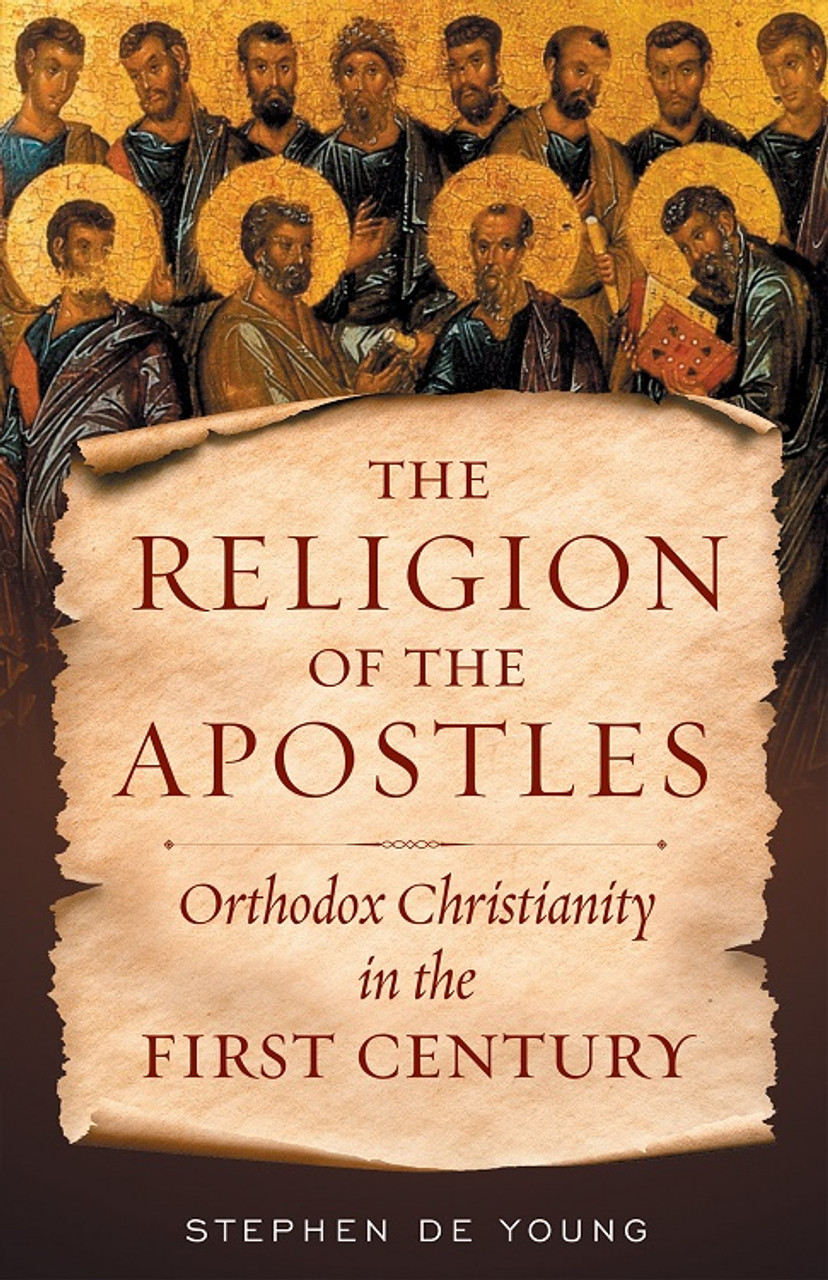
Religion of the Apostles, by Stephen De Young, a Multi-Part Review (#3 The Atonement)

When we say that Jesus died for sins, what do we mean by that exactly?

Stephen De Young in his The Religion of the Apostles: Orthodox Christianity in the First Century dives into this topic, which has at times caused some friction between evangelical Protestant and Eastern Orthodox Christians. But perhaps both sides have more in common than many realize. In the interest of Christian apologetics, both Protestant and Eastern Orthodox Christians together have an answer to give to those secular and progressive critics who say that Christians invented their doctrine of atonement, based on the assertion that atonement had nothing to do with the message that Jesus taught.


The Religion of the Apostles, by Stephen De Young, shows how the beliefs and practices of the early church connect with the world of Second Temple Judaism, the historical context for Jesus of Nazareth and the New Testament.


Forgiveness Without Atonement?

Bart Ehrman, a religion professor at University of North Carolina at Chapel Hill, perhaps the most influential living skeptic of historically orthodox Christianity, makes an argument which will probably shock the average Christian. For Ehrman, Jesus preached a message of forgiveness, whereas Christianity as an organized faith teaches a message of atonement, which are two completely different things.

For Ehrman, forgiveness is simply “letting go” the fault of another person, without any price or payment associated with it. The only condition for extending forgiveness is repentance, the act of turning from a sinful act, with the intention never to commit the sinful act again.

Atonement, on the other hand, is about a payment for debt incurred by sin, in order to cancel the debt. Unless a payment has been made, the debt can not be canceled.

In Ehrman’s mind, Jesus was all about forgiveness, whereas his followers, particular those who followed the Apostle Paul, changed Jesus teaching in order to stress an atonement for sin instead. For example, in Mark 2:1-12 when Jesus heals the paralytic lowered through a roof in Capernaum, Jesus forgave the man’s sins. There was no mention of atonement. There was no mention of needing to go to the Temple to make a sacrifice. No sacrifice was necessary. God, through Jesus, simply forgave the man.

Ehrman goes on saying that in the Gospel of Luke, and even in the Book of Acts, there is no doctrine of atonement. In Acts following Jesus’ death and resurrection, Jesus’ death is frequently mentioned, but it is never connected with atonement. As Ehrman argues, for Luke, “Jesus’ death makes you realize how you have sinned against God and you turn to God and beg his forgiveness, and he forgives you.  No one pays your debt; God simply forgives it.”

It was not until we get to the Apostle Paul, and perhaps others in the early Jesus movement, that we get the sense of atonement as being the full basis for why forgiveness is possible from a Christian perspective.  Repeatedly, Paul makes the case that Jesus’ death actually paid some sort of debt. In Romans 5:8, “God shows his love for us in that while we were still sinners, Christ died for us.” In Ephesians 5:2, “Christ loved us and gave himself up for us, a fragrant offering and sacrifice to God.”  In Galatians 3:13, “Christ redeemed us from the curse of the law by becoming a curse for us.”

Ehrman adds, however, that in Mark’s Gospel, supposedly someone probably put on the lips of Jesus an idea of atonement, decades after Jesus’ earthly ministry ended. In Mark 10:45, “For even the Son of Man came not to be served but to serve, and to give his life as a ransom for many.”

If Bart Ehrman is correct, then it would appear that a certain group of Christians, which eventually became the “orthodox” party of the early church, essentially invented a theory of atonement to explain the  relationship between Jesus’ death with the forgiveness of sin. The implication should be obvious. From Ehrman’s vantage point, the message of Jesus is ethically superior than the message of Paul: Crudely put, Jesus offers forgiveness for free, while Paul’s brand of forgiveness comes at the cost of a life, human or some other animal.

However, there are some very good reasons for saying that Bart Ehrman is quite wrong about his assessment that Jesus’ message of forgiveness was in stark contrast with the later, supposedly “invented” teaching of the church, associated with Paul.

One of the great benefits Stephen De Young’s The Religion of the Apostles: Orthodox Christianity in the First Century is that it offers a convincing apologetic for why a theology of atonement is fully integrated into the teachings of Jesus, as seen through the lens of Second Temple Jewish thinking. While Religion of the Apostles does not directly address Bart Ehrman’s critique of Pauline Christianity, as being morally inferior to the teachings of Jesus, Stephen De Young lays down a foundation for why the forgiveness of sins is intricately connected with the concept of atonement. Far from being an invention of the early church, the New Testament doctrine of atonement is drawn from centuries of Jewish meditation on the Old Testament Scriptures.

“The Scriptures and the Fathers understand Christ’s atoning death as the revelation of His divine glory. Atonement as it took place in the Old Covenant, as described in the Hebrew Scriptures, represents a partial and preliminary revelation of the glory of Christ, which comes to its fullness in His death on the Cross” (DeYoung, p. 192)

In other words, Christianity did not invent atonement and decades later bolt it somehow onto the teachings of Jesus concerning forgiveness. Rather, the life, death, and resurrection all stand within the steady stream of Jewish thought during the period when the Second Temple was still standing in Jerusalem. The New Testament shows us how Jesus fulfills and thereby transcends certain older ways of thinking about atonement, something not limited to the world of Judaism in the first century and its Temple in Jerusalem. The sacrifice of Jesus on the cross enables the message of God’s forgiveness of sins to be a universal message, empowering a universal message of forgiveness with respect to God (vertically) and with one’s neighbor (horizontally).

For Stephen De Young, there have been a number of theories about atonement discussed in Christian theology which are either only partially supported by Scripture, or some even not found in Scripture at all.  In this third blog post in this book review series, we now take a closer look into De Young’s defense of an Old Testament-grounded theology of atonement which the early church adopted through divine revelation. De Young’s full treatment in his apologetic has some minor problems, as I see it, but in the long run, his understanding of the early church view of atonement offers an adequate answer to Bart Ehrman’s skepticism.

Forgiveness Is Not As Easy As Some May Think

Here is an anecdote to show why Bart Ehrman’s viewpoint is unsatisfactory: About 13 years ago, my wife took our Italian greyhound out for a walk in the neighborhood, as she normally did. We live in a rural area, where few dog owners in our neighborhood keep their dogs on a lease. Suddenly, one of our neighbor’s dogs, a rather large one, jumped out onto the road where my wife was strolling along with our rather small, 10-pound greyhound. This big dog mauled our little greyhound, grabbing him by the throat, thrashing him around. The big dog finally let go, but our Italian greyhound was permanently injured by the incident.

The combination of the physical and the emotional trauma led to a severe decline and eventually an early death of our little dog less than two years later.

We were able to forgive our neighbors for allowing their dog to go free without a leash, and then attack our dog, but it was difficult. We spent hours and hours trying to nurse our dog back to health, not to mention the costly visits to the vet, only to watch our dog slowly lose his zest for life due to the trauma.

Our neighbors received our forgiveness, but it was not easy for them to fully accept it. Their big dog had himself experienced some abuse earlier in his life, so it was not altogether unexpected for him to lash out on our Italian greyhound. They had tried other ways help their big dog to become healthier and better behaved, but that proved to be very difficult. I am not sure what exactly happened with that dog, but the dog did not remain very long in our neighborhood after that.

No amount of money for vet visits could have ever fully helped out our little Italian greyhound come back to full health. I am convinced that our neighbors continued to feel guilt about the incident for years to come, as they were reminded about it every time they saw my wife or myself trying to walk our dog down the street again, much slower than before the attack.

We paid a price to extend our forgiveness. Our neighbors paid a price in terms of the guilt they experienced.

Chances are, as you are reading this, you can think of examples in your own life where it was difficult to forgive someone else for some wrong committed against you. You might even think of examples when someone tried to forgive you of something you did, and you still ended up feeling guilty.

Forgiveness is costly. It is not as easy as some may think.

The idea that forgiveness can be extended or obtained without paying some sort of price, as Bart Ehrman suggests, is unrealistic.

Atonement in the Early Church

In The Religion of the Apostles, Stephen De Young rejects the idea of different “models” to describe Christ’s atonement, which he sees is a movement away from “describing” what Christ accomplished on the cross towards “explaining” how and why Christ accomplished what he did (De Young, p. 191). To his point, we can get so bogged down with which model best explains the atonement that we miss the big picture. That the atonement works is what ultimately matters, more so than trying to tease out how it works.

Nevertheless, De Young’s rejection of various models, like that of penal substitutionary atonement, seems to this reviewer to be a bit of special pleading. Everyone has a theory of how atonement works, whether one realizes it or not. But happily this reviewer agrees with De Young that a Christian need not pick one model and thereby reject other models. There is a richness in understanding how Christ’s atonement for sin works, drawing from multiple models, each one potentially offering a different dimension of thought not fully addressed by other models. Stephen De Young is sensitive to this, and rightly so.

For example, later in the book, De Young notes that the Jewish Passover, which is connected to Christ’s own sacrifice had no concept of substitution associated with the ritual:

“There is no indication that the lamb is being killed instead of a firstborn human losing his life. This is clear for several reasons when the text is read carefully. No attention is paid by the ritual text to the killing of the lamb. This means that its death is incidental to the ritual, not part of it. Rather, the focus is on how the lamb is to be cooked and eaten (Ex. 12:3–11)” (De Young, p. 234).

But this need not indicate that Christ’s sacrifice lacked any sense of substitution, as there are other elements in Jewish atonement tradition which are substitutionary in character. In Eastern Orthodoxy, there is a general sentiment that penal substitutionary atonement is to be rejected.  Well, at least the penal concept is rejected, while retaining the substitutionary atonement part. Historically, the penal substitutionary model has been the standard evangelical Protestant view of Christ’s atonement. However, in the modern period, a number of Protestants have grown squeamish about penal substitution today as well.

But much of this sentiment against the standard Protestant view of atonement relies on a caricature of penal substitution. This caricature wrongly assumes that the loving Son of God is killed on the cross in order the appease the anger of God the Father against human wrongdoing. It carries the sense of a kind, loving Son who has to somehow assuage the uncontrolled wrath of an angry Father, who is royally ticked off at humanity.

This caricature was driven home to me when I heard it preached at a youth evangelistic event years ago. The speaker pictured God the Father as being so angered by sin that he acts as a judge and executioner who must impose punishment on the sinner. The Father has a gun and must shoot the sinner, standing in as a representative for “us;” that is, all of humanity, in order to satiate his anger. However, at the last minute, the kind and sacrificial Son steps into view, the Father turns the gun towards the Son, and takes the bullet on our behalf.

Looking back, I know that the speaker had meant well, and no illustration of the meaning of the cross is perfect. But this type of illustration is pretty terrible.

To the contrary, Jesus as the Son of God is just as angry with human sin as the Father is. Likewise, the Father is just as loving towards humanity as the Son of God is. The key to understanding the doctrine of atonement, and its relationship to the forgiveness of sins, is that Jesus’ death on the cross is an act of self-sacrifice. Because of God’s self-sacrificial love for us, not only are we forgiven of our sins, we are also enabled and empowered as humans to self-sacrificially extend forgiveness towards others who have hurt us.

De Young’s efforts at “describing” Christ’s atonement show that a broad array of Scriptural themes can be brought to bear on the meaning of Christ’s atonement, including elements that make up the doctrine of penal substitution; that is, the teaching that Jesus died in our place in order to pay the penalty for our sins. Admittedly, some evangelical Protestants wrongly focus exclusively on penal substitution, so in this sense, Stephen De Young’s closer look at how Second Temple Judaism influenced the early church offers a very helpful corrective to the typical Protestant caricature of the doctrine of atonement.

God’s Wrath and a Better Understanding of Propitiation

De Young acknowledges the role the wrath of God plays in purifying the sinner of sin, as in a purifying fire, and he helpfully points out the Old Testament language of God being “slow to anger,” which is rooted in a Hebrew idiom of being “long of nose” (De Young, p. 194). De Young accepts the concept of propitiation, which is often seen as the heart of the doctrine of penal substitutionary atonement. Perhaps as an Eastern Orthodox priest, Stephen De Young is not far off from an historic, standard Protestant view of atonement? But helpfully, he notes that propitiation has a simple meaning:

“it means to render someone propitious, or favorably disposed. At its most basic level, it refers to an offering that is pleasing to God” (De Young, p. 203).

The pagan form of propitiation does not map well onto the biblical form of propitiation. For in pagan sacrificial ritual, the killing of an animal is required to satiate the wrath of the gods. But in the Bible, “attempting to import this concept into the sacrificial system established in the Torah is simply impossible. Much of the sacrificial system of the Law does not even involve the killing of an animal, even though the offerings it calls for are always food” (De Young, p. 203). Instead, it is the pleasing aroma that is offered up to God that matters. The actual killing of the animal itself is not tied to the propitiation towards Yahweh.

‘Some sort of punishment or suffering on the part of the sacrificial animal was no part of the ritual. Even in the case of whole burnt offerings—which stipulated that the entire animal be burned and thereby given to Yahweh—it is not sacrificed alive but is killed first, unceremonially……. The more common language used in the Scriptures for God’s appreciation for His portion of sacrificial meals is that these sacrifices are a pleasing aroma (as in Gen. 8:21; Lev. 1:9, 13; 2:2; 23:18). This same language is applied to the sacrifice of Christ in the New Testament (in Eph. 5:2 and the Father’s statement that in Christ He is “well pleased”)’ (De Young, p. 203).

This more mature view of propitiation goes against the common misunderstanding about propitiation, pedaled by those such as Bart Ehrman. Ehrman’s false view wrongly links biblical propitiation with some “barbaric” requirement of an animal death meant to satiate the supposed bloodthirsty demands of an angry god. This is the worst caricature of all regarding the doctrine of atonement in Christianity. As the late Michael Heiser has said, “It is not that God is thirsty for blood.”

De Young also links God’s justice less with retributive justice, whereby criminals are merely punished for their crimes, and more with distributive justice, which is more linked to civil law. Someone has been wronged, and therefore an attempt is made to try to rectify the wrong so that the injured party can be made whole (De Young, p. 196).

While the following analogy does not work well for vegetarians, the analogy that I can think of to best begin to explain this is the experience of eating a good steak on a grill. What makes someone happy, or pleased, or “propitious” about a good steak meal is not the fact that a cow had to be killed to supply the meat. What makes for a pleasing or “propitious” steak meal is the aroma of a freshly cooked steak on the grill, and the eventual eating of that steak. This is reasonably close to the idea that the pleasant aroma of a cooked sacrificial meat is what is “propitious” in God’s perspective, not the killing of the animal to supply the meat. This is the basic difference between a biblical view of propitiation versus a pagan view of propitiation which celebrates the killing of an animal.

Propitiation, rightly understood therefore, is not about God’s supposed inner need to kill someone or some animal, or have someone or some animal killed to make God happy. Israel’s pagan neighbors had that understanding but not Israel herself. Rather, as Joel Edmund Anderson puts it in his review of The Religion of the Apostles, propitiation celebrates “the restoration of relationship and a demonstration of His justice and righteousness.”

Other Dimensions of Atonement Theology

De Young highlights Colossians 2:14 as an expression of atonement theology: ““He canceled the handwriting in the decrees against us, which were opposed to us. And He has taken it from our midst, by nailing it to the Cross.” Sin is here associated with the concept of debt, in that Christ’s death canceled the debt of sin (De Young, pp. 206ff). De Young goes on to say that this made perfect sense in Paul’s first century context, as the slavery system of the time was employed as a means of paying off debt.

“Slavery in the ancient world was not primarily an instrument of racial or ethnic oppression. Rather, it was primarily an economic institution. With no concept of bankruptcy in the modern sense, the means by which a debt that could not be paid would be settled was indentured servitude. A person would work off the debt by becoming a slave” (De Young, p. 207)

This understanding of slavery is helpful in that it is a stark contrast with the type of slavery practiced in the American antebellum South, which was specifically racial in character. While not answering every question about what the Bible has to say about slavery, De Young frames the discussion in a way that can assist us to get past many of the polemical critiques against Christianity today.

Furthermore, the atoning work of Christ is universal in character, impacting every human being (1 John 2:2; De Young, p. 215). Yet this universal character is often misunderstood (De Young, p. 209). As a result, De Young’s rejects the doctrine of universalism, most notably defended by a fellow Eastern Orthodox scholar, David Bentley Hart (See Veracity analysis of universalism espoused by David Bentley Hart). For De Young, universalism as those like David Bentley Hart presents it, is a Christian heresy that is fully dismissed by Eastern Orthodox tradition, contra David Bentley Hart. (For a substantial interaction with David Bentley Hart’s universalism thesis, one should consult this episode of the Lord of Spirits podcast for a full critique. For a modest, cautious defense of David Bentley Hart with respect to Stephen De Young’s critique, see this essay by Jesse Hake).

Interestingly, De Young shows that certain strands of Eastern Orthodoxy have preserved certain Second Temple Jewish understandings of atonement, that are typically unknown to Protestants: “Texts such as the Apocalypse of Abraham, which has been preserved in Slavonic by the Orthodox Church, describe an ultimate eschatological Day of Atonement” (De Young, p. 218).

Another Second Temple Jewish tradition linked to atonement theology, associated with the figure of “Azazel,” can be found in the Book of Enoch. In the Enoch literature, Azazel is identified as the leader of angels which rebel from Yahweh, those members of the divine council that sought to subvert God’s ultimate rule (DeYoung, p. 125).

1 Enoch 10:8 says, “The whole earth has been corrupted through the works taught by Azazel; to him credit all sin” (compare 1 John 3:8; 5:19). (DeYoung, p. 125).

One other particular observation that De Young makes is very intriguing: Several translations of Leviticus 16:8 link Azazel with the scapegoat, sent out into the wilderness as part of the Jewish atonement rituals. “And Aaron shall cast lots over the two goats, one lot for the Lord and the other lot for Azazel” (Lev. 16:8 ESV, De Young p. 218). Compare with the NIV translation that renders “Azazel” with “scapegoat” instead. The goat is sent out into the wilderness, from where the sins of the people came, back to the spiritual evil powers who instigated those sins (De Young, p. 217-218). Oh, and yes, the concept of a scapegoat is inherently substitutionary in character (at least that is my read on it. De Young is not clear on this point).

But the other goat involved in this ritual, the one that gets killed, is not killed as an act of sacrifice. The sins of the people are not placed on this other goat, and then killed. Rather, this goat is killed in order to share a meal celebrating the removal of sin represented by the activity of the other goat, the scapegoat, who does take the sins of the people away (See Michael Heiser’s video on the same topic).

What is apparently clear is that that this substitutionary aspect of the scapegoat does not involve a bloody sacrifice. Jesus is our scapegoat, who by way of substitution takes our sins upon himself, thereby achieving atonement through Christ’s work on the cross.

Frankly, of all of the chapters in The Religion of the Apostles, De Young’s chapter on atonement is perhaps the most challenging and difficult to assess. On the negative side, De Young tends to fall back on this caricature of an historic Protestant view of atonement at various points. But to De Young’s credit, on the positive side, he ultimately lands in the right place as far as I can tell. The Religion of the Apostles may not satisfactorily resolve the differences between historical Protestant and Eastern Orthodox understandings of the atonement, but it takes the conversation into a very constructive direction. I intend on revisiting this chapter again in the future, to make sure I have understood Stephen De Young correctly.

De Young’s conclusion in this chapter finally connects the concept of atonement with the restoration of Adam. Adam was originally sent on a mission to rule the world, but the problem of sin short-circuited that mission. The work of Christ on the cross puts humanity back on the right track. This work of Christ accomplished something that the Jewish ritualized system of atonement was not able to fully do. In turn, Christians today are given the privilege to participate in the reality of Christ’s finished work through ritual:

The New Testament narrative of Christ’s atoning work is enacted, made real, and participated in by members of the Church as community through ritual. This participation produces repentance, which brings about forgiveness, cleansing, and the healing of sin.

For Israel and Judea, ritual represented a curse postponed and a deadly infection managed. Christ through His acceptance of the curse has removed His people from it. He has removed the threat of death and ended the exile by restoring humanity to Paradise in coming, as God, to dwell in our midst (De Young, p. 215).

The Christian church is then called upon to proclaim and embody that message to the whole world:

“The entire creation is now the possession of our Lord Jesus Christ, who wields all authority within it. We, as His assembly the Church, bring that rule and its effects to realization within the world as we receive God’s creation, bless it, and hallow it” (De Young, 229).

Stephen De Young does not come right out and say it, but the doctrine of substitutionary atonement is clearly present in Eastern Orthodoxy, and certainly goes back to the apostolic era, and beyond into ancient Judaism. Some will surely debate and quibble about the “penal” association with substitutionary atonement, but it is helpful to know that the Western and Eastern understanding of Christ’s atoning work may not be so far apart as it is often described.

I have just attempted to pull out the best takeaways from Stephen De Young’s approach to atonement. Trying to tease all of the data points out from this chapter of The Religion of the Apostles, and synthesizing them is too difficult to do in this book review. Hopefully, this survey will whet the appetite of the reader to go out and get a copy of Stephen DeYoung’s book and meditate on what he writes in his chapter on atonement.

Forgiveness and Atonement Are Bound Together

Real forgiveness involves restoration, and such restoration is costly. We as humans often miss this because we are finite creatures with limited resources whereas God is infinite, possessing unlimited resources. Still, the atoning work of Christ on the cross actually cost God something, though we have trouble seeing this. My earlier example of our little Italian greyhound suffering an attack by a big dog belonging to one of our neighbors should make more sense now.

This emphasis on connecting forgiveness with restoration helps to explain that even if you have wronged someone else, and that other person has supposedly “forgiven” you, it does not always feel right. You can still feel guilty, even if the other person whom you have wronged “lets you off the hook.” It only feels right when full restitution has been made somehow.  This ultimate restoration of all things gets at the heart of what Christ’s atoning work on the cross is all about.

In contrast to Bart Ehrman’s view, Stephen De Young sees that the concept of atonement is tied together with Jesus’ teaching of forgiveness. We see this even in the Lord’s Prayer.

“Depending on the Gospel, the Lord’s Prayer asks for the forgiveness either of “debts” or of “trespasses.” The Lord’s Prayer as rendered by St. Matthew’s Gospel refers to the forgiveness of our debts as we forgive our debtors (Matt. 6:9–13). Immediately thereafter, however, as an interpretation of the prayer, Christ says that if we forgive the trespasses of others, then our trespasses will likewise be forgiven (vv. 14–15). Saint Luke, however, phrases the Lord’s Prayer as referring to the forgiveness of our sins as we forgive our debtors (Luke 11:4). The concepts of debt and transgression are so closely aligned in Second Temple-era thought that they can be used interchangeably. In describing the forgiveness of sins, Christ uses debt in several of His parables (see Matt. 18:23–35; Luke 7:36–47)” (DeYoung, p. 207).

The point is that forgiveness is only made possible because of atonement.  Jesus was able to forgive the sins of the paralytic because Christ in a sense knew that his ultimate mission was to pay for the sins of the whole world through his upcoming death. The paralytic did not need to offer a sacrifice because Jesus’ death was still a few years off into the future, a death which thereby paid off the debt of sin incurred by the paralytic. Likewise, today we can receive God’s offer of forgiveness just as the paralytic did.

As Jesus’ disciples were wandering the hills and pathways with the Christ in Galilee, they were not ready to fully understand the meaning of Jesus’ death until after it actually happened. This would explain why the Gospels often talk about Jesus forgiving people of their sins, with no direct reference to atonement. That sense of atonement was something that would not fully come together until Christ’s being nailed to the Cross. It would take decades for the early church to ultimately work through what this all meant and weave this theology into the pages of the New Testament.

We see this principle of atonement intimately connected with forgiveness in terms of how we are to forgive our neighbor when they sin against us. It is extremely difficult simply to forgive someone else of wrongdoing when we have been hurt. If someone recklessly runs over your pet with their car, or cheats you out of your money at the store, or steals your online identity and empties your bank account, that can make it exceedingly difficult to say to anyone, “I forgive you,” even if the one who violated you promises to amend their ways. For even if your offender does show contrition and repents from their wrongdoing, that does not bring your pet back to life, it is no promise that you will get your money back, and it in no way compensates for all of the hours you have to spend trying to clear your name and get control of all of your stolen online assets.

Back to the story about the sad encounter of our little Italian greyhound with a neighborhood dog, the idea of atonement makes sense. It was difficult for me to forgive our neighbor. But the more I reflected on how Jesus paid the penalty for my sin, through his atoning death on the cross, the easier it was for me to eventually forgive my neighbor. Forgiveness did not come right away. I had to work through my own anger, frustration, and sadness quite a bit, but by meditating on Jesus and the cross, forgiveness finally came.

Bart Ehrman’s idea of a Jesus who simply offers forgiveness, without any sense of atonement, in terms of making restitution or otherwise paying off a debt, does not seem very realistic anymore, once you take a closer look at it.

But because Christ has died for us, and forgive us of our sins and canceled our debt, we are then able to extend forgiveness towards others. As we receive the healing mercy and grace of God in erasing the debt of our sins towards God, so are we empowered to extend mercy and grace towards others.  Atonement is what makes forgiveness possible.


The next and last post in this multi-part blog review of The Religion of the Apostles will cover an assortment of topics in the rest of Stephen De Young’s book, plus a critical interaction with the book overall.


For a short description of how Eastern Orthodoxy might view something like “penal substitutionary atonement” positively, the following video by Seraphim Hamilton might be of interest:

Protestant YouTube apologist, Gavin Ortlund, suggests a view of penal substitutionary atonement that goes back to the early church, and not something introduced into Western Christian ways of the thinking through some supposed innovation by Anselm.


Christian Urban Legends

Were the shepherds at the birth of Christ really despised, social outcasts? This popular story makes for a great Christmas sermon message, namely that lowly, poor shepherds, having the social reputation equivalent to prostitutes, were given the honorary privilege of giving testimony to the birth of the Messiah. Though well intended, it turns out that this is largely an urban legend.

“Adoration of the Shepherds,” by Gerard van Honthorst, 1622. (credit Wikipedia: The Yorck Project: 10.000 Meisterwerke der Malerei. DVD-ROM, 2002. ISBN 3936122202)

Evangelical Bible scholar, David Croteau, the Dean of Columbia Biblical Seminary, and author of Urban Legends of the New Testament, acknowledges that many other scholars over the years have commented on the supposed despised nature of 1st century Jewish shepherds, citing sources like Aristotle and the Babylonian Talmud, for support. However, Croteau points out that Aristotle was not a Jew, and lived several hundreds of years before Christ, and the Babylonian Talmud was not produced until several centuries after Christ. Furthermore, British Bible scholar Ian Paul notes that the Babylonian Talmud’s denigration of shepherds might have been shaped more by an anti-Christian polemic, rather than the actual historical context. In other words, these are not the best expert witnesses as to how shepherds were viewed by 1st century Jews.

As it turns out, Croteau cites the best evidence that counterbalances this legend directly from the New Testament itself. Luke 2:18 tells us that “all who heard it were amazed at what the shepherds said to them,” when speaking of the appearance of angels. But the people were not amazed by the supposed fact that these were “lowly” shepherds. Rather, they were amazed by what the shepherds were talking about, that of the birth announcement of the Messiah.

Instead, the Bible holds the profession of shepherding in high respect. For example, Genesis 13 notes that Abraham had much livestock, herds, and flocks of sheep. Also, Exodus 3:1 tells us that Moses was a shepherd, and that before David was king, 1 Samuel 17 tells us that David himself was a shepherd. Jesus himself speaks of being “the good shepherd [laying] down his life for the sheep” (John 10:11).

True, shepherds were not wealthy, and belonged to the lower class, and thus represented the poor and humble, but they were hardly the social equivalent to prostitutes. With such an established pedigree, from Abraham to David, to ultimately Jesus, the traditional story of the “despised” Bethlehem shepherds simply does not fit the actual data.

Continue reading
