So, what is that whole story about the “sons of God” having relations with the “daughters of men” in Genesis 6:1-4? This rather weird passage which has puzzled many readers for centuries actually holds a clue which unlocks the meaning of a number of New Testament passages which also confuse readers today. After a brief mention of Enoch who “walked with God” in Genesis 5:21-24, the next chapter begins like this (ESV translation):
When man began to multiply on the face of the land and daughters were born to them, the sons of God saw that the daughters of man were attractive. And they took as their wives any they chose. Then the Lord said, “My Spirit shall not abide in man forever, for he is flesh: his days shall be 120 years.” The Nephilim were on the earth in those days, and also afterward, when the sons of God came into the daughters of man and they bore children to them. These were the mighty men who were of old, the men of renown.
In short, Genesis 6:-14 is about the “sin of the Watchers.” After Enoch was taken away (Genesis 5:24), the “sons of God” were divine beings which came down to procreate the Nephilim with the “daughters of men.” This act wreaked havoc upon God’s created world, prompting the Flood of Noah. In addition to what Christians know about the sin of Adam and Eve, it was this divine rebellion in Genesis 6 that informed Jews of the Second Temple period as to the source of sin and evil in the world, as most clearly described in the Book of Enoch, a popular Jewish text written between the Old and New Testament eras.
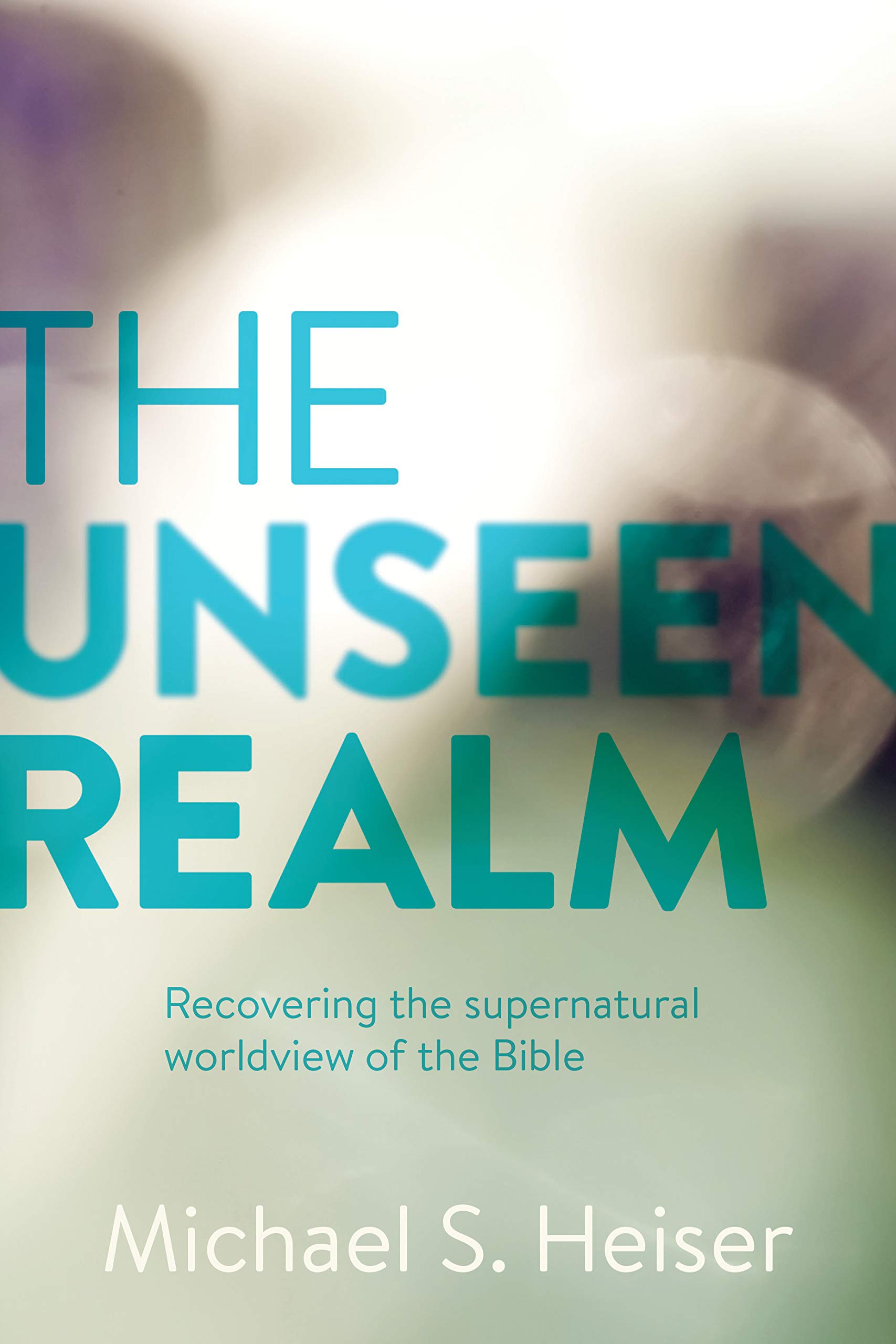
So argues Michael Heiser in Reversing Hermon: Enoch, the Watchers, and the Forgotten Mission of Jesus Christ. Readers of the late Dr. Michael Heiser’s landmark work, The Unseen Realm, will appreciate Reversing Hermon as a follow-up to The Unseen Realm, which lays out the scholarly case for the theology of the Divine Council, a theme which has been known by scholars but which rarely gets communicated to the average Christian on a Sunday morning.
When I first heard of Michael Heiser and his ideas, I was quite skeptical. It took me awhile to warm up to him, and still to this day, there are a few things he taught of which I am not convinced, including a few ideas presented in Reversing Hermon. But after reading through Reversing Hermon now, I am convinced that Dr. Heiser has left the church a valuable contribution to help normal, everyday believers better understand the Bible. The worst part about the book is probably the subtitle “the Forgotten Mission of Jesus Christ,” which comes across as click-bait and sensationalist. But a careful read of Reversing Hermon is anything but that!
It has been a year since the death of Dr. Michael Heiser (February 20, 2023), a highly-skilled and respected Old Testament BIble scholar, who had a keen ability to take difficult concepts and put them on the “bottom shelf” for serious students of the Bible, who want more depth in their understanding of Scripture. Many people view the Bible as being incomprehensible and confusing, but the late Michael Heiser was committed to “making the Bible weird again,” in an effort to show that the Bible has some unique things to say to 21st century sophisticated Westerners. However, much of the unfamiliarity concerning the Divine Council and the rest of Dr. Michael Heiser’s teaching has not been without controversy. Continue reading
Every now and then a book comes along that just revolutionizes your thinking. After having this book on my “to-be-read” list for at least five years, I finally got around to reading Dr. Michael S. Heiser’s The Unseen Realm. Talk about a revolution. I will never read my Bible the same way again. I am not sure that Michael Heiser has EVERYTHING right, but he pretty much nails a lot of things smack dab on the head.
Michael Heiser got on my radar a few years ago with the Naked Bible Podcast, where this Old Testament and Semitic languages scholar goes through books of the Bible, mostly passage by passage, and focuses on a lot of the “weird” stuff in the Bible that is simply left untaught in most evangelical churches from the pulpit these days.
Heiser is a great Bible teacher, unafraid to challenge traditional denominational categories. Furthermore, a lot of what you find in popular media regarding the Old Testament is downright skeptical of Scriptural revelation, ranging from your typical college introductions to the Old Testament to televised programs on the History Channel. But Michael Heiser knows his stuff, tackling such skepticism of the Bible head on. Yet he introduces you to a paradigm of understanding Bible that affirms the full trustworthiness of the Scriptures, while maintaining a solid footing in the best of contemporary scholarship. Along with Wheaton College’s John Walton (see here and here), Michael Heiser is pretty much the “go-to” scholar when it comes to all things Old Testament, and relating that world to the New Testament, in the fiery world of Christian apologetics.
How Contemporary Evangelical Avoidance of the Supernatural in Holy Scripture Has Obfuscated the Meaning of Many Difficult Texts in the Bible
In 2020, I decided to read one of Heiser’s more recent in-depth books first, Angels, and it was great, but I became aware that a lot of what you find in Angels assumes you understand the basic ideas presented in The Unseen Realm. The Unseen Realm seemed a bit daunting to me at the time, as it is somewhat academic (but not too academic), and I was not ready to dig that deep into the topic. But my goal of reading (errr… listening via Audible) The Unseen Realm on my bike rides this year left me stopping on the bike path, several times, to rewind the last paragraph or two, to fully digest the topic.
But let us look at something right near the beginning of the whole Bible. Before you get a few chapters into Genesis, most every Christian I know gets stumped on this one: How about the story in Genesis 6, where the “sons of God” took the “daughters of men” as wives, and the offspring produced were called the Nephilim?
Pretty weird, huh?
In fact, I have always thought that this passage was SO weird, that I wrote a blog post almost 6 years ago explaining that most Christians have no clear idea as to what this passage is talking about, and urging humility when studying it. I still think we need humility, but I am pretty well convinced that Dr. Heiser’s approach is correct (I will leave the old blog post up anyway, just so that you can compare and see where my mind has changed). The amount of explanatory power behind Heiser’s thesis is simply breathtaking.
So, who are the “sons of God” in Genesis 6? A tradition going back to Saint Augustine suggests that these were descendants of Seth, the other son of Adam and Eve, aside from the well known Cain and Abel. In a nutshell, these “sons of God” were godly descendants of Seth, who had sexual relations with women descended from Cain; that is, “daughters of men,” such that God’s anger against humankind was stirred enough to trigger Noah’s flood, as a sign of divine judgment against the world.
Saint Augustine is surely one of the greatest teachers of Scripture of the Christian faith. The entire Protestant movement, for example, finds its backing squarely in the thought of Augustine’s view of justification by faith. Augustine was no slouch! However, Augustine was not proficient in his understanding of Greek, knew close to nothing about the Hebrew language, and lacked the cultural background of Second Temple Judaism, that was pretty well assumed by the original Jewish audience, living in the time of Jesus. Instead, according to Dr. Michael Heiser, a much older tradition, predating Augustine’s views, going back to the Book of Enoch, and other writings in the inter-testamental period, between the Old Testament and New Testament suggests that the “sons of Gods” were actually divine beings that rebelled against Yahweh, the name for God in the New Testament.
Genesis does not give us that many further details concerning these “sons of God,” but Heiser’s overview of the Jewish literature written within a few hundred years prior to the earthly ministry of Jesus reveals that Jesus’ listeners were thinking a lot about the “sons of God.” Are there other “sons of God,” other than the Genesis 6 rebels?
If you take a glance at just about any modern Bible translation, for the most popular verse in the Bible, John 3:16, you might see a clue here. For years, older translations of this verse spoke about Jesus this way, like in the KJV: “For God so loved the world, that he gave his only begotten Son, that whosoever believeth in him should not perish, but have everlasting life.” Most newer translations have removed the word “begotten“, an older archaic word, typically having something to do with “birth” or “generation.” But it is not because “begotten” is archaic that this word has been removed. Though still a topic of some debate, recent scholarship indicates the original Greek word, monogenes, actually has a meaning closer to “unique” or “one of a kind,” close to what the NIV 2011 translation has as “one and only Son“. Michael Heiser probably prefers a translation along these lines: “For God so loved the world, that he gave his one of a kind Son“. In other words, Jesus is the unique, one of a kind, Son of God. Unlike any other divine being, Jesus has a unique relation to God the Father that no other divine being has ever had.
So, what is the big deal about that? Well, have you ever wondered why the Gospels talk so much about demons and demon possession? Today, Christians normally fall into two camps when they think about demons. Either they see demons everywhere around us, even to an extreme, under your bed, in your neighbor’s mini-van, etc., a belief that is particularly strong among certain hyper-charismatic Christians. At the other extreme, other Christians (along with many non-believers) are embarrassed about such talk of demons, as demonic possession is typically thought of today as being an out-dated relic of unscientific, pre-modernistic cultures. Is there another alternative?
Furthermore, Heiser argues that this understanding of demons explains the perplexing passage in 1 Peter 3:19-20, where Jesus is said have preached to the “spirits in prison.” This passage is most probably the basis for the (in)famous descensus clause from the Apostles Creed, whereby Jesus descends into Hades (“hell“), between his crucifixion and resurrection. Who are these “spirits in prison?” For Heiser, and according to a large body of contemporary scholarship, these are the dead Nephilim that Jesus preaches to, condemning the demonic powers to their eternal demise and judgment. While not ruling out other possible explanations, that could run side by side with this one, the idea that Jesus was sent to preach a message of condemnation to the demons is a pretty awesome thing to consider.
That is some powerful stuff to think about!
Yes, it does sound quite weird. But then, that is partly why the message of the Bible still has a striking message for our fallen world today, that secularizes just about everything, and robs our day to day life of mystery and deeper meaning.
How an Old Testament Approach to the “Divine Council” Makes Better Sense of the New Testament
Behind Dr. Heiser’s approach to the Bible is the notion of a “Divine Council” being expressed in the pages of the Old Testament, whereby we understand Yahweh, the God of Israel, to have a court of other divine beings, that Yahweh himself created (see the Bible Project). These divine beings, whom we encounter in the Bible, including angels, cherubim, seraphim, and even the rebellious ones, like Satan and the demons, were created originally to serve Yahweh, as most clearly articulated in Psalm 82.
Traditionally, the “gods” of Psalm 82 have been primarily understood to be Jewish elders. On the other hand, Heiser makes the case that these “gods” are not human creatures, but rather they are divine creatures, that bring their supernatural influence to bear among the nations, as members of God’s “Divine Council.” Heiser makes the bolder case that this “Divine Council” interpretation predates the “traditional” interpretation of Psalm 82, as it is thoroughly rooted in the worldview of Second Temple Judaism, a perspective that many of the great Gentile patristic teachers of the early church never fully grasped.
Once one understands the workings of the Divine Council in the Old Testament, this then unlocks a lot of the mystery behind dozens of passages in the New Testament, that typically confuse the vast majority of Christians. Heiser gives multiple examples of how a Divine Council framework of thinking helps to make more sense out of the New Testament.
Are you ever confused about Paul’s statement that we are to “judge angels” (1 Corinthians 6:3 ESV)? What about the rebellious angels that Jude highlights in his short letter (Jude 6)? Have you ever wondered why the tribe of Dan is omitted from the list of the 144,000 in Revelation 7? Had you ever considered that the plain of Meggido, in northern Israel, may not be the proper location of the battle of Armaggedon? And to top all of that off, what about that strange passage mentioned above in 1 Corinthians 11, requiring that women wear head coverings while praying/prophesying in church, because “of the angels” (verse 10)?
Sure, other competent scholars might suggest other interpretations. But Heiser’s work is most impressive for the broad explanatory power his thesis has in bringing together so many loose ends in Scripture, that continues to puzzle many students of the Bible.
Solving Old Testament Mysteries, Too
Of particular interest to those who are concerned about faith/science issues, as they relate to the Bible, is Dr. Heiser’s understanding that at least some of the Nephilim survived Noah’s flood. The Nephilim, products of the angelic/human procreation rebellion in Genesis 6, were considered to be giants. Heiser links these to the giants that the Israelite spies saw, when they identified the land as being filled with milk and honey. When the Israelites were commanded to wipe out the Anakim, when entering the Promised Land, Dr. Heiser suggests that these Anakim, as giants, were descendants of the Nephilim who survived the flood. Goliath, the great giant that David faced, is also identified as a descendant of the Anakim.
This view of the Nephilim also dampens claims that the Bible advocates genocide of humans, as the wiping out of the Anakim would be for destroying these giant angelic/human hybrid offspring, instead of normal humans. Sure, it is some weird stuff to think about, like something out of a science-fiction movie. But it makes more sense than some of the peculiar ideas put forward by some Young Earth Creationists, regarding a global flood, and answers at least some concerns that skeptics have about the conquest of Canaan by Joshua.
What makes Dr. Heiser’s work in The Unseen Realm so compelling is that none of this research that he brings to bear on the Bible is unique or new to him. Everything you read about in The Unseen Realm is a result of peer-reviewed Biblical scholarship, researched and studied over the past few decades, that often remains locked up in the halls of academia. Instead, Michael Heiser takes this vast treasure of Biblical insight and makes it available to common, everyday Christian believers, putting it lower down towards the bottom shelf, so that everyone can benefit. The Unseen Realm is jam-packed with details that frame the Biblical story in a whole new way.
The main caution I would again point out is that The Unseen Realm assumes that the reader has some advanced understanding of the Bible. The Unseen Realm is therefore loaded with footnotes, which might be off-putting to the casual or uninitiated reader, but that will really help more knowledgeable students of the Bible put all of the pieces together. As an added bonus, Dr. Heiser has a website that gives even more extended notes for Bible students to dig deeper into the meaning of the text.
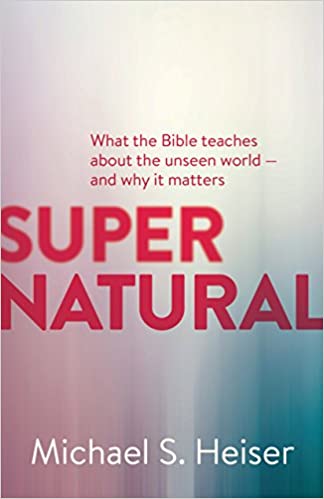
Fortunately, Michael Heiser’s more accessible version Supernatural will really help newer believers and other Bible novices comprehend his paradigm shifting argument. In other words, if you are fairly new to the Bible, get Supernatural instead, and leave the The Unseen Realm to the Bible nerds. If even that sounds too intimidating, Michael Heiser has also written a short introduction to what the story of the Bible is all about, What Does God Want?, that introduces the Gospel within the framework of his research.
Michael Heiser’s Supernatural is a “beginner’s guide” to Heiser’s thesis about the supernatural worldview of the Bible, otherwise known as the less academic version of his groundbreaking The Unseen Realm.
Seeing the Bible in a New Way Can Unsettle Older Ways of Thinking
Like any paradigm shifting work of theology published today, there are bound to be critics who will emerge to pushback on Heiser’s work. A Google search easily brings up a number of Heiser’s critics. I will just cover a few of the interesting one’s I found recently:
To varying degrees, some much more than others, each one of these critiques suffers from the same fundamental flaw. Each critique is at least somewhat nervous, or perhaps even scandalized, that Dr. Heiser seeks to ground his interpretation of these weird Scripture texts within the context of both the Ancient Near East and Second Temple Judaism. Yet this is precisely Dr. Heiser’s point, that we should best interpret the Bible within its ancient context, as opposed to depending on later traditions of thought, centuries removed from the original context, with little contact with ancient culture. The majority of Michael Heiser’s most severe critics therefore fail to appreciate the process of progressive revelation that took place among the Jewish writers and readers of Scripture, stemming hundreds of years back to the era of Moses, and on through the eve of Jesus’ public ministry (including the inter-testamental period, the so-called “Silent Years”).
Dr. Heiser is pretty adamant that we need to have the ancient Israelite “living in our head” if we ever expect to understand and interpret the Bible responsibly. Otherwise, we are simply reading “someone else’s mail,” thus imposing our own 21st century ideas on the text of Scripture, at the expense of neglecting the mindset that the ancient writers of Scripture held.
My teachers back during my years in seminary constantly hounded me for irresponsibly reading things back into the ancient texts of the Bible, and now I understand why. The original readers of the ancient Scriptural text were not able to consciously understand their Old Testament, in its fullness. Prior to the coming of Jesus, they got bits and pieces, but they lacked the full picture. It is a whole lot easier to skip that fact and try to read things back into the Old Testament, than it is to appreciate how God worked in the minds and hearts of His people over hundreds of years, to eventually disclose the mystery of the faith to Jesus’ earliest disciples in 1st century Palestine, and those like the Apostle Paul.
In other ways, Heiser likes to stand aloof from various controversies that plague the church today. For example, Dr. Heiser often states in his Naked Bible Podcast, that he “does not care” about the various eschatological systems that give us conflicting interpretations about the nature, timing and events associated with the Second Coming of Jesus. He also takes no position on the complementarian/egalitarian discussion regarding “women in ministry” dividing churches today, for pretty much the same reason. Some might find that to be a relief, whereas others might think that he is just dodging controversy. Presumably, I think that Dr. Heiser simply has no interest in trying to resolve any of the “hot-button” issues that trigger many Christians today, in the church, preferring instead to focus on his research into the Divine Council, which in my view, is a whole lot more intriguing and substantial anyway. Finally, some of the “science-fiction-like” interpretations that Heiser offers can sound a little crazy. People who get into fascinations regarding UFOs and paranormal experiences likely will be totally spellbound by Dr. Heiser’s research, whereas skeptics of those type of things might tend to be dismissive of Heiser’s ideas.
However, getting a glimpse as to how so many previously confusing passages of the Bible fit together in a coherent whole is really mind-blowing. More than any other contemporary Bible scholar, who writes for a popular audience, Michael Heiser’s detailed work in the supernatural character of the Bible, and love for verse-by-verse exposition of the Scripture, has created in me a deeper love and interest in the study of the Scriptures. The broad explanatory power of Heiser’s work that simultaneously undermines secularist skepticism about the Bible, and takes Jewish readings of the Bible more seriously, while illuminating the meaning of once difficult passages, makes an appreciation of Michael Heiser’s work both theologically stimulating and exciting. For Christians tired of shallow, thematic-based sermons in church, that dodge the more tricky parts of the Bible, and non-believers who struggle with making sense of the Bible, The Unseen Realm does an excellent job of opening up a whole new way of reading the Bible.
I have not been able to read my Bible the same way ever since.
Over the past few months, as I was writing the first draft of this book review, I learned that Dr. Heiser has been diagnosed with pancreatic cancer. An August, 2021, update showed that Dr. Heiser’s medical status was uncertain, and that he has been having trouble eating for the last few months. But as of early September, 2021, we have some good news, that the cancer growth has not spread beyond the pancreas, which means that the cancer might be treatable. Please pray for healing for Dr. Heiser. His teaching work has been a real gift for the church, for the past decade or so, helping many thousands across the world grow in their deep love for God and His Word.
Dr. Michael Heiser currently teaches at Celebration Church in Jacksonville, Florida. Here are three introductory sessions to his teachings, summarizing the basic contour of his book Supernatural, which is essentially his The Unseen Realm, without all of the footnotes.
John Walton understands Genesis to be talking about an archetypal, functional view of creation, as opposed to a scientific, materialistic account of origins.
Many Christians are opposed to calling Genesis One an allegory or poetry. These Christians warn that this threatens to change the clear message of the Bible, watering it down, and thus compromising the Gospel. On the other side, other Christians are troubled by efforts that interpret Genesis too literally. Does not an over-literal reading of Genesis One conflict with modern science, creating an unnecessary obstacle for a non-believer in coming to know Christ? John Walton, an Old Testament scholar at Wheaton College, takes both of these concerns seriously, and he suggests a third alternative.
In the previous Veracity post about John Walton, you were introduced to Walton’s thesis that the first chapter of Genesis is an account of the functional order of the universe, NOT the material origins of the universe. It sounds a little odd, but some refer to John Walton’s perspective as an archetypal view of creation. Walton calls it a cosmic temple inauguration view.
Yeah, just go ahead and try to explain that to your grandmother…. or Joe Friday.
Joe Friday wants to ask Wheaton College professor John Walton, “So, what is the cosmic temple inauguration view, and what does it have to do with the Bible? Have you been spending a bit too much in time in those Ancient Near Eastern texts?“
Okay, it does sound a little fancy and nerdy. But just exactly what is Dr. Walton driving at? Let us give Dr. Walton a little room here, shall we? Walton argues that the Genesis was written for us but not to us. It is as though we are reading someone else’s mail when we read Genesis. Walton contends that Bible students today need to understand Genesis from the perspective of those ancient Hebrews who first read the text. If we fail to do that, we risk distorting God’s Word.
Whoa. Do I have your attention now?
In the last Veracity post on this topic, we set out some of the primary points of John Walton’s thesis. But before doing a “deep-dive” it might be good to consider some of the objections critics have been making to his ideas. Then, as you look over Walton’s presentation, you can evaluate on your own whether he has made a good case or not. Even if you are not entirely convinced, you will be challenged to grow deeper in your faith and understanding of God’s Word. Continue reading
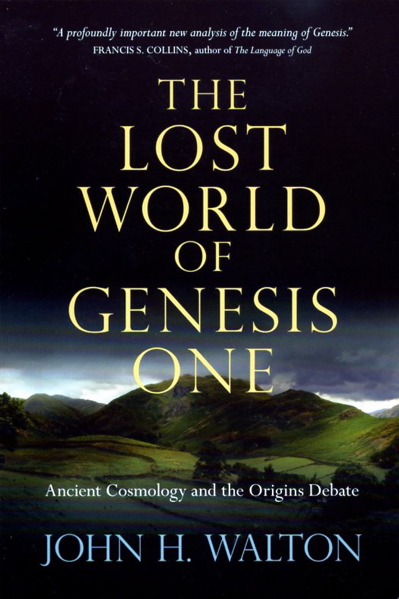
Are Christians who look for literal scientific revelation in Genesis abusing the Biblical text? John Walton, in The Lost World of Genesis One, says “Yes”, proposing a better way to interpret and honor the authority of Scripture based on pioneering research from the Ancient Near East.
When the first few chapters of the Book of Genesis are talking about the origins of the universe, should we read it like a scientific textbook…. or something else?
Many Christians today read the first part of Genesis assuming that God is supernaturally revealing to us the natural history of physical creation. This is a reasonable assumption. The Bible claims to be God’s Word, and we all want to know how it all got started.
So it would appear that God is simply stepping in Himself and giving us “just the facts, ma’am,” as Joe Friday said on the classic 1960’s TV show, Dragnet. But what exactly does that mean? Before Adam gets created, there are no human eyewitnesses peering over God’s shoulder to see what He was doing. Even if you believe that Moses was the author of Genesis, you have to grapple with the reality that Moses was not hanging out in a tree in the Garden of Eden with a video camera or an iPhone camera app, recording the interaction between Adam, Eve and the Serpent. Joe Friday is wondering what to make of all this! So then, how does that historical information get from God to Moses, and then finally, to us?
Unlike the Gospels that are built on eyewitness testimony, in early Genesis many wrestle with God’s meaning of things like “days” and try to figure out how it all fits in with modern science. Are they 24-hour periods of time, or long epochs of time? How do you get “light” on day one when the sun does not appear until day four? What about the Big Bang?
But these are modern types of questions that today’s Bible readers bring to the text. Have we really taken the time to consider how the ancient Hebrew readers from several thousands of years ago understood the Genesis text? Centuries before NeoDarwinian genetics, the telescope, Google, and… we can not forget, Joe Friday… what did God’s people think when they originally read Genesis One?
Joe Friday wants to interrogate Moses.. he might just have to settle for Wheaton College’s John Walton.
Meet John Walton, professor of Old Testament at Wheaton College (uh, not the guy in this photo… you will see a photo of Walton later). Walton argues in The Lost World of Genesis One that though Genesis was written for us, it was not written to us. It is a subtle distinction, but it emphasizes the reality that we must not pretend that Moses, or anyone else in the Old Testament era, originally wrote for a 21st century audience. Instead we must first understand the mindset of the ancient Hebrews before we try to apply the Truth of Genesis to modern-day concerns.
To put it the way that a William and Mary chemistry professor and friend of mine would say it: Is Genesis talking about “Adam” or “atoms”? Continue reading






 Veracity