Category Archives: Topics

Mark Driscoll and the Cult of Personality

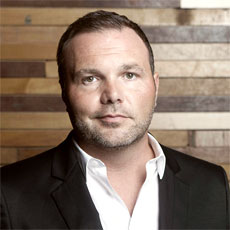
Mark Driscoll. Former pastor of the Mars Hill mega-church in Seattle, Washington.

Mark Driscoll. Former pastor of the Mars Hill mega-church in Seattle, Washington.

I have a confession to make. I like Mark Driscoll.

Mark Driscoll is a gifted Bible teacher. I have referenced some of his material here before on Veracity. He is direct, does not pull any punches, explains things from the Bible really well, and relates to the guy on the street in a very winsome way, putting things right on the bottom shelf for people within easy reach. For years he had led one of the fastest growing mega-churches in the country, but now the mega-church run is over. Just a few weeks ago, Driscoll resigned his position as head over his multi-site congregation, where his video sermons had been displayed live via satellite over about twelve locations in Seattle, Washington.

Veracity’s blogger-in-chief, John Paine, sent me this article from the Atlantic this morning that tells the whole story. According to the article, Driscoll’s Mars Hill Church has dropped from a peak in January of 14,000 Sunday worshippers down to 6,000, less than a year later. Now the remaining congregations will become autonomous local churches and the Mars Hill infrastructure will disband completely.

For years, Mark Driscoll has had his critics. Some conservatives had complained that he was too vulgar in his public demeanor. Others dismissed his muscular, Calvinist brand of Christianity as too divisive. He has had difficulties in being charged with plagiarism. Countless progressive Christians have accused him of everything from misogyny to being horribly infatuated with his own ego, something that even historian Molly Worthen reported on several years ago. But what really brought about his downfall was the internal disputes within his church among the church leadership and elder board. It was not a sexual or drug abuse related scandal. Instead, Driscoll was apparently a control-freak, prone to bullying other church leaders, all while projecting a congeniality towards others who did not know the inside situation that well.

The really sad part is that because of the crisis of leadership at the church, dozens of church staff people will lose their jobs. A once vibrant and growing community will have to remake itself. We would do well to pray for those remaining at Mars Hill, that the unemployed staff will find jobs elsewhere soon to support their families and that the remaining congregants will rebuild the leadership in these small churches into more healthy, growing and dynamic communities of faith. We should pray for Mark Driscoll, too, as losing your job as a pastor can be a dreadfully humiliating experience, not simply for himself, but for his family, as well.

What do we learn from the Mark Driscoll saga? Well, the big thing for me is to realize that the evangelical church in general has a serious problem with cultivating cults of personality. It can happen in large churches like Mars Hill, but it can happen in much smaller churches.

It can happen in your own church.

If a church builds itself around the “charismatic” leadership of one individual, no matter how gifted or likable that person is (remember: I still like Mark Driscoll, even with his flaws), then we should have red flags go up. However, if the church instead is built around the message of the Gospel, where Jesus Christ and Him alone is the “head pastor,” and not some guy in the pulpit, then that church is doing the right thing.

If and when a church goes through a crisis of leadership, it will serve as a wake-up call to that community. Churches that survive these difficult times do so because they focus on Christ and His work, not on the work of man. If a church experiences a decline in attendance because of a cult of personality crisis, then perhaps that is actually a good thing. If people are a part of a local church simply because they want to hear one particular person preach, and then they leave because their guy is no longer there, then I would argue that this is actually a good thing. On the other hand, if someone is in a local church because they are excited by what God is doing among the community as a whole, not simply through one individual, then a community of faith built with people like that will not only survive, it will flourish.

We have much to learn from the Mark Driscoll saga, lessons we all need to learn.

HT: John Paine

Left Behind: A Good Thing or A Bad Thing?

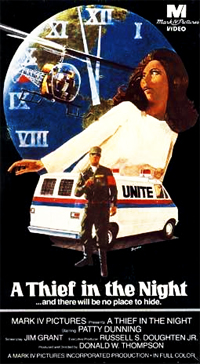
Long before the popular Left Behind books and films by Tim LaHaye and Jerry Jenkins, a Christian filmaker, Russell S. Doughten, in 1972 produced the classic (though some say a bit cheesy) A Thief in the Night, a visual experience that haunted a great many youth groups in dispensationalist churches throughout the 1970s.

Long before the popular Left Behind books and films by Tim LaHaye and Jerry Jenkins, a Christian filmaker, Russell S. Doughten, in 1972 produced the classic (though some say a bit cheesy) A Thief in the Night, a visual experience that haunted a great many youth groups in dispensationalist churches throughout the 1970s.

Growing up in the late 1970’s and early 1980’s, things were not looking very good. The Cold War with the U.S.S.R., the Islamic Revolution in Iran with American embassy staff held as hostages, and runaway inflation were on everyone’s mind. So when I first heard Larry Norman’s song “I Wish We’d All Been Ready,” I really resonated with the message:

life was filled with guns and war
and everyone got trampled on the floor
i wish we’d all been ready

children died the days grew cold
a piece of bread could buy a bag of gold
i wish we’d all been ready

there’s no time to change your mind
the son has come and you’ve been left behind
a man and wife asleep in bed
she hears a noise and turns her head
he’s gone
i wish we’d all been ready

two men walking up a hill
one disappears and one’s left standing still
i wish we’d all been ready

Based on Matthew 24:36-44, Larry Norman was singing about the coming Rapture, where all living Christians would be taken up into the air to escape the approaching seven years of the Great Tribulation, prior to the Second Coming where Jesus Christ sits in judgment as the righteous King and to rule the earth for a one thousand year millennium (previous Veracity post). While most of my Christian friends were hesitant to guess any particular dates, the general sense was that Jesus would definitely come within my lifetime. I was so taken in by this message that for the first few working years out of college, I never bothered to participate in my company’s 401K plan to save for the future. Why should I plan for the future when Jesus is definitely coming back so soon?

Years later, I now wish I had given greater thought to how my view of the EndTimes had impacted my life as a young person. Even more so, I wish I had learned that the Rapture theology narrative I had so readily embraced as being identical with the very Word of God is actually a bit more complicated. Let us dig a little deeper into what the Bible teaches on the subject. Continue reading


Ben Witherington and Darrell Bock on the Rapture

If you were a bit intimidated by my last (lengthy) post regarding the Book of Revelation, including its connection to the Rapture, you might be more interested in the following less-than-seven minute video by Ben Witherington, New Testament scholar at Asbury Seminary. Witherington, who was highlighted before here on Veracity, gets to the rub of the history behind the Rapture.

Witherington, as you will see, concludes with a negative assessment of “Rapture Theology.” Contrast this with Dallas Theological Seminary’s Darrell Bock who accepts the “Rapture Theology.” For those of you not accustomed to big words like eschatology, you can think of it in this context as someone’s understanding or theology of the “End Times.” Bock, also a New Testament scholar and a favorite here on Veracity, follows his brief assessment with a very helpful, three-minute way of evaluating how Christians should handle important issues in the church where Christians nevertheless disagree.

I hope you might benefit from both videos.


Revelation … (and the Rapture Reboot)

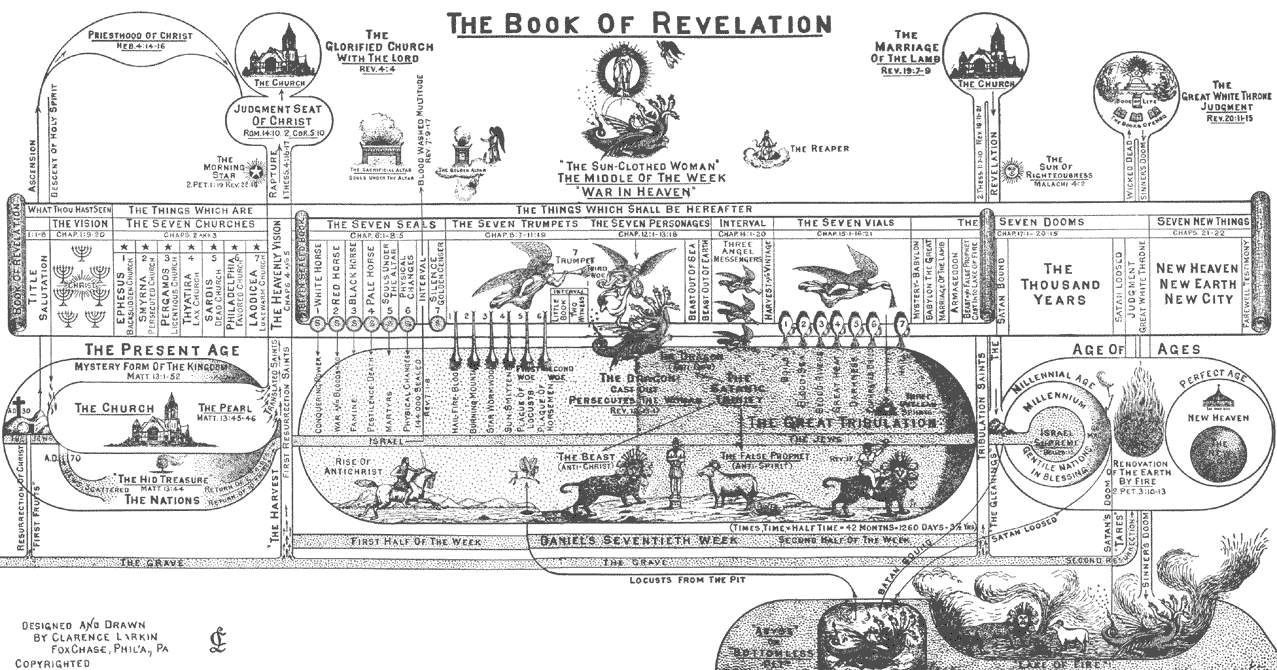
Clarence Larkin (1850–1924), a Baptist pastor, produced this intricately detailed chart showing the structure of the events described in the Book of Revelation according to a dispensationalist system of Bible interpretation. Note how Larkin splits the event of the Second Coming, into two parts: the first where Christ "raptures" the church and the second where the Christ comes in glory with his Church to begin the millennial reign. In between the two parts of the Second Coming is the "seventieth week of Daniel," which forms the basic narrative of the last book of the Bible.

Clarence Larkin (1850–1924), a Baptist pastor, produced this marvelously intricate and detailed chart showing the structure of events described in the Book of Revelation according to a dispensationalist system of Bible interpretation (Click to enlarge). Note how Larkin splits the event of the Second Coming, into two parts: the first where Christ “raptures” the church out of the world and the second where Christ comes in glory with his Church to begin the millennial reign. In between the two parts of the Second Coming is the “seventieth week of Daniel,” which forms the basic, if not sometimes terrifying, narrative of the last book of the Bible… You really need a chart to keep track of everything! (Source: clarencelarkincharts.com)

The subject of the End Times can be very daunting. Various places in the New Testament address the topic, but by far the most fascinating discussion in the Holy Scriptures that digs into End Times issues can be found in the very last book of the Bible: The Revelation.

As I was nearly completing this blog post on the Book of Revelation, I read about a new Christian movie coming out this year, Left Behind. What? Nicholas Cage in a Christian movie?

Yep. That’s right. What a great lead in on a blog post about the Book of Revelation! How did this all come about?

Well, the story is that some years ago, best selling Christian authors Tim LaHaye and Jerry B. Jenkins wrote a series of popular books of the same name. The only book series that has topped Left Behind in sales in recent years is Harry Potter.

In 2000, Cloud Ten Pictures released a theatrical version of the book, starring Christian actor Kirk Cameron. Left Behind: The Movie was a total bust at the box office. Unlike the Harry Potter films, Left Behind: The Movie never went very far.

In response to the poor sales and lackluster quality, author Tim LaHaye sued the film company claiming a breach of contract. LaHaye was expecting a much better movie and wanted Cloud Ten to make amends. Cloud Ten eventually settled with the author and agreed to remake the movie. As the subject of the film is “the Rapture,” you can call it a “Rapture Reboot.”

Well, here is the trailer. Does this look like your idea of a Christian film?

I am still working on the concept of Nicholas Cage being in this film…. Anyway… Undoubtedly, the film will be controversial, particularly among Christians. Fans of the book series might flock to the theatre, just to see if the “Rapture Reboot” with Nicholas Cage was really that much of an improvement over Kirk Cameron. Nevertheless, the film does raise a lot of questions about the Bible, the type of issues you simply will not be able to resolve just by going to a movie theater, or viewing later on Netflix.
Continue reading


Wrong Kind of Christian

A growing number of college campuses today are not extending the welcome mat to evangelical Christians today. Is it merely an issue regarding sexual discrimination or is it an erosion of religious freedom?

A growing number of secular-minded college campuses are not extending the welcome mat to evangelical Christians today. Is the central issue regarding sexual discrimination, or is it an erosion of religious freedom?

Tish Harrison Warren has written a very compelling article at Christianity Today on her experience as a campus ministry worker at Vanderbilt University. Several years ago, Vanderbilt University kicked several Christian student groups off of campus for failing to comply with the university’s revised anti-discrimination policy.

Along with Bowdoin College in Maine and possibly soon the entire Cal State school system, with some 450,000 students, Vanderbilt has joined a growing trend that is seeking to revise their criteria for allowing religious groups to affiliate with university campuses, allowing space for on-campus meetings, as well as sometimes permitting the partial use of student activities fees to fund some aspects of their programs. The conservative Christian groups at Vanderbilt sought to challenge what they considered to be an intrusive form of control by the university. Vanderbilt insisted that leadership in student religious groups should not be limited to those adhering to an organization’s statement of faith. This put the Christian groups on that campus in a real bind, having to choose between the principle of honoring their creedal commitments against working with the anti-discriminatory policies of the university.

It is a dilemma worth thinking about deeply.
Continue reading