
When we say that Jesus died for sins, what do we mean by that exactly?
Stephen De Young in his The Religion of the Apostles: Orthodox Christianity in the First Century dives into this topic, which has at times caused some friction between evangelical Protestant and Eastern Orthodox Christians. But perhaps both sides have more in common than many realize. In the interest of Christian apologetics, both Protestant and Eastern Orthodox Christians together have an answer to give to those secular and progressive critics who say that Christians invented their doctrine of atonement, based on the assertion that atonement had nothing to do with the message that Jesus taught.
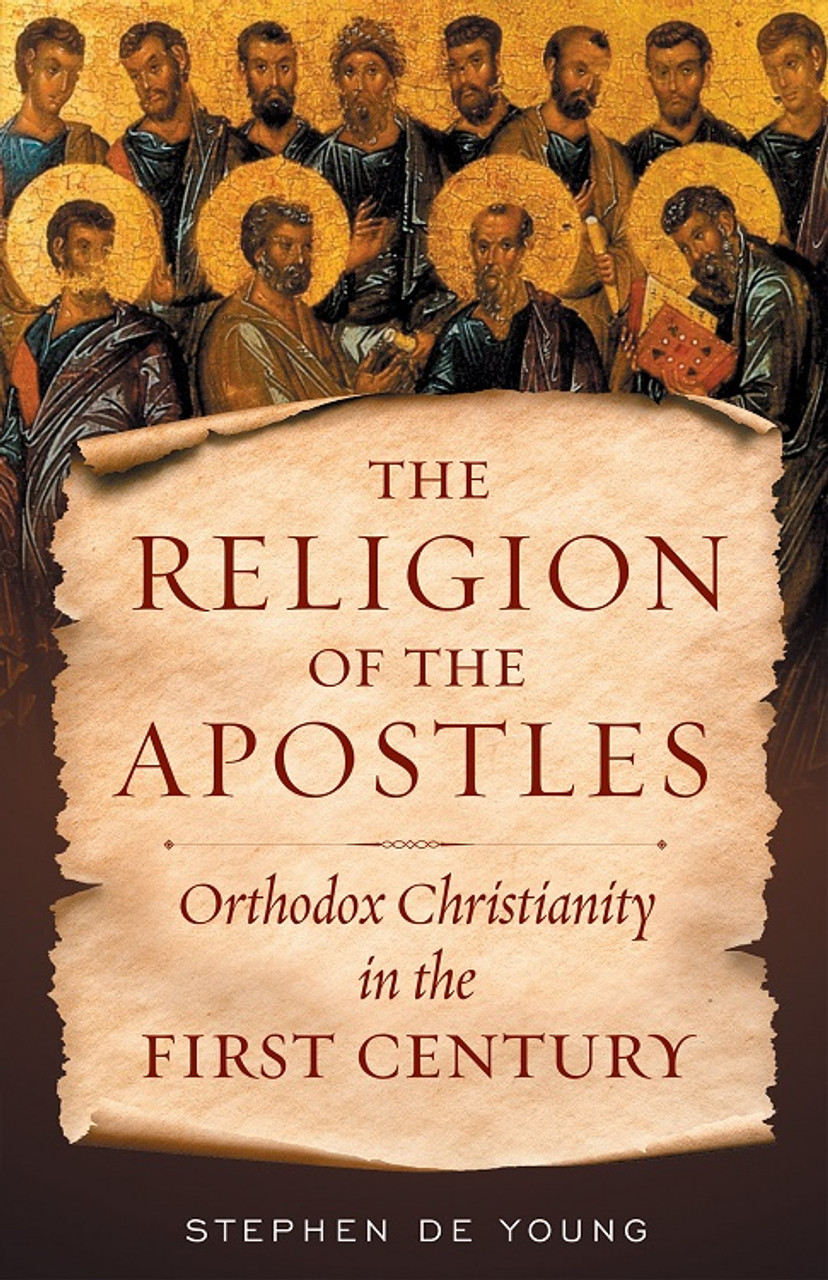
The Religion of the Apostles, by Stephen De Young, shows how the beliefs and practices of the early church connect with the world of Second Temple Judaism, the historical context for Jesus of Nazareth and the New Testament.
Forgiveness Without Atonement?
Bart Ehrman, a religion professor at University of North Carolina at Chapel Hill, perhaps the most influential living skeptic of historically orthodox Christianity, makes an argument which will probably shock the average Christian. For Ehrman, Jesus preached a message of forgiveness, whereas Christianity as an organized faith teaches a message of atonement, which are two completely different things.
For Ehrman, forgiveness is simply “letting go” the fault of another person, without any price or payment associated with it. The only condition for extending forgiveness is repentance, the act of turning from a sinful act, with the intention never to commit the sinful act again.
Atonement, on the other hand, is about a payment for debt incurred by sin, in order to cancel the debt. Unless a payment has been made, the debt can not be canceled.
In Ehrman’s mind, Jesus was all about forgiveness, whereas his followers, particular those who followed the Apostle Paul, changed Jesus teaching in order to stress an atonement for sin instead. For example, in Mark 2:1-12 when Jesus heals the paralytic lowered through a roof in Capernaum, Jesus forgave the man’s sins. There was no mention of atonement. There was no mention of needing to go to the Temple to make a sacrifice. No sacrifice was necessary. God, through Jesus, simply forgave the man.
Ehrman goes on saying that in the Gospel of Luke, and even in the Book of Acts, there is no doctrine of atonement. In Acts following Jesus’ death and resurrection, Jesus’ death is frequently mentioned, but it is never connected with atonement. As Ehrman argues, for Luke, “Jesus’ death makes you realize how you have sinned against God and you turn to God and beg his forgiveness, and he forgives you. No one pays your debt; God simply forgives it.”
It was not until we get to the Apostle Paul, and perhaps others in the early Jesus movement, that we get the sense of atonement as being the full basis for why forgiveness is possible from a Christian perspective. Repeatedly, Paul makes the case that Jesus’ death actually paid some sort of debt. In Romans 5:8, “God shows his love for us in that while we were still sinners, Christ died for us.” In Ephesians 5:2, “Christ loved us and gave himself up for us, a fragrant offering and sacrifice to God.” In Galatians 3:13, “Christ redeemed us from the curse of the law by becoming a curse for us.”
Ehrman adds, however, that in Mark’s Gospel, supposedly someone probably put on the lips of Jesus an idea of atonement, decades after Jesus’ earthly ministry ended. In Mark 10:45, “For even the Son of Man came not to be served but to serve, and to give his life as a ransom for many.”
If Bart Ehrman is correct, then it would appear that a certain group of Christians, which eventually became the “orthodox” party of the early church, essentially invented a theory of atonement to explain the relationship between Jesus’ death with the forgiveness of sin. The implication should be obvious. From Ehrman’s vantage point, the message of Jesus is ethically superior than the message of Paul: Crudely put, Jesus offers forgiveness for free, while Paul’s brand of forgiveness comes at the cost of a life, human or some other animal.
However, there are some very good reasons for saying that Bart Ehrman is quite wrong about his assessment that Jesus’ message of forgiveness was in stark contrast with the later, supposedly “invented” teaching of the church, associated with Paul.
One of the great benefits Stephen De Young’s The Religion of the Apostles: Orthodox Christianity in the First Century is that it offers a convincing apologetic for why a theology of atonement is fully integrated into the teachings of Jesus, as seen through the lens of Second Temple Jewish thinking. While Religion of the Apostles does not directly address Bart Ehrman’s critique of Pauline Christianity, as being morally inferior to the teachings of Jesus, Stephen De Young lays down a foundation for why the forgiveness of sins is intricately connected with the concept of atonement. Far from being an invention of the early church, the New Testament doctrine of atonement is drawn from centuries of Jewish meditation on the Old Testament Scriptures.
“The Scriptures and the Fathers understand Christ’s atoning death as the revelation of His divine glory. Atonement as it took place in the Old Covenant, as described in the Hebrew Scriptures, represents a partial and preliminary revelation of the glory of Christ, which comes to its fullness in His death on the Cross” (DeYoung, p. 192)
In other words, Christianity did not invent atonement and decades later bolt it somehow onto the teachings of Jesus concerning forgiveness. Rather, the life, death, and resurrection all stand within the steady stream of Jewish thought during the period when the Second Temple was still standing in Jerusalem. The New Testament shows us how Jesus fulfills and thereby transcends certain older ways of thinking about atonement, something not limited to the world of Judaism in the first century and its Temple in Jerusalem. The sacrifice of Jesus on the cross enables the message of God’s forgiveness of sins to be a universal message, empowering a universal message of forgiveness with respect to God (vertically) and with one’s neighbor (horizontally).
For Stephen De Young, there have been a number of theories about atonement discussed in Christian theology which are either only partially supported by Scripture, or some even not found in Scripture at all. In this third blog post in this book review series, we now take a closer look into De Young’s defense of an Old Testament-grounded theology of atonement which the early church adopted through divine revelation. De Young’s full treatment in his apologetic has some minor problems, as I see it, but in the long run, his understanding of the early church view of atonement offers an adequate answer to Bart Ehrman’s skepticism.
Forgiveness Is Not As Easy As Some May Think
Here is an anecdote to show why Bart Ehrman’s viewpoint is unsatisfactory: About 13 years ago, my wife took our Italian greyhound out for a walk in the neighborhood, as she normally did. We live in a rural area, where few dog owners in our neighborhood keep their dogs on a lease. Suddenly, one of our neighbor’s dogs, a rather large one, jumped out onto the road where my wife was strolling along with our rather small, 10-pound greyhound. This big dog mauled our little greyhound, grabbing him by the throat, thrashing him around. The big dog finally let go, but our Italian greyhound was permanently injured by the incident.
The combination of the physical and the emotional trauma led to a severe decline and eventually an early death of our little dog less than two years later.
We were able to forgive our neighbors for allowing their dog to go free without a leash, and then attack our dog, but it was difficult. We spent hours and hours trying to nurse our dog back to health, not to mention the costly visits to the vet, only to watch our dog slowly lose his zest for life due to the trauma.
Our neighbors received our forgiveness, but it was not easy for them to fully accept it. Their big dog had himself experienced some abuse earlier in his life, so it was not altogether unexpected for him to lash out on our Italian greyhound. They had tried other ways help their big dog to become healthier and better behaved, but that proved to be very difficult. I am not sure what exactly happened with that dog, but the dog did not remain very long in our neighborhood after that.
No amount of money for vet visits could have ever fully helped out our little Italian greyhound come back to full health. I am convinced that our neighbors continued to feel guilt about the incident for years to come, as they were reminded about it every time they saw my wife or myself trying to walk our dog down the street again, much slower than before the attack.
We paid a price to extend our forgiveness. Our neighbors paid a price in terms of the guilt they experienced.
Chances are, as you are reading this, you can think of examples in your own life where it was difficult to forgive someone else for some wrong committed against you. You might even think of examples when someone tried to forgive you of something you did, and you still ended up feeling guilty.
Forgiveness is costly. It is not as easy as some may think.
The idea that forgiveness can be extended or obtained without paying some sort of price, as Bart Ehrman suggests, is unrealistic.
Atonement in the Early Church
In The Religion of the Apostles, Stephen De Young rejects the idea of different “models” to describe Christ’s atonement, which he sees is a movement away from “describing” what Christ accomplished on the cross towards “explaining” how and why Christ accomplished what he did (De Young, p. 191). To his point, we can get so bogged down with which model best explains the atonement that we miss the big picture. That the atonement works is what ultimately matters, more so than trying to tease out how it works.
Nevertheless, De Young’s rejection of various models, like that of penal substitutionary atonement, seems to this reviewer to be a bit of special pleading. Everyone has a theory of how atonement works, whether one realizes it or not. But happily this reviewer agrees with De Young that a Christian need not pick one model and thereby reject other models. There is a richness in understanding how Christ’s atonement for sin works, drawing from multiple models, each one potentially offering a different dimension of thought not fully addressed by other models. Stephen De Young is sensitive to this, and rightly so.
For example, later in the book, De Young notes that the Jewish Passover, which is connected to Christ’s own sacrifice had no concept of substitution associated with the ritual:
“There is no indication that the lamb is being killed instead of a firstborn human losing his life. This is clear for several reasons when the text is read carefully. No attention is paid by the ritual text to the killing of the lamb. This means that its death is incidental to the ritual, not part of it. Rather, the focus is on how the lamb is to be cooked and eaten (Ex. 12:3–11)” (De Young, p. 234).
But this need not indicate that Christ’s sacrifice lacked any sense of substitution, as there are other elements in Jewish atonement tradition which are substitutionary in character. In Eastern Orthodoxy, there is a general sentiment that penal substitutionary atonement is to be rejected. Well, at least the penal concept is rejected, while retaining the substitutionary atonement part. Historically, the penal substitutionary model has been the standard evangelical Protestant view of Christ’s atonement. However, in the modern period, a number of Protestants have grown squeamish about penal substitution today as well.
But much of this sentiment against the standard Protestant view of atonement relies on a caricature of penal substitution. This caricature wrongly assumes that the loving Son of God is killed on the cross in order the appease the anger of God the Father against human wrongdoing. It carries the sense of a kind, loving Son who has to somehow assuage the uncontrolled wrath of an angry Father, who is royally ticked off at humanity.
This caricature was driven home to me when I heard it preached at a youth evangelistic event years ago. The speaker pictured God the Father as being so angered by sin that he acts as a judge and executioner who must impose punishment on the sinner. The Father has a gun and must shoot the sinner, standing in as a representative for “us;” that is, all of humanity, in order to satiate his anger. However, at the last minute, the kind and sacrificial Son steps into view, the Father turns the gun towards the Son, and takes the bullet on our behalf.
Looking back, I know that the speaker had meant well, and no illustration of the meaning of the cross is perfect. But this type of illustration is pretty terrible.
To the contrary, Jesus as the Son of God is just as angry with human sin as the Father is. Likewise, the Father is just as loving towards humanity as the Son of God is. The key to understanding the doctrine of atonement, and its relationship to the forgiveness of sins, is that Jesus’ death on the cross is an act of self-sacrifice. Because of God’s self-sacrificial love for us, not only are we forgiven of our sins, we are also enabled and empowered as humans to self-sacrificially extend forgiveness towards others who have hurt us.
De Young’s efforts at “describing” Christ’s atonement show that a broad array of Scriptural themes can be brought to bear on the meaning of Christ’s atonement, including elements that make up the doctrine of penal substitution; that is, the teaching that Jesus died in our place in order to pay the penalty for our sins. Admittedly, some evangelical Protestants wrongly focus exclusively on penal substitution, so in this sense, Stephen De Young’s closer look at how Second Temple Judaism influenced the early church offers a very helpful corrective to the typical Protestant caricature of the doctrine of atonement.
God’s Wrath and a Better Understanding of Propitiation
De Young acknowledges the role the wrath of God plays in purifying the sinner of sin, as in a purifying fire, and he helpfully points out the Old Testament language of God being “slow to anger,” which is rooted in a Hebrew idiom of being “long of nose” (De Young, p. 194). De Young accepts the concept of propitiation, which is often seen as the heart of the doctrine of penal substitutionary atonement. Perhaps as an Eastern Orthodox priest, Stephen De Young is not far off from an historic, standard Protestant view of atonement? But helpfully, he notes that propitiation has a simple meaning:
“it means to render someone propitious, or favorably disposed. At its most basic level, it refers to an offering that is pleasing to God” (De Young, p. 203).
The pagan form of propitiation does not map well onto the biblical form of propitiation. For in pagan sacrificial ritual, the killing of an animal is required to satiate the wrath of the gods. But in the Bible, “attempting to import this concept into the sacrificial system established in the Torah is simply impossible. Much of the sacrificial system of the Law does not even involve the killing of an animal, even though the offerings it calls for are always food” (De Young, p. 203). Instead, it is the pleasing aroma that is offered up to God that matters. The actual killing of the animal itself is not tied to the propitiation towards Yahweh.
‘Some sort of punishment or suffering on the part of the sacrificial animal was no part of the ritual. Even in the case of whole burnt offerings—which stipulated that the entire animal be burned and thereby given to Yahweh—it is not sacrificed alive but is killed first, unceremonially……. The more common language used in the Scriptures for God’s appreciation for His portion of sacrificial meals is that these sacrifices are a pleasing aroma (as in Gen. 8:21; Lev. 1:9, 13; 2:2; 23:18). This same language is applied to the sacrifice of Christ in the New Testament (in Eph. 5:2 and the Father’s statement that in Christ He is “well pleased”)’ (De Young, p. 203).
This more mature view of propitiation goes against the common misunderstanding about propitiation, pedaled by those such as Bart Ehrman. Ehrman’s false view wrongly links biblical propitiation with some “barbaric” requirement of an animal death meant to satiate the supposed bloodthirsty demands of an angry god. This is the worst caricature of all regarding the doctrine of atonement in Christianity. As the late Michael Heiser has said, “It is not that God is thirsty for blood.”
De Young also links God’s justice less with retributive justice, whereby criminals are merely punished for their crimes, and more with distributive justice, which is more linked to civil law. Someone has been wronged, and therefore an attempt is made to try to rectify the wrong so that the injured party can be made whole (De Young, p. 196).
While the following analogy does not work well for vegetarians, the analogy that I can think of to best begin to explain this is the experience of eating a good steak on a grill. What makes someone happy, or pleased, or “propitious” about a good steak meal is not the fact that a cow had to be killed to supply the meat. What makes for a pleasing or “propitious” steak meal is the aroma of a freshly cooked steak on the grill, and the eventual eating of that steak. This is reasonably close to the idea that the pleasant aroma of a cooked sacrificial meat is what is “propitious” in God’s perspective, not the killing of the animal to supply the meat. This is the basic difference between a biblical view of propitiation versus a pagan view of propitiation which celebrates the killing of an animal.
Propitiation, rightly understood therefore, is not about God’s supposed inner need to kill someone or some animal, or have someone or some animal killed to make God happy. Israel’s pagan neighbors had that understanding but not Israel herself. Rather, as Joel Edmund Anderson puts it in his review of The Religion of the Apostles, propitiation celebrates “the restoration of relationship and a demonstration of His justice and righteousness.”
Other Dimensions of Atonement Theology
De Young highlights Colossians 2:14 as an expression of atonement theology: ““He canceled the handwriting in the decrees against us, which were opposed to us. And He has taken it from our midst, by nailing it to the Cross.” Sin is here associated with the concept of debt, in that Christ’s death canceled the debt of sin (De Young, pp. 206ff). De Young goes on to say that this made perfect sense in Paul’s first century context, as the slavery system of the time was employed as a means of paying off debt.
“Slavery in the ancient world was not primarily an instrument of racial or ethnic oppression. Rather, it was primarily an economic institution. With no concept of bankruptcy in the modern sense, the means by which a debt that could not be paid would be settled was indentured servitude. A person would work off the debt by becoming a slave” (De Young, p. 207)
This understanding of slavery is helpful in that it is a stark contrast with the type of slavery practiced in the American antebellum South, which was specifically racial in character. While not answering every question about what the Bible has to say about slavery, De Young frames the discussion in a way that can assist us to get past many of the polemical critiques against Christianity today.
Furthermore, the atoning work of Christ is universal in character, impacting every human being (1 John 2:2; De Young, p. 215). Yet this universal character is often misunderstood (De Young, p. 209). As a result, De Young’s rejects the doctrine of universalism, most notably defended by a fellow Eastern Orthodox scholar, David Bentley Hart (See Veracity analysis of universalism espoused by David Bentley Hart). For De Young, universalism as those like David Bentley Hart presents it, is a Christian heresy that is fully dismissed by Eastern Orthodox tradition, contra David Bentley Hart. (For a substantial interaction with David Bentley Hart’s universalism thesis, one should consult this episode of the Lord of Spirits podcast for a full critique. For a modest, cautious defense of David Bentley Hart with respect to Stephen De Young’s critique, see this essay by Jesse Hake).
Interestingly, De Young shows that certain strands of Eastern Orthodoxy have preserved certain Second Temple Jewish understandings of atonement, that are typically unknown to Protestants: “Texts such as the Apocalypse of Abraham, which has been preserved in Slavonic by the Orthodox Church, describe an ultimate eschatological Day of Atonement” (De Young, p. 218).
Another Second Temple Jewish tradition linked to atonement theology, associated with the figure of “Azazel,” can be found in the Book of Enoch. In the Enoch literature, Azazel is identified as the leader of angels which rebel from Yahweh, those members of the divine council that sought to subvert God’s ultimate rule (DeYoung, p. 125).
1 Enoch 10:8 says, “The whole earth has been corrupted through the works taught by Azazel; to him credit all sin” (compare 1 John 3:8; 5:19). (DeYoung, p. 125).
One other particular observation that De Young makes is very intriguing: Several translations of Leviticus 16:8 link Azazel with the scapegoat, sent out into the wilderness as part of the Jewish atonement rituals. “And Aaron shall cast lots over the two goats, one lot for the Lord and the other lot for Azazel” (Lev. 16:8 ESV, De Young p. 218). Compare with the NIV translation that renders “Azazel” with “scapegoat” instead. The goat is sent out into the wilderness, from where the sins of the people came, back to the spiritual evil powers who instigated those sins (De Young, p. 217-218). Oh, and yes, the concept of a scapegoat is inherently substitutionary in character (at least that is my read on it. De Young is not clear on this point).
But the other goat involved in this ritual, the one that gets killed, is not killed as an act of sacrifice. The sins of the people are not placed on this other goat, and then killed. Rather, this goat is killed in order to share a meal celebrating the removal of sin represented by the activity of the other goat, the scapegoat, who does take the sins of the people away (See Michael Heiser’s video on the same topic).
What is apparently clear is that that this substitutionary aspect of the scapegoat does not involve a bloody sacrifice. Jesus is our scapegoat, who by way of substitution takes our sins upon himself, thereby achieving atonement through Christ’s work on the cross.
Frankly, of all of the chapters in The Religion of the Apostles, De Young’s chapter on atonement is perhaps the most challenging and difficult to assess. On the negative side, De Young tends to fall back on this caricature of an historic Protestant view of atonement at various points. But to De Young’s credit, on the positive side, he ultimately lands in the right place as far as I can tell. The Religion of the Apostles may not satisfactorily resolve the differences between historical Protestant and Eastern Orthodox understandings of the atonement, but it takes the conversation into a very constructive direction. I intend on revisiting this chapter again in the future, to make sure I have understood Stephen De Young correctly.
De Young’s conclusion in this chapter finally connects the concept of atonement with the restoration of Adam. Adam was originally sent on a mission to rule the world, but the problem of sin short-circuited that mission. The work of Christ on the cross puts humanity back on the right track. This work of Christ accomplished something that the Jewish ritualized system of atonement was not able to fully do. In turn, Christians today are given the privilege to participate in the reality of Christ’s finished work through ritual:
The New Testament narrative of Christ’s atoning work is enacted, made real, and participated in by members of the Church as community through ritual. This participation produces repentance, which brings about forgiveness, cleansing, and the healing of sin.
For Israel and Judea, ritual represented a curse postponed and a deadly infection managed. Christ through His acceptance of the curse has removed His people from it. He has removed the threat of death and ended the exile by restoring humanity to Paradise in coming, as God, to dwell in our midst (De Young, p. 215).
The Christian church is then called upon to proclaim and embody that message to the whole world:
“The entire creation is now the possession of our Lord Jesus Christ, who wields all authority within it. We, as His assembly the Church, bring that rule and its effects to realization within the world as we receive God’s creation, bless it, and hallow it” (De Young, 229).
Stephen De Young does not come right out and say it, but the doctrine of substitutionary atonement is clearly present in Eastern Orthodoxy, and certainly goes back to the apostolic era, and beyond into ancient Judaism. Some will surely debate and quibble about the “penal” association with substitutionary atonement, but it is helpful to know that the Western and Eastern understanding of Christ’s atoning work may not be so far apart as it is often described.
I have just attempted to pull out the best takeaways from Stephen De Young’s approach to atonement. Trying to tease all of the data points out from this chapter of The Religion of the Apostles, and synthesizing them is too difficult to do in this book review. Hopefully, this survey will whet the appetite of the reader to go out and get a copy of Stephen DeYoung’s book and meditate on what he writes in his chapter on atonement.
Forgiveness and Atonement Are Bound Together
Real forgiveness involves restoration, and such restoration is costly. We as humans often miss this because we are finite creatures with limited resources whereas God is infinite, possessing unlimited resources. Still, the atoning work of Christ on the cross actually cost God something, though we have trouble seeing this. My earlier example of our little Italian greyhound suffering an attack by a big dog belonging to one of our neighbors should make more sense now.
This emphasis on connecting forgiveness with restoration helps to explain that even if you have wronged someone else, and that other person has supposedly “forgiven” you, it does not always feel right. You can still feel guilty, even if the other person whom you have wronged “lets you off the hook.” It only feels right when full restitution has been made somehow. This ultimate restoration of all things gets at the heart of what Christ’s atoning work on the cross is all about.
In contrast to Bart Ehrman’s view, Stephen De Young sees that the concept of atonement is tied together with Jesus’ teaching of forgiveness. We see this even in the Lord’s Prayer.
“Depending on the Gospel, the Lord’s Prayer asks for the forgiveness either of “debts” or of “trespasses.” The Lord’s Prayer as rendered by St. Matthew’s Gospel refers to the forgiveness of our debts as we forgive our debtors (Matt. 6:9–13). Immediately thereafter, however, as an interpretation of the prayer, Christ says that if we forgive the trespasses of others, then our trespasses will likewise be forgiven (vv. 14–15). Saint Luke, however, phrases the Lord’s Prayer as referring to the forgiveness of our sins as we forgive our debtors (Luke 11:4). The concepts of debt and transgression are so closely aligned in Second Temple-era thought that they can be used interchangeably. In describing the forgiveness of sins, Christ uses debt in several of His parables (see Matt. 18:23–35; Luke 7:36–47)” (DeYoung, p. 207).
The point is that forgiveness is only made possible because of atonement. Jesus was able to forgive the sins of the paralytic because Christ in a sense knew that his ultimate mission was to pay for the sins of the whole world through his upcoming death. The paralytic did not need to offer a sacrifice because Jesus’ death was still a few years off into the future, a death which thereby paid off the debt of sin incurred by the paralytic. Likewise, today we can receive God’s offer of forgiveness just as the paralytic did.
As Jesus’ disciples were wandering the hills and pathways with the Christ in Galilee, they were not ready to fully understand the meaning of Jesus’ death until after it actually happened. This would explain why the Gospels often talk about Jesus forgiving people of their sins, with no direct reference to atonement. That sense of atonement was something that would not fully come together until Christ’s being nailed to the Cross. It would take decades for the early church to ultimately work through what this all meant and weave this theology into the pages of the New Testament.
We see this principle of atonement intimately connected with forgiveness in terms of how we are to forgive our neighbor when they sin against us. It is extremely difficult simply to forgive someone else of wrongdoing when we have been hurt. If someone recklessly runs over your pet with their car, or cheats you out of your money at the store, or steals your online identity and empties your bank account, that can make it exceedingly difficult to say to anyone, “I forgive you,” even if the one who violated you promises to amend their ways. For even if your offender does show contrition and repents from their wrongdoing, that does not bring your pet back to life, it is no promise that you will get your money back, and it in no way compensates for all of the hours you have to spend trying to clear your name and get control of all of your stolen online assets.
Back to the story about the sad encounter of our little Italian greyhound with a neighborhood dog, the idea of atonement makes sense. It was difficult for me to forgive our neighbor. But the more I reflected on how Jesus paid the penalty for my sin, through his atoning death on the cross, the easier it was for me to eventually forgive my neighbor. Forgiveness did not come right away. I had to work through my own anger, frustration, and sadness quite a bit, but by meditating on Jesus and the cross, forgiveness finally came.
Bart Ehrman’s idea of a Jesus who simply offers forgiveness, without any sense of atonement, in terms of making restitution or otherwise paying off a debt, does not seem very realistic anymore, once you take a closer look at it.
But because Christ has died for us, and forgive us of our sins and canceled our debt, we are then able to extend forgiveness towards others. As we receive the healing mercy and grace of God in erasing the debt of our sins towards God, so are we empowered to extend mercy and grace towards others. Atonement is what makes forgiveness possible.
The next and last post in this multi-part blog review of The Religion of the Apostles will cover an assortment of topics in the rest of Stephen De Young’s book, plus a critical interaction with the book overall.
For a short description of how Eastern Orthodoxy might view something like “penal substitutionary atonement” positively, the following video by Seraphim Hamilton might be of interest:
Protestant YouTube apologist, Gavin Ortlund, suggests a view of penal substitutionary atonement that goes back to the early church, and not something introduced into Western Christian ways of the thinking through some supposed innovation by Anselm.









 Veracity