Category Archives: Archaeology

Josephus and the Werowocomoco Effect

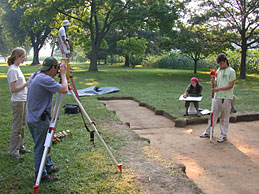
Archaeology students from the College of William and Mary doing field work a few years ago at Werowocomoco, a prominent Native American village in pre-colonial Virginia... and famous site for Captain John Smith's rescue by Pocahonatas.

Archaeology students from the College of William and Mary doing field work a few years ago at Werowocomoco, a prominent Native American village in pre-colonial Virginia… and famous site for Captain John Smith’s rescue by Pocahontas.   Werowocomoco, under excavation since 2003,  dates back as an active settlement as early as perhaps the 12th century Before Christ.

Terrence Malick’s 2005 film, The New World, was filmed on the Chickahominy River, less than a mile or two from where we live. The New World tells the story of Jamestown, focused around the fascinating story of Captain John Smith, his capture by the Native Americans, and his detainment at the ancient Algonquian village of Werowocomoco, recently discovered along the York River in Virginia. By Smith’s recollection, his life was spared at the last minute by the intervention of the young daughter of chief Powhatan, Pocahontas. This is the stuff that great legends are made of.

Captain John Smith was a man of adventure, much like the great Jewish historian, Josephus, whom we considered in an earlier Veracity post. Perhaps in more ways than one, you might find a connection between John Smith and Josephus. Let me know what you think.
Continue reading
The Masada Myth: Martyrs or Maniacs?

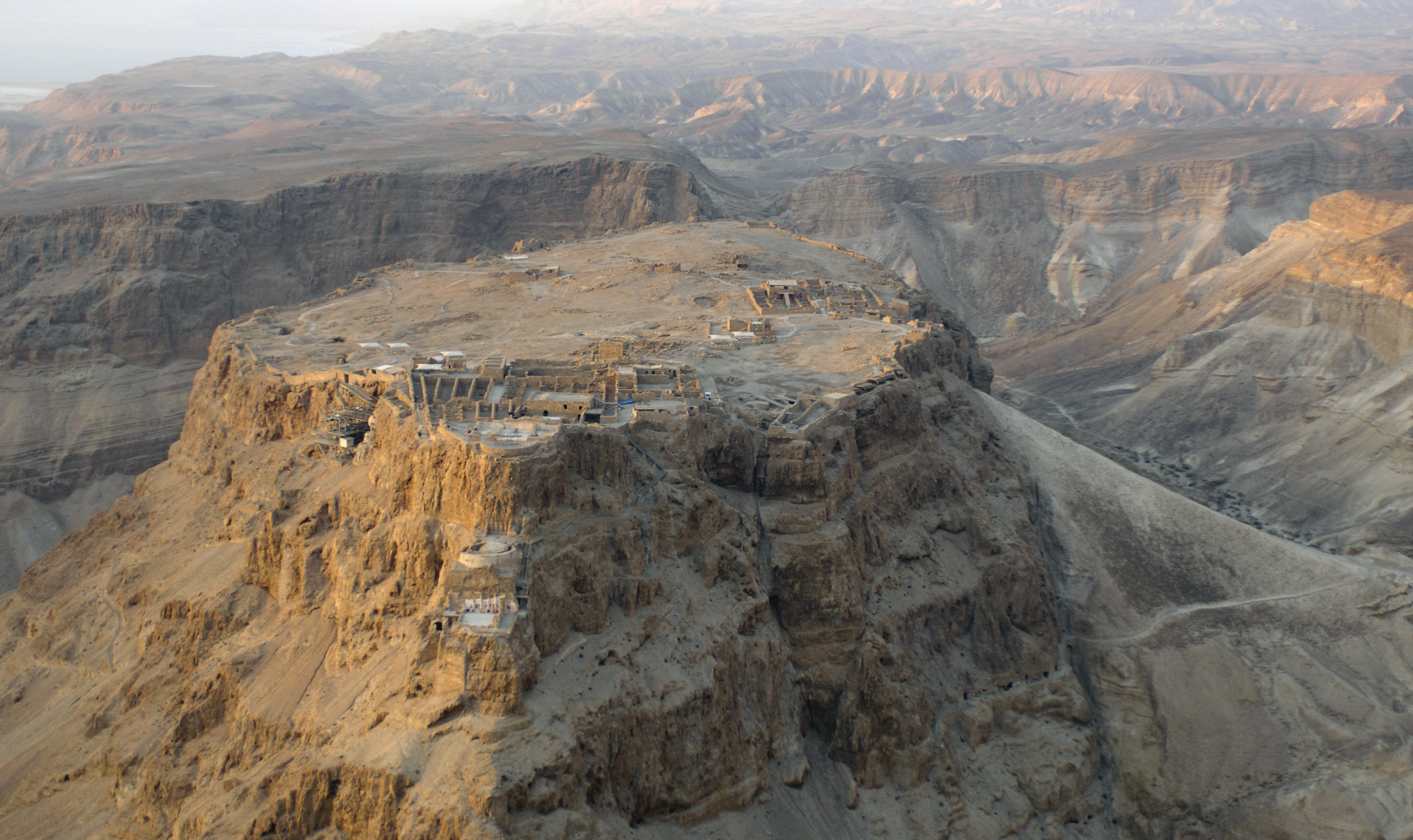
Aerial view of Masada, Herod's fortress near the Dead Sea, where Jewish rebels resisted the Roman army, just a few years after the Destruction of Jerusalem within a generation after Jesus' Resurrection (Wikipedia image, Godot13 photographer)

Aerial view of Herod’s Masada, where Jewish rebels resisted the Roman army, just a few years after the Destruction of Jerusalem, within a generation after Jesus walked the earth.  Note the Dead Sea faintly in the upper left to the east, and the location on the right where the Romans built their siege ramp on the western approach. (Wikipedia image, Godot13 photographer, click on the image to see it close up…. pretty impressive)

Around the years 72-73 A.D., a band of Jewish rebels and their families sought refuge in one of Herod the Great’s fortresses, Masada. The Roman army had recently destroyed the city of Jerusalem, slaughtering thousands of fellow Jews in the process. These 960 men, women and children belonging to a radical group of Zealots, the Sicarii, sought to hold out at Masada in a last ditch effort to resist the Roman occupation.

Herod the Great, known to students of the Bible for the “massacre of the innocents”, had originally built Masada on a desolate mountaintop just west of the Dead Sea. What happened at the siege of Masada some one hundred years later has continued to fascinate historians and believers down through the years. The Jewish Zealots had enough food and water to last them for many, many months, but it was only a matter of time before their defeat in the hands of the Roman army would become inevitable. Roman troops eventually surrounded the near impenetrable fortress, and over the following months they were able to build a siege ramp that enabled the Romans to break through the Jewish Zealot defenses.

What the Romans found there next on top of Masada has inspired many a freedom fighter while horrifying others by the ghastly moral choices that were made. What really happened at Masada, and how is a Christian to respond to it?
Continue reading


City of David

“Brothers, I can tell you confidently that the patriarch David died and was buried, and his tomb is here to this day.”
Acts 2:29

I love it when archaeologists dig the Bible out of the ground.  I’m cautious not to over-promote ancient artifacts, particularly when they have hazy trails through the antiquities market, but there are lots of recent archaeological discoveries in Israel that precisely fit the text in the Bible.  Since the excavation of the steps of the Pool of Siloam by Ir David Foundation archaeologists in 2004, digs in the City of David have produced an impressive, rapidly growing catalog of artifacts and discoveries.  Critics continue to debate the interpretation of these findings, but the preponderance of evidence is piling up rapidly.

The video below highlights recent finds in the City of David.  You may be amazed to learn just how strongly the archaeology matches the text in the Bible, and the text in extra-biblical sources, such as the writings of Josephus.  The video describes:

  1. A Phoenician capital that prominent archaeologist Eilat Mazar suspected must have rolled downhill from King David’s palace.  She started searching for the palace uphill from the capital’s resting place, and unearthed what many archaeologists agree are the remains of King David’s palace2 Samuel 5:11 states that King David’s palace was built by (Phoenician) King Hiram of Tyre.  What kind of capitals would Phoenician craftsmen put on the palace columns?  Makes sense to me.
  2. Jebusite pottery from the Iron Age, right where it is supposed to be in the stratigraphy. David captured Jerusalem from the Jebusites (2 Samuel 5).
  3. Two seals (bullae) that were found 30 feet apart containing the exact names of two officials, who in the same sentence of the Bible were part of a plot to kill Jeremiah (400 years after David and right where they should be in the layers of the excavation).
  4. A cistern that could be the muddy cistern recorded in Jeremiah 38:1-13, into which those officials threw Jeremiah.
  5. An underground tunnel leaving the temple area, where according to Josephus, the Roman 10th legion blocked escaping Jews headed to Masada in 70 CE, then opened the tunnel and butchered them.  Archaeologists found a sword in its scabbard from the Roman 10th legion in that tunnel, along with pottery that had food caked on it—indicating the last 2,000 fleeing Jews were indeed hiding or stuck in the tunnel for some period of time.  These artifacts match accounts in Josephus’ Jewish Wars.
  6. A golden bell that matches the raiment prescribed for Hebrew priests in the Bible.
  7. An incomplete inscribed depiction of the Jewish menorah from the Second Temple period, one of only three depictions ever found.

Continue reading


Dead Sea Scrollback

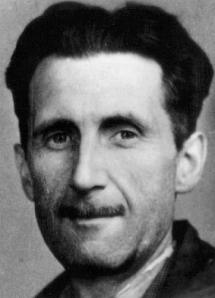
George Orwell wrote about the tendency to revise history into a muddle of misinformation in order to pacify people. Though Orwell had political totalitarianism in mind, is there perhaps a similar application with respect to popular distortions of church history?

George Orwell wrote about the tendency to revise history into a muddle of misinformation in order to pacify people. Although Orwell had political totalitarianism in mind, is there perhaps a similar application with respect to popular distortions of church history?

The most effective way to destroy people is to deny and obliterate their own understanding of their history.” George Orwell penned this in his classic novel, 1984. Can the same be said of God’s people regarding their knowledge of church history?

Perhaps the greatest battleground in apologetics today revolves around the early history of the church.   Many students of the Bible are content to honor the authority of Scripture as God’s Word straight from Jesus Christ.  Some say that if all you need is the Bible, why trouble yourself with church history?

However, the Bible as we have it today did not drop down out of the sky.   During the early centuries of the church, Christians passed down the teachings of those earliest apostles to make up the New Testament.   The Old Testament was borrowed from the Jewish community.     Put together, the Scriptures as we have them arose out of the spiritual life of the early church.   If we fail to grasp a hold on this earliest Christian history, we risk falling into a type of Orwellian trap that would make discussions about the Bible… sadly…. useless.
Continue reading


Cave of the Patriarchs

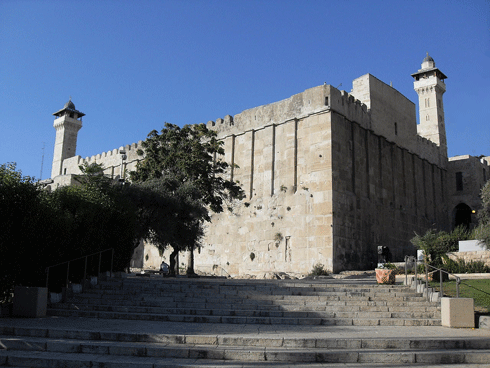
Cave of the Patriarchs

Cave of the Patriarchs, Hebron, Israel

“Then Abraham breathed his last and died at a good old age, an old man and full of years; and he was gathered to his people. His sons Isaac and Ishmael buried him in the cave of Machpelah near Mamre, in the field of Ephron son of Zohar the Hittite, the field Abraham had bought from the Hittites. There Abraham was buried with his wife Sarah.”
Genesis 25:8-10, NIV

There are so many strange names and places in the Bible it’s easy to just keep reading without digging into the details.  But the details contain evidence for the historicity of the Scriptures, even if we don’t appreciate them.  Just because we’re dealing with “long ago and far away” doesn’t mean we’re reading fairy tales.

For all their pratfalls and controversies, archaeology and history have a lot to offer in terms of making sense of obscure names and places.  Take the “cave of Machpelah near Mamre” in Genesis 25 for instance.  It turns out that this cave is a well-known place, also known as the “Cave of the Patriarchs.”  The cave is memorialized in Judaism underneath the only fully surviving Herodian structure from the first century.  According to the biblical accounts in Genesis, Abraham, Isaac, Jacob, Sarah, Rebecca, and Leah—the Patriarchs and Matriarchs of the Jewish people—were all buried in this cave.  We are also told in Genesis 23 that Abraham paid Ephron the Hittite 400 Shekels of silver for the cave, the field, and all the trees in the field.  Pretty detailed information. Continue reading
