Category Archives: Apologetics

Christian Urban Legends

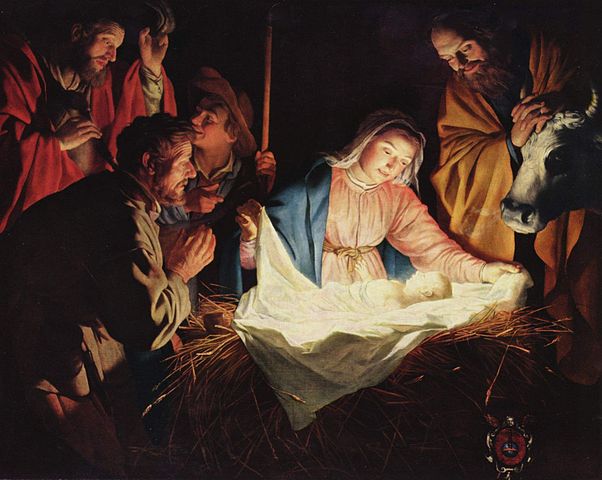
Were the shepherds at the birth of Christ really despised, social outcasts? This popular story makes for a great Christmas sermon message, namely that lowly, poor shepherds, having the social reputation equivalent to prostitutes, were given the honorary privilege of giving testimony to the birth of the Messiah. Though well intended, it turns out that this is largely an urban legend.

“Adoration of the Shepherds,” by Gerard van Honthorst, 1622. (credit Wikipedia: The Yorck Project: 10.000 Meisterwerke der Malerei. DVD-ROM, 2002. ISBN 3936122202)

Evangelical Bible scholar, David Croteau, the Dean of Columbia Biblical Seminary, and author of Urban Legends of the New Testament, acknowledges that many other scholars over the years have commented on the supposed despised nature of 1st century Jewish shepherds, citing sources like Aristotle and the Babylonian Talmud, for support. However, Croteau points out that Aristotle was not a Jew, and lived several hundreds of years before Christ, and the Babylonian Talmud was not produced until several centuries after Christ. Furthermore, British Bible scholar Ian Paul notes that the Babylonian Talmud’s denigration of shepherds might have been shaped more by an anti-Christian polemic, rather than the actual historical context. In other words, these are not the best expert witnesses as to how shepherds were viewed by 1st century Jews.

As it turns out, Croteau cites the best evidence that counterbalances this legend directly from the New Testament itself. Luke 2:18 tells us that “all who heard it were amazed at what the shepherds said to them,” when speaking of the appearance of angels. But the people were not amazed by the supposed fact that these were “lowly” shepherds. Rather, they were amazed by what the shepherds were talking about, that of the birth announcement of the Messiah.

Instead, the Bible holds the profession of shepherding in high respect. For example, Genesis 13 notes that Abraham had much livestock, herds, and flocks of sheep. Also, Exodus 3:1 tells us that Moses was a shepherd, and that before David was king, 1 Samuel 17 tells us that David himself was a shepherd. Jesus himself speaks of being “the good shepherd [laying] down his life for the sheep” (John 10:11).

True, shepherds were not wealthy, and belonged to the lower class, and thus represented the poor and humble, but they were hardly the social equivalent to prostitutes. With such an established pedigree, from Abraham to David, to ultimately Jesus, the traditional story of the “despised” Bethlehem shepherds simply does not fit the actual data.

Continue reading


Did Herod’s Massacre of the Innocents Really Happen?

Merry Christmas, Ye Veracity Readers!

While you are putting the last touches on your Christmas tree, and reading the story of the Nativity to your family, someone is bound to wonder (at least silently, if not out loud), “Do we really know if this ‘Virgin Birth’ story is really true?” …

Anyone familiar with the world of mainstream biblical scholarship will know that the Christmas narratives, which are found only in the Gospels of Matthew and Luke, have come under a great deal of scrutiny over the last couple of hundred years. As I have addressed elsewhere, critics will cite “contradictions” between Matthew’s story and Luke’s story, as well as problems trying to sync up the Scriptural narratives with sources outside of the Bible, notably the timing of the census of Quirinius.

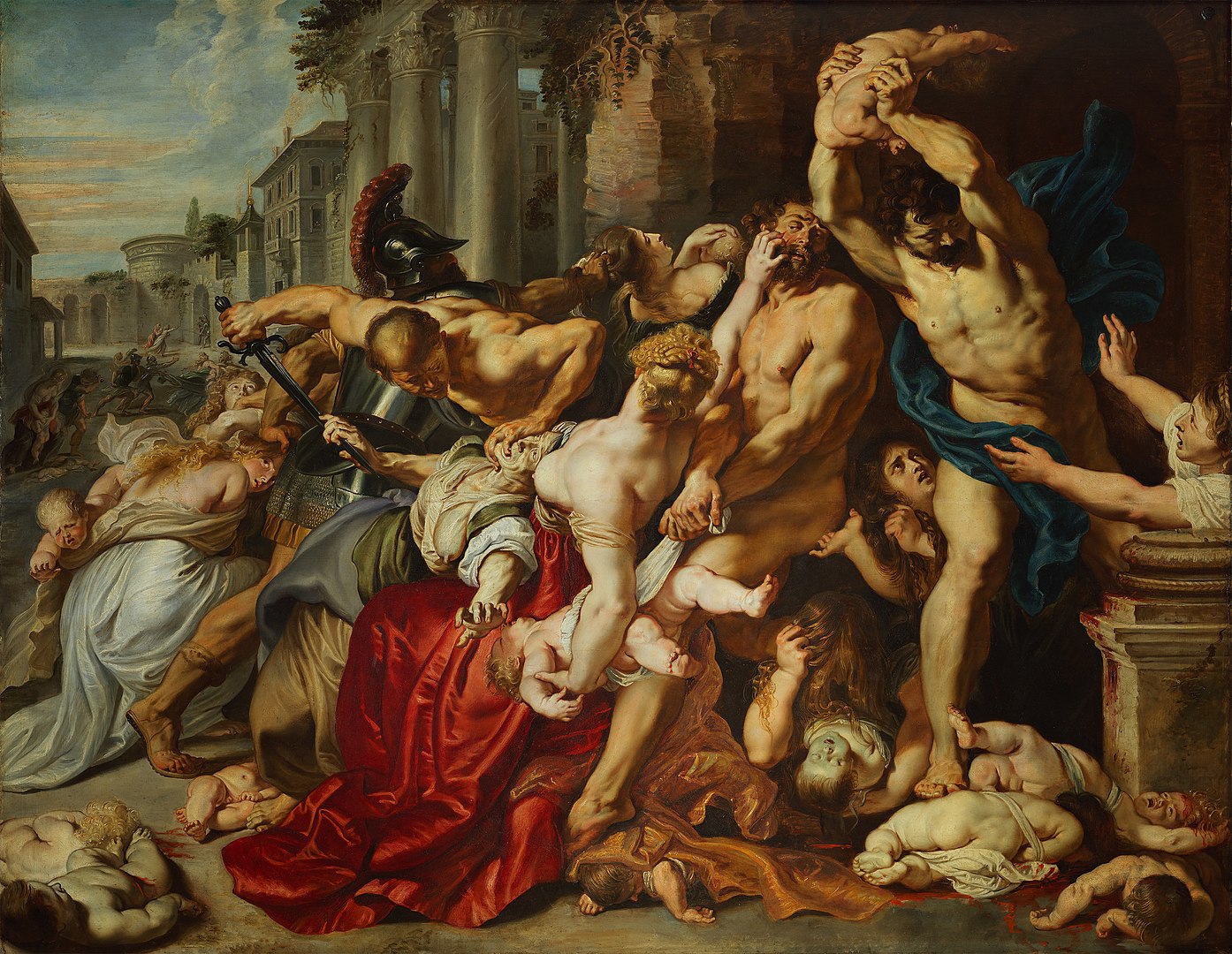
The story of Herod the Great’s Massacre of the Innocents, recorded in Matthew 2:16-18, is often singled out as being implausible as well. The main difficulty is that we have no source outside of Matthew describing how Herod ordered the killing of all of the male infants, under the age of 2, in and around the town of Bethlehem. In Matthew’s story, the Gospel highlights in Matthew 2:13-15 that Jesus was able to escape the slaughter when his parents took him to Egypt, for safety.

Massacre of the Innocents, 1610-1611, Toronto. By Peter Paul Rubens – Rubenshuis, Public Domain, https://commons.wikimedia.org/w/index.php?curid=75942301

A Useful Fiction?

Some have sought to defend and rescue Matthew’s story by suggesting that Matthew was using a type of fictional narrative device, as a means of symbolically associating Jesus with being the “new Moses.” After all, Exodus 1:22 suggests a parallel with Matthew’s story by describing the slaughter of Hebrew infants, while sparing the life of Moses, in the days of Pharoah. The similarities are striking.

The use of fictional narrative devices to communicate truth is not unknown to the Gospels, along with other parts of the Bible. Jesus himself used parables to teach his disciples about the Kingdom of God. Furthermore, the theme of Jesus being the “new Moses” is indeed a big part of Matthew’s Gospel. But the idea of a fictionalized Massacre of the Innocents undoubtedly will strike some as suggesting that Matthew was simply “making up” a historical detail, by riffing on an idea pulled out of the Old Testament.

Mmmmm….. 

We see this same type of criticism about the Bible, more broadly, made particularly by so-called “Jesus Mythicists,” those who believe that Jesus never even existed, suggesting that much of what we read in the Gospels is simply riffing on a whole set of ancient stories of a pagan origin, and not simply depending on stories found in the Old Testament.

New Testament scholar Mike Licona uses the following illustration to show the fallacy of such thinking: ….

…. Most Americans are quite familiar with the story of an airplane, that took off from Massachusetts one morning, that at some point after 9am flew into one of the tallest skyscrapers in the world, in New York City, between the 78th and 80th floors, killing everyone on board.

Of course, you probably know exactly what event this is, right?

Are you sure you know what I am talking about??

Are you really sure?

…..

Here is the answer:

It is about the B-25 that flew into the Empire State Building on July 28, 1945.

Some readers might be surprised here, as what immediately comes to mind is 9/11, when the Boeing 767 flew into the South Tower, of the World Trade Center.

Coincidentally, both airplanes hit their respective buildings at the exact same floors! Both planes took off in the morning from Massachusetts. Both planes had no survivors, following their respective crashes. The parallels are striking, are they not?

Nevertheless, we would never draw from this example the conclusion that 9/11 never happened. But you never know what someone might think, 2,000 years from now, assuming humanity is still on this planet by then. Here is Dr. Licona explaining this:

Herod’s Atrocities Were So Numerous, They Were Hard to Keep Track

So, do we really need to accept Matthew’s story about the slaughter of babies as being purely fictional? A closer look at what is already known about Herod suggests that we need not go down that road. There is plenty of material in Herod’s life to indicate that the Massacre of the Innocents is quite plausible indeed. In other words, the absence of evidence does not necessarily mean the evidence of absence.

Dr. Paul Maier, a retired historian at Western Michigan University, tells us that Herod was a master politician, who sought to placate his Jewish subjects while seeking help from the Romans. After the Romans conquered Judea in 63 BCE, Herod acted as a governor, representing the Roman emperor. Herod rebuilt the temple in Jerusalem, restoring it to a type of glory, reminiscent of King Solomon’s temple. He created the sea port city of Caesarea over a period of twelve years by sinking some ship hulls to create a harbor area. He also built a great palace for himself, theaters, a stadium, and the famous mountain fortress at Masada.

Yet as an ambitious ruler, Herod could be quite paranoid and ruthless. The Jewish historian Josephus tells us that after some attempted poisonings within his family, he put three of his sons to death on suspicion of treason. He put his favorite wife, Mariamne, a Hasmonean Maccabean princess, to death, as well as his mother-in-law. Towards the end of his life, Herod was so rattled by threats to depose him that he even plotted to kill a stadium full of Jewish leaders, a plot that eventually failed. Caesar Augustus remarked that “I would rather be Herod’s pig than his son.”

Part of the suspicion about Matthew’s account of Herod stems from unwarranted traditions that arose within the church, over the years, that lack Scriptural support. A Byzantine liturgy stated that 14,000 infants were killed by Herod at Bethlehem. A Syrian tradition placed the number at 64,000 infants killed. During the medieval period, an attempt was made to link Revelation 14:3 with the massacre, thus inflating the number to 144,000 thousand!

The problem with these large numbers tied to certain Scriptural narratives is that other facts on the ground make such claims unnecessary. In the case of Herod’s massacre, the town of Bethlehem was known to be pretty tiny. Imagine the Bethlehem in the days of Jesus to be the rough equivalent of a rural American town that only has one traffic light in it. You might miss Bethlehem if you were driving through it and blinked! We are talking about an area, with probably less than a 1,000 inhabitants, having a relatively small number of young children. With that in mind, it is quite plausible to consider that perhaps only a dozen or so of Bethlehem’s male infant population were murdered, which would hardly have measured a blip on the notoriously brutal life of Herod, as reported by those like Josephus.

So, it should not come as a surprise to learn that Matthew was the only ancient writer to have recorded this incident from the life of Herod the Great. While some might still have qualms about the historicity of certain events found in the Bible, a strong case can be made, giving us a great deal of confidence that the story of Christmas happened exactly like what we are told within the Sacred Book.

… And with that, I wish you once again, a Merry Christmas!


How Believers Become Unbelievers: A Review of Alec Ryrie’s Emotional History of Doubt

Deconstruction. That is the popular word used nowadays to talk about how certain Christians go through severe periods of doubt about their faith. Some recover from these periods of deconstruction, and continue on with a stronger, renewed faith. Others do not, either hoping to hang onto some sliver or strand of faith, couched within a progressivist view of Christianity, while others simply become agnostics, or even, perhaps, atheists.

It is a phenomenon that hits people ranging from Christian musicians to Bible scholars… I remember the terrible feeling I had, in the pit of my stomach, when I first read Bart Ehrman’s introduction to Misquoting Jesus, one of the first of his many New York Times bestsellers, where he chronicled his story of deconstruction, in the process of becoming a Bible scholar. The scary part was just how similar his story was to mine, at least initially. Ehrman had grown up in a mainline Episcopal Church, with a pretty nominal Christian upbringing, until he got involved with a vibrant evangelical youth ministry, where he describes himself as becoming a “born-again” Christian, in high school.  However, I went off to a secular college, and was strengthened in my faith through my college Christian fellowship. In contrast, shortly after Erhman’s “born-again” experience, Ehrman was drawn into a very “fundamentalist” type of Christian faith, that propelled him towards attending Moody Bible Institute, and then to transfer to Wheaton College.

Wheaton was a more “sophisticated” brand of evangelical Christianity back then, as compared to Moody, but Ehrman was still deeply steeped in a rather rigid form of Christian belief. It was only during his years in graduate school, at Princeton Seminary, when the wheels fell off of his faith. He first lost confidence in the inerrancy of Scripture, but finally became disillusioned with the Christian answer to the problem of evil and suffering. How was it that a person with such a classically evangelical pedigree, having been educated at some of the best and well known conservative Christian institutions of higher learning, end up throwing away his faith in God? Today, Bart Ehrman is perhaps the world’s most recognizable skeptic of Christianity, having a rather large Internet following, who enjoys a highly visible presence on YouTube. I have personally experienced a number of seasons of doubt, in my own Christian walk, but nothing to the extent to which Ehrman himself went through. Sadly, stories like Ehrman’s have become more frequent in the age of the Internet.

Pastor Joshua Ryan Butler argues that there are four main causes behind deconstruction: (1) hurt experienced in the church, (2) poor Bible teaching, (3) a desire to sin, and (4) street cred; that is, it has become hip these days to doubt. As compared to previous generations, it seems like the propensity towards doubting Christianity has been on the rise. As a blogger writing for an apologetics blog, I still believe that the Christian faith still offers the best explanation for reality. I am confident that not all seasons of deconstruction lead to a completely unraveled faith. Nevertheless, I am still left with the question: What are the historical roots behind deconstruction in our post-modern world? A deeply thoughtful book by Alec Ryrie has been written in an attempt to probe this question for answers.

An Emotional History of Doubt

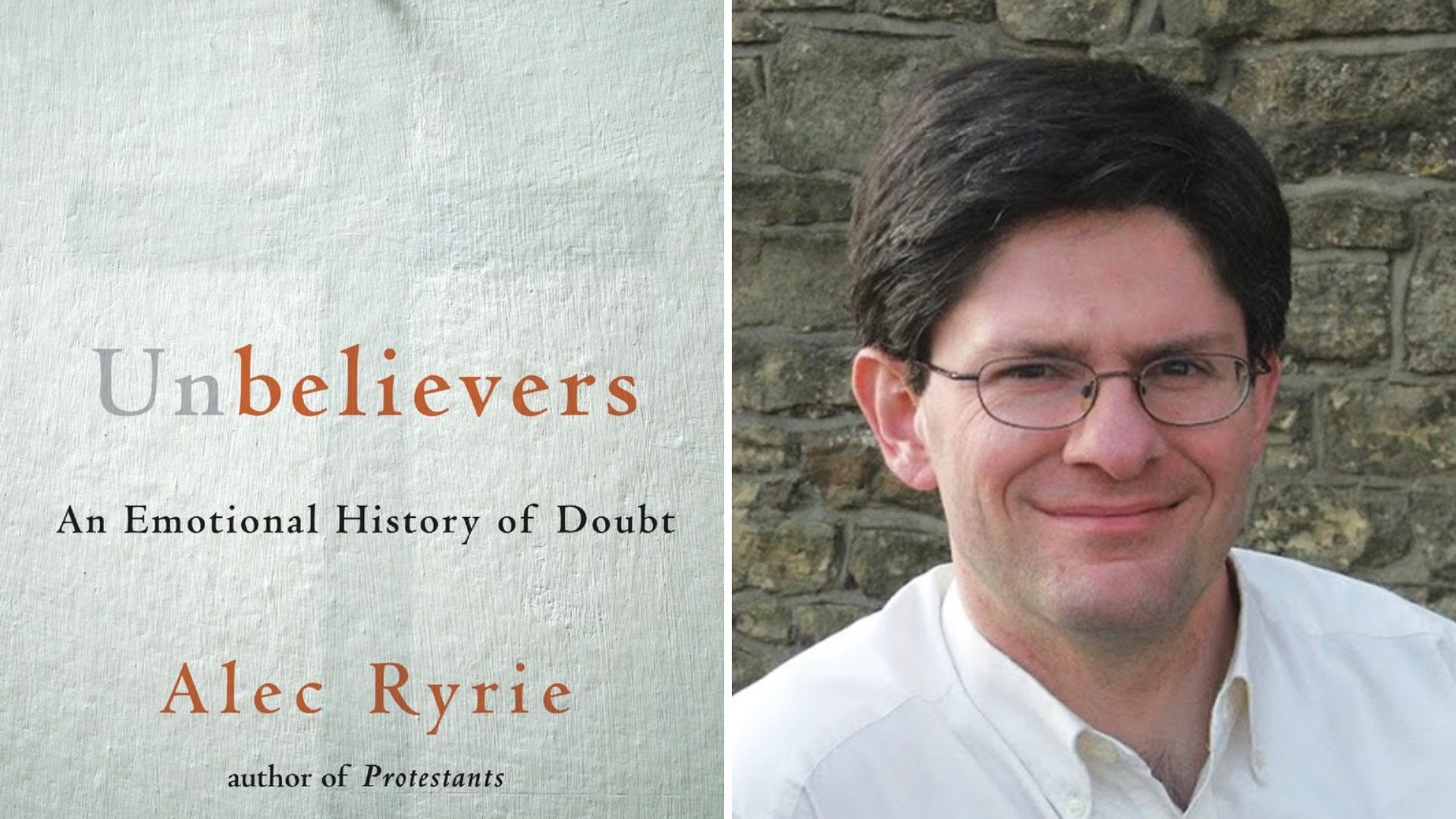
Alec Ryrie’s Unbelievers: An Emotional History of Doubt comes as an aid to help one understand why it is that those from certain Christian backgrounds go through periods of deconstruction. Ryrie, a professor of Christian history at Durham University in the U.K., and an expert in the history of the Protestant Reformation, analyzes how societies that were once overwhelmingly Christian, at the start of the Protestant Reformation, became so secular. Charles Taylor, the Roman Catholic and Canadian philosopher, and author of the monumental, The Secular Age, wondered why “it was virtually impossible not to believe in God in, say, 1500 in our Western society, while in 2000 many of us find this not only easy, but inescapable?

Ryrie tackles Taylor’s question by providing his own answer. Doubts that lead to atheism are not first prompted by philosophical inquiry, as many believe. Instead, intense periods of doubting are first triggered by emotions born of anxiety, buoyed by changing cultural trends. A reorientation of someone’s moral framework can easily lead to the sentiment of anger, where such feelings are often directed against those in religious authority. The abandonment of time-honored traditions only amplifies the problem. In response, more radically-oriented, liberal Protestants have recast Christian theology in terms of ethics, which ironically has only made the problem worse. The rapid decline of mainline liberal Protestant Christianity provides evidence that this trend tends towards promoting secularism, thus demonstrating the difficulty in sustaining such a revisionist understanding of faith across multiple generations.

I would add that going to an extreme in the opposite direction, from liberal Protestantism, also exacerbates the problem. Certain forms of Christian fundamentalism, in responding to our age of anger and anxiety, end up seeking to double-down on certain theological commitments, as a means of safeguarding theological certainty. But in doing so, the apologetic complexities and strenuous efforts required to sustain such theological commitments become so unwieldy, that they can create a type of emotional exhaustion, all of its own. Once one reaches a certain threshold of that exhaustion, the floodgates of doubt are let loose. Like pulling a loose thread on a sweater, faith begins to completely unravel.

Ryrie makes a case for an emotional history of doubt, as opposed to the typical intellectual history of doubt, as told by many skeptics themselves (think of Edward Gibbon’s 18th century classic apologetic for modernistic skepticism, The Rise and Fall of the Roman Empire). Ryrie’s argument parallels the theme of Jonathan Haidt’s The Righteous Mind: Why Good People Are Divided by Politics and Religion, reviewed here on Veracity, which posits that human beings are moved primarily by intuitions, and only secondarily moved by evidence-based argumentation.


Historical Factors Behind the Deconstruction of Christian Faith

Ryrie locates the beginning of the cultural acceptance of atheism, not at the start of the Protestant Reformation, but during the medieval period.  In other words, the seed for the post-modern trend for rejecting Christian faith was planted during the Middle Ages, as the state church started to become crippled by corruption from within, as book reviewer Andrew Wilson observed.

Ryrie’s thesis goes on to indict the Protestant movement for adding fuel to the fire in enabling atheism to grow and flourish in the West, as summarized in Graham Hillard’s review of the book in The National Review. What resonated with me the most in Unbelievers is just how much the variety of conflicting opinions given by religious authorities, in how to interpret the Bible, feeds into skepticism about the Bible itself. Christian group “A” believes that the Bible teaches doctrine “X”, while Christian group “B” believes the Bible teaches doctrine “Y”, which flatly contradicts doctrine “X”. Sadly, this state of affairs has all been done in the name of upholding the Protestant claim of “sola Scriptura;” that is, believing that the Bible, and the Bible alone, teaches authoritative truth.

Ryrie devotes most of his writing to telling stories of how the deconstruction of Christian faith impacted uncertain believers, between the age of Martin Luther in the early 16th century and the beginnings of historical criticism associated with Baruch Spinoza in the 1670s. It was very insightful to learn that such explorations of doubt rarely had much to do with the so-called contemporary conflict between the Bible and science. Instead, deconstruction before the modern era was driven more by anxiety about the instability of one’s personal theological beliefs, and anger at established church authorities for failing to guide and unite believers. As it has been often repeated, “division in the church leads to atheism in the world.” As a book reviewer for the Wall Street Journal, Jeffery Collins, put it, “It wasn’t the books of Hobbes and Spinoza that shook the faith of the people. Rather, the people’s weakening religious certainty cleared the ground for godless philosophers.”

The connection between anger and deconstruction suggests a way of understanding why unbelief has proliferated so much in modern and post-modern periods. Evangelical Christianity enjoyed its greatest hegemony in the United States up until the eve of the Civil War. While some Christians believe that it was the publication of Charles Darwin’s Origin of Species in 1859 that prompted the decline of this hegemony, I would argue instead that it was the moral outrage behind the Civil War that sparked this movement towards skepticism. The failure of evangelical Christianity to address the moral problem of slavery, without triggering a bloody Civil War, only increased anger towards historically orthodox Christianity. We see this also in the decline of Christianity in 20th century Europe, in the wake of two world wars primarily fought on European soil, where religion was used as a justification for the perpetuation of violent atrocities. I would then continue to make the case that moral outrage over the perceived inability of Christianity to ward off the evils of racism, misogyny, hatred towards sexual minorities, and exclusivism (think of the doctrine of hell and divine judgment) fuels the move towards deconstruction in 21st century America. In my conversations with critics of Christian faith, it is the anger towards the perceived lack of an adequate moral vision in Christianity that triggers the process of personal deconstruction more than anything else.

In the last chapter of Unbelievers, Ryrie offers two insights that helps to describe why unbelief has risen so much in the West, particularly since the end of World War 2. First, Ryrie observes that the phenomena of “Jesus Mythicism,” the belief that Jesus never existed, owes itself less to rigorous historical inquiry, and more to the claim that Christianity has lost the moral high ground. Napoleon himself denied the existence of Jesus on several occasions, but Ryrie identifies Napoleon’s reasoning here as based on Napoleon’s resentment towards the “moral authority of a dead Galilean peasant” (p. 196). Secondly, Ryrie argues that the positive moral authority of Jesus, in the modern age, has been superseded by the negative moral authority of Adolf Hitler, as Nazism has largely replaced Satan and all of his minions as being the ultimate expression of the demonic. Ryrie’s conclusion is that the trend towards unbelief will continue, but that at the same time, unbelief will not dominate, as both the believer and unbeliever ironically have an equally vested interest in the future of the Christian faith.

Anger and Anxiety: Unbelief Is Not Just about Questions of the Intellect

Unbelievers: An Emotional History of Doubt is an invitation to skeptics to consider how much the emotional dimension of doubt will often supersede the intellectual dimension. With that in mind, Alec Ryrie’s efforts here are less about persuasion, and more about encouraging self-reflection. In other words, rational argumentation rarely works to convince someone out of unbelief. Likewise, for believers undergoing periods of doubt, it is worth considering the role intuitions play in instilling anxiety about faith, as opposed to purely evidenced-based logic.

Personally, I am glad I read Tom Holland’s Dominion last year, before reading Ryrie’s Unbelievers, as Holland successfully argues that even for those disenchanted with Christian belief, the thought streams of a Christian worldview are deeply embedded in Western culture. It is simply in the water that we drink and the air that we breath. In other words, the truth claims of the Gospel of Jesus will continue to haunt the skeptic, even if one accepts atheism. The influence of Jesus of Nazareth is simply unescapable.

In my own spiritual journey, I have experienced extended periods of doubt, but I always find myself sensing that the God revealed in Jesus Christ is that “Hound of Heaven,” who never stops pursuing me, and who will not let me go. Nevertheless, both Christians wrestling with their own faith journey, along with agnostics and atheists, will find Unbelievers to be a helpful tool to process how developments within culture impact personal experiences of doubt in today’s world.

Alec Ryrie offers the following lecture based on the content of his book.


Did the Apostle Peter Really Write 2 Peter?

Here is a thorny question that Christians seldom consider, but it is pretty important: How do we know if the Apostle Peter actually wrote 2 Peter? Let us take a deep dive into exploring the answer.

Christians have long believed that there is an authoritative New Testament “canon”, or rule, by which the teachings of the church can be measured. Protestant scholars speak of the “self-authenticating” nature of Scripture, and Roman Catholic and Eastern Orthodox scholars speak of the magisterial authority of popes and bishops that have received the twenty-seven books that we have in our New Testament canon.

However, many Christians wrongly assume that the table of contents in their Bibles were somehow dropped down out of heaven, like the tablets of Moses at Mount Sinai. Rather, the development of the New Testament canon was a process that happened over many decades during the history of the early church. The 2nd century heretic, Marcion, had first developed his own list of authoritative New Testament books, but others in the church believed that Marcion’s list was far too restrictive. Others proposed that certain popular books read in church could be included within the New Testament canon, but doubts arose as some questioned the apostolic authenticity of those certain books. It was not until the last quarter of the 4th century C.E. when the church across the Roman empire finally received our list of twenty-seven books.

How then was a book received into the New Testament canon? Generally, a New Testament book needed to conform to the “rule of faith,” a common body of teaching that could be traced back to the early apostles of the Christian movement. Furthermore, a New Testament book must have been authored by one of those early apostles, or someone who moved within that early circle of apostles.

This document, Papyrus Bodmer VIII, is considered to be the oldest copy of 2 Peter we possess. It is dated to the 3rd or 4th century. Scholars are divided as to the date the original manuscript for 2 Peter was written…along with actual identity of its author. (credit: Wikipedia)

Continue reading


Introducing… The Cambridge House at the College of William & Mary

What is a “Christian Study Center?”

Tracing back to Francis and Edith Schaeffer’s L’Abri, there is now a growing movement to establish centers for Christian study, physical presences near leading American universities, where conversations can take place to engage the secular campus with the story of the historic Christian faith. In fact, a new one is being established near the Williamsburg, Virginia campus of the College of William and Mary. It is called the Cambridge House, and I am excited to be part that movement.

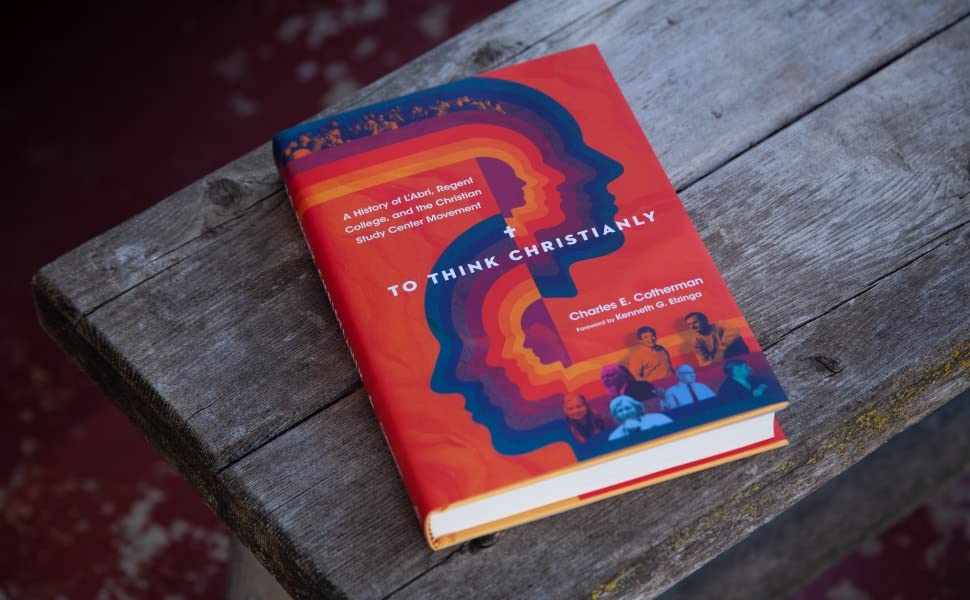
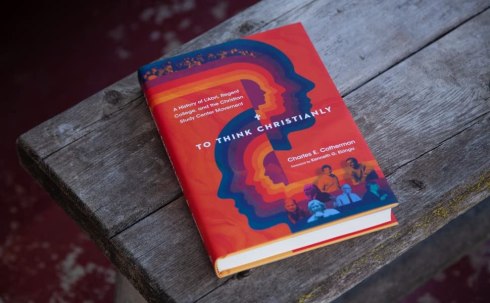
According to Charles E. Cotherman, author of, To Think Christianly: A History of L’Abri, Regent College, and the Christian Study Center Movement, a “Christian Study Center” is a “local Christian community dedicated to the spiritual, intellectual and relational flourishing via the deep cultivation of deep spirituality, intellectual and artistic engagement, and the cultivation of hospitable presence. To be a study center, each of these four elements — spiritual, intellectual, relational, and spatial — must be cultivated” (Cotherman, p. 8).
What was just a few generations ago only a higher education opportunity made available to the cultural elite, has now become almost a rite of passage to adulthood, for a growing number of Americans across diverse backgrounds. The college students of today will become the social, political, business, and intellectual leaders of tomorrow. What part will Christians today have in having conversations that shape the kind of world we will live in 20 to 30 years from now?

I agree with Cotherman that Christian study centers are a vital component for connecting Christians in a local community with the world of their neighboring college campus to make those conversations happen. In the forward to To Think Christianly, Ken Elzinga, an economist at the University of Virginia, and one of the leading founders of the Center for Christian Study in Charlottesville, Virginia, observes that what makes a “study center” unique is that it is a center, a “place having a geographical footprint.” Such a center is a “safe place” where one can bring their disagreements and doubts, to meet with the scornful Nathaniels who ask “Can anything good come out of Nazareth?,” (John 1:46) as well as the doubting Thomas’ who wonder if the resurrection of Jesus is really true.

Furthermore, a “study center” is not just about students, but it is also a place for Christian faculty and college staff to congregate, and build a wide-ranging experience of community.

Unlike the many campus ministries, like InterVarsity Christian Fellowship and CRU, that often require working with the local university for obtaining meeting space, a “Christian study center” is owned by a non-profit entity, to make such a space available, ideally within walking distance of a college campus. In the case of the new Cambridge House at the College of William and Mary, at 930 Jamestown Road, this new center is just a five minute walk away from the Mason School of Business, and around the corner from the student Ludwell apartment building complex.

But a “Christian study center” is more than a place for stimulating conversation, as it can be a place for prayer, and a place for meditation and study, a short distance away from the hustle and bustle of a college campus. It can also be a place for exploring one’s vocation, to help discern God’s calling for an individual or group in our world.

Finally, according to Elzinga, a “study center” is irenic, “marked by relational warmth and hospitality.” Instead of viewing a secular university as an adversary, a “Christian study center” can engage the campus environment as a partner in dialogue, to help move conversations forward, for the benefit of all, believer and non-believer alike.

As the Cambridge House at William and Mary gets established, having a book like To Think Christianly available now helps to provide the historical context for understanding why several dozen study centers are starting to pop-up across college and university towns across the country. After all, what does it mean “to think Christianly?”

Cotherman examines the history of this movement by first focusing on the story of Francis and Edith Schaeffer, and the work of L’Abri, an alpine retreat center at a Swiss chalet founded by the Schaeffer’s in the mid-1950s. The Schaeffer’s were a product of mid-20th century American fundamentalism, when denominational bickering and Francis Schaeffer’s own crisis of faith led this missionary couple to establish L’Abri, which is French for “the shelter.”

Francis and Edith Schaeffer opened up their Swiss home to young people over the following decades, offering hospitality for short-term guests, as well as opportunities to work for the upkeep of the center for longer-term visitors and future staff. Edith in particular took great care to make sure dining ware placement at meals was done with excellence, with attention to detail, as conversation over meals were an essential part of the L’Abri experience. Francis had an appreciation for the history of art, providing many opportunities for conversation among philosophically inclined skeptics. This was no sterile classroom setting, but rather, a living, breathing community that put out the welcome mat for all seekers of truth.

But what the Schaeffer’s became most known for were for the talks given at L’Abri, and the informal conversations that followed, discussing the implications of a Christian worldview with respect to contemporary challenges to such faith in the 20th century. The content of these talks eventually became the substance of books published by InterVarsity Press, which led the Schaeffer’s towards giving lectures across the evangelical world.

In the early years, the Schaeffer’s L’Abri was a “faith-based” ministry, not asking others directly for funds, but rather, the Schaeffers appealed to God in prayer for the Lord to meet all of their needs. By the 1970s, as word of L’Abri spread and brought many more guests into the fold, and the “counter-cultural movement” was in fashion, Francis ‘”took to wearing beige Nehru jackets, odd linen shirts, and mountain climbing knickers” while wearing his hair long and growing a goatee‘ (Cotherman, p. 39). Through the Schaeffer’s, Christ was meeting the counter-culture!

But Cotherman’s story only begins there with L’Abri. Cotherman also chronicles the work of James Houston to establish Regent College in Vancouver, and the subsequent development of the Cornerstone house at the University of Maryland and the C.S. Lewis Institute. Begun in the late 1960’s, Houston’s work at Regent College paralleled L’Abri, but also differed in substantial ways. L’Abri was located away from university settings whereas Houston believed that study centers were best served by being located adjacent to a college campus. Houston was an academic, having done advanced degree work in geography, whereas Francis Schaeffer had no academic training beyond his theological studies. Schaeffer gained most of his knowledge of modern philosophy and art from magazines, as opposed to reading peer-reviewed scholarship found in academic books.

James Houston was concerned that Schaeffer’s L’Abri tended towards creating a type of evangelical celebrity culture and intellectual isolation, whereby a teaching “guru” like Schaeffer was the center of discussion. Alternatively, Houston believed that study centers should participate in academic discussions on college campuses, and he worked towards having a good relationship with the nearby University of British Columbia, in Vancouver, even himself teaching classes there on occasion.

Houston’s vision for Regent College was primarily oriented towards lay education, as opposed to providing seminary education for ordained clergy, thus making theological teaching available to a wider spectrum of people. Part of the early, original ideal was to offer a one-year program of study, particularly for recent college graduates to participate in, before pursuing careers in a variety of professions. By focusing on lay persons, study centers like Regent College, and others, have been able to side-step the thorny issue of women’s ordination, and have continued to improve over the years in providing opportunities for both young men and women to grow deeper in their faith and intellectual life as Christians, living out their vocations in a secular world, as well finding new ways to diversify the ethnic and racial make-up of their communal lives.

The Cambridge House, at the Crossroads, at 930 Jamestown Road, in Williamsburg, Virginia. With close proximity to the campus of the College of William and Mary, the Cambridge House is one of the newest Christian study centers.

Cotherman, to varying degrees, also tells the stories of other study centers, such as New College Berkeley, in California, and R.C. Sproul’s Ligonier Valley Study Center in Stahlston, Pennsylvania. The example of R.C. Sproul’s Ligonier is particularly insightful, as it shows some of the challenges that study centers face in figuring out what type of focus each study center should take. There are a wide-variety of approaches!

R.C. Sproul had been forced to delay the completion of his doctoral work in theology at the Free University in Amsterdam, due to family emergencies. This event triggered a series of decisions that helped him to cross paths with Francis Schaeffer, and consider establishing a L’abri-like study center in Stahlston, Pennsylvania.  This Ligonier study center sought to offer a wide variety of classes and seminars aimed at providing good, intellectual Christian content, not often found in local churches, while seeking to create a hospitable environment for speakers to share their lives together with their students. In those early part of the 1970s, Ligonier attracted well-known evangelical Christian speakers to offer talks, that had a cross-denominational appeal, albeit leaning towards a Reformed theological tradition.

Ligonier was able to take advantage in the growth of technology, to get R. C. Sproul’s Ligonier content out to a wider-audience, and video-tape recording made this development possible. But as Ligonier’s influence as a study center grew, it also changed its style and focus for ministry. Opening up the homes of speakers for Christian hospitality gave way to a more formalized approach for Ligonier. In the early days of video taping R.C. Sproul’s talks, Sproul appeared nicely tanned, sporting a countercultural appeal with plaid pants, turtlenecks, sunglasses, and long hair. But by the time Ligonier moved their operations to Orlando, Florida, in the 1980s, Sproul was appearing before taped classes with a polished suit and tie look. Gone were the days when volleyball games were followed by casual meals around a dinner table, that allowed for deep spiritual conversation. Now, large, well-attended conferences were giving evangelical audiences a hefty, hearty diet of theological training for which they were starving to receive.

Is a study center a place for theological and philosophical discussion? A place where Christians and skeptics can ask their questions? A place for prayer? A place for hospitality? A place for Christian learning? The answer for each of these questions can indeed be “yes,” but each study center wrestles with trying to flesh out what is distinctive to each discrete instance of a study center. The value in reading To Think Christianly is in helping people interested in the study center movement to tie all of these things together.

All of this serves in Cotherman’s story as the backdrop for the eventual late 1970’s founding of the Center for Christian Study, in Charlottesville, Virginia, adjacent to the University of Virginia campus. The Charlottesville house has served as an intriguing model for what study centers across the country can do, in the local campus communities. Over the years, the Charlottesville house has offered residential living for students, a large library filled with Christian books and material for deeper study, quiet study areas for students as well as kitchens for providing meals and snacks, meeting spaces for prayer groups and Bible study groups, and even a Christian bookstore.

In the wake of its success, a Consortium of Christian Study Centers, originally led by Drew Trotter, was formed, and the Cambridge House near the College of William and Mary is among the Consortium’s newest members. In Virginia, the Cambridge House joins other new study centers near campuses like the University of Richmond, and Virginia Tech, in Blacksburg. What will the Cambridge House eventually look like, in terms of its distinctives? All of this depends on how God moves among the students, faculty, staff, and local churches and interested individuals, in figuring out how to invest in this exciting experiment.

Check out the Cambridge House Christian Study Center today, near the campus of the College of Wiliam and Mary!