

We are almost a month away from April Fool’s Day, but one of the latest viral videos on YouTube ain’t no joke. Satan’s Guide to the Bible points to the need for having Christian apologetics in our churches.
Satan’s Guide to the Bible is the work of independent filmmaker, Zeke Piestrup. The premise of the documentary film (mainly cartoon) is actually quite clever. Here you have a Sunday school class, with kids gathering around singing “This Little Light of Mine,” waiting for their Sunday school teacher to arrive. But the real teacher is not in class today, so a substitute arrives as the new teacher: SATAN!
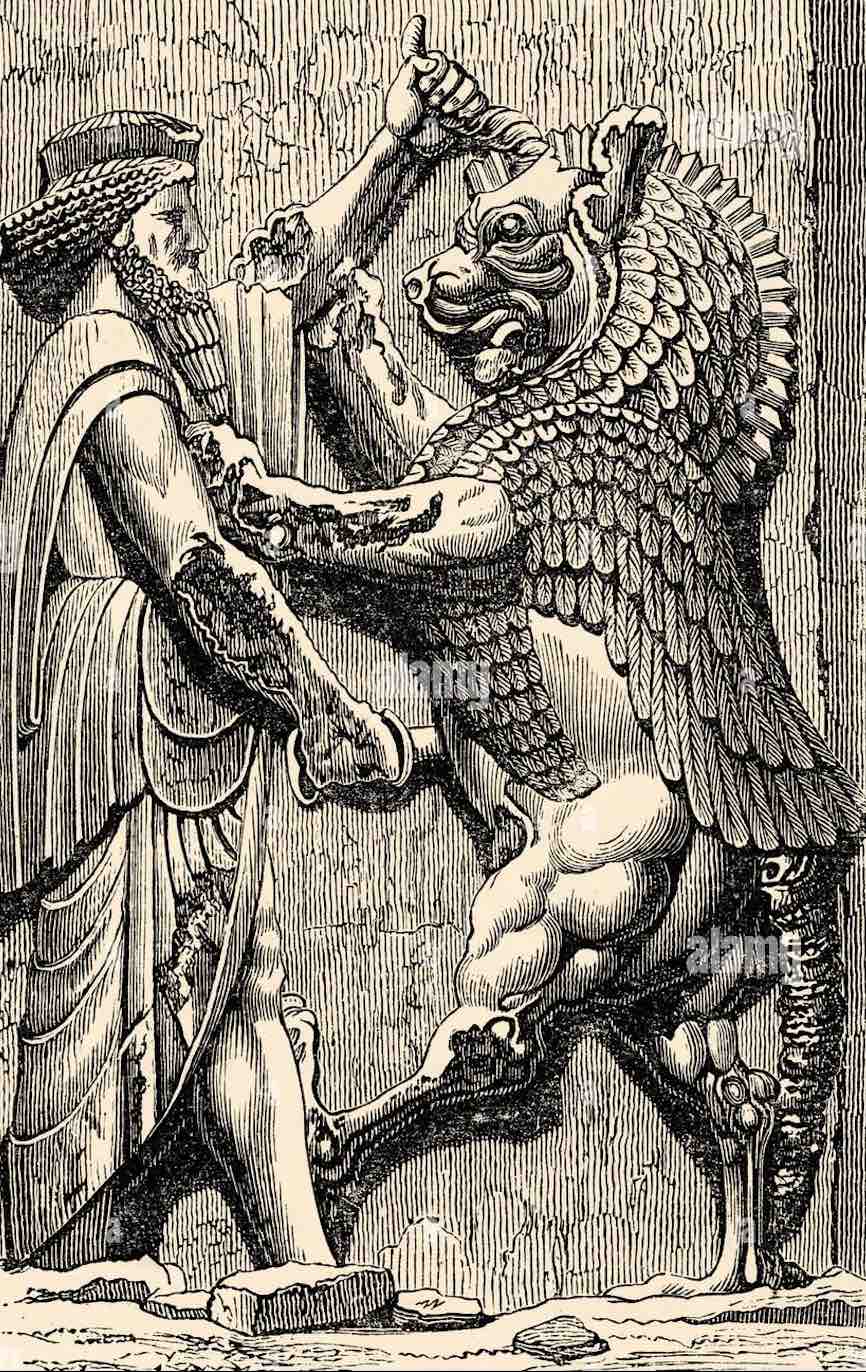
SATAN??? Where did he come from? …. In Persian Zoroastrian mythology, Ahura Mazda (the good diety on the left) was locked in combat with Ahriman (the evil deity on the right). Many scholars suggest that the concept of “Satan” was “borrowed” from this dualistic Persian mythology when the Jews were sent off to Babylon after the destruction of Jerusalem and its first Temple. The Persians, who conquered Babylon, allowed the Jews to return to Jerusalem, taking incipient ideas about “Satan” with them. However, a better answer to this is to say that the Jewish encounter with Persian religion served as the opportunity for the Jews to search their own Scriptures, for the source of angelic rebellion against the one True God: Yahweh. There was no need for Jews to “borrow” anything from Zoroastrianism. They had everything they needed in their Scriptures. But they did need to connect the dots to make sense of who “Satan” really was. Progressive revelation regarding the identity of the true rebel against God, “Satan,” the personification of evil, eventually emerged in the writings of the Christian New Testament. See Veracity review of Anthony J. Tomasino’s Judaism Before Jesus, for more background.
The Plot Line of Satan’s Guide to the Bible
Satan proceeds to instruct the children that today he will reveal to the student “Bible secrets.” These “Bible secrets” are secrets that the children’s pastor (“Mark”) knows, which he learned in seminary, but which he keeps hidden from the children, for fear of losing his job. For about the next hour and a half, Satan reveals these “Bible secrets” to the kids, ranging from the idea that the Exodus out of Egypt with Moses splitting the Red Sea never happened, to the controversy that many of the documents in our New Testament are in reality forgeries, meant to deceive the unknowing Bible reader. Here is the video (but skip on down if you want to get the response):
Satan’s Guide to the Bible uses a lot humor along the way, to keep the viewer engaged. Perhaps the most memorable line is when Jen, one of the kids who is the most skeptical about what Satan is saying, shouts, ““I rebuke you Satan!”
Satan’s response? : “Thanks, Jen. Noted.”
I have not worked my way through the entire video yet, but what makes the film so effective is the recorded interviews with leading critical Bible scholars, some of whom are atheists (like Bart Ehrman) and some of whom are progressive Christians (like Dale Allison). Zeke Piestrup has his interview-ees read from their published scholarly books, to reinforce the message. Plus, he pretty much hits just about every major controversial topic regarding the integrity of the Bible and Christian faith claims in general.
A lot of Christians will find the film frustrating, but it is worth asking the question: “What does Satan’s Guide to the Bible get right?” Well, it does point to a real problem, in that while some churches do offer educational opportunities regarding Christian apologetics; that is, learning how to develop an informed defense of the Christian message, many churches do not. Most Christians are woefully unprepared to answer the criticisms raised in this documentary, what the film calls “standard stuff.” But as more and more churches prioritize small group ministries at the expense of structured Christian education, the opportunities to talk about this “standard stuff” in many evangelical churches are few and far between.
It is true that much of what the documentary touches on is “standard stuff” discussed in mainline seminaries. More and more conservative evangelical seminaries also discuss this “standard stuff” today. But you do not have to go get an advanced degree to hear about this “standard stuff.” Most religion departments at secular universities expose their undergraduate students to such “standard stuff”…… And then there are social media platforms, like short Tik-Tok videos, and YouTube, which makes such “standard stuff” readily accessible to any teenager with a smart phone.
Part of what the Veracity blog tries to do is to fill in the gap often left by churches, and offer resources to try to address the criticisms raised in Satan’s Guide to the Bible. Here is a sample list of previous blog posts that address some specific criticisms highlighted in the video:
- Did the Exodus really happen? There are several Veracity blog posts which explore this topic, including Veracity’s most read blog post, “Did An Army of 600,000 Israelites Conquer the Land of Canaan?
- Is the Bible really without error? Several several Veracity blog posts dive into the topic of “inerrancy,” including a discussion about the difference between the inerrancy of the Bible itself versus the inerrancy of one’s interpretation about what the Bible says. The two ideas are not the same!
- Was Jesus a failed apocalyptic prophet? This is a central theme of biblical criticism going back to the work of the famous German Bible scholar / missionary doctor of the early 20th century, Albert Schweitzer. But this idea is not without its critics.
- Did the early church invent the doctrine of hell, as a scare tactic meant to keep people in-line? How else can people be motivated to “be good?” See the Veracity review of Bart Ehrman’s popular book, Heaven and Hell.
- Is most of the New Testament made up of forgeries? See the Veracity multi-part review of Bart Ehrman’s Forgery and Counterforgery, with one more final installment to-go, coming in a few weeks.
The YouTube world of Christian apologetics has responded to Satan’s Guide to the Bible. One of the first one’s to appear is by Mike Winger, which I will highlight below at the bottom of this blog post. Some of Winger’s critics say that Winger overuses the rhetoric of “propaganda” when describing Satan’s Guide to the Bible. Mike has a few technical problems in the first few minutes, and he probably does go overboard with the “propaganda” rhetoric a bit too much, but it is still worth considering what Mike has to say, and I agree with a good majority of Mike’s pushback.
For a deeper dive into the criticism of Satan’s Guide, I would suggest the 3+ hour response video by Michael Jones (and friends) at Inspiring Philosophy (I have it queued up here at the beginning of their discussion regarding the possibility of forgeries being in our New Testament). Here are some of the other timestamps in the response video (roughly) that address certain topics of interest:
- Evidence for the Exodus?
- Canaanite culture showing that the Israelites were Canaanites?
- Were the Israel origin stories made up?
- Bashing the heads of babies against the rocks (Psalm 137)?
- Joshua’s conquest and killing children?
- Child sacrifice performed by the Israelites?
- Is the Bible trustworthy for teaching morality?
- The Book of Daniel — written in the 6th century or 2nd century?
- Were the apostles illiterate fisherman, unqualified to write Gospels?
- Why did Paul never mention the empty tomb?
- Was Jesus a failed apocalyptic prophet?
Or consider the (much shorter) YouTube review by Roman Catholic apologist, Trent Horn, or explore an even deeper dive with the YouTube playlist by Ratio Christi, a Christian apologetics ministry found on a number of college campuses.
Satan’s Guide to the Bible pokes fun at evangelical Christians, both scholars and apologists with day jobs (like me), so I had to take some jabs with watching the parts that I had gotten through the film already. But if Christians watch something like the Inspiring Philosophy response video above, or the Mike Winger video below, or keep reading Veracity, then this will help equip you to respond to such common criticisms of the Bible, as presented by skeptical non-believers like Zeke Piestrup. As a work of satire, the film provocatively gets its points across, quoting a lot of my favorite Christian scholars out-of-context along the way multiple times, leaving a lot of things left off in a rather one-sided manner.
Is it purely propaganda? I will let you decide.














 Veracity