
Does the Bible forbid a Christian from getting a tattoo? The answer is a qualified “No,” but it does require some unpacking to explain the qualification.
Tattoos have become increasingly popular, among non-Christians and Christians alike today. But they are controversial. Some say that the Bible is OKAY with tattoos, while others disagree with that. Let us take a look at this controversial topic….
The closest Hebrew word to our English “tattoo” is found only one place in the Bible:
“You shall not make any cuts on your body for the dead or tattoo yourselves: I am the Lord” (Leviticus 19:28 ESV).
The Hebrew word transliterated into English as “qa-aqa,” is translated here in the ESV translation as “tattoo,” or in other translations as “tattoo mark” (CSB, NASB, NIV, NRSVue). The NET translation reads this as “incise a tattoo.”1
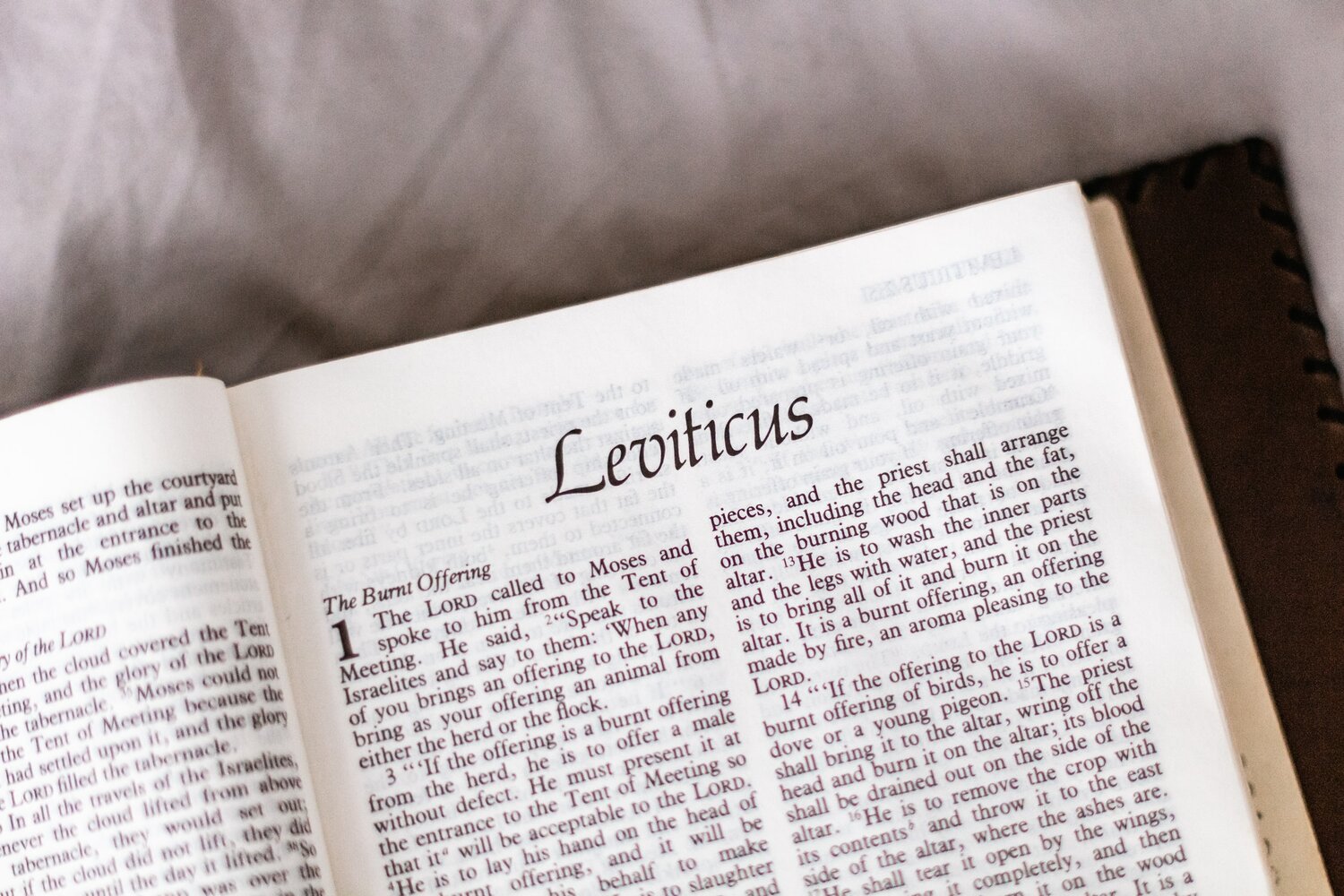
The Book of Leviticus is often ignored by many Christians, as it has a lot of information about purity rituals and regulations, which tend to bog readers down. But there are insights that we can gain from this book that we can apply to our lives today as Christians.
A Fairly Short Look at a Controversial Topic: Do Tattoos and Christians Mix Well Together?
As with any verse in Scripture, it is crucial to understand the context. Leviticus 19:28 is first and foremost found within the Law of Moses, in a set of prescriptions given to the Israelites as to what they should not do as followers of Yahweh. In the two prior verses, the Israelites are told not to interpret omens or tell fortunes (v. 26) and not to round off the hair on the temples or mar the edges of one’s beard (v.27). Before the mention of “tattoo” in verse 28, the Israelites are told not to make any cuts on the body for the dead.
In view of these various restrictions, some sensible (and some frankly a bit weird … according to modern standards), the context would indicate that these forbidden practices were associated with idolatry. The Israelite people were to worship Yahweh and stay completely away from practices associated with worshipping other gods. Tattoos, apparently, in the world of the ancient Israelite, were somehow linked with idol worship.
The idea of “cutting” the body was associated with the worship of foreign gods in 1 Kings 18:28. It was also forbidden in Deuteronomy 14:1-2, urging faithfulness to the God of Israel instead of worship other gods:
You are the sons of the Lord your God. You shall not cut yourselves or make any baldness on your foreheads for the dead. For you are a people holy to the Lord your God, and the Lord has chosen you to be a people for his treasured possession, out of all the peoples who are on the face of the earth.
The context for the prescription against tattoos is with respect to avoiding idolatry. Some scholars even suggest that since marking one as a slave is associated with piercing the ear, then this verse also anticipates a movement away from the practice of slavery (Exodus 21:6; Deut. 15:17).2
Since this is the only reference to tattoos in the Bible, there is then no obvious reference to it in the New Testament. One could appeal to Genesis 1:26-28, that humans have been made in God’s image, and therefore tattoos, or any other disfiguration of the body is an insult to the creator. However, this type of appeal has a lot of guesswork to it and few scholars would defend it.
Some might even also cite 1 Corinthians 6:19 to say that our bodies as New Testament believers are a temple of the Holy Spirit. Therefore, as this line of reasoning goes, Christians should not get tattoos. However, the Old Testament temple, which corresponds to this referent in the New Testament, had plenty of images and markings on it, such as cherubim, palm trees, and open flowers (1 Kings 6:29). Therefore, it is difficult to forbid a New Testament “temple” for having a marking on it (the human body), if the Old Testament temple had plenty of markings. Again, this kind of argument against tattoos is difficult to sustain.
Given that Christians today are under the New Covenant, and not the Old Covenant, which is often associated with certain cultic practices and prohibitions associated with ancient Israel, as found in this passage of Leviticus 19, then Christians today are not forbidden to get tattoos.3
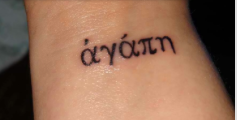
Someone put an “agape” tattoo on their arm… Tattoos have been becoming increasingly popular to get, even among Christians. But is it really “OKAY” for a Christian to get a tattoo?
Tattoos Today Are Not Prohibited in Principle, But There Are Still Things to Consider Before You Agree to Get One
Some Christians will get “Christian” symbols tattooed on themselves, as a kind of witness for the Christian faith and/or a conversation starter. But physical symbols can easily get misinterpreted. How does someone know that such symbols really are “Christian” and not something else?
In early 2025, then Secretary of Defense nominee Pete Hegseth learned the hard way that tattoos can be interpreted in variety of ways, after being relentlessly grilled during his Senate confirmation hearing. Hegesth has a “Jerusalem Cross” tattooed on his chest, which some critics say is associated with certain white supermacist or otherwise violent extremist groups. Is it really worth having to go through all of the trouble as to why you wear a controversial tattoo permanently on your body?
The possible association with idolatry is something which every believer should keep in mind. Even though most modern people do not get tattoos in order to declare their allegiance to other gods, some people still associate getting at least certain kinds of tattoos with idolatry.
An extreme example of when getting tattoos crosses the line into idolatry is with gangs. In El Salvador, gangs like MS13 use tattoos (lots of them) as a means of identifying someone as a gang member, where strict allegiance to the game is expected, and gang members often engage in outright Satanic activities. If such is the case, then out of allegiance to Jesus, Christians should not get those types of tattoos. Is it really worth the risk to get a tattoo, if it might lead to some serious confusion which can severely impact your life?
While Christians do have the freedom in Christ to get a tattoo or not get a tattoo, it is important to consider that wearing a tattoo might cause another believer in Jesus to struggle, particularly depending on what kind of tattoo it is. Consider the example of gangs and tattoos again. If a Christian has given up their identity with a gang, in pursuit of following Jesus, then other Christians might want to reconsider getting a tattoo, or if they already have one, they might reconsider public display of their tattoo(s), out of a sense of encouraging a former gang member to wholeheartedly pursue their walk with Jesus. If a Christian does get a tattoo, one might consider placing the tattoo on a part of the body that can be covered with clothing easily, out of respect for others.
Getting a tattoo is not simply about doing something you like. It is also about having wisdom and showing love in your relationships with other people.
Now, time for some full disclosure: Personally, I am no fan of tattoos. I do not find them attractive on a person. I know that getting a tattoo of some sort has become very popular, particularly among younger people. Nevertheless, I really do not understand the appeal for why someone would want to get a tattoo in the first place. But it would be wrong for me to insist that another Christian should not get a tattoo, when the Scriptural support for such a prohibition is rather weak. Simply wanting the Bible to say something does not make it true!
There are probably a lot of other reasons for not getting tattoos that are more practical in nature, that have little to do with Scripture. For example, one should think twice about getting a tattoo, if there is a possibility that several years down the road you might eventually regret having obtained that tattoo. I had a friend once who tattooed the name of his girlfriend on his leg…. then they broke up….. Not a smooth move!!
That is reason enough for me to stay away from tattoos altogether! Also, there is always some risk with getting a tattoo, from a health perspective, even under the safest conditions.
The bottom line is that getting a tattoo is a matter of the conscience. So, while ultimately, there is no clear moral prohibition against a Christian getting a tattoo, it might not always be the wisest thing to do. Think about what you are getting yourself into before you rush off to get some mark imprinted on yourself.
Notes:
1. This Hebrew word transliterated into English as qa-aqa is notoriously difficult to translate, as it only appears this one time in the Hebrew Bible, and scholars are unsure about its meaning. It is however closely associated with another Hebrew word, transliterated to English as “ke-to-vet,” which means to “imprint” or to “mark.” Bible scholar Chad Bird at 1517.org explains in the following video.↩
2. Richard Hess, Leviticus (The Expositor’s Bible Commentary), p. 754; The Jewish Study Bible: Second Edition, notes for Lev. 19:28). John Walton argues that tattoo marks were used to mark someone’s loyalty to a particular god, as we see in various Egyptian mummies. In Mesopotamia, most known tattoos were either slave markings or marks made by priests designating which god they serve. See Walton and Keener, NIV Cultural Backgrounds Study Bible, footnote 28 on Leviticus 19. The question about tattoos highlights a lot of issues that can be traced back to how Christians interpret the Book of Leviticus, a topic discussed in the Veracity blog series on Leviticus. ↩
3. For a more thorough look at the question of tattoos within the context of the Old Covenant, and how this, and other controversial Levitical regulations relate to Christians today, the following teaching video by Christian apologist Mike Winger from a few years ago might provide some help. Mike Winger is more of a pastor/apologist than an academic Bible scholar, but in this video I think he does a pretty good job laying out the issues, more broadly. As he states in the first few minutes of the video, the division among Christians over tattoos is very concerning, and we should work hard to try to find peace between different Christians who disagree over the topic of tattoos. ↩




 Veracity
What do you think?