
This might be near the top of the list of the most confusing Bible passages. In 1 Corinthians 15:29, what is Paul talking about when mentioning people being baptized for the dead?
When was the last time you heard a sermon about this? I am not a gambling person, but if I was I would wager to say, “NEVER.”
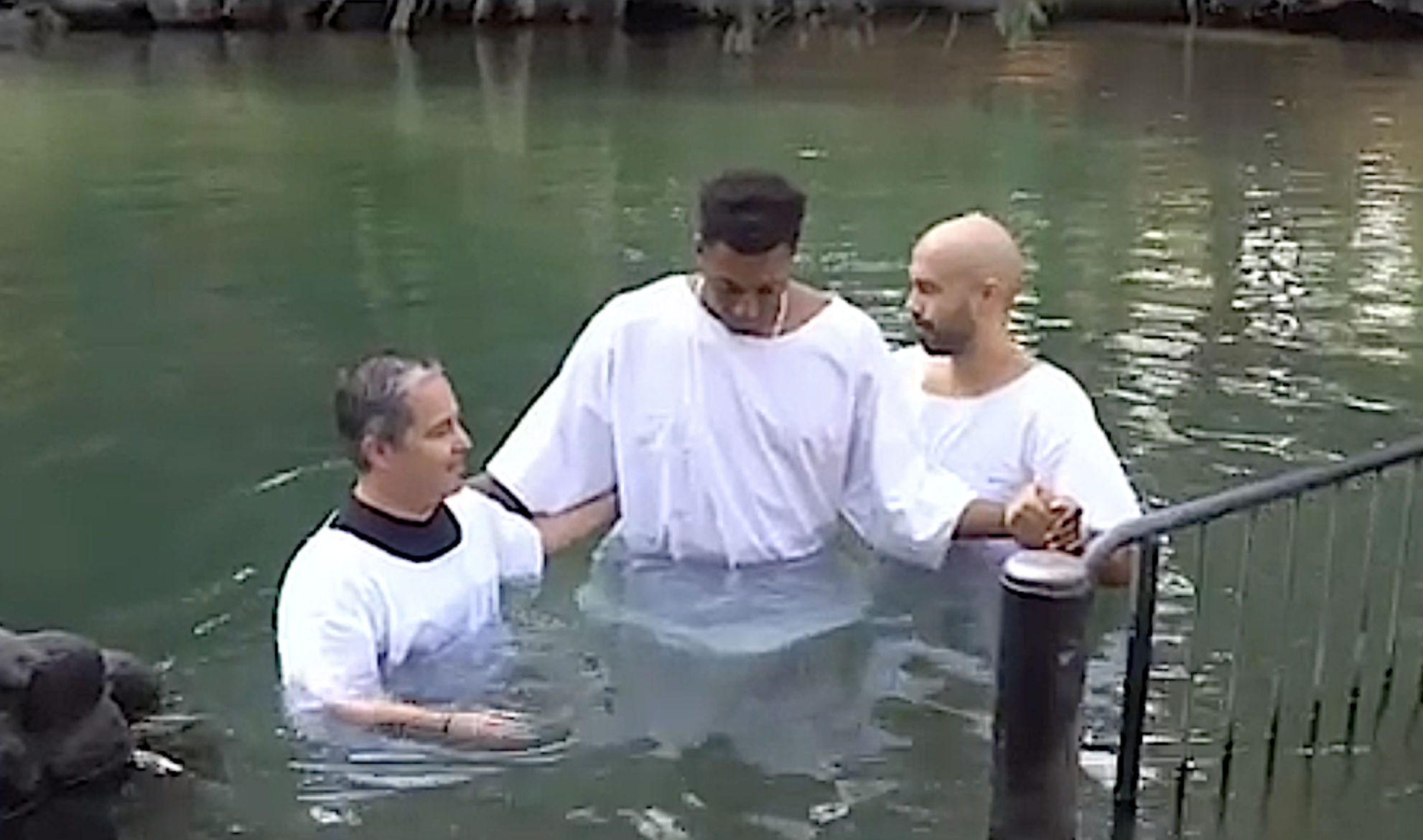
Hip-hop artist Lecrae was “rebaptized” in the River Jordan, in September, 2019…. Baptism is a central feature of the Christian faith. But what do we make of Paul’s mention of “baptism for the dead” in 1 Corinthians 15? That is a real puzzler.
A lot of Bible scholars scratch their heads on this one. I have heard that there are about forty different interpretations about this verse. Here is a quick look at one of those interpretations.
Think genealogy.
My mother spent a number of years researching the genealogical records for our family. Anyone who has labored in genealogical research knows that one of the best sources of information is found with the Church of Jesus Christ of Latter-Day Saints, commonly known as the Mormons. They interpret 1 Corinthians 15:29 as saying that a Mormon could undergo a kind of “proxy baptism” on behalf of dead people, normally family members. In order to do that, you need to have good records to identify deceased members of your family tree. LDS genealogical resources are therefore available for converts to Mormonism who want to undergo a proxy baptism for deceased family members, going generations back, as a means of making sure that there is a place in God’s Heaven for them, according to that theology.
My mom never bought into that LDS theology, but Joseph Smith certainly did and taught it to his fellow Mormons.
Most scholars today put the Mormon interpretation down towards the very bottom of the list of being the most legitimate way of understanding this text. So, if Joseph Smith missed it, what is the right way to interpret 1 Corinthians 15:29? The verse reads in the ESV translation:
Otherwise, what do people mean by being baptized on behalf of the dead? If the dead are not raised at all, why are people baptized on their behalf?

Context for “Baptism for the Dead” in 1 Corinthians 15
Some context does help immensely here. In the 1 Corinthians 15 chapter as a whole, Paul is writing to certain Corinthian believers who have some serious doubts about the bodily resurrection of believers in Christ when the Lord Jesus comes back at his final return, to set the world right. Paul is aware of this practice of some Christians being baptized on behalf of those who have already died. He is not making a judgment on the practice in verse 29, right or wrong. But he is using the practice as an illustration to correct this theological error about the resurrection among the Corinthians.
In other words, what is the point of being baptized on behalf of the dead, if there is no future resurrection? If there is no future resurrection, then the practice of “baptism for the dead” does not make sense.
Here is the main takeaway of the passage: There is going to be a future resurrection of believers!!
Parsing Out the Best Interpretation of 1 Corinthians 15:29
Still, what is this “baptism for the dead” all about, anyway?
Without going off on some endless rabbit trail, some have suggested that this “baptism for the dead” was actually a pagan practice, possibly connected with the Greco-Roman mystery religions. However, most scholars take the view advanced by the late and eminent Gordon Fee that there is no real evidence to support this idea. Some of these ancient mystery cults had rites for water purification, but they did not have the same importance and meaning that the early Christians had regarding baptism. For Fee, this “baptism for the dead” was an infrequent practice, but it was nevertheless performed by some early Christians (Fee, NICNT Commentary on First Corinthians, first edition, p. 764).
The late Old Testament scholar, Michael Heiser, has a very illuminating podcast episode covering the controversy about this verse, which I would highly recommend. Heiser notes a number of questions that scholars raise about this passage:
- Is this passage talking about water baptism or some metaphorical understanding of baptism?
- Why are these people undergoing this baptism? Is it a form of penance for the Purgatorial relief of the dead? In other words, was Joseph Smith onto something?
- Is the phrase “baptized on behalf of the dead” really just a reference to a ritual washing of dead bodies, not having anything to do with baptism as we normally think of it?
Interestingly, Eastern Orthodox priest Stephen De Young, author of The Religion of the Apostles: Orthodox Christianity in the First Century, takes a very similar approach that Michael Heiser does. One particular observation, rooted more in the original Greek text of the letter, which tends to be obscured in many English translations, is that “the dead” spoken here in this verse are actually deceased Christians. Paul had been going around preaching the Gospel across the Roman Empire, and some believers had already died before Jesus’ return.
In the New Testament era, it was quite common for Christians to believe that Jesus would be returning within the lifetime of the apostles, and of those who had become Christians in that same generation. Christians back in the first century might never have imagined that the timing of the Second Coming might be delayed by at least around 2,000 years! So, what about those believers who had died in that first generation before the return of Jesus?
Was it because those dead believers were possibly not baptized, suggesting that a form of “proxy baptism” was practiced? Well, this is highly unlikely as the normative practice in that era of the early church was to baptize people immediately after conversion. It was not until some time had passed, and more pagan-background people were coming to have faith in Christ, that it became necessary to delay baptism, in order that these new believers had sufficient enough instruction to undergo baptism, to make sure that these new Christians knew more about what they were getting themselves into! By the third or fourth century or so, when more and more people without much background knowledge of the Bible were coming into the church, the typical delay for baptism after conversion could have been up to THREE YEARS! (See J. I. Packer’s Grounded in the Gospel).
Most probably these deceased believers were already baptized before they died. We can reasonably infer that some kind of “proxy baptism” was not in view here. So if indeed “proxy baptism” is off the table, what is really going on here?
A careful look at the text again in various translations helps: The KJV takes a very word-for-word approach with the idea that these living Christians were being “baptized for the dead.” But translations like the ESV take an extra step more aligned with more thought-for-thought translations: “baptized on behalf of the dead.” The same Greek word translated word-for-word as “for” is translated in much the same way in the ESV of Philemon 1:13,”I would have been glad to keep him with me, in order that he might serve me on your behalf during my imprisonment for the gospel.” Acts 9:16 is similar, as is 2 Corinthians 1:6.
In 1 Corinthians 15:29, this idea of being “baptised for the dead” can be translated in four possible ways:
- Baptised vicariously in the place of the dead, or just baptized in place of the dead. But this interpretive translation can be ruled out since Jesus already vicariously died in place of the dead believers with his own death. No one else would have to die to benefit those already dead, since Jesus already took care of that.
- Baptised for the benefit of the dead. Again, what is the benefit for the dead person or persons? There is no known reason to explain this. So, we can rule this out as well.
- Baptised for the sake of the dead. This is much better. It suggests that there is some goal in mind. However, that goal is not terribly clear in this passage, so we should be cautious here.
- Baptised in honor of the dead. Heiser agrees that this is the best option available. There is no benefit for the person or persons who have already died. If there is a benefit, it is more an honorific benefit. A good example of this is when someone you know dies, and the family asks that any gifts for the survivors be given to a charity that the deceased person really likes; like an animal shelter or a medicine-based charity; such as, fighting to end cancer. You honor the dead person by providing some type of benefit to that charity.
So, which translation is best? Of the four possible translations, this last interpretation ties in best with the context of 1 Corinthians 15 as a whole. Remember that Paul mentions that some 500 people witnessed the bodily resurrection of Jesus. But by the time Paul was ministering in Corinth, there was a good chance that a number of these 500 witnesses might have already died, and not been given the opportunity to witness the Second Coming of Jesus within their earthly lifetimes. Therefore, there were some new Christians in Corinth who decided to get baptized, partly as a way of honoring those believers who had already died, as well as themselves also receiving the benefits of baptism, thus marking ones’ entry into the Christian community.
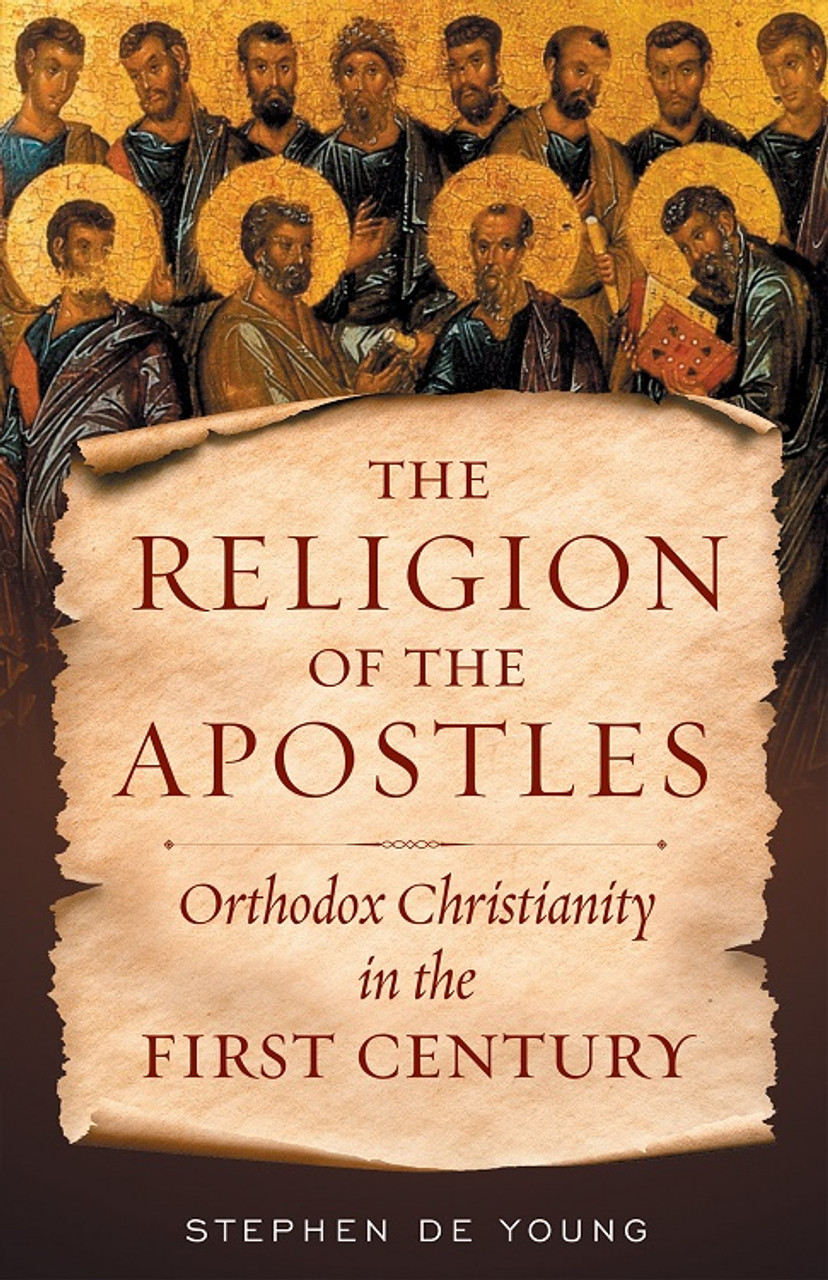
The Religion of the Apostles, by Stephen De Young, shows how the beliefs and practices of the early church connect with the world of Second Temple Judaism, the historical context for Jesus of Nazareth and the New Testament. One of the oddest practices among some, though clearly not all, early Christians is the rite of baptism for the dead, giving honor to believers who have already died. See the four part Veracity review of De Young’s book for more.
Christians Being Baptized in Honor of Other Dead Believers in the Early Church
Stephen De Young, in The Religion of the Apostles, agrees with this honorific interpretation of 1 Corinthians 15:29, noting that there was an ancient practice among the early Christians to do exactly this; that is, to be baptized in a way that gave honor to those believers who had already died. De Young says that these early Christians were doing this, but they were not explicitly making reference to this passage of 1 Corinthians 15:29 to support this practice (De Young, p. 162).
De Young also notes that the act of baptism is passive. It is not “those who baptize for the dead,” but rather “those who are baptized for the dead” (De Young, p. 162).
This interpretation proposed by both Stephen De Young and Michael Heiser is the most convincing to me, as has the least amount of problems with it as compared to alternative views, though every time I think about it, I still scratch my head a bit. Stephen De Young suggests that this odd passage explains why the practice of saint veneration took off even in the era of the early church, building on the “baptism for the dead” ritual. The practice continues today in many Roman Catholic and Eastern Orthodox circles. Because of the Protestant Reformation’s rejection of saint veneration , particularly with respect to icon veneration, (many Protestants call it an accretion), this practice died off within at least the last 500 years, in most of Protestant Western Christianity.
Should Christians still practice “baptism for the dead?” Paul himself refers to the practice in the third person (see the Christian Standard Bible translation of this verse, which uses the pronoun “they”), and neither as a practice he himself advocates nor practices (no “I” or “we”). Since Paul makes only passing reference to the practice, neither approving or disproving it, it can simply be regarded as a custom and not a command of Scripture. We should honor the lives of Christians who have died, but the Bible does not dictate any specific way to do this which transcends culture.
But at least this interpretation helps to make better sense of a very, very puzzling passage of Scripture.
Sponsored by the Christian Standard Bible, theologians Brandon Smith and Trevin Wax have a 15-minute podcast episode covering this passage.
The folks at Logos Bible Software feature an interview with scholar B. J. Oropeza about the difficulties in interpreting this passage:




 Veracity
February 8th, 2025 at 1:55 pm
Clark,
There is another nuance to this passage, as taught by eminent Orthodox Bible scholar, Dr. Eugenia Constantinou. As I understand her, she maintains that this particular verse is referring to the very common practice among Orthodox Christians to this day to take a saint’s name upon baptism and then use that name as their “church name.” Our dear Swedish friend, Bjorn, for example took the name Anthony for his “church name” since there are no saints named “Bjorn.” St. Anthony the Great is his patron saint and Bjorn celebrates his “name day” on the calendar day dedicated to remembrance of St. Anthony.
Just another perspective.
LikeLike
February 8th, 2025 at 5:13 pm
Thank you, John, for commenting. I was not aware of this.
LikeLike