Monthly Archives: December 2019

Were There Humans Before Adam Was Created?

During the great age of exploration of the 15th and 16th centuries, European Christians faced a nagging problem in how they read their Bibles. Traditional belief understood that all humans were descended from a single human couple, Adam and Eve, as taught in Genesis 2. But as folks like Christopher Columbus set forth on their famous journeys, they ran into humans no one ever expected. Thinking he was near India, Columbus thought of them as “Indians.” But Columbus was nowhere near India.

This created a problem: Who were these Native Americans? Where did they come from? And how did they get to the Americas?

The most popular theory that emerged speculated that these Native Americans were the descendants of the Ten Lost Tribes of Israel, the people of the biblical Northern Kingdom, which according to the Bible, was overrun by the Assyrians, over 700 years before Jesus was born. A common example can be traced back to 1660, when a New England Puritan missionary to some of these Native Americans, John Eliot, helped to spread this idea, to English settlers coming to the New World.

Then there was a well-known 19th century attempt to solve this problem. A New York treasure hunter had a read a book by an American Congregationalist minister, Ethan Smith, View of the Hebrews, that explored this possible connection between the Native Americans and the Ten Lost Tribes of Israel, in considerable detail. Yet this treasure hunter, Joseph Smith, was to popularize this view through his translation of the Book of Mormon, capitalizing on the same theme, and thereby creating a uniquely American sect of Christian religion. Aside from the Mormons themselves, no one takes this view seriously today.

Most researchers conclude that the ancestors of today’s Native Americans came across the Bering Straight from Russia, within the past 35,000 years, but probably no less than roughly 16,500 years ago. So, does this mean that the Bible got it wrong, when it came human origins?

The Naming of the Animals, by John Miles of Northleach 1781-1849 (media credit: sothebys.com). Adam named the animals, but were there any other humans existing at the time, who were not in the picture (outside the Garden, in the Americas?)

There is more to the story. The efforts of Ethan and Joseph Smith (not related), were preceded in the 17th century by French theologian Isaac La Peyrère. La Peyrère, who had a Marrano Jewish background, was originally a Calvinist, though he later converted to Roman Catholicism. La Peyrère’s proposal endeavored to solve some persistent problems in biblical interpretation, in the process of explaining the origin of peoples like the Native Americans.

Isaac La Peyrère’s Biblical Reconstruction of Human Origins

In Genesis 4 we read that after the murder of his brother Abel, Cain obtained a wife and built a city. But the text gives us no description as to where his wife and the population of this city came from. Many Young and Old Earth Creationists propose Cain must have had a sister, another unknown child of Adam and Eve, and that Cain must have married her. But this introduces yet the strange difficulty that God might have changed his moral law to allow such an incestuous relationship to take place. For Christians today, who believe that God’s law prohibiting same-sex relations never changes, such an exception to incest, in the case of Cain, is problematic.

La Peyrère concluded that there must have been a human population existing alongside Adam and Eve, from where Cain could have obtained his wife. La Peyrère appealed to another biblical passage to further his case. In Romans 5:12-14 (ESV), we read:

Therefore, just as sin came into the world through one man, and death through sin, and so death spread to all men because all sinned— for sin indeed was in the world before the law was given, but sin is not counted where there is no law. Yet death reigned from Adam to Moses, even over those whose sinning was not like the transgression of Adam, who was a type of the one who was to come.

The troublesome phrase here is highlighted. Who were those whose sinning was not like Adam’s transgression? What was the Apostle Paul talking about here? La Peyrère suggested:

if Adam sinned in a morally meaningful sense there must have been an Adamic law according to which he sinned. If law began with Adam, there must have been a lawless world before Adam, containing people” (Almond, Philip C. (1999). Adam and Eve in Seventeenth-Century Thought. p. 53)

La Peyrère’s solution was to challenge the long-held traditional view, that the creation of humans on day six, in Genesis 1, was the same event as the creation of Adam and Eve, in the garden of Eden in Genesis 2. It has been long recognized that syncing up the events on day six of creation, in Genesis 1, with the events described in Genesis 2, is not without difficulty (I go into detail in this previous Veracity blog post).

La Peyrère proposed that Genesis 1 speaks of the creation of a human population, and that these humans pre-existed Adam and Eve. Specifically, Genesis 1 has no mention of a single couple being created. These humans were the start of the Gentile, or non-Jewish peoples.In Genesis 2, Adam and Eve, on the other hand, were the start of the Jewish people, from whom the Messiah would come to redeem the world.

La Peyrère further went onto suggest that these Gentile peoples in Genesis 1 eventually became geographically isolated the Adam and Eve descendants, and eventually unknown to Adam and Eve’s progeny. So, when we get to the story of Noah and the flood, La Peyrère argued that the great flood was local in scope, wiping out the then known humanity of Adam and Eve’s descendants, and thereby not touching the other unknown humans who had migrated elsewhere around the globe.

Even though La Peyrère made a clever proposal, Jewish, Calvinist and Roman Catholic theologians of his day condemned La Peyrère’s “pre-Adamism” as a heresy. His 1653 book on the subject, Præadamitæ, was burned in an effort to censor his views. La Peyrère escaped the death penalty himself by supposedly retracting his views, though copies of his book have survived.

In view of events in subsequent years, the theologians of the day were probably correct in rejecting La Peyrère’s teachings (La Peyrère had other peculiar ideas that caught the attention of the enlightenment philosopher, Baruch Spinoza, one of the fathers of modern skepticism). Furthermore, in the 19th century, scientists used pre-Adamite theories about humanity, like that taught by La Peyrère, as a justification for racism. Before the rise of Charles Darwin, many scientists believed not in one human race, but rather, in multiple human races, who were distinguished based on the color of a person’s skin. Defenders of Christian orthodoxy were surely right in rejecting such views.

Despite whatever disagreements many Christians have with Charles Darwin’s theory of evolution, both Darwin and the Bible share the common view that humans, of all colors, shapes, and sizes, share the same humanity. As a result, no scholar today would contend against the notion that we all share a common humanity.

However, other, modern developments in evolutionary biology complicate matters, when it comes to trying to synchronize science with a traditional interpretation of the Scriptural text. For example, we have continuing questions about the presence of hominids, or pre-human creatures, like the Neanderthals. Where do they fit in the Bible’s story? Archaeological research today suggests that modern humans rose out of East Africa, and not, strictly speaking, the Middle East. Then there is the research on the human genome, for which many genetic scientists argue that the earliest human population had upwards to 10,000 individuals… and NOT 2!

In view of these developments, some Old Earth Creationists, and even perhaps Evolutionary Creationists, look to some elements of La Peyrère’s work today as a potential solution. For example, Genesis 1 could be understood as referring to humans originally created in East Africa, some of whom eventually migrated to the Middle East, the traditional location of the Genesis 2 narrative. Furthermore, if La Peyrère is correct, then there is effectively no difficulty in associating a Bering Sea crossing of the ancestors of the Native Americans, to populate the Americas over 10,000 years ago, and no need to appeal any “Lost Ten Tribes of Israel” proposal as an alternative means of explanation. As with a lot of things like this, research in these areas have a speculative component.

Isaac La Peyrère (1596-1675), who wrote under the pen name of Samuel Maresius. Some find him as a precursor to modern biblical criticism, but others see him as a pious scholar, who sought to solve a nagging problem in biblical chronology. He was also known as an early proponent of a type of Christian Zionism, believing that the returning Messiah would join the king of France, to set up rule in Jerusalem, and rebuild the Temple.

An Objection to La Peyrère: How to Interpret Genesis 3:20?

For example, one of the most serious problems with La Peyrère’s proposal is with Adam’s naming of Eve, in Genesis 3:20 (ESV), that “she was the mother of all living.” For many students of Scripture, this single verse makes La Peyrère’s proposal of other humans living before and alongside Adam and Eve, a non-starter. Traditionally, this verse has been assumed to teach that every human person ever born, was and is, a physical descendant of Eve, herself. But is this interpretation the only possible way of reading this text?

For example, taking this verse too literally would be absurd. Does the text really mean that every living thing comes from Eve, like every plant and animal? Surely not. Adam was already living, by the time Eve came along, so it makes no sense to say that Eve was Adam’s mother. There must be some limitation, or qualification, to the notion of Eve being “the mother of all living.” Unfortunately, the text does not spell that out for us.

As it turns out, different translations of Genesis 3:20 might give us a different clue as to how this verse should be interpreted. For example, in the NIV 2011 translation, we read the whole verse as: “Adam named his wife Eve, because she would become the mother of all the living.”  Taking this in a reasonable, yet still strictly literal fashion, the highlighted “would become” might imply that Eve is the mother of all who would come after her, but not the mother of all humans, already living at the time Adam named her. Or it could be that Eve “would become” mother of the Israelite line of humans. Or it could be that Eve “would become” the mother of all living, say at a future point in time, such as when Jesus Christ comes as the Messiah, which would be quite relevant for the Apostle Paul, when in Romans 5, Paul argues that Adam was the type of the one who was to come, namely Jesus.

Furthermore, it could be interpreted that by naming Eve, as “the mother of all the living,” Adam was uttering a rebellious statement against God’s curse, that had little to do with the reality of the situation. Other scholars suggest that Adam’s naming of Eve was instead a sign of faith, that through Eve she would be the bearer of children. To make this even more complicated, some early Jewish commentators link the name “Eve” with a similar Aramaic word for “serpent,” implying that Eve was the deceiver of Adam, a designation that the narrator of the story reinterprets.

Some of these interpretative options are better than others. The traditional argument, that Adam and Eve were the parents of all humans to have ever lived after them, was is one of the better options. But it is not a slam dunk. Either way, the exact meaning of saying that Eve was the “the mother of all living” remains unclear.

For those who wonder how the ancient story of Genesis might be correlated with the discoveries of modern science, La Peyrère’s ideas might be worth considering. There are still questions out there that are difficult to answer. Nevertheless, the bottom line should be evident: Those who insist that science somehow “disproves” the Bible can be safely set aside.
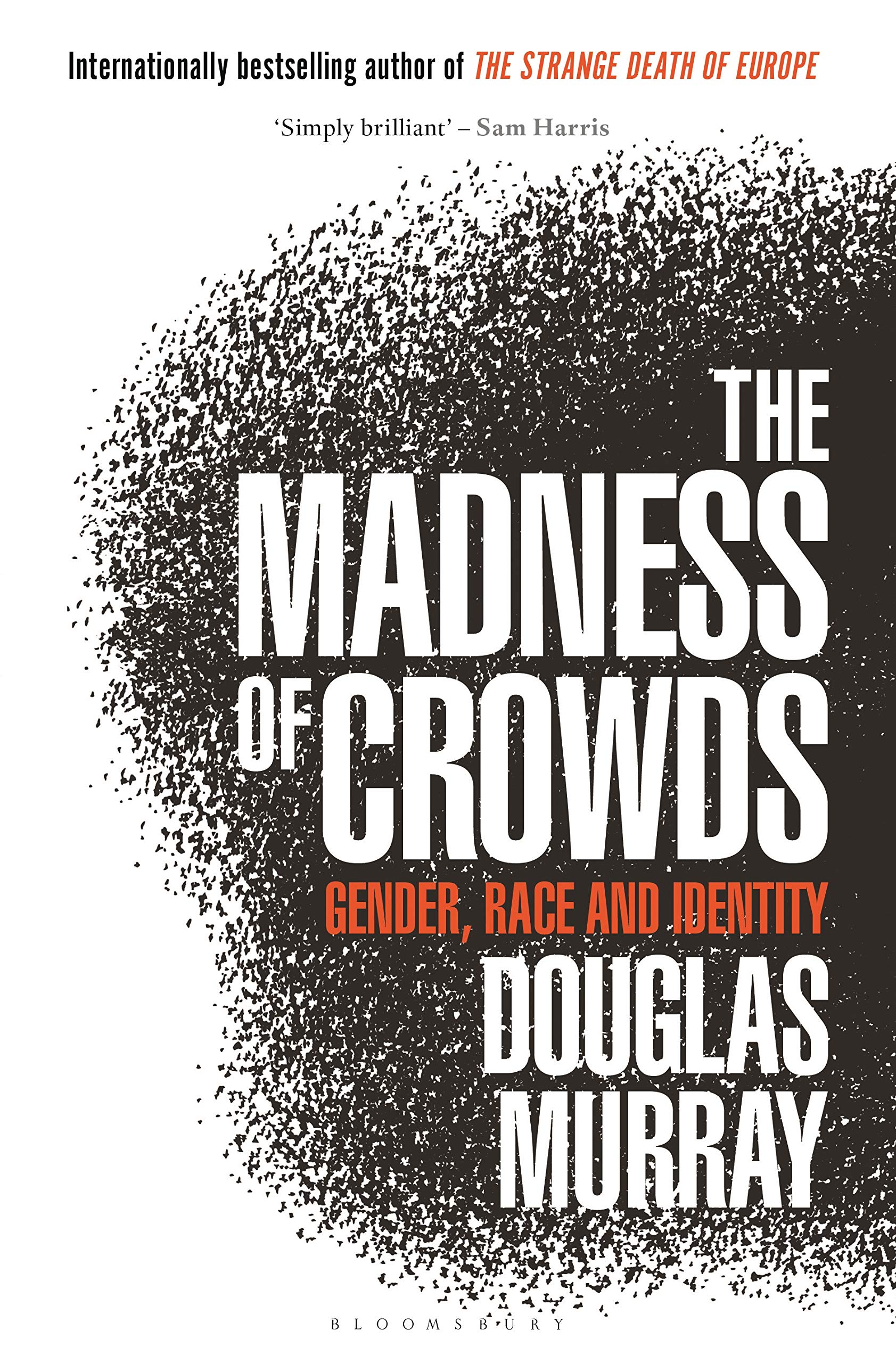


The Madness of Crowds

In the introduction to his brilliant book, The Madness of Crowds: Gender, Race and Identity, British author Douglas Murray, begins by saying:

“We are going through a great crowd derangement. In public and in private, both online and off, people are behaving in ways that are increasingly irrational, feverish, herd-like and simply unpleasant….”
“[Yet] the origin of this condition is rarely acknowledged. This is the simple fact we have been living through a period of more than a quarter of a century in which all our grand narratives have collapsed.”

“One by one, the narratives we had were refuted, became unpopular to defend or impossible to sustain. The explanations for our existence that used to be provided by religion went first, falling away from the 19th century onwards.”

“Then over the past century the secular hopes held out by all political ideologies began to follow in its wake. In the latter part of the 20th century we entered the postmodern era. An era that defined itself, and was defined, by its suspicion towards all grand narratives. However, as all schoolchildren learn, nature abhors a vacuum, and into the postmodern vacuum new ideas began to creep, with the intention of providing explanations and meanings of their own.

What makes Murray’s observations so strangely poignant, is that he is not a professing Christian. Rather, he is an openly practicing gay atheist. Yet Murray manages to highlight the following quote, by G. K. Chesterston, a Christian, who was also one of the most profound cultural critics of the modern world, back almost exactly 100 years ago:

“[The] special mark of the modern world is not that it is skeptical, but that it is dogmatic without knowing it.”

Chesterton had prophetic insight in his own day. Douglas Murray revives that same insight for where we are in the 21st century.

In The Madness of Crowds, Douglas Murray lays out what he sees is a new, post-modern religion, that has sought to supplant Christianity in the West. But it has only starting to emerge, with its full-throated dogmatism, somewhere within the past ten years or so.

I recall about ten years ago, when the controversial Mormon and conservative news commentator, Glenn Beck, cautioned Christians to beware of churches that promote diversity and social justice. “I beg you look for the words social justice or economic justice on your church Web site. If you find it, run as fast as you can. Social justice and economic justice, they are code words…

My response to Mr. Beck’s critique then, just as it is now, is that Mr. Beck simply does not understand what the Bible is talking about, when it is talking about “social justice,” or specifically, “justice.” As I had learned years ago, the language of “intersectionality” and “identity,” as interpreted through the lens of Scripture, were simply intellectual tools, to help us to understand the fallen world in which we live, and make sense of the lived, life experiences of those who face oppression or misunderstanding, who have yet to experience the full reality of being made new creatures in Christ (2 Corinthians 5:17). As I have outlined elsewhere, the concept of “social justice” actually has its roots in the Bible.

But times have changed, and the pace of that change is unrelentingly fast. In particular, I have been increasingly learning, that words can alter their meanings over time, and such words can be spun very differently, in different contexts. What were once merely helpful intellectual tools have morphed into becoming ideological markers, whereby rationality is sacrificed on the altar of sentimentality, and justified on the basis of Neo-Marxist philosophy. When the Biblical concept of social justice gets uprooted from its essentially Christian, Scriptural context, a new religiosity gets formed, promoting a form of dogmatism, just as bad, if not infinitely worse than the most wooden, legalistic forms of Christian fundamentalism.

What is so scary about this, is just how pervasive it is in all levels of society. Take for example, this easy experiment that Douglas Murray shows in his book, as to how Silicon Valley has embraced this new religiosity, and smuggled it into our iPads and iPhones, without most of us ever knowing it. Type into Google’s search engine, “straight couples,” and look for images, and you will immediately notice that a large number of the top hits will be either gay or lesbian couples, with relatively few heterosexual couples to be found. On the other hand, if you type in “gay couples” instead, you will get exactly what you are looking for, countless gay couples, and no straight couples anywhere to be found. Nevertheless, we all know that “straight couples” far outnumber “gay couples” throughout society. So, why are the Google search results so skewed in favor of “gay couples” over and against “straight couples?”

This is “intersectionality” as an ideological project at work, going way beyond the more helpful notion of “intersectionality” as a tool. In oh-so-subtle ways, the world of social media is forming our minds, with the new religion defining the new dogmatism. The supposedly unbiased nature of machine learning algorithms, that tech giants like Google (and they are not alone!!) use to sort their search results, are being employed to further this post-modern agenda.

One could suggest, as Douglas Murray does at times, that such language of “intersectionality” and “identity” has always been rooted in non-Christian, Marxist ideology. Yet this would be news to the writers of the Old and New Testament, such as when Christians make reference to the fact that Christians have a new “identity” found in Christ, as taught by the Apostle, in 2 Corinthians 5:17, mentioned above. But we now live in a world where the new forms of social media, driven by Silicon Valley, available 24/7 on our smart phones, are causing a whole new generation of young people to lose those long held connections to a Christian frame of mind.

Murray’s point is well taken, in that much of the talk of “intersectionality” and “critical race theory” today is decidedly not Christian today, but rather unashamedly Neo-Marxist. In his 1960s “I Have a Dream” speech, Martin Luther King Jr. argued for a Christian vision of a colorblind society. “I have a dream that my four little children will one day live in a nation where they will not be judged by the color of their skin but by the content of their character.” But Murray’s central contention in The Madness of Crowds is that the contemporary, ideologically-driven “social justice” movement has flipped King’s colorblind vision upside down upon its head, and freedom of speech has suffered as a result.

The silencing and bullying that seeks to suppress free speech is horrifying enough. The fact that such promotion of this type of “intersectionality” rhetoric shows very little, if any shame, only heightens the analysis that Douglas Murray displays in his prose. But it is not merely shameless, it is frankly unbelievable, or as the title of Murray’s book suggests… it is madness.

Perhaps the most troubling message in The Madness of Crowds comes in Murray’s chapter on “On Forgiveness.” In this new, ideologically-driven “intersectionality” movement there is no opportunity for forgiveness. Once someone has been identified as being a person of privilege, due to their gender, race, etc., the only “moral” way forward is to ally with the identified non-privileged. If such a person of privilege “sins,” in this religious paradigm, not even an apology is acceptable.  Even “sins” of the past can never be forgiven. Unlike the Christian faith, there is no opportunity for redemption. There is only condemnation. This new religion is a view of the world without hope or forgiveness.

The Madness of Crowds is not for the most squeamish. There were moments, when reading The Madness of Crowds, where the author was very explicit in matters delicate and morally degrading, to the point where I felt uncomfortable. But there is a purpose here. Murray is not gratuitous, for he chooses his words carefully to make his points, which are sadly necessary.

As an aside, in the Audible version of the title, Douglas Murray reads his own book. Just listening to the cadence and his British accent adds to the effectiveness of driving Murray’s argument home.

While The Madness of Crowds was not the most profound book I read this year, it is surely the best book I read that was released this year. Concerned and thoughtful Christians need to push this book to the top of their reading list.

I have Douglas Murray to thank, to help expose the elephant in the room, regarding how the post-modern phenomenon of political correctness and identity politics gone viral has poisoned the hearts and minds of so many in our day. Unlike Murray, I have not given up on what Murray calls “religion,” which I find to be the Gospel of Jesus Christ, as the true antidote to our difficulties today. Yet many Christians seem to be blithely unaware of what is being propagated, in much of the social media in our post-modern age. Sometimes, when the Church finds it so hard to figure things out herself, God can even raise up a gay atheist, to tell us the truth.

Get this book, and read it.


F.F. Bruce on Biblical Inspiration and Interpretation

On my to-read list is Tim Grass' biography of F.F. Bruce (1910-1990), one of best British biblical scholars in a hundred years.

On my to-read list is Tim Grass’ biography of F.F. Bruce (1910-1990), one of the best British biblical scholars in a hundred years.

What do we mean we say that the Bible is inspired? There are some, on one side of this question, who say that the Bible is inspired because it is inspiring.

Sorry folks, but that type of fluffy sentiment does not cut it. There are too many people in our churches who think of the Bible as a huge, oversized Hallmark card. There you will find inspiring thoughts, but are they merely sentiments born from human religious experience? Or are they truly the thoughts from a God who has spoken?

The Bible has been under intense scrutiny for a long time. You often hear these days that the Bible is an outdated, outmoded book. Has not modern science disproven the Bible? Has not the study of archaeology, history, and ethics rendered the Bible as obsolete? The Bible has been under serious attack, but thankfully God has raised up some really smart people who have helped to set the record straight, supporting the integrity and reliability of Scripture.

However, this does not mean that every defense has been a good defense. Unfortunately, there are those who so desperately want the Bible to be true, that they are afraid to ask tough questions. That does not cut it either.

F. F. Bruce was one of the premier evangelical scholars of the 20th century. During his era, there were relatively few who possessed such a deep love and reverence for Holy Scripture, who also championed responsible scholarship. The many students of F.F. Bruce today are now the senior members of the scholarly, evangelical community who love God’s Word, but who are not afraid to address tough issues. One of my absolute favorite seminary professors, Donald Hagner, received his PhD while studying with F.F. Bruce, at the University of Manchester.

Just recently, I glanced back at my highly annotated copy of one of Bruce’s last books that he completed before his death, Paul: Apostle of the Heart Set Free, that I read in seminary nearly twenty years ago. I tell you what… to this day, this guy still gets me really excited about studying God’s Word.

Here is a very appropriate selection from his autobiographical work that gets at how he viewed the Bible. As a student of the Bible, this is what I aspire to:

“I should not find the career of a Bible teacher so satisfying as I do if I were not persuaded that the Bible is God’s word written. The fact that I am so persuaded means that I must not come to the Bible with my own preconceptions of what the Bible, as God’s word written, can or cannot say. It is important to determine, by the canons of grammatical, textual, historical and literary study, what it actually does say. Occasionally, when I have expounded the meaning of some biblical passage in a particular way, I have been asked, ‘But how does that square with inspiration?’ But inspiration is not a concept of which I have a clear understanding before I come to the study of the text, so that I know in advance what limits are placed on the meaning of the text by the requirements of inspiration. On the contrary, it is by the patient study of the text that I come to understand better not only what the text itself means but also what is involved in biblical inspiration. My doctrine of Scripture is based on my study of Scripture, not vice versa. The question, ‘how does that square with inspiration?’ is perhaps asked most insistently when one part of Scripture seems to conflict in sense with another. I suppose much depends on the cast of one’s mind, but I have never been bothered by ‘apparent discrepancies’, nor have I been greatly concerned to harmonize them. My faith can accommodate such ‘discrepancies’ much more easily than it could swallow harmonizations that place an unnatural sense on the text or give an impression of special pleading. If the ‘discrepancies’ are left unharmonized, they may help to a better appreciation of the progress of revelation or of the distinctive outlooks of individual writers.”

–F.F. Bruce. In Retrospect (pp. 311-312).