Monthly Archives: July 2013

How Do We Know the Old Testament is Valid?

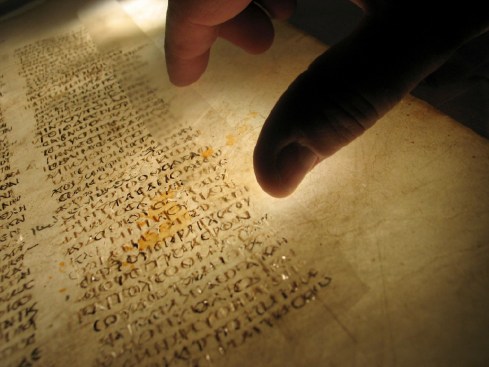
Codex Sinaiticus

Photo Credit: CodexSinaiticus.org


I’ve been reading the Old Testament straight through, struggling at times with the accounts reported in the ancient texts.  Admittedly, if someone at a party started telling these stories we’d all think they were loony.

There are essentially three possible pronouncements for the passages in the OT that are represented as factual, either:

  1. They are fictional and/or fraudulent, or
  2. They are (wholly or partly) allegorical and not meant to be taken literally, or
  3. The miraculous is in play and the historical accounts are correct.

There is no half-off sale in Christianity—we can’t have the New Testament without the Old.  Some poor souls work themselves into torturous and indefensible theological positions by cherry picking which parts of Scripture they accept and which ones they discount as allegorical.  Some of them even show up on documentaries wearing clerical collars, affiliated with organizations that have ‘Jesus’ or books of the Bible in their name.  Hmmm…. It’s best to think it through yourself.

Is our faith based merely on the hope that the OT is valid, or is there some intelligent basis of assurance? Continue reading


The Septuagint and the Original Old Testament?

The first part of the Book of Genesis, from the Septuagint, the early Old Testament Greek translation used by the early Christian church.

The first part of the Book of Genesis, from the Septuagint, an early  Greek translation of the Old Testament, which served as the “Bible” of the early Christian church before the completion of the New Testament.  Is this translation the closest thing we have to the “original” Old Testament?

I noticed sometimes the quotes of the Old Testament passages in [the Book of] Hebrews do not exactly match the wording when I go back and look up the verses in the Old Testament. I am just wondering what is going on.” This was a question sent to our pastors for our summer Bible study series on the Book of Hebrews. I do not know who asked the question in our congregation, but I want that person in my small group. What an awesome question!

The problem is that when you read a number of Old Testament citations in the New Testament, the New Testament writers are actually quoting from the ancient Greek translation of the Old Testament, the Septuagint. Most of the Old Testament was written originally in Hebrew, so it comes as a shock to people to learn that this ancient Greek version of the Old Testament is referenced quite a bit in the New. Critics of Biblical faith will ask if the New Testament writers are at best sloppy when quoting from the original Old Testament, or are they downright fraudulent and terribly mistranslate the Old Testament by relying so much on the Septuagint instead of the original Hebrew?

Get your thinking caps on. This is really a good question.
Continue reading