Monthly Archives: March 2012

12 Apostles

The fate of the 12 Apostles is an interesting topic, and many arguments supporting the reliability of Scripture are built upon the martyrdom of the Apostles as described in extra-Biblical sources and apocryphal writings.  Many of these sources are wildly imaginative and unreliable, but we can learn from them nonetheless.

Sometimes you don’t have to go very far to check things out.  Several months ago, the Biblical Archaeology Review (BAR) ran a lead article about the recent discovery of the Tomb of the Apostle Philip in Hierapolis, Turkey, which was updated in this January 2012 Bible History Daily post. The original article mentioned that an interesting artifact depicting the recently uncovered site was on display in the Virginia Museum of Fine Arts.  This artifact is a sixth-century bronze bread stamp that was found at Hierapolis.  Details about the artifact are summarized in this Discovery News post.  This was too good to pass up, so several friends and I made a day trip to Richmond and came back with the following photograph (shot through the glass with my pocket camera).
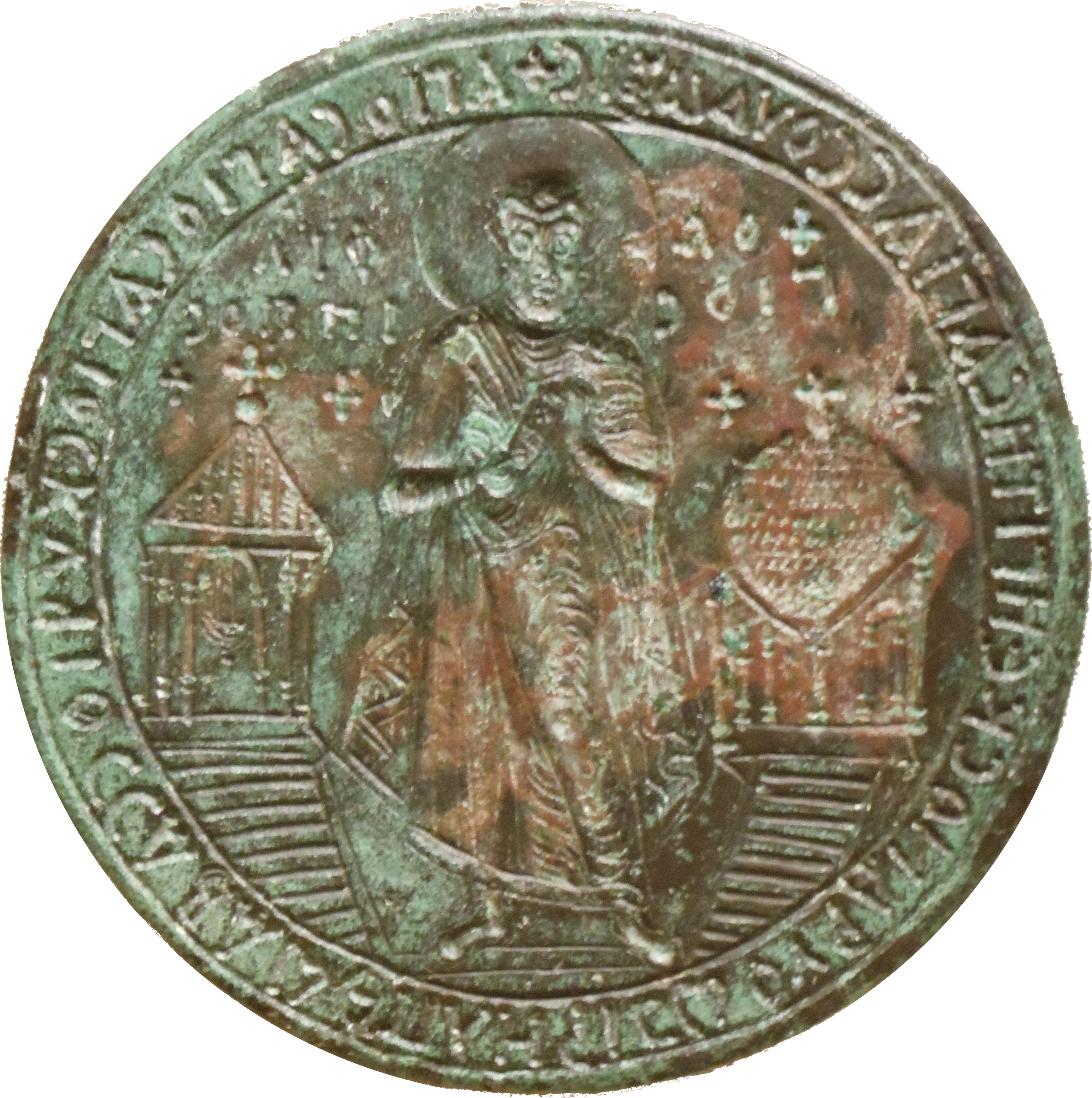
Apostle Philip Bread Stamp

Sixth-century bronze bread stamp bearing the image of the Apostle Philip

The 4-inch bread stamp labels the figure in Greek as Hagios Philippos (St. Philip), and another Greek inscription around the edge quotes from Isaiah 6:3: “Holy, holy, holy, Lord of hosts; heaven and earth are full of Thy glory.”

You can chase down the fascinating details of this news story—which is still unfolding as the archaeologists continue to work and report their findings—by clicking on the hyperlinks above, and gain insight into what happened to the Apostle Philip (and Bartholomew) after he accepted his great commission.  But that’s not the point of this post.

The point is that Biblical archaeology is a vibrant, richly productive, and ever-changing field—full of ongoing discoveries that shed light on the Bible.  A little effort can go a long way to discovering new, rich insights to the veracity of Scripture.  And sometimes great discoveries are just a click or two on a hyperlink away.

Would you like to see more of these discoveries?  How many of them are there?  Lots!

Sometimes you can Google your way to great information, but sometimes there is more beneath the surface than any search engine can succinctly summarize in response to your search query.  This blog is all about sharing resources, so here are two that provide an ocean of archaeological discoveries for your consideration.  And they both happen to be actively sharing late-breaking information on the cutting edge of Biblical archaeology.

The first source packs great, professional teaching into a searchable, fascinating, contemporary catalog of discoveries.  It’s called (oddly enough) Ferrell’s Travel Blog and the name belies the wealth of top-drawer research that Professor Ferrell Jenkins has tied up in this site.  Spend some time here, and you will discover an indispensable addition to your Disciple’s toolbox.  Rather than just casually browsing through the posts, try jumping off on the side links, and use the Search box to investigate any topic you like.

The second site is also a blog (which I found from Ferrell’s Travel Blog).  It’s called the BiblePlaces.com Blog, and in addition to its energetic reporting of contemporary topics, their treatment and responses to ongoing controversies in the field of Biblical archaeology are impressive.  They are high integrity, and out in front of late-breaking events.  Another impressive addition to your toolbox.

Follow both of these blogs and you will be richly blessed.  Enjoy!


Trial of Jesus Before Pilate

The Gospel accounts of Easter and the trial of Jesus before Pilate have considerable agreement, and some interestingly unique statements.  While all four accounts agree on the essential details of what happened early in the morning of Good Friday, April 3rd, 33 CE, only Luke records that Jesus was interrogated by Herod Antipas (see Luke’s Sources).  Only John—writing long after the three synoptic Gospel writers—adds the detail of the name of the location in Jerusalem where the trial took place (Gabbatha).  And in writing that one word, John left a great clue for modern archaeologists to find the location of the trial.

There is so much to be gleaned about the veracity of the Gospel accounts from reading about the trial of Jesus.  The accounts are not identical.  But they are not inconsistent.  An argument could be made that if this material was contrived, all four accounts would be more homogeneous in the narrative details.

Archaeologist Dr. Shimon Gibson (mentioned in an earlier post) conducted a dig of the Gabbatha site in Jerusalem, and reached some conclusions that even his critics concede are probably correct, rewickering the traditional Via Dolorosa (“Way of Suffering”) in the process.  This type of work, and online resources, can help us see the Bible in context.

Among all that occurred at His trial, Jesus mocked Pontius Pilate—the judge who had the power to set Him free—with sarcasm.  I don’t know why that detail is so important, but somehow it just is.  Consider the painting below, which may be one of the most correctly detailed paintings of Jesus ever crafted.

If you research the work of Dr. Gibson, be careful—there are high-profile misrepresentations of his work, as he himself is quick to point out.  Unfortunately there are those who seem to be motivated more by the need to entertain than a desire to get the facts right.  This topic keeps coming up, and we will address it in forthcoming posts.

Veracity


Creation & the Bible (Apologetics Course)

“I may not be a trained speaker, but I do have knowledge.”
                                                                       2 Corinthians 11:6, NIV

We can take a clue from one of the most influential and effective writers who ever lived—knowledge is important.

I’m generally a proponent of the big-thoughts-small-words school of thinking, but have recently been impressed by an apologetics ministry called Reasons To Believe. They offer apologetics courses, which you can read about here.  If you are interested in apologetics, please consider giving their courses a go.  I’m planning on taking their course entitled Creation and the Bible, which starts March 26, 2012.  You can read about their distance learning approach at the Reasons Institute web page.

Hope to see you in class!


The Golden Gate

This video ties archaeology and history to Matthew 17, and provides some context for the turmoil that surrounds Jerusalem—substantially predating the first century and continuing to this day.

Check out the links at the end of this post.  The Biblical Archaeology Review (BAR) is a fascinating resource that will engage your imagination and help you see the Bible.


Credits & Sources:

Day of Discovery More Than a Miracle
Gates of the Old City of Jerusalem
Golden Gate (Jerusalem)
Map of Jerusalem in the Time of Jesus
Biblical Archaeology Review
Where Jesus Walked DVD (Biblical Archaeology Review)
Matthew 17


Sermon on the Mount

The core teachings of Jesus Christ are recorded in Matthew’s account of the Sermon on the Mount.  This video is an experiment, using the Glo Bible and other online resources to build upon Dick Woodward’s Mini Bible College lessons.  Dick has some unique views on the context and content of Jesus’ formative teaching.

[vimeo 30211208]

Veracity Blavatar
